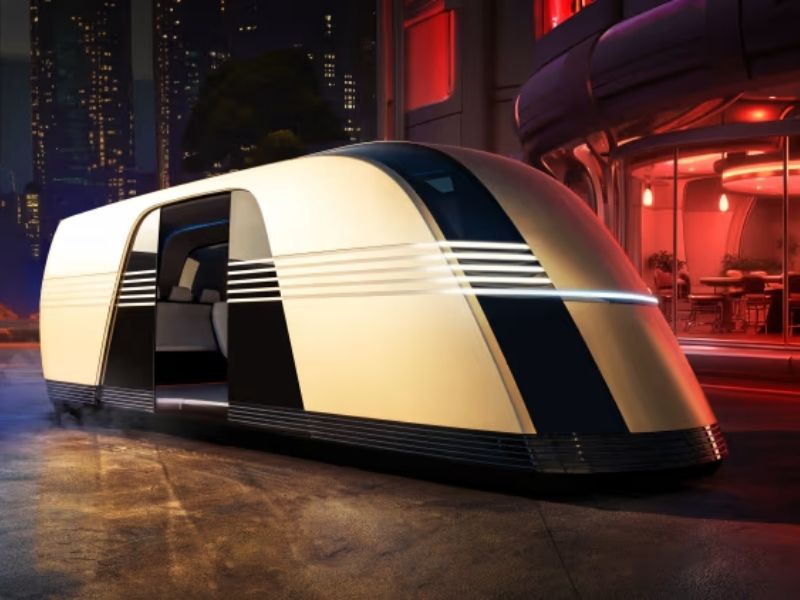
The Tesla Robovan concept debuted at the company’s “We, Robot” event last October and was met with an enthusiastic response. Interest has surged again after an executive hinted it could evolve into a self-driving RV.
A Driverless Design Beyond Urban Mobility
The Tesla Robovan prototype is a modular, fully autonomous vehicle for up to 20 passengers and cargo. Its low-floor design, spacious interior, and panoramic visibility have sparked ideas for uses beyond urban transport.
Social media has been buzzing that the Robovan could lead to autonomous RVs. Y Combinator CEO Garry Tan suggested it’s time for self-driving RV startups, and Tesla’s VP of Autopilot, Ashok Elluswamy, replied “On it,” fueling speculation about a camper-ready Robovan.
Why the Robovan Design Fits the RV Lifestyle
The Robovan concept’s design makes it well suited to discussions around RV use. Its flat, open floor plan, absence of a steering wheel, and Tesla’s load-leveling suspension allow users to configure the platform for sleeping, relaxing, or working. A self-driving electric RV also aligns with the growing “van life” movement, offering the appeal of autonomous, low-stress travel.
For now, the concept of a Robovan-based RV exists only through hints and speculation on social media. Tesla has yet to confirm any plans for a fully autonomous RV built on the platform, and the Robovan itself remains a prototype without a defined production schedule. Still, online enthusiasm for a self-driving Tesla camper continues to grow, hinting that the Robovan could become more than the urban people mover Tesla initially imagined.
Ancient Egyptians and Etruscans are often credited with pioneering orthodontics, reportedly using fine gold wires and catgut to straighten teeth—a story that has long appeared in dental textbooks, suggesting our ancestors were surprisingly advanced in seeking the perfect smile.
However, when archaeologists and dental historians examined the evidence closely, they found that much of this account is actually a myth.
For example, the El-Quatta dental bridge from Egypt, dating back to around 2500 BC, did not function as previously thought. The gold wires discovered with these ancient remains were not used to align teeth; instead, they served to stabilize loose teeth or secure replacements.
Supporting Teeth, Not Straightening Them
In other words, these ancient devices acted more like prosthetics than braces.
The gold bands found in Etruscan tombs tell a similar story—they were likely dental splints meant to support teeth weakened by gum disease or injury, rather than tools for repositioning teeth.
There are also practical reasons these early devices couldn’t have functioned as braces. Tests on Etruscan pieces showed the gold was 97% pure, and pure gold is extremely soft. It bends and stretches easily, making it unsuitable for orthodontics. Braces work by exerting steady pressure over time, which requires metal that is both strong and springy. Pure gold simply can’t do that—it would bend or break before moving a tooth.
Another interesting question is who actually wore these gold bands. Many were found with female skeletons, hinting that they may have served as status symbols or decorative jewelry rather than as medical tools.
Why Crooked Teeth Were Rare in the Ancient World
Notably, none were found in the mouths of children or teenagers—the age group where you’d expect genuine orthodontic devices to appear.
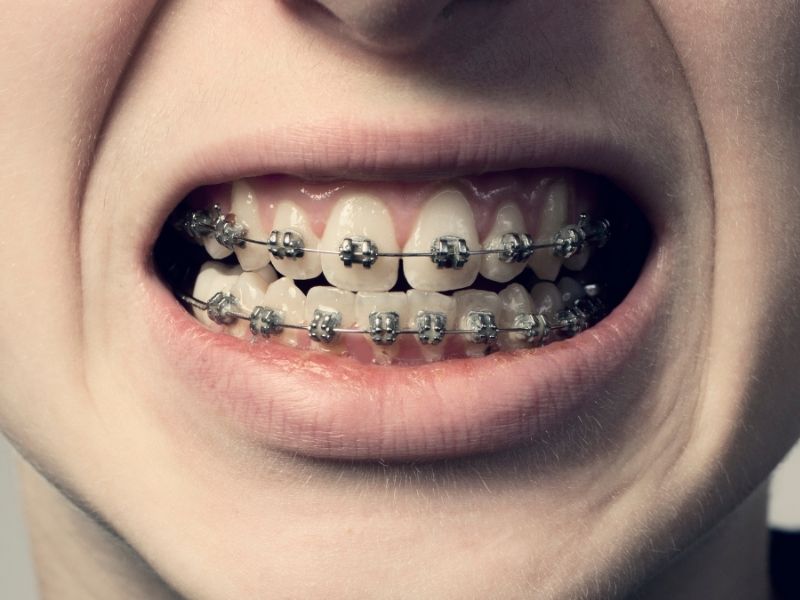
Perhaps the most striking finding is that ancient people didn’t suffer from the same dental issues we see today. Malocclusion, or the crowding and misalignment of teeth, was extremely rare in the past. Studies of Stone Age skulls reveal almost no crowding, a difference largely attributed to diet.
Image Credits: Malocclusion is far more common today than it was in the ancient past. (Sebastian Kaulitzki/SciencePhotoLibrary/Getty Images)
How Diet Shapes Our Jaws—and Our Teeth
Our ancestors consumed coarse, fibrous foods that demanded a lot of chewing. This constant exercise strengthened and enlarged their jaws, giving them plenty of room for all their teeth.
In contrast, modern diets are soft and heavily processed, so our jaws get far less exercise. As a result, our jaws are often smaller than those of our ancestors, but our teeth haven’t shrunk, which leads to the crowding common today.
Because crooked teeth were extremely rare in ancient times, there was little need to create ways to straighten them.
That said, people did sometimes try simple fixes for dental issues. One of the earliest reliable accounts comes from the Romans. Aulus Cornelius Celsus, a first-century AD Roman medical writer, advised that if a child’s tooth grew in crooked, it could be gently nudged into place with a finger each day until it shifted correctly. Though basic, this method relied on the same principle we use in orthodontics today: gentle, continuous pressure can move a tooth.
After the Roman period, little advancement occurred for centuries. By the 18th century, however, interest in straightening teeth resurged—though the techniques used were often quite painful.
Before modern dental tools, people sometimes used wooden “swelling wedges” to make room between crowded teeth. A tiny piece of wood would be placed between the teeth, and as it absorbed saliva, it expanded, gradually pushing the teeth apart.
Crude and undoubtedly painful, this method nonetheless marked an early recognition that teeth could be moved using pressure.
Modern Orthodontic Science
True scientific orthodontics began with the French dentist Pierre Fauchard in 1728. Often regarded as the father of modern dentistry, Fauchard published a groundbreaking two-volume work, The Surgeon Dentist, which included the first detailed explanation of how to treat malocclusions.
He also invented the “bandeau,” a curved metal band placed around the teeth to expand the dental arch. This was the first device created specifically to move teeth using controlled pressure.
Fauchard also explained how threads could be used to hold teeth in place after moving them. His work represented a key turning point, moving dentistry away from ancient myths and crude experiments toward the scientific methods that eventually gave rise to modern braces and clear aligners.
The Evolution of Orthodontics
As dentistry progressed through the 19th and 20th centuries, orthodontics emerged as a specialized field. The introduction of metal brackets, archwires, elastics, and eventually stainless steel made tooth movement far more predictable.
Later innovations—like ceramic brackets, lingual braces, and clear aligners—made treatments less noticeable. Today, orthodontics uses digital scans, computer modeling, and 3D printing to plan treatments with incredible precision.
The idea of ancient people wearing gold and catgut braces is visually striking, but it doesn’t align with the evidence. While early civilizations recognized dental problems and sometimes tried simple solutions, they lacked both the need and the technology to move teeth the way we do today.
The true story of orthodontics begins not in antiquity, but with the scientific advances of the 18th century and beyond—a history that is fascinating in its own right, without relying on myths.
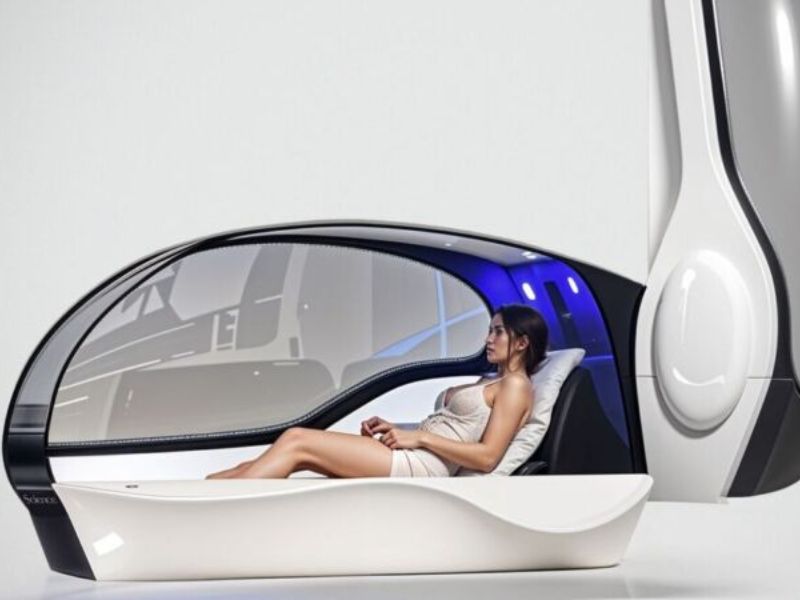
Image Credits:Mirai Human Washing Machine, a “máquina de lavar humanos”
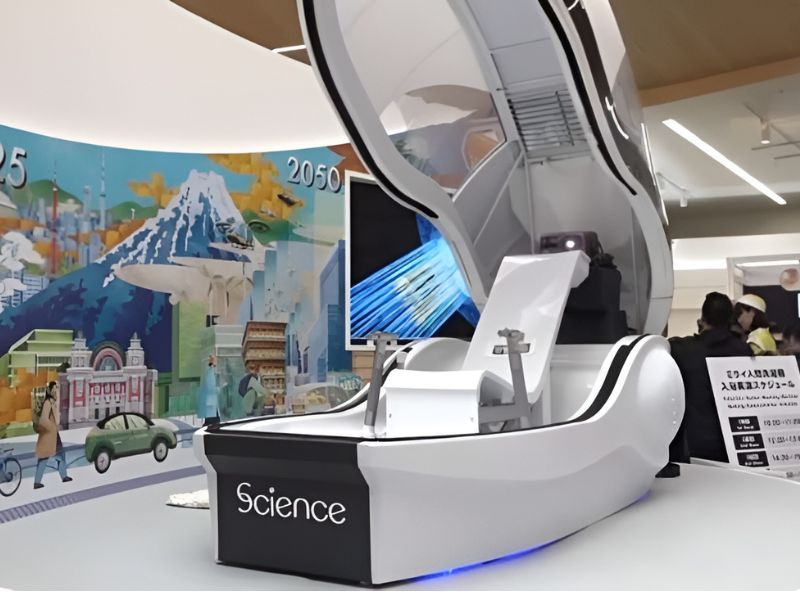
The Mirai Human Washing Machine, a cutting-edge “human washing” device that drew attention at the Osaka World Expo, is now available in Japan.
Created by Japanese tech company Science, the capsule-shaped machine lets users lie inside, close the lid, and experience a full-body wash—without any spinning—while listening to soothing music.
Major Attraction at Expo with 27 Million Visitors
The device was a major attraction during the six-month expo, which welcomed over 27 million visitors before concluding in October.
The concept builds on a similar idea first showcased at the 1970 Osaka Expo, which left a lasting impression on Science’s current president, Yasuaki Aoyama, who saw it as a child.
A company spokesperson explained that the new machine goes beyond cleaning the body—it also “cleans the soul,” using sensors to track the user’s heart rate and other vital signs during the wash.
Global interest, including from a US resort chain, prompted Science to commercialize the prototype. The first unit was bought by a hotel in Osaka, which intends to offer the unique service to its guests.
The Japan Times reports that Yamada Denki bought the Mirai Human Washing Machine to draw more store visitors. A demonstration unit will be on display from December 25th, along with a testing area for visitors.
The company will produce only about 50 units, with an estimated price of 60 million yen (around 332,000 euros).
Thinking of Buying One? Here’s How It Operates
If you’ve been saving up thousands of euros to own one of these unusual machines, NDTV offers a summary of how it works:
Entering the capsule The user lies down inside a 2.3-meter-long enclosed capsule designed for a full-body wash.
Start of the automatic wash The machine uses microbubbles and a fine mist shower to gently cleanse the entire body.
Health monitoring Built-in sensors track the user’s vital signs throughout the wash, ensuring safety.
Relaxation experience Calming visuals are projected, and soft music plays inside the capsule during the wash.
Drying phase After washing, the machine automatically dries the user, completing the experience in about 15 minutes.
Leaving refreshed The user emerges fully clean, relaxed, and monitored—no towels or manual effort needed.
Essentially, the Mirai Human Washing Machine combines elements of a shower, spa, and sauna—without the uncomfortable spinning of a traditional washing machine.
Image Credits:After wowing World Expo visitors, a human washing machine is now on sale in Japan, a company spokesperson said Friday.
People stretch out inside the pod, shut the lid, and the machine washes them like laundry—minus the spinning—while music plays in the background.
A prototype of the machine, dubbed the “human washer of the future,” drew long queues at the six-month World Expo in Osaka, which concluded in October after attracting more than 27 million visitors.
Modern Revival of a 1970 Osaka Expo Innovation
Created by the Japanese company Science, the device is a modernized version of a product showcased during Osaka’s previous Expo in 1970.
Science representative Sachiko Maekura told AFP that their company president drew inspiration from that exhibit when he was a 10-year-old boy.
She added that the machine “cleans not only your body but also your spirit,” and it also tracks the user’s heartbeat and other vital signs.
After a U.S. resort company contacted Science to ask about commercializing the prototype, the firm decided to produce it.
First Unit Goes to Osaka Hotel
According to the spokesperson, a hotel in Osaka bought the first unit and plans to offer the service to its guests.
Other buyers include Yamada Denki—one of Japan’s major consumer electronics chains—which hopes the device will attract more visitors to its stores.
“Since the uniqueness of the product is part of its charm, we intend to manufacture only about 50 machines,” Maekura explained.
Local reports say the machine will sell for 60 million yen (around $385,000).
Sexual activity significantly impacts overall well-being. During intercourse, the body releases a surge of hormones that help relieve pain, strengthen the immune system, reduce the risk of cancer, and alleviate symptoms associated with menopause.
However, many adults choose to avoid sex, which can result in emotional distress, feelings of shame, and lowered self-esteem—for both the individual avoiding intimacy and the partner who feels rejected.
The Impact of Sexual Avoidance and Its Varying Patterns Across Demographics
A human behavior researcher intrigued by the relationship between sex and gender discovered that avoiding sex affects various dimensions of well-being. He also identified numerous reasons why individuals choose to abstain from sexual activity.
Estimates suggest that about 19% of adults avoid sex, with patterns differing based on gender and marital status. Married men, for instance, are rarely abstinent for extended periods.
Women are more likely to avoid sex, often due to past experiences of childhood sexual abuse. Pregnant women may abstain out of fear of miscarriage or potential harm to the fetus. Additionally, lack of interest and fatigue are common reasons for sexual avoidance among women.
Men tend to avoid sex due to issues such as erectile dysfunction, chronic health conditions, and limited opportunities for intimacy.
Medical and Psychological Factors Behind Sexual Avoidance
The research indicates that medical issues are the primary reason both men and women steer clear of sex. For instance, individuals with heart disease often refrain from sexual activity out of fear it might trigger a heart attack.
Additionally, factors like personality disorders, addiction, substance abuse, and poor sleep quality can significantly impact sexual desire and performance. The use of antidepressants and anti-anxiety medications also tends to lower libido and reduce sexual activity, thereby increasing the likelihood of sexual avoidance.
Many older adults abstain from sex due to shame, guilt, or the belief that they are simply too old for it. However, it’s a mistake to assume that older individuals lack interest in sexual activity.
Few people openly discuss sexual issues with their doctors. At the same time, factors such as embarrassment, cultural or religious beliefs, and time constraints often prevent doctors from initiating conversations about their patients’ sexual health.
Research shows that some individuals hesitate to respond when asked about such matters. As a result, their issues often go unaddressed unless the doctor takes the lead in raising the topic.
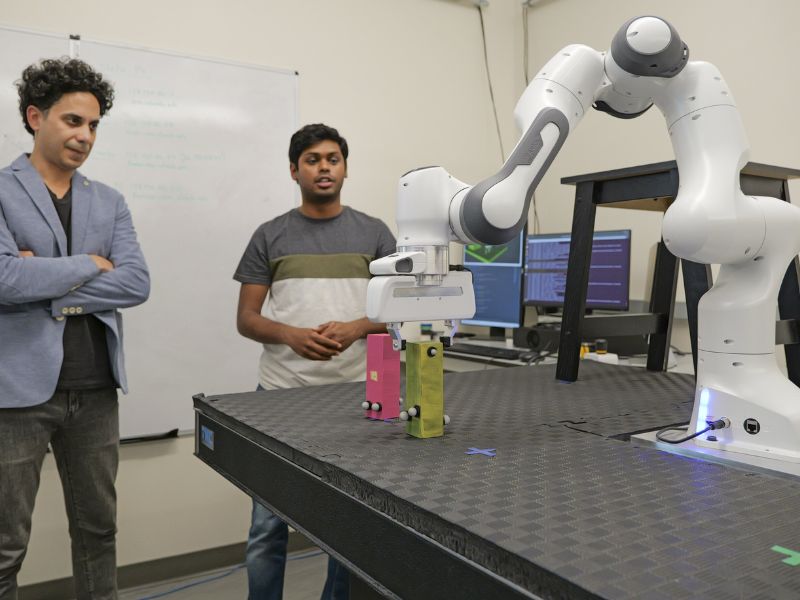
From left, engineering professor Morteza Lahijanian and graduate student Karan Muvvala watch as a robotic arm completes a task using wooden blocks. Image Credits: Casey Cass/University of Colorado Boulder
Picture yourself in an automobile factory for a moment. A robot and a human are working side by side on the assembly line. The robot is swiftly putting together car doors, while the human handles quality control—checking the doors for defects and ensuring they are assembled correctly.
Harnessing the Strengths of Human-Robot Collaboration Across Industries
Robots and humans can form powerful partnerships in fields like manufacturing, healthcare, and many others. Robots tend to outperform humans in repetitive, tedious tasks—such as assembling bulky car components—while people are often better suited for more intricate or skill-demanding work.
However, these collaborations also come with risks. Humans can be unpredictable and prone to errors, leading to situations that robots may not be equipped to manage. In some cases, this can lead to serious or even tragic consequences.
Emerging research may transform how robots deal with the unpredictability that comes with interacting with humans. Morteza Lahijanian, an associate professor in CU Boulder’s Ann and H.J. Smead Department of Aerospace Engineering Sciences, is developing methods that enable robots to make safer choices around people while still working efficiently.
Advancing Robot Decision-Making for Unpredictable Human Environments
In a recent study presented at the International Joint Conference on Artificial Intelligence in August 2025, Lahijanian and graduate students Karan Muvvala and Qi Heng Ho introduced new algorithms designed to help robots make the most effective decisions in situations involving uncertainty and potential risk.
“How can we transition from highly controlled settings—where robots operate independently without any humans—to more unpredictable environments filled with uncertainty and other individuals?” Lahijanian posed the question.
“If you’re a robot, you need to be able to engage with others—you have to take risks and see how things unfold. But how do you decide to take that leap, and what level of risk is acceptable?” Lahijanian explained.
Like humans, robots rely on internal models to guide their decision-making. When interacting with people, a robot attempts to anticipate human behavior and adjust its actions accordingly. While its main goal might be to carry out a task—such as assembling a car part—it should also account for additional variables in its environment.
Applying Game Theory to Enhance Robot Decision-Making and Human Safety
In their latest study, the research team used game theory—a mathematical framework originally developed in economics—to create new algorithms for robots. Game theory examines how different players, whether they’re companies, governments, or individuals, make decisions that influence one another within a shared system.
In robotics, game theory frames the robot as one of several players in a game where the goal is to “win”—in this case, successfully completing a task. However, when humans are involved, success isn’t guaranteed, and ensuring human safety becomes just as important.
Rather than aiming for robots to always win, the researchers introduced the idea of an “admissible strategy.” This approach allows a robot to complete as much of its task as possible while also reducing potential harm—especially to humans.
“When selecting a strategy, you don’t want the robot to come across as aggressive,” Lahijanian explained. “To give the robot a more human-like sense of caution, we consider the idea of regret. Will the robot regret its action later? The goal is to make a choice now that it won’t regret in the future.”
Adaptive Robots: Anticipating Human Actions to Ensure Safety on the Factory Floor
Imagine returning to that auto factory, where a robot and a human are working side by side. If the human makes errors or isn’t cooperating, the researchers’ algorithms allow the robot to adapt. It might try to correct the mistakes without putting the person at risk. If that’s not possible, the robot could choose to move its work to a safer location to complete the task.
Similar to a skilled chess player who plans several moves ahead based on an opponent’s potential actions, the robot will anticipate what the human might do and stay a few steps ahead, Lahijanian explained.
The objective isn’t to perfectly predict human behavior—that’s unrealistic. Instead, the focus is on designing robots that prioritize human safety above all else.
“If you want effective collaboration between a human and a robot, it’s the robot that needs to adapt to the human—not the other way around,” Lahijanian said. “The human might be a beginner with little experience or an expert who knows exactly what they’re doing. But as a robot, you can’t predict which type of person you’ll be working with. That’s why you need a strategy that can handle any scenario.”
When robots are able to operate safely alongside humans, they have the potential to improve lives and deliver meaningful benefits to society.
The Future of AI: Challenges, Opportunities, and Impact on the Workforce
As more industries adopt robotics and artificial intelligence, important questions remain—what will AI ultimately be capable of, will it replace jobs traditionally held by people, and what impact could that have on humanity? Despite these concerns, there are advantages to having robots take on certain roles. They could help address labor shortages in areas like elder care, or take on physically demanding tasks that put strain on human workers.
Lahijanian also emphasizes that, when used appropriately, robots and AI can complement human abilities and help us achieve even more.
“Human-robot collaboration involves blending each other’s strengths: humans bring intelligence, judgment, and adaptability, while robots provide accuracy, power, and consistency,” he explained.
You’re at the office, casually approaching the printer, and when you touch it, a tiny shock makes you jerk back. Or even worse, you accidentally bump into a friend, causing both of you to startle. The cause? A familiar nuisance: static electricity.
This occurs when electrical charges build up on a surface—whether it’s your body, your clothing, or an object—and when it comes into contact with another surface carrying a different charge, the stored energy is suddenly discharged.
How Friction Causes Everyday Static Electricity
The most common way these charges build up in daily life is through friction. It’s the same basic principle behind lightning, but on a much smaller and harmless scale. Activities like walking on synthetic carpet with shoes, rubbing different fabrics together, or even repeatedly opening and closing car doors can all cause this electrical buildup.
Humidity in the air also plays an important role. “Dry air allows charges to remain separated longer, while humid air contains more ions that help neutralize these charges, lowering the likelihood of getting shocked,” explains Thales Quirino, a physics professor at Academia das Específicas in Brasília.
Another element that makes this tiny “shock” stronger is the material you touch. Metal objects conduct electricity very well, making the discharge feel more intense. However, even though static electricity can reach thousands of volts, the actual amount of charge is so minimal that it isn’t harmful.
Simple Ways to Reduce Static Electricity Discomfort
You can easily lessen this discomfort by increasing the humidity in your surroundings, avoiding fully synthetic clothing, moisturizing your skin, and, when possible, wearing shoes with non-conductive soles like rubber.
In industry, preventing static electricity is a priority, using antistatic materials, ionizers, and grounding to minimize risks. For example, tanker trucks have metal chains that drag on the ground, safely releasing the charge built up from friction with the air before it can cause any issues.
Surprisingly, this common “troublemaker” also plays a key role in innovative technologies. It powers electrostatic printers, improves the adhesion of inks and disinfectants in sprayers, and even helps some touchscreens function. As Quirino explains, “when we understand a physical phenomenon, we can discover countless ways to utilize it.”
The ability to sense rhythm isn’t unique to humans, but it’s relatively rare in the animal world. While chimpanzees can follow a beat, their rhythmic skills are quite limited compared to humans. Interestingly, one species of lemur is better
“Mastering New Rhythms and Outperforming Humans”
A 16-year-old California sea lion named Ronan (Zalophus californianus) outshines them all — even outperforming some humans. A recent study reveals that her rhythmic abilities go beyond simply responding to familiar tempos; she can actually match her movements to new beats. This indicates that once she understood the task, she was able to adjust and stay in sync with a variety of rhythms.
“She’s remarkably precise, with only about a tenth of an eyeblink’s variation from one cycle to the next,” says comparative neuroscientist Peter Cook from the University of California Santa Cruz and New College of Florida.
“At times, she might be five milliseconds ahead of the beat, or ten milliseconds behind—but she’s consistently landing right on the rhythmic target again and again.”
“Ronan, residing at UC Santa Cruz’s Long Marine Laboratory, starred in a 2013 study showcasing her impressive sense of timing“. “As a three-year-old juvenile, she learned to nod her head in sync with a ticking metronome and later with music, adjusting her movements as the tempo changed.”
“Debate Emerges Over Ronan’s Rhythm Abilities: Variability and Training Concerns”
“Subsequent research questioned whether Ronan’s timing abilities truly matched those of humans, highlighting that her performance displayed slightly more variability than typically seen in human studies“. Additionally, some scientists questioned the intensity of the training Ronan received and whether her sense of timing arises from the same neurobiological processes that govern rhythm in humans.
Over the past 12 years, Cook and his team occasionally gave Ronan brief practice sessions—just 10 to 15 seconds each, sporadically—amounting to about 2,000 sessions in total.
“Cook confirms, ‘She definitely wasn’t overtrained. “In fact, if you added up all the rhythmic exposure Ronan has had since she’s been with us, it’s likely far less than what an average one-year-old child hears.”
Credit: Strike a pose! (Carson Hood. NMFS 23554)
“Surpassing Humans with Improved Beat-keeping Skills”
Now fully grown, Ronan’s beat-keeping skills have not only improved but even surpassed those of some humans. In a follow-up study, researchers assessed her ability to move in sync with a snare drum at tempos of 112, 120, and 128 beats per minute—two of which were new to her.
Next, they tested 10 university undergraduates with the same sounds, asking them to keep the beat by moving their forearms.
“We compared Ronan’s performance to that of the adults we tested,” the researchers explain, “offering the first direct comparison of rhythmic entrainment between humans and non-humans with confirmed beat-keeping abilities.”
“Perfecting Rhythm with Superior Precision and Timing”
In every test conducted, Ronan outperformed all human participants. Her timing, movement spacing, and synchronization with the beat—measured through tempo interval, movement interval, and phase-angle—were consistently more accurate than at least some humans in each trial. She was especially precise in maintaining rhythm at higher speeds.
At 112, 120, and 128 beats per minute, Ronan’s average tempos were 113.1, 121.6, and 129.0 beats per minute, respectively. For the same beats, the humans had average tempos of 112.4, 119.3, and 126.2 beats per minute.
These findings show that non-human animals can learn to maintain a rhythm when motivated. Although animals likely don’t need this skill in the wild, training in a controlled lab setting—where rewards like treats and praise are given—enables researchers to gain insights into animal intelligence and cognitive development, especially as they mature.
“One of the key takeaways from this study is that maturation and experience play a significant role,” says animal behaviorist Colleen Reichmuth of UC Santa Cruz. “This isn’t just about testing rhythmic ability—it’s also about understanding cognitive behavior and how it evolves and improves over time.”
It’s worth mentioning that Ronan was generously rewarded for her involvement in the study: At the end of the test session, human participants were thanked and provided with additional information about the study. “Ronan, on the other hand, received a toy filled with fish and ice.”
The ability to sense rhythm isn’t unique to humans, but it’s relatively rare in the animal world. While chimpanzees can follow a beat, their rhythmic skills are quite limited compared to humans. Interestingly, one species of lemur is better.
“Mastering New Rhythms and Outperforming Humans”
A 16-year-old California sea lion named Ronan (Zalophus californianus) outshines them all — even outperforming some humans. A recent study reveals that her rhythmic abilities go beyond simply responding to familiar tempos; she can actually match her movements to new beats. This indicates that once she understood the task, she was able to adjust and stay in sync with a variety of rhythms.
“She’s remarkably precise, with only about a tenth of an eyeblink’s variation from one cycle to the next,” says comparative neuroscientist Peter Cook from the University of California Santa Cruz and New College of Florida.
“At times, she might be five milliseconds ahead of the beat, or ten milliseconds behind—but she’s consistently landing right on the rhythmic target again and again.”
“Ronan, residing at UC Santa Cruz’s Long Marine Laboratory, starred in a 2013 study showcasing her impressive sense of timing“. “As a three-year-old juvenile, she learned to nod her head in sync with a ticking metronome and later with music, adjusting her movements as the tempo changed.”
“Debate Emerges Over Ronan’s Rhythm Abilities: Variability and Training Concerns”
“Subsequent research questioned whether Ronan’s timing abilities truly matched those of humans, highlighting that her performance displayed slightly more variability than typically seen in human studies“. Additionally, some scientists questioned the intensity of the training Ronan received and whether her sense of timing arises from the same neurobiological processes that govern rhythm in humans.
Over the past 12 years, Cook and his team occasionally gave Ronan brief practice sessions—just 10 to 15 seconds each, sporadically—amounting to about 2,000 sessions in total.
“Cook confirms, ‘She definitely wasn’t overtrained. “In fact, if you added up all the rhythmic exposure Ronan has had since she’s been with us, it’s likely far less than what an average one-year-old child hears.”
Credit: Strike a pose! (Carson Hood. NMFS 23554)
“Surpassing Humans with Improved Beat-keeping Skills”
Now fully grown, Ronan’s beat-keeping skills have not only improved but even surpassed those of some humans. In a follow-up study, researchers assessed her ability to move in sync with a snare drum at tempos of 112, 120, and 128 beats per minute—two of which were new to her.
Next, they tested 10 university undergraduates with the same sounds, asking them to keep the beat by moving their forearms.
“We compared Ronan’s performance to that of the adults we tested,” the researchers explain, “offering the first direct comparison of rhythmic entrainment between humans and non-humans with confirmed beat-keeping abilities.”
“Perfecting Rhythm with Superior Precision and Timing”
In every test conducted, Ronan outperformed all human participants. Her timing, movement spacing, and synchronization with the beat—measured through tempo interval, movement interval, and phase-angle—were consistently more accurate than at least some humans in each trial. She was especially precise in maintaining rhythm at higher speeds.
At 112, 120, and 128 beats per minute, Ronan’s average tempos were 113.1, 121.6, and 129.0 beats per minute, respectively. For the same beats, the humans had average tempos of 112.4, 119.3, and 126.2 beats per minute.
These findings show that non-human animals can learn to maintain a rhythm when motivated. Although animals likely don’t need this skill in the wild, training in a controlled lab setting—where rewards like treats and praise are given—enables researchers to gain insights into animal intelligence and cognitive development, especially as they mature.”
“One of the key takeaways from this study is that maturation and experience play a significant role,” says animal behaviorist Colleen Reichmuth of UC Santa Cruz. “This isn’t just about testing rhythmic ability—it’s also about understanding cognitive behavior and how it evolves and improves over time.”
It’s worth mentioning that Ronan was generously rewarded for her involvement in the study: At the end of the test session, human participants were thanked and provided with additional information about the study. “Ronan, on the other hand, received a toy filled with fish and ice.”
Driverless cars are on the horizon, and they hold both promise and concerns for individuals with disabilities. These revolutionary vehicles have the potential to enhance the lives of those with disabilities, addressing various challenges they face when using public transportation, such as dependence on others for rides or high taxi expenses. However, certain disabilities currently prohibit driving altogether, creating a barrier to mobility. The advent of driverless cars may change this landscape, offering newfound independence and convenience.
Obstacles Faced by People with Disabilities
People with disabilities encounter numerous obstacles that hinder their ability to engage in everyday activities like shopping, commuting, attending medical appointments, socializing, or enjoying entertainment venues. Additionally, some disabilities prevent individuals from driving, even with adapted vehicles, based on the severity of their condition. However, the introduction of driverless cars could provide an inclusive transportation solution for everyone, regardless of their physical abilities.
The Potential of Driverless Cars
Driverless cars have the potential to revolutionize transportation for people with disabilities in the UK. These vehicles can offer door-to-door transportation, automated parking, and a comfortable environment for passengers. The newfound independence and freedom they provide can significantly improve the quality of life for individuals with disabilities, eliminating concerns about uncooperative public transport staff and discrimination from fellow passengers.
Addressing Worries and Fears
Studies conducted in the UK have shed light on the concerns that people with disabilities have regarding driverless cars. Common worries include safety, understanding the technical aspects of these vehicles, and the ease of boarding, disembarking, and exiting a damaged car. Fear of being stranded after an accident or breakdown and concerns about equipment failures, software glitches, and reckless driving by others on the road have also been expressed.
Prior Information and Attitudes
Prior knowledge plays a crucial role in shaping attitudes toward driverless cars among individuals with disabilities. Exposure to information about these vehicles through various sources, including television, newspapers, magazines, and conversations with friends and family, can significantly influence confidence levels. However, it’s worth noting that some individuals with disabilities, despite prior knowledge, may still harbor reservations about driverless cars.
Steps Toward Inclusivity
To foster the acceptance of driverless cars among people with disabilities, proactive steps are necessary. Social marketing campaigns, highlighting the ease of controlling these vehicles and emphasizing the benefits of independence, convenience, and safety, should be a priority for manufacturers and advocates. Collaboration with government agencies, charities, and non-profit disability organizations is essential to ensure trustworthiness, given potential skepticism about commercial advertisements.
Crafting Effective Communication
Market research is crucial for tailoring messages that resonate with disabled communities. Messages that convey “I can do it” and demonstrate the simplicity of using driverless cars should be central to informational campaigns.
The Importance of Dialogue
For a seamless transition to a future with driverless vehicles, meaningful dialogue between manufacturers, government departments, and disability support organizations is essential. This collaboration will facilitate the design of autonomous vehicles that cater to the unique needs of people with disabilities.
In conclusion, the emergence of driverless cars holds great promise for enhancing the lives of people with disabilities. While challenges and concerns exist, concerted efforts from various stakeholders can pave the way for an inclusive and accessible transportation future.
We use cookies on our website to give you the most relevant experience by remembering your preferences and repeat visits. By clicking “Accept All”, you consent to the use of ALL the cookies. However, you may visit "Cookie Settings" to provide a controlled consent.
This website uses cookies to improve your experience while you navigate through the website. Out of these, the cookies that are categorized as necessary are stored on your browser as they are essential for the working of basic functionalities of the website. We also use third-party cookies that help us analyze and understand how you use this website. These cookies will be stored in your browser only with your consent. You also have the option to opt-out of these cookies. But opting out of some of these cookies may affect your browsing experience.
Necessary cookies are absolutely essential for the website to function properly. These cookies ensure basic functionalities and security features of the website, anonymously.
Cookie
Duration
Description
cookielawinfo-checkbox-analytics
11 months
This cookie is set by GDPR Cookie Consent plugin. The cookie is used to store the user consent for the cookies in the category "Analytics".
cookielawinfo-checkbox-functional
11 months
The cookie is set by GDPR cookie consent to record the user consent for the cookies in the category "Functional".
cookielawinfo-checkbox-necessary
11 months
This cookie is set by GDPR Cookie Consent plugin. The cookies is used to store the user consent for the cookies in the category "Necessary".
cookielawinfo-checkbox-others
11 months
This cookie is set by GDPR Cookie Consent plugin. The cookie is used to store the user consent for the cookies in the category "Other.
cookielawinfo-checkbox-performance
11 months
This cookie is set by GDPR Cookie Consent plugin. The cookie is used to store the user consent for the cookies in the category "Performance".
viewed_cookie_policy
11 months
The cookie is set by the GDPR Cookie Consent plugin and is used to store whether or not user has consented to the use of cookies. It does not store any personal data.
Functional cookies help to perform certain functionalities like sharing the content of the website on social media platforms, collect feedbacks, and other third-party features.
Performance cookies are used to understand and analyze the key performance indexes of the website which helps in delivering a better user experience for the visitors.
Analytical cookies are used to understand how visitors interact with the website. These cookies help provide information on metrics the number of visitors, bounce rate, traffic source, etc.
Advertisement cookies are used to provide visitors with relevant ads and marketing campaigns. These cookies track visitors across websites and collect information to provide customized ads.