Tag: Robots

  • Even with Encryption, Robots are Vulnerable to Privacy Breaches

    Even with Encryption, Robots are Vulnerable to Privacy Breaches

    A recent study by the University of Waterloo has revealed significant privacy vulnerabilities in collaborative robots, highlighting the need for enhanced protective measures.
    Image Credits: Pixabay

    A recent study by the University of Waterloo has revealed significant privacy vulnerabilities in collaborative robots, highlighting the need for enhanced protective measures.

    Widespread Adoption of Robotics and Emerging Privacy Risks

    In recent years, robotics have become widely used in both public and private sectors. Hospitals utilize robots as surgical assistants because of their precision and skill, while many manufacturing companies increasingly rely on robots for dangerous and hazardous jobs. Robots not only produce high-quality products quickly and consistently but also help enhance workplace safety.

    However, despite their growing use, collaborative robots remain vulnerable to malicious attacks.If a hacker detects command patterns during operations, they can deduce sensitive patient information, such as medical conditions or medication routines—even if encryption protects the commands.

    “Imagine a robot communicating with its controller. While you can’t understand the actual conversation, you can tell when the robot is speaking and when it isn’t,” explains Cheng Tang, the lead author and a third-year engineering undergraduate. By examining the frequency of communication, the duration of the exchanges, and the pauses in between, an attacker can deduce the types of commands being transmitted.

    Remote Robot Control and Collaborative Efforts to Address Security Vulnerabilities

    Dr. Yue Hu, a professor in the Department of Mechanical and Mechatronics Engineering, adds, “There is growing interest in the robotics field to control robots remotely by sending commands over networks. These robots could be located anywhere—from hospitals to factories, or even different countries. However, many don’t realize that connecting robots to networks exposes them to security vulnerabilities.”

    These privacy issues led Hu to contact her former co-op student, Cheng, along with Drs. Diogo Barradas and Urs Hengartner, computer science researchers and members of the University of Waterloo’s Cybersecurity and Privacy Institute (CPI), to collaboratively find solutions. CPI brings together all six faculties of Waterloo and industry partners to protect critical Canadian infrastructure.

    While past research has concentrated on privacy risks in teleoperated robotics—where humans control robots in real-time using devices like joysticks or virtual reality—this study focused on script-based robots that execute pre-programmed commands. This distinctive approach enables robots to perform tasks with minimal human involvement.

    Analyzing Network Traffic to Identify Robot Actions Using Signal Processing

    The team explored methods to identify a robot’s actions by examining its network traffic. They developed a classification approach inspired by signal processing techniques—similar to those used in noise-canceling headphones—that analyze and transform signals to extract information or enhance quality.

    In their experiment, the researchers instructed a Kinova Gen3 robotic arm to perform four different tasks and collected 200 network traces, which are crucial for understanding the system’s data flow between the robot and its controller.

    They found that robot commands generate specific traffic sub-patterns, and common signal processing methods—particularly signal correlation and convolution—can detect these patterns. Impressively, their technique was able to correctly identify the Kinova robot’s actions 97% of the time, even though the data was encrypted.

    Addressing Privacy Risks Through Improved System Design and Security Measures

    These findings indicate that robots have the potential to unintentionally expose sensitive information, ranging from industry secrets to patient privacy, highlighting the urgent need for stronger security measures in the robotics field.

    Nevertheless, specific design adjustments could help prevent such data leaks and stabilize the network. The researchers suggest strategies like modifying the system’s interface—such as adjusting the timing of its application programming interface (API)—or implementing intelligent traffic shaping algorithms during operation.

    Their work was recognized with the Best Research Paper Award at the 20th International Conference on Availability, Reliability and Security (ARES).

    “The researchers published their study, On the Feasibility of Fingerprinting Collaborative Robot Network Traffic, in the ARES 2025 conference proceedings, and it also appears in the Lecture Notes in Computer Science book series.”


    Read the original article on: Tech Xplore

    Read more: Interacting With Robots Can Reduce Feelings of Loneliness Among Caregivers
  • 5 Takeaways From Munich’s Auto Show — Robots to Flying cars

    5 Takeaways From Munich’s Auto Show — Robots to Flying cars

    From flying cars to robots and autonomous buses, these are some of the innovations showcased at this week’s Munich auto fair, IAA Mobility — one of the world’s largest.
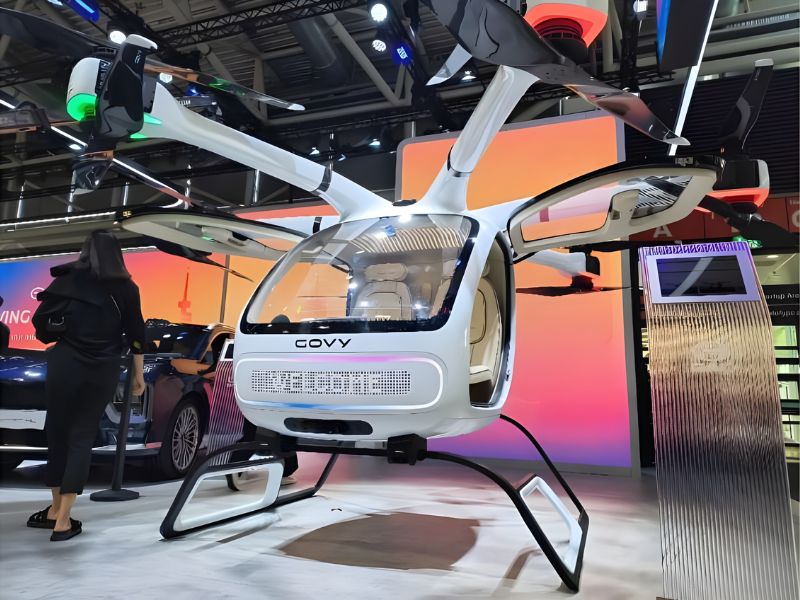
    Image Credits:The Govy AirCab two-seater electric ‘flying car’, made by a subsidiary of

    From flying cars to robots and autonomous buses, these are some of the innovations showcased at this week’s Munich auto fair, IAA Mobility — one of the world’s largest.

    Chinese automakers highlighted their push into “flying cars” — compact electric aircraft equipped with multiple rotors and intended for short-distance travel.

    We want to give the car wings,” said Wang Tan, co-founder of Xpeng’s aeronautics division.

    A car with wings for 2026

    Xpeng presented its Land Aircraft Carrier, an electric vehicle that houses a fold-out, two-seat aircraft. The model is expected to enter mass production in 2026 and retail in China for under 2 million yuan ($281,000). According to Wang, potential uses include rescue operations in hard-to-reach areas, such as congested roads or high-rise buildings.

    Another entrant, GAC’s flying car subsidiary Govy, unveiled the AirCab, a two-seat autonomous electric aircraft capable of speeds up to 120 km/h with a maximum range of 30 km.

    It’s quieter than a helicopter and better suited to everyday needs,” said Govy spokesperson Li Shuhan. “It’s also more affordable.”

    Customers have already pre-ordered about 1,500 AirCabs at 1.68 million yuan each.

    The Go2 robot dog wears yellow fur, googly eyes, and a red felt tongue, giving it a playful look — but it does much more than entertain.

    Image Credits: Germany’s Holon was showcasing a small, self-driving electric bus.

    For hazardous tasks, robots are essential,” said Todd Zhang of Eve Energy, the Chinese battery manufacturer behind the Go2, which is produced by fellow Chinese firm Unitree Robotics.

    In the future, robotic dogs will take on dangerous environments instead of people,” he added.

    Eve Energy also counts German automakers such as BMW and Porsche among its clients, underscoring China’s strong hold on the electric vehicle supply chain.

    Europe’s answer to innovation

    Determined to prove that Europe can innovate as well, Austrian entrepreneur Wolfgang Podleiszek is developing a quirky two-wheeled electric car that operates like a Segway, requiring drivers to lean into turns.

    We wanted to send a message from Europe — that we can dream again and create something fresh and inventive,” he said.

    Podleiszek launched Wolf eMobility last year and is currently seeking investors at the auto show to fund the building of a prototype.

    Once people get the chance to try it and experience how enjoyable it is, I believe everything else will fall into place,” he added.

    Image Credits: A plastic mock-up of the Wolf etu, a two-wheeled electric concept car.

    Podleiszek’s small startup, however, faces legal pressure from German heavyweight Volkswagen, which has taken the company to court, arguing that the name “Wolf” is too close to its Golf model. Still, Podleiszek insists that “our chances are not bad” in the case.

    Holon and Auve Tech showcase mini autonomous shuttles

    Meanwhile, other firms showcased compact autonomous buses designed for routes where running larger, driver-operated buses would be too costly. German company Holon and Estonia’s Auve Tech were among the exhibitors.

    Auve Tech already has 25 vehicles in operation — 20 of them in Japan — thanks in part to a strong government push, co-founder Johannes Mossov told AFP.

    With an aging population, it makes sense,” he explained. “Public transport has to be more accessible for people who no longer want to drive or walk long distances.”

    Europe will face the same reality in 10 to 15 years,” Mossov added.

    At the fair, Chinese EV manufacturer Xpeng unveiled its humanoid robot, known as Iron.

    More than 30 ‘Iron’ robots in training for production and retail

    More than 30 units are currently in training — most on the company’s production line, with a few assisting in showroom sales.

    We aim to have robots working on the production line by the end of this year,” Xpeng’s head of robotics, Shi Xiaoxin, told AFP.

    By late next year, he added, they will likely be interacting directly with customers.

    Iron is taught through motion sensors worn by employees, which capture and analyze human movements.


    Read the original article on: Techxplore

    Read more: ORNL Confronts the Control Challenges of Nuclear Rocket Engines

  • Delivery Robots Hit the Streets in Swiss Post Initiative

    Delivery Robots Hit the Streets in Swiss Post Initiative

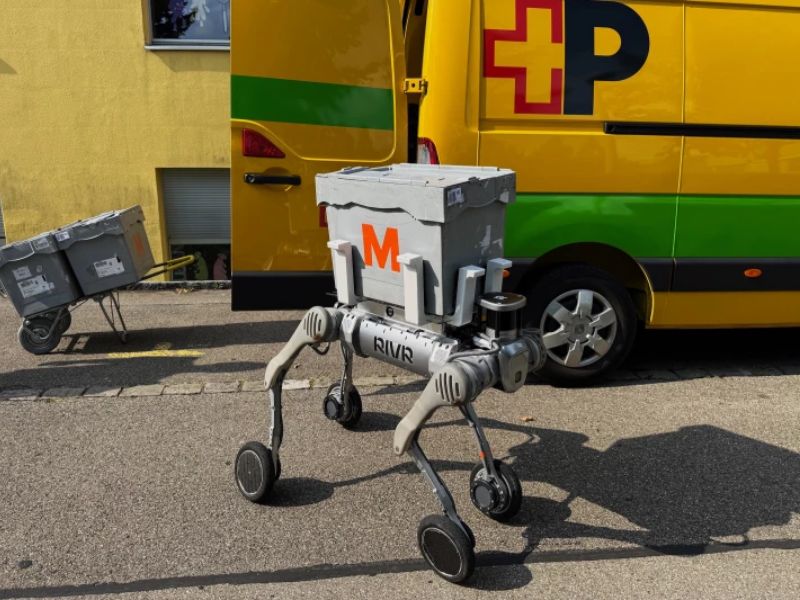
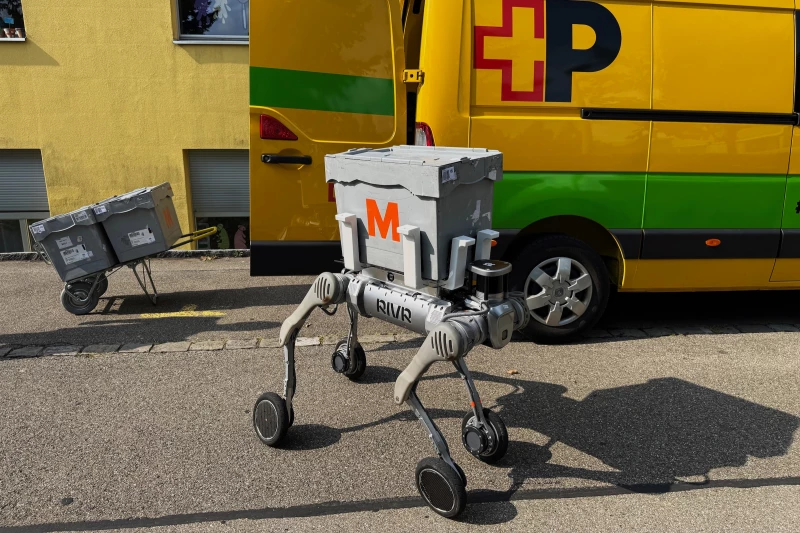
    Residents of Regensdorf, Switzerland, may soon receive their parcels from robots. The municipality has become the testing ground for a new pilot project launched by Swiss Post, online grocer Migros Online, and robotics company RIVR.
    Image Credits: The RIVR ONE can carry up to 30 kg (66 lb) of cargo from delivery vans to clients’ doorsteps
    RIVR

    Residents of Regensdorf, Switzerland, may soon receive their parcels from robots. The municipality has become the testing ground for a new pilot project launched by Swiss Post, online grocer Migros Online, and robotics company RIVR.

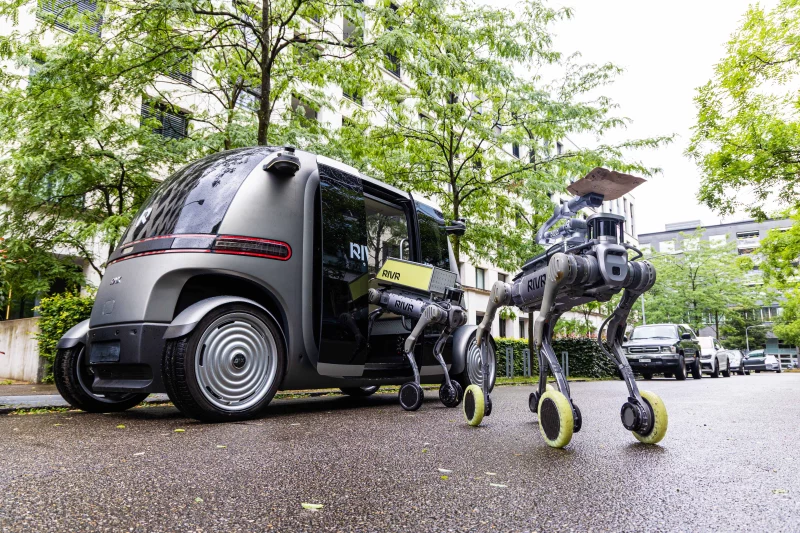
    Readers may recall the ANYmal robot, a project developed at ETH Zurich in Switzerland. The quadruped robot uses four legs equipped with wheels instead of standard foot pads.

    Robots switch between walking and rolling for versatile mobility

    When the wheels are locked, they function like rubber-soled feet, enabling the robot to climb stairs, step over obstacles, and traverse uneven ground. When unlocked, the wheels spin freely, letting the robot move quickly and efficiently over smooth, flat surfaces like pavement—much faster and with less energy than walking.

    RIVR ONE is the commercialized version of ANYmal, created by ETH spinoff RIVR (previously Swiss-Mile). Equipped with sensors such as LiDAR, optical cameras, and GPS, it can navigate city streets autonomously, avoid obstacles, and transport cargo securely in its onboard locked box.

    Image Credits:RIVR ONE can also carry smaller items via a back-mounted arm
    RIVR

    In the latest Regensdorf trial, RIVR ONE robots will ride along in Swiss Post delivery vans before transporting select Swiss Post parcels and Migros Online grocery orders from the vans directly to customers’ doorsteps.The robots deliver autonomously, while human supervisors stand by to intervene if needed.

    Swiss Post tests robots to ease workloads, maintain quality

    This project allows us to explore how autonomous delivery systems can support both our staff and operations,” explains Pascal Stalder, Project Lead at Swiss Post. “We’re particularly focused on reducing walking distances and heavy lifting, all while maintaining the level of service our customers rely on.”

    This isn’t RIVR ONE’s first real-world deployment. Earlier this year, the robots delivered restaurant meals in Zurich (see video below) and also handled parcel deliveries in Austin, Texas.


    Read the original article on: New Atlas

    Read more: Sunlight Alone Keeps These Tiny Aircraft Aloft

  • Why are We so Fascinated with Making Robots Dance?

    Why are We so Fascinated with Making Robots Dance?

    We’ve tamed fire, split the atom, and launched ourselves beyond Earth. We’ve created machines that surpass our intelligence, gadgets that can make our meals, and instruments precise enough to open our bodies for life-saving surgery. All of that is remarkable. Traveling through space is awe-inspiring, no doubt … but it doesn’t mirror who we are. It doesn’t carry the essence of being human.
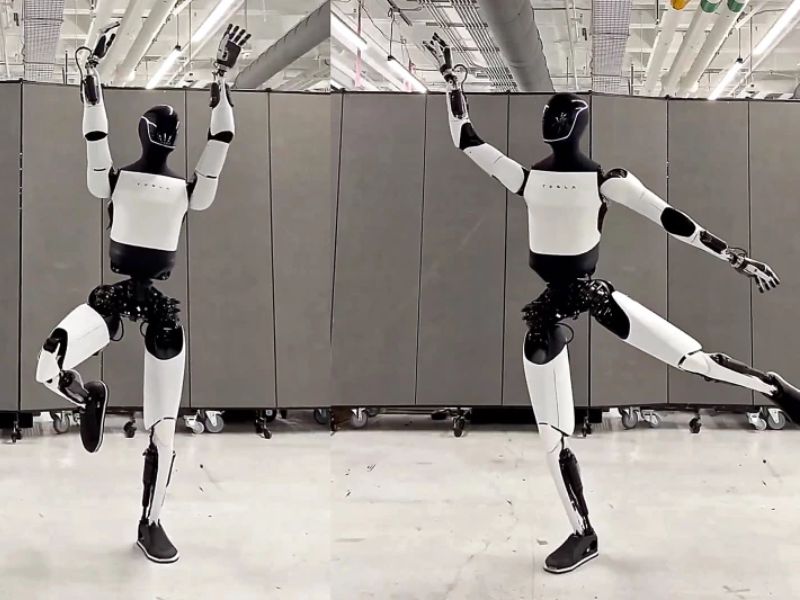
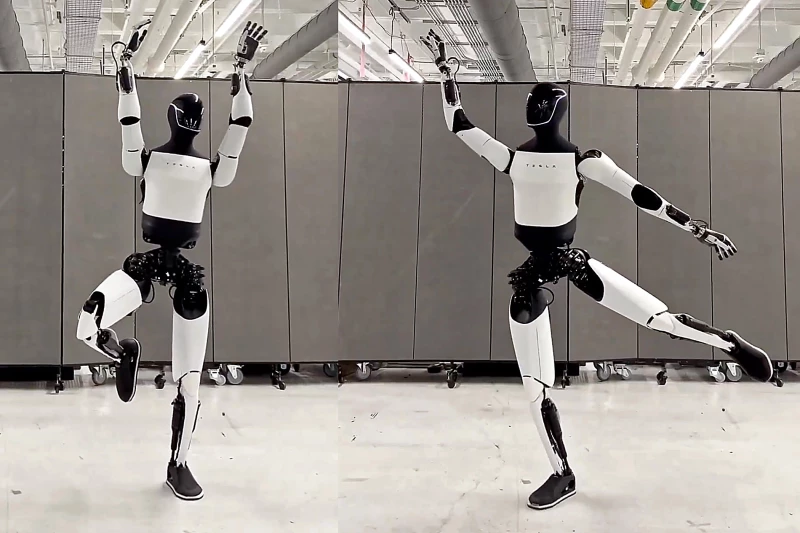
    Image Credits: The Tesla Optimus just might have the best moves yet 
    Tesla

    We’ve tamed fire, split the atom, and launched ourselves beyond Earth. We’ve created machines that surpass our intelligence, gadgets that can make our meals, and instruments precise enough to open our bodies for life-saving surgery. All of that is remarkable. Traveling through space is awe-inspiring, no doubt … but it doesn’t mirror who we are. It doesn’t carry the essence of being human.

    So, what comes next? Naturally, it’s teaching humanoid robots to move the way we do—through dance. And dancing isn’t unique to humans, either. Take Birds of Paradise: their mating displays are so elaborate that people gather in groups just to witness them. Males fan out their feathers and perform rhythmic steps to win over potential mates—remarkably similar to our own behavior.

    Credits:Rare Footage of New Bird of Paradise Species Shows Odd Courtship Dance | Nat Geo Wild

    The Manakin might even outshine Michael Jackson when it comes to moonwalking, while Australia’s Peacock Spiders put on performances as dazzling as their colorful costumes.

    And it’s not just birds—bugs dance too. For insects, though, the moves are more geometry than groove. Honeybees, for instance, use a “waggle dance” to point their hive-mates toward food in relation to the sun—like a tiny, fuzzy Pythagoras shaking its hips.

    Credits:Bee Dance (Waggle Dance)

    “The best case for building robots in a human shape is that our world is already designed around us. Humanoid robots can slip right into our spaces, adapt to what’s already here, and be repurposed with little friction,” explains Humanoid, the company behind the HMND 1.

    It’s a fair point. The human form also makes it easier for us to project feelings onto these machines—for better or worse. I’ve even been a little touched by some clips, like one from 1X showing its Neo Gamma robot doing chores, looking oddly forlorn as people around it barely notice.

    But when a humanoid robot starts dancing? That’s a whole different energy—fun, joyful, and yes, just a bit uncanny. Few things capture the essence of being human as much as dance does.

    Before Robots, There Were Puppets on Pulleys

    Of course, dancing robots aren’t new. For decades, animatronics have been programmed to entertain us. Disney’s It’s a Small World ride, first shown at the 1964 New York World’s Fair before moving to Disneyland in 1966, is basically an endless parade of little puppet-like figures shimmying on hydraulics and pulleys. And Chuck E. Cheese’s Pizza Time Players have been both delighting and terrifying kids since 1977.

    Fast-forward sixty years, and the tech landscape looks completely different. Now we’re talking about onboard CPUs and GPUs, reinforcement learning, physics simulations, proprioception, computer vision with real-time recognition, SLAM navigation, gyros, accelerometers, tactile sensors, microcontrollers, efficient servos, and batteries that last for hours.

    One of the first big pop-culture moments I remember was back in 2005, when Beck’s Hell Yes video showcased a swarm of Sony QRIO robots tearing up the dance floor. At the time, it was jaw-dropping. The QRIO—short for “Quest for cuRIOsity”—stood just two feet tall, weighed 16 pounds, had 38 degrees of freedom, and could run, jump, walk, and most importantly, dance. But they were never sold to the public, and by 2006, the project was abruptly discontinued.

    Credits:Beck – Hell Yes (Official Music Video)

    In 2008, Aldebaran Robotics made a splash with the release of the NAO robot. Designed primarily for education, it quickly found roles in therapy, autism support, and STEM learning. Standing 22.8 inches (58 cm) tall, weighing 11.9 pounds (5.4 kg), and equipped with 25 degrees of freedom, the NAO was marketed mainly to schools and research labs, with a price tag ranging from $7,000 to $15,000.

    While not fully open source, the robot could be programmed within set parameters. Almost immediately, users began hacking it into a dancing companion using Choregraphe, a drag-and-drop motion sequencing tool. The most iconic example? A NAO-robot version of Judson Laipply’s Evolution of Dance.

    Credits:Evolution Of Dance by NAO Robot

    By 2017, Toyota unveiled its T-HR3 robot—remarkably smooth in motion, even capable of performing graceful Tai Chi routines. The catch was that it wasn’t autonomous; instead, it mirrored the movements of a human wearing a control suit and VR headset. Still, it earned a spot on this list because it was among the first to achieve such human-like fluidity, offering a glimpse of what future robots might be capable of.

    Credits:Demonstration of T-HR3 robot by Toyota at iRex17 (part 2 of 2) [RAW VIDEO]

    In late 2020, Boston Dynamics stole the spotlight. While much of the world was stuck at home in lockdown, Spot, Atlas, and Handle broke out into the mashed potato, the twist, and a full choreographed routine set to The Contours’ 1962 classic Do You Love Me? The video racked up around 42 million views, leaving audiences stunned.

    The first-generation Atlas—a 4-foot 11-inch (1.5 m), 176-pound (80 kg) humanoid robot powered mostly by hydraulics—moved so convincingly that even years later, some people still insist the footage was CGI. It wasn’t. In fact, pulling off that routine actually exposed weaknesses that pushed Boston Dynamics to upgrade Atlas. And let’s not forget, Atlas was also the first humanoid robot to successfully land a standing backflip back in 2017.

    Credits:Do You Love Me?

    Since then, the pace has only accelerated.

    China’s Unitree made waves with the G1—a 4-foot 4-inch (1.3 m), 77-pound (35 kg) humanoid boasting up to 43 degrees of freedom, 3D LiDAR, functional hands, and jaw-dropping agility. It was the first humanoid to land a front flip, the first to pull off a backflip without hydraulics, and it can spring up from its back like a trained martial artist. Oh, and of course—it dances. Honestly, better than I can.

    Credits:What Dance Would You Like to Perform with Unitree G1?

    The real spark for this whole piece came from Tesla’s Optimus.

    Milan Kovac, Tesla’s former VP of Optimus Engineering, shared a clip of the robot showing off reinforcement-learning dance moves—executed “zero-shot” from simulation to the real world. In other words, it practiced the routine virtually, then pulled it off flawlessly on the first attempt in real life. That’s like picturing yourself performing Swan Lake while lounging on the couch, then standing up and actually nailing it.

    When Robots Start to Dance Gracefully

    It was a short clip, but watching Optimus pull off a simple ballet move floored me. I’d never seen a humanoid robot attempt genuine ballet before, and it felt like a milestone—a real leap in robotic ability. Huawei did a partial ballet collaboration back in 2021, but this was operating on an entirely different level.

    Curious, I asked my wife—who’s staunchly anti-AI and anti-robot—what she thought. Her response was blunt: “Why are we making robots like humans? I don’t like it.” Judging by the flood of similar comments on YouTube, she’s not alone.

    And yet … here we are.

    From QRIO to Optimus, humanoid robots have danced their way into the cultural spotlight. But they’re no longer just novelties—today’s humanoids are advanced platforms backed by hundreds of millions in R&D. Building a single unit can run well over $100,000. They move with a balance, fluidity, and precision that sometimes makes us look awkward by comparison. Teaching these machines to waltz, break into the running man, or even execute a plié isn’t just about spectacle—it’s about pushing the boundaries of movement, AI, and human-robot interaction.

    So maybe choreographing robots isn’t the next grand leap in technology … but it might just be the most human step we’ve taken.


    Read the original article on: New Atlas

    Read more:See Spot Backflip: Robodog Achieves an Unexpected Feat

  • Robots Gain Touch and Proximity Awareness Through Vision-Enabled Arms

    Robots Gain Touch and Proximity Awareness Through Vision-Enabled Arms

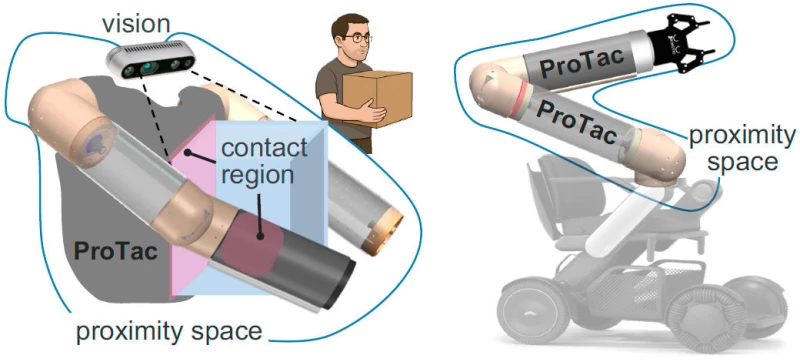
    The ProTac system uses in-arm cameras for both proximity sensing (left) and tactile sensing (lower right)
    Van Anh Ho from JAIST

    For robots to interact safely with humans, they must recognize when a person is nearby and detect when physical contact occurs. A newly developed system enables them to handle both tasks by placing cameras inside their arms.

    Introducing the ProTac System

    Prof. Van Anh Ho, Dr. Quan Khanh Luu, and their team at the Japan Advanced Institute of Science and Technology (JAIST) are advancing an approach called ProTac (short for Proximity and Tactile sensing).They integrated the technology into a cylindrical robotic arm segment known as the ProTac link, but they could also adapt it to other robotic components.

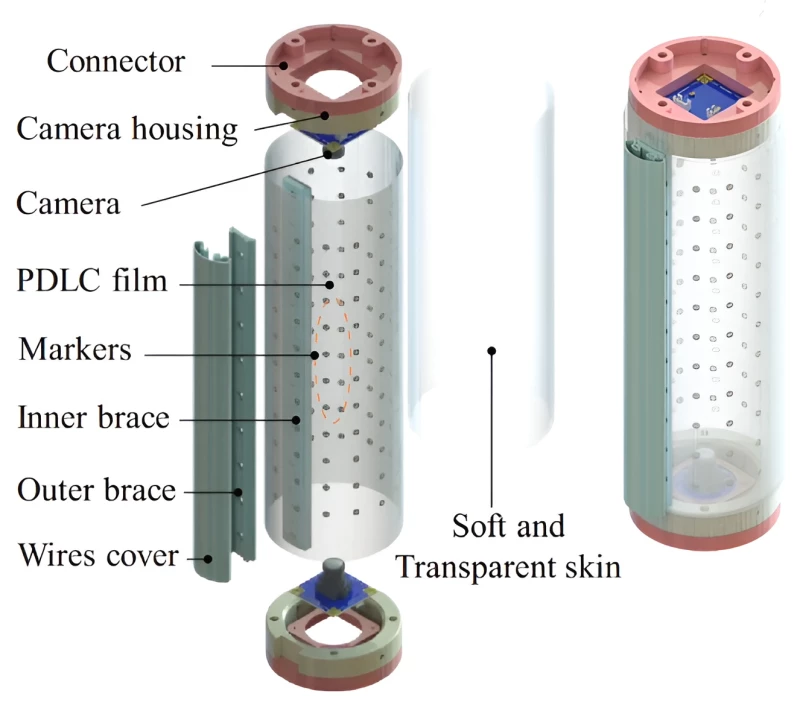
    This arm section is hollow and wrapped in a soft, transparent polymer skin. On top of it lies a flexible layer of polymer-dispersed liquid crystal (PDLC). By applying voltage, the PDLC can rapidly shift between transparent and opaque states. Beneath it sits a series of marker dots that remain opaque at all times.

    Embedded Camera System

    Two stereo cameras, placed at either end of the arm, capture visual data along its interior.

    A diagram of the ProTac link
    Van Anh Ho from JAIST

    When the PDLC is transparent, the vision system allows the cameras to look outward and identify objects in the environment.If the robot detects a person approaching, it either pauses its movement to avoid harm or adjusts its path to prevent contact.

    Sensing Touch Through Opacity

    When the PDLC turns opaque, the cameras only see the dots against a dark background. A touch on the flexible surface alters the spacing of those dots at the point of pressure, enabling the system to identify where the contact occurred and estimate its force.

    Additionally, ProTac can operate in a “flicker mode,” where the PDLC switches rapidly between clear and opaque. This lets the system alternate between monitoring approaching objects and detecting touch, effectively combining both sensing abilities at once.

    ProTac could also be used by robots that are designed to lift objects, letting them know how much pressure they’re applying
    Van Anh Ho from JAIST

    “ProTac can enhance robotic dexterity in environments where both safety and gentle handling are crucial,” explains Dr. Luu.

    The team’s findings were recently detailed in the journal IEEE Transactions on Robotics.

    T-RO: Vision-based Proximity and Tactile Sensing for Robot Arms: Design, Perception, and Control

    Read the original article on: New Atlas

    Read more: Robotics Combined with Virtual Reality Allows Seamless, Natural Engagement

  • Robots With a Unified Mind: The Rise of Shared Intelligence

    Robots With a Unified Mind: The Rise of Shared Intelligence

    As automation rapidly progresses, robot collaboration has moved beyond science fiction. Picture a warehouse where dozens of machines move goods without crashing, a restaurant where robots deliver meals to the right tables, or a factory where robot teams instantly adapt their tasks to meet changing demand.
    Image Credits: Pixabay

    As automation rapidly progresses, robot collaboration has moved beyond science fiction. Picture a warehouse where dozens of machines move goods without crashing, a restaurant where robots deliver meals to the right tables, or a factory where robot teams instantly adapt their tasks to meet changing demand.

    Open-Source ROS2 Framework Brings Collaborative Robotics to Life

    This vision is becoming reality through an open-source framework built on ROS2, which enables multiple robots to collaborate intelligently, flexibly, and safely. The research was recently published in IEEE Access.

    Turning theory into practice requires studying how robots learn to navigate collectively. Successful collaboration depends on their capacity to communicate and make real-time decisions. The system incorporates three key elements:

    Autonomous navigation: Each robot computes the best routes using GPS-like algorithms adapted for dynamic environments. With simulation tools such as GAZEBO, they first train in virtual settings before operating in the real world. When faced with unexpected obstacles—like a fallen box—they immediately recalculate their route.

    Adaptable behavior: The system relies on “behavior trees,” which act like a dynamic set of instructions. For instance, if a robot gets stuck, it will first attempt to turn, then back up, and if the issue continues, it asks the central system for assistance. This method not only avoids collisions but also makes the system scalable—from just two robots in a lab to dozens in a factory.

    Computer vision and task allocation: Acting as the eyes and brain of the collaborative setup, this component ensures robots know both their position and their assigned tasks. It combines two key technologies: ArUco markers—similar to QR codes, small printed symbols placed in the environment that serve as reference points—and distributed cameras that track these markers, calculating each robot’s location with an accuracy of under 3 cm.

    It’s as though the robots maintain a continuously refreshed internal map. The second technology is smart task assignment: the system dispatches the nearest available robot, much like a courier selecting the quickest route. If one robot breaks down, another seamlessly takes over, ensuring operations continue without interruption.

    Scalable, intelligent, and ready for any industry. Image Credits: Francisco Yumbla/ESPOL

    Simulated Warehouses, Restaurants, and Labs Put Collaborative Robots to the Test

    To test the system, researchers simulated a variety of complex scenarios. Into industrial warehouses, robots transported packages between ArUco-marked stations while avoiding traffic jams. In restaurants, machines delivered meals to specific tables, coordinating to prevent collisions in tight hallways. In laboratories, diverse teams—including small robots and robotic arms—collaborated to carry out experiments.

    The results were impressive: robots located themselves with an average error margin of just 2.5 cm. The system also proved highly resilient—when one robot failed, another seamlessly took over its task within seconds.

    Scalability, often a challenge in robotics, was also demonstrated, as the framework functioned equally well with five robots as with 15, adapting smoothly to different environments.

    Because it is open-source and built on ROS2, a widely adopted platform, the system is accessible to any organization. Hospitals could program robots to deliver medications, logistics hubs could optimize package flow, and museums could deploy autonomous tour guides. At the same time, it reduces reliance on humans for repetitive duties, freeing staff for more strategic tasks.


    Read the original article on: Tech Xplore

    Read more: A Wheel-Legged Robot Moves with Improved Efficiency Across Different Types of Environments

  • Tooth Sensitivity Might One Day be Treated Using Tiny Robots Inside your Mouth

    Tooth Sensitivity Might One Day be Treated Using Tiny Robots Inside your Mouth

    A microscope image of compromised dentin tubules that have been protectively plugged by the CalBots
    Shanmukh Peddi, Debayan Dasgupta

    Dealing with hypersensitive teeth can be a real nuisance, causing pain when eating or drinking anything hot, cold, sweet, or acidic. Researchers are now developing tiny “robots” that actively seal the microscopic channels in teeth, offering lasting relief from sensitivity.

    Building on earlier work, CeNSE scientists are developing “CalBots”—400-nanometer magnetic nanoparticles infused with a calcium-silicate bioceramic.

    Guided by magnets, CalBots navigate dentin tubules to reach nerve endings deep within the tooth

    Researchers apply CalBots to the tooth surface and guide them into tiny fluid-filled channels—called tubules—using an external magnetic field. These tubules run through the dentin layer of the tooth and connect directly to nerve endings in the pulp.

    Under normal conditions, the tooth’s enamel seals these tubules, preventing contact with substances in the mouth. But when enamel wears away, hot, cold, sweet, or acidic foods can enter the tubules, causing fluid movement that stimulates nerve endings and results in pain.

    While desensitizing toothpastes can offer temporary relief, CalBots aim for a lasting solution. The bioceramic forms a cement-like barrier 300–500 micrometers deep, mimicking enamel and blocking irritants.

    Initial tests on extracted human teeth and mice show CalBots effectively seal tubules and reduce tooth sensitivity within minutes

    The researchers first tested this approach on human teeth extracted for medical reasons. In just 20 minutes, CalBots formed stable plugs in tooth tubules. Treated mice with tooth sensitivity began drinking cold water again, showing promising results.

    This is a powerful example of the potential of nanorobotics and the major role they could play in the future of healthcare,” says Prof. Ambarish Ghosh of CeNSE, a corresponding author of the study. “We’re looking forward to advancing this technology toward clinical application.”

    The CalBot technology is being brought to market by Theranautilus, a spinoff company, and the research has been detailed in a recent publication in the journal Advanced Science.


    Read the original article on: New Atlas

    Read more: Hubble Network Plans Satellite Upgrade for Global Bluetooth Coverage

  • IFR Analyzes Global Trends in the Adoption of Humanoid Robots

    IFR Analyzes Global Trends in the Adoption of Humanoid Robots

    Humanoid robots have been drawing considerable attention in the robotics field over the past few years. Across the globe, robotics firms, private investors, and governments are actively working to refine this technology and find the most suitable applications for it.
    Image Credits:.therobotreport

    Humanoid robots have been drawing considerable attention in the robotics field over the past few years. Across the globe, robotics firms, private investors, and governments are actively working to refine this technology and find the most suitable applications for it.

    “Futuristic humanoids in homes and workplaces capture public interest,” said Takayuki Ito, president of the IFR. “Since our world is built for humans, adaptable robotic assistants are a natural fit.

    However, he noted, It’s still unclear when or if humanoids will see widespread adoption. Humanoids likely won’t replace current robot models—they’ll enhance and build on today’s robotics technology instead.

    China Sets Production Targets as U.S. and Europe Invest Heavily

    China, currently the leading market for industrial robots, has outlined goals for large-scale production of humanoids. At the same time, U.S. and European tech firms are securing major investments with the aim of developing multipurpose robots that replicate human movement.

    The IFR has published a report titled Vision and Reality, which explores current developments, possibilities, and challenges in the evolving field of humanoid robotics.

    In the United States, major tech players like NVIDIA, Amazon, and Tesla are making substantial investments in artificial intelligence and robotics. In addition to military support, private capital is driving the growth of numerous startups working on humanoid robots.

    According to the International Federation of Robotics (IFR), there is significant interest in deploying humanoid robots in logistics and manufacturing. These robots are primarily viewed as tools to boost productivity and efficiency, rather than as social companions. The focus in the U.S. is on functional, real-world applications, not social integration.

    China Prioritizes Humanoids in National Tech Strategy with Focus on Service Industries

    In contrast, China has made humanoid robots a central pillar of its national technology strategy. The government aims to highlight its technological strengths and global competitiveness by advancing humanoid development, particularly in customer-facing roles in the service sector.

    The IFR noted that using humanoids in China to automate production lines and reduce dependency on human labor appears to be of secondary importance. A core element of China’s strategy involves building a scalable domestic supply chain for essential components.

    Japan, a long-standing leader in humanoid robotics, introduced one of the earliest examples with Honda’s Asimo in 2000. The IFR noted that Japan often treats robots as companions rather than just machines. Schools, retail spaces, and elder care facilities use socially focused humanoids like Pepper and Palro to address the needs of an aging population. Japan’s focus is on integrating robots harmoniously into society. Companies like Kawasaki are developing humanoids for research and development purposes.

    In Europe, the ethical dimensions of robotics and AI are a key concern, according to the IFR. There is a strong emphasis on collaborative robots designed to work safely alongside humans in industrial environments. The European approach centers on improving safety, enhancing human productivity, and complementing human labor — not replacing it.

    European companies are also prioritizing human-centered design and assessing the social impact of robotics. There is a measured and cautious approach to deploying humanoids for automation in manufacturing and service industries, especially in the near to medium term.

    Explore the Future of Humanoid Robotics at RoboBusiness 2025

    Be sure to attend RoboBusiness 2025, taking place on October 15–16 in Santa Clara, California. The event will feature sessions on humanoid robot development, including the keynote “Lessons Learned from First Humanoid Deployments,” with speakers Katlyn Lewicke of GXO Logistics and Jim Fan of NVIDIA.

    The humanoid-focused sessions at RoboBusiness will also cover topics such as:

    • “Humanoids for Real Applications: Mastering Safety and Performance,” presented by Nikolai Ensslen, CEO of Synapticon
    • Advancements in Humanoid Actuation,” with Jordan Schaeffler, strategic business development engineer at Novanta
    • Integrating Behavioral Science into Humanoid Design,” led by Ram Devarajulu, VP and head of robotics for North America at Cambridge Consultants

    RoboBusiness will also offer tracks on physical AI, enabling technologies, and robot design best practices. Attendees can expect over 60 expert speakers, a startup workshop, the annual Pitchfire competition, and ample networking opportunities.

    More than 100 exhibitors will be present to showcase cutting-edge products, technologies, and services. Registration for RoboBusiness 2025 is now open.


    Read the original article on: The Robot Report

    Read more: Machines Mimic Human Motions to Prevent Slipping

  • Single-Material Electronic Skin gives Robots Near-Human Feel

    Single-Material Electronic Skin gives Robots Near-Human Feel

    Image Credits: Inovacaotecnologica

    Replicating the touch and sensitivity of human skin—known as robotic touch—might not require advances in flexible electronics or the integration of thousands of miniature sensors.

    Researchers have developed a new type of robotic skin that is low-cost, durable, and highly sensitive. This innovative skin delivers exceptional precision and fits onto robotic hands like a glove.

    Moldable Conductive Polymer Offers Versatile Foundation for Robotic Skin

    David Hardman and his team at the University of Cambridge and University College London created a conductive polymer they can melt and mold into complex shapes.

    Although it doesn’t match the sensitivity of human skin, the material can process signals from over 860,000 microscopic channels, enabling it to detect various types of touch and pressure—such as a finger’s contact, temperature differences, cuts or punctures, and multiple simultaneous touches.

    Remarkably, all of this is achieved using a single material, greatly simplifying the design. By reading physical inputs, this tech helps robots interact more like humans.

    Most current robotic touch technologies rely on small, localized sensors and require separate components to detect different kinds of touch. In contrast, the newly developed electronic skin functions as a single, unified sensor—closer in function to human skin.
    Image Credits: University of Cambridge

    Most current robotic touch technologies rely on small, localized sensors and require separate components to detect different kinds of touch. In contrast, the newly developed electronic skin functions as a single, unified sensor—closer in function to human skin.

    One Material, Many Sensations

    Using different sensors for each type of touch makes the manufacturing process more complex,” explained David Hardman. “Our goal was to create a single material that could detect multiple types of touch at once.

    The researchers achieved this using a sensor material capable of multimodal sensing—responding differently to various forms of touch. Though pinpointing each signal is tricky, the materials are easier to make and more durable.overall.

    To interpret the signals, the team experimented with different electrode layouts to identify which configuration yielded the most detailed data. With only 32 wrist electrodes, they collected over 1.7 million data points from the hand via the material’s fine conductive network.

    From Gentle Contact to Physical Damage

    They tested the prototype with a variety of stimuli, including light touch, multiple simultaneous touches, heat exposure from a heat gun, and physical damage from a scalpel. Data collected from these tests was then used to train a machine learning model that can accurately interpret future touch inputs.

    Robotic skin hasn’t yet matched human capabilities, said Professor Thomas Thuruthel, but this is the most advanced and easiest to produce so far—and it works well across real-world tasks.


    Read the original article on: Inovacaotecnologica

    Read more:Your Dog Seems To Sense What’s On Your Mind

  • Humanoid Robots Symbolize China’s Ambitions in AI

    Humanoid Robots Symbolize China’s Ambitions in AI

    From serving craft beer and playing mahjong to stacking shelves and boxing, the dozens of humanoid robots at this weekend’s World AI Conference (WAIC) in Shanghai showcased China’s advancing AI capabilities and aspirations.
    Image Credits:Techxplore

    From serving craft beer and playing mahjong to stacking shelves and boxing, the dozens of humanoid robots at this weekend’s World AI Conference (WAIC) in Shanghai showcased China’s advancing AI capabilities and aspirations.

    China Showcases AI Progress at Annual Event Amid Push to Rival U.S. in Tech and Regulation

    The annual event serves as a platform to highlight China’s rapid advancements in artificial intelligence, as the government pushes to establish itself as a global leader not only in AI technology but also in its regulation—closing in on the United States.

    At the event’s opening on Saturday, Premier Li Qiang announced plans to create a new body focused on international cooperation in AI governance, emphasizing the need to balance innovation with potential risks.

    Yet just next door, inside the vast expo hall, the atmosphere was far more energetic than cautious.

    Surging Demand Fuels AI Growth Across Sectors, Says Transwarp R&D Director

    There’s strong demand right now—across data, use cases, model training, and infrastructure,” said Yang Yifan, R&D director at Shanghai-based AI platform Transwarp. “The energy in every area is high.

    This year’s WAIC follows a major milestone in Chinese AI: the January debut of startup DeepSeek’s AI model, which matched top-performing U.S. systems at a significantly lower cost.

    According to organizers, the forum featured over 800 companies and more than 3,000 products, with the humanoid robots and their quirky, almost theatrical demonstrations stealing the spotlight.

    Image Credits:Organizers said the forum involved more than 800 companies, showcasing over 3,000 products — the undeniable crowd pleasers being the humanoid robots.

    At one exhibit, a robot awkwardly drummed—slightly off rhythm—to Queen’s “We Will Rock You,” while a man in safety gear energized a laughing crowd.

    Elsewhere, robots dressed in work uniforms or baseball caps operated assembly lines, challenged humans in games of curling, or clumsily poured soft drinks from dispensers.

    Though many of the robots still moved with some stiffness, their growing sophistication compared to previous years was unmistakable.

    China’s Government-Backed Robotics Push May Give It an Edge Over the U.S., Experts Say

    Robotics has received significant backing from the Chinese government, with some experts suggesting China may already hold an edge over the U.S. in this field.

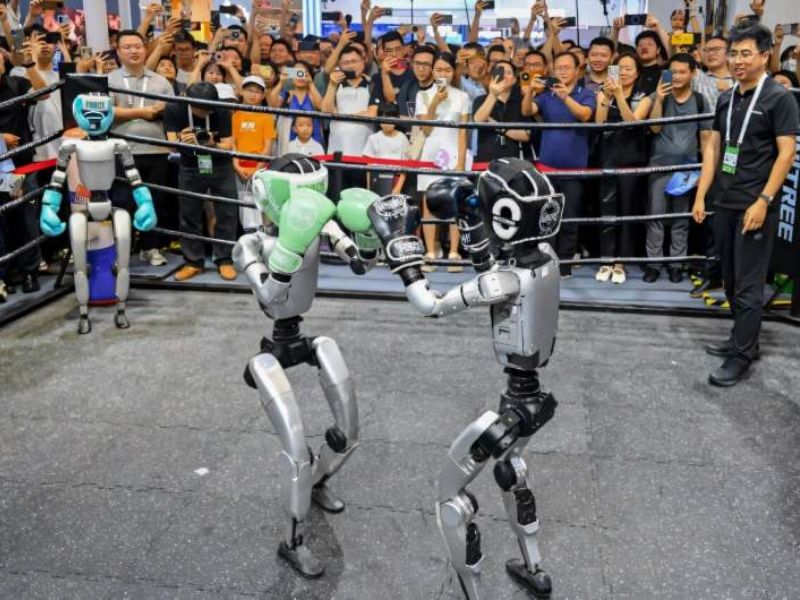
    At the booth of Hangzhou-based Unitree, its G1 android—about 130 centimeters tall with a two-hour battery life—demonstrated impressive balance while kicking, pivoting, and throwing punches as it shadowboxed inside a ring.

    Just before the conference began, Unitree also announced plans to release a full-sized humanoid robot, the R1, priced under $6,000.

    Image Credits:While most of the machines on display were still a little jerky, the increas

    Most cutting-edge assistants don’t require physical form.

    At the expo, AI-powered virtual companions—taking the shape of middle-aged businessmen, scantily dressed women, and ancient warriors—greeted visitors from screens, asking about their day. Other booths featured demos where attendees could design their own digital avatars.

    Baidu Unveils Next-Gen AI “Digital Humans” Capable of Decision-Making and Collaboration

    On Saturday, tech giant Baidu unveiled the latest generation of its “digital human” technology—AI-driven personas modeled on real individuals, which the company claims can think, make decisions, and work collaboratively.

    Baidu recently hosted a six-hour e-commerce livestream led by digital replicas of a popular streamer and another avatar. According to the company, the AI hosts outperformed the human streamer’s debut in several product categories.

    More than 10,000 businesses already use this technology daily, said Wu Chenxia, head of the department, speaking to AFP.

    Image Credits:People watch a robot performing tasks at an exhibition during the World

    When asked about AI’s impact on employment—a key concern surrounding its widespread use—Wu emphasized that AI should be viewed as a tool designed to enhance quality and efficiency, while still relying on human involvement.

    In China, the adoption of AI in daily life is gaining momentum.

    Baidu Approved to Launch Robotaxis in Central Shanghai’s Pudong

    At WAIC, Baidu also revealed it had received approval to launch fully autonomous robotaxi services in parts of Shanghai’s vast Pudong district—marking the service’s first expansion into the city center.

    At the expo, however, few attendees appeared concerned about the implications of the agile, back-flipping robotic dogs they eagerly watched.

    China has a relatively strong data foundation and a wide range of real-world applications for AI,” noted Yang from Transwarp.


    Read the original article on: Techxplore

    Read more:Primitive Cell Structures May Have Formed in the Lakes on Saturn’s Moon Titan