Image Credits:When post-surgery weight loss is suboptimal, introducing one of the newer weight loss drugs can help Depositphotos original extended using Firefly
Some patients don’t reach weight-loss goals after bariatric surgery, but daily liraglutide injections may help them lose more weight and reduce the need for repeat surgery.
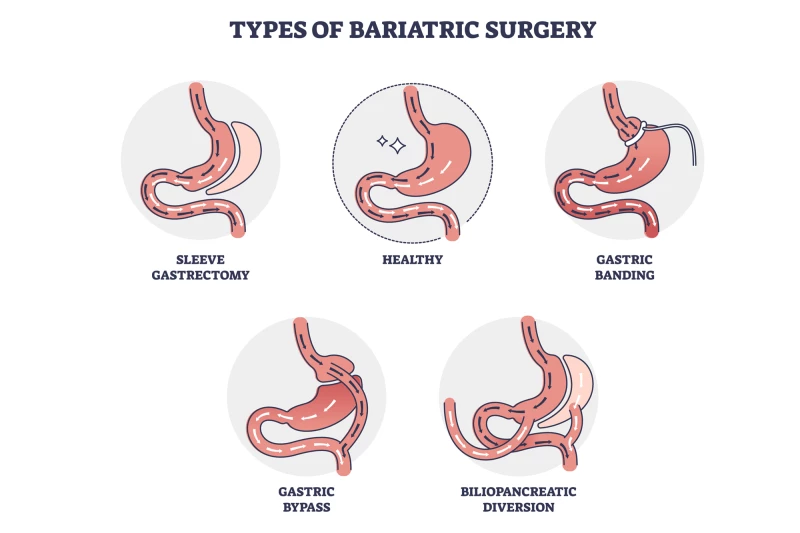
Bariatric surgery is highly effective for most with moderate-to-severe obesity, producing lasting weight loss and major health improvements, including remission of diabetes, hypertension, and sleep apnea.
Addressing Weight-Loss Plateaus with Liraglutide
However, about 15% of patients don’t lose as much weight as expected, which also limits the health benefits they gain. An Australian study now suggests that the newer injectable GLP-1 medication liraglutide may offer additional help.
“For patients regaining weight after bariatric surgery, adding medication can help, often at a lower dose,” said Professor Wendy Brown, MD, PhD.
Image Credits: Types of bariatric surgeries Depositphotos
“We show patients usually don’t need the full dose of obesity medication after bariatric surgery, without affecting quality of life,” Brown said. “This could help avoid risky repeat surgery.”
The study involved 48 adults (20–65) whose weight loss 12–36 months post-bariatric surgery was below expectations. They received daily liraglutide (up to 3 mg) or placebo, with 12-month weight change as the main outcome and health markers and quality of life as secondary measures.
After 12 months, the liraglutide group lost 5.7 kg (12.6 lb) versus a 1.4 kg (3.1 lb) gain in the placebo group—a 7.1 kg (15.6 lb) difference, or 4.4% weight loss versus 1.4% gain.
Health Markers and Quality of Life
No notable differences were found between groups for blood sugar, cholesterol, or nutritional markers. Participants taking liraglutide saw a modest rise in diastolic blood pressure—from 78 to 82 mmHg. Quality-of-life scores showed small variations but no meaningful changes in overall wellbeing, mood, or eating/swallowing comfort.
Most participants didn’t reach the full 3-mg dose—averaging around 2.4 mg—but still saw meaningful weight loss. The study didn’t track why participants avoided higher doses, but researchers suggest they found it unnecessary or had mild GI symptoms. Liraglutide commonly causes nausea, vomiting, and diarrhea or constipation. The study excluded participants living over an hour away in case nausea required gastric band adjustments. Still, no serious side effects occurred, showing symptoms were generally mild and manageable.
Image Credits: The Roux-en-Y gastric bypass Wikimedia Commons/BruceBlaus CC BY 3.0
The researchers acknowledged several limitations in the study, including a small sample size and incomplete participation. Delays and early terminations caused by the COVID-19 pandemic and resulting drug shortages disrupted the study timeline. Most participants were women from a single center, and many didn’t reach the full liraglutide dose, leaving the impact of higher doses uncertain.
Potential of Liraglutide to Enhance Post-Surgery Outcomes
Despite limitations, liraglutide may help patients regaining weight after bariatric surgery, potentially avoiding risky repeat procedures. The study also suggests that introducing GLP-1 drugs before significant weight regain could enhance recovery outcomes. The findings suggest that combining medication with surgery could become standard for patients with partial bariatric surgery results.
“GLP-1 drugs can boost weight loss after bariatric surgery, offering hope,” said Professor John Wentworth, MD, PhD. “Even more effective, newer drugs are now available, which should help patients achieve better weight and health outcomes.”
“There are no shortcuts, but effective, evidence-based options exist,” said co-author Paul Burton, MD, PhD. “These findings support a personalized, long-term approach combining surgery, medication, and lifestyle support for lasting remission.”
Don’t believe the hype: Apple cider vinegar doesn’t have demonstrated weight-loss benefits Image Credits: Depositphotos
The authors, the wellness industry, and the journal publisher BMJ Group have been set back after they retracted a widely publicized study that helped fuel the rise of the apple cider vinegar (ACV) trend. Researchers found that the study, which suggested that consuming one to two teaspoons of ACV daily could lead to significant weight loss and metabolic benefits, contained ‘multiple errors’ and unverifiable results.
After growing concerns over the frequently cited study—ranging from journal letters to a formal review by BMJ’s content integrity team and independent statisticians—experts were unable to replicate its dramatic findings. They identified “implausible statistical values,” unreliable raw data, poor reporting practices, and the absence of prior trial registration. The authors consented to the retraction, attributing the issues to honest mistakes.
A journal spokesperson stated that the journal is retracting the paper because the authors couldn’t replicate their analyses and researchers found multiple errors. “The dataset provided by the authors also showed patterns inconsistent with random participant assignment and improbably small p-values, considering the limited sample size used in the study.”
Study Retraction Sparks Caution Despite Promising Weight-Loss Claims
Although the journal BMJ Nutrition, Prevention & Health removed the published study, a March 2024 news release release still presents its details. The study, a three-month trial examining ACV’s weight-loss effects, involved 120 participants assigned various daily dosages. According to the authors, participants experienced an average weight loss of 6–8 kg (13–17.6 lbs) and a BMI reduction of 2.7–3 points. Despite acknowledging certain limitations, the study’s striking results gained significant media attention.
At the time of the study’s publication, BMJ Nutrition, Prevention & Health co-owner Shane McAuliffe noted that while the intervention showed promise in terms of feasibility and effectiveness—potentially paving the way for future trials exploring broader applications—he urged caution in interpreting the findings. He emphasized that researchers should not generalize conclusions about apple cider vinegar’s independent effects, and he urged them to conduct further studies with more detailed dietary reporting to address possible confounding factors. Future studies, he added, should explore how ACV affects biochemical markers like lipids and blood glucose, beyond just weight loss.
Editor-in-chief Professor Martin Kohlmeier also admitted that the journal made a mistake by publishing a trial that the authors hadn’t prospectively registered, clearly violating its policies.
Reflecting on Publication Decisions and Challenges in Nutrition Research
“In retrospect, this was the wrong call,” he said. “However, the authors are from a scientific community that is underrepresented in nutrition research. The journal seeks to promote strong evidence, typically from clinical trials—though these are rare in nutrition science due to the complexity, scale, and time required to conduct them.”
Because of the challenges involved in conducting clinical trials, nutrition research often relies on observational studies that draw from large datasets like the UK Biobank—allowing only for the identification of correlations, not causal relationships.
Dr. Helen Macdonald, Publication Ethics and Content Integrity Editor at BMJ Group, stated: “While it may be tempting to promote what appears to be a simple and effective weight-loss solution, the study’s findings are currently unreliable. Journalists and others should stop referencing or using this study in any future reporting.”
Replication Failure and Expert Criticism Raise Doubts About Study’s Validity
A major concern with the study was the inability to replicate its results. Scientists consider replication a vital—though sometimes neglected—part of research, as it helps confirm the reliability of original findings. While replication failures can result from factors like human error, poorly documented methodologies, or other hard-to-control variables, the inability to verify results raises serious concerns about a study’s credibility.
In this case, independent experts raised concerns about the study’s data collection methods, lack of transparency, and the age of participants.
Dr. Rosemary Stanton OAM, a nutritionist and Senior Visiting Fellow at the University of New South Wales, pointed out: “One major issue is that the participants had an average age of 17 ± 5 years—meaning some were as young as 12. Some of them may still have been growing, which could naturally influence their weight. The study also claims that participants maintained their usual diets and logged their meals in a food diary, but no specific details were provided. Without that information, it’s impossible to know if participants ate less or changed their eating habits during the trial.”
Concerns Over Participant Stability and Flawed Statistical Analysis
Professor Helen Truby from The University of Queensland echoed these concerns, adding: “The participants weren’t weight-stable at the beginning, which suggests some may have already been trying to lose weight before starting the vinegar regimen. Because participants self-reported both their diet and physical activity, researchers can’t determine whether ACV or lifestyle changes actually caused the reported weight loss. Additionally, there’s no information on whether any participants were using weight-loss medications.”
Additional experts criticized the way the researchers analyzed their results, arguing that the statistical approach used did not adequately reflect the complexity of the data.
“They appear to have relied solely on t-tests, which are basic tools for comparison, but they should have applied more advanced models capable of evaluating both fixed and random effects,” explained Miguel Ángel Martínez González, Professor of Preventive Medicine and Public Health at the University of Navarra. Because participants self-reported both their diet and physical activity, researchers can’t determine whether ACV or lifestyle changes actually caused the reported weight loss. Furthermore, the researchers failed to detail the participants’ overall diets, including changes in calorie intake, or the consumption of fruits, vegetables, and ultra-processed foods.”
Study Limitations and Ongoing Debate Over Apple Cider Vinegar’s Weight Loss Effects
Dr. Evangeline Mantzioris, Program Director of Nutrition and Food Sciences at the University of South Australia, noted the study’s potential but highlighted key flaws: it involved only 12 to 25-year-olds, limiting broader applicability, and the statistical analysis didn’t guarantee consistent weight loss for all. Researchers tracked diet and exercise but didn’t report them, making it unclear whether lifestyle changes influenced the results. Additionally, the study didn’t verify if participants knew their treatment group or report any dropouts.
While this particular study has been discredited mainly due to poor methodology and lack of detail, apple cider vinegar has been the subject of other research. A 2009 Japanese study first sparked interest by suggesting ACV might lead to modest weight loss. In the years since, many researchers—including the authors of the now-retracted paper—have attempted to replicate those findings. However, the overall evidence remains inconclusive, and no studies to date support the dramatic 6–8 kg (13–17.6 lb) weight loss claimed by the withdrawn research.
Furthermore, as outlined in a 2014 review, scientists continue to disagree on how exactly apple cider vinegar affects glucose and lipid metabolism.
Limited Evidence on Health Benefits Amidst Growing Apple Cider Vinegar Market
“While there is some evidence suggesting vinegar may be a helpful complementary treatment for individuals with glucose and lipid disorders, more extensive, long-term studies with rigorous methodology are needed before any conclusive health claims can be made,” the researchers stated.
Despite the controversy, the global apple cider vinegar (ACV) market is now worth over US$1 billion (as of 2023–2024) and continues to expand—suggesting that the retraction of a single study is unlikely to slow its momentum.
“Although some evidence indicates that apple cider vinegar might support weight loss and help reduce blood sugar, cholesterol, and triglyceride levels, it’s unlikely to be a miracle solution for overall health,” said Dr. Daisy Coyle, an Accredited Practising Dietitian at The George Institute for Global Health.
“Although several animal studies have shown that acetic acid can influence the expression of genes related to fatty acid oxidation, the exact mechanism behind any effects seen in this study remains unclear,” said Margaret Morris, Professor of Pharmacology and Head of the Environmental Determinants of Obesity Group at the University of New South Wales. “This research offers promising groundwork for future, larger-scale and longer-term studies involving diverse age groups to gather stronger evidence on whether apple cider vinegar could be an effective weight-loss aid.”
The next generation of GLP-1 receptor agonist drugs is on the horizon, with new weight-loss and diabetes treatments expected to hit shelves by early next year. These advancements follow the success of drugs like Ozempic and Wegovy, signaling a rapid evolution in obesity and diabetes care.
Less than five years after the FDA approved Novo Nordisk’s semaglutide-based Wegovy for weight loss, the company is preparing to seek regulatory approval for CagriSema in early 2026. This once-weekly injection combines semaglutide with cagrilintide, a long-acting amylin analogue, offering the potential for improved glycemic control and greater weight-loss results. While it didn’t fully meet the ambitious targets set in early trials, its Phase III study still showed promising results—participants lost an average of 15.7% of their body weight over 68 weeks, compared to 3.1% in the placebo group.
CagriSema is being developed for both diabetes and obesity treatment, but Novo Nordisk isn’t stopping there. The company recently struck a $2 billion deal with Chinese pharmaceutical firm United Biotechnology to license its novel weight-loss and diabetes drug, UBT251, for global markets. United Biotechnology will retain rights to market the drug in China, Hong Kong, Macau, and Taiwan while receiving additional royalties from international sales.
UBT251: A Next-Gen “Triple-G” Drug Showing Promise in Obesity and Diabetes Treatment
UBT251, a triple agonist—or “triple-G” drug—targets glucose-dependent insulinotropic polypeptide (GIP) and glucagon-like peptide-1 (GLP-1) receptors. Considered a next-generation obesity and diabetes treatment, it demonstrated significant potential in a small Phase II trial in China, where participants lost an average of 15.1% of their body weight in just 12 weeks. Novo Nordisk now aims to accelerate its global development through a Phase I/II trial.
The urgency stems from intensifying competition with Eli Lilly, which recently completed Phase III trials for its own “triple-G” drug, retatrutide, for both obesity and diabetes. If retatrutide delivers the superior weight-loss results seen in early studies, Eli Lilly could gain a major advantage over Novo Nordisk in the battle for market dominance.
Meanwhile, China has approved UBT251 for trials targeting type 2 diabetes, metabolic dysfunction-associated fatty liver disease, and chronic kidney disease.
Novo Nordisk Expands Pipeline with UBT251 for Cardiometabolic Diseases
“The addition of a candidate targeting glucagon, as well as GLP-1 and GIP, strengthens our clinical pipeline as we work to develop a broad range of differentiated treatments for highly prevalent diseases,” said Martin Holst Lange, Novo Nordisk’s executive vice president for development. “We look forward to expanding on United Biotechnology’s research and exploring UBT251’s potential across cardiometabolic conditions.”
Under the deal, United Biotechnology will receive an upfront payment of $200 million, with potential milestone payments of up to $1.8 billion, plus tiered royalties.
In the U.S., Novo Nordisk is also taking steps to address the rising use of compounded semaglutide. The company launched NovoCare, an online pharmacy offering uninsured Americans access to Wegovy for $499 per month, shipped directly to their homes—though certain conditions apply.
We use cookies on our website to give you the most relevant experience by remembering your preferences and repeat visits. By clicking “Accept All”, you consent to the use of ALL the cookies. However, you may visit "Cookie Settings" to provide a controlled consent.
This website uses cookies to improve your experience while you navigate through the website. Out of these, the cookies that are categorized as necessary are stored on your browser as they are essential for the working of basic functionalities of the website. We also use third-party cookies that help us analyze and understand how you use this website. These cookies will be stored in your browser only with your consent. You also have the option to opt-out of these cookies. But opting out of some of these cookies may affect your browsing experience.
Necessary cookies are absolutely essential for the website to function properly. These cookies ensure basic functionalities and security features of the website, anonymously.
Cookie
Duration
Description
cookielawinfo-checkbox-analytics
11 months
This cookie is set by GDPR Cookie Consent plugin. The cookie is used to store the user consent for the cookies in the category "Analytics".
cookielawinfo-checkbox-functional
11 months
The cookie is set by GDPR cookie consent to record the user consent for the cookies in the category "Functional".
cookielawinfo-checkbox-necessary
11 months
This cookie is set by GDPR Cookie Consent plugin. The cookies is used to store the user consent for the cookies in the category "Necessary".
cookielawinfo-checkbox-others
11 months
This cookie is set by GDPR Cookie Consent plugin. The cookie is used to store the user consent for the cookies in the category "Other.
cookielawinfo-checkbox-performance
11 months
This cookie is set by GDPR Cookie Consent plugin. The cookie is used to store the user consent for the cookies in the category "Performance".
viewed_cookie_policy
11 months
The cookie is set by the GDPR Cookie Consent plugin and is used to store whether or not user has consented to the use of cookies. It does not store any personal data.
Functional cookies help to perform certain functionalities like sharing the content of the website on social media platforms, collect feedbacks, and other third-party features.
Performance cookies are used to understand and analyze the key performance indexes of the website which helps in delivering a better user experience for the visitors.
Analytical cookies are used to understand how visitors interact with the website. These cookies help provide information on metrics the number of visitors, bounce rate, traffic source, etc.
Advertisement cookies are used to provide visitors with relevant ads and marketing campaigns. These cookies track visitors across websites and collect information to provide customized ads.