
On December 29, KAIST unveiled a powdered agent that stops bleeding in about one second, forming a durable hydrogel to reduce fatal blood loss.
Severe blood loss is the top cause of combat deaths, creating a need for fast, reliable treatments in extreme conditions. In response, a KAIST research team developed a method to halt bleeding almost instantly.
An active-duty Army major participated directly in the project, shaping the technology to meet real-world demands.
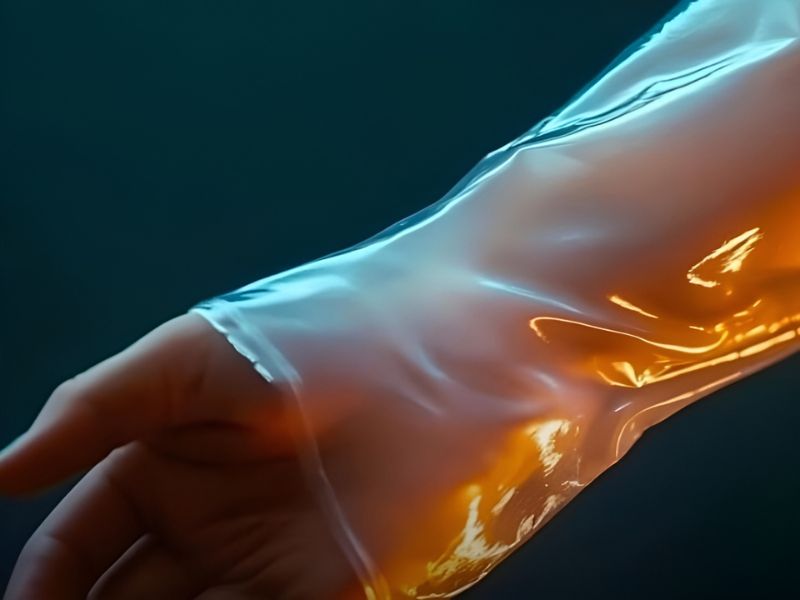
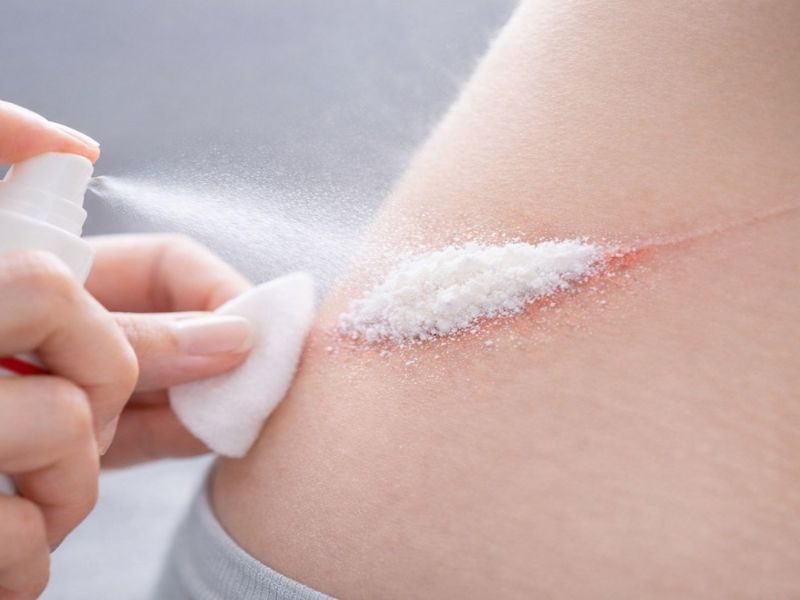
The result is a powdered agent that sprays onto wounds and instantly forms a solid hydrogel barrier.
Ultra-Fast Hydrogel Formation Prevents Hemorrhagic Shock
KAIST reports the powder forms a hydrogel in one second, crucial for preventing hemorrhagic shock and outperforming current treatments.
Most widely used hemostatic products today come as flat adhesives. While effective in some cases, they struggle with deep, irregular, or complex-shaped wounds. Many are sensitive to heat and humidity, restricting their use in harsh environments.
To address these issues, the KAIST team developed a powder format that conforms to different wound shapes. It can be applied to superficial cuts, deep lacerations, or irregular injuries, increasing its versatility for emergency care.
The researchers also noted a limitation of existing powder hemostatics: they generally act only through physical absorption, creating a restricted barrier in cases of heavy bleeding.
AGCL Powder Harnesses Blood’s Ionic Reactions for Rapid Gelation
To address these challenges, the team leveraged the ionic reactions naturally occurring in blood. The resulting agent, AGCL powder, is made from biocompatible natural materials structured for ultra-fast gelation.
Key ingredients, alginate and gellan gum, react with blood calcium to form a gel and seal wounds. Chitosan is added to bind blood components, enhancing both chemical and biological hemostasis.
This combination allows the powder to solidify almost instantly on contact with blood, forming a gel in about a second and effectively stopping bleeding.
The designers engineered AGCL powder to perform reliably in harsh conditions, hardening quickly in adverse environments and remaining stable in storage for immediate use.
High Absorption and Superior Performance Against Severe Bleeding
Its 3D gel structure can absorb over seven times its weight in blood, quickly stopping high-pressure bleeding. Tests indicate performance superior to many commercial hemostatic products.
The material’s adhesive strength exceeds 40 kPa, withstanding manual compression in first aid.
These combined properties make AGCL powder especially suitable for situations where rapid bleeding control is critical, including combat, major accidents, and emergency surgeries.
In addition to its mechanical properties, biological safety was a key focus in evaluating AGCL powder. Made entirely from natural materials, it shows high compatibility with human tissues.
Laboratory Tests Confirm Safety and Antibacterial Effectiveness
Laboratory tests revealed a hemolysis rate below 3%, cell viability above 99%, and a 99.9% antibacterial effect, indicating minimal risk of cell damage or infection upon contact with blood.
Animal studies showed faster healing and improved tissue regeneration, suggesting the material may also aid recovery while controlling bleeding.
Tests in liver surgery models showed the powder cut blood loss and hemostasis time versus commercial products. Liver function normalized within two weeks, and researchers observed no systemic toxicity during the evaluation period.
Durability and Long-Term Stability for Harsh Environments
Another important factor was the product’s durability. AGCL powder retained its effectiveness for up to two years, even when stored at room temperature and in high-humidity conditions. Its long-term stability provides a key logistical advantage for military and disaster response situations.
Though designed for defense, the powder has potential for civilian emergency care and low-resource regions, exemplifying defense-to-civilian technology transfer.
The agent can be used in battlefield first aid or surgery, showcasing its broad healthcare potential.
The research earned the 2025 KAIST Q-Day and 2024 KAIST-KNDU Minister’s Awards for innovation and strategic impact.
The Korea National Research Foundation supported the study, “An Ionic Gelling Powder for Ultra-Rapid Hemostasis and Accelerated Wound Healing,” which the team published on October 28, 2025.
Senior scientists and doctoral candidates, notably Army Major Kyusoon Park, actively developed and tested the material.
Mission Driven by Saving Lives in Combat
Park explained that the primary motivation behind the project was to reduce human casualties in modern warfare, aiming to save at least one additional soldier in critical situations.
He also expressed hope that the technology would find applications in both military and civilian medicine, broadening its societal impact. The authors view AGCL powder as a key advance in stopping severe bleeding, with life-saving potential.
Read the original article on: Clickpetroleoegas