

University of Cambridge
Dysarthria, a speech impairment, affects nearly half of stroke survivors, making it difficult to speak clearly or form full sentences due to weakened facial muscles and vocal cords. Recovery is often slow and frustrating, impacting quality of life during rehabilitation.
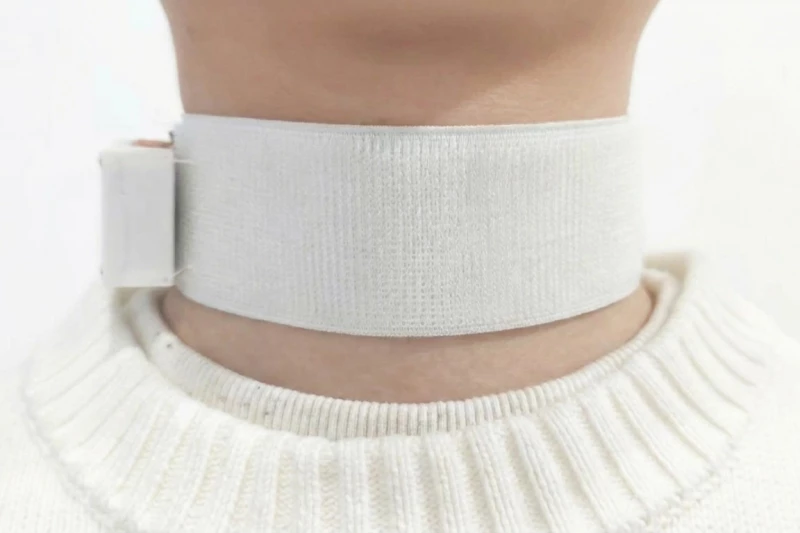
Researchers at the University of Cambridge have developed Revoice, a wearable device designed to help people with dysarthria communicate more naturally.
Bridging the Gap Between Thought and Speech After Stroke
“Stroke survivors with dysarthria know what they want to say but struggle physically because the stroke disrupts signals between the brain and throat,” says Prof. Luigi Occhipinti, a lead researcher.
Revoice reads and reconstructs signals, offering a non-invasive alternative to brain implants for temporary speech support.
University of Cambridge
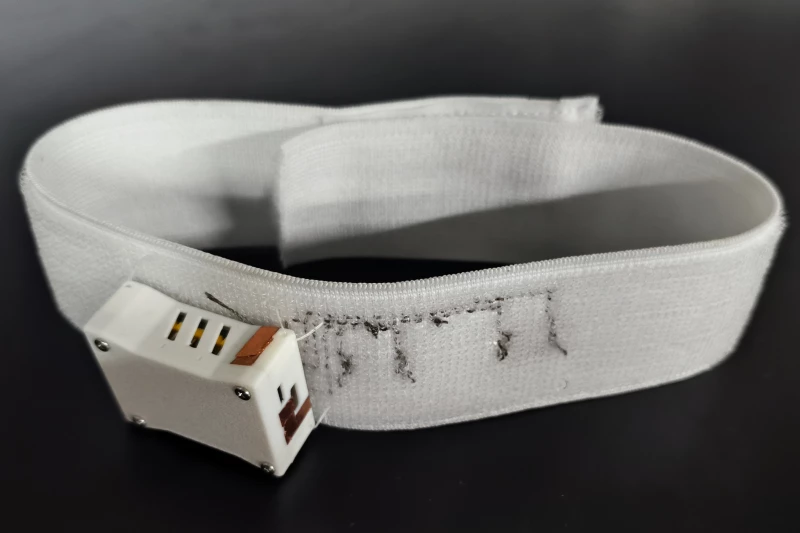
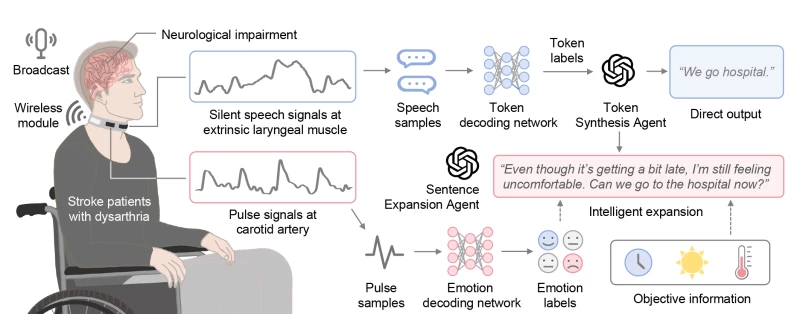
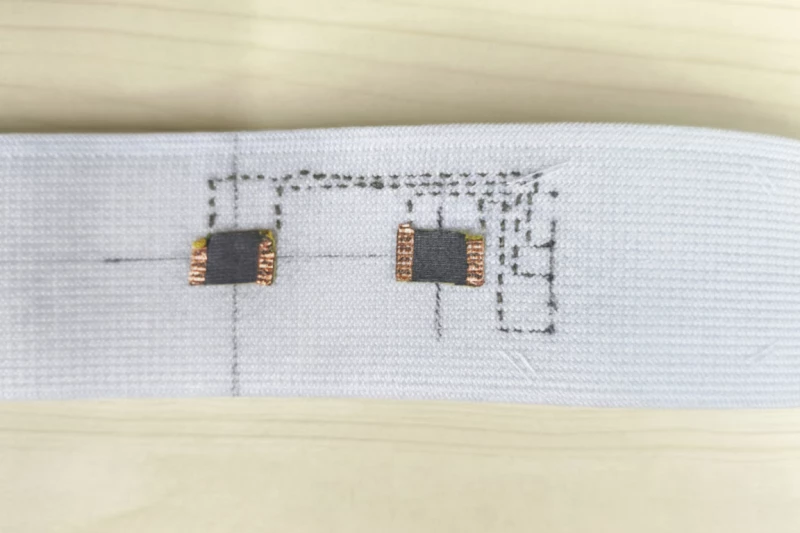
The device resembles a soft, adjustable choker equipped with textile strain sensors and a wireless circuit board. Its AI has two agents: one decodes mouthed speech and throat vibrations, the other detects emotion via neck pulse. This enables the device to generate full sentences that are both coherent and emotionally expressive.
Revoice Overcomes the Limitations of Traditional Silent-Speech Systems
Unlike earlier systems, Revoice uses AI throat sensors and a lightweight language model to instantly turn mouthed words into natural, fluent speech.
University of Cambridge
After testing on five stroke patients, Revoice showed low error rates and increased user satisfaction by 55%, converting silently mouthed phrases into full, fluent sentences.
The researchers suggest that Revoice could also benefit people with Parkinson’s disease or motor neuron disease.
University of Cambridge
Here’s a paraphrase of your passage:
Revoice uses durable, breathable, and washable materials, making it suitable for everyday use. It runs on a 1,800-mWh battery, capable of lasting a full day on a single charge. The team must conduct further clinical testing before releasing the device commercially. If successful, the team plans to add multiple languages and more emotional expression.
The study detailing this work was recently published in Nature Communications.
Read the original article on: Newatlas
Read more:Brain Scans May Assist in Regaining Movement After Paralysis


