Domingo Alvarez E on Unsplash
A recent study reveals that emojis play a significant role in building closeness within your relationships through text messaging.
You’re familiar with emoji—the expressive little symbols that quickly convey emotions and ideas. And yes, both “emoji” and “emojis” are acceptable plurals, but I’ll stick with “emoji.” Only recently have we begun to understand just how much they actively strengthen our personal connections.
How a Study Tested Emoji’s Impact on Perceived Connection
Eun Huh, a communication studies researcher at The University of Texas at Austin, authored a study recently published in PLOS One this week. In the study, Huh had 260 adults between the ages of 23 and 67 read two sets of 15 nearly identical text message exchanges—one set included emoji, the other did not. Researchers asked participants to imagine themselves as the sender in each conversation and reflect on how their partner’s responses made them feel.
Participants then rated how the messages made them feel about their “partners” using a Likert scale, indicating their level of agreement with various statements on a scale from 1 to 7. The results showed that messages with emoji made the sender seem more responsive—suggesting that emoji help convey attentiveness and emotional involvement.
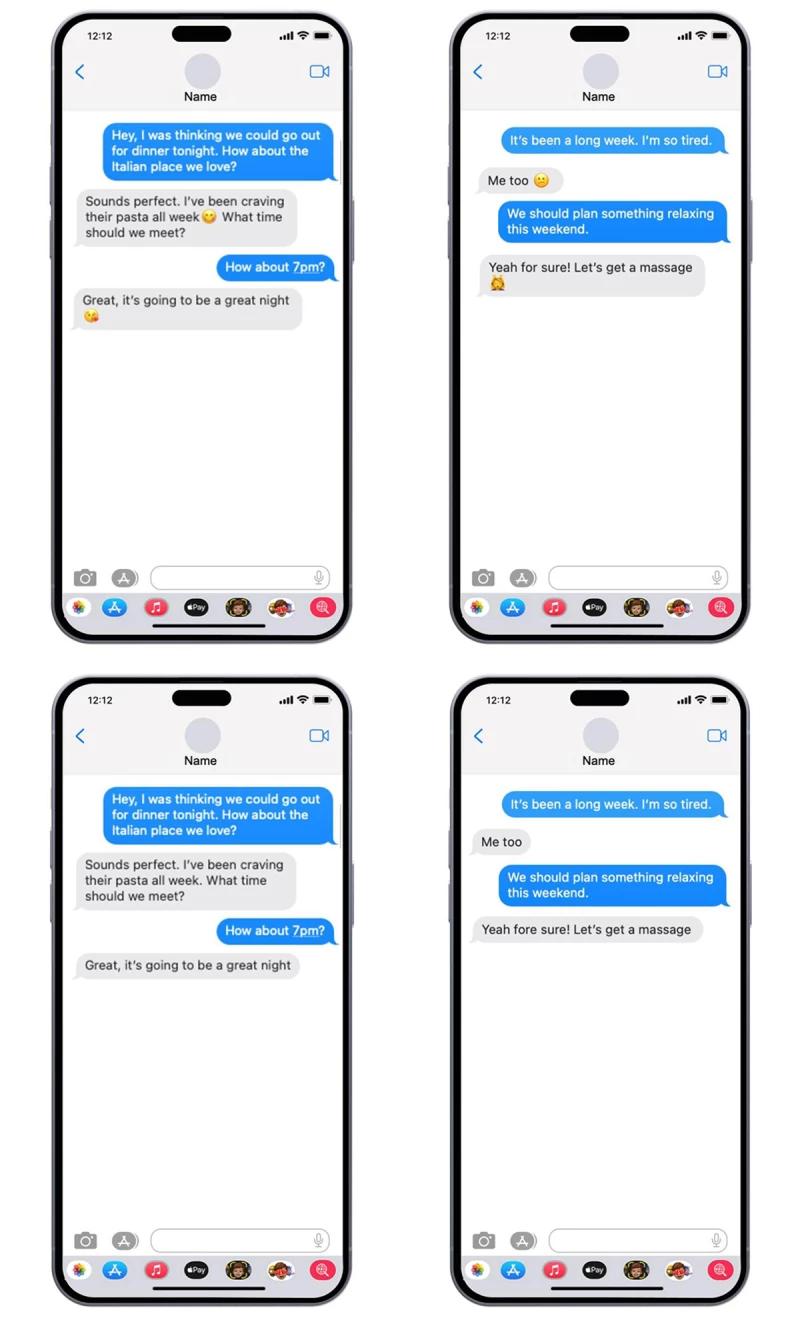
Image courtesy of the researchers
That’s significant because, as Huh explains, perceived responsiveness contributes to stronger relationship outcomes—like feeling closer, being more satisfied with the relationship, and even finding the other person more likable. Unless you’re currently in the honeymoon phase of a relationship, chances are you could benefit from a boost in one or all of these areas.
Emotional Consistency Matters More Than Emoji Type or Personal Traits
Interestingly, the study included both facial emoji that clearly express emotions and non-face emoji like symbols or objects. As long as the emoji matched the emotional tone of the message, the specific type didn’t influence how responsive the sender was perceived to be. Personal traits like the participant’s age, gender, or how often they used emoji themselves also had no impact on the results.
The findings also led Huh to suggest that emoji in text messages might function not just as tools for expression, but also as indicators of attentiveness and emotional involvement. That’s especially meaningful if you struggle to show others that you’re fully engaged in your conversations with them.
Read the original article on: New Atlas
Read more: Threads Now lets Users Manage Hidden Words Separately and Set Time Limits