
Unitree
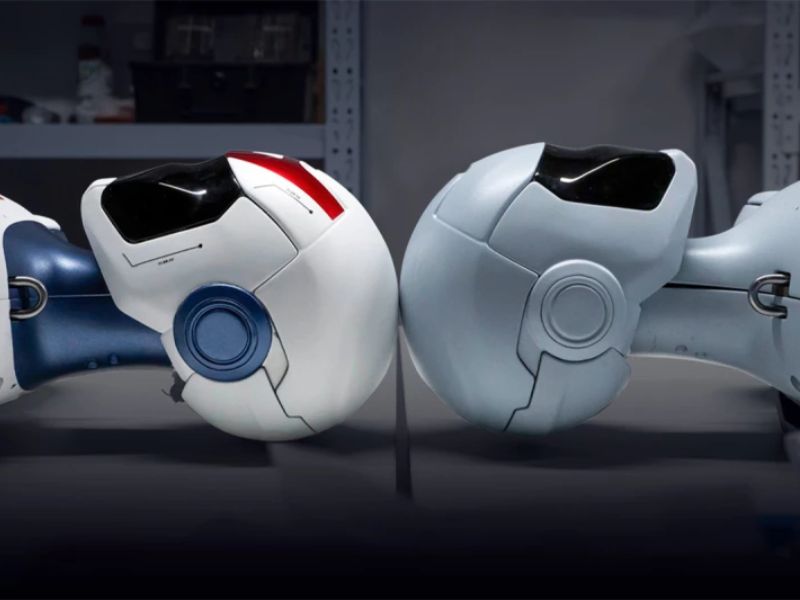
Chinese robotics company Unitree has unveiled the R1—its most budget-friendly humanoid robot yet—with a surprisingly low price tag of just $5,900. That’s less than the cost of a high-end Leica Q3 camera, making it remarkably accessible for a robot that can walk and respond to commands.
Compact Build with Functional Capabilities
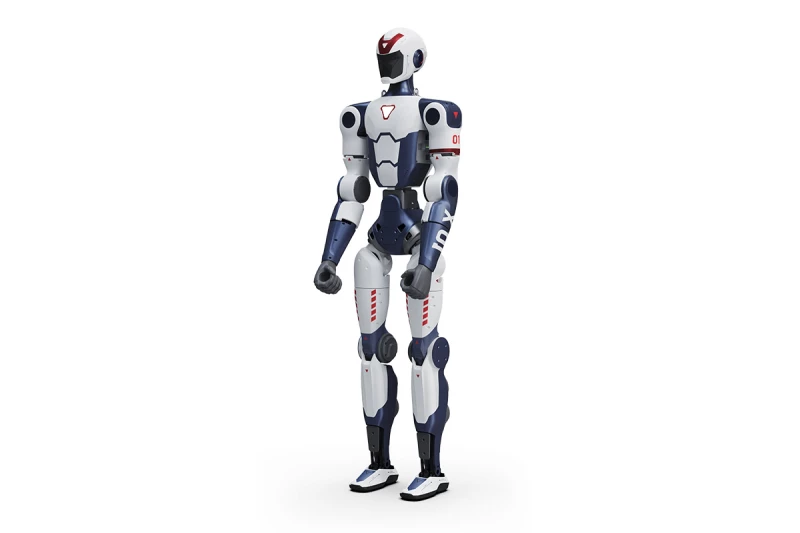
Standing just under 4 feet tall (1,210 mm) and weighing around 55 pounds (25 kg), the R1 features 26 joints, giving it a good range of motion. It can operate for roughly an hour on a single battery charge and includes Wi-Fi, Bluetooth, a built-in camera, microphones, and speakers for interaction.
Thanks to its lightweight frame and joint-rich design, the R1 is notably agile. Demonstrations suggest it’s capable of athletic movement—though it’s unclear whether current footage is simulation or real-life performance, and clarification has been requested.
Despite its mobility, the R1 lacks one critical feature: hands. Unlike Unitree’s more advanced humanoids, it doesn’t have functional grippers, limiting its ability to manipulate objects. Combined with its short runtime and compact size, these limitations mean the R1 isn’t ready for complex household chores right out of the box—so don’t expect it to handle your dishes or laundry just yet.
Ideal for Research and Education
Where it truly shines for now is in research and educational settings. Developers and researchers are using the R1 to test algorithms, AI behaviors, and assess how robots might perform in real-world industrial tasks. Automaker Geely, for instance, is experimenting with a Unitree robot on its production line to explore potential roles in car manufacturing.
Unitree
Still, it’s impressive to see a functioning humanoid robot at this price point. To put things in perspective, Unitree’s more capable H1 model—able to climb stairs and perform backflips—sells for $90,000, while the G1 goes for $16,000. Tesla’s much-anticipated Optimus robot is expected to cost between $20,000 and $30,000. That makes the R1’s price a notable leap toward affordability—especially considering the market is still in its early stages.
For those seeking more functionality, Unitree offers an ‘EDU’ version of the R1, which includes dexterous robotic hands. Each hand adds about $5,200 to the cost, and the upgraded version comes with a more powerful computing module as well.
By keeping the R1’s price below $6,000, Unitree is paving the way for broader experimentation with humanoid robots. Expect to see it show up in pilot programs across industries, in academic labs, and among robotics enthusiasts eager to explore the technology’s potential.
Read the original article on: New Atlas
Read more: Humanoid Robots Symbolize China’s Ambitions in AI