


Xinhua/Sun Fei
The second World Humanoid Robot Games began on August 21 at Beijing’s National Speed Skating Oval, drawing attention mainly to robot sprinters and boxers. However, beyond the competitions, the five-day event highlights an important reason why China is taking the lead in the robotics race.
This year’s games feature 666 teams and 2,056 humanoid robots competing in 30 events, along with numerous demonstrations and showcase performances. The competition provides a clear snapshot of the robotics industry in 2026. Although humanoid technology still has significant room for development, comparing this year’s event with the 2025 highlights shows how much progress has been made in just one year.
Humanoid Robot Lightning Breaks Usain Bolt’s 100-Meter Record
One of the biggest stories so far is Lightning, a humanoid robot developed by phone manufacturer Honor, which surpassed Usain Bolt’s 100-meter sprint record. Lightning completed the race in 9.32 seconds, faster than Bolt’s 9.58-second human world record, which has stood for 17 years.
Earlier this year, in April, Honor’s humanoid robots also performed strongly at the Beijing robot half-marathon, earning recognition not only for speed but also for their walking style and design. These features are increasingly becoming important areas of development as humanoid robots continue to evolve.

The most important point is not the record itself, but the story behind the robot’s development.When I first covered Chinese technology, it was surprising to see companies like Xiaomi and Xpeng making cars, smartphones, robots, and even eVTOL aircraft.
However, China’s technology supply chain is unlike any other in the world. Its interconnected ecosystem allows companies to diversify into different industries while often strengthening their products rather than limiting them. This applies whether the product is a smartphone, a car, or a humanoid robot. Events like the World Humanoid Robot Games help engineers share ideas and compare results. In 2024, an initiative was introduced to promote data sharing among humanoid robotics startups and companies.
Companies such as Unitree and UBtech are competing aggressively for both domestic and international markets, creating strong competition. They operate in an ecosystem supporting hundreds of humanoid robot teams in 2026.
CCTV
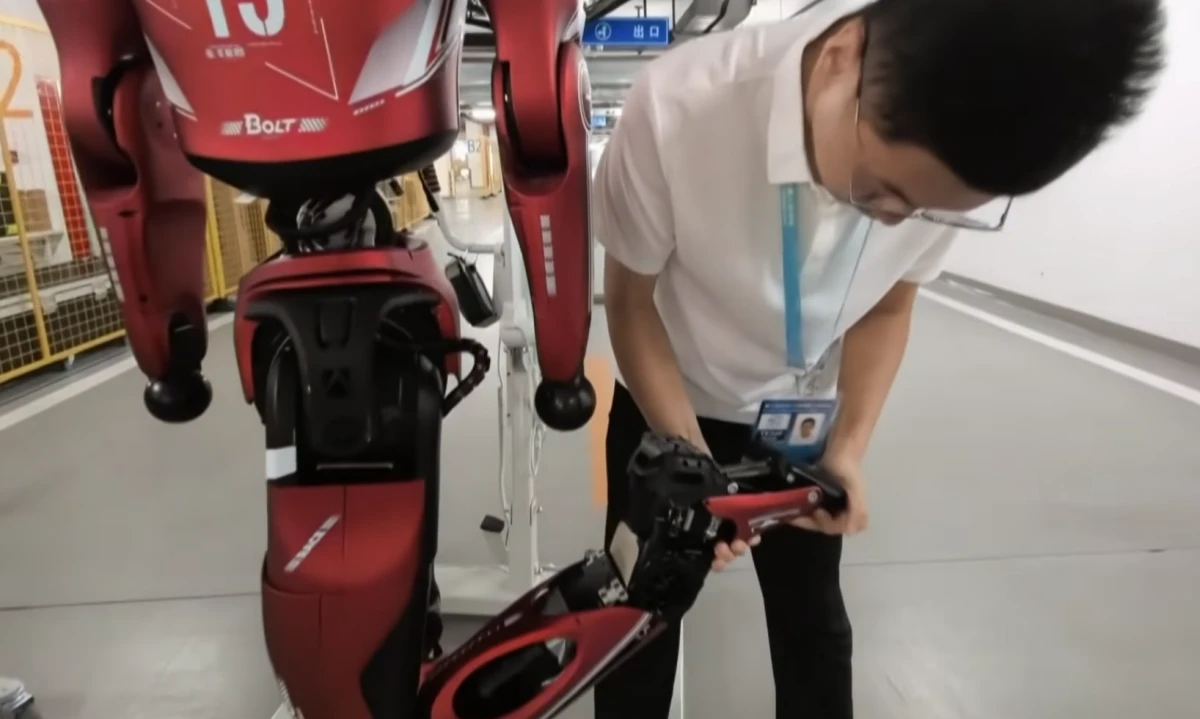
Jin Yongbin, Chief Technology Officer at MirrorMe Technology, believes China has an extremely complete supply chain for robotics. According to him, key components such as motors, batteries, electric drives, and transmission systems are closely connected to the country’s established automotive industry. This allows companies to adapt the existing automotive supply chain for robotics.

alancing Speed, Strength, and Stability in Humanoid Robotics
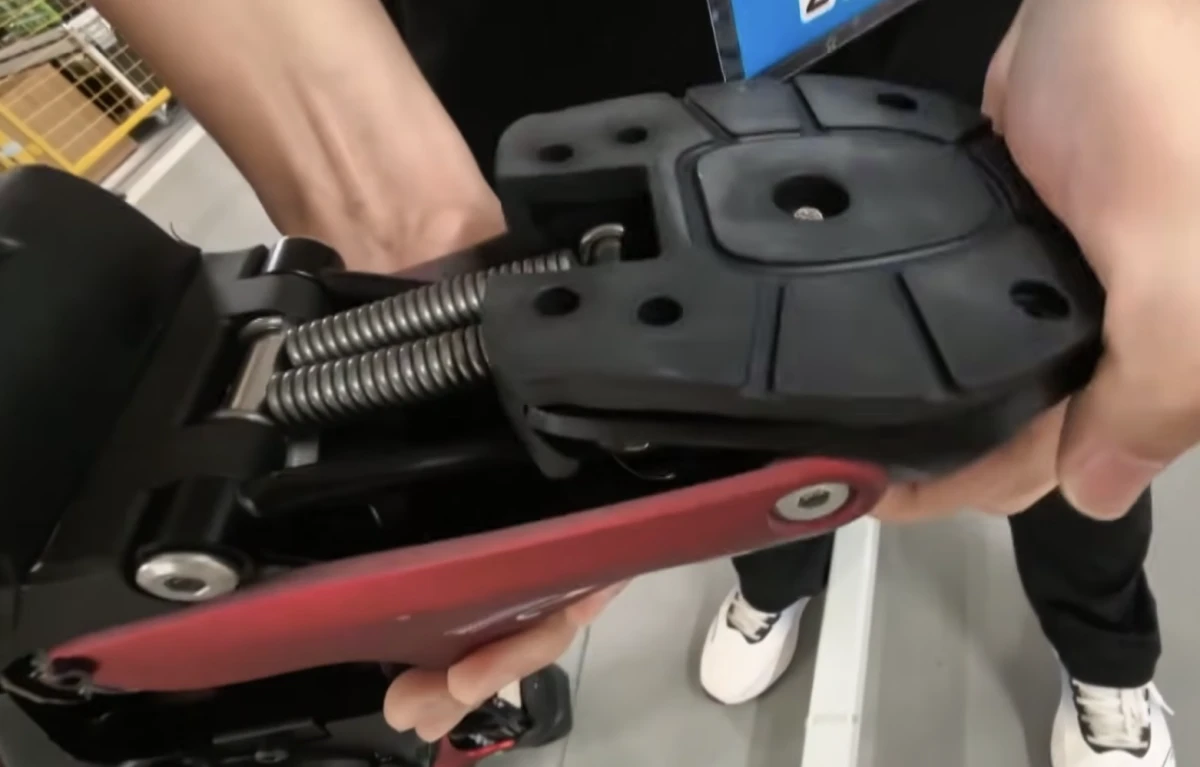
MirrorMe has developed Bolt, a 1.75-meter-tall, 75-kilogram humanoid robot capable of reaching speeds of 11 meters per second. Although Bolt is slower than Lightning, Jin argues that speed is about much more than simply moving fast. It requires overcoming engineering challenges involving strength, durability, stability, and movement.
He also emphasizes that achieving higher speeds requires engineers to study biological movement, understand how dynamic motion works, and determine how those principles can be applied to humanoid robots.
CCTV
Jin added that events like these are important for sharing ideas, comparing different technologies, identifying their strengths and weaknesses, and improving the robotics supply chain more quickly.
China’s Collaborative Approach to Robotics and AI Innovation
This highlights another important difference between China’s robotics and AI industries. While there is strong competition between companies, technological progress often resembles a nationwide collaborative effort, with engineers exchanging knowledge and learning from one another across organizational boundaries.
Ultimately, describing the competition between the US and China as a simple “robot arms race” is an oversimplification. Both countries are advancing rapidly, but they appear to be following different paths and competing in different areas of the broader technology race.

Read the original article on:newatlas
Read more:Smart Ring Analyzes Sweat to Track Glucose, Ketones, and Other Health Biomarkers


