Did you know that the volume of gas your body releases can offer important clues about the state of your gut microbiota? A new wearable aims to turn what is often seen as embarrassing into a measurable indicator of digestive health.
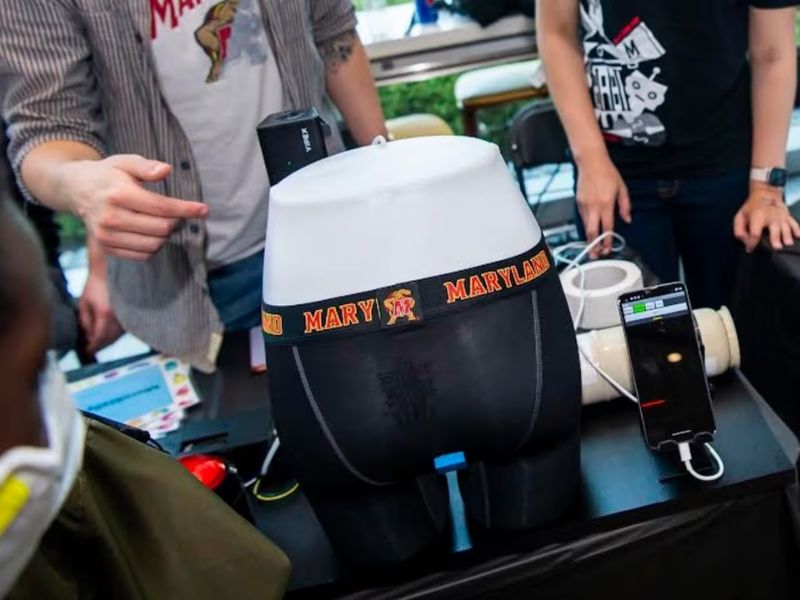
Scientists have created smart underwear that can track intestinal gas continuously and without invasive methods. The research, led by Santiago Botasini, was published in Biosensors and Bioelectronics: X in December 2025 under the title “Smart underwear: A novel wearable for long-term monitoring of gut microbial gas production via flatus” (DOI: 10.1016/j.biosx.2025.100699).
Hydrogen Detection for Gut Activity
The device includes sensors designed to identify hydrogen in flatulence, a key byproduct of the fermentation process performed by intestinal bacteria. This gas serves as a direct sign of microbiota metabolic activity.
In contrast to conventional approaches that depend on patients’ self-reported symptoms, the new technology makes it possible to:
China is rapidly using AI-powered humanoid robots to manage city traffic and assist law enforcement.
The Humanoid Robot Managing Urban Traffic
A recent example is the R001 Intelligent Police Unit, a humanoid robot integrated with the city’s traffic light network. Wearing a uniform and cap, the robot performs traffic gestures and uses cameras and AI to guide pedestrians autonomously.
Its AI-driven technology can detect traffic violations by non-motorized vehicles, such as bicycles and scooters, as well as pedestrian infractions and illegal parking. This data processes in real time, organizing traffic and preventing accidents.
Robots Lightening the Load for Police Officers
Chinese authorities state that the primary goal of the initiative is to ease the workload of police officers, particularly during peak periods or challenging conditions like extreme weather. The robots serve as operational assistants, enabling human officers to concentrate on more complex duties.
Cities such as Chengdu have already tested mixed teams of robots, including quadrupeds, wheeled models, and humanoids. According to Xinhua, this technology has been deployed in over 100 different scenarios, covering tasks from reception and security patrols to public service functions.
The Tesla Robovan concept debuted at the company’s “We, Robot” event last October and was met with an enthusiastic response. Interest has surged again after an executive hinted it could evolve into a self-driving RV.
A Driverless Design Beyond Urban Mobility
The Tesla Robovan prototype is a modular, fully autonomous vehicle for up to 20 passengers and cargo. Its low-floor design, spacious interior, and panoramic visibility have sparked ideas for uses beyond urban transport.
Social media has been buzzing that the Robovan could lead to autonomous RVs. Y Combinator CEO Garry Tan suggested it’s time for self-driving RV startups, and Tesla’s VP of Autopilot, Ashok Elluswamy, replied “On it,” fueling speculation about a camper-ready Robovan.
Why the Robovan Design Fits the RV Lifestyle
The Robovan concept’s design makes it well suited to discussions around RV use. Its flat, open floor plan, absence of a steering wheel, and Tesla’s load-leveling suspension allow users to configure the platform for sleeping, relaxing, or working. A self-driving electric RV also aligns with the growing “van life” movement, offering the appeal of autonomous, low-stress travel.
For now, the concept of a Robovan-based RV exists only through hints and speculation on social media. Tesla has yet to confirm any plans for a fully autonomous RV built on the platform, and the Robovan itself remains a prototype without a defined production schedule. Still, online enthusiasm for a self-driving Tesla camper continues to grow, hinting that the Robovan could become more than the urban people mover Tesla initially imagined.
At China’s second Public Security Tech Expo in Lianyungang, Safmax introduced advanced fabrics that reportedly withstand extreme heat while staying breathable, waterproof, and windproof, according to an 18 September article by Interesting Engineering.
Safmax says its flame-resistant fabric can endure temperatures up to 2,192°F (1,200°C) without melting, shrinking, or losing shape. The fabric protects firefighters, shields with fire blankets, and controls airflow during battery fires in electric vehicles.
Nano-Membrane Fabric: Waterproof Yet Breathable
Jiang Huangsen, Safmax’s chief technology officer, said the company applies its nano-membrane to regular fabric at a thickness just 1% that of a human hair. In a demonstration, the material blocked water while allowing air to pass, making it both waterproof and breathable.
Interesting Engineering explains that manufacturers typically make flame-retardant fabrics by using naturally resistant fibers or chemically treating flammable materials.These methods protect the fabric by charring it, releasing gases that suppress flames, or forming an insulating barrier.
Traditional firefighter gear uses multiple fabric layers, including aramid fibers, moisture barriers, and quilted thermal layers, to resist heat, flames, and moisture.
Safmax positions its fabrics as a practical and effective option for extreme fire safety, building on advances in flame-retardant cotton and nano-membrane technology, the article added.
Image Credits:Divulgação/Universidade de Ciência e Tecnologia Pohang
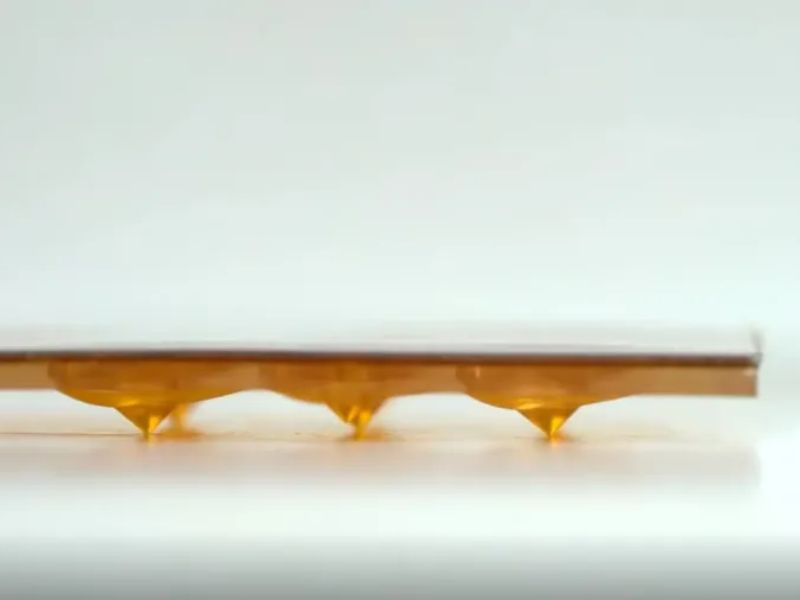
Researchers at Pohang University of Science and Technology in South Korea have designed a paper-thin robot that can exert tremendous force. Published in Nature Communications in July, the study suggests it may have applications in surgery or industrial machinery.
The robot mimics the proteins that drive human muscle movement. In humans, the motor protein myosin powers most motions, from organelle transport to muscle contraction. Inspired by myosin, scientists created a robot with surface protrusions that attach to various materials, enabling movement in multiple directions.
Paper-Thin Yet Powerful: A Blade-Shaped Robot That Crawls
Though as thin as paper, the blade-shaped device generates substantial force. It contains dozens of small, overlapping 3D air chambers and a network of pneumatic circuits. Even when folded, it can “crawl like a caterpillar” using just its protrusions.
The robot’s design enables it to navigate confined spaces and handle objects. Scientists say it could be applied in fields ranging from surgery to industrial operations. “By adjusting the pressure sequence, the robot can move across surfaces in six directions, at varying speeds and distances,” the study notes.
Image Credits:Reprodução/Nature Communications… – Veja mais em https://www.uol.com.br/tilt/noticias/redacao/2025/08/09/coreia-do-sul-robo-com-pele-macia-e-flexivel.htm?cmpid=copiaecola
Traditional robots are usually made from rigid metal parts, which provide strength but restrict delicate movements and operation in tight spaces.
The new study offers a different approach, combining power with flexibility. The actuator performs tasks like clearing pipes, handling objects, and transporting items underwater, the study reports.
Navigating the Human Body with Finger-Like Accuracy
The South Korean-developed technology can operate within the human body. As demand rises for robots that can perform delicate internal procedures, this robot offers finger-like precision, allowing medical teams to use it through small surgical openings.
The team also created a mathematical model to forecast the robot’s movements, laying the groundwork for future projects and applications. Researchers aim to deploy the technology in surgery, industry, and exploration
Image Credits:The .Lumen glasses are more of a headset than spectacles, and this device delivers haptic feedback to your forehead to guide you around your surroundings .Lumen
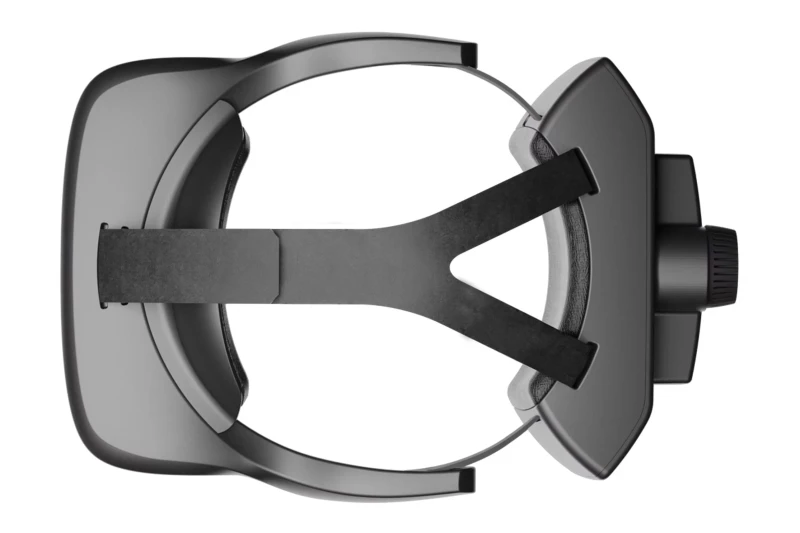
The .Lumen glasses work like a VR headset, using AI and sensors to guide users with forehead vibrations and directional audio instead of visuals.
The device can direct you to a chosen destination, describe nearby objects, and assist you while moving through public spaces. Its AI processes sensor data over 100 times per second to track movement and prevent collisions. It also relies on an AI model that recognizes road layouts to spot crosswalks and safely guide users through traffic.
Hands-Free, Voice-Guided Navigation
Users can request directions via voice, from saved spots like “home” to detailed guidance like “take me to my office” or nearby locations such as a Starbucks counter.
Image Credits:The headset can help you avoid obstacles as you walk, and also guide you to specific destinations .Lumen
The system uses cameras, infrared lasers, inertial sensors, and GPS to detect obstacles beyond a white cane’s reach. According to .Lumen, the glasses can also recognize stairs, doors, bus stops, and hazards like puddles or slippery snow.
The device has a prominent forehead sensor and rear battery, runs two hours per charge, and weighs 2.2 lbs (1 kg), like a half-face motorcycle helmet.
Image Credits:The wearable is by no means compact, as it’s packing six cameras, three IMUs, two laser projectors, and precise vibration motors to allow blind people to get around independently .Lumen
The .Lumen wearable offers functionality similar to a guide dog, a top mobility aid for the blind. However, guide dogs can involve long waiting lists and come with the significant long-term responsibility of daily care.
Image Credits:.Lumen says the headset manages practically 70% of a self-driving car’s sensing performance using hardware that’s a tenth of the size .Lumen
After five years of development, .Lumen will debut the glasses with live demos at CES 2026 in Los Angeles.
Proven in Real-World Testing Worldwide
The .Lumen wearable offers functionality similar to a guide dog, a top mobility aid for the blind.
Reservations are now open for the headset, which is priced at €9,999 (about US$11,800). Approval for sales in the United States may take longer, as .Lumen is prioritizing expansion within Europe first. If the glasses perform as intended, they could offer people who are blind a powerful new sense of independence.
A video from a Chinese company featuring a robot with a human-like face is going viral online, evoking strong Westworld comparisons.
AheadForm, a robotics startup founded in 2024, is developing realistic humanoid robots integrated with AI to interact seamlessly with people.
Lifelike Expressions and Emotional Interaction
According to AheadForm, the robot’s expressive face, moving eyes, and synchronized speech allow it to display emotions and interpret human non-verbal signals, creating more natural and engaging interactions.
The circulating video focuses solely on the robot’s face, showing it blinking, moving its eyes, and making human-like expressions.
AheadForm says the Origin M1 uses 25 micro motors for realistic facial gestures.
Exploring AheadForm’s Robot Lineup
The company’s website showcases other humanoid robots in its Lan Series, as well as an Elven-themed model called ELF V1.
“Within ten years, we might interact with robots and feel they are almost human; in 20 years, they could walk and perform tasks just like humans,” AheadForm founder Hu Yuhang told the South China Morning Post last year.
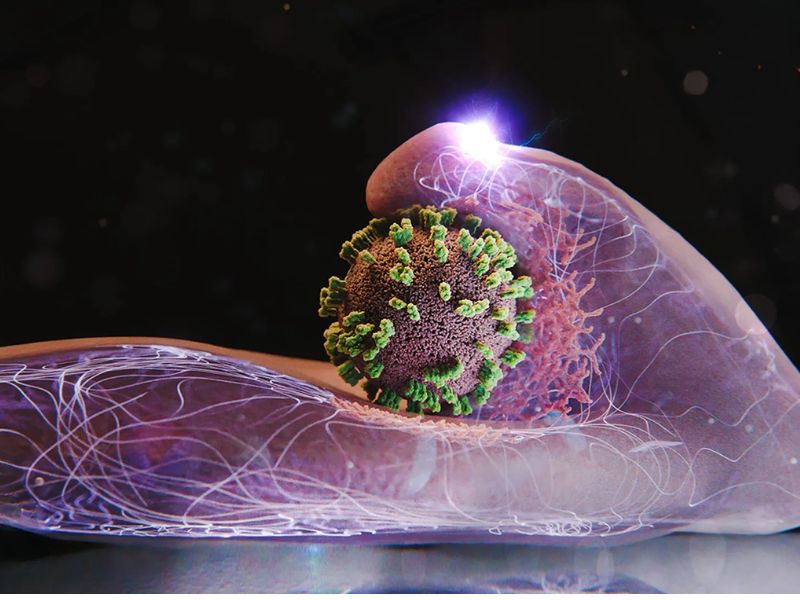
A research team from Switzerland and Japan has closely examined how the virus behaves. Using a self-developed microscopy technique, the scientists can focus on the outer surface of human cells in a Petri dish, allowing them to observe in real time the precise moment an influenza virus enters a living cell.
Led by Yohei Yamauchi, Professor of Molecular Medicine at ETH Zurich, the team made a surprising discovery. Rather than remaining passive as the influenza virus nears, the cells seem to actively try to capture it. “The infection of our body’s cells is like a dance between virus and cell,” explains Yamauchi.
How Viruses Exploit Essential Pathways
Although cells gain no benefit from infection, the interaction appears active because the virus takes advantage of a normal cellular uptake system that the cells rely on. This system typically transports vital substances like hormones, cholesterol, and iron into the cell.
To start the infection, an influenza virus binds to specific molecules on the cell surface. It “surfs” along the membrane, attaching to one molecule after another until it reaches an area dense with these receptors. A cluster of receptors provides the most efficient entry point.
Once the receptors detect the virus, the membrane begins to form a small indentation at that site. A structural protein called clathrin shapes and reinforces this pocket. As the pocket deepens, it envelops the virus and forms a vesicle. The cell then pulls the vesicle inward, where the clathrin coat disassembles and releases the virus inside.
Why Traditional Imaging Falls Short in Capturing Viral Entry
Earlier efforts to examine this critical stage of infection depended on techniques such as electron microscopy, which destroy the cells to produce an image, capturing only isolated snapshots. Fluorescence microscopy, another frequently used method, allows live imaging but provides only low spatial resolution.
The new technique, named virus-view dual confocal and AFM (ViViD-AFM), combines atomic force microscopy (AFM) with fluorescence microscopy. This integrated method allows researchers to observe the detailed movements of the virus as it penetrates the cell.
Using this technique, the researchers showed that cells play an active role in multiple stages of viral entry. They recruit key clathrin proteins to the site where the virus is bound, and the membrane rises at that spot, seemingly attempting to capture the virus. These wave-like movements become stronger if the virus begins to move away from the cell surface.
Since ViViD-AFM enables real-time observation of infection, it provides a useful method for testing potential antiviral drugs directly in cell cultures. The researchers also suggest that this technique could be applied to studying other viruses or vaccines, allowing scientists to see how these particles interact with cells as it happens.
Image Credits:Divulgação/Universidade de Guelph e Canadian Light Source
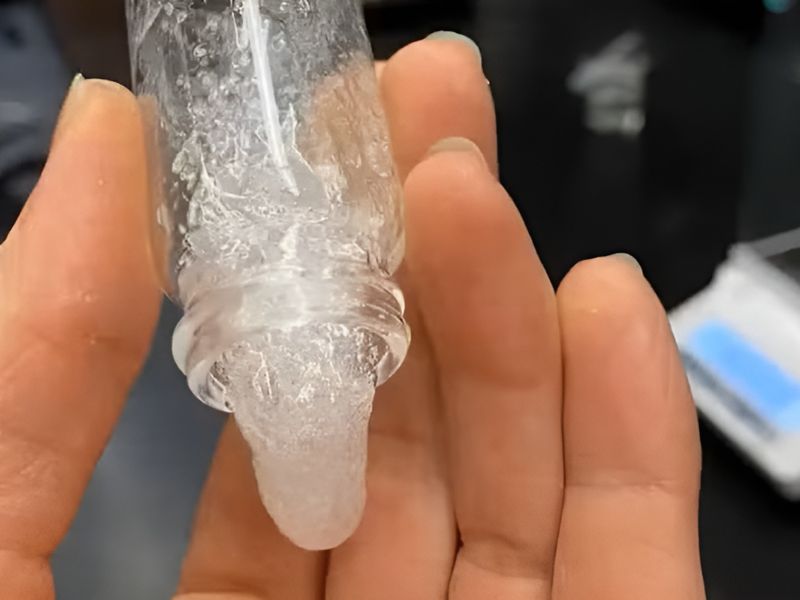
Scientists at the University of Guelph in Canada have developed a slime that produces electricity when squeezed. Although still in the prototype phase and undergoing early testing, the invention is already receiving praise from its creators. The findings were reported in a scientific article in the journal Science Direct.
The Canadian Light Source, the research facility involved in the study, explained that the slime consists of 90% water, along with oleic acid (found in olive oil) and amino acids. This combination makes the material safe to handle and suitable for direct contact with skin.
Biocompatible Piezoelectric Slime Generates Electricity Under Pressure
The slime developed by the researchers exhibits a piezoelectric effect, allowing it to produce electrical charges when compressed. “Many materials with this property exist, but most are not biologically based or fully biocompatible,” said Erica Pensini, the lead scientist on the project, in an interview with CTV.
In a CBC interview, Erica explained that energy-generating materials have dipoles, acting like “tiny batteries” with two poles. In most materials, these dipoles are misaligned, preventing electricity generation. The researchers found a way to align the molecules so compression generates energy.
Prototype Slime Shows Promise for Clean Energy and Healing Applications
Erica’s team believes the prototype could provide clean energy and support wound healing. “I apply the material to my hands. Ideally, it could enhance the body’s regeneration, since piezoelectricity plays a key role in many biological processes,” Erica said.
The practical uses of electric slime are still being explored, but Erica’s team sees its potential for generating energy from floors, enhancing robotic skin, or tracking movement in shoe soles.
Although it’s too early to know when—or if—this material will become part of everyday life, the potential applications are undeniably exciting.
People with higher muscle mass appear to exhibit reduced indicators of brain aging, according to newly released research. The study, which is still awaiting peer review, appears at the yearly conference of the Radiological Society of North America (RSNA).
The study raises concerns that GLP-1 drugs like Ozempic, Wegovy, and Mounjaro may reduce both fat and muscle mass.
The study examined MRI scans from 1,164 healthy adults with an average age of 55. Researchers compared brain structure measurements with full-body imaging and noted that…
Muscle Mass Linked to More Youthful Brain Aging
The researchers discovered that people with higher muscle mass had “younger”-looking brains, and that having less visceral fat relative to muscle was likewise linked to reduced brain aging.
Initially developed for managing type 2 diabetes, GLP-1 drugs have since gained widespread use for quick weight loss.
However, earlier research has shown that roughly 15% to 40% of the weight shed while using these drugs can be lean mass, including muscle.
We use cookies on our website to give you the most relevant experience by remembering your preferences and repeat visits. By clicking “Accept All”, you consent to the use of ALL the cookies. However, you may visit "Cookie Settings" to provide a controlled consent.
This website uses cookies to improve your experience while you navigate through the website. Out of these, the cookies that are categorized as necessary are stored on your browser as they are essential for the working of basic functionalities of the website. We also use third-party cookies that help us analyze and understand how you use this website. These cookies will be stored in your browser only with your consent. You also have the option to opt-out of these cookies. But opting out of some of these cookies may affect your browsing experience.
Necessary cookies are absolutely essential for the website to function properly. These cookies ensure basic functionalities and security features of the website, anonymously.
Cookie
Duration
Description
cookielawinfo-checkbox-analytics
11 months
This cookie is set by GDPR Cookie Consent plugin. The cookie is used to store the user consent for the cookies in the category "Analytics".
cookielawinfo-checkbox-functional
11 months
The cookie is set by GDPR cookie consent to record the user consent for the cookies in the category "Functional".
cookielawinfo-checkbox-necessary
11 months
This cookie is set by GDPR Cookie Consent plugin. The cookies is used to store the user consent for the cookies in the category "Necessary".
cookielawinfo-checkbox-others
11 months
This cookie is set by GDPR Cookie Consent plugin. The cookie is used to store the user consent for the cookies in the category "Other.
cookielawinfo-checkbox-performance
11 months
This cookie is set by GDPR Cookie Consent plugin. The cookie is used to store the user consent for the cookies in the category "Performance".
viewed_cookie_policy
11 months
The cookie is set by the GDPR Cookie Consent plugin and is used to store whether or not user has consented to the use of cookies. It does not store any personal data.
Functional cookies help to perform certain functionalities like sharing the content of the website on social media platforms, collect feedbacks, and other third-party features.
Performance cookies are used to understand and analyze the key performance indexes of the website which helps in delivering a better user experience for the visitors.
Analytical cookies are used to understand how visitors interact with the website. These cookies help provide information on metrics the number of visitors, bounce rate, traffic source, etc.
Advertisement cookies are used to provide visitors with relevant ads and marketing campaigns. These cookies track visitors across websites and collect information to provide customized ads.