Image Credits:A Kobe University group now published that they achieved the production of PDCA — which is biodegradable and materials incorporating this show physical properties comparable to or even surpassing those of PET — in bioreactors at concentrations more than seven-fold higher than previously reported. Credit: Tsutomu Tanaka
PDCA, a biodegradable alternative to PET, boasts superior physical properties. Researchers at Kobe University engineered E. coli bacteria to produce PDCA from glucose at unprecedented levels without generating byproducts, opening new avenues in bioengineering.
While the durability of plastics has driven their widespread use, it also contributes to environmental problems. Most plastics are petroleum-based, making them non-renewable and dependent on geopolitical factors. Scientists worldwide are developing biodegradable and bio-based alternatives, but challenges with yield, purity, and production costs remain.
Engineering PDCA with Nitrogen
Kobe University bioengineer Tsutomu Tanaka explains that most biomass-based production focuses on molecules containing only carbon, oxygen, and hydrogen. “Yet some highly promising compounds for high-performance plastics include elements like nitrogen, and no efficient bioproduction methods exist. Chemical synthesis inevitably creates unwanted byproducts,” he says. PDCA (pyridinedicarboxylic acid) is one such compound. Biodegradable and physically comparable—or even superior—to PET, PDCA holds potential for containers and textiles. “We took a new approach: using cellular metabolism to incorporate nitrogen and build the compound from start to finish,” Tanaka adds.
In Metabolic Engineering, the team reported producing PDCA in bioreactors at concentrations over seven times higher than previously achieved. “Our work shows that metabolic reactions can integrate nitrogen cleanly, without generating byproducts, enabling efficient synthesis,” says Tanaka.
Solving the H₂O₂ Hurdle in Enzyme Production
The team faced challenges, notably a bottleneck where an introduced enzyme produced hydrogen peroxide (H₂O₂), which then deactivated the enzyme. “By adjusting culture conditions and adding a compound to scavenge H₂O₂, we overcame this, though it may pose economic and logistical challenges for scaling up,” Tanaka notes.
Looking ahead, the team plans to further optimize production. “Obtaining sufficient quantities in bioreactors sets the stage for practical applications. More broadly, our success in incorporating nitrogen-metabolism enzymes expands the range of molecules accessible via microbial synthesis, boosting the potential of bio-manufacturing,” Tanaka concludes.
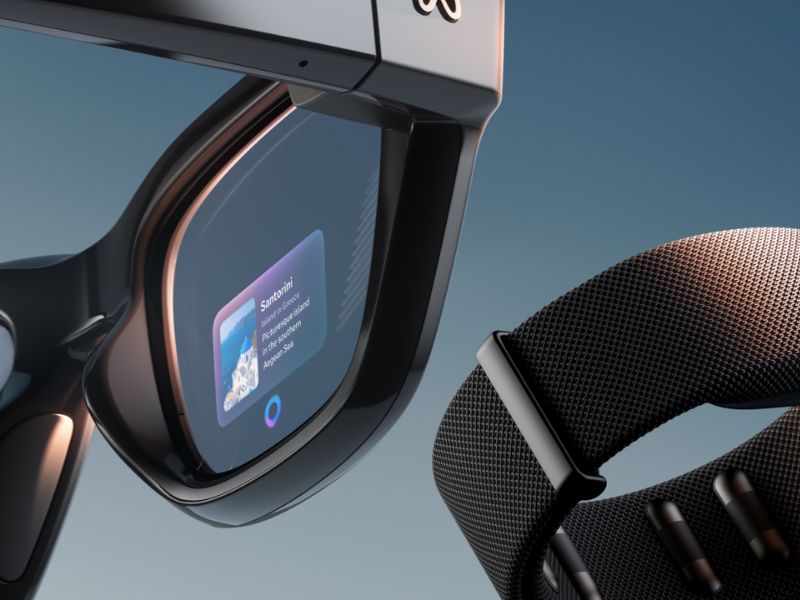
Image Credits:Meta’s long-awaited smart glasses finally bring the goods, but may take a backseat to a far less expected reveal. Credit: Meta/Ray-Ban
Meta introduced several products at yesterday’s Connect event, but the spotlight was on two: the Ray-Ban Meta Display glasses and a surprise accessory called the Neural Band. The glasses mark the official debut of the long-rumored “Hypernova” project—Meta’s attempt at mainstream, easy-to-use smart glasses with a built-in display.
More precisely, a display. The Display glasses project a 600×600-pixel, 5,000-nit image into the right lens only, positioned near the lower edge of your field of view.
Smartphone Features First, AR Second
The glasses are technically designed for augmented reality, though that wasn’t strongly highlighted during the debut. Most of the features resembled “a smartphone on your face,” such as reading messages without pulling out your device. The most compelling demo, in my view, was the live transcription and translation tool, which overlays subtitles onto the real world. The glasses also include a 12-megapixel camera that records up to 1440p video at 30 frames per second.
While the right arm houses a button and touch controls, Meta also unveiled a more innovative way to interact with them.
The Meta Neural Band relies on surface electromyography (sEMG) to pick up tiny muscle signals in the wrist, translating them into hand and finger movements. This allows users to operate the glasses without touching the frames and provides a far more precise level of control.
Gesture Controls at Your Wrist
Early demos—better described as “wrists-on” than hands-on—highlighted gestures such as “clicking” (tapping the index finger against the thumb), “swiping” (running the thumb along the index finger), and “zooming” (pinching in the air). These are interactions that would typically require a smartphone.
Meta also touched on updates like fresh designs for the Ray-Ban Meta (Gen 2) glasses, broader AI enhancements, and new roadmaps for its software platforms—but it was the glasses and the Neural Band that clearly dominated the spotlight.
Image Credits:Meta’s sEMG wristband could revolutionize all user input, not just for glasses. Credit: Meta
The battery life, however, poses a real concern. It’s rated at just six hours, which—as someone who relies on prescription lenses—I can say falls far short, even with the included charging case. Meta notes that the Display glasses support prescriptions from -4.00 to +4.00, but without the option of hot-swappable batteries, the practicality is questionable. As it stands, this first-generation model seems best suited for people with good vision or those willing to wear contacts.
There’s long been speculation over which company would be first to integrate a true display into glasses. For a time, Google seemed poised to take the lead—but in the end, Meta crossed the finish line. The real question now is whether the Display glasses’ fairly straightforward design will leave less of a mark than the far more novel Neural Band.
The Ray-Ban Meta Display glasses launch on September 30 for $799, available through Best Buy, LensCrafters, Sunglass Hut, and Ray-Ban retail stores.
The competition for quantum supremacy has reached a new stage—this time extending into space. China unveiled its fastest quantum computer as another milestone marked the first launched into orbit on a SpaceX rocket.
China’s newly unveiled model outperforms several of the world’s most powerful supercomputers. Using a photon-based architecture, the system performs complex computations exponentially faster than classical machines. This breakthrough strengthens China’s position in the global tech race and moves quantum computing closer to practical, real-world use.
Debating Supremacy, Advancing Reality
Though debated, quantum supremacy is a milestone that recent progress shows is getting closer.
Meanwhile, University of Vienna researchers launched the first operational quantum computer into orbit, now circling Earth at about 530 km.
Remarkably, the device was built in only 11 days. Compact and efficient, the device is under 4 liters, 9 kg, and runs on 10–30 watts—ideal for energy-limited space missions.
Project lead Philip Walther said the mission tests whether quantum principles endure space’s extreme conditions.
“As pioneers, we also bear the responsibility of ensuring that these systems perform as expected beyond Earth’s atmosphere,” Walther told ScienceNews.
Its main advantage is enabling edge computing, letting satellites process data locally instead of sending it back to Earth, saving time, energy, and bandwidth.
Photons as the Building Blocks of Quantum Power
The system uses photonic quantum computing, with photons as qubits able to exist in 0 and 1 states simultaneously. This method offers not only faster processing but also higher energy efficiency, a critical factor for space operations.
Though still experimental, the mission proved the hardware works in space. The next step is to assess how well it withstands long-term exposure to orbital conditions.
Once the mission concludes, the satellite will be directed into a controlled atmospheric reentry, ensuring its safe destruction and marking the close of its groundbreaking journey.
From Earth to space, China’s breakthrough and the orbital experiment show quantum computing is moving from promise to reality.
Astronomers have discovered “Quipu,” possibly the universe’s largest structure, spanning 1.3 billion light-years—over 13,000 times the Milky Way’s size, Live Science reports.
The Controversy of the Hercules-Corona Borealis Great Wall
Previously, the Hercules-Corona Borealis Great Wall—situated 10 billion light-years from Earth and spanning a similar length—was regarded as the universe’s largest structure. However, scientists still dispute whether it truly exists.
While analyzing the data, scientists discovered Quipu along with four additional megastructures. The ArXiv study (pending peer review) reports that these five structures contain 45% of galaxy clusters, 30% of known galaxies, and 25% of observable matter.
Image Credits: Live Science
The authors noted in the paper that “Quipu is so prominent that it can be spotted with the naked eye on a sky map of galaxy clusters within the studied redshift range, without relying on any specialized detection technique.”
What Are Cosmic Superstructures?
Structures such as Quipu are immense assemblies of galaxy clusters, smaller groups, and individual galaxies that typically aren’t gravitationally bound together. A well-known example is the Laniakea supercluster, home to the Milky Way.
The research indicates that Quipu plays a major role in shaping the movement of our cosmic neighborhood. Scientists say it drives much of the Local Group’s unusual motion relative to the Cosmic Microwave Background (CMB). Still, more studies are required to fully grasp how this structure affects its surrounding region of the universe.
Although Quipu is immense, it won’t persist as a single structure indefinitely. Researchers predict that, with ongoing cosmic evolution, it will gradually break apart into smaller segments that will eventually collapse.
The Future Fate of Cosmic Superstructures
The study points out that “as the universe continues to evolve, these superstructures will inevitably divide into multiple collapsing units.”
Although temporary, they exhibit distinctive characteristics and exist in unique cosmic environments, which makes them especially valuable to astronomers.
Investigating a system as vast as Quipu offers insights into how galaxies form and evolve, while also helping refine cosmological models.
The NaviCam, developed by the U.S.-based company AnXRobotica, is a pill-sized endoscopic capsule designed to examine the stomach and intestines without the need for sedation. Guided magnetically by an external operator and enhanced with artificial intelligence, it moves through the digestive tract while transmitting live video.
Inside the capsule are a camera, integrated light source, lenses, wireless connectivity, and a magnet. Using external magnetic control, physicians can precisely steer the capsule in real time, especially within the esophagus and stomach.
Minimizing Risks with Non-Sedated Visualization
This system enables non-sedated visualization, minimizing risks such as perforation and cross-contamination. The capsule can also rotate up to 180 degrees to inspect the esophageal sphincter and view the stomach in its natural condition.
In addition, NaviCam incorporates ProScan, an FDA-cleared AI software that supports interpretation of the images. According to the company, this technology detects abnormalities with an accuracy rate of up to 99.9% and significantly speeds up the review process.
Currently available in the United States and gradually expanding into Europe, the NaviCam also comes in smaller versions (such as NaviCam XS) along with compatible accessories.
Picture a future where tooth loss no longer requires costly implants, ill-fitting dentures, or artificial bridges. Instead, a single treatment could trigger the natural regrowth of a tooth, offering a permanent biological solution. What once sounded like science fiction is now moving toward reality, driven by groundbreaking research in Japan.
Image Credits: updateordie
In September 2024, Kyoto University and Kitano Hospital began the first human trials of a drug that blocks USAG-1, a protein that prevents extra teeth. If successful, the treatment could reach the market by 2030. This article reviews the breakthrough and its potential impact on global dentistry.
In September 2024, Kyoto University and Kitano Hospital began human trials of a drug that blocks USAG-1, the protein that stops extra teeth from forming. If progress continues smoothly, the medication could become commercially available by 2030. This article explores how the innovation could reshape global dentistry.
Image Credits: updateordie
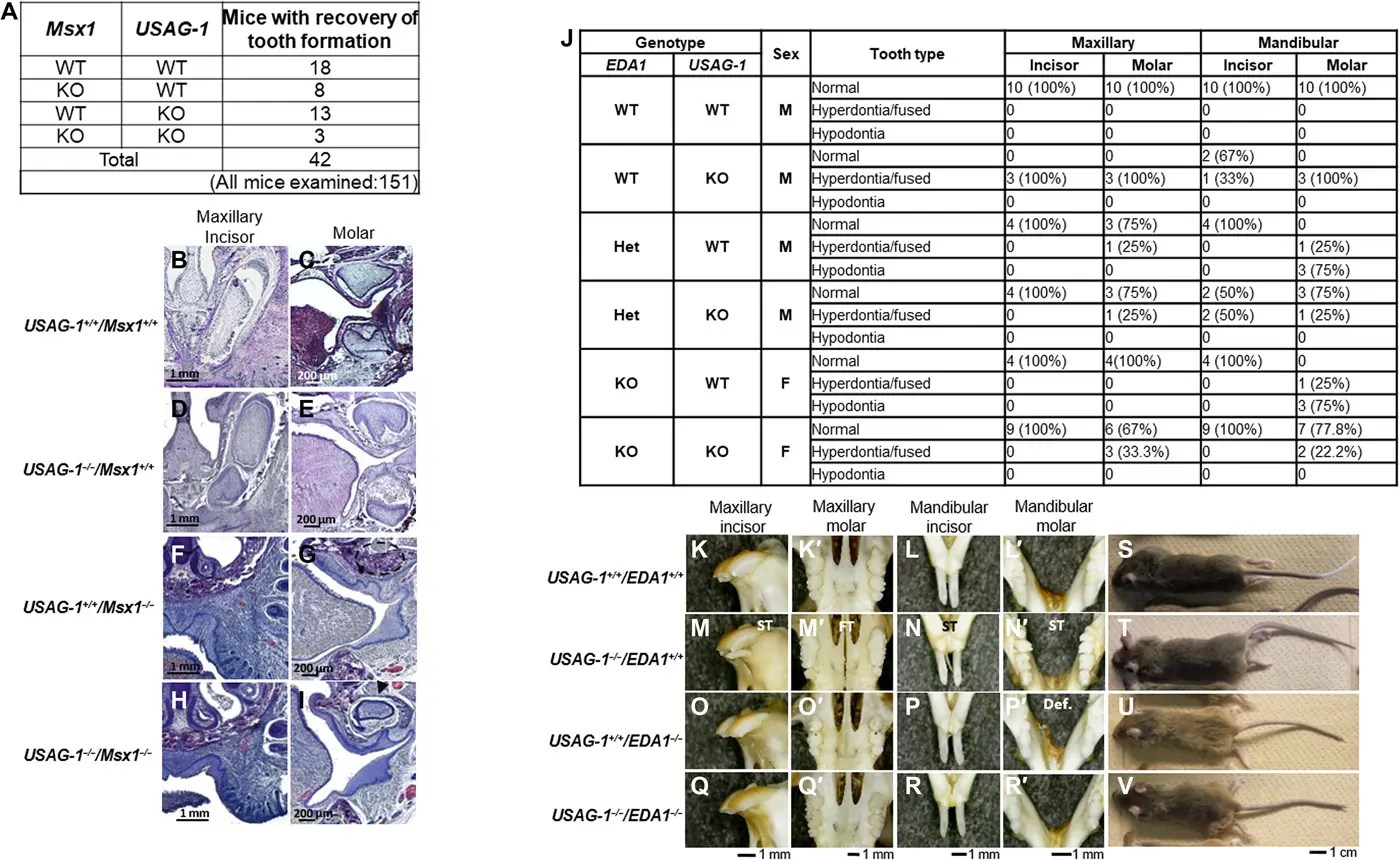
The protein USAG-1 (Uterine Sensitization-Associated Gene-1) functions as a natural “brake” on tooth formation. USAG-1 suppresses extra tooth growth. About 1% of people have congenital tooth agenesis, while over 90% of Japanese over 75 experience tooth loss from decay, injury, or disease.
Image Credits: updateordie
The experimental drug TRG-035, developed by Kyoto University spin-off Toregem Biopharma, uses monoclonal antibodies to block USAG-1 and reactivate BMP signaling, allowing dormant tooth buds to grow into complete teeth. In animal trials with mice and ferrets, a single intravenous dose successfully generated new teeth without major side effects.
Phase 1 Trials Underway at Kyoto University Hospital
Reports confirm that Phase 1 clinical trials began in September 2024 at Kyoto University Hospital. The trial involves 30 men aged 30–64 with at least one missing molar and will run until August 2025 to evaluate safety, dosage, and side effects. Participants receive intravenous doses, with progress monitored through imaging and clinical evaluations.
Updates from 2025 suggest encouraging results. By late 2024, the drug was tested in adults with acquired tooth loss, and Toregem Biopharma plans Phase 2 trials in 2025 for children aged 2–7 with oligodontia.Affecting about 0.1% of the population, this disorder can lead to nutritional and developmental challenges.
Dr. Takahashi’s Vision and Toregem’s Backing
Dr. Takahashi, who has spent nearly three decades studying tooth regeneration, stated: “We want to help people struggling with missing teeth. There is no permanent cure today, but hopes for tooth regrowth are strong.” Supported by over 100 collaborators, Toregem has funding from AMED and partners like WuXi Biologics. In 2023, Toregem raised 380 million yen to accelerate its research and development.
By 2025, developments remain promising. Early 2025 reports confirmed no major side effects in trials, and Toregem Biopharma presented findings at global events, highlighting potential benefits for older adults.
Still, challenges persist. Experts caution that animal trial results may not translate to humans, calling claims of a “third set of teeth” controversial. Concerns include ensuring correct tooth positioning to avoid misalignment and confirming long-term durability. Initial treatments may cost as much as implants (US$3,000–5,000 per tooth), though insurance could ease expenses.
Ethical and accessibility issues also play a role.Although early use targets rare conditions (1%), the long-term goal is treating common cases like cavities; in Brazil, where 15% of adults have tooth loss, this could cut public health costs.
TRG-035 as a Third Alternative to Dentures and Implants
If approved, TRG-035 could become a “third option” alongside dentures and implants. For children with agenesis, it would remove the need for frequently replaced dentures during growth. For adults and seniors, it could restore natural chewing, improving digestion and overall quality of life. Globally, the treatment has potential to help the estimated 5% of people living with partial tooth loss.
Meanwhile, complementary research is advancing. At King’s College London, scientists are testing Tideglusib to stimulate dentin regeneration in cavities using biodegradable sponges. Together, these innovations point toward a future of regenerative dentistry, where natural biology replaces synthetic solutions.
The outlook is credible and supported by reliable sources such as The Mainichi, New Atlas, and PubMed. With clinical trials ongoing and a projected launch around 2030, the USAG-1 inhibitor marks a major milestone. That said, patience is essential—scientific progress is deliberate to guarantee safety. Until then, good oral hygiene and regular dental care remain the best defense. Still, the day may come when regrown teeth are not the exception, but the standard in dentistry.
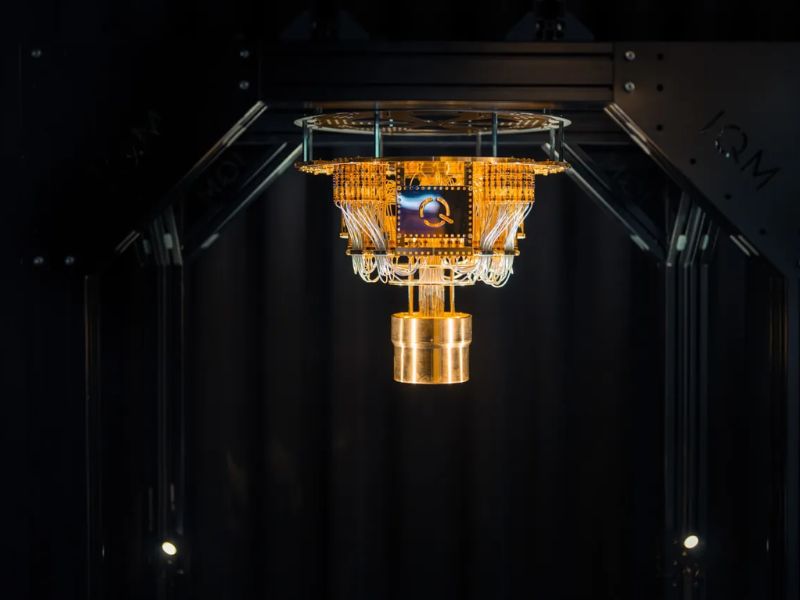
Finnish quantum computing company IQM has achieved unicorn status after a $300+ million Series B round led by cybersecurity-focused investor Ten Eleven Ventures.
A spinout from academia, IQM develops both on-premise quantum computers and a complementary cloud platform. While it has clients in the APAC region and the U.S., its primary market is currently Europe. This new funding is aimed at expanding its global commercial presence and advancing R&D to translate quantum science into practical applications.
Accelerating the Roadmap to Compete
To compete with tech giants like IBM, Google, and Microsoft for U.S. clients, IQM plans to accelerate its hardware and software roadmap. Co-CEO Jan Goetz stated this involves investing in chip fabrication, software development, and critical error correction research.
The industry is shifting its focus from simply maximizing the number of qubits to improving quality and reliability—a complex trade-off IQM must navigate. This focus on developing stable and useful systems is key to delivering the long-promised real-world applications for quantum computing.
Ultimately, IQM’s strategy reflects the sector’s broader move towards building the essential software layer that will allow domain experts (non-quantum specialists) to actually use this powerful technology.
Prioritizing US Growth and Sales
While most of its 300 employees are in Finland and Germany, IQM will use the new capital to grow its team and boost its commercial presence in the U.S. This may eventually include local assembly to navigate tariffs, but for now, the focus remains on sales, evidenced by a recent system sale to the U.S. Department of Energy’s Oak Ridge National Laboratory.
IQM chose lead investor Ten Eleven Ventures for their strategic fit. The firm’s co-founder, Alex Doll, sees quantum computing as a pivotal pillar for future cybersecurity and will join IQM’s board. The round, which included participation from Tesi and others, brings IQM’s total funding to $600 million.
Co-CEO Jan Goetz justified the round’s size by highlighting IQM’s commercial traction, claiming it is now the global leader in quantum computer sales across all major continents. Although the company has produced only 30 systems by late 2024, it is now progressing from its current 54-qubit systems toward deploying 150-qubit machines. Goetz values this technical milestone more than the company’s new unicorn status.
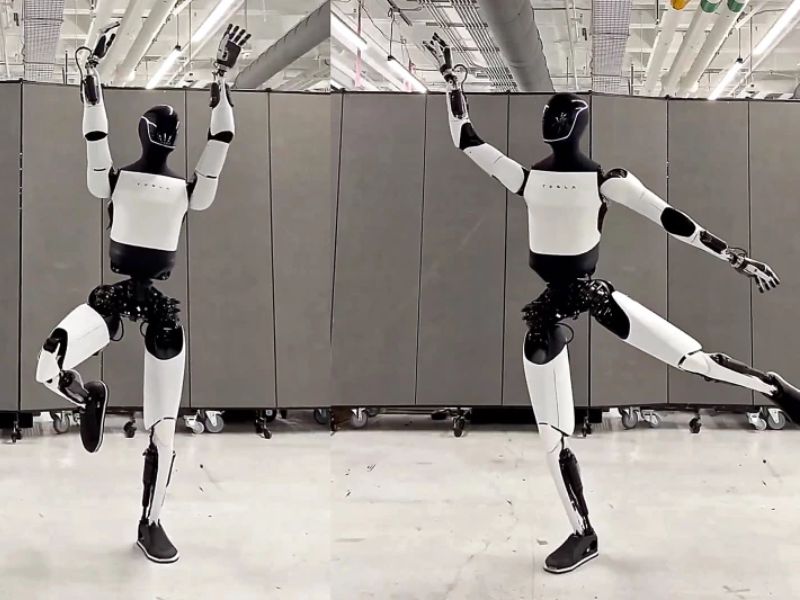
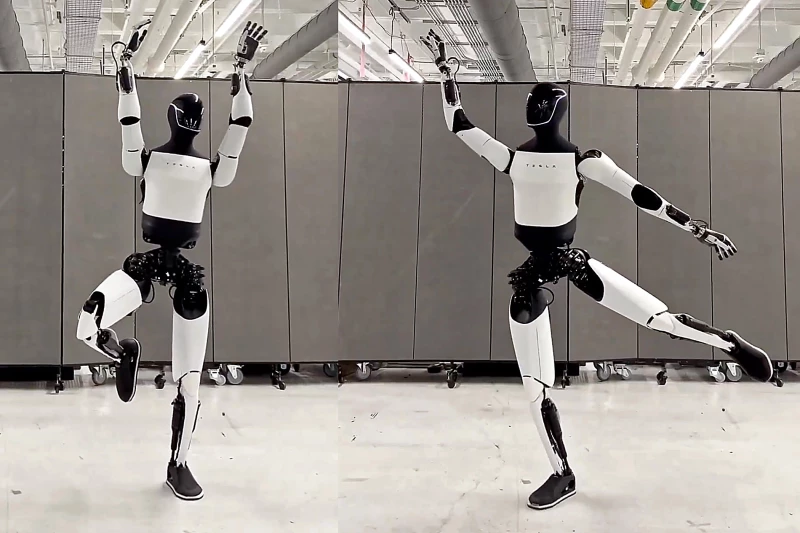
Image Credits: The Tesla Optimus just might have the best moves yet Tesla
We’ve tamed fire, split the atom, and launched ourselves beyond Earth. We’ve created machines that surpass our intelligence, gadgets that can make our meals, and instruments precise enough to open our bodies for life-saving surgery. All of that is remarkable. Traveling through space is awe-inspiring, no doubt … but it doesn’t mirror who we are. It doesn’t carry the essence of being human.
So, what comes next? Naturally, it’s teaching humanoid robots to move the way we do—through dance. And dancing isn’t unique to humans, either. Take Birds of Paradise: their mating displays are so elaborate that people gather in groups just to witness them. Males fan out their feathers and perform rhythmic steps to win over potential mates—remarkably similar to our own behavior.
Credits:Rare Footage of New Bird of Paradise Species Shows Odd Courtship Dance | Nat Geo Wild
The Manakin might even outshine Michael Jackson when it comes to moonwalking, while Australia’s Peacock Spiders put on performances as dazzling as their colorful costumes.
And it’s not just birds—bugs dance too. For insects, though, the moves are more geometry than groove. Honeybees, for instance, use a “waggle dance” to point their hive-mates toward food in relation to the sun—like a tiny, fuzzy Pythagoras shaking its hips.
Credits:Bee Dance (Waggle Dance)
“The best case for building robots in a human shape is that our world is already designed around us. Humanoid robots can slip right into our spaces, adapt to what’s already here, and be repurposed with little friction,” explains Humanoid, the company behind the HMND 1.
It’s a fair point. The human form also makes it easier for us to project feelings onto these machines—for better or worse. I’ve even been a little touched by some clips, like one from 1X showing its Neo Gamma robot doing chores, looking oddly forlorn as people around it barely notice.
But when a humanoid robot starts dancing? That’s a whole different energy—fun, joyful, and yes, just a bit uncanny. Few things capture the essence of being human as much as dance does.
Before Robots, There Were Puppets on Pulleys
Of course, dancing robots aren’t new. For decades, animatronics have been programmed to entertain us. Disney’s It’s a Small World ride, first shown at the 1964 New York World’s Fair before moving to Disneyland in 1966, is basically an endless parade of little puppet-like figures shimmying on hydraulics and pulleys. And Chuck E. Cheese’s Pizza Time Players have been both delighting and terrifying kids since 1977.
Fast-forward sixty years, and the tech landscape looks completely different. Now we’re talking about onboard CPUs and GPUs, reinforcement learning, physics simulations, proprioception, computer vision with real-time recognition, SLAM navigation, gyros, accelerometers, tactile sensors, microcontrollers, efficient servos, and batteries that last for hours.
One of the first big pop-culture moments I remember was back in 2005, when Beck’s Hell Yes video showcased a swarm of Sony QRIO robots tearing up the dance floor. At the time, it was jaw-dropping. The QRIO—short for “Quest for cuRIOsity”—stood just two feet tall, weighed 16 pounds, had 38 degrees of freedom, and could run, jump, walk, and most importantly, dance. But they were never sold to the public, and by 2006, the project was abruptly discontinued.
Credits:Beck – Hell Yes (Official Music Video)
In 2008, Aldebaran Robotics made a splash with the release of the NAO robot. Designed primarily for education, it quickly found roles in therapy, autism support, and STEM learning. Standing 22.8 inches (58 cm) tall, weighing 11.9 pounds (5.4 kg), and equipped with 25 degrees of freedom, the NAO was marketed mainly to schools and research labs, with a price tag ranging from $7,000 to $15,000.
While not fully open source, the robot could be programmed within set parameters. Almost immediately, users began hacking it into a dancing companion using Choregraphe, a drag-and-drop motion sequencing tool. The most iconic example? A NAO-robot version of Judson Laipply’s Evolution of Dance.
Credits:Evolution Of Dance by NAO Robot
By 2017, Toyota unveiled its T-HR3 robot—remarkably smooth in motion, even capable of performing graceful Tai Chi routines. The catch was that it wasn’t autonomous; instead, it mirrored the movements of a human wearing a control suit and VR headset. Still, it earned a spot on this list because it was among the first to achieve such human-like fluidity, offering a glimpse of what future robots might be capable of.
Credits:Demonstration of T-HR3 robot by Toyota at iRex17 (part 2 of 2) [RAW VIDEO]
In late 2020, Boston Dynamics stole the spotlight. While much of the world was stuck at home in lockdown, Spot, Atlas, and Handle broke out into the mashed potato, the twist, and a full choreographed routine set to The Contours’ 1962 classic Do You Love Me? The video racked up around 42 million views, leaving audiences stunned.
The first-generation Atlas—a 4-foot 11-inch (1.5 m), 176-pound (80 kg) humanoid robot powered mostly by hydraulics—moved so convincingly that even years later, some people still insist the footage was CGI. It wasn’t. In fact, pulling off that routine actually exposed weaknesses that pushed Boston Dynamics to upgrade Atlas. And let’s not forget, Atlas was also the first humanoid robot to successfully land a standing backflip back in 2017.
Credits:Do You Love Me?
Since then, the pace has only accelerated.
China’s Unitree made waves with the G1—a 4-foot 4-inch (1.3 m), 77-pound (35 kg) humanoid boasting up to 43 degrees of freedom, 3D LiDAR, functional hands, and jaw-dropping agility. It was the first humanoid to land a front flip, the first to pull off a backflip without hydraulics, and it can spring up from its back like a trained martial artist. Oh, and of course—it dances. Honestly, better than I can.
Credits:What Dance Would You Like to Perform with Unitree G1?
The real spark for this whole piece came from Tesla’s Optimus.
Milan Kovac, Tesla’s former VP of Optimus Engineering, shared a clip of the robot showing off reinforcement-learning dance moves—executed “zero-shot” from simulation to the real world. In other words, it practiced the routine virtually, then pulled it off flawlessly on the first attempt in real life. That’s like picturing yourself performing Swan Lake while lounging on the couch, then standing up and actually nailing it.
When Robots Start to Dance Gracefully
It was a short clip, but watching Optimus pull off a simple ballet move floored me. I’d never seen a humanoid robot attempt genuine ballet before, and it felt like a milestone—a real leap in robotic ability. Huawei did a partial ballet collaboration back in 2021, but this was operating on an entirely different level.
Curious, I asked my wife—who’s staunchly anti-AI and anti-robot—what she thought. Her response was blunt: “Why are we making robots like humans? I don’t like it.” Judging by the flood of similar comments on YouTube, she’s not alone.
And yet … here we are.
From QRIO to Optimus, humanoid robots have danced their way into the cultural spotlight. But they’re no longer just novelties—today’s humanoids are advanced platforms backed by hundreds of millions in R&D. Building a single unit can run well over $100,000. They move with a balance, fluidity, and precision that sometimes makes us look awkward by comparison. Teaching these machines to waltz, break into the running man, or even execute a plié isn’t just about spectacle—it’s about pushing the boundaries of movement, AI, and human-robot interaction.
So maybe choreographing robots isn’t the next grand leap in technology … but it might just be the most human step we’ve taken.
Image Credits:The study compared hot baths, traditional saunas, and fancy far-infrared saunas to see what triggered the greatest health benefits Gemini
From ancient baths to modern saunas, passive heat therapy has long been used to boost health and reduce disease risk. As warmth penetrates the body, core temperature climbs. The effect? The cardiovascular system kicks in, raising heart rate and widening blood vessels—like a light workout without the effort.
Think of it as a spa session with extra perks; this gentle battle with heat sparks potent physiological changes.
Heat therapies don’t all work equally well A new University of Oregon study put hot baths, traditional saunas, and far-infrared saunas head-to-head to see which delivers the greatest health benefits.
Study Finds Hot Water Immersion Tops Both Traditional and Infrared Saunas
For young, healthy adults, soaking in hot water produced the most powerful effects—improving temperature regulation, circulation, and even immune function more effectively than either sauna type.
The study followed 20 fit participants (ages 20–28, non-smokers, and not on medication) under the guidance of physiology expert Christopher Minson. Researchers measured changes in core temperature, heart rate, blood pressure, cardiac workload, and immune response across different heat sessions.
Participants completed 10 sessions, rotating between hot tubs, traditional saunas, and far-infrared saunas. Data was collected before, during, and after each session.
Why Hot Baths Heat the Body More Than Saunas
Hot water immersion raised core temperature the most, boosting circulation and immune response. Lead author Jessica Atencio explained this occurs because submersion prevents efficient cooling through sweat.
Minson adds that while regular exercise can match or even surpass these benefits, passive heat therapy is a valuable alternative for those unable to work out.
The findings were published in the American Journal of Physiology.
Image Credits:Succulents glow in shades of red, green, blue, and more after being infused with afterglow phosphor particles that absorb and slowly release light Liu et al., Matter
Imagine if the plants in your home could do more than simply look decorative. Scientists at South China Agricultural University found a way to use nanoparticles to turn plants into softly glowing night lights.
Phosphor Compound Turns Succulents into Two-Hour Natural Night Lights
Researchers developed a phosphor compound that lets succulents absorb light in minutes and glow softly for up to two hours.
The afterglow phosphor, like that in glow-in-the-dark toys, is cheap, safe, and eliminates the need for genetic modification. Instead, it’s simply injected into the leaves.
Image Credits:Rapid and uniform diffusion of luminous phosphor particles inside E. mebina leaves (sped up to 1.6x) Liu et al., Matter
Finding the Optimal Particle Size for Maximum Glow
For the latest work, the researchers had to refine more than just the commercial compound. They also needed to determine the ideal particle size for the phosphors to function effectively inside plants. Lead author Shuting Liu noted that smaller particles spread easily but glow weakly, while larger ones shine brighter but travel less.
After extensive testing, the team identified about 7 micrometers—roughly the width of a red blood cell—as the optimal size. They also found the particles performed best in succulents with thick leaves, rather than thinner-leaved plants like bok choy.
With the right particle size, concentration, and plant type, the phosphor quickly spread through succulent leaves, producing a uniform glow bright enough to light nearby objects.
Image Credits:With just a couple of minutes of charge time, the phosphor-injected succulents glowed brightly enough to illuminate nearby objects Liu et al., Matter
Colorful, Low-Cost Glowing Plants for Décor and Lighting
The team developed phosphors that glow green, red, and blue, offering potential for décor and lighting. Each plant takes about 10 minutes to prepare and costs just over 10 yuan ($1.40), excluding labor.
Over 10 days, treated plants showed no damage, yellowing, or chlorophyll loss. The next phase of research will focus on studying the long-term impact of the phosphor to confirm its safety. If proven harmless, these glowing plants could one day light up large botanical gardens, offering visitors an immersive, radiant experience.
We use cookies on our website to give you the most relevant experience by remembering your preferences and repeat visits. By clicking “Accept All”, you consent to the use of ALL the cookies. However, you may visit "Cookie Settings" to provide a controlled consent.
This website uses cookies to improve your experience while you navigate through the website. Out of these, the cookies that are categorized as necessary are stored on your browser as they are essential for the working of basic functionalities of the website. We also use third-party cookies that help us analyze and understand how you use this website. These cookies will be stored in your browser only with your consent. You also have the option to opt-out of these cookies. But opting out of some of these cookies may affect your browsing experience.
Necessary cookies are absolutely essential for the website to function properly. These cookies ensure basic functionalities and security features of the website, anonymously.
Cookie
Duration
Description
cookielawinfo-checkbox-analytics
11 months
This cookie is set by GDPR Cookie Consent plugin. The cookie is used to store the user consent for the cookies in the category "Analytics".
cookielawinfo-checkbox-functional
11 months
The cookie is set by GDPR cookie consent to record the user consent for the cookies in the category "Functional".
cookielawinfo-checkbox-necessary
11 months
This cookie is set by GDPR Cookie Consent plugin. The cookies is used to store the user consent for the cookies in the category "Necessary".
cookielawinfo-checkbox-others
11 months
This cookie is set by GDPR Cookie Consent plugin. The cookie is used to store the user consent for the cookies in the category "Other.
cookielawinfo-checkbox-performance
11 months
This cookie is set by GDPR Cookie Consent plugin. The cookie is used to store the user consent for the cookies in the category "Performance".
viewed_cookie_policy
11 months
The cookie is set by the GDPR Cookie Consent plugin and is used to store whether or not user has consented to the use of cookies. It does not store any personal data.
Functional cookies help to perform certain functionalities like sharing the content of the website on social media platforms, collect feedbacks, and other third-party features.
Performance cookies are used to understand and analyze the key performance indexes of the website which helps in delivering a better user experience for the visitors.
Analytical cookies are used to understand how visitors interact with the website. These cookies help provide information on metrics the number of visitors, bounce rate, traffic source, etc.
Advertisement cookies are used to provide visitors with relevant ads and marketing campaigns. These cookies track visitors across websites and collect information to provide customized ads.