Researchers suggest that emotions such as joy, love, and anger may extend beyond the human body, potentially leaving traces on the structure of water itself. According to specialists, water exposed to different emotional inputs appears to show distinct crystal patterns, displaying orderly or chaotic shapes depending on the type of “vibration” it receives.
The idea gained attention when scientists compared water samples influenced by positive expressions like “gratitude” and “hope” with others exposed to negative words. The contrast was striking: crystals linked to uplifting messages formed balanced, aesthetically pleasing shapes, while those associated with negative emotions broke into irregular and messy patterns.
Emotional States and Their Potential Influence on the Body and Environment
These findings have sparked debate about whether our emotional states could affect not only our surroundings but also our own bodies, given that humans are largely made of water. The research hints that nurturing positive feelings might produce physical effects that are both real and unexpected.
Although many remain doubtful of these claims, the experiments have encouraged new avenues of inquiry. If emotions can alter microscopic structures, some argue, what broader influence might they have on the way we experience and shape the world around us?
Since the late 1800s, sauropod dinosaurs—like Brontosaurus and Brachiosaurus—have been widely accepted as plant-eaters. Yet until recently, no direct evidence, such as fossilized stomach contents, had confirmed this.
A Rare Glimpse Into a Sauropod’s Diet
I was part of a paleontology team working in outback Queensland, Australia, where we discovered “Judy,” an extraordinary sauropod fossil containing the preserved remains of its last meal.
In a new Current Biology paper, we detail these gut contents and report that Judy is not only the most complete sauropod ever found in Australia but also the first with fossilized skin.
Thanks to its exceptional preservation, Judy offers new insight into how these massive creatures fed.
Sauropods’ Reign and Extinction
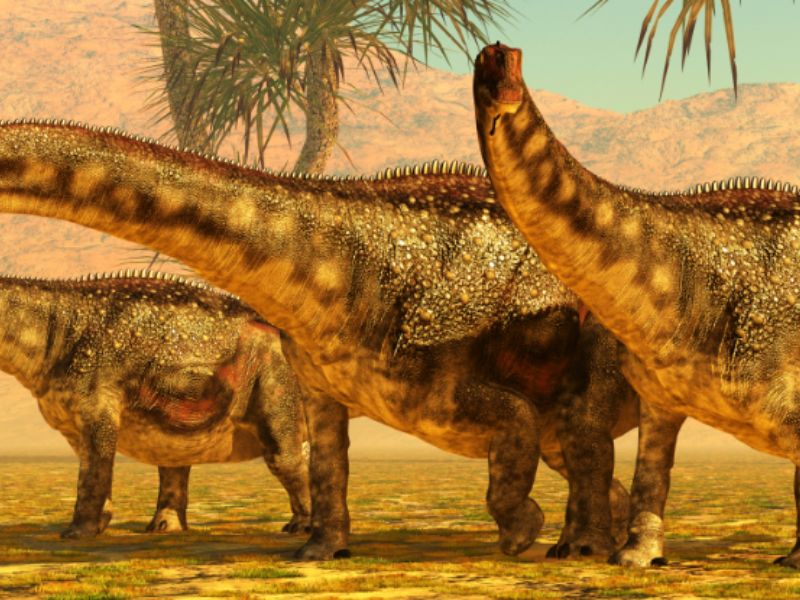
Sauropod dinosaurs dominated Earth for 130 million years until their extinction 66 million years ago.
Since the 1870s, sauropods have been widely accepted as plant-eaters. It’s difficult to imagine these massive creatures eating anything but vegetation.
Their simple teeth weren’t suited for tearing meat or breaking bones. With small brains and slow movements, they likely lacked the speed or intelligence to hunt prey effectively.
To maintain their enormous size, sauropods would have needed to feed frequently, relying on a consistent and plentiful food source—plants.
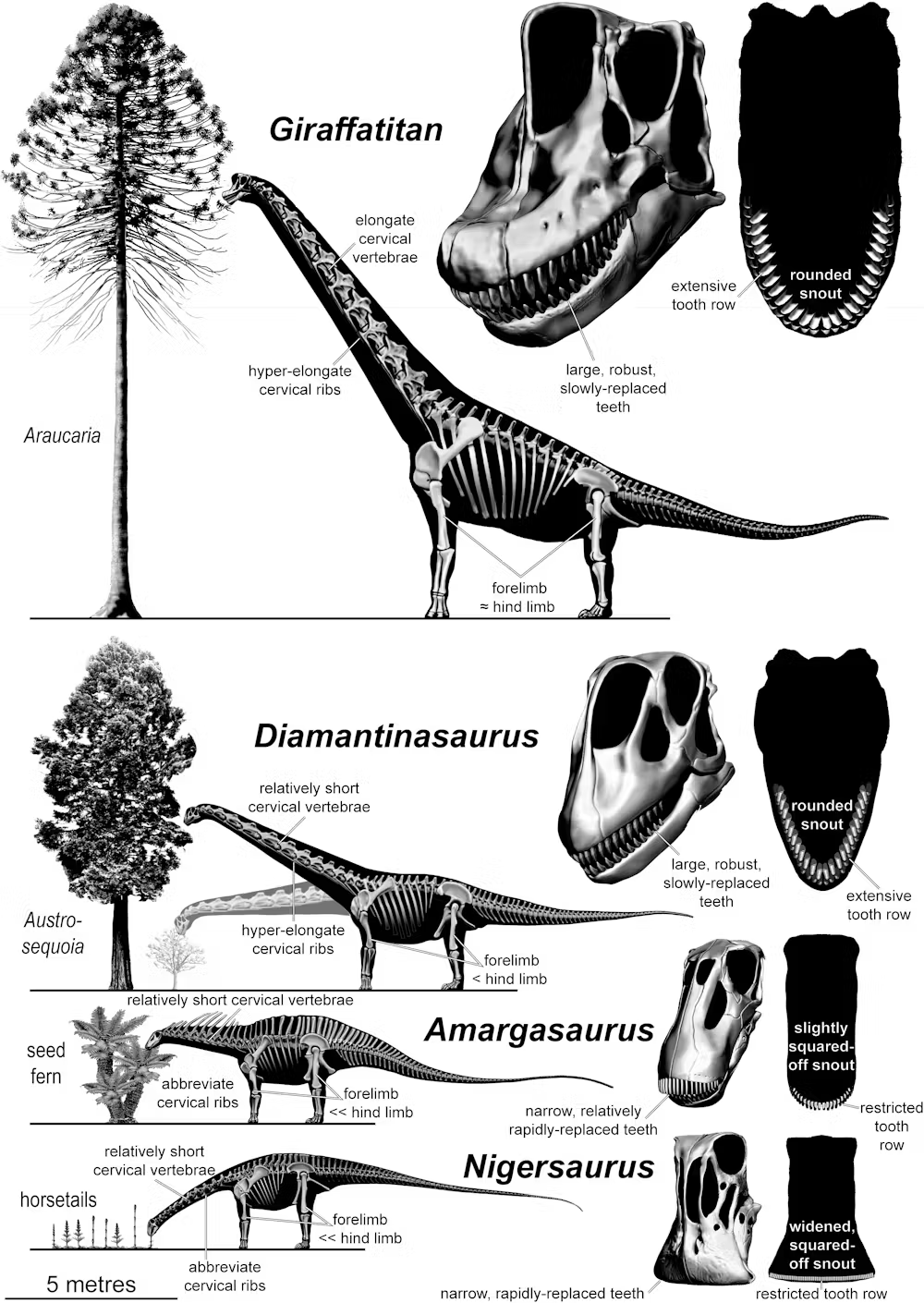
Image Credits:Sauropods showed great variety in overall size, skull and tooth row shape, tooth shape and replacement rate, neck length and flexibility, and relative limb proportions. These features and others have been used to infer the feeding heights of different sauropods. (Travis Tischler & Tayla Croxford/Poropat et al., Current Biology, 2025)
While sauropods shared a generally uniform body structure—large, four-legged, and long-necked—they displayed notable differences upon closer examination.
How Sauropods Differed in Form and Function
Some sauropods had squared snouts with small, fast-replacing teeth limited to the front of the mouth, while others featured rounded snouts and sturdier teeth that extended further back along the jaw. Neck length and flexibility also varied widely—some necks stretched up to 15 meters. Additionally, a few species had shoulders that rose higher than their hips.
Their overall size differed as well—some were noticeably smaller than others. These physical traits would have influenced how high each species could feed and which types of vegetation they could access.
Image Credits:Small portion of Judy’s skin, showing approximately hexagonal scales covered in tiny lumps (termed papillae). Scale bar in centimetres. (Poropat et al., Current Biology, 2025)
Sauropod discoveries are increasingly common in outback Queensland, largely due to the efforts of the Australian Age of Dinosaurs Museum in Winton.
In 2017, I assisted the museum in uncovering a sauropod estimated to be around 95 million years old, later nicknamed Judy in honor of the museum’s co-founder, Judy Elliott.
Australia’s Most Complete Sauropod with Preserved Skin and Stomach Contents
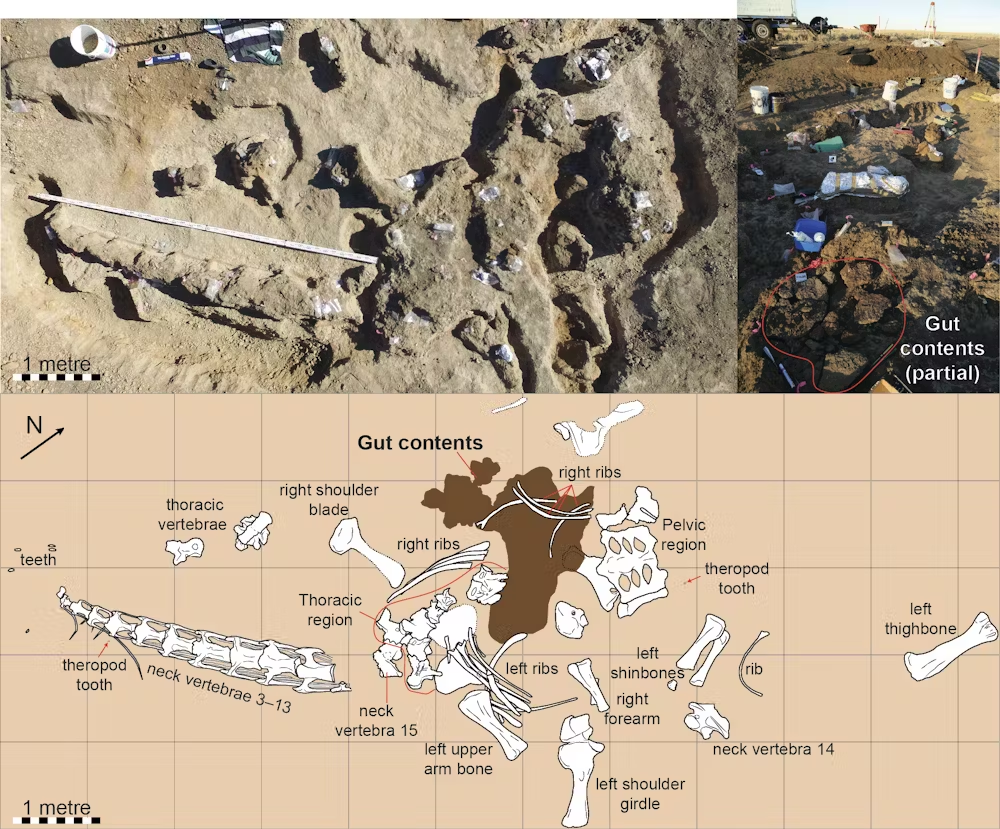
It quickly became clear that this was a remarkable find. Not only is Judy the most complete sauropod skeleton and the first with fossilized skin ever discovered in Australia, but her abdominal area also contained an unusual rock layer—about two square meters in size and averaging ten centimeters thick—densely packed with fossilized plant material.
The presence of this plant-rich layer solely within Judy’s abdominal area, pressed against the inner side of her fossilized skin, led us to ask—had we uncovered the remnants of Judy’s final meal or meals?
If that were the case, we realized we were dealing with something truly unique: the first-ever discovery of sauropod stomach contents.
Image Credits:Bird’s eye view of the Judy site, showing how her bones and gut contents were found. Some parts of her body seem to have been moved out of position after she died by predatory dinosaurs, as shown by the presence of a few theropod teeth on site. (Winton Shire Council/Australian Age of Dinosaurs/Poropat et al., Current Biology, 2025)
A Rare Specimen of Diamantinasaurus matildae
By analyzing Judy’s skeleton—carefully extracted from the surrounding rock by museum volunteers—we identified her as Diamantinasaurus matildae.
These techniques allowed us to digitally reconstruct the plant material—preserved as voids in the rock—without damaging the fossils.
Analyzing the Composition of Judy’s Final Meal
We carefully removed and analyzed small samples of the gut contents, along with fragments of skin and surrounding rock, to determine their chemical composition.
The results showed that the gut contents had fossilized through microbial activity in an acidic environment—possibly stomach acids—with the minerals likely coming from the breakdown of Judy’s own body tissues.
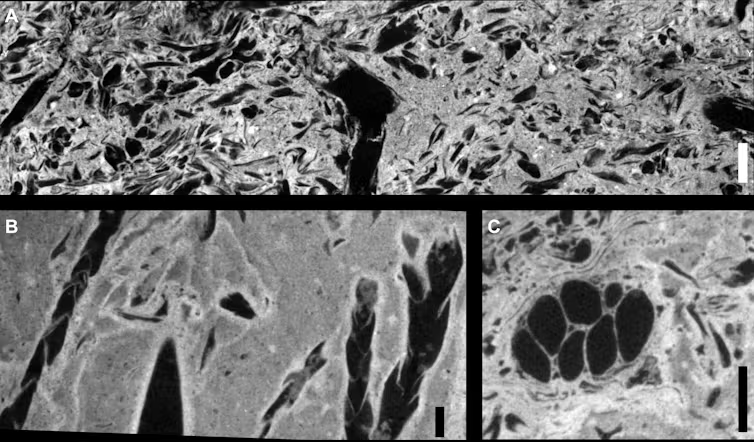
Image Credits:Some of the many plant fossils found within Judy’s gut contents, including conifer bracts (B) and a seed fern seed pod (C). Scale bars = 1 centimetre. (Poropat et al., Current Biology, 2025)
Judy’s gut contents confirm that sauropods consumed plant material with minimal chewing, relying heavily on gut microbes for digestion.
Crucially, the analysis reveals that just before her death, Judy ate conifer bracts (from relatives of today’s monkey puzzle trees and redwoods), seed pods from now-extinct seed ferns, and leaves from angiosperms, or flowering plants.
At the time, conifers—much like today—would have been tall trees, suggesting Judy fed high off the ground. In contrast, flowering plants during the mid-Cretaceous were mostly low-lying, indicating she grazed at varying heights.
However, since Judy wasn’t fully grown at the time of her death, the angiosperm remains suggest she also fed closer to the ground. This points to the possibility that some sauropods’ diets shifted slightly as they matured. Still, they remained committed plant-eaters throughout their lives.
Judy’s preserved skin and stomach contents are now on display at the Australian Age of Dinosaurs Museum in Winton. While I’m not sure how I’d feel about my final meal being on public view after death, I think I’d be okay with it—if it advanced science.
Oceans, covering a substantial portion of Earth’s surface and hosting a diverse range of life, also contain a dispersed population of uranium ions. Extracting these ions from seawater could provide a sustainable fuel source for nuclear power generation.
Scientists, as reported in ACS Central Science, have developed a material for electrochemical extraction that efficiently attracts elusive uranium ions from seawater, outperforming existing methods. Nuclear power reactors harness the energy stored within atoms through fission, breaking apart uranium atoms due to their inherent instability and radioactivity.
Uranium
Currently, uranium is primarily extracted from rocks, but the availability of uranium ore deposits is limited. The Nuclear Energy Agency estimates that the oceans contain over 4.5 billion tons of uranium in dissolved uranyl ions, surpassing the land reserves by over 1,000 times.
However, extracting these ions presents challenges due to the insufficient surface area of existing materials for effective ion trapping. In response, Rui Zhao, Guangshan Zhu, and their team aimed to create an electrode material with a highly porous structure suitable for electrochemically capturing uranium ions from seawater.
The researchers initiated the process with a flexible cloth crafted from carbon fibers to produce the electrodes. The cloth underwent coating with two specialized monomers, followed by polymerization. Subsequently, the cloth was treated with hydroxylamine hydrochloride to introduce amidoxime groups to the polymers.
The inherent porous structure of the cloth resulted in numerous small pockets where amidoxime could settle, facilitating the effective trapping of uranyl ions. In experimental setups, the team deployed the coated cloth as a cathode in seawater, whether naturally sourced or enriched with uranium, added a graphite anode, and ran a cyclic current between the electrodes.
Extracting uranium from seawater for nuclear fuel: Tests using seawater from the Bohai Sea
Over time, the cathode cloth accumulated bright yellow, uranium-based precipitates. In tests using seawater from the Bohai Sea, the electrodes extracted 12.6 milligrams of uranium per gram of water over 24 days. The capacity of the coated material surpassed that of most other uranium-extracting materials tested by the team.
Moreover, employing electrochemistry to trap the ions proved to be approximately three times faster than allowing them to accumulate naturally on the cloths. The researchers assert that this study presents an efficient approach to extracting uranium from seawater, potentially establishing oceans as new nuclear fuel sources.
Therefore, the authors express gratitude for the funding received from various sources, including the National Key R&D Program of China, the National Natural Science Foundation of China, the Project of Education Department of Jilin Province, the Natural Science Foundation of the Department of Science and Technology of Jilin Province, the Fundamental Research Funds for the Central Universities, and the “111” project.
Wildfires, among the nation’s most devastating natural calamities, threaten lives, property, and the environment by causing air pollution and destroying homes and infrastructure. Effective wildfire forecasting and management hinge upon understanding the risk and strategically allocating resources. A recent study, detailed in the November release of Earth’s Future, brings scientific insights to this cause.
The collaborative research, involving scientists from DRI, Argonne National Laboratory, and the University of Wisconsin-Madison, delved into evaluating forthcoming fire risks. They analyzed four fire danger indices employed in North America, examining their association with observed wildfire sizes spanning from 1984 to 2019.
Climate change intensifies wildfires and prolongs fire seasons: The impact of climate change
They further investigated the impact of climate change on wildfire risk and duration, discovering potential increases in both fire likelihood and prolonged fire seasons due to climate shifts.
Dr. Guo Yu, the study’s lead author and an assistant research professor at DRI, highlighted, “We’ve utilized various fire danger indices to assess fire risk in the contiguous U.S. Past research mainly focused on how climate change might influence wildfire risk using just one of these indices. Only a few studies have explored how fire risk translates into the actual size or features of wildfires. We aimed to evaluate both aspects in our paper comprehensively.”
These fire danger indices rely on weather conditions and fuel moisture content, which gauges the dryness of ground vegetation. The commonly used indices in North America include the USGS Fire Potential Index, the Canadian Forest Fire Weather Index, and the Energy Release Component and Burning Indices from the National Fire Danger Rating System.
Initially, the researchers employed satellite remote sensing data from 1984 to 2019, analyzing over 13,000 wildfires (excluding controlled burns) to ascertain the correlation between potential fire risk and the actual size of wildfires.
The fire danger indices
The study revealed a direct correlation between heightened wildfire risk and larger fire sizes, especially across wider regions.
When the fire danger indices were projected into future climate scenarios, the investigation concluded that extreme wildfire hazards would surge by an average of 10 days nationwide by the century’s end, mainly attributed to rising temperatures.
Particular regions, such as the southern Great Plains encompassing states like Kansas, Oklahoma, Arkansas, and Texas, are anticipated to experience over 40 additional days annually of intense wildfire threats.
Conversely, minor areas might see a reduction in their yearly wildfire risk due to increased rainfall and higher humidity, notably along the Pacific Northwest and mid-Atlantic coasts.
The Southwest, including Texas and Louisiana coastal plains, foresees an augmentation of over 20 days per year in severe wildfire seasons, largely concentrated in spring and summer months.
Unexpectedly, the forecast also predicts extended fire seasons, even into the winter months, particularly in the Texas-Louisiana coastal region.
Dr. Guo Yu expressed his surprise, stating, “Under a warmer future climate, we can see that the fire danger will even be higher in the winter. This surprised me, because it feels counterintuitive, but climate change will alter the landscape in so many ways.”
The authors aspire that their findings will aid fire managers in comprehending potential wildfire sizes for adequate preparation and in comprehending the shifting fire seasonality due to climate change.
In a groundbreaking laboratory experiment, scientists have definitively determined the trajectory of individual antihydrogen atoms when dropped, concluding that antimatter falls downwards. This discovery confirms the gravitational attraction between antimatter and regular matter, eliminating the possibility of gravitational repulsion as an explanation for the scarcity of antimatter in the observable universe.
Researchers from the global Antihydrogen Laser Physics Apparatus (ALPHA) collaboration at CERN in Switzerland have published their findings in the journal Nature. This achievement is the result of collaboration among numerous countries and private institutions, including the United States, supported through the joint U.S. National Science Foundation/Department of Energy Partnership in Basic Plasma Science and Engineering program.
Vyacheslav “Slava” Lukin, a program director in NSF’s Physics Division, underscores the significance of international teamwork and highlights the potential applications of antimatter research, such as positron emission tomography (PET) scans for cancer detection.
Gravity’s impact on antimatter: the enigmatic and rare counterpart of ordinary matter
Antimatter, the enigmatic and rare counterpart of ordinary matter, defies science fiction notions of antimatter-powered warp drives and photon torpedoes, remaining a genuine but exceptionally scarce phenomenon.
University of California, Berkeley plasma physicist and member of the ALPHA collaboration, Jonathan Wurtele, stated, “Einstein’s theory of general relativity says antimatter should behave exactly the same as matter,” and he further explained that numerous indirect measurements have suggested that gravity interacts with antimatter as predicted. However, prior to the recent result, there had been no direct observation to definitively determine whether antihydrogen, for example, responds to gravity by moving upward or downward in a gravitational field.
Most of the universe, including our bodies and Earth, is made of conventional matter with protons, neutrons, and electrons.
Antimatter, despite sharing some opposing properties with regular matter, remains its counterpart. For instance, antiprotons possess a negative charge, while protons carry a positive charge. Similarly, antielectrons, also known as positrons, exhibit a positive charge, whereas electrons bear a negative charge.
The explosive nature of antimatter
One significant challenge faced by researchers is the explosive nature of antimatter upon contact with regular matter. When antimatter touches matter, it annihilates, converting all their mass into energy. This process generates an incredibly dense form of energy release, known for its potency.
The minuscule antimatter quantity in the ALPHA experiment only registers as energy through sensitive detectors. Consequently, meticulous handling of antimatter is essential to prevent its loss, according to Fajans.
The antimatter scarcity, despite predictions of equal abundance with regular matter, raises the baryogenesis problem. While some sources of antimatter, such as positrons emitted from the decay of potassium, do exist, they are relatively scarce. This mystery led scientists to explore theories, including antimatter’s repulsion by regular matter during the big bang.
Gravity’s impact on antimatter: the ALPHA collaboration experiment
Recent ALPHA experiment shows antimatter is attracted to gravity, like regular matter, not repelled by it. This conclusion challenges the theory of gravitational repulsion as an explanation for antimatter’s scarcity. The experiment eliminated antimatter’s gravitational repulsion but didn’t definitively confirm differences in gravitational forces between antimatter and regular matter. Further, more precise measurements are required to address this question.
The researchers involved in the ALPHA collaboration plan to continue their investigations into the properties of antihydrogen. They seek to enhance antimatter’s gravity measurements and study antihydrogen’s interaction with electromagnetic radiation. Differences between antihydrogen and hydrogen may challenge fundamental physical laws in quantum mechanics and gravity, requiring further experiments for certainty.
Read more: The Wonderful Black People Inventions .
We use cookies on our website to give you the most relevant experience by remembering your preferences and repeat visits. By clicking “Accept All”, you consent to the use of ALL the cookies. However, you may visit "Cookie Settings" to provide a controlled consent.
This website uses cookies to improve your experience while you navigate through the website. Out of these, the cookies that are categorized as necessary are stored on your browser as they are essential for the working of basic functionalities of the website. We also use third-party cookies that help us analyze and understand how you use this website. These cookies will be stored in your browser only with your consent. You also have the option to opt-out of these cookies. But opting out of some of these cookies may affect your browsing experience.
Necessary cookies are absolutely essential for the website to function properly. These cookies ensure basic functionalities and security features of the website, anonymously.
Cookie
Duration
Description
cookielawinfo-checkbox-analytics
11 months
This cookie is set by GDPR Cookie Consent plugin. The cookie is used to store the user consent for the cookies in the category "Analytics".
cookielawinfo-checkbox-functional
11 months
The cookie is set by GDPR cookie consent to record the user consent for the cookies in the category "Functional".
cookielawinfo-checkbox-necessary
11 months
This cookie is set by GDPR Cookie Consent plugin. The cookies is used to store the user consent for the cookies in the category "Necessary".
cookielawinfo-checkbox-others
11 months
This cookie is set by GDPR Cookie Consent plugin. The cookie is used to store the user consent for the cookies in the category "Other.
cookielawinfo-checkbox-performance
11 months
This cookie is set by GDPR Cookie Consent plugin. The cookie is used to store the user consent for the cookies in the category "Performance".
viewed_cookie_policy
11 months
The cookie is set by the GDPR Cookie Consent plugin and is used to store whether or not user has consented to the use of cookies. It does not store any personal data.
Functional cookies help to perform certain functionalities like sharing the content of the website on social media platforms, collect feedbacks, and other third-party features.
Performance cookies are used to understand and analyze the key performance indexes of the website which helps in delivering a better user experience for the visitors.
Analytical cookies are used to understand how visitors interact with the website. These cookies help provide information on metrics the number of visitors, bounce rate, traffic source, etc.
Advertisement cookies are used to provide visitors with relevant ads and marketing campaigns. These cookies track visitors across websites and collect information to provide customized ads.