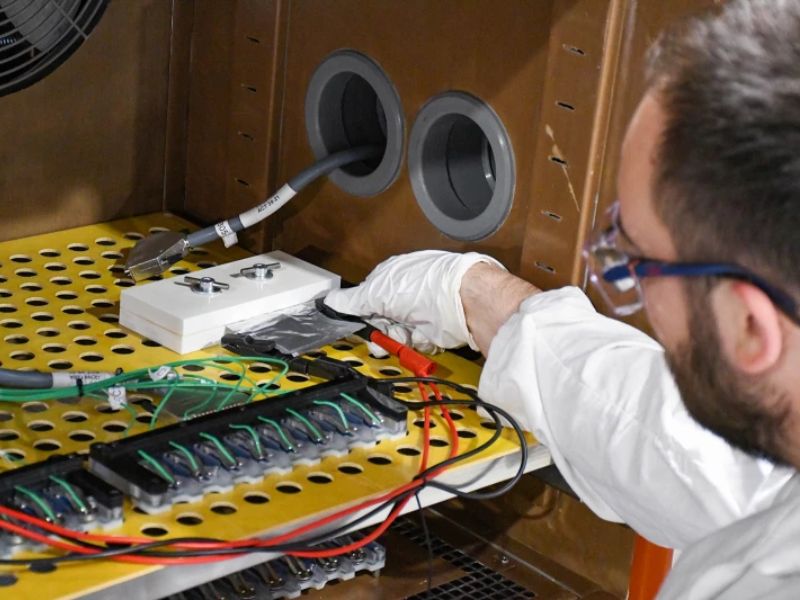
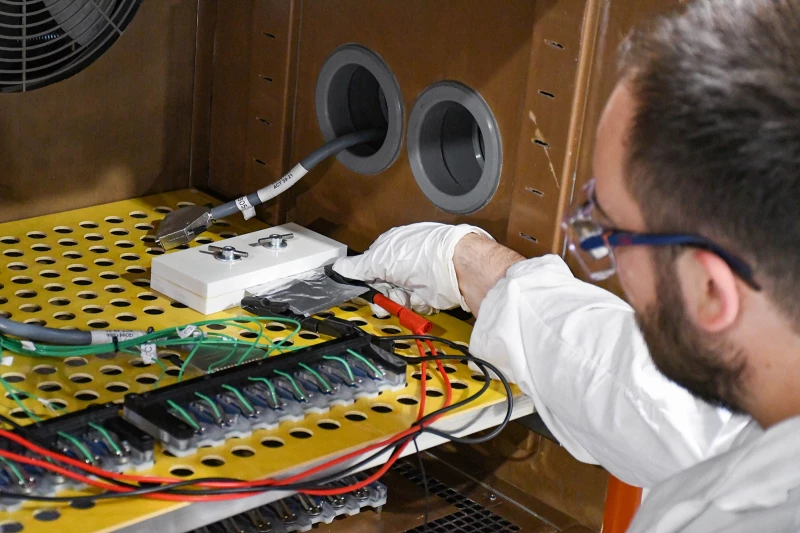
Image Credits:A pouch cell is used to test the battery’s electrode materials Fraunhofer IKTS
Researchers at Germany’s Fraunhofer Institute for Ceramic Technologies and Systems (IKTS) have created a new kind of sodium-ion battery that relies on lignin as a core electrode material.
Lignin is a naturally occurring polymer in trees that binds wood fibers together and provides structural strength. In the paper-making industry, manufacturers largely treat it as a low-value byproduct and typically burn it for energy. The team saw a chance to turn this waste into an affordable, safe battery material.
From Wood Waste to Working Anodes
This study advances wood-based materials toward practical use by heating lignin into hard carbon for the battery’s anode.
Image Credits:Hard carbon, obtained from lignin, forms the basis for the electrode of the battery Fraunhofer IKTS
One of lignin’s biggest strengths is how easy it is to obtain.People can source it locally in many regions worldwide. For this project, the team collected lignin from the Thuringian Forest near the Fraunhofer IKTS facility, providing a far cheaper, more accessible alternative to costly, mining-dependent metals like lithium, cobalt, and nickel.
“Our goal is to remove critical metals from the battery value chain. “We’re aiming to reduce or even eliminate fluorine in electrodes and electrolytes, but our main focus is turning locally sourced, high-quality lignin into high-performance electrodes for sodium-ion batteries,” says Lukas Medenbach of Fraunhofer IKTS.
Using lignin in batteries also lowers carbon emissions, since the material is no longer burned as waste. In addition, sodium-ion batteries made this way are safer and much easier to recycle than lithium-based alternatives.
Iron-Based Prussian Blue Analogs Power the Positive Electrode
The battery’s positive electrode uses abundant, non-toxic iron-based Prussian Blue analogs—once known as pigments, now engineered to store sodium ions.
Tests have shown that lignin-derived hard carbon performs well in sodium-ion storage and offers excellent cycle stability.
“Even after 100 charge–discharge cycles, the lab cell shows no meaningful performance loss. By the end of the project, we aim to demonstrate 200 cycles in a 1-Ah full cell,” Medenbach notes.
Researchers are still developing lignin-based sodium-ion batteries, which suit stationary storage and low-power vehicles like microcars and forklifts, where fast charging isn’t critical.
Image Credits:Cientista clonagem Asia-Pacific Images Studio (Asia-Pacific Images Studio/Getty Images)
Researchers at the Institute of Physics of the Chinese Academy of Sciences have made a major breakthrough by producing metals just one atom thick, a development that could be transformative.
Since graphene’s discovery in 2004, 2D materials have reshaped our understanding of matter and advanced physics and materials science. In recent years,
Why Making Two-Dimensional Metals Is So Challenging
Zhang Guangyu, the IOP lead scientist, said creating 2D metals is difficult due to strong multi-directional metallic bonds.
Using the van der Waals compression technique, researchers synthesized several 2D metals, including bismuth.
These 2D metals are extraordinarily thin—about one millionth the thickness of an A4 sheet of paper and roughly one two-hundred-thousandth the width of a human hair.
International Recognition for a Major 2D Materials Breakthrough
The study has received strong acclaim from international reviewers, who regard it as an important breakthrough in two-dimensional materials research.
Du Luojun of the research team said the work fills a key gap in 2D materials and will speed up scientific and technological progress.
He noted that, like 3D metals in the past, 2D metals could drive the next stage of human innovation.
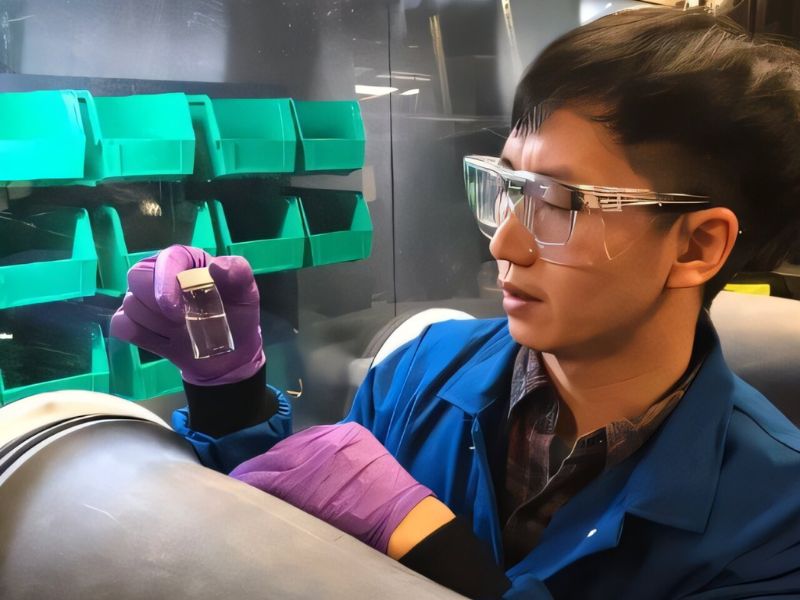
The first author of the paper, Dr. Wenzhan Xu, holding a bottle of the magic ionic liquid. Image Credits: Kyung Ho Kim.
Solar cells, which produce electricity from sunlight, are already contributing to lower fossil fuel emissions in numerous countries around the world. Recently, energy engineers have been exploring alternatives to silicon to create solar cells that are more efficient, long-lasting, and cost-effective.
These materials include perovskites, especially halide perovskites, which have a distinctive ABX₃ crystal structure and contain halides—compounds formed from a halogen element combined with a metal or positively charged ion.
Halide perovskites are highly effective at absorbing light and transporting charge carriers, which allows solar cells made from them to achieve high power conversion efficiencies (PCEs). However, they are generally much less stable than traditional silicon solar cells, meaning their performance tends to deteriorate quickly over time.
Enhancing Halide Perovskite Solar Cell Stability
To address this issue, researchers at Purdue University, Emory University, and other institutions have developed a new approach aimed at enhancing the operational stability of halide perovskite solar cells.
Their proposed method, described in a paper in Nature Energy, involves improving solar cells using specially designed ionic liquids—salts that remain liquid at low temperatures and interact strongly with certain materials.
“Our team focuses on organic synthesis, hybrid perovskite crystal growth, and device engineering,” said Letian Dou, the paper’s senior author, in an interview with Tech Xplore.
He added, “An industry partner asked us to create new additives to enhance the long-term stability of the devices. We reviewed existing research and were inspired by a previous study that used ionic liquids as additives. However, that study only used simple, commercially available ionic liquids and didn’t carefully design the molecular structures.”
The team’s enhanced solar cells tested at 90C and under 1-Sun illumination. Credit: Wenzhan Xu.
Building on previous research, Dou and his team aimed to create new molecules that interact strongly with perovskites, minimizing small defects and slowing their degradation over time. Importantly, the ionic liquids they developed proved more effective than those used in earlier studies at stabilizing perovskite solar cells.
Novel Ionic Liquids that Improve Solar Cell Performance
Halide perovskite solar cells are typically comprised of three layers. These include two so-called interface layers and the active perovskite layer sandwiched between them.
“It is very important to minimize the defects in the perovskite layer, as well as the two interfaces (top and bottom of the perovskite layer),” explained Dou. “Despite widespread efforts aimed at improving the top interface by coating an additional surface passivation layer, few efforts have been made for bulk defect passivation and bottom (buried) interface.”
The most promising ionic liquid designed by the researchers, dubbed MEM-MIM-CI, binds strongly to positively charged lead ions in perovskites, while also filling halide vacancies (i.e., sites at which halide ions are missing). Dou and his colleagues added this liquid to a perovskite material, then used it to develop a solar cell and assessed its stability.
Effect of IL on the buried perovskite interface. Credit: Nature Energy (2025). DOI: 10.1038/s41560-025-01906-6
“These new ionic liquids, when incorporated into the perovskite precursor, create an intermediate phase during crystallization,” explained Dou.
“This intermediate phase slows the crystallization process and encourages the formation of larger perovskite grains with fewer defects. We also observed that the ionic liquid tends to accumulate at the bottom interface, which helps reduce defect formation.”
Testing Improved Perovskite Solar Cells Under Extreme Conditions
The researchers then evaluated the performance of solar cells made from their improved perovskite material under extreme conditions. They first tested the devices at temperatures between 65–80°C and under intense light exposure (equivalent to full sunlight, or 1-Sun irradiation).
“Our sponsor later raised the standards, asking us to examine how the devices would degrade under even more severe conditions—at least 90°C while exposed to light,” said Dr. Wenzhan Xu, the study’s first author.
“Consequently, we tested our devices under these more extreme conditions and showed that they maintain 90% of their initial performance for more than 1,500 hours under continuous 1-Sun illumination at 90°C in open-circuit mode—conditions that are more severe than those usually applied by other researchers.”
Advancing the Implementation of Perovskite Solar Cells
The preliminary findings by Dou, Xu, and their team demonstrate that carefully engineered ionic liquids can enhance the stability of halide perovskite solar cells. These results may encourage other researchers to develop similar ionic liquids for incorporation into perovskite precursor solutions.
“The materials we worked with are simple to synthesize and can be produced at scale,” said Dou. “This approach could potentially enable the industrial-scale production of large-area perovskite solar cell devices, as ionic liquids allow scalable, solution-based deposition methods such as blade coating.”
“Moreover, we discovered that these ionic liquids can improve both the efficiency and stability of wide-bandgap and lead-free perovskite systems, highlighting the broad applicability of this approach for tandem solar cell technologies.”
Dou and his team are planning further research to enhance the stability of perovskite-based solar cells. They are working on designing more effective molecules that could boost the durability of these devices under real-world conditions.
Dou added, “We also seek to gain deeper insights into the basic mechanisms of ionic liquid–perovskite interactions through advanced spectroscopy and imaging methods.”
“We are open to partnerships with industry collaborators, and the patent for this technology is available for licensing. We hope this innovation will help advance the commercialization and broader adoption of stable perovskite solar cells.”
A group of chemists has unveiled a new way to convert used cooking oil into high-strength, fully recyclable plastics that can bond metal surfaces and even pull a car.
Their research, published November 28 in the Journal of the American Chemical Society, highlights a sustainable approach to turning a widely discarded waste product into durable plastic materials.
Although waste cooking oil has traditionally been used for fuels, lubricants, and coatings, the study shows it can also be repurposed to create tough polyester plastics.
Turning Waste Streams into Sustainable Manufacturing Resources
The researchers highlighted non-food waste as an untapped resource for sustainable materials.
The team broke cooking oil into fatty acids and glycerol, then converted them into alcohols and esters. By recombining them in various configurations, they created a range of polyester plastics.
Testing showed the materials behave similarly to low-density polyethylene (LDPE), commonly used in plastic bags and packaging. Unlike LDPE, however, the new plastics naturally adhere strongly to other surfaces.
This adhesion comes from oxygen atoms in the polyester structure, which form strong bonds with metals and other materials. In lab tests, the adhesive plastics held steel plates under loads up to 123 kilograms and were strong enough to tow a car.
The researchers say the materials could be used in packaging, automotive, electronics, medical devices, and laminates.
Equally important, the plastics are highly recyclable. The team showed the materials can be chemically recycled and remade repeatedly with minimal performance loss. Some versions can also be recycled alongside common plastics like high-density polyethylene and polypropylene.
The microorganisms living in our bodies assist in digesting food and affect our overall health, though their exact role—particularly when prescription medications are involved—is not always fully understood.
Researchers have now detailed in ACS Central Science how one of the most prevalent gut bacteria reacts to tetracyclines, a widely used class of antibiotics. The bacterium releases newly identified signals that may support the host’s immune system, suppress harmful microbes, and reshape the gut microbiome.
“Previously, we demonstrated that external molecules can stimulate the production of normally ‘hidden’ metabolites in marine and soil microbes,” says Mohammad Seyedsayamdost, the study’s corresponding author. “Our aim here was to apply this approach to human gut microbes and explore their responses to FDA-approved drugs.”
How Medications can Affect Gut Bacteria
Each day, healthcare providers nationwide prescribe medications to treat a range of conditions. While these drugs can achieve their intended results, they may also affect the microbes that support our health. For instance, antibiotics often target harmful bacteria but can also disrupt beneficial gut bacteria.
Researchers have suggested that taking medications might influence microbial metabolism as well, modifying the substances bacteria produce and potentially affecting human health.
Analyzing Bacterial Responses to Drug Exposure
To investigate this, Seyedsayamdost and colleagues exposed separate cultures of the gut microbe Bacteroides dorei to hundreds of FDA-approved drugs—including antihistamines, blood pressure medications, anticancer treatments, and antibiotics—and monitored metabolic changes compared with untreated cultures.
After incubating B. dorei with and without the drugs, the team isolated and analyzed compounds secreted by the bacteria. Low-dose tetracyclines triggered microbes to produce two new compounds: doreamides and N-acyladenosines.
Both compounds stimulate human immune cells to release pro-inflammatory cytokines involved in infection defense. Doreamides triggered host antimicrobial peptides that suppressed harmful bacteria while sparing B. dorei.
Effects on Immune Function and Overall Health
The experiments revealed an additional effect of antibiotic treatment beyond simply killing microbes. Low-dose tetracyclines prompted B. dorei to produce molecules that activate immunity and trigger antimicrobial peptides, potentially altering gut microbiota.
These results provide a foundation for animal studies to investigate the potential therapeutic benefits of doreamides.
Image Credits:Inconspicuous: The biodegradable tag is as thin as a sheet of paper, but still able to measure
Researchers at Empa, EPFL, and CSEM have created an eco-friendly smart sensing tag that tracks temperature and humidity in real time and can indicate when a temperature limit has been crossed. It could eventually be used to monitor sensitive goods like pharmaceuticals or food. The tag is fully biodegradable.
Every day, vast quantities of sensitive goods—like vaccines, medicines, and perishable foods—travel globally. Maintaining strict temperature and humidity limits is crucial, but equipping each shipment with conventional sensors is costly, unsustainable, and provides limited insight into conditions along the route.
A Four-Year Effort Leads to a Fully Biodegradable Smart Sensor Tag
In response to this problem, researchers at Empa, EPFL, and CSEM have spent four years working on the Greenspack project. They have created an innovative sensor tag that tracks temperature and relative humidity and can log when a critical temperature threshold has been surpassed. This tiny, sticker-like device contains no silicon and is fully biodegradable. The team has reported its results in Nature Communications.
The smart tag operates without a battery or transmitter. Instead, it functions much like an RFID device. It uses printed conductive pathways that create electrical circuits made up of resistive and capacitive components. When exposed to an electromagnetic field, the circuits generate a resonance signal that the reader can detect.
Image Credits:Eco-friendly chipless temperature-responsive tag concept, fabrication and testing setup. Credit: N
The circuits’ conductivity and capacitance change with temperature or humidity, altering their resonance. This shift reveals the surrounding temperature and moisture levels—eliminating the need for complex sensing electronics.
Smart Tag Records Irreversible Heat Events Above 25 °C
The team also added a built-in “memory”: if temperatures exceed 25 °C, a tiny circuit component melts and breaks permanently. At the next scan, the tag reveals that the shipment was exposed to excessive heat. “For vaccines, this could make the batch unusable or expire,” says Gustav Nyström, head of Empa’s Cellulose and Wood Materials lab.
This approach reduces supply chain strain and environmental impact by detecting compromised goods early, allowing rerouting of items with reduced shelf life. “By choosing different materials, we can define various temperature thresholds,” Nyström adds. Tags designed specifically for frozen products are one potential application.
After a shipment arrives, the tag is intended to be composted or recycled with cardboard, since it is entirely biodegradable. For the base material, the Empa team developed a special substrate made from a biopolymer combined with cellulose fibers. Empa and EPFL researchers then printed the conductive sensing structures using a tailored ink that contains the bio-absorbable metal zinc. At the same time, CSEM focused on designing the tag and developing the readout system.
Overcoming the Challenges of Biodegradable Sensor Design
Using biodegradable materials poses its own difficulties—they must remain stable until their job is complete. Moreover, each sensing component had to react only to its specific environmental factor. “We didn’t want the temperature sensor to respond to humidity, or the humidity sensor to react to temperature,” Nyström explains. Working together, the partners succeeded in addressing these challenges.
Two EPFL researchers are now moving toward commercializing the Greenspack results through a start-up called Circelec. Meanwhile, Nyström’s team at Empa plans to advance their research in green electronics and investigate how smart biodegradable labels could be used in agriculture and environmental monitoring.
Researchers suggest that emotions such as joy, love, and anger may extend beyond the human body, potentially leaving traces on the structure of water itself. According to specialists, water exposed to different emotional inputs appears to show distinct crystal patterns, displaying orderly or chaotic shapes depending on the type of “vibration” it receives.
The idea gained attention when scientists compared water samples influenced by positive expressions like “gratitude” and “hope” with others exposed to negative words. The contrast was striking: crystals linked to uplifting messages formed balanced, aesthetically pleasing shapes, while those associated with negative emotions broke into irregular and messy patterns.
Emotional States and Their Potential Influence on the Body and Environment
These findings have sparked debate about whether our emotional states could affect not only our surroundings but also our own bodies, given that humans are largely made of water. The research hints that nurturing positive feelings might produce physical effects that are both real and unexpected.
Although many remain doubtful of these claims, the experiments have encouraged new avenues of inquiry. If emotions can alter microscopic structures, some argue, what broader influence might they have on the way we experience and shape the world around us?
The actinide group of the periodic table Berkeley Lab
Researchers at the Department of Energy’s Lawrence Berkeley National Laboratory are relying on the 88-Inch Cyclotron to stabilize the periodic table, atom by atom, where things get unpredictable at the heavy-element end.
The Periodic Table’s Classroom Legacy
For many people, the periodic table brings back memories of dull science classes, its oversized classroom poster offering a distraction from lectures and an alternative to dozing off. But beyond its role as wall décor, this oddly arranged chart stands as one of the most profound breakthroughs in scientific history.
First introduced in 1869 by Russian chemist Dmitri Mendeleev, and later refined, the table successfully organized the elements according to atomic weight and properties. Its true genius, however, lay in its predictive power—allowing scientists to forecast the properties of elements that had not yet been discovered.
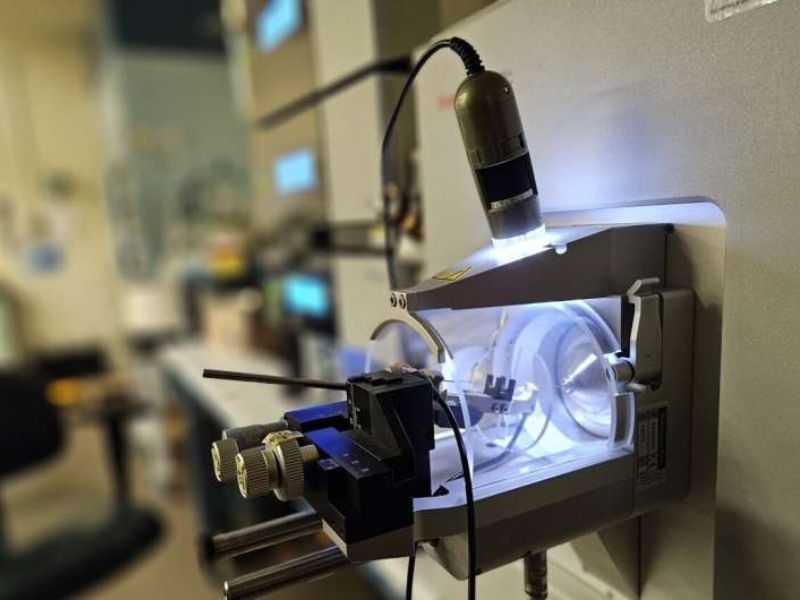
The FIONA mass spectrometer Berkeley Lab
This foresight gave chemists a major advantage. For instance, astrobiologists speculated that alien life might use silicon instead of carbon or breathe chlorine instead of oxygen, all thanks to patterns revealed by the table.
When Heavy Elements Break the Rules
Still, the system begins to falter with very heavy elements—particularly those beyond atomic number 99. At this scale, electrons orbit the nucleus at speeds close to light, triggering relativistic effects described by Einstein. Their increased mass pulls their orbits inward, reshuffling other electrons and distorting the elements’ expected chemical behavior.
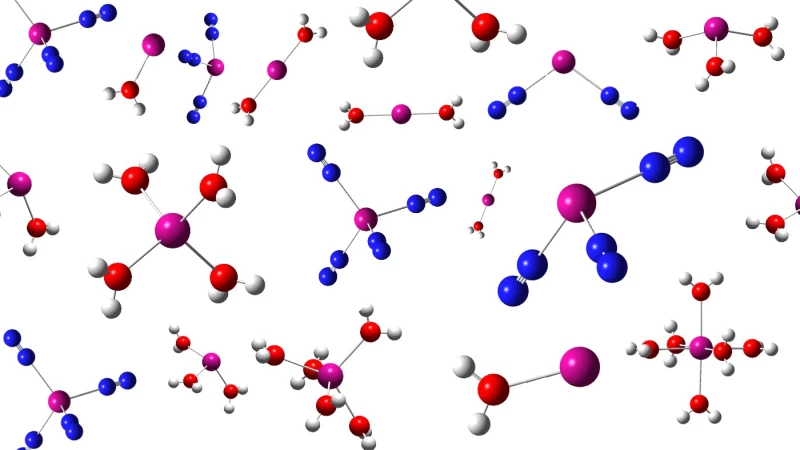
Nobelium molecules formed with nitrogen and water Berkeley Lab
In short, once elements grow extremely heavy, their chemistry becomes less predictable, leaving scientists to rely on direct experiments rather than theoretical guesses. But there’s a challenge: these transuranic elements don’t occur naturally, decay almost instantly, and are intensely radioactive. For example, Nobelium (element 102) survives at most 58 minutes before disappearing. That means experiments must be carried out in mere milliseconds.
To address this, Berkeley Lab scientists revived a cyclotron built in 1958. Paired with a mass spectrometer known as FIONA, the setup bombards thulium and lead targets with calcium isotopes to generate atoms like nobelium and actinium (element 89).
Molecules Born at Supersonic Speeds
Unexpectedly, these fleeting atoms formed molecules with traces of water and nitrogen as they raced out of the cyclotron at supersonic speeds. FIONA then analyzed them one atom at a time, measuring molecular masses in real time.
The scale is astonishing: after 10 days, researchers had created only about 2,000 molecules—a stark contrast to a single drop of water, which contains 10²¹ molecules.
This opens the door to the next generation of atom-by-atom chemistry with superheavy elements,” explained Berkeley Lab scientist Jennifer Pore. “It could completely reshape how we study these exotic elements—and even challenge their current placement on the periodic table.
Mass spectrometer instruments (top image) can help detect known, illicit drugs in human urine. For new psychoactive substances, a predicted database offers theoretical mass spectra to help detect designer drugs and their metabolites in urine. Credit: Tytus Mak (top image); Hani Habra (bottom image).
How can you detect a substance when no test exists for it? Designer drugs mimic the effects of established illicit drugs while slipping past law enforcement. Their modified chemical structures help them evade detection while making their effects on the body unpredictable and dangerous.
High School Researcher Presents New Database for Tracking Designer Drugs
A research group has now applied computer modeling to build a database of predicted chemical structures aimed at enhancing the detection of designer drugs.
Jason Liang, an upcoming senior in the Science, Mathematics, and Computer Science Magnet Program at Montgomery Blair High School, shared the team’s findings at the American Chemical Society’s Fall 2025 meeting, held August 17–21.
“This database of predicted metabolic signatures and spectra, called DAMD, could improve detection and monitoring of emerging designer drugs,” says Liang.
Illicit drugs are typically identified by a unique chemical “fingerprint,” known as a mass spectrum. This fingerprint reflects the molecule’s structure, weight, and composition.
Why Standard Drug Tests Miss New Psychoactive Substances
In urine drug tests, technicians use mass spectrometry to compare molecular spectra with catalogs of known drugs and their metabolites. But because new psychoactive substances and their metabolites rarely appear in current databases, they often go undetected.
“It’s a classic chicken-and-egg dilemma,” says Liang’s mentor, Tytus Mak, a statistician and data scientist at the National Institute of Standards and Technology (NIST) mass spectrometry center.
“How do you identify a drug that’s never been measured, or measure it if you don’t know what to look for?” Could computational prediction provide a way forward?”
From Concept to Collaboration: The Origins of DAMD
The idea for DAMD began with Mak and Hani Habra, a former NIST postdoc now at Michigan State University. They suggested computer modeling could track the constant influx of new synthetic compounds burdening health systems and drug monitoring. In summer 2024, Mak and Habra invited Liang to join the project.
“Creating a predicted mass-spectral library demands both advanced programming abilities and a strong grasp of chemistry—skills that match my background well,” says Liang.
“After seeing the devastating toll of overdose deaths, including cases in my own community, I was motivated to contribute to a project that might make a difference.”
The team began with the mass-spectral database curated by SWGDRUG, chaired by the U.S. Drug Enforcement Administration. This resource contains validated mass spectra for identifying over 2,000 substances seized by law enforcement.
Using computational methods, Habra, Liang, and Mak generated nearly 20,000 predicted chemical structures along with their mass-spectral fingerprints for potential metabolites of SWGDRUG-listed substances and their derivatives.
Validating Predictions Against Real-World Urine Data
The researchers are now validating these predictions by comparing them with actual spectra from human urine analysis datasets—comprehensive catalogs of all detectable compounds present in urine samples.
“If we find a match, or even something close, it indicates that the chemical structures and spectra produced by our algorithms are realistic,” explains Habra. The next step is to test DAMD against existing real-world data, providing a proof of concept for forensic toxicology.
In the future, DAMD could expand public drug databases to improve detection and identification in urine samples. A key goal is to support timely medical intervention.
“For example, someone might unknowingly ingest a substance laced with a fentanyl derivative,” Mak says. “With DAMD, doctors could identify fentanyl-like metabolites in a toxicology report and adjust treatment accordingly.”
A new type of crystalline material comprising strontium, iron, and cobalt, can release oxygen on demand when heated – without breaking down Diana / Pexels
Solid oxide fuel cells (SOFCs) have the potential to extend the driving range of electric vehicles and power stationary generators while keeping emissions low. The challenge, however, is that these systems typically require extremely high operating temperatures.
Researchers from South Korea and Japan may have found a solution. The team created a new crystalline material capable of absorbing and releasing oxygen on demand, almost like it is “breathing.” This ability allows fuel cells to generate electricity from hydrogen efficiently, produce fewer emissions, and maintain durability across repeated use.
The material is a metal oxide made from strontium, iron, and cobalt. When heated to just 752 °F (400 °C)—a relatively modest temperature compared to current methods—it releases oxygen when required. This breakthrough addresses the difficulty of oxygen control at much higher temperatures and replaces earlier fragile materials that couldn’t withstand repeated cycles.
Samples of the oxygen-breathable crystal film for developing smart windows with oxygen absorbed (left) oxygen released (right) visually confirming enhanced transparency upon reduction Prof. Hyoungjeen Jeen from Pusan National University, Korea
This is a significant leap toward smart materials that can adapt in real time, said Professor Hiromichi Ohta of Hokkaido University in Japan, co-author of the study published in Nature Communications last week. Its possible applications stretch from clean energy technologies to electronics and even sustainable building materials.
Beyond fuel cells, the crystal could also play a role in compact devices such as thermal transistors, which regulate heat transfer in electronics, as well as in smart windows that manage heat flow to keep indoor environments comfortable.
We use cookies on our website to give you the most relevant experience by remembering your preferences and repeat visits. By clicking “Accept All”, you consent to the use of ALL the cookies. However, you may visit "Cookie Settings" to provide a controlled consent.
This website uses cookies to improve your experience while you navigate through the website. Out of these, the cookies that are categorized as necessary are stored on your browser as they are essential for the working of basic functionalities of the website. We also use third-party cookies that help us analyze and understand how you use this website. These cookies will be stored in your browser only with your consent. You also have the option to opt-out of these cookies. But opting out of some of these cookies may affect your browsing experience.
Necessary cookies are absolutely essential for the website to function properly. These cookies ensure basic functionalities and security features of the website, anonymously.
Cookie
Duration
Description
cookielawinfo-checkbox-analytics
11 months
This cookie is set by GDPR Cookie Consent plugin. The cookie is used to store the user consent for the cookies in the category "Analytics".
cookielawinfo-checkbox-functional
11 months
The cookie is set by GDPR cookie consent to record the user consent for the cookies in the category "Functional".
cookielawinfo-checkbox-necessary
11 months
This cookie is set by GDPR Cookie Consent plugin. The cookies is used to store the user consent for the cookies in the category "Necessary".
cookielawinfo-checkbox-others
11 months
This cookie is set by GDPR Cookie Consent plugin. The cookie is used to store the user consent for the cookies in the category "Other.
cookielawinfo-checkbox-performance
11 months
This cookie is set by GDPR Cookie Consent plugin. The cookie is used to store the user consent for the cookies in the category "Performance".
viewed_cookie_policy
11 months
The cookie is set by the GDPR Cookie Consent plugin and is used to store whether or not user has consented to the use of cookies. It does not store any personal data.
Functional cookies help to perform certain functionalities like sharing the content of the website on social media platforms, collect feedbacks, and other third-party features.
Performance cookies are used to understand and analyze the key performance indexes of the website which helps in delivering a better user experience for the visitors.
Analytical cookies are used to understand how visitors interact with the website. These cookies help provide information on metrics the number of visitors, bounce rate, traffic source, etc.
Advertisement cookies are used to provide visitors with relevant ads and marketing campaigns. These cookies track visitors across websites and collect information to provide customized ads.