Category: Physics

  • Quantum Teleportation was Achieved over the Internet for the First Time

    Quantum Teleportation was Achieved over the Internet for the First Time

    In 2024, researchers in the US successfully teleported a quantum state of light over more than 30 kilometers (about 18 miles) of fiber optic cable, even amid heavy internet traffic—a feat once thought impossible.
    Image Credits:(agsandrew/Getty Images)

    In 2024, researchers in the US successfully teleported a quantum state of light over more than 30 kilometers (about 18 miles) of fiber optic cable, even amid heavy internet traffic—a feat once thought impossible.

    While it won’t help you skip your commute or speed up streaming, transmitting quantum states through existing infrastructure marks a major step toward quantum networks, stronger encryption, and advanced sensing technologies.

    A Breakthrough Once Thought Impossible, Says Lead Researcher

    This is incredibly exciting because nobody thought it was possible,” says Prem Kumar, a computing engineer at Northwestern University who led the study.

    Our research points to a future where next-generation quantum and classical networks can share the same fiber optic infrastructure, paving the way for advanced quantum communications.”

    Resembling the teleportation seen in Star Trek, quantum teleportation transfers the potential state of one object to another by carefully erasing the original and recreating the same quantum configuration elsewhere.

    While the measurement of both objects finalizes their states simultaneously, establishing their entangled quantum link still depends on sending a single wave of information across space.

    Fragile Quantum States Need Careful Protection

    Like cotton candy in a spring rain, an object’s quantum state is a delicate cloud of possibilities, liable to collapse into reality almost instantly. Electromagnetic radiation and the jostling of particles quickly destroy this quantum coherence unless it is carefully shielded.

    Protecting quantum states inside a computer is one challenge, but sending a single photon through fiber optic cables crowded with bank transfers, cat videos, and messages—while keeping its quantum state intact—is much harder. It’s like tossing delicate quantum cotton candy into the Mississippi and hoping it survives the journey.

    Imagem Credits:Optical fibers are used to transmit internet communication. (alphaspirit it/Canva)

    To protect their lone photon’s delicate state amid a 400-gigabit-per-second flood of internet traffic, the researchers used several techniques to confine its channel and prevent it from mixing with other signals.

    Kumar says, “We carefully analyzed how light scatters and positioned our photons where it would minimize this effect.”

    This allowed us to carry out quantum communication without interference from the simultaneous classical data.”

    First Quantum Teleportation Achieved Over a Live Internet Stream

    While previous teams had simulated sending quantum information alongside classical internet traffic, Kumar’s group was the first to teleport a quantum state alongside a real, live internet stream.

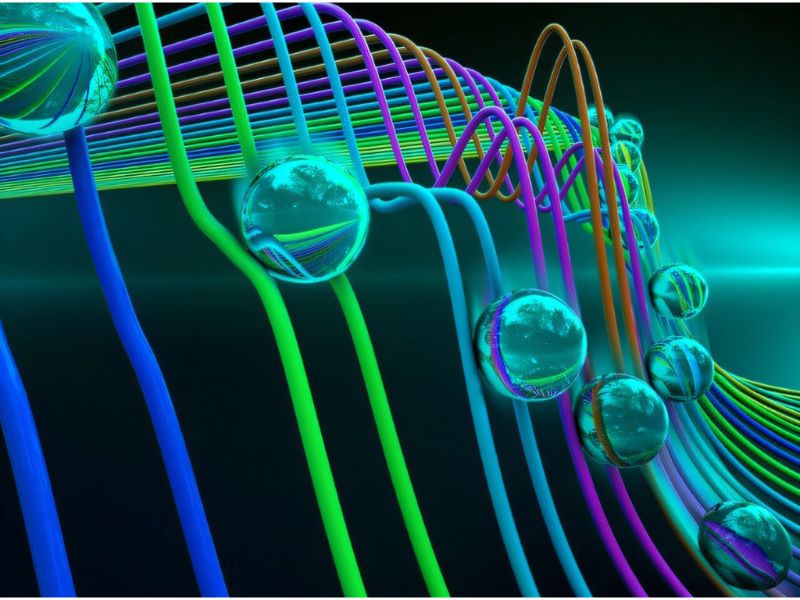
    Image Credits:https://www.sciencealert.com/images/2025/03/quantum_entangled_teleport_642.jpg

    Each experiment reinforces the idea that a quantum internet is on the horizon, offering computing engineers a powerful new set of tools for measurement, monitoring, encryption, and computation—without having to rebuild the existing internet.

    Quantum teleportation can securely link distant nodes with quantum connections,” says Kumar.

    Many assumed it would require specialized infrastructure to transmit photons. But by selecting the right wavelengths, we can use existing networks—allowing classical and quantum communications to operate side by side.”


    Read the original article on:sciencealert

    Read more:NASA’s Perseverance Rover Finishes its First Autonomous, AI-Directed Drive
  • The XFELO Laser Creates Highly Focused, Ultra-Precise X-Ray Beams

    The XFELO Laser Creates Highly Focused, Ultra-Precise X-Ray Beams

    A group of engineers and scientists has demonstrated for the first time that a hard X-ray cavity can achieve net X-ray gain. In their experiment, crystal mirrors repeatedly reflected the X-ray pulses, amplifying them in a process similar to that of an optical laser. This proof-of-concept at the European XFEL produced an exceptionally coherent, laser-like beam with a level of quality never before achieved in the hard X-ray range.
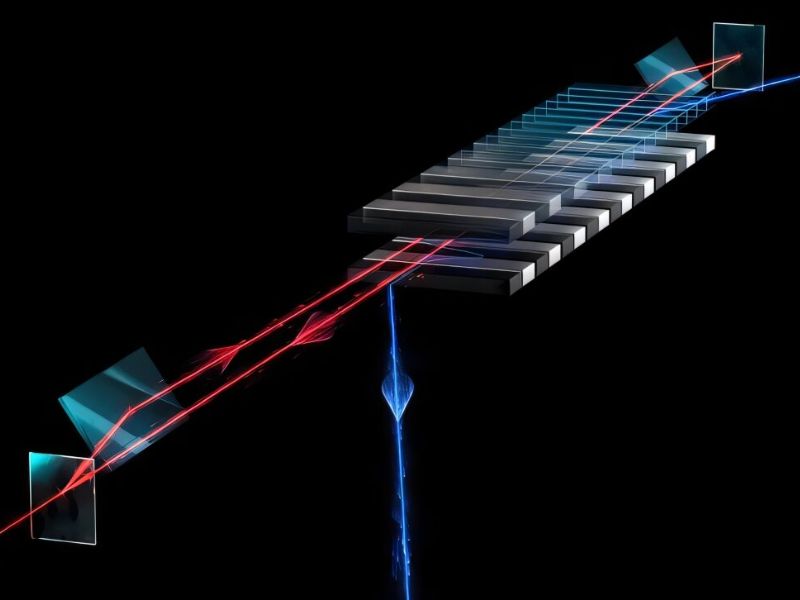
    Illustration of the XFELO system. Image Credits: European XFEL

    A group of engineers and scientists has demonstrated for the first time that a hard X-ray cavity can achieve net X-ray gain. In their experiment, crystal mirrors repeatedly reflected the X-ray pulses, amplifying them in a process similar to that of an optical laser. This proof-of-concept at the European XFEL produced an exceptionally coherent, laser-like beam with a level of quality never before achieved in the hard X-ray range.

    Achieving lasing within a cavity has long been difficult for short-wavelength X-rays, for several reasons, including the fundamental challenge that such light is hard to reflect at large angles. The X-ray Free-Electron Laser Oscillator (XFELO) approach overcomes these limitations and enables new opportunities for research, ranging from the study of ultrafast chemical processes to high-resolution investigations of the smallest biological structures. The researchers report the findings in the journal Nature.

    From an XFEL to an XFELO

    Today’s free-electron lasers produce X-ray pulses using linear electron accelerators. Powerful electric fields accelerate bunches of roughly 100 billion electrons to nearly the speed of light. These electrons then travel through specialized magnetic devices known as undulators, which force them into a rapid, slalom-like motion. As the electrons constantly change direction, they emit intense, tightly focused X-ray radiation in the forward direction. At the European XFEL, as many as 27,000 electron bunches per second pass through the undulators, creating X-ray pulses at the same frequency.

    Despite their outstanding quality, these X-ray pulses still exhibit a degree of energy spread. The newly developed XFELO approach significantly narrows this spread, producing X-ray light with a precisely defined energy—an essential feature for high-precision experiments.

    In an XFELO setup, the X-ray beam circulates multiple times within a resonator cavity. This cavity consists of two sets of diamond mirrors with a series of undulators placed between them. During each round trip, the X-ray light interacts with a fresh electron bunch from the accelerator, progressively reinforcing and sharpening the beam. As Harald Sinn, X-ray optics expert and head of the Instrumentation Department at European XFEL, explains, “Each pass makes the light stronger and more focused.”

    A Razor-Thin Peak

    “With each round trip, the X-ray pulse sheds noise while the focused light sharpens,” explains DESY accelerator scientist Patrick Rauer, whose doctoral research laid the foundation for the resonator cavity and who now leads its implementation at DESY. “The signal grows more stable, and a single, distinct frequency begins to emerge—this spike.” That spike corresponds to a unique X-ray pulse with an exceptionally sharp definition.

    Jörg Rossbach, then a physics professor at the University of Hamburg, originally suggested employing a resonator cavity at the European XFEL. Over the following decades, researchers extensively analyzed and modeled the concept, eventually enabling Rauer and his colleagues from DESY’s accelerator division, along with scientists and engineers from Harald Sinn’s instrumentation teams at European XFEL, to design a concrete resonator cavity system. Fittingly, during beamtime at the European XFEL dedicated to studying the resonator’s performance, it was Jörg Rossbach—now a professor emeritus—who first spotted the spike in the data.

    Exceptional Level of Accuracy

    The resonator cavity at the European XFEL stretches approximately 66 meters. High-quality diamond crystals reflect the X-ray light, guiding it repeatedly through the cavity, while optical mirrors provide extra focusing and stability. Key challenges included precisely positioning the crystals and synchronizing the X-ray pulses with the electron bunches. Maintaining the stability of the 1.7-kilometer accelerator—both in terms of energy, timing down to femtoseconds, and position down to micrometers—over several days was essential for the experiment’s success. “It took years to achieve this level of performance, which is now unmatched in the world of high-repetition-rate accelerators,” says Rauer.

    “The successful demonstration proves that the resonator concept can be practically implemented,” says Sinn. “Compared to previously used methods, it produces X-ray pulses with much narrower wavelengths, as well as significantly improved stability and coherence.” This opens entirely new possibilities for highly precise experiments in physics, materials science, chemistry, and biology. “With this system, researchers can explore structures and processes that were previously barely measurable,” adds Thomas Feurer, managing director at European XFEL.

    In the coming years, the team aims to further intensify the X-ray light, maintain stability over longer operating periods, and prepare the technique for use by a broader research community. DESY Accelerator Division Director Wim Leemans notes, “This collaborative effort has realized a long-envisioned way to enhance the laser-like properties of coherent hard X-ray pulses at the European XFEL, and users will benefit greatly from their work.” The ultimate goal is a new generation of X-ray sources offering extraordinary precision and brilliance, enabling unprecedented insights into the tiniest and fastest processes.


    Read the original article on: Phys.Org

    Read more: If an Asteroid Hits the Moon in 2032, Earth could be Affected

  • The World’s Longest-Running Lab Experiment Nears 100 Years

    The World’s Longest-Running Lab Experiment Nears 100 Years

    Science can sometimes move at a glacial pace. Data trickles in slowly, truth emerges gradually, and certainty is often hard-won.
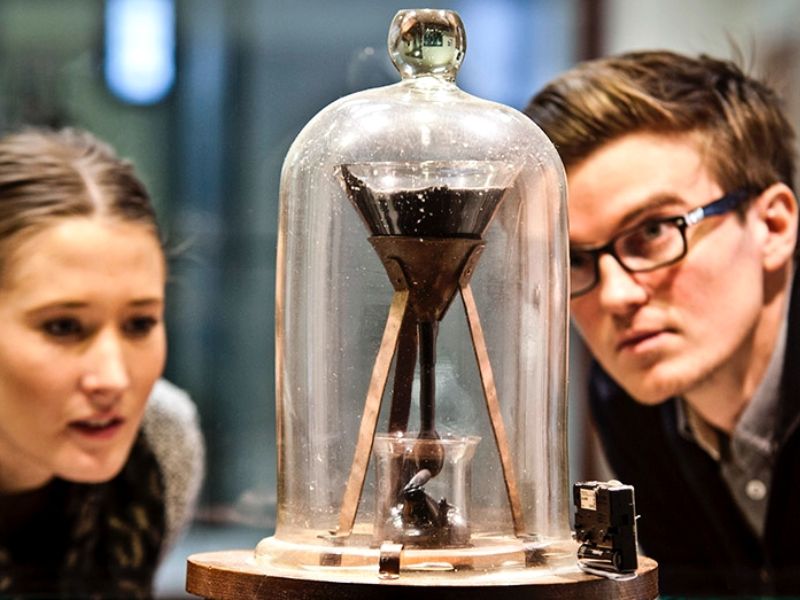
    Image Credits:(University of Queensland)

    Science can sometimes move at a glacial pace. Data trickles in slowly, truth emerges gradually, and certainty is often hard-won.

    The world’s longest-running lab experiment embodies this kind of extreme patience. It has been ongoing for nearly a century, overseen by successive custodians and observed by countless onlookers, as the experiment proceeds at an almost imperceptible pace.

    It began in 1927 when physicist Thomas Parnell at the University of Queensland in Australia filled a sealed funnel with pitch, a tar-like substance once used to waterproof ships.

    A Ribbon-Cutting Moment in 1930

    Three years later, in 1930, Parnell cut the funnel’s stem—like cutting a ceremonial ribbon—initiating the Pitch Drop Experiment. The pitch began to flow.

    Well, “flow” is relative. At room temperature, pitch appears solid, but it is actually an incredibly viscous fluid, some 100 billion times thicker than water.

    It took eight years for the first droplet to finally fall into the beaker below. After that, drops appeared roughly every eight years, slowing only when air conditioning was added in the 1980s.

    Nearly a century after the funnel was first cut, just nine drops have fallen in total, the most recent in 2014.

    Scientists anticipate the next drop sometime in the 2020s, but it has yet to happen.

    Never Seen in Real Time Despite Live Streaming

    Remarkably, no one has ever witnessed a droplet fall in real time. The experiment is now live-streamed, yet past technical glitches have ensured each crucial moment has gone unseen.

    Image Credits:The pitch drop experiment before a new beaker replaced the full one. (UQ/Wikimedia Commons/CC BY-SA 3.0)

    After Parnell, physicist John Mainstone became the experiment’s caretaker in 1961. Sadly, neither he nor Parnell ever witnessed a droplet fall in person.

    Mainstone oversaw the experiment for 52 years. In 2000, he missed a drop due to a thunderstorm interrupting the live feed, and he passed away just months before the next droplet fell in April 2014.

    Today, physics professor Andrew White serves as the third custodian, patiently awaiting the long-anticipated 10th drop.


    Read the original article on:Sciencealert

    Read more:10,000 Brain Scans Explain How Aging Impairs Memory

  • Effects of Pointing Inaccuracies in Quantum key Distribution Systems

    Effects of Pointing Inaccuracies in Quantum key Distribution Systems

    Quantum key distribution (QKD) is a developing communication technology that applies the principles of quantum mechanics to achieve extremely secure information exchange between two parties. It enables a sender and a receiver to actively establish a shared secret key, even when an adversary may be monitoring the communication channel. Any eavesdropping attempt disturbs the quantum signals and creates detectable errors, enabling the parties to identify potential security breaches through QKD protocols.
    The study’s findings explain the effects of pointing error on quantum key distribution performance metrics, offering insights for improving real-world systems. Image Credits: “Quantum bits” by Argonne National Laboratory from Openverse Image source link: https://openverse.org/image/9fdefd74-61fc-4dab-b3be-bec5f667d43f?q=Quantum+bits&p=1

    Quantum key distribution (QKD) is a developing communication technology that applies the principles of quantum mechanics to achieve extremely secure information exchange between two parties. It enables a sender and a receiver to actively establish a shared secret key, even when an adversary may be monitoring the communication channel. Any eavesdropping attempt disturbs the quantum signals and creates detectable errors, enabling the parties to identify potential security breaches through QKD protocols.

    Among the many factors that affect the performance of QKD systems, pointing error—caused by misalignment between the transmitter and receiver—is one of the most critical. This misalignment may result from mechanical vibrations, atmospheric turbulence, or imperfections in alignment mechanisms.

    Despite its significance, researchers have examined pointing error in only a few studies, and they have yet to conduct a comprehensive analysis for QKD optical wireless communication (OWC) systems.

    A Novel Analytical Framework for Modeling Pointing Error

    To fill this research gap, a paper published in the IEEE Journal of Quantum Electronics introduces a detailed analytical framework to evaluate how pointing error affects the performance of QKD optical wireless communication systems.

    “By integrating statistical descriptions of beam misalignment with quantum photon detection theory, we developed analytical expressions for key QKD performance metrics, revealing the precise impact of pointing error on secure key generation,” explains Professor Yalçın Ata of OSTIM Technical University, Turkey.

    The study concentrates on the widely adopted BB84 QKD protocol and represents pointing errors using Rayleigh and Hoyt distributions, which more accurately capture horizontal and vertical beam behavior than the simplified models used in previous studies. As a result, the framework provides a more realistic characterization of random pointing errors.

    Main Results and Their Implications for QKD Systems

    Using these statistical models, the researchers first derived analytical expressions for the error and sift probabilities in the presence of pointing error—an achievement not previously reported in the literature. The researchers then used these expressions to actively evaluate the quantum bit error rate (QBER), which quantifies the fraction of bits that system noise, environmental disturbances, hardware imperfections, or potential eavesdropping corrupt. As such, QBER serves as a fundamental performance indicator.

    Building on this, the researchers employed QBER to determine the secret key rate (SKR), which quantifies how quickly secure shared keys can be generated. They examined the impact of pointing error arising from both symmetric and asymmetric beam misalignments.

    The results revealed that a larger beam waist, and consequently greater pointing error, substantially degrades QKD performance, as reflected by higher QBER and lower SKR. While increasing the receiver aperture size can mitigate these effects, the improvement is limited beyond a certain point.

    Notably, the study found that asymmetric beam misalignment—where horizontal and vertical deviations differ—can be beneficial for enhancing system performance. The researchers also observed that achieving a non-zero secret key rate, which is essential for secure communication, requires higher average photon numbers.

    “Our results, developed within the Rayleigh and Hoyt modeling framework, align with existing generalized models while providing new analytical insight into how asymmetry in pointing errors influences performance,” concludes Prof. Ata.


    Read the original article on: Phys.Org

    Read more: Scientists Predict Earth’s Rotation will Make Days 25 Hours Long

  • The Strongest Hypergravity Machine Reaches 1,900× Earth’s Gravity

    The Strongest Hypergravity Machine Reaches 1,900× Earth’s Gravity

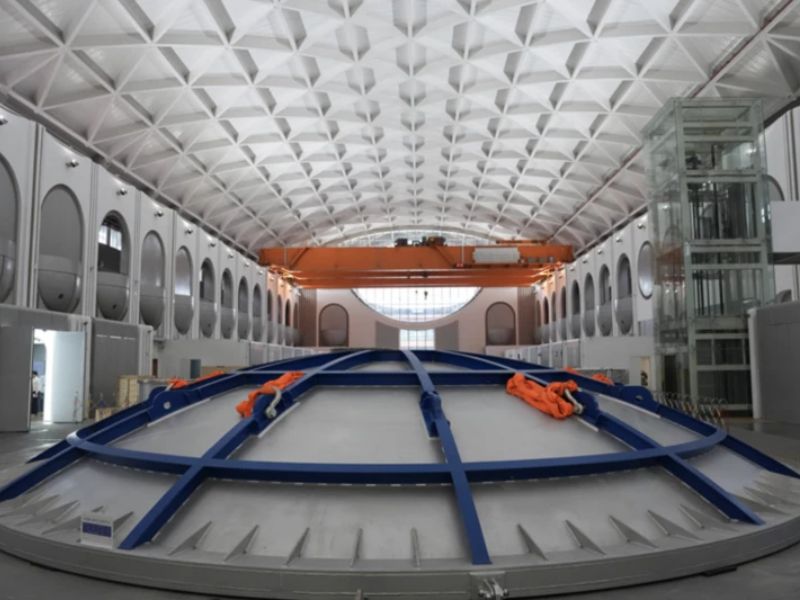
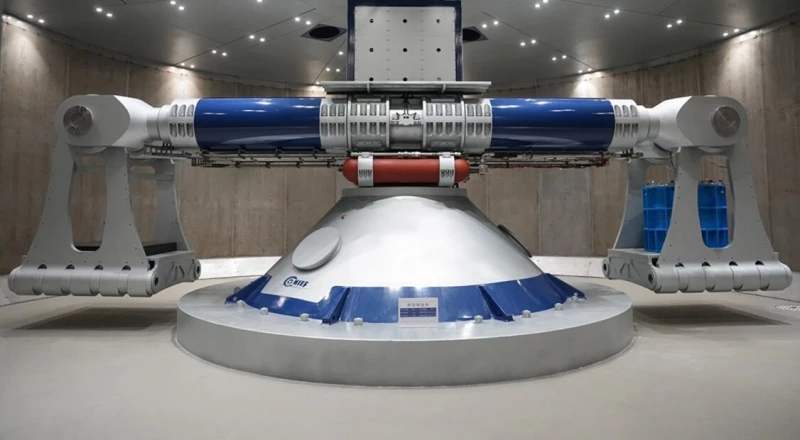
    China has surpassed both its own and U.S. records by constructing a massive underground hypergravity centrifuge capable of simulating forces up to 1,900 times Earth’s gravity, delivering unprecedented experimental power.
    Image Credits:Inside the subterranean Centrifugal Hypergravity and Interdisciplinary Experiment Facility (CHIEF) in Hangzhou
    Xinhua

    China has surpassed both its own and U.S. records by constructing a massive underground hypergravity centrifuge capable of simulating forces up to 1,900 times Earth’s gravity, delivering unprecedented experimental power.

    Image Credits:The above-ground facility 
    Xinhua

    Developed by Shanghai Electric Nuclear Power Group for China’s CHIEF facility, the new CHIEF1900 centrifuge will soon reach 1,900 g‑tonnes, surpassing the CHIEF1300.

    Simulating Extreme Conditions Across Time and Scale

    CHIEF scientist Chen Yunmin said the facility will test “milliseconds to millennia, atomic to kilometer scales.” “This opens the door to discovering entirely new phenomena or theories.

    The facility was first revealed in 2024, when only early-stage equipment had been installed. CHIEF1300 became operational in September 2025, capable of producing 1,300 g-tonnes of hypergravity. The newer centrifuge boosts that capability by roughly 46 percent, marking a major leap in performance.

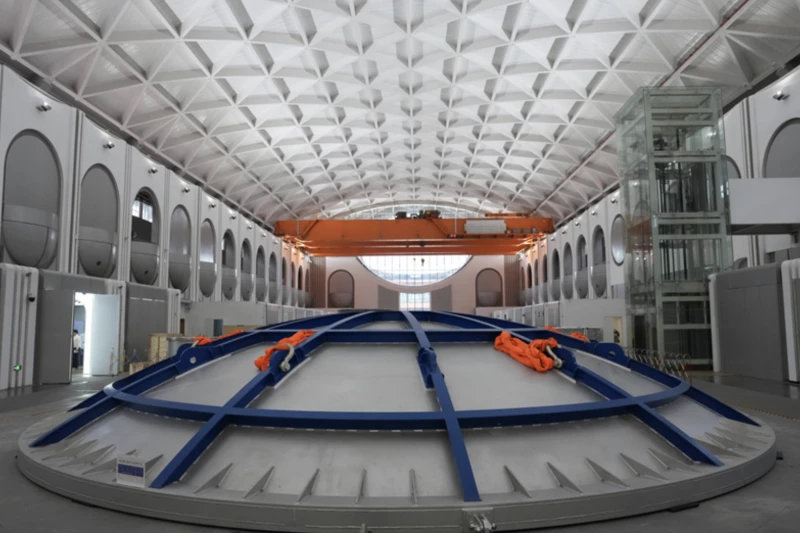
    Image Credits:The CHIEF1300 centrifuge
    Xinhua

    Both centrifuges recreate extreme gravity, enabling experiments to compress time and scale.This allows scientists to study large-scale, long-term processes—like dam safety, earthquakes, landslides, and nuclear waste storage—in far less time.

    By boosting effective gravity, researchers can condense decades of geological or structural stress into just hours, making previously impractical experiments feasible.

    Underground Design and Advanced Cooling for Stable Operation

    China’s $285M hypergravity facility to become global hub.

    China’s new $285 million hypergravity complex aims to become a global research hub, open to scientists worldwide.

    While CHIEF1900 has not yet begun experiments, it is expected to become operational in the near future.


    Read the original article on: Newatlas

    Read more:Japanese Scientists Create Device that Records Dreams

  • Innovative Quantum Detection Technology is Reshaping Dark Matter Research

    Innovative Quantum Detection Technology is Reshaping Dark Matter Research

    In our quest to comprehend the universe, our knowledge represents just a tiny fraction of the full reality.
    A MINER detector that is used to search for low-energy neutrinos at the Texas A&M TRIGA reactor. This sapphire detector can be used for both dark matter searches and for detection of reactor neutrinos that can not only provide evidence of new physics but also enable nuclear non-proliferation. Image Credits: Texas A&M University

    In our quest to comprehend the universe, our knowledge represents just a tiny fraction of the full reality.

    Dark matter and dark energy constitute roughly 95% of the universe, leaving a mere 5% as “ordinary matter” that we can directly observe. Dr. Rupak Mahapatra, an experimental particle physicist at Texas A&M University, develops cutting-edge semiconductor detectors equipped with cryogenic quantum sensors. His work supports experiments around the globe, pushing the limits of our knowledge in the quest to understand this profound cosmic mystery.

    Mahapatra compares our grasp of the universe to an old parable: “It’s like trying to describe an elephant by only touching its tail. We sense something immense and intricate, yet we are only experiencing a tiny fragment of it.”

    What Exactly are Dark Matter and Dark Energy?

    Dark matter and dark energy are named for the mystery surrounding their composition. Most of the mass in galaxies and clusters comes from dark matter, which helps shape the vast cosmic structures we observe. Dark energy, in contrast, is the force responsible for the accelerating expansion of the universe. In simple terms, dark matter binds matter together, while dark energy drives it apart.

    Although both are abundant, neither emits, absorbs, or reflects light, which makes them extremely difficult to detect directly. Nevertheless, their gravitational influence shapes galaxies and large-scale cosmic structures. Dark energy makes up about 68% of the universe’s energy, surpassing dark matter’s 27%.

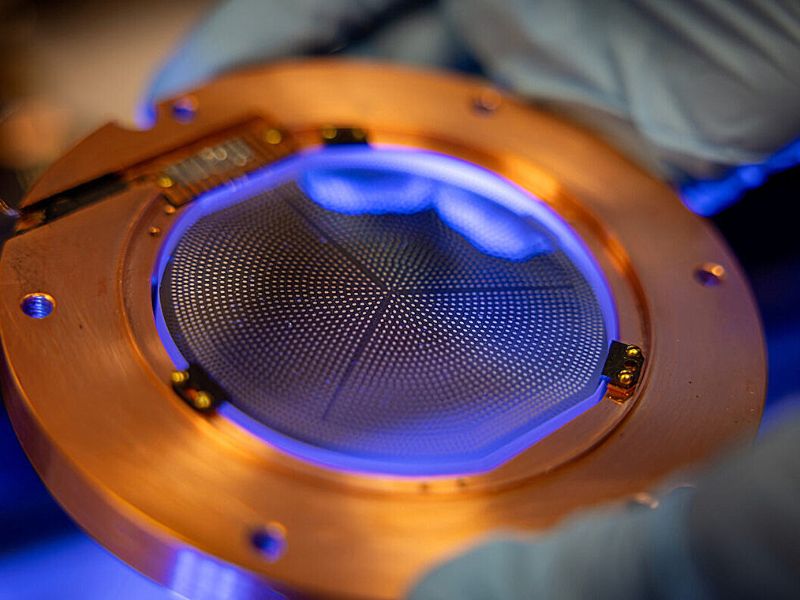
    Dr. Rupak Mahapatra, an experimental particle physicist, holds a TESSERACT detector. The highly sensitive devices, which are fabricated at Texas A&M University, are deepening the search for dark matter and have potential applications in quantum computing. Image Credits: Texas A&M University

    Catching Murmurs in The Midst of Turmoil

    At Texas A&M, Mahapatra’s team is developing extremely sensitive detectors designed to capture signals from particles that rarely interact with normal matter—signals that could help uncover the mysteries of dark matter.

    “The difficulty is that dark matter interacts so weakly that we need detectors capable of observing events that might occur only once a year, or even once every ten years,” Mahapatra explained.

    The group has played a role in a leading global dark matter experiment using a detector called TESSERACT. “It’s all about innovation,” he said. “We’re finding ways to amplify signals that were previously lost in noise.”

    Texas A&M is among a select number of institutions involved in the TESSERACT project.

    Redefining What’s Possible

    Mahapatra’s research continues a decades-long effort to extend the boundaries of particle detection, highlighted by his 25-year involvement in the SuperCDMS experiment. In a groundbreaking 2014 Physical Review Letters paper, he and his collaborators presented voltage-assisted calorimetric ionization detection within SuperCDMS—a major advancement that enabled the study of low-mass WIMPs, a prominent dark matter candidate. This method significantly enhanced sensitivity to particles that had previously been undetectable.

    A wafer with many different designs of chips for the TESSERACT project. Image Credits: Texas A&M University

    In 2022, Mahapatra co-authored a study examining complementary strategies for detecting WIMPs, including direct detection, indirect detection, and collider searches. The research highlights the worldwide, multi-faceted effort to unravel the mystery of dark matter.

    “No single experiment can provide all the answers,” Mahapatra emphasizes. “We need different approaches working together to build a complete understanding.”

    Studying dark matter goes beyond academic curiosity—it is essential for uncovering the fundamental laws of nature. “Detecting dark matter would mark a new era in physics,” Mahapatra explained. “This quest requires extremely sensitive technologies and could pave the way for innovations we can’t yet imagine.”


    Read the original article on: Phys.Org

    Read more: Ultrathin Polymer Improves the Longevity of Anode-Free Lithium Batteries

  • A Unique Form of Quantumness may be Key to Quantum Computers Success

    A Unique Form of Quantumness may be Key to Quantum Computers Success

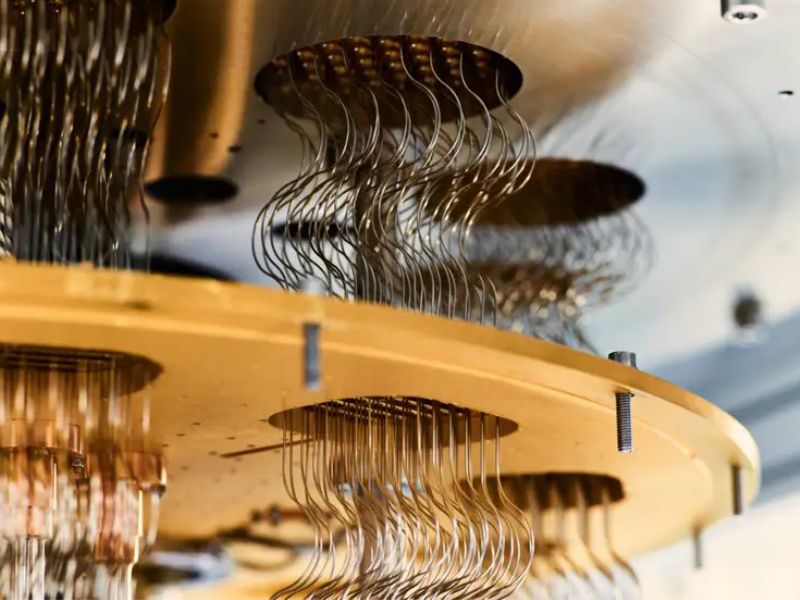
    Google researchers used their Willow quantum computer to show that quantum contextuality may be essential to its computational power.
    Image Credits:Google’s Willow quantum computer
    Google Quantum AI

    Google researchers used their Willow quantum computer to show that quantum contextuality may be essential to its computational power.

    What gives quantum computers their edge over classical machines? A new experiment suggests that “quantum contextuality” could be a crucial factor.

    How Qubits Redefine Computing

    Quantum computers differ fundamentally from conventional machines because they exploit uniquely quantum effects that ordinary electronics lack. Their basic units, known as qubits, can exist in superposition—appearing to hold two normally exclusive properties at once—or become linked through the inseparable phenomenon of quantum entanglement.


    Read the original article on: Newscientist

    Read more:NASA Enables Mars Rover to Navigate on Its Own

  • Searching for Dark Matter Axions Using a Quantum-Enhanced Haloscope

    Searching for Dark Matter Axions Using a Quantum-Enhanced Haloscope

    Axions are theoretical lightweight particles that may address two major puzzles in physics: they could explain why certain nuclear interactions preserve time symmetry and may also make up dark matter. Dark matter itself does not emit, reflect, or absorb light and has yet to be directly detected.
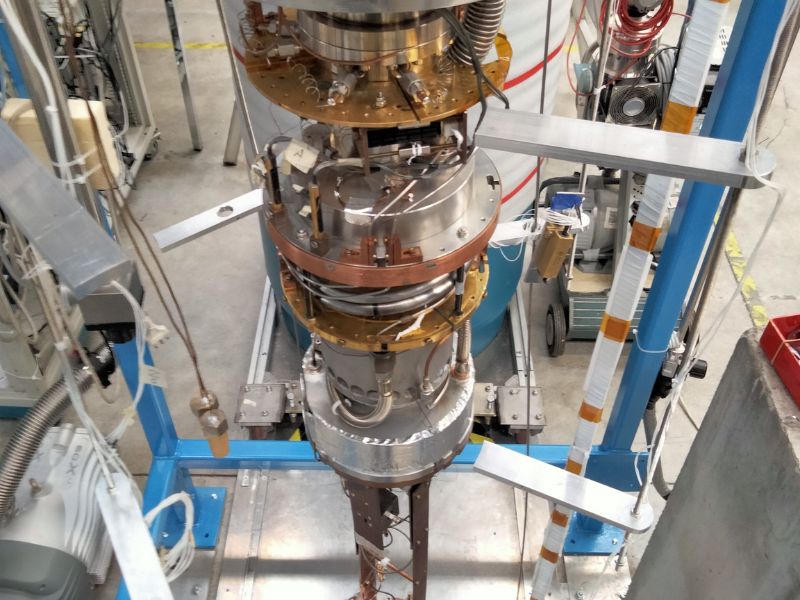
    The last stages of the wet dilution refrigerator that hosts and cools down the cavity (on the bottom) and readout electronics (various wiring). It’s comprised of many plates that allow to cool down the system at every stage: from room temperature up to the lowest level of about 70 mK. The magnet, missing in the picture, completely wraps the cavity without touching it. Image Credits: QUAX Collaboration.

    Axions are theoretical lightweight particles that may address two major puzzles in physics: they could explain why certain nuclear interactions preserve time symmetry and may also make up dark matter. Dark matter itself does not emit, reflect, or absorb light and has yet to be directly detected.

    Axions are extremely light, hypothetical particles believed to have formed in the early universe and to still exist today. They interact very weakly with normal matter but can convert into photons in strong magnetic fields.

    The QUAX (Quest for Axions / QUaerere AXion) collaboration is a large team of researchers from several institutes across Italy, created to search for axions using two haloscopes located at the Laboratori Nazionali di Legnaro (LNL) and the Laboratori Nazionali di Frascati (LNF).

    Latest Results from QUAX’s Dark Matter Axion Search

    In a study published in Physical Review Letters, the team presents results from their latest dark matter axion search, which uses a microwave cavity placed in a strong magnetic field to probe the axion–photon interaction.

    “Our work continues the INFN (Istituto Nazionale di Fisica Nucleare) research program on axions, which has been ongoing since 2015,” said Giosuè Sardo Infirri and Pino Ruoso of the QUAX collaboration in an interview with Phys.org.

    Our objective is to develop a high-frequency haloscope—operating above 10 GHz—with sensitivity capable of probing theoretically well-motivated models. This paper represents the latest major milestone toward achieving that goal.

    “The drive to search for axions stems from the central importance of the dark matter problem in modern physics, as well as the fact that axions are among the most compelling dark matter candidates.”

    The cavity used in the experiment: a copper cavity that can be opened in a clamshell-like mechanism with a detail of the tuning mechanism. Image Credits: QUAX Collaboration.

    A Ten-Year Effort to Detect Axions Using Haloscopes

    Because the mass of the axion is unknown, experiments searching for it must be able to scan a broad range of possible masses. QUAX’s recent work focuses on exploring a previously untested high-mass region.

    Their setup achieves extremely high sensitivity, enabling the investigation of axion masses above 40 microelectronvolts—a range that has gained attention due to recent theoretical developments. Haloscopes, used in these searches, convert axions into measurable photons and detect the resulting signals.

    “The QUAX collaboration searches for power generated by the interaction between axions and virtual photons produced by the magnetic field,” Sardo Infirri and Ruoso explained.

    “The expected signal appears as an extremely faint excess of power at an unknown frequency, emerging above the background noise. To observe such a weak effect, we place a copper cavity inside a strong magnetic field.”

    Within this magnetized copper cavity, axions produce a tiny power surplus as they convert into real photons. This tiny signal can be detected with a coupled antenna and a quantum-limited amplifier. To cover different possible axion masses, the detection setup operates across a broad range of frequencies.

    “Changing the cavity opening alters its resonant frequency and the detectable axion mass,” the researchers explained. “For each cavity configuration, we can then compare pure noise with the potential presence of a signal.”

    Search Results and Plans for Future Studies

    The QUAX collaboration has not yet detected any signals consistent with axions converting into photons. Their recent experiments show their partially automated system can tune across frequencies, highlighting its potential to detect axion-photon conversions.

    “Our initial search lays the groundwork for a haloscope capable of operating autonomously at high frequencies,” said Sardo Infirri and Ruoso.

    “We have adapted the haloscope to higher frequencies, opening up a new range of axion masses to investigate. This search is crucial: finding an axion would confirm dark matter, while not finding one would rule out some theoretical models.

    The QUAX collaboration is preparing the next round of axion searches using their haloscopes at LNL and LNF. In upcoming experiments, they aim to boost haloscope sensitivity and explore a wider range of axion masses.

    “In our next experiments, we also plan to expand the search region as much as possible by using additional and improved cavities,” Sardo Infirri and Ruoso added.

    “We also hope to fully automate the system so it can run and collect data on its own.”


    Read the original article on: Phys.Org

    Read more: A Shape-Shifting Wheel Engineered for Moon Cave Exploration

  • Scientists Confirm Successful Quantum Teleportation Between Photons

    Scientists Confirm Successful Quantum Teleportation Between Photons

    Stuttgart team teleports quantum state between separate photonsThis breakthrough enables quantum information to travel long distances through repeaters made of 'quantum dots' without loss or interference.
    Image Credits: (Eduard Muzhevskyi/iStock/Getty Images Plus)

    Stuttgart team teleports quantum state between separate photonsThis breakthrough enables quantum information to travel long distances through repeaters made of ‘quantum dots’ without loss or interference.

    Unlike standard internet signals, which can be amplified along the way, quantum information requires photons that are nearly identical. Quantum dots—special semiconductors that emit light at extremely precise frequencies—can produce such indistinguishable photons, making them ideal for reliable long-distance quantum communication.

    Quantum Data Teleported Between Photons

    Researchers teleport quantum information between photons from separate quantum dots

    For the first time anywhere, we have transferred quantum information between photons from two separate quantum dots,” says physicist Peter Michler of the University of Stuttgart.

    Although physicists call these experiments “teleportation,” what is actually being transferred is a quantum state—no photons disappear from one location and reappear in another.

    Maintaining Indistinguishability Is Key for Quantum Teleportation

    For a quantum state to move between two photons, the particles must exist in a delicate, indistinguishable quantum form. Using different photon sources can introduce variations that disrupt the process.

    Quantum dots help control these variations, making it possible to teleport quantum states between completely separate locations.

    The experiments used standard optical fibers, showing a practical path toward a quantum internet.

    Quantum Teleportation Across Dots Extends Range

    Transferring quantum information between photons from different quantum dots is a crucial step toward bridging greater distances,” says Michler.

    Scientists are exploring how existing infrastructure can support the quantum internet, with its layer crucial for secure, long-distance data. In the current experiment, the optical fiber used was about 10 meters (nearly 33 feet) long.

    The team aims to extend the range and boost the teleportation success rate, now over 70%.

    These results highlight the maturity of quantum dot technology and represent a key building block for future quantum communication,” the researchers conclude.


    Read the original article on: Science Alert

    Read more: This Plant Thrives Despite the Harsh Environment of Space

  • How Sound and Light Behave Similarly—and Differently—at The Tiniest Scale

    How Sound and Light Behave Similarly—and Differently—at The Tiniest Scale

    For the first time, a renowned 1801 light experiment has been recreated using sound. Leiden physicists conducted research revealing insights with potential for 5G and quantum acoustics. The findings are published in Optics Letters.
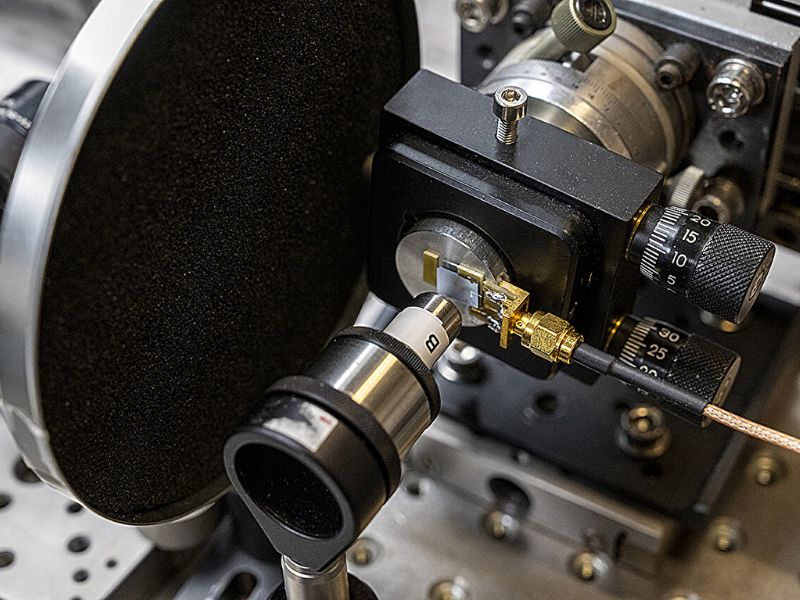
    The setup of the experiment in the optical lab, with the semiconductor crystal containing the double slits in the centre. Image Credits: Leiden University

    For the first time, a renowned 1801 light experiment has been recreated using sound. Leiden physicists conducted research revealing insights with potential for 5G and quantum acoustics. The findings are published in Optics Letters.

    Ph.D. student Thomas Steenbergen explains that sound waves in materials act similarly to light waves, though with some differences. Using a mathematical model, we can now describe and anticipate this behavior.”

    Thomas Young’s Classic Experiment with Two Slits

    Young’s famous double-slit experiment was the first to demonstrate that light can exhibit both particle-like and wave-like behavior. In this experiment, light passing through two slits created an interference pattern of bright and dark bands.

    Later, the same experiment was performed using particles, revealing that all particles can also display both wave and particle characteristics. Over time, the double-slit experiment has been repeated with a wide variety of quantum objects, including electrons, neutrons, and even buckyballs—molecules composed of 60 carbon atoms.

    Using Sound Instead of Light

    Steenbergen and his colleague Löffler aimed to investigate the behavior of sound at a microscopic level. The double-slit experiment offered them important insights. Using this experimental setup, Steenbergen expanded on research initially conducted by physics undergraduate Krystian Czerniak.

    For the experiment, the team employed gigahertz-frequency sound waves, oscillating a billion times per second—well beyond the range of human hearing.

    The Research

    The sound waves were aimed at a small piece of material: the semiconductor gallium arsenide, which is commonly used in electronic devices. Matthijs Rog, a colleague in Kaveh Lahabi’s research group, used an ion beam to carve two tiny grooves (slits) into the material.

    Steenbergen explains, “We then detect the sound using an extremely precise optical scanner. This device can measure sound virtually everywhere, including inside and just in front of the slits. It can determine the amplitude of the sound waves with picometer-level precision—that’s one millionth of a micrometer.”

    Commonalities and distinctions

    Similar to the double-slit experiments with light, an interference pattern forms at the back, revealing areas where the sound is amplified and areas where it cancels out.

    Steenbergen notes, “If you examine it closely, the pattern isn’t perfectly symmetrical. Sound waves don’t travel identically in every direction—their speed varies depending on the angle at which they move through the material.” By creating a mathematical model, the team was able to account for these variations and predict them with precision.

    A Classic Experiment Reveals Fresh Insights

    Gigahertz-frequency sound waves play a key role in telecommunications, particularly in 5G technology like mobile phones. This study offers fresh insights that could enhance these applications, as well as other microelectronic devices and sensors that rely on sound.

    Additionally, it sheds light on the developing field of quantum acoustics, where sound waves at the quantum scale are harnessed to transmit information. In this sense, an experiment conducted centuries ago is once again inspiring new technological possibilities.


    Read the original article on: Phys.Org

    Read more: Humanoid Robots Still Can’t Replace Humans, Says a Robotics Expert