Category: Physics

  • How Imaginary Numbers Describe the Fundamental Shape of Nature

    How Imaginary Numbers Describe the Fundamental Shape of Nature

    Several science students may imagine a ball rolling down a hill or a car skidding due to friction as prototypical examples of the systems physicists care about. However, much of modern physics consists of looking for objects and essentially invisible sensations: the small electrons of quantum physics and the particles concealed within odd steels of products science along with their highly energetical counterparts that only exist briefly within large particle colliders.

    In their quest to grasp these secret building blocks of reality, researchers have looked to mathematical concepts and also formalism. Ideally, a random experimental observation leads a physicist to a new mathematical concept, and then mathematical work with a stated concept leads them to brand-new experiments and new observations. Some part of this process unavoidably takes place in the physicist’s mind, where symbols and also numbers aid make invisible theoretical ideas visible in the tangible, measurable physical world.

    Sometimes, however, as it comes to imaginary numbers– that is, numbers with negative square values– mathematics remains ahead of experiments for a very long time. Though friction numbers have been integral to quantum theory, considering that it started in the 1920s, scientists have actually only lately had the ability to locate their physical signatures in experiments and empirically prove their necessity.

    In December of 2021 and also January of 2022, two teams of physicists, one a global collaboration evolving researchers from the Institute for Quantum Optics and Quantum Information in Vienna as well as the Southern College of Science as well as Modern Technology in China, as well as the other led by researchers at the University of Scientific Research as well as Innovation of China (USTC), showed that a variety of quantum mechanics devoid of imaginary numbers leads to a faulty description of nature.

    A month previously, researchers at the University of California, Santa Barbara, rebuilded a quantum wave function, another quantity that can not be fully explained by real numbers, from experimental data. In either case, physicists encouraged the extremely real world they study to reveal properties when so invisible as to be dubbed imaginary.

    For most people, the concept of a number has an association with counting. The number 5 might remind somebody of fingers on their hand, which kids often use as a counting aid, while twelve may make you think of buying eggs. For years, researchers have held that some animals also use numbers, specifically since many species, such as monkeys or dolphins, perform well in experiments that need them to count.

    Counting has its limitations: it only allows us to formulate so-called natural numbers. However, since ancient times, mathematicians have known that other sorts of numbers also exist. Rational numbers, for example, are equivalent to fractions, familiar to us from cutting cakes at birthday parties or divvying up the cheque afterward dinner at a fancy dining establishment. Irrational numbers are equivalent to decimal numbers without periodically repeating digits.

    They are commonly obtained by taking the square root of some natural numbers. While writing down infinitely many numbers of a decimal number or taking a square root of a natural number, such as 5, seems less accurate than cutting a pizza pie into eighths or 12ths, some irrational numbers, like pi, could still be matched to a concrete visual.

    Pi is the same as the ratio of a circle’s circumference and the diametre of the same circle. In other words, if you counted how many ways it takes you to walk in a circle and come back to where you began after that, divided that by the number of steps you would certainly need to take to make it from one point on the circle to the contrary point in a straight line passing through the center, you would certainly come up with the value of pi.

    This example might seem contrived, but measuring lengths or volumes of usual objects likewise typically generates irrational numbers; nature seldom serves us up with perfect integers or specific fractions. Consequently, rational and irrational numbers are collectively called real numbers.

    Negative numbers can also appear difficult: as an example, there is no such point as ‘negative 3 eggs’. At the same time, if we consider them as catching the opposite or inverse of some amount, the physical world once again offers up examples. Negative and also positive electric charges correspond to unambiguous, measurable comportment.

    In the centigrade scale, we could see the difference between negative and favorable temperature since the previous corresponds to ice rather than liquid water. Across the board so, with positive and negative natural numbers, we can claim that numbers are signs that simply help us keep track of well-defined, visible physical properties of nature. For hundreds of years, it was basically difficult to make the same case regarding imaginary numbers.

    In their easiest mathematical formula, imaginary numbers are square roots of negative digits. This definition rapidly leads to questioning their physical significance: if it takes us an additional step to work out what negative digits mean in the real world, how could we possibly imagine something that remains negative when multiplied by itself? Consider, for instance, the number +4. It can be acquired by squaring either two or its negative counterpart -2.

    How could -four ever be a square when two and -2 were both already determined to produce four when squared? Imaginary numbers give a resolution by introducing the so-called imaginary unit i, that is, the square root of -1. Now, -four is the square of 2i or -2 I, emulating the properties of +4. In this way, imaginary digits are like a mirror image of natural numbers: attaching I to any actual number enables it to generate a square precisely the opposite of the one it was generating before.

    Western mathematicians began grappling with imaginary numbers in earnest in the 1520s when Scipione del Ferro, a professor at the College of Bologna in Italy, set out to solve the so-called cubic equation. One version of the challenge, later on, known as the irreducible case, needed to take the square root of an opposing digit. Going distant, in his book Ars Magna (1545 ), meant to resume all of the algebraic understanding of the time, the Italian astronomer Girolamo Cardano stated this range of the cubic equation to be impossible to solve.

    Almost three decades later, another Italian scholar, Rafael Bombelli, presented the imaginary unit i more formally. He called it as più di meno, or ‘more of the less,’ a paradoxical phrase in itself. Calling these numbers fictional came later on, in the 1600s, when the philosopher René Descartes suggested that, in geometry, any type of structure corresponding to imaginary numbers must be impossible to visualize or draw.

    By the 1800s, thinkers like Carl Friedrich Gauss and Leonhard Euler included imaginary numbers in their research. They discussed complex digits made up of a real number added to an imaginary number, such as 3 +4 I, and also found that complex-valued mathematical functions have different properties than those that just create real numbers.

    However, they still had misgivings concerning the philosophical implications of such features existing at all. A French mathematician Augustin-Louis Cauchy said that he was ‘abandoning’ the imaginary unit ‘without regret because we do not know what this alleged symbolism means nor what meaning to offer to it.’

    In physics, however, the oddness of imaginary digits was disregarded in favor of their usefulness. For example, imaginary numbers can be utilized to explain opposition to changes in current within an electric circuit. They are additionally used to model some oscillations, such as those discovered in grandfather clocks, where pendulums swing back and forth despite friction.

    Imaginary numbers are necessary in numerous equations pertaining to waves, be they vibrations of a plucked guitar string or undulations of water along a coast. Moreover, these numbers hide within mathematical functions of sine and also cosine, familiar to numerous high-school trigonometry students.

    At the same time, in all these problems, imaginary digits are utilized as more of a bookkeeping gadget than an alternate for some fundamental part of physical reality. Measurement devices such as clocks or ranges have actually never been recognized to display imaginary values.

    Physicists typically different formulas which contain imaginary numbers from those that do not. After that, they draw some collection of conclusions from each, dealing with the infamous I as no more significant than an index or an additional label that aids organize this deductive process, except the physicist in question is confronted with the little and also cold world of quantum mechanics.

    Quantum theory predicts the physical behavior of things that are either really small, such as electrons that make up electrical currents in every wire in your home, or millions of times colder than the insides of your fridge. Moreover, it is chock-full of complex as well as imaginary numbers.

    Imaginary numbers went from a trouble seeking a solution to a solution that had simply been matched with its problem.
    Emerging in the 1920s, only a decade after Albert Einstein’s paradigm-shifting work on general relativity and also the nature of spacetime, quantum mechanics made complex practically everything that physicists thought they knew about using mathematics to define physical reality.

    One enormous upset was the proposition that quantum states, the fundamental method which objects that comport according to the laws of quantum mechanics are described, are by default complex. In other sentences, one of the most generic, many basic descriptions of anything quantum consists of imaginary numbers.

    In stark contrast to concepts concerning electricity and also oscillations, in quantum mechanics, a physicist can not look at a formula that involves imaginary digits, extract a useful punchline, then forget all about them. When you set out to try and catch a quantum state in the language of mathematics, these seemingly tricky square roots of negative numbers are an integral part of your vocabulary. Removing imaginary numbers would highly restrict exactly how accurate of a statement you can make.

    The discovery and evolvement of quantum mechanics upgraded imaginary numbers from a trouble seeking a solution to a solution that had simply been matched with its issue. As the physicist and also Nobel laureate Roger Penrose noted in the documentary series Why Are We Here? (2017 ):’ [Imaginary numbers] were there all the time. They have actually existed since the start of time. These digits are embedded in the way the world works at the smallest and, if you like most fundamental degree.’

    The complex item at the heart of all of quantum mechanics is the so-called wave function. It reflects a striking essential truth uncovered by quantum scientists– that everything, it does not matter how solid or corpuscular it appears, sometimes behaves like a wave. As well as it functions, the other method also: electrons, the stuff of waves, could behave like particles.

    ‘ Louis de Broglie speculated that perhaps these seemingly disparate features, undulatory and corpuscular, form a join not only in light but in everything,’ writes Smitha Vishveshwara, a physicist at the College of Illinois Urbana-Champaign, in her forthcoming book, ‘2 Revolutions: Einstein’s Relativity and Quantum Physics. ‘Possibly the stuff we are made of, that we know to be composed of particles, could have wavy traits,’ she adds, paraphrasing the question which led the founders of quantum theory to make the complex-valued wave function the basic building block of their model of nature.

    To establish the exact information of a quantum-mechanical wave function that describes some physical item, as an example, an electron moving within a steel, researchers turn to the Schrödinger equation. Called after the Austrian physicist Erwin Schrödinger, another architect of quantum theory’s foundations, this equation accounts not only for the type of tiny particle one is trying to describe but also its environment.

    Is the electron seeking a much less energetic and also more stable state like a ball rolling down a steep hill? Has it obtained an energy ‘kick’ and is subsequently executing a fast as well as complex motion like a football thrown in a spiral by an extremely strong professional athlete? The mathematical form of the Schrödinger equation enables this information to be taken into account.

    This way, the Schrödinger formula is straight informed by the particle’s immediate physical reality. However, its solution is always the wave function that inextricably contains fictional numbers. Also, Schrödinger was disturbed by this. In 1926, he said to his colleague Hendrik Lorentz, ‘What is unpleasant here, and also directly to be objected to, is the use of complex numbers.’

    Almost a century after Schrödinger 1st voiced his concern, three independent teams of physicists have cornered imaginary numbers in their laboratories.

    In the initial experiment, scientists from the College of California, Santa Barbara (UCSB) and Princeton College went after the quantum wave function itself. Their work, appearing in the journal Nature, showed a 1st-of-its-kind rebuilding of the quantum-mechanical wave function from a lab measurement.

    The researchers experimentally examined how the semiconductor material gallium arsenide behaves after being exposed to a very rapid pulse of laser light. A lot more specifically, gallium arsenide re-emits some of the light that a laser shines onto it, and the UCSB group was able to show that, remarkably, properties of that light depend not just on the details of the wave functions of particles inside the product, however in particular on the imaginary elements of those wave functions.

    Semiconductors like gallium arsenide take up the middle ground between conducting materials, where electrons form rivers of moving charges that we call currents, as well as insulators that hold on to their electrons so tightly which the formation of a current is complex. In a semiconductor, most electrons stay put, but here and there, a few can begin moving here and there, constituting little currents.

    An odd feature of this transmission type is that every electron that manages to move gains a companion instantly– a particle-like entity called a ‘hole,’ which carries a positive electric charge. If the electron were a droplet of water in a pond, the hole’s existence and activity would certainly be like the vacancy left after the droplet is eliminated, gaining a life of its own. Electrons and their partner holes follow the regulations of quantum mechanics, so the best form physicists define them is to write down a wave function for each.

    An essential part of every such wave function is its stage that contains an imaginary digit. Often, it reflects interactions which a quantum particle may have experienced while traveling along some path in space. Two wave functions can overlap and also incorporate similar to two waves on the surface of water.

    The resulting ripple pattern, that in the quantum case informs scientists of where particles corresponding to those wave functions are most likely to be, depends on the wave functions’ stages. In the UCSB and Princeton experiment, the stages of the wave functions of gallium arsenide’s holes and electrons also dictated what sort of light the material could re-emit.

    To reveal that connection, scientists initially offered electrons in the product an energy boost by shining a quick pulse of near-infrared laser light. This power boost made the electrons move through the product and created their companion holes.

    The physicists utilized another laser to briefly separate the two sorts of particles. After a short time of lonely activity through the semiconductor, the electron and hole pairs were allowed to reunite. Because both particles acquired power while they were moving along, their reunion resulted in a flash of light. Scientists determined the fictional wave-function phase for the holes involved in this process by measuring that light– that was a concrete entity in the natural world.

    Other physicists, meanwhile, now wonder whether theories can be reconfigured to avoid the apparent conflict between the real and the imaginary. In this view, instead of looking for imaginary numbers in the laboratory, physicists just need to find a different labelling system that only requires real numbers. This type of theory is referred to as ‘real quantum mechanics.

    Some conclusions can never be reached without imaginary numbers

    Historically, actual quantum mechanics has had not only proponents but also some successes in the realm of mathematical proofs and investigations. Theorists have been able to reveal that particular properties of quantum-mechanical systems can indeed be captured without resorting to imaginary.

    Within the last year but, a new crop of proofs and experiments confirmed that this line of reasoning could just go so far. Laboratory experiments, including quantum computers and quantised light, currently strongly indicate that imaginary and complex digits are an indispensable part of the quantum, also, therefore, our own world.

    The theoretical work, led by physicists at the Austrian School of Sciences in Vienna, and the experiments that put it to the test in laboratories in Austria and China, approach the problem through a sort of game.

    In the theoretical study research, the ‘players’ are three fictional physicists, Alice, Bob, and Charlie, who utilize quantum states as their board-game pieces and also a series of sophisticated quantum operations as their in-game moves. At the end of the game, the 3 can compare notes on what properties their quantum state acquired during play.

    The Vienna physicists showed that some conclusions could never be reached without imaginary numbers. It was as if they had discovered that fundamental quantum theory could not help a sport predict that a basketball player successfully shooting the basket from the three-point arc would undoubtedly score the full 3 points on their team.

    Such game-like examinations of competing concepts of nature are something of a rule in quantum mechanics. They date back to the Northern Irish physicist John Bell in the 1960s, who used a similar technique to prove that quantum mechanics is essential for an accurate description of nature. In this case, physicists pitted quantum mechanics against classical physics, that dates all the way back to Isaac Newton. They found that the former constantly excelled in predicting the outcomes of their experiments.

    This approach, referred to as the Bell examination, included just 2 ‘players, Alice and also Bob, that could not understand their post-game results unless they viewed them via the lens of quantum theory. Classical physics, scientists concluded, simply was not the best description of the globe.

    Miguel Navascués, a physicist in the Austrian School of Sciences and co-author of both experimental and theoretical research studies of the new Bell game, noted that his group’s effort provided a form to make exactly the same evaluation of real as well as complex-valued quantum theories. ‘If you can perform this experiment,’ he said, ‘then you will have refuted real-number quantum physics.’

    In the experiment performed at USTC, the Bell game took place inside a quantum computer, where microwave pulses controlled superconducting units called ‘qubits.’ In the experiment that Navascués was involved with, the arena was an optical setup where scientists worked with quantum light– in other words, a stream of photons that beam-splitters could alter and also various other lab equipment.

    In either case, the game’s outcome was impossible to predict precisely by any version of quantum physics that renounced complex digits. Not only did physicists infer that imaginary digits can undoubtedly turn up in experiments, but that, even more strikingly, they had to be taken into consideration for experiments in the quantum world to be understood correctly.

    The studies mentioned here carry significant implications for the most heady and profound ideas about quantum mechanics and also the nature of physical reality. They are also essential milestones for the development of new quantum technologies. Manipulating wave functions and wave-function phases is essential in quantum info and quantum computing.

    Accordingly, the UCSB experiment might help advance device design in those fields. ‘If you are thinking about building any type of gadget that takes advantage of quantum mechanics, you are going to need to know its [wave function’s] criteria truly well,’ Joe Costello, a physics Ph.D. pupil at UCSB and also the lead author on the study, emphasized when discussing the work.

    Similarly, when researchers write algorithms which deal with quantum information, they have to consider whether there are any advantages to using complex-valued quantum states. Current works led by USTC and Vienna strongly recommend the answer is ‘yes.’ Quantum computers will ultimately vastly surpass their conventional equivalents, making the evolvement of best algorithmic practices a critical task. Almost a hundred yrs after Schrödinger bemoaned imaginary digits; physicists are finding they may be helpful in very practical ways.

    Quantum physics has actually disclosed that we have misunderstood imaginary numbers all along

    In his book The Road to Fact (2004 ), Penrose writes, ‘ In the development of mathematical ideas, an important initial driving force has always been to find mathematical structures that properly mirror the behavior of the physical world.’ In this form, he summarises the trajectory of theoretical physics overall.

    Notably, he includes that ‘in numerous instances, this drive for mathematical consistency and elegance takes us to maths structures and concepts which turn out to mirror the physical world in a much deeper and more broad-ranging way than those we started with.’ Imaginary numbers have transcended their initial location as simple placeholders, transforming our grasp of reality and illuminating this grand idea.

    The Quantum concept has historically challenged many seemingly ‘common sense assumptions concerning nature. It has, for instance, changed the way physicists think about an experimenter’s ability to measure something with certainty or the claim that objects could be affected only by various other items in their immediate surroundings.

    When quantum theory was first formulated, it scandalized many stars of science at the time, including Einstein, which contributed to its foundations himself. Working with quantum concepts and poking quantum systems always has, by default, come with the possibility of uncovering something not expected at best and bizarre at worst. Now quantum physics has revealed that we have misunderstood imaginary digits all along.

    They may get, for a time, seem to be simply a mental tool inhabiting the minds of physicists and mathematicians. However, since the natural world that we inhabit is indeed quantum, it is no surprise that imaginary numbers can be found quite clearly, within it.


    Read the original article on AEON.
  • A Strange Brand-New Phase Of Matter Developed In Quantum Computers Acts Like It Has Two-Time Dimensions

    A Strange Brand-New Phase Of Matter Developed In Quantum Computers Acts Like It Has Two-Time Dimensions

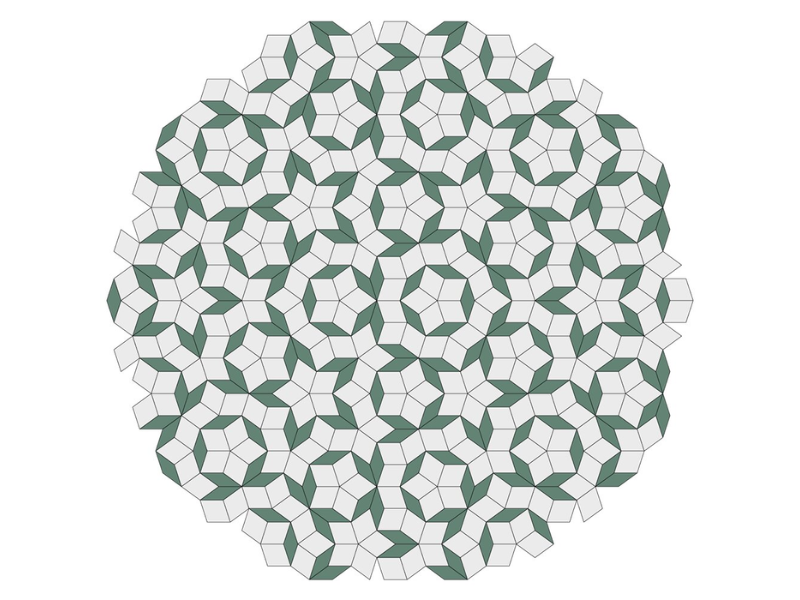
    The Penrose tiling pattern is a type of quasicrystal, which means that it has an ordered yet never-repeating structure. The pattern, composed of two shapes, is a 2D projection of a 5D square lattice. Credit: None
    The Penrose tiling pattern is a type of quasicrystal, which means that it has an ordered yet never-repeating structure. The pattern, composed of two shapes, is a 2D projection of a 5D square lattice. Credit: None

    By shining a laser pulse series inspired by the Fibonacci numbers at atoms inside a quantum computer, physicists have produced a remarkable, never-before-seen phase of matter. The phase has the advantages of two-time dimensions despite there still being just one particular flow of time, as the physicists report on July 20 in Nature.

    This mind-bending property offers a desired advantage: Information stored in the phase is even more protected against errors than with different setups currently utilized in quantum computers. As a result, the data may exist without obtaining garbled for a lot longer, an important milestone for making quantum computing viable, states study lead author Philipp Dumitrescu.

    The technique’s use of an “additional” time dimension “is an entirely different method of thinking about phases of matter,” states Dumitrescu, that worked on the project as a study fellow at the Flatiron Institute’s Center for Computational Quantum Physics in New York City. “I have been working on these concept ideas for over 5 yrs, and seeing them come to be realized in experiments is exciting”.

    Dumitrescu spearheaded the study’s theoretical part with Andrew Potter of the University of British Columbia in Vancouver, Romain Vasseur of the College of Massachusetts, Amherst, and Ajesh Kumar of the College of Texas at Austin. The experiments were conducted on a quantum computer at Quantinuum in Broomfield, Colorado, by a group led by Brian Nyenhuis.

    The workhorses of the group’s quantum computer are 10 atomic ions of an element called ytterbium. Each ion is independently held and controlled by electric fields created by an ion trap and can be adjusted or determined by using laser pulses.

    Each of those atomic ions works as what scientists call a quantum bit, or “qubit”. Whereas conventional computers quantify information in bits (each representing a 0 or a 1), the qubits used by quantum computers take advantage of the strangeness of quantum mechanics to keep much more data.

    Just as Schrödinger’s cat pet is both dead and active in its box, a qubit can be a zero, a 1, or a mashup– or “superposition”— of both. That extra information density and the means qubits communicate with one another guarantee to enable quantum computer systems to take on computational issues much beyond the reach of conventional computers.

    There is a huge issue, though: Just as peeking in Schrödinger’s box seals the cat’s fate, so does interact with a qubit. Furthermore, that interaction does not also have to be deliberate. “Even if you maintain all the atoms under tight control, they can shed their quantumness by talking to their environment, warning up or interacting with things in methods you really did not strategy,” Dumitrescu says. “In practice, experimental tools have several sources of error that can degrade comprehensibility after simply a few laser pulses”.

    In this quantum computer, physicists created a never-before-seen phase of matter that acts as if time has two dimensions. The phase could help protect quantum information from destruction for far longer than current methods. Credit: Quantinuum

    The difficulty, therefore, is to make qubits more robust. To do that, physicists can utilize “symmetries,” essentially properties that hold up to change. (A snowflake, for example, has rotational symmetry because it looks the same when rotated by 60 degrees.)

    One means is adding time symmetry by blasting the atoms with rhythmic laser pulses. This strategy helps; however, Dumitrescu and his collaborators wondered if they could go further. So instead of just one-time symmetry, they aimed to add 2 by using ordered, however non-repeating laser pulses.

    The best method to understand their approach is by considering something else ordered yet non-repeating: “quasicrystals”. A specific crystal has a regular, repeating structure, like the hexagons in a honeycomb. A quasicrystal still has an order, but its patterns never repeat. (Penrose tiling is one instance of this.) A lot more mind-boggling is that quasicrystals are crystals from higher dimensions projected or squished down into lower dimensions. Those higher dimensions can even be past physical space’s three dimensions: A 2D Penrose tiling, for instance, is a projected piece of a five-D lattice.

    For the qubits, Dumitrescu, Vasseur, and Potter proposed in 2018 the creation of a quasicrystal in time rather than space. Whereas a periodic laser pulse would alternate (A, B, A, B, A, B, etc.), the researchers produced a quasi-periodic laser-pulse regimen based on the Fibonacci sequence. In such a series, each part of the sequence is the sum of the two previous parts (A, AB, ABA, ABAAB, ABAABABA, etc.).

    This adjustment, just like a quasicrystal, is ordered without repeating. Moreover, akin to a quasicrystal, it is a 2D pattern squashed into a single dimension. That dimensional flattening theoretically results in two-time symmetries instead of just one: The system essentially gets a bonus proportion from a nonexistent extra time dimension.

    Actual quantum computers are incredibly delicate experimental systems, though, so whether the advantages promised by the concept would endure in real-world qubits remained unproven.

    Utilizing Quantinuum’s quantum computer, the experimentalists put the theory to the test. They pulsed laser light at the computer’s qubits both periodically and utilizing the sequence based on the Fibonacci numbers. The focus was on the qubits at either end of the ten-atom lineup; that is where the study researchers expected to see the new phase of matter experiencing two-time symmetries at once.

    In the routine test, the edge qubits stayed quantum for around 1.5 seconds– already an impressive length given that the qubits were interacting hardly with one another. With the quasi-periodic pattern, the qubits remained quantum for the whole experiment length, concerning 5.5 secs. That is since the extra time symmetry supplied more protection, Dumitrescu states.

    “With this quasi-periodic sequence, there is a complicated evolution that cancels out all the errors that live on the edge”, he says. “Because of that, the side remains quantum-mechanically systematic much longer than you would expect”.

    Though the findings show that the new phase of matter can act as long-term quantum data storage, the study researchers still require to functionally integrate the stage with the computational side of quantum computing. “We have this straight, tantalizing application, but we need to find a way to hook it into the estimations,” Dumitrescu says. “That is an open problem we are working on”.


    Reference:

    Philipp Dumitrescu, Dynamical topological phase realized in a trapped-ion quantum simulator, Nature (2022). DOI: 10.1038/s41586-022-04853-4. www.nature.com/articles/s41586-022-04853-4

    Read the original article on PHYS.

  • A Quantum Double-slit Experiment Run with Molecules for the First time

    A Quantum Double-slit Experiment Run with Molecules for the First time

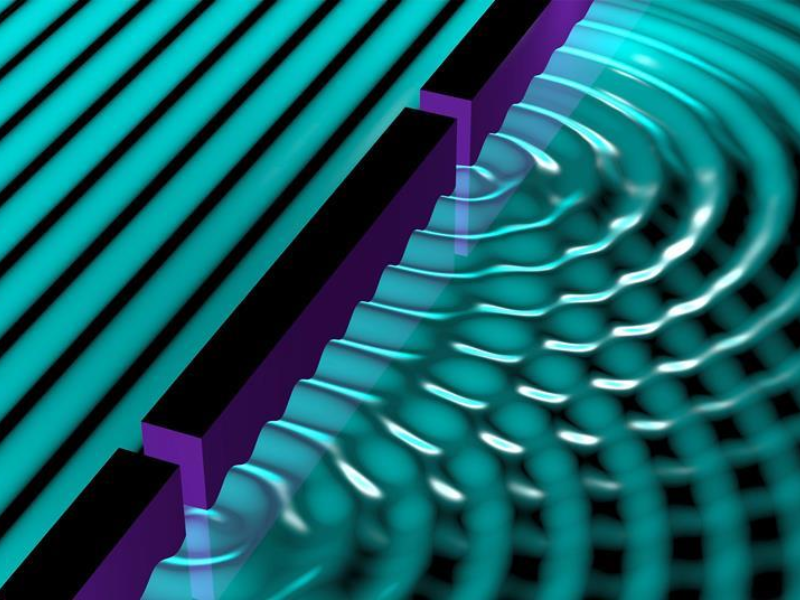
    Richard Feynman once stated that the double-slit experiment reveals the central challenges of quantum mechanics, putting us ”up against the and peculiarities of nature and paradoxes and mysteries”.

    Nandini Mukherjee, Richard Zare, and their co-workers at Stanford University, United States, have currently revealed that when helium (He) atoms collide with deuterium molecules (D2) in a quantum superposition of states, the spreading can take two distinct courses that interfere with one another. The researchers reveal the disturbance by looking at its results on the spread of D2 molecules, which lose rotational energy in the collision.

    Zare and colleagues developed an ultracold molecular beam of a mixture of D2 and helium in which collisions occur at an effective temperature of 1K (272 ° C). They coaxed the D2 molecules into a particular rotational and vibrational energy state but in two distinct orientations relative to the laboratory frame of reference, at right angles to one another, using two sets of polarised laser pulses. These act as both ‘slits’ that spread the helium atoms.

    Crucially, the researchers can likewise prepare the D2 molecules in a consistent superposition of both orientations, meaning with the wavefunctions of the two superposed states remaining in synchrony with one another. When helium atoms spread off the superposed molecules, the atoms ‘feel’ both orientations at once.

    The quantum particles in the classic double-slit experiment each travel through both slits in a superposition of trajectories. In this instance, in contrast, it is as if there is only a single slit that is itself in a superposition of positions.

    The collisions cause the D2 molecules to fall back to the rotational ground state for this vibrational level, which Zare and colleagues, afterward selectively ionize and evaluate. The experimental measurements matched this prediction approximately.

    Physical chemist David Clary of the University of Oxford, UK, states that the work develops the understanding of how molecular spreading can switch molecules between different quantized rotational states.

    It has long been a goal to develop an experiment that can measure such transitions in all the first and final quantum states,’ he states. Progress in this direction has been made by the Stanford team has made by utilizing quantum interference to reveal the distinct rotational states, he adds.

    Before, quantum interference effects in molecular spreading have been seen. In one previous experiment, interference was observed for photoelectrons produced from an oxygen molecule due to the fact that each electron could communicate with either of the two atomic nuclei. However, what makes their experiment different, states Mukherjee is that ”we have full control of the “slits”.

    As in a diatomic molecule, they are not two atoms in a fixed relationship; however, they are developed by superposing the molecular orientations and so can be adjusted at will, instead of modifying the slit width or separation or blocking one of them off.

    Clary hopes this method might finally cause the ‘holy grail’ of quantum control with an experiment where all the first and final quantum states of the spread molecules can be picked. Mukherjee states that the method will also work for bimolecular gas-phase chemical reactions. In that case, she states: ”you could control the product of reactive chemical collisions” with quantum precision.

    The researchers think their results are also probing fundamental aspects of quantum behavior. ”We depict the preparation of a new kind of matter: a molecule prepared in a coherent superposition of states with a known and controllable phase relating the superposed states,’ states Zare. They hope their method might be utilized to research decoherence, by which quantum phenomena turn into classical outcomes through environmental interactions.


    Reference:

    H Zhou et al, Quantum mechanical double slit for molecular scattering, Science, 2021, DOI: 10.1126/science.abl4143

  • Physicists Mesmerized by Deepening the Mystery of Muon Particle Magnetism

    Physicists Mesmerized by Deepening the Mystery of Muon Particle Magnetism

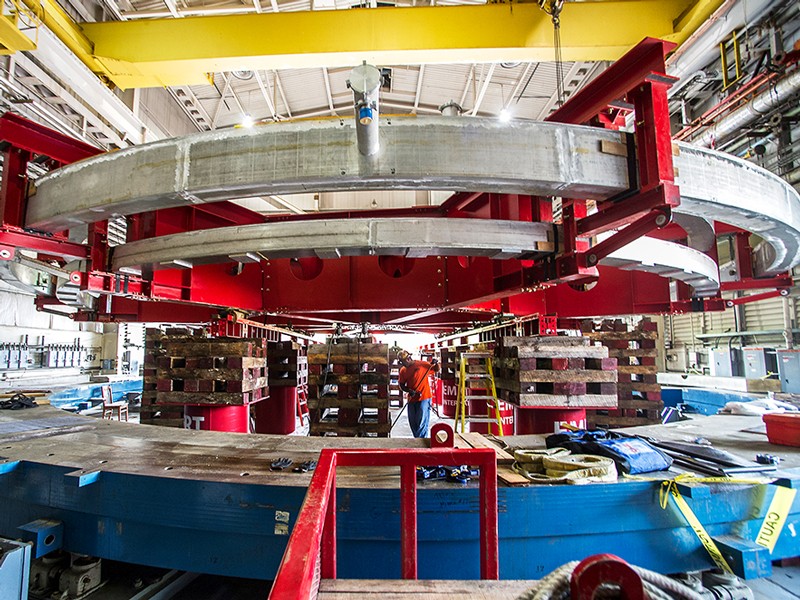
    Fermilab’s Muon g − 2 experiment uses this circular electromagnet to store muons, so that their magnetic moment can be measured with unprecedented precision.Credit: Brookhaven National Laboratory/SPL

    Theoretical predictions move closer to experimental outcomes, but questions stay concerning possible gaps in the standard model of particle physics.

    The muon’s mysteries still leave physicists mesmerized. Last year, an experiment suggested that the fundamental particle had inexplicably strong magnetism, possibly breaking a decades-long streak of triumphs for the leading theory of particle physics, known as the standard model. Currently, modified calculations by several groups suggest that the theory’s prediction of muon magnetism might not be very far from the experimental dimensions after all.

    The new predictions are initial and do not entirely vindicate the standard version. However, by narrowing the space between theory and experiment, they might make it simpler to resolve the discrepancy- while potentially creating another one.

    The muon is approximately identical to the electron, except that it is 200 times heavier and short-term, decaying millions of a second after being developed in particle collisions. Like the electron, the muon has a magnetic field making it act like a tiny bar magnet. As muons travel, they produce numerous particles that briefly pop in and out of presence. These ephemeral particles slightly increase the muon magnetism, referred to as its magnetic moment. The big question is: by how much?

    If the standard model already consists of all of the universe’s fundamental particles, it should have the ability to precisely measure this additional magnetic contribution. However, if experiments confirm that nature deviates from that prediction, it would point to the existence of hitherto unknown particles, whose fleeting looks can skew the muon magnetic moment more than expected. Researchers have already seen tips of such a disparity and have spent decades attempting to boost the precision of both theory and experiments to validate whether they do provide distinct results.

    Conflicting outcomes

    In 2020, the theoretical-physics community created a consensus paper with the most accurate prediction yet for the muon’s magnetic moment. This mainly relied on calculations based on the basic principles of the standard model. However, the researchers were required to plug in some experimental data to show the magnetic impact of particles such as gluons and quarks, which could not be calculated adequately utilizing theory alone.

    This calculation was soon joined by the most accurate experimental measurement of the muon’s magnetic moment. In April 2021, the Muon g– 2 experiment at the Fermi National Accelerator Laboratory (Fermilab), outside Chicago, Illinois, reported that the muon magnetic moment was considerably higher than the theoretical prediction.

    Yet, on the same day, physicists in a collaboration called BMW unveiled separate calculations of the magnetic moment that did not call for the support of experimental data. They used a technique known as lattice quantum chromodynamics (lattice QCD) to simulate the behavior of gluons, quarks, and other particles. This pegged the muon magnetic moment higher than the calculation in the 2020 agreement paper and closer to the Muon g- 2 experimental value.

    Lattice QCD had not played an essential part in the agreement paper due to the fact that, at that time, the method’s predictions were not precise enough. State-of-the-art mathematical methods and sheer supercomputing power subsequently assisted the BMW team in providing their lattice-QCD simulations sufficient of a boost to make the grade. Since then, a minimum of 8 teams of physicists worldwide have been racing to validate or improve on the BMW prediction. They have started by concentrating on a restricted range of the particle energies that BMW simulated.

    Two initial results from this energy ‘window’ were published in April 2022 on the arXiv preprint repository: one by Gen Wang at the University of Aix-Marseille in France and the other at Fordham University in New York City by Christopher Aubin and his collaborators.

    Previously this month, two more groups– one led at Johannes Gutenberg University in Mainz, Germany by Hartmut Wittig, and the other by Silvano Simula at the National Institute for Nuclear Physics in Rome– announced their own window results at a muon conference in Los Angeles, The Golden State. A Preprint is being written by Simula’s group, and Wittig’s group submitted its preprint on 14 June. All four calculations validated BMW’s own window outcomes, even though their lattice techniques differ. “Very distinct means of approaching the issue are obtaining a very similar outcome,” states Aubin.

    New agreement

    “As time passes, the distinct groups are converging on a result that agrees with BMW’s, a minimum of in the intermediate window,” states Physicist Davide Giusti in Germany at the University of Regensburg, who is a former member of Simula’s collaboration, and who currently works with another lattice-QCD group led by his Regensburg colleague Christoph Lehner.

    However, the calculations are still preliminary and could end up diverging once they are used beyond the present window. “We do not yet know if lattice results from other collaborations agree with the BMW result for the other pieces” of the calculation, states Aida El-Khadra, a theorist at the University of Illinois at Urbana-Champaign, who is part of another lattice-QCD effort.

    Additionally, the Muon g– 2 experimental outcome is still higher than the value determined by lattice QCD. So, it is early to conclude that the standard version was correct all along. The Fermilab experiment expects to post an updated value for the magnetic moment the following year; however, “even if the gap between theoretical prediction and experiment turns out to be smaller– even if it is only fifty percent as a lot– it would still be a large disparity,” Wittig states.

    Moreover, if lattice QCD and experiments do end up converging on the same value, physicists would still need to describe why the 2020 consensus paper was so off the mark, says Sven Heinemeyer, a theoretical physicist at CERN, the European particle physics laboratory outside Geneva in Switzerland.

    In the meantime, physicists are left scratching their heads. “It would be difficult to believe that all of our lattice simulations were wrong,” states Aubin. However, it is also difficult to imagine how the data-driven calculations from 2020 could have gone awry, he says.

    Still, it is already clear that lattice QCD will have a significant influence on the muon magnetism question, states Giusti. “This calculation is truly exciting, and whatever the response is, it will be decisive.”


    Read the original article on Nature.

  • Quantum Sensor Can Identify Electromagnetic Signs of Any Frequency

    Quantum Sensor Can Identify Electromagnetic Signs of Any Frequency

    MIT researchers have developed a method to enable quantum sensors to detect any arbitrary frequency, with no loss of their ability to measure nanometer-scale features. Quantum sensors detect the most minute variations in magnetic or electrical fields, but until now they have only been capable of detecting a few specific frequencies, limiting their usefulness.
    MIT researchers have developed a method to enable quantum sensors to detect any arbitrary frequency, with no loss of their ability to measure nanometer-scale features. Quantum sensors detect the most minute variations in magnetic or electrical fields, but until now they have only been capable of detecting a few specific frequencies, limiting their usefulness. Credit: Guoqing Wang

    Quantum sensors, which identify the most minute variations in magnetic or electrical fields, have permitted precision measurements in materials science and fundamental physics. These sensors can only detect a few specific frequencies of these fields, restricting their utility. Now, scientists at MIT have developed a technique to enable such sensors to spot any arbitrary frequency with no loss of their ability to measure nanometer-scale features.

    The new approach, for which the team has already applied for patent protection, is defined in the journal Physical Review X, in an article by graduate student Guoqing Wang, professor of nuclear science and engineering and of physics Paola Cappellaro, and four others at MIT and Lincoln Laboratory.

    Quantum sensors can take several types; they are systems in which some particles are in such a delicately balanced state that they are influenced by even slight variations in the fields they are subjected to. These can take the format of neutral atoms, trapped ions, and solid-state spins, and research using such sensors has expanded quickly.

    Physicists utilize them to research the exotic states of matter, involving so-called time crystals and topological phases, while other researchers utilize them to characterize practical gadgets such as experimental quantum memory or computation devices. However, many other phenomena of interest encompass a much wider frequency variety than today’s quantum sensors can spot.

    The new system the group devised, called a quantum mixer, injects a second frequency into the detector utilizing a beam of microwaves. This transforms the frequency of the field being examined into a different frequency- the difference between the original frequency and that of the included sign- which is tuned to the specific frequency that the detector is most delicate to. This basic process enables the detector to approach any desired frequency without loss in the nanoscale spatial resolution of the sensor.

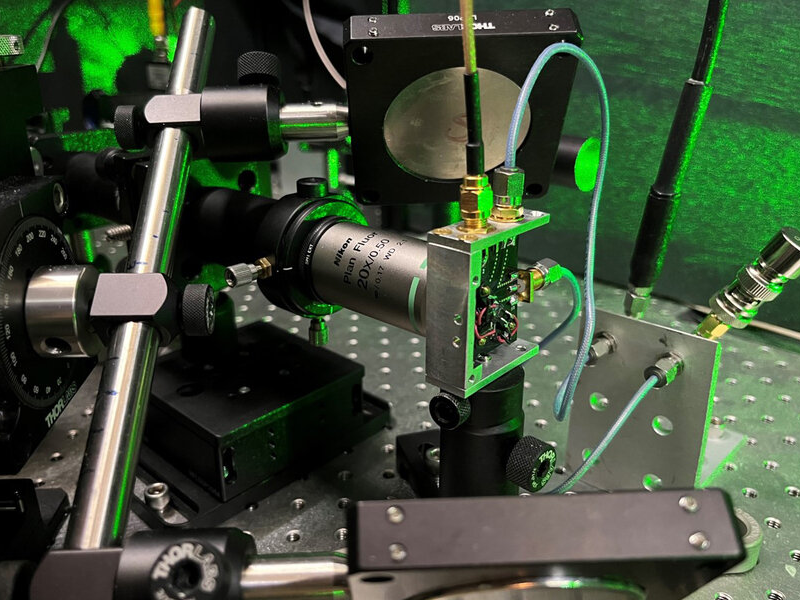
    In their tries, the group utilized a specific device based on an array of nitrogen-vacancy facilities in diamond, an extensively utilized quantum sensing system, and successfully showed detecting of a sign with a frequency of 150 megahertz, utilizing a qubit detector with the frequency of 2.2 ghzs– a detection that would be unattainable without the quantum multiplexer. They then did precise analyses of the process by obtaining a theoretical structure based upon the Floquet concept and examining the numerical predictions of that theory in a series of experiments.

    While their examinations utilized this particular system, Wang says, “the same principle can also be used in any type of sensors or quantum gadgets.” The system would be self-restrained, with the detector and the second frequency source all packaged in a unique gadget.

    Wang says that this system could be used, for example, to feature in detail the performance of a microwave antenna. “It can feature the distribution of the field [generated by the antenna] with nanoscale resolution, so it is extremely promising in that direction,” he claims.

    There are other manners of modifying the frequency sensitivity of some quantum sensors. However, these require the usage of massive gadgets and strong magnetic fields that blur out the fine information and make it impossible to achieve the extremely high resolution that the new system provides. In such systems today, Wang claims, “you need to utilize a solid magnetic field to tune the sensor, but that magnetic field can essentially destroy the quantum material properties, which can affect the phenomena that you want to determine.”

    The system might open up new applications in biomedical fields, according to Cappellaro, because it can make available a range of frequencies of the electrical or magnetic task at the level of a unique cell. It would be tough to get helpful resolution of such signs using current quantum sensing systems, she claims.

    It might be conceivable to utilize this system to spot output signs from a single neuron in feedback to some stimulus, for example, which generally includes a great deal of noise, making such signals challenging to isolate.

    The system can likewise be used to define the conduct of exotic materials such as 2D materials that are being researched for their electromagnetic, optical, and physical features.

    In ongoing work, the group is exploring the probability of finding means to broaden the system to be capable to examine a range of frequencies immediately, instead of the present system’s unique frequency targeting. They will also be remaining to define the system’s capabilities utilizing more effective quantum sensing gadgets at Lincoln Laboratory, where some study team members are based.


    More information:

    Guoqing Wang et al, Sensing of Arbitrary-Frequency Fields Using a Quantum Mixer, Physical Review X (2022). DOI: 10.1103/PhysRevX.12.021061

    Read the original article on PHYS.

  • Scientists Invent “Profound” Quantum Sensor That Can Peer Into the Earth

    Scientists Invent “Profound” Quantum Sensor That Can Peer Into the Earth

    “This Is An ‘Edison Moment’ In Sensing That Will Improve Society.”

    Quantum Sensor
    Credit: Pixabay/CC0 Public Domain

    Gravitational

    A significant breakthrough in quantum sensing technology is being explained as an “Edison moment” that could, scientists expect, have embracing implications.

    New research in Nature explains one of the first practical applications of quantum sensing, a largely theoretical technology that weds quantum physics and the study of Earth’s gravity to peer into the ground below our feet– and the researchers engaged in this study believe it will be massive.

    Referred to as a quantum gravity gradiometer, this new sensor created by the University of Birmingham beneath contract with the United Kingdom’s Ministry of Defense is the initial time such a technology has been used out of a laboratory. Researchers claim it will allow them to explore ambiguous subterranean substructures much more inexpensively and effectively than previously.

    Although gravity sensors already exist, the distinction between the traditional equipment and this quantum-powered sensor is substantial because, as Physics World describes, the old tech takes a long time to spot changes in gravity, needs to be recalibrated with time, and can be thrown away by any vibrations that happen nearby.

    On the other side, this new type of very sensitive quantum sensor can determine the minute changes in gravity fields from items of distinct sizes and compositions that exist subterranean– such as human-made constructions buried by the ages, tantalizingly– much quicker and more properly.

    Reaching Gold

    In a press blurb, the University of Birmingham’s Kai Bongs, who guides the UK Quantum Technology Hub in Sensors and Timing, stated that the “advancement” provides “the capacity to end reliance on inadequate records and luck as we exploit, construct and repair.”

    “This is an ‘Edison moment’ in perception that will transform society, human comprehension, and economies,” Bongs added.

    Alongside applications for both archaeologists and engineers who intend to find out what is beneath the surface of the Earth, this new quantum sensor will also, researchers hope, help foresee natural tragedies like volcanoes.


    Read the original article on futurism.

  • Physicists Announce First Results From Daya Bay’s Final Dataset

    Physicists Announce First Results From Daya Bay’s Final Dataset

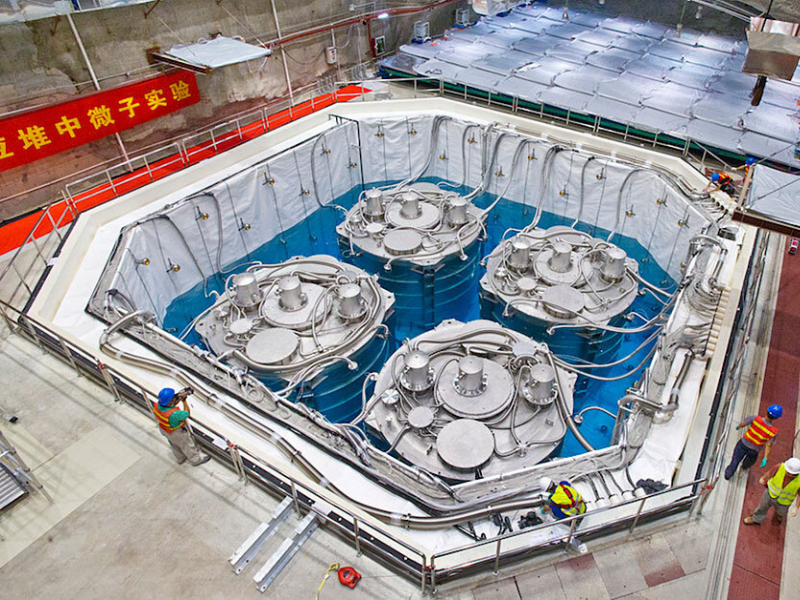
    Bird’s: eyesight of the underground Daya Bay far detector hall throughout the installation. The four antineutrino detectors are immersed in a large pool filled with ultra-pure water. Credit: Roy Kaltschmidt, Berkeley

    The Daya Bay Neutrino Experiment has created the most precise measurement yet of theta13, an essential parameter for comprehending how neutrinos transform their “taste.”

    BEIJING; BERKELEY, CA; and UPTON, NY- Over approximately nine years, the Daya Bay Reactor Neutrino Experiment captured an unprecedented five and a half million communications from subatomic particles called neutrinos.

    Currently, the international team of physicists of the Daya Bay collaboration has reported the first result from the experiment’s full dataset: the most exact measurement yet of theta13, an essential parameter for understanding how neutrinos transform their “taste.” The result, introduced today at the Neutrino 2022 conference in Seoul, South Korea, will help physicists explore some of the most significant mysteries bordering the nature of universe and the matter.

    What are Neutrinos?

    Neutrinos are subatomic particles that are famously elusive and significantly abundant. They endlessly bombard the entire Earth’s surface at nearly the speed of light. However, seldom interact with matter. They can travel through a light year’s worth of lead without disturbing a single atom.

    One of the specifying characteristics of these ghost-like particles is their ability to oscillate between three unique “flavors”: muon neutrino, tau neutrino, and an electron neutrino. The Daya Bay Reactor Neutrino Experiment was designed for investigating the properties that determine the probability of those oscillations, or what is known as mixing angles and mass splittings.

    The Neutrino Experiment at the Daya Bay Reactor

    Just one of the three mixing angles stayed unknown when Daya Bay was developed in 2007: theta13. So, Daya Bay was developed to determine theta13 * with higher sensitivity than any other experiment.

    Operating in Guangdong (China), the Daya Bay Reactor Neutrino Experiment includes large, cylindrical particle detectors immersed in water swimming pools in 3 underground caves. The eight detectors pick up light signals produced by antineutrinos streaming from close-by nuclear power plants. Antineutrinos are the antiparticles of neutrinos and are generated in abundance by nuclear reactors.

    Daya Bay was constructed through an international effort and a first-of-its-kind partnership for a significant physics project between China and the USA. The Beijing-based Institute of High Energy Physics (IHEP) of the Chinese Academy of Sciences leads China’s function in the collaboration, while the United State Department of Energy’s (DOE) Lawrence Berkeley National Laboratory and Brookhaven National Laboratory co-lead U.S. involvement.

    To define the value of theta13, Daya Bay scientists detected neutrinos of a specific flavor-in this case, electron antineutrinos- in each of the underground caverns. Two caves are near the nuclear reactors, and the third cavern is farther away, giving ample distance for the antineutrinos to oscillate. By comparing the variety of electron antineutrinos grabbed by the near and far detectors, physicists determined how several transformed tastes and, consequently, theta13 value.

    Daya Bay physicists created the world’s first conclusive dimension of theta13 in 2012 and subsequently improved upon the dimension’s precision as the experiment continued taking information. After nine years of operation and completion of information collection in December 2020, outstanding detector performance, and dedicated information analysis, Daya Bay has far exceeded expectations.

    Dealing with the complete dataset, physicists have now gauged the value of theta13 with a precision two and a half times which was greater than the experiment’s layout objective. Nothing else existing or planned experiment is expected to reach such a charming level of precision.

    “We had several evaluation teams that scrutinized painstakingly the entire dataset, carefully taking into account the evolution of detector performance over the nine years of operation,” stated Daya Bay co-spokesperson Jun Cao of IHEP. “The teams took advantage of the big dataset not only to refine the choice of antineutrino occasions but also to enhance the decision of backgrounds. This dedicated effort permits us to reach an unrivaled level of precision.”

    Discovery after experience

    The precision dimension of theta13 will enable physicists to more easily determine other parameters in neutrino physics and create more accurate designs of subatomic particles and their interaction.

    By investigating the interactions and properties of antineutrinos, physicists may gain insight into the universe’s imbalance of matter and antimatter. Physicists believe that antimatter and matter were created in equal amounts at the time of the Big Bang.

    However, if that were the case, these two opposites should have annihilated, leaving behind only light. Some distinction between both must have tipped the equilibrium to explain the preponderance of matter (and lack of antimatter) in the universe today.

    “We expect there might be some distinction between neutrinos and antineutrinos,” stated Berkeley physicist and Daya Bay co-spokesperson Kam-Biu Luk. We have never discovered differences between particles and antiparticles for leptons, the type of particles that includes neutrinos.

    We have only detected distinctions between particles and antiparticles for quarks. However, the differences we see with the quarks are not enough to describe why there is more matter than antimatter in the universe. It is feasible that neutrinos might be the smoking gun.”

    The most recent evaluation of Daya Bay’s final dataset also offered physicists a precise dimension of the mass splitting. This property dictates neutrino oscillations frequency.

    “The measurement of mass splitting was not one of Daya Bay’s genuine design objectives. However, it became accessible thanks to the relatively huge value of theta13,” Luk stated. “We determined the mass splitting to 2.3% with the final Daya Bay dataset, an enhencement over the 2.8% precision of the previous Daya Bay measurement.”

    The international Daya Bay collaboration expects to report more findings from the last dataset, including updates to previous dimensions.

    Daya Bay results to precisely measure and compare the properties of neutrinos and antineutrinos will be utilized by the Next-generation neutrino experiments, such as the Deep Underground Neutrino Experiment (DUNE). Presently under construction, DUNE will provide physicists with the world’s most intense neutrino beam, underground detectors divided by 800 miles, and the chance to study the behavior of neutrinos like never before.

    “As one of many physics objectives, DUNE expects to gauge theta13 nearly as precisely as Daya Bay eventually,” said Brookhaven experimental physicist and Daya Bay collaborator Elizabeth Worcester. “This is amazing because we will then have precise theta13 measurements from different oscillation channels, which will rigorously evaluate the three-neutrino version. Until DUNE gets to that high precision, we can utilize Daya Bay’s precise theta13 measurement as a constraint to allow the search for differences between neutrino and antineutrino properties.”

    Scientists will also utilize the big theta13 value and reactor neutrinos to determine which of the three neutrinos is the lightest. “The exact theta13 measurement of Daya Bay improves the mass-ordering sensitivity of the Jiangmen Underground Neutrino Observatory (JUNO), which will finish construction in China next year,” stated Yifang Wang, JUNO spokesperson, and IHEP director. “Moreover, JUNO will attain sub-percent level precision on the mass splitting gauged by Daya Bay in numerous years.”


    Read the original article on PHYS.

  • Studying the Magnetic Properties of Helium-3

    Studying the Magnetic Properties of Helium-3

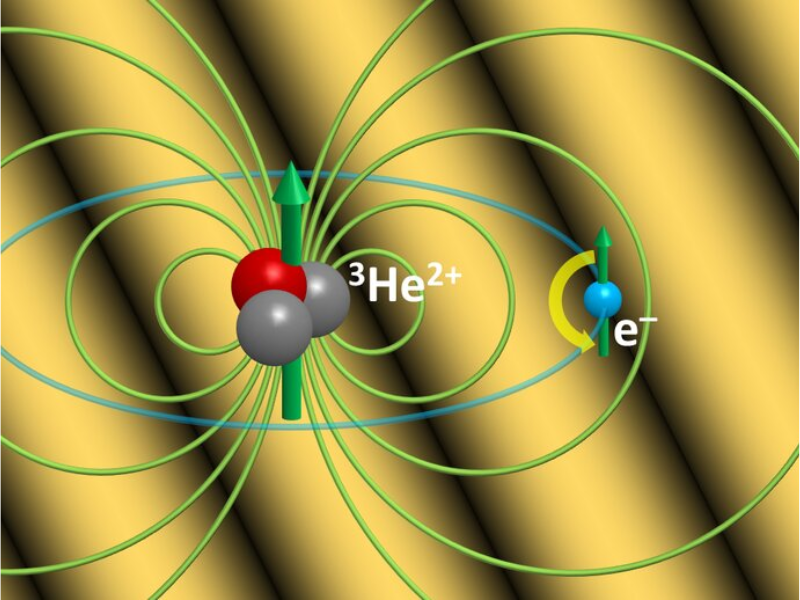
    Fig. 1: Schematic view of the 3He+ ion’s external and internal magnetic interactions. Background: microwave radiation. Credit: MPI

    In joint experimental-theoretical research published in Nature, physicists at the Heidelberg Max Planck Institute for Nuclear Physics (MPIK), together with collaborators from RIKEN, Japan, investigated the magnetic properties of the isotope helium-3. For the first time, the electronic and nuclear g-factors of the 3He+ ion were measured straightly with a relative accuracy of 10– 10.

    The electron-nucleus magnetic cooperation (zero-field hyperfine splitting) was gauged with an accuracy boosted by two orders of magnitude. The g-factor of the bare 3He core was defined through an accurate calculation of the electronic shielding. The outcomes compose the first straight calibration for 3He nuclear magnetic resonance (NMR) probes.

    The exact knowledge of the magnetic properties of matter on an atomic/nuclear level is of great importance for fundamental physics and applications like Nuclear Magnetic Resonance (NMR) probes. Charged particles with an inherent angular momentum (spin) operate like a little magnetic needle.

    The proportionality of magnetic moment (strength of the electromagnetic field) and spin is offered by the alleged g-factor, which is a property of the specific particle and its environment. An atomic or nuclear angular momentum is quantized; specifically, the spin of the electron (even for the core) in 3He can be orientated either parallel or antiparallel to an external magnetic field.

    The magnetic interaction of 3He is threefold (Fig. 1): In an outside magnetic field, the magnetic moment guidance of the electron/nucleus can be parallel or antiparallel to the field lines. Additionally, there is the magnetic interaction between electron and nucleus (supposed hyperfine splitting). This triggers overall four energy levels relying on the electronic and nuclear spin guidance.

    Transitions between them (matching to a spin-flip) can be resonantly stimulated by microwave radiation. This allows for very accurate measurement of the resonance frequencies, where the g-factors and the hyperfine splitting for a provided magnetic field can be directly deduced.

    Fig.2: Photograph and schematic view of the Penning trap for the 3He+ hyperfine structure measurement. Credit: MPI

    For the experiment, the scientists of the division of Klaus Blaum at MPIK, along with cooperators from the University of Mainz and RIKEN (Tokyo, Japan), used a single-ion Penning trap (Fig. 2) to gauge the change frequencies between the hyperfine states and concurrently the magnetic field, using the precise determination of the cyclotron frequency of the trapped ion.

    Antonia Schneider, the first author of the article, describes the setup of the trap: “It is put inside a 5.7 Tesla superconducting magnet and composed of two components: an accuracy trap for the mensuration of the ion frequencies and the interaction with the microwave radiation and an analysis trap to define the hyperfine state“.

    For each switch, the spin-flip rate gets to a maximum at resonance. The g-factors and the zero-field hyperfine splitting are then extracted from the evaluation of the resonance curves. The new experimental configuration improves the precision for the g-factors by a factor of 10 to the level of 10– 10.

    “In order to draw out the g-factor of the bare nucleus in 3He2+ from the gauged nuclear g-factor in 3He+, one needs to take into account the diamagnetic shielding of the electron, i.e. its magnetic reaction to the exterior field,” explains Bastian Sikora from the division of Christoph H. Keitel at MPIK.

    The theoreticians defined the shielding factor with high precision using very accurate quantum electrodynamic (QED) calculations. They also determined the bound electron g-factor for 3He+ and the zero-field hyperfine splitting inside the theoretical framework.

    All theoretical and experimental outcomes are consistent within the matching precision, which has been enhanced for the experimental zero-field hyperfine splitting by two orders of magnitude. The latter was utilized to extract a nuclear parameter (Zemach radius) featuring the nuclear charge and magnetization distribution.

    In the future, the researchers prepare to enhance the measurements by decreasing the magnetic inhomogeneity of the accuracy trap and more precise magnetic field measurements. The new measurement technique can also be applied to determine the nuclear magnetic moment of other hydrogen-like ions.

    The following action is a straight measurement of the magnetic moment of the bare 3He nucleus in a Penning trap with a relative accuracy on the order of 1 ppb or better by applying sympathetic laser cooling.


    More information:

    A. Schneider et al, Direct measurement of the 3He+ magnetic moments, Nature (2022). DOI: 10.1038/s41586-022-04761-7

    Read the original article on PHYS.

  • DeepMind Has Taught an AI to Control Nuclear Fusion

    DeepMind Has Taught an AI to Control Nuclear Fusion

    Nuclear fusion.
    Nuclear fusion. Credit: The Conversation.

    The reinforcement learning algorithm, which controls the scorching plasma within a tokamak nuclear fusion reactor, was developed by an AI company backed by Google.

    The interior of a tokamak– the doughnut-shaped vessel created to include a nuclear fusion reaction– presents a unique type of chaos. Hydrogen atoms are shattered together at unfathomably high temperatures, developing a whirling, roiling plasma warmer than the sun’s surface.

    The key to unlocking the potential of nuclear fusion, which has been proposed as a clean energy source for the future for decades, lies in developing effective methods to manage and confine plasma. The science behind fusion appears to be sound, leaving only an engineering challenge to be overcome.

    According to Ambrogio Fasoli, the director of the Swiss Plasma Center at École Polytechnique Fédérale de Lausanne in Switzerland, the task at hand is to heat the plasma up and maintain its stability long enough to extract energy from it.

    Control of the nuclar reaction by AI

    To tackle this challenge, DeepMind, the artificial intelligence company backed by Google’s parent company Alphabet, has collaborated with the Swiss Plasma Center on a research project to develop an AI system capable of controlling a nuclear fusion reaction. DeepMind has previously applied its expertise to video games and protein folding.

    In stars, which are likewise powered by fusion, the sheer gravitational mass is sufficient to draw hydrogen atoms join and overmatch their opposing charges. On our planet, researchers utilize powerful magnetic coils to confine the nuclear fusion reaction, nudging it into the desired position and molding it like a potter manipulating clay on a wheel.

    The coils need to be meticulously regulated to prevent the plasma from touching the vessel’s sides: this can harm the walls and slow down the fusion reaction. (There is little danger of an explosion as the fusion reaction can not succeed without magnetic confinement).

    However, each time researchers desire to change the arrangement of the plasma and experiment with different forms that may yield more power or a cleaner plasma; it requires a massive quantity of engineering and design work. Traditional systems are computer-controlled and based on designs and careful simulations, but they are, Fasoli says, “complex and not usually necessarily optimized.”.

    Exactly how does DeepMind control nuclear fusion?

    DeepMind has developed an AI that can independently control plasma, as described in a paper published in the journal Nature.

    The research team taught a deep reinforcement learning system to regulate the 19 magnetic coils in the variable-configuration tokamak at the Swiss Plasma Center known as TCV, which conducts research informing the design of future fusion reactors.

    According to Martin Riedmiller, control team lead at DeepMind, AI, and reinforcement learning, in particular, are well-suited for solving the complex problem of controlling plasma in a tokamak.

    The neural network, which mimics the human brain’s architecture, initially learned in a simulation by observing how changes to each of the 19 coils affected the plasma’s shape within the vessel, and it was given specific shapes to recreate in the plasma.

    A deep reinforcement learning system, developed by DeepMind, has been trained to regulate the 19 magnetic coils inside the variable-configuration tokamak at the Swiss Plasma Center.

    The system was able to control the plasma autonomously by observing the effects of altering the settings on each coil and was offered different shapes to recreate in the plasma, including a D-shaped cross-section and a snowflake setup that evenly dissipates heat.

    The system was able to reproduce these shapes in the simulation and in real experiments, indicating a significant step towards the design of future tokamaks and the acceleration of viable fusion reactors.

    The fusion process

    The ambiguity and continuous nature of the fusion process presented a challenge for DeepMind’s scientists, as it is an “under-observed system” that constantly changes.

    “At times algorithms which are efficient, these discrete troubles fight with such continual issues,” claims Jonas Buchli, a researcher at DeepMind. “This was a tremendous advance for our algorithm because we could show that this is doable. Furthermore, we believe this is really sophisticated trouble to resolve. It is a different sort of complexity than what you have in games”.

    This is not the first time artificial intelligence has been utilized to attempt to manage nuclear fusion. Since 2014, Google has been working with California-based fusion firm TAE Technologies to apply machine learning to a different sort of fusion reactor– quickening the evaluation of experimental data. A study at the Joint European Torus (JET) fusion project in the UK has utilized AI to foresee plasma habits.

    The principle even appears in fiction: In 2004’s Spider-Man 2, villain Doc Ock develops an AI-powered, brain-controlled exoskeleton to regulate his experimental fusion reactor, which functions well till the AI takes control of his mind and starts eradicating people.

    The collaboration with DeepMind can show the most fundamental as fusion reactors grow. Physicists have a good handle on controlling the plasma in smaller-scale tokamaks with conventional techniques; the obstacle will increase as scientists try to make power-plant-sized versions viable. Progress has been sluggish but constant.

    The JET project

    Last week the JET project performed a breakthrough, setting a new record for the volume of energy extracted from a fusion project, and construction is progressing at France’s ITER, an international collaboration that will end up being the globe’s most giant experimental fusion reactor when it triggered in 2025.

    “The more ambiguous and high performance the tokamak, the higher the necessity to control more quantities with greater and higher confidence and precision,” claims Dmitri Orlov, an associate researcher at the University of California San Diego Center for Energy Research.

    An AI-controlled tokamak might be improved to control the transfer of warmth out of the reaction to the walls of the vessel and protect against destructive “plasma instabilities.” The reactors themselves can be redesigned to benefit from the tighter control offered by reinforcement learning.

    Ultimately, Fasoli states, the cooperation with DeepMind can permit researchers to push the limits and speed up the long journey towards fusion power. “AI would permit us to explore things that we would not explore otherwise because we can take threats with this sort of control system we would not dare take otherwise,” he claims. “If we are sure that we have a control system that can take us near to the limit but not beyond the limit, we can certainly explore probabilities that would not otherwise be there for exploring.”.


    Read the original article on WIRED.

    Read More: Microsoft’s Bing Chatbot Has Begun Acting Defensive and Talking Back to Users.

  • Laws of Physics bent: Time Crystals “Impossible” but Obey Quantum Physics

    Laws of Physics bent: Time Crystals “Impossible” but Obey Quantum Physics

    In a new experiment, scientists created two time crystals inside the superfluid, and brought them to touch. Credit: SciTechdaily.

    Time crystals were long considered impractical because their continuous movement would seem to challenge the laws of physics. Utilizing quantum physics, scientists have developed time crystals and now proved that they can power helpful tools in the future.

    Researchers have produced the first “time-crystal” two-body system in an experiment that seems to bend the laws of physics.

    This happened after the same team lately experienced the first interaction of the new stage of matter.

    The laws of physics and time crystals

    Time crystals were for a long time believed to be impossible because they come from atoms in never-ending motion. The discovery, released on June 2, 2022, in the journal Nature Communications, shows that not simply can time crystals be developed, but they have the potential to become valuable devices.

    Time crystals are distinct from a standard crystal, like metals or rocks, which is made of atoms arranged in a frequently repeating pattern precede.

    Theorized in 2012 by Nobel Laureate Frank Wilczek and identified in 2016, time crystals display the peculiar feature of being in constant, repeating motion in time despite no external input. Their atoms are frequently oscillating, rotating, or moving initially in one direction and, after that, the other.

    Researchers cooled superfluid helium-3 to near absolute zero (minus 273.15°C) inside this rotating refrigerator, where two time crystals were created and brought into touch. Credit: © Aalto University/Mikko Raskinen

    EPSRC Fellow Dr. Samuli Autti, the lead author from Lancaster University’s Department of Physics, explained: “Everybody knows that endless movement devices are impossible. In quantum physics, perpetual movement is okay as long as we shut our eyes. By sneaking through this crack, we can make time crystals.

    Result of the crystal junction

    It happens that putting both of them together functions beautifully, even if time crystals should not exist in the first place. Moreover, we already know they also exist at room temperature.”

    A “two-level system” is a fundamental foundation of a quantum computer. Time crystals can be utilized to develop quantum tools that function at room temperature.

    A worldwide team of scientists from Lancaster University, Royal Holloway London, Landau Institute, and Aalto University in Helsinki observed time crystals by utilizing Helium-3, a rare isotope of helium with one missing neutron. The experiment was performed at Aalto University.

    They cooled superfluid helium-3 to about one ten thousandths of a degree from absolute zero (0.0001 K or -273.15°C). The researchers produced two time crystals inside the superfluid and brought them to touch. As explained by quantum physics, the scientists then viewed both time crystals interacting.


    Read the original article on scitechdaily.

    Read more: Infant Infections May Expand the Possibility of Heart Illnesses Later in Life.