Category: Physics

  • Enhancing Group Light Emission Through Atomic Interactions

    Enhancing Group Light Emission Through Atomic Interactions

    A group of physicists from the Faculty of Physics and the Center for New Technologies at the University of Warsaw, along with researchers from Emory University in Atlanta, U.S., studied how interactions between atoms influence their collective behavior when interacting with light.
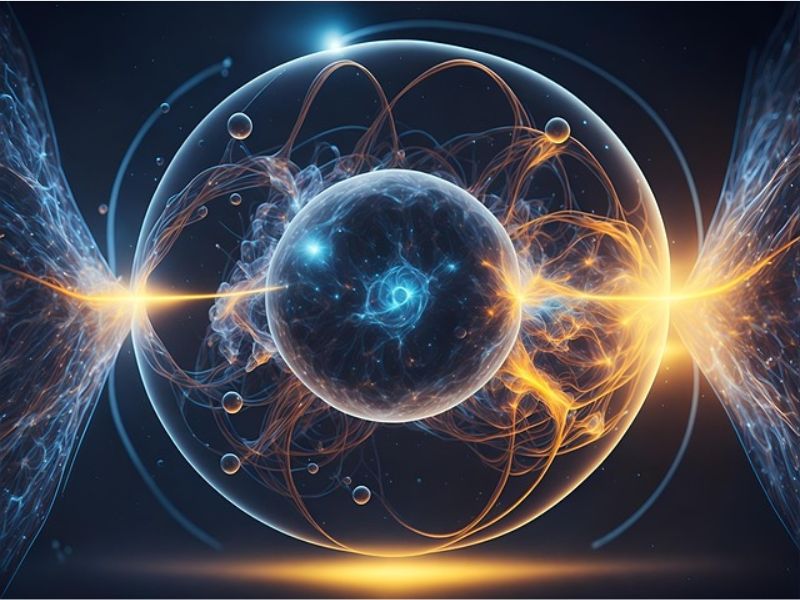
    Visualization of atoms placed in an optical cavity, interacting with each other as well as with the light mode. Image Credits: Yao Wang, Emory University

    A group of physicists from the Faculty of Physics and the Center for New Technologies at the University of Warsaw, along with researchers from Emory University in Atlanta, U.S., studied how interactions between atoms influence their collective behavior when interacting with light.

    Enhancing Superradiance Through Atom Interactions

    In a study published in Physical Review Letters, the researchers build upon existing models of the phenomenon. They demonstrate that direct interactions between atoms can enhance a collective emission of light called superradiance, highlighting new possibilities for advancing quantum technologies.

    Light–matter systems involve placing multiple emitters, such as atoms, within a shared optical mode of a cavity—a specific light pattern confined between closely spaced mirrors. This setup allows for collective behaviors that do not occur with individual, isolated atoms.

    A key example of this is superradiance—a quantum collective effect in which numerous atoms emit light in sync, resulting in radiation far more intense than what each atom would produce on its own.

    Beyond the Giant Dipole Model

    Typically, research on this effect assumes that the interaction between light and matter is the dominant factor. Under this assumption, the entire group of atoms is treated as a single “giant dipole” that couples uniformly to the cavity’s electromagnetic field, allowing for interactions that extend across the entire system.

    “Photons serve as connectors, linking each emitter to all the others within the cavity,” explains Dr. João Pedro Mendonça, the lead author of the study, who earned his Ph.D. at the Faculty of Physics, University of Warsaw, and is currently a researcher at the Center for New Technologies at the same university.

    In actual materials, however, nearby emitters also affect one another through short-range dipole–dipole interactions—effects that are often overlooked. This research explores how the situation changes when these inherent atom–atom interactions are taken into account.

    Balancing Interactions and Preserving Entanglement in Superradiance

    The study reveals that these atom–atom interactions can either oppose or enhance the photon-mediated interactions responsible for superradiance. Grasping this interplay is crucial for accurately interpreting experiments where light and matter strongly influence one another.

    At the heart of the combined light–matter behavior is entanglement. However, many analytical and computational models treat light and matter as separate systems, which effectively erases this vital connection.

    “Semiclassical models simplify the complex quantum dynamics, but they do so by sacrificing key details,” the authors note. “In particular, they ignore potential entanglement between photons and atoms—and in certain situations, we found this simplification to be inadequate.”

    Computational Insights into Entangled Superradiance

    The researchers present a computational method that explicitly retains entanglement, allowing them to accurately capture correlations both within individual subsystems and between them.

    Applying this approach, they demonstrate that natural interactions between nearby emitters can reduce the threshold for superradiance and uncover a previously unrecognized ordered phase exhibiting superradiant characteristics. Overall, the findings highlight that including entanglement is crucial for fully mapping the range of possible states in light–matter systems.

    Beyond its theoretical importance, this work has practical implications for emerging quantum technologies. One notable application is quantum batteries—devices that could, in theory, achieve faster and more efficient charging and discharging by leveraging collective quantum effects.

    Tuning Superradiance for Efficient Energy Transfer

    Superradiant behavior can speed up both the charging and discharging processes, enhancing energy transfer efficiency. This study sheds light on how short-range interactions between nearby emitters influence those dynamics: by altering the conditions for superradiance and guiding the system between different states, these inherent interactions become adjustable design parameters for optimizing charging performance in real-world materials and optical cavities.

    “When you include light–matter entanglement in the model, you gain the ability to predict whether a device will charge efficiently or not. That transforms a complex many-body effect into a practical design principle,” said João Pedro Mendonça. Gaining similar control over light–matter correlations is also valuable for other technologies, such as quantum networks and high-precision sensors.

    The project emerged from an international collaboration that brought together expertise from several institutions. João Pedro Mendonça conducted multiple research visits to the U.S., and close international cooperation was central to the success of the study. “This is a great example of how international mobility and collaboration can lead to important breakthroughs,” the team emphasized.


    Read the original article: Phys.Org

    Read more: Mechanical Bee may make Off-World Pollination Possible
  • The First Quantum Computer Constructed with Silicon Chip Technology

    The First Quantum Computer Constructed with Silicon Chip Technology

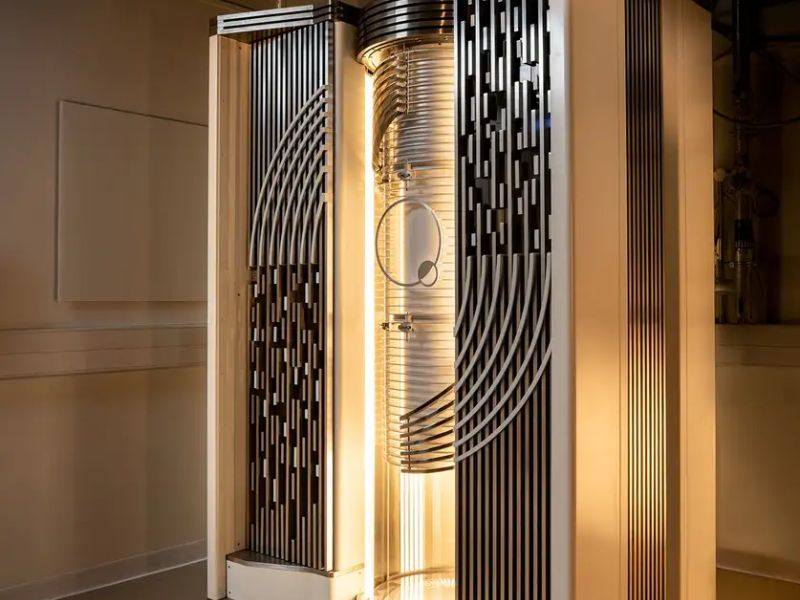
    Quantum Motion has developed a machine that is now housed at the National Quantum Computing Centre (NQCC) in Oxfordshire. Researchers there will explore its potential for solving real-world challenges, such as drug discovery.
    Image Credits: Christy Nunns and Quantum Motion

    Quantum Motion has developed a machine that is now housed at the National Quantum Computing Centre (NQCC) in Oxfordshire. Researchers there will explore its potential for solving real-world challenges, such as drug discovery.

    A Comprehensive Quantum Computing System Built on Scalable Silicon CMOS Technology

    A full-stack quantum computer is an all-in-one system integrating a Quantum Processing Unit (QPU), user interface, and control stack compatible with standard quantum software.

    By using standard silicon CMOS (Complementary Metal-Oxide-Semiconductor) technology—the same material used in global semiconductor manufacturing—Quantum Motion’s quantum computers have the potential to be scaled up for mass production more easily.

    Founded in 2017 by Professors John Morton (UCL) and Simon Benjamin (Oxford), the company now has over 100 employees. Its headquarters are in London, with additional teams based in the US, Australia, and Spain. To date, it has secured more than £62 million through equity and grant funding.

    Silicon-Based Quantum Computing Celebrated as a Major Milestone by Experts and UK Officials

    Professor Morton, now CTO, said: “The system delivered to the UK’s National Quantum Computing Centre marks the arrival of silicon-based quantum computing.”

    UK Science Minister Lord Vallance stated: “The National Quantum Computing Centre provides a one-of-a-kind environment for innovators to test emerging quantum technologies.”

    He added that Quantum Motion’s new quantum computer moves the technology closer to commercial use, with potential to transform healthcare and clean energy.

    Harnessing Atomic-Scale Physics to Revolutionize Computing and Problem-Solving

    Quantum computers use physics at atomic and subatomic levels, giving them powerful abilities to simulate and understand nature.

    They could surpass today’s top supercomputers, quickly performing complex tasks like discovering new materials, medicines, and aiding climate change efforts.

    James Palles-Dimmock, CEO of Quantum Motion, said, “This is the defining moment for silicon-based quantum computing. Today’s announcement demonstrates that engineers can build a reliable, functional quantum computer using the world’s most scalable, mass-producible technology.

    Dr. Michael Cuthbert, NQCC Director, said, “The NQCC advances UK quantum capabilities by evaluating hardware from top global companies.” The successful installation of Quantum Motion’s system represents a significant milestone in our quantum computing testbeds program. Our team begins testing the system to better understand its real-world silicon-based applications.


    Read the original article on: UCL NEWS

    Read more: China Launches World-First Quantum Computer Into Space

  • Deep Fission Secures $30 Million To Develop Mile-Deep Nuclear Reactor

    Deep Fission Secures $30 Million To Develop Mile-Deep Nuclear Reactor

    The new borehole reactor plant will have a much smaller footprint than this surface plant
    US Department of Energy

    Bringing a new dimension to underground energy, Deep Fission Nuclear has raised US$30 million to build a micro-reactor inside a borehole one mile (1.6 km) deep, with completion targeted for July 4, 2026, under the US Department of Energy’s Reactor Pilot Program.

    An unconventional approach to reactor design

    More than a year ago, the company unveiled its unconventional plan: to drill a 30-inch (76-cm) shaft through solid rock in a geologically stable area and lower a fully assembled reactor to the bottom on a cable.

    Though the concept may sound unusual, it addresses several of nuclear energy’s most pressing challenges: high costs, safety concerns, and security risks. Traditional nuclear power plants, particularly in Western countries, often take decades to build and cost tens of billions of dollars. Alongside the expense, fears of catastrophic accidents and potential sabotage have long overshadowed the technology.

    Deep Fission aims to tackle these issues by rethinking reactor placement.

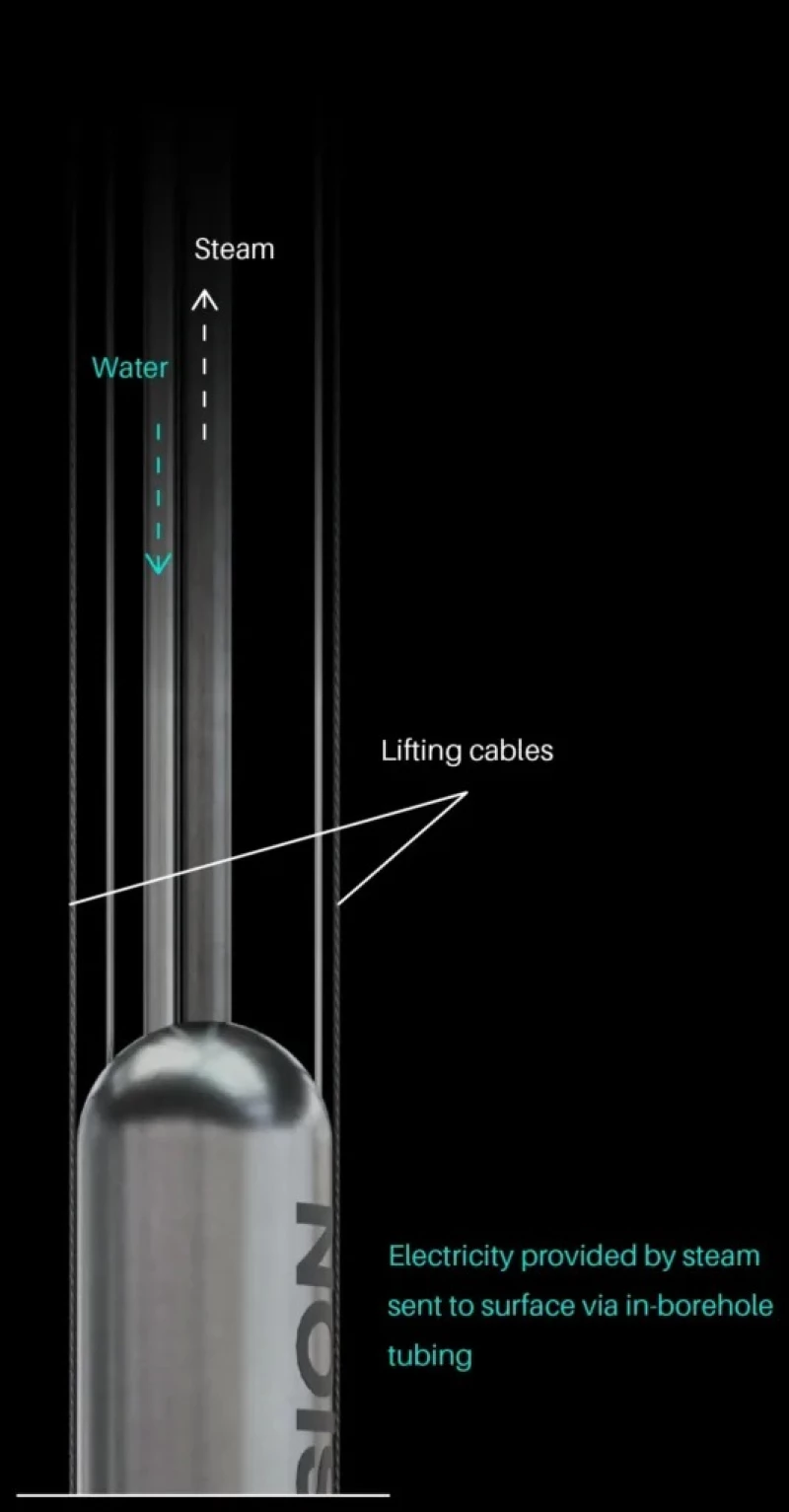
    Diagram of the Deep Fission reactor
    Deep Fission

    The bulk of nuclear plant costs typically stem not from the reactor itself but from the extensive infrastructure required to contain it. Housing the reactor far below ground could streamline design and reduce above-ground construction expenses by up to 80%.

    Design details of the modular reactor

    The company’s current design calls for a compact 15-MWe modular reactor, fueled by low-enriched uranium (LEU) and operating at about 315 °C (600 °F). The unit would be lowered into a water-filled borehole, connected by two insulated pipes—one sending water down, the other returning non-radioactive steam to drive turbines at the surface. The water column and surrounding rock would naturally maintain reactor pressure at 160 ATM (2,352 psi), eliminating the need for specialized pressurization equipment.

    This underground setup would require only a quarter to half an acre (roughly 1,000 to 2,000 m²) on the surface. By placing the reactor so deep, conventional containment structures become unnecessary, while security is enhanced by the inaccessibility of the site.

    Geology as a built-in safety mechanism

    The geology itself adds another safety layer. Drilling below the water table in a stable formation means that, in the unlikely event the reactor becomes irretrievable, operators could seal the borehole with rubble and concrete. At that depth, the water table remains protected, and uranium migration through solid rock is negligible, even over millions of years.

    Deep Fission estimates a pilot plant could be built in just six months, and if scaled commercially, the technology could deliver electricity at five to seven cents per kWh.

    Deep Fission’s vision for nuclear energy

    This is a pivotal moment for nuclear power, said Liz Muller, Co-Founder and CEO of Deep Fission. We have the right technology at the right time and place. With this funding, we can move ahead with our pilot reactor and aim to finish by 2026. We’re confident our design can scale quickly and profitably to meet the soaring energy demands of AI data centers and other global customers.


    Read the original article on: New Atlas

    Read more: Nuclear Waste Could Become a Source of Tritium for Fusion Power

  • The World’s Largest Neutrino Detector Begins Operations Deep Underground

    The World’s Largest Neutrino Detector Begins Operations Deep Underground

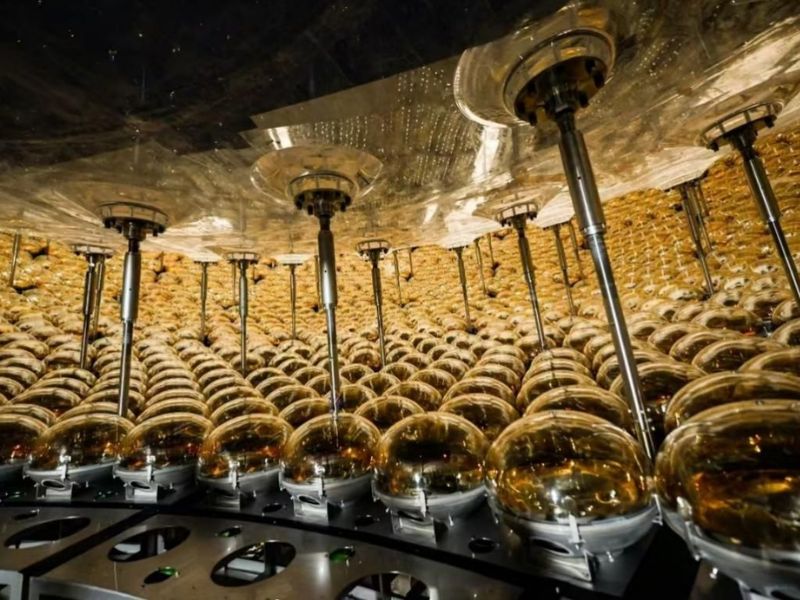
    The inside of the sphere with the scintillating liquid. (JUNO Collaboration)

    Neutrinos rank among the most mysterious particles in the standard model, largely because they are so elusive. Although around 400 trillion of them stream through every human body each second, produced mainly by the Sun, they almost never interact with ordinary matter—making them notoriously difficult to study.

    A Giant Leap in Detection

    To peel back some of that mystery, a massive new neutrino observatory in China has started collecting data. Scientists expect it to detect between 40 and 60 neutrinos daily over the next decade.

    The facility, called the Jiangmen Underground Neutrino Observatory (JUNO), sits between two large nuclear power plants at Yangjian and Taishan. These reactors produce additional artificial neutrinos alongside the solar ones, flooding the region with particles that scarcely interact with anything around them.

    Shielded Underground

    Like most neutrino detectors, JUNO lies far below the surface—about 700 meters underground. The surrounding rock shields it from most other cosmic particles, such as muons, just as similar setups like IceCube rely on natural barriers to filter background noise.

    The inside of the JUNO detector. (Yuexiang Liu/Institute of High Energy Physics)

    To further reduce interference, JUNO uses a secondary system known as the “Top Tracker.” This setup covers a 44-meter-wide pool of ultrapure water, registering stray particles that manage to reach the site. While it cannot prevent those particles from arriving, it helps researchers rule out the false signals they create.

    At the heart of the observatory sits a liquid scintillator sphere encased in more than 43,000 ultra-sensitive photodetectors, each capable of spotting individual photons. By combining signals from all detectors, scientists can extract detailed information about neutrinos, including the distinctions among the three known “flavors”: electron, muon, and tau.

    Unraveling Oscillations and Mass Hierarchy

    These types are known to differ slightly and, remarkably, to transform into one another—a phenomenon called oscillation. JUNO’s key objectives include unraveling the relative masses of the three neutrino types and studying how often they switch states. Determining whether one type is heavier or lighter than the others could be a major step forward.

    The Top Tracker covering the pool of water surrounding the detector. (JUNO Collaboration)

    Unlocking neutrino behavior could reshape multiple fields: cosmology, where neutrinos may have influenced the universe’s early expansion; astrophysics, where they provide clues to supernova explosions; and even geology, since radioactive decay within Earth produces them as well.

    JUNO represents the latest milestone in this global pursuit. The project brings together 74 institutions and roughly 700 researchers under the leadership of the Chinese Academy of Sciences’ Institute of High Energy Physics.

    Planned to operate for at least 10 years, the detector aims to amass a dataset robust enough to reveal new details about these elusive particles. If successful, the insights could ripple across many areas of science.


    Read th eoriginal article on: Science Alert

    Read more: Neutrinos Transform the Universe: Researchers Validate the Theory

  • China Launches World-First Quantum Computer Into Space

    China Launches World-First Quantum Computer Into Space

    The competition for quantum supremacy has reached a new stage—this time extending into space. China unveiled its fastest quantum computer as another milestone marked the first launched into orbit on a SpaceX rocket.
    Image Credits: Um computador quântico projetado para funcionar no espaço (mostrado durante a montagem em laboratório) está orbitando a Terra em um satélite. © Walther Group/Cortesia de DLR RSC3

    The competition for quantum supremacy has reached a new stage—this time extending into space. China unveiled its fastest quantum computer as another milestone marked the first launched into orbit on a SpaceX rocket.

    China’s newly unveiled model outperforms several of the world’s most powerful supercomputers. Using a photon-based architecture, the system performs complex computations exponentially faster than classical machines. This breakthrough strengthens China’s position in the global tech race and moves quantum computing closer to practical, real-world use.

    Debating Supremacy, Advancing Reality

    Though debated, quantum supremacy is a milestone that recent progress shows is getting closer.

    Meanwhile, University of Vienna researchers launched the first operational quantum computer into orbit, now circling Earth at about 530 km.

    Remarkably, the device was built in only 11 days. Compact and efficient, the device is under 4 liters, 9 kg, and runs on 10–30 watts—ideal for energy-limited space missions.

    Project lead Philip Walther said the mission tests whether quantum principles endure space’s extreme conditions.

    As pioneers, we also bear the responsibility of ensuring that these systems perform as expected beyond Earth’s atmosphere,” Walther told ScienceNews.

    Its main advantage is enabling edge computing, letting satellites process data locally instead of sending it back to Earth, saving time, energy, and bandwidth.

    Photons as the Building Blocks of Quantum Power

    The system uses photonic quantum computing, with photons as qubits able to exist in 0 and 1 states simultaneously. This method offers not only faster processing but also higher energy efficiency, a critical factor for space operations.

    Though still experimental, the mission proved the hardware works in space. The next step is to assess how well it withstands long-term exposure to orbital conditions.

    Once the mission concludes, the satellite will be directed into a controlled atmospheric reentry, ensuring its safe destruction and marking the close of its groundbreaking journey.

    From Earth to space, China’s breakthrough and the orbital experiment show quantum computing is moving from promise to reality.


    Read the original article on: Think Move Make

    Read more: Pregnancy-Simulating Robot Debuts in China

  • Unicorn IQM Expands Quantum Computing Globally

    Unicorn IQM Expands Quantum Computing Globally

    Finnish quantum computing company IQM has achieved unicorn status after a $300+ million Series B round led by cybersecurity-focused investor Ten Eleven Ventures.
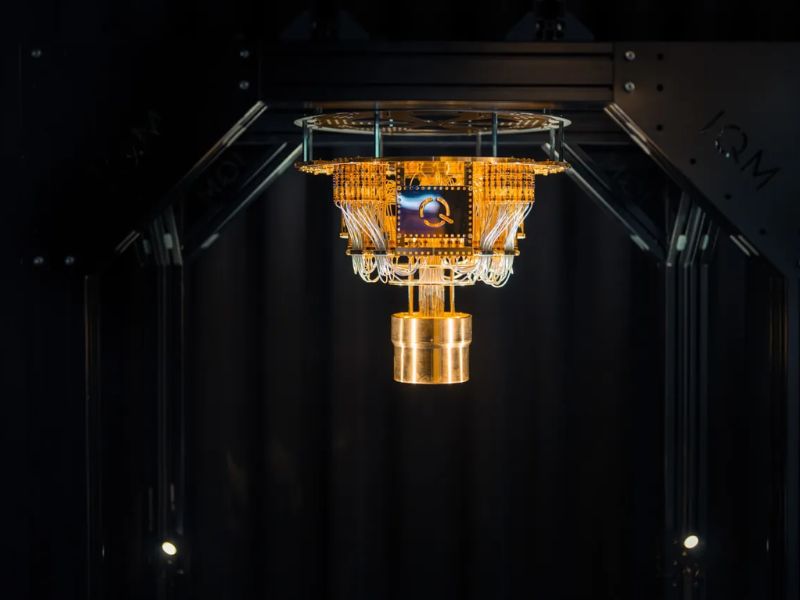
    Image Credits: IQM

    Finnish quantum computing company IQM has achieved unicorn status after a $300+ million Series B round led by cybersecurity-focused investor Ten Eleven Ventures.

    A spinout from academia, IQM develops both on-premise quantum computers and a complementary cloud platform. While it has clients in the APAC region and the U.S., its primary market is currently Europe. This new funding is aimed at expanding its global commercial presence and advancing R&D to translate quantum science into practical applications.

    Accelerating the Roadmap to Compete

    To compete with tech giants like IBM, Google, and Microsoft for U.S. clients, IQM plans to accelerate its hardware and software roadmap. Co-CEO Jan Goetz stated this involves investing in chip fabrication, software development, and critical error correction research.

    The industry is shifting its focus from simply maximizing the number of qubits to improving quality and reliability—a complex trade-off IQM must navigate. This focus on developing stable and useful systems is key to delivering the long-promised real-world applications for quantum computing.

    Ultimately, IQM’s strategy reflects the sector’s broader move towards building the essential software layer that will allow domain experts (non-quantum specialists) to actually use this powerful technology.

    Prioritizing US Growth and Sales

    While most of its 300 employees are in Finland and Germany, IQM will use the new capital to grow its team and boost its commercial presence in the U.S. This may eventually include local assembly to navigate tariffs, but for now, the focus remains on sales, evidenced by a recent system sale to the U.S. Department of Energy’s Oak Ridge National Laboratory.

    IQM chose lead investor Ten Eleven Ventures for their strategic fit. The firm’s co-founder, Alex Doll, sees quantum computing as a pivotal pillar for future cybersecurity and will join IQM’s board. The round, which included participation from Tesi and others, brings IQM’s total funding to $600 million.

    Co-CEO Jan Goetz justified the round’s size by highlighting IQM’s commercial traction, claiming it is now the global leader in quantum computer sales across all major continents. Although the company has produced only 30 systems by late 2024, it is now progressing from its current 54-qubit systems toward deploying 150-qubit machines. Goetz values this technical milestone more than the company’s new unicorn status.


    Read the original article on: Techcrunch

    Read more: Why are We so Fascinated with Making Robots Dance?

  • Nuclear Waste Could Become a Source of Tritium for Fusion Power

    Nuclear Waste Could Become a Source of Tritium for Fusion Power

    Nuclear waste could fuel future fusion power plants
    Depositphotos

    A looming shortage of fuel for nuclear fusion may have an unexpected fix. A physicist at Los Alamos National Laboratory (LANL) suggests that tritium for fusion reactors could be generated using nuclear waste left over from fission plants.

    If fusion energy becomes practical, it could revolutionize power production, delivering virtually limitless electricity on demand. Yet, the challenge isn’t the physics of fusion itself but a severe scarcity of the fuel it requires.

    Why Fusion Needs More Than Ordinary Hydrogen

    Unlike fission, which splits uranium or plutonium atoms to release energy, fusion works by merging hydrogen atoms into helium. The complication lies in the fact that fusion reactors cannot run on ordinary hydrogen—they require deuterium and tritium, heavier isotopes of hydrogen.

    Deuterium, found in seawater, is abundant enough to supply humanity’s needs. Tritium, however, is extraordinarily scarce, with global reserves estimated at only 55 pounds ± 31 pounds (25 kg ± 14 kg). Its rarity drives costs up to roughly US$15 million per pound ($33 million per kilogram), with Canada’s fission reactors being the primary commercial source today.

    To put it in perspective, powering one million U.S. homes for a year would require about 32 pounds (14.6 kg) of tritium—far beyond what current reserves can cover. If fusion plants were already widespread, excess power could be used to generate more tritium, but since that infrastructure doesn’t yet exist, an alternative must be found.

    A New Approach from Los Alamos

    Terence Tarnowsky of LANL has been exploring reactor simulations that turn fission waste into a tritium source. His approach builds on an old concept but leverages modern technology to make it viable. The process involves sealing radioactive waste—such as uranium and plutonium—inside molten lithium salt and bombarding it with high-energy particles from a superconducting linear accelerator. This triggers spallation, a nuclear reaction that releases neutrons. Those neutrons interact with lithium, eventually producing tritium.

    A key advantage is safety: the reaction only continues while the accelerator is active, making it inherently subcritical. Tarnowsky estimates that a one-gigawatt system could generate enough tritium annually to power 800,000 homes—ten times the output of a fusion reactor of equivalent thermal capacity.

    “Energy transitions are always expensive, so whenever there’s a way to ease that burden, we should pursue it,” Tarnowsky said.

    He presented his findings last week at the American Chemical Society’s fall meeting.


    Read th eoriginal article on: New Atlas

    Read more: Nuclear Fusion: How Thrilled Should We Be?

  • Physicists Used a Quantum Computer to Reverse the Flow of Time

    Physicists Used a Quantum Computer to Reverse the Flow of Time

    Researchers from the Moscow Institute of Physics and Technology, working with colleagues in the U.S. and Switzerland, managed to revert a quantum computer’s state by a fraction of a second. They also estimated the probability of an electron in the vacuum of interstellar space spontaneously returning to a previous state in its own timeline.
    Image Credit: Pixabay

    Researchers from the Moscow Institute of Physics and Technology, working with colleagues in the U.S. and Switzerland, managed to revert a quantum computer’s state by a fraction of a second. They also estimated the probability of an electron in the vacuum of interstellar space spontaneously returning to a previous state in its own timeline.

    Lead author Gordey Lesovik explained, “This work is part of a broader series exploring the potential to challenge the second law of thermodynamics. That law is deeply connected to the concept of the arrow of time, which describes time’s one-way flow from past to future.”

    Researchers Challenge Thermodynamics with Engineered Quantum Time Reversal

    Our first paper introduced a concept known as a local perpetual motion machine of the second kind. In December, we explored how Maxwell’s demon could be used to violate the second law. In this latest study, we approached the issue from a new angle—by artificially generating a state that moves in the opposite direction of the thermodynamic arrow of time.”

    The team wanted to explore whether time could spontaneously reverse—even briefly—for a single particle. To investigate this, they focused on observing a lone electron in the emptiness of interstellar space.

    Study co-author Andrey Lebedev, from MIPT and ETH Zurich, explained, “Let’s say we begin observing an electron that’s localized — meaning we have a fairly good idea of where it is in space. Quantum mechanics doesn’t allow us to pinpoint its exact position, but we can define a small area where it’s most likely located.”

    As time progresses, the electron’s state evolves according to Schrödinger’s equation. Although this equation doesn’t favor a direction in time, the electron’s position rapidly becomes more uncertain, causing its probability distribution to spread out. This increasing uncertainty mirrors the growing disorder—or entropy—in larger systems, like billiard balls scattering on a table, a hallmark of the second law of thermodynamics.”

    Schrödinger’s Equation Suggests Time Reversal Is Theoretically Possible Under Rare Cosmic Conditions

    Valerii Vinokur, another co-author from Argonne National Laboratory in the U.S., added, “Still, Schrödinger’s equation is reversible. That means, mathematically, if we apply a transformation known as complex conjugation, it would describe the reverse: a dispersed electron re-localizing into a small area in the same amount of time. While this doesn’t naturally occur, it’s theoretically possible through a random fluctuation in the cosmic microwave background that fills the universe.”

    The team then calculated the chances of such a reverse, where a spread-out electron spontaneously regains its previous localized state. Their findings showed that even if 10 billion newly localized electrons were observed continuously for the entire 13.7-billion-year lifespan of the universe, this time-reversal would only occur once. And even then, the electron would only shift back in time by a mere ten-billionth of a second.

    When applied to large-scale events—like aging or volcanoes erupting—the sheer number of particles and the much longer timescales involved make time reversal essentially impossible. That’s why we don’t witness people growing younger or ink separating from paper.

    To explore this further, the researchers conducted a four-phase experiment to simulate time reversal—not with an electron, but using a quantum computer made up of two, and later three, superconducting qubits.

    The four stages of the actual experiment on a quantum computer mirror the stages of the thought experiment involving an electron in space and the imaginary analogy with billiard balls. Each of the three systems initially evolves from order toward chaos, but then a perfectly timed external disturbance reverses this process. Credit: @tsarcyanide/MIPT

    Stage 1: Order

    The experiment begins with each qubit set to its ground state, or zero. This represents a highly ordered setup, similar to an electron confined to a small space or a neatly arranged rack of billiard balls before the game starts.

    Stage 2: Degradation

    Next, order breaks down. Like an electron’s position spreading out or the balls scattering on a pool table after the break, the qubit system becomes increasingly complex, forming a shifting pattern of zeros and ones. This is done by briefly running an evolution program on the quantum computer. Although a similar breakdown could naturally occur from environmental interactions, using a controlled program allows the researchers to eventually reverse it.

    Stage 3: Time Reversal

    At this stage, a special program alters the quantum computer’s state to make it evolve in reverse—from disorder back to order. This deliberate “kick” mimics the improbable cosmic fluctuation that might reverse an electron’s state, but here it’s intentionally programmed. In the billiard analogy, it’s like giving the table an exact nudge that sends the balls rolling back to their original triangle.

    Stage 4: Regeneration


    The same evolution program from Stage 2 is run again. If the reversal “kick” was accurate, the system doesn’t spiral further into chaos—it rewinds. The qubits return to their original state, much like an electron refocusing or billiard balls retracing their paths back into formation.

    The results were promising: in about 85% of trials, the two-qubit system successfully reverted to its original state. When a third qubit was added, the success rate dropped to around 50%, mainly due to hardware imperfections. The researchers believe that as quantum computers improve, error rates will decrease.

    Lebedev noted, “What’s exciting is that this time-reversal algorithm might also help enhance the precision of quantum computers. It could be adapted to test and debug quantum programs by identifying and correcting noise and errors.”


    Read the original article on: TechExplorist

    Read more: How Quantum Technology Could Enhance Pilot Navigation Safety

  • Scientists Capture First Quantum Bit Made from Antimatter

    Scientists Capture First Quantum Bit Made from Antimatter

    For the first time, CERN researchers have examined an antimatter particle held in a quantum superposition—a state where its properties remain undecided.
    Image Credits: sciencealert

    For the first time, CERN researchers have examined an antimatter particle held in a quantum superposition—a state where its properties remain undecided.

    Although the quantum behavior of regular matter has been thoroughly explored and applied in qubits for quantum computing, this discovery has implications far beyond technology, potentially shedding light on why the universe exists at all.

    Scientists Isolate Antiproton with Electromagnetic Traps

    The scientists trapped an antiproton—the antimatter version of a proton—using electromagnetic fields, shielding it from environmental disturbances that could disrupt its fragile quantum state.

    Normally, scientists can’t transport antimatter far from where they create it because contact with regular matter instantly destroys it.

    “This is the first-ever antimatter qubit,” said Stefan Ulmer, a physicist with CERN’s BASE collaboration. “Crucially, it will enable BASE to measure antiproton moments in future experiments with precision improved by a factor of 10 to 100.”

    Image Credits:A diagram illustrating the system of antiproton traps at BASE (Latacz et al., Nature 2025)

    Future experiments could uncover more distinctions between matter and antimatter, potentially solving the mystery of why the universe survived an “antimatter apocalypse” that, under current physics models, should have wiped out all matter billions of years ago.

    In theory, matter and antimatter should be identical except for having opposite charges. If that were true, the Big Bang would have produced equal amounts of both, leading them to annihilate each other and leaving the universe empty.

    Existence Points to Hidden Differences Between Matter and Antimatter

    The fact that we exist suggests that physics treats matter and antimatter differently in some other way. While experiments have found hints of this asymmetry, the differences detected so far are too small to explain the imbalance.

    At CERN, the BASE experiment compares proton and antiproton spin states under identical conditions to find the missing piece. Spin, an inherent property of subatomic particles, makes them act like tiny magnets.

    In earlier runs, BASE measured the magnetic moment of the antiproton with a precision of 1.5 parts per billion—yet even at that accuracy, it still matched the magnetic moment of an ordinary proton.

    A key challenge is quantum states’ extreme sensitivity to interference, making it hard to keep antiprotons in superposition for study.

    BASE Upgrades Set Record for Antimatter Quantum State Duration

    After upgrades, BASE can better shield particles, keeping them isolated in a quantum blur for a record 50 seconds. Researchers expect to extend this time even further.

    Normally, scientists can’t transport antimatter far from where they create it because contact with regular matter instantly destroys it. To address this, CERN is testing BASE-STEP, a system for safely moving antimatter to facilities that reduce or eliminate interference.

    Such ultra-quiet conditions could provide the key to answering one of physics’ deepest mysteries.

    CERN physicist Barbara Latacz said the new Penning trap system—supplied with antiprotons via BASE-STEP—could soon achieve spin coherence times up to ten times longer, transforming baryonic antimatter research.


    Read the original article on: Sciencealert

    Read more:This Asthma Treatment May Offer a Way to Eliminate Severe Food Allergies

  • Revealing the Planck time Limit Unlocks New Quantum Tech

    Revealing the Planck time Limit Unlocks New Quantum Tech

    A Japanese team observed "heavy fermions"—massive electrons—exhibiting quantum entanglement governed by Planckian time. This breakthrough, published in npj Quantum Materials, could lead to a new class of quantum computers using solid-state materials.
    Image Credits: Pixabay

    A Japanese team observed “heavy fermions”—massive electrons—exhibiting quantum entanglement governed by Planckian time. This breakthrough, published in npj Quantum Materials, could lead to a new class of quantum computers using solid-state materials.

    Heavy fermions form when conduction electrons in a solid strongly interact with localized magnetic electrons, significantly increasing their effective mass. This interaction leads to unique properties like unconventional superconductivity, making heavy fermions central to condensed matter physics. The studied material, CeRhSn, belongs to a heavy fermion class with a quasi-kagome lattice known for geometric frustration.

    CeRhSn Shows Persistent Non-Fermi Liquid Behavior and Signs of Quantum Entanglement

    In this study, researchers explored CeRhSn’s electronic state, which shows non-Fermi liquid behavior even at relatively high temperatures. Detailed reflectance measurements revealed that this behavior persists up to near room temperature, with heavy electron lifetimes nearing the Planckian limit. The spectral response followed a single functional form, strongly suggesting quantum entanglement among the heavy electrons.

    Dr. Shin-ichi Kimura from the University of Osaka, who led the study, stated, “Our results show that heavy fermions in this quantum critical state are entangled, with the entanglement governed by the Planckian time. This is a crucial step toward unraveling the complex link between quantum entanglement and heavy fermion systems.

    Image Credits:a) Crystal structure of CeRhSn. (b) Inverse lifetime divided by the temperature and the Planckian time a

    Quantum entanglement is essential for quantum computing, and the ability to harness it in solid-state materials like CeRhSn could lead to innovative quantum computing designs. The observed Planckian time limit offers valuable insight for building such systems.

    Entangled States Could Drive the Future of Quantum Information and Technology

    Continued exploration of these entangled states could transform quantum information processing and open up new avenues in quantum technology. This discovery not only deepens our understanding of strongly correlated electron systems but also sets the stage for future breakthroughs in next-generation quantum applications.


    Read the original article on: Phys Org

    Read more:Will Artificial Intelligence Need a Physical Body to Achieve Human-Like Intelligence?