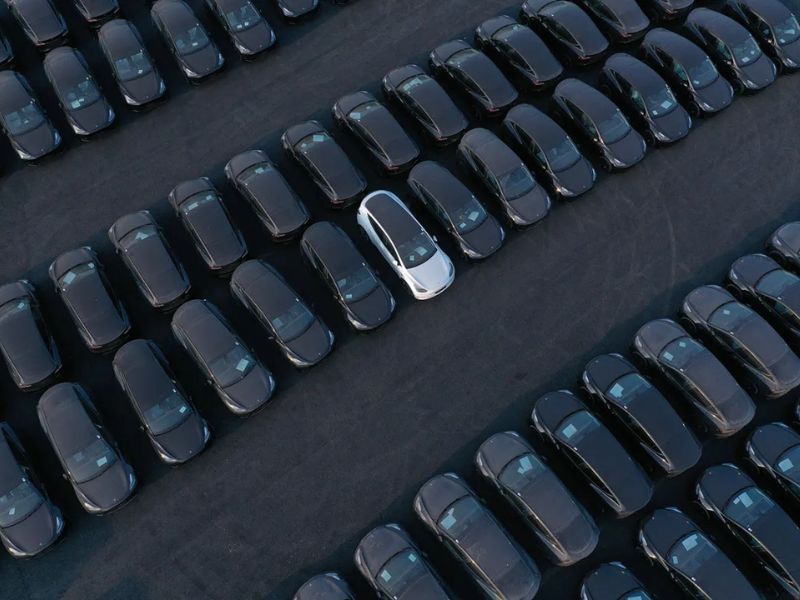
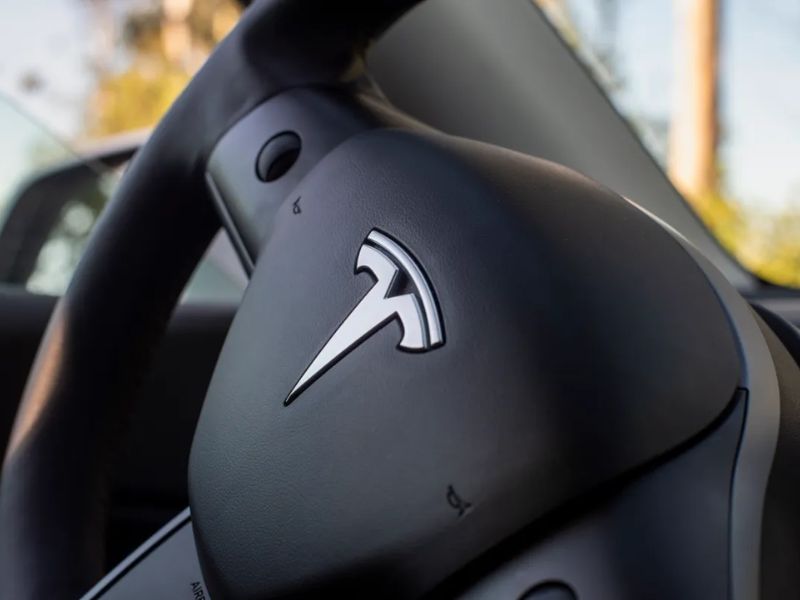
Tesla’s vehicle sales in Europe and the U.K. dropped by almost 50%, according to data released Tuesday by the European Automobile Manufacturers Association. In April, the company sold 7,261 cars across the EU, EFTA, and U.K.—a 49% decrease compared to the same month last year.
The sharp drop in sales is especially concerning given Tesla’s recent launch of a new Model Y, a release that would normally boost demand. However, other automakers in the region haven’t seen similar declines, pointing to the possibility that CEO Elon Musk’s political involvement and ties to U.S. President Donald Trump may be negatively impacting Tesla’s image.
Global Sales Slump Deepens Amid Musk’s Political Distractions
Tesla has faced declining sales worldwide for several months. The company reported 336,681 deliveries in the last quarter, marking its weakest performance in over two years. This downturn coincided with Elon Musk’s leadership of DOGE, a controversial advisory group responsible for mass federal layoffs and attempts to dismantle various agencies and programs. The backlash was so significant that Musk announced he would shift his attention back to Tesla.
In April, new car registrations across the EU, U.K., and EFTA nations such as Sweden and Norway dipped by 0.3% year-over-year, totaling 1,077,186 vehicles, with the steepest drops seen in gasoline and diesel models.
Electric vehicles still represent a smaller portion of the overall market but are steadily growing. In April, EV sales rose by 27.8% year-over-year to 184,685 units. Hybrid vehicles saw the largest increase, with sales climbing 31%.
Data released last week by market research firm Jato Dynamics indicates that Chinese automakers, including BYD, are making significant progress in the market despite EU-imposed tariffs. In April, registrations of electric vehicles from Chinese brands jumped 59% year-over-year, reaching nearly 15,300 units.
Connecting a charging cable to your EV isn’t complicated, but with the rise of robotics, why not let machines handle it? That’s exactly what Hyundai plans to do at a South Korean airport.
Most EV drivers manage plugging in, but those with mobility issues might need help. For autonomous vehicles, expecting passengers to charge the robotaxi en route is unreasonable.
Hyundai has launched a demonstration project at Incheon International Airport near Seoul, one of the world’s largest airports. The airport already features numerous charging stations across its vast grounds and plans to exceed a thousand by 2026. Hyundai’s AI-powered robotic chargers will now be deployed at select stations to improve both convenience and safety for users.
How Hyundai’s Automated Charging Robot Seamlessly Powers EVs
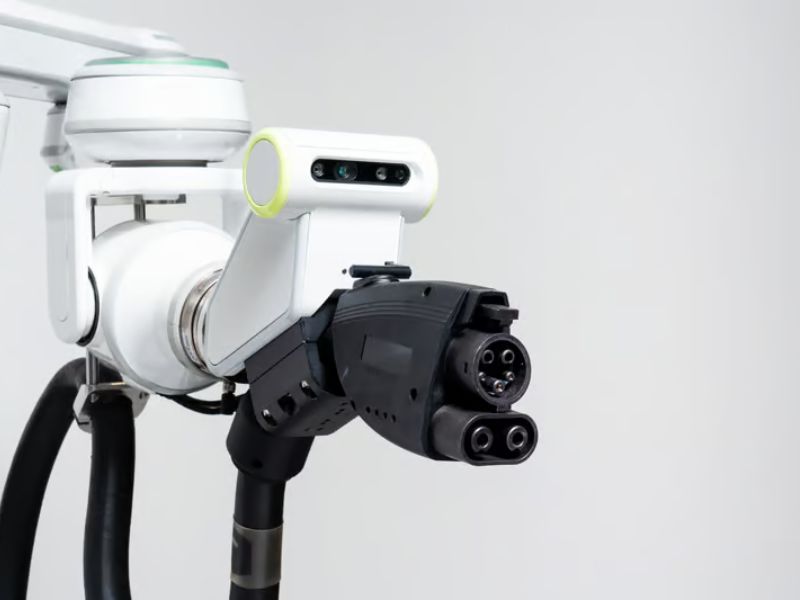
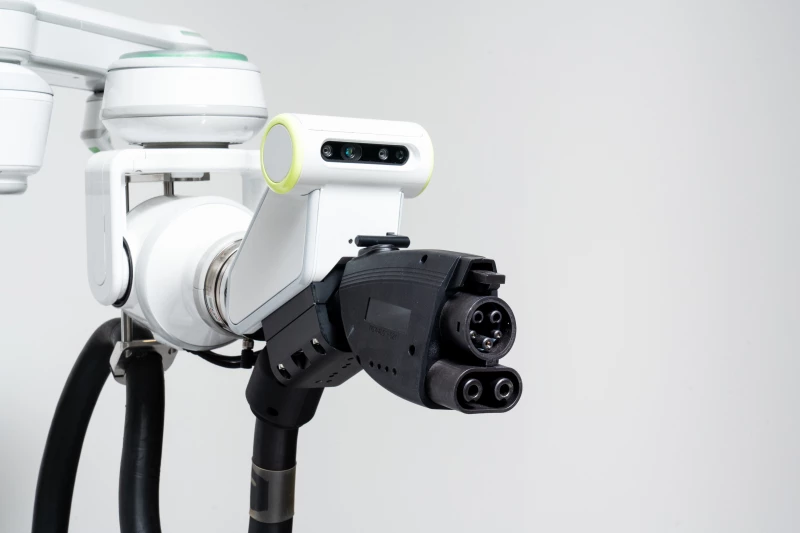
The concept involves drivers parking in a charging bay equipped with robotic assistance. The Automated Charging Robot (ACR) wirelessly connects with the EV to access its charging port. Using camera sensors, the robot’s arm extends the cable, plugs it into the vehicle, and begins charging. After charging, the robot disconnects, closes the port, and resets for the next user.
Image Credits:The ACR uses its sensor and control hardware to precisely line up the charger and vehicle charging port, and then connect the two Hyundai
The ACR system was certified in Korea last year and has also undergone testing to meet basic European safety standards. It has already been trialed at a “robot-friendly” facility in Seoul. The current airport deployment will act as both a testing ground and showcase, with plans to eventually expand the technology to other domestic and international transport hubs, including airports, seaports, and railways.
Hyundai and Incheon Airport Partner to Advance Future Mobility Solutions
“This collaboration showcases the real-world potential of future mobility by combining Hyundai’s robotics and AI with Incheon Airport’s operational expertise,” said Heui Won Yang, President of Hyundai’s R&D Division. “Our aim is to provide a seamless, user-friendly charging solution for any setting.”
Hag Jae Lee, President and CEO of Incheon International Airport Corporation, added, “We believe this partnership will greatly improve service quality and operational efficiency at the airport.”
Image Credits: Artur Widak/NurPhoto / Getty Images
Tesla will launch its long-awaited robotaxi test in Austin, Texas, next month, but will limit it to areas the company considers “the safest,” CEO Elon Musk told CNBC on Tuesday.
Tesla Robotaxis to Steer Clear of Complex Intersections
Musk explained that Tesla vehicles will avoid complex intersections unless the system is highly confident in its ability to handle them, opting instead for alternate routes. “We’re going to be extremely cautious with the rollout, as we should be. It would be unwise not to be,” he said.
This use of geofencing—a method of confining autonomous vehicles to specific zones—marks a significant shift in strategy for Musk, who had long touted Tesla’s goal of developing a general-purpose self-driving system capable of operating anywhere without human input. Musk added that similar pilot programs may launch in California and other states later this year.
Musk Signals Shift Toward Geofencing in Early Robotaxi Deployment
Musk hinted at the use of geofencing during Tesla’s first-quarter earnings call in April, though he didn’t explicitly confirm it as the company’s chosen strategy. At the time, he mentioned it was “increasingly likely” that early robotaxi deployments would rely on a “localized parameter set.”
Reinforcing Tesla’s cautious approach, Musk said Tuesday that the company will have employees remotely monitor the initial fleet of about 10 Model Y SUVs running the “unsupervised” version of its Full Self-Driving software. These vehicles, he added, will operate without a safety driver inside.
“I think it makes sense to begin with a small fleet, ensure everything is running smoothly, and then gradually expand based on performance,” Musk explained.
Autonomous vehicle companies such as Waymo typically operate a control center where staff monitor robotaxis and offer remote assistance when necessary. In a 2024 blog post, Waymo explained that it doesn’t directly control the vehicles. Instead, human operators interact with the self-driving system by asking and answering questions to provide context and support its decision-making process.
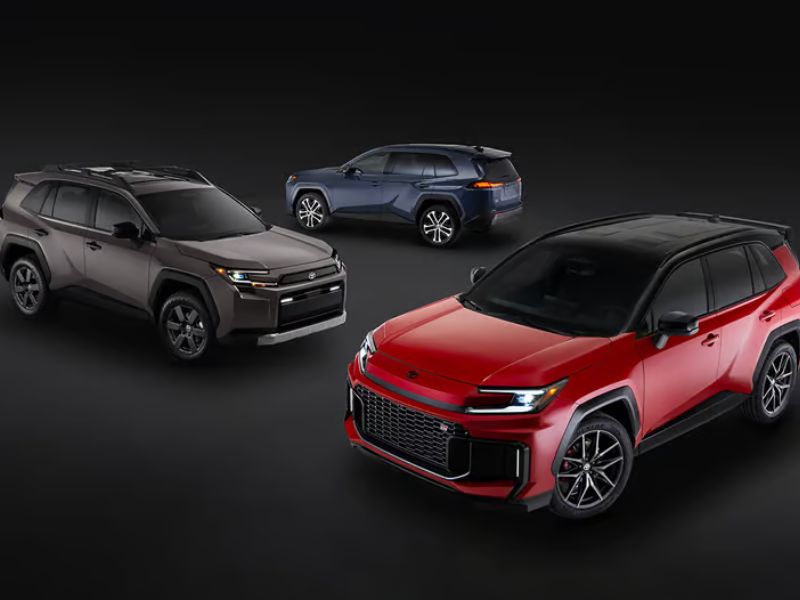
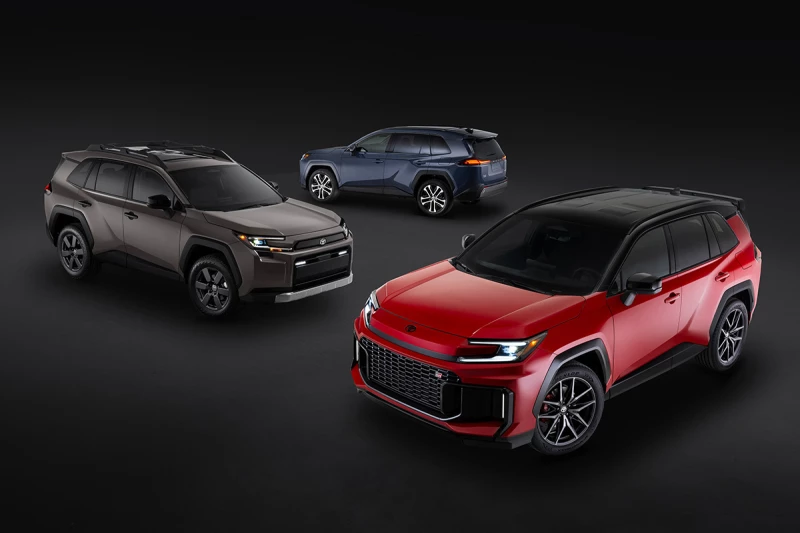
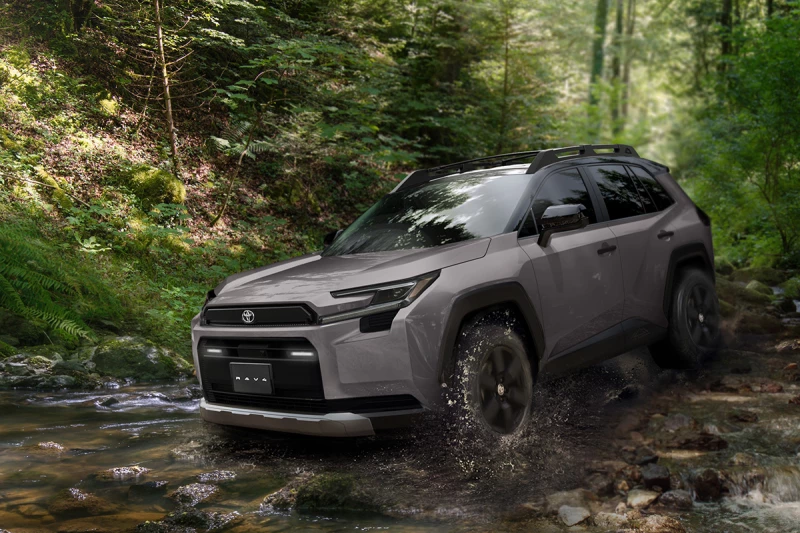
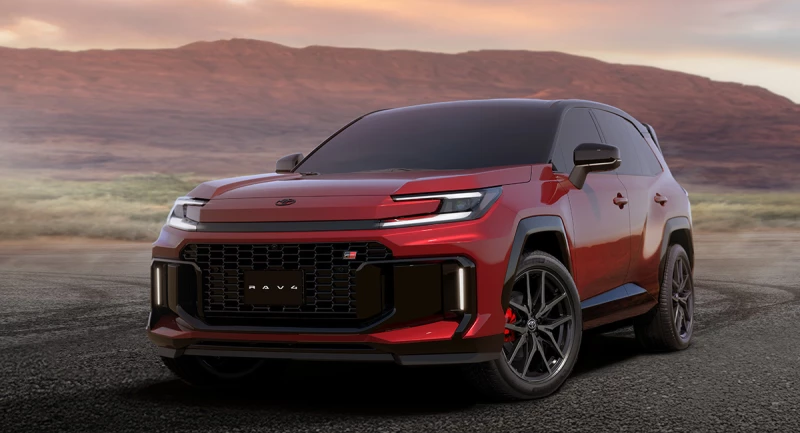
Credit:he 6th-gen RAV4 comes in Core, Woodland, and GR Sport variants, with a bunch of electrified powertrains and trims to choose from Toyota
After the 2019 fifth-gen debut, Toyota refreshed the RAV4 for 2026 with updated styling and electrified powertrains. For the first time, the US will also see the GR Sport model.
The lineup includes a standard RAV4, rugged Woodland trim, and sporty Gazoo Racing version. Choose between HEV or PHEV engines, with front- or all-wheel drive, except the Woodland trim, which is AWD only.
Enhanced Power and Performance in the Sixth-Gen RAV4
The sixth-gen models offer more power than the previous generation, thanks to upgraded hybrid systems. The HEV engine delivers 236 hp, while the 2.5-liter 4-cylinder PHEV reaches a robust 320 hp. The PHEV provides 50 miles of all-electric range and DC fast charging, reaching 80% in 30 minutes.
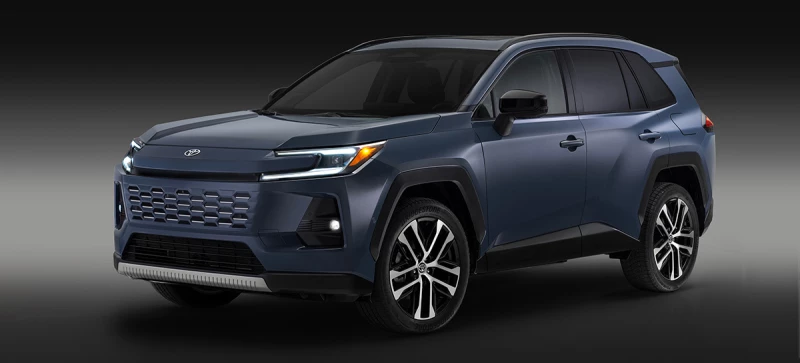
Credit:The Core RAV4 can be had with PHEV or HEV systems, up to 20-inch wheels, and additional electronic goodies in the cabin Toyota
The RAV4 offers customization options for trims, materials, infotainment, and wheels up to 20 inches, along with 749 liters of storage space.
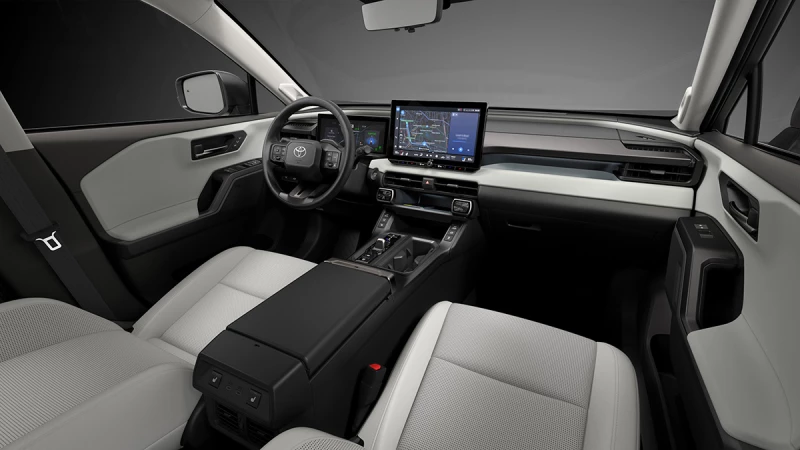
Inside, you’ll find a 12.3-inch digital instrument cluster, with a head-up display on higher trims, and can choose between a 10.5-inch or 12.9-inch touchscreen and a six- or nine-speaker JBL audio system.
Credit:The interior components are grouped into ‘islands’ for easy access, and you can add a nine-speaker JBL system as well as a head-up display Toyota
The updated software now supports wireless Android Auto and Apple CarPlay, and allows two phones to connect at the same time. Toyota also highlighted new safety features, but will provide specific details on what to expect in the future.
Rugged Features and Towing Capacity of the AWD-Only Woodland Model
The AWD-only Woodland model offers a rugged front design, all-terrain tires, roof rails with crossbars, and a rear activity mount for extra storage. Toyota mentions that this model, along with other AWD variants, can tow up to 3,500 lb (1,588 kg).
Credit:The adventure-focused Woodland model gets all-terrain tires and roof rails as standard Toyota
The GR Sport model boasts a ‘Functional Matrix’ grille, front and rear spoilers, and sport-tuned suspension and power steering for enhanced handling. It will also come equipped with summer tires, a wider tread, and lightweight 20-inch aluminum wheels.
Credit:The GR Sport model gets a specially tuned suspension and steering system for improved handling, lightweight wheels, spoilers, and this bold two-tone colorway Toyota
Celebrating 30 years since its debut, the RAV4 continues to be a popular crossover, consistently appearing on top best-of lists, including as recently as last year. If you’re in the market for a straightforward, reliable SUV, this could be one to consider.
Toyota hasn’t revealed pricing yet, but the current Hybrid LE model starts at $32,300, so the 2026 version will likely land at a similar price when it hits dealerships later this year.
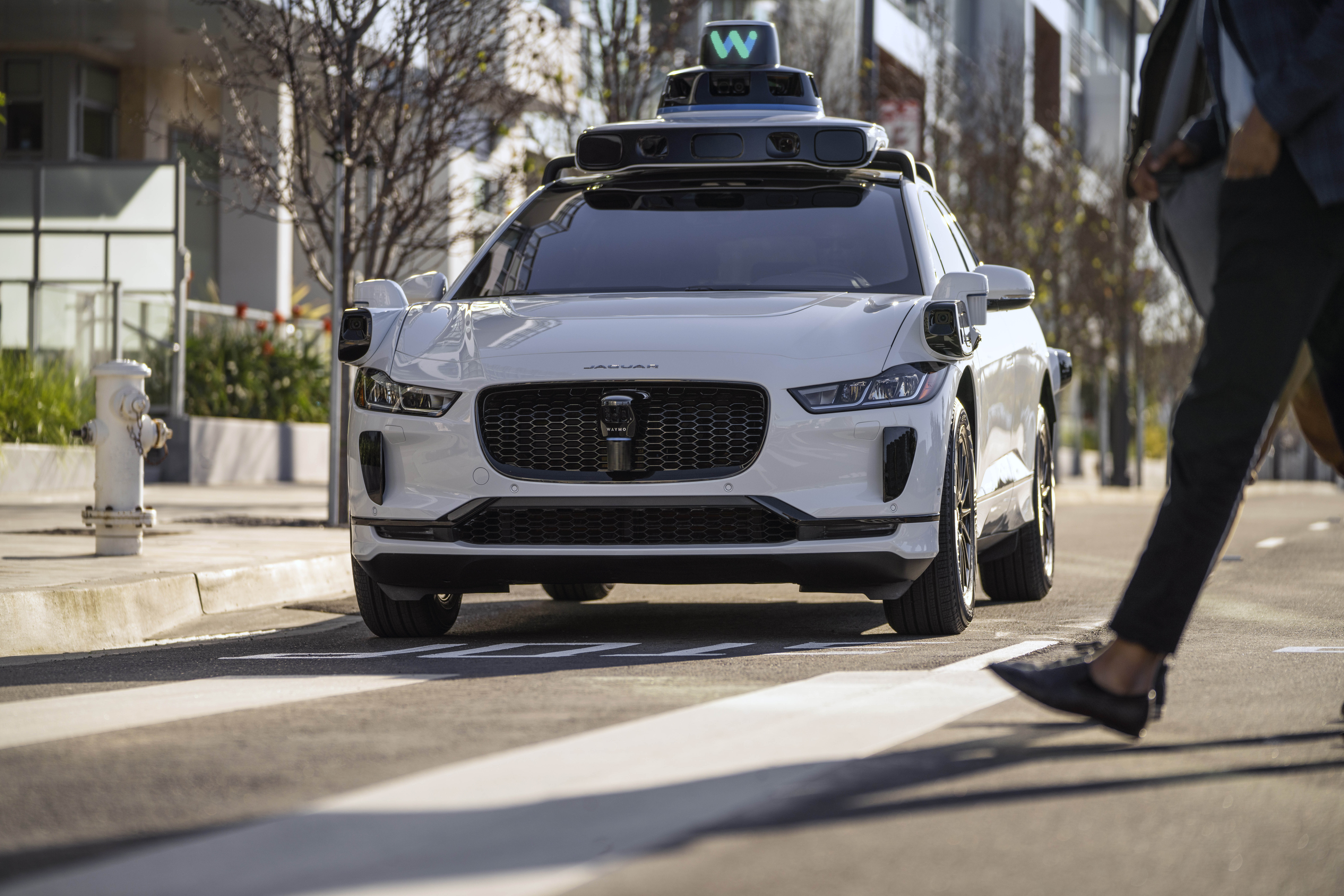
The California Public Utilities Commission has authorized Waymo to extend its commercial robotaxi service, allowing the Alphabet company to operate its driverless ride-hailing vehicles in more communities south of San Francisco.
Waymo Maintains Current Robotaxi Operations Across San Francisco and Silicon Valley
The company stated on X that the approval will not alter its immediate plans. Currently, Waymo runs a commercial robotaxi service across San Francisco and parts of the Peninsula. It also offers driverless rides to paying customers in several Silicon Valley cities, including Mountain View, Palo Alto, Los Altos, and Sunnyvale. Overall, Waymo’s service area spans about 85 square miles, covering both San Francisco and Silicon Valley.
Expanding Robotaxi Service to San Francisco International Airport
The company also plans to expand service to San Francisco International Airport, but this is expected to happen much later. In March, Waymo received a temporary permit to map the airport’s roadways, though its vehicles won’t operate autonomously there yet; employees will manually drive to gather mapping data. This permit marks the first step toward eventually offering commercial service at SFO.
Waymo currently provides 250,000 paid rides weekly across its operations, which include Los Angeles, Phoenix, and more recently, Austin.
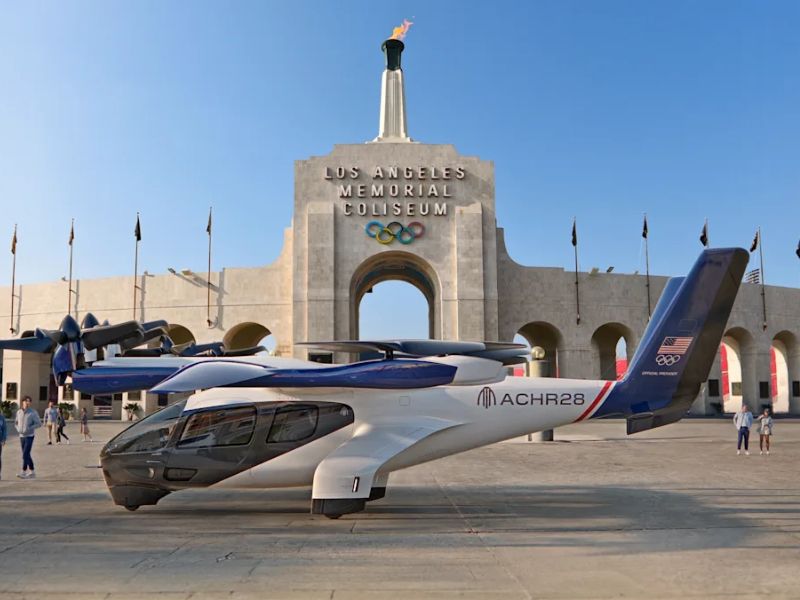
Archer has been selected as the official air taxi provider for the 2028 Olympic and Paralympic Games in Los Angeles. According to a press release from the company, if all goes according to plan—a significant uncertainty—their Midnight eVTOL aircraft will shuttle VIPs, fans, and key personnel between major event locations, while also assisting with emergency services and security operations.
A Leading Contender in the Air Taxi Industry with FAA Approval and Expanding Networks
Archer stands out as one of the more credible contenders in the emerging air taxi industry, being one of only two companies—alongside Joby Aviation—to obtain the FAA’s final airworthiness criteria (though not yet full certification) for its Midnight aircraft. The company recently revealed possible routes for a future service in New York City and has already announced plans for proposed air taxi networks in San Francisco, Los Angeles, and Chicago.
Archer’s previously announced plans for a Los Angeles hub likely worked in its favor. The proposed network already featured major LA28 locations such as the Stadium in Inglewood, the Los Angeles Memorial Coliseum, LAX, Hollywood, Orange County, and Santa Monica.
A Next-Generation Electric Air Taxi with Strong Industry Support and FAA Certification Potential
Midnight operates as an electric air taxi, piloted to carry up to four passengers while generating less noise and fewer emissions than a conventional helicopter. Equipped with 12 tilting rotors, along with a wing and tail, it lifts off vertically like a helicopter before shifting into airplane-style flight, with the rear rotors still contributing to lift. Archer says the aircraft includes “redundant, fault-tolerant systems,” which they believe will help it meet FAA certification standards comparable to those of commercial airlines.
Archer has also secured support from major aviation industry players such as Fiat Chrysler and United Airlines, along with fixed base operators like Signature Aviation and Atlantic Aviation. With this backing, the company may be one of the best-positioned in the air taxi sector to obtain the FAA “type certificate” required to carry passengers. Still, earning approval for a completely new aircraft is a complex and costly process—especially for one that belongs to an entirely new category.
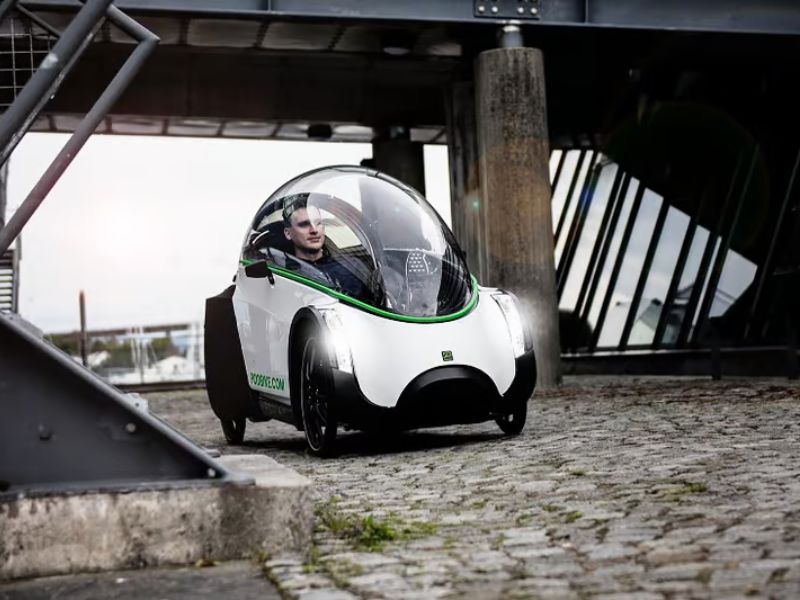
The Frikar electric-assist quadcycle, now available in Austria and Belgium Podbike
If you spot a sleek, futuristic-looking vehicle gliding silently through the streets of Oslo, Berlin, Vienna, or Brussels, take a closer look — someone might be pedaling it. If that’s the case, there’s a strong chance you’ve found the Frikar, a pedal-electric quadcycle that Podbike now sells in four European countries.
From Podbike to Frikar: A Brief History
The Frikar was first introduced back in 2017, when it debuted under the name Podbike.
Back then, the company publicly unveiled a prototype of the enclosed, pedal-assisted four-wheeled vehicle for the first time.It was still under development by the Norwegian company Elpedal, which has since rebranded as Podbike.
Fast forward to 2025, and the Frikar is now in production — with Austria and Belgium recently added to its list of active markets. These join Norway and Germany, where the vehicle has already been available for some time.
The Frikar measures 2.3 m long by 84 cm wide (90.6 by 33 inches) Podbike
Although the manufacturers equipped the Frikar with pedals, they didn’t include a traditional chain or belt drive.Instead, the rider powers a generator through pedaling.
Electric Power and Performance
The system then delivers this electricity to two hub motors located in the rear wheels.A detachable battery supplements the pedaling power, helping the Frikar reach a top speed of 25 km/h (16 mph), electronically limited for regulatory compliance. The design is somewhat similar to other chainless systems, like Free Drive.
The estimated range remains at around 60 km (37 miles) per battery, and there’s capacity to add more batteries for greater distance.The designers built the vehicle to seat one adult and to include space for either 160 liters of cargo or an optional child seat behind the driver.
The Frikar is legally considered an ebike in most of Europe, so it doesn’t require a license or registration Podbike
Weighing in at 100 kg (220.5 lb), the Frikar can support a combined weight of up to 230 kg (507 lb) — including the rider, any child passenger, and luggage.
Comfort and Convenience Features
Additional features include a full lighting system with blinkers, windshield wiper, interior fan to prevent fogging, side mirrors, a carpeted cabin, and a removable canopy for warmer days.
Prices begin at €10,916 (approximately US$12,204), though this can vary by region. The company expects to deliver vehicles to buyers in Austria and Belgium before July. Unfortunately, North American customers will have to wait — the Frikar’s four-wheeled design prevents it from being legally classified as an ebike in those markets.
Check out the video below for a look at the production-ready model.
How to Get Started with Your FRIKAR | Quick & Easy Full Guide
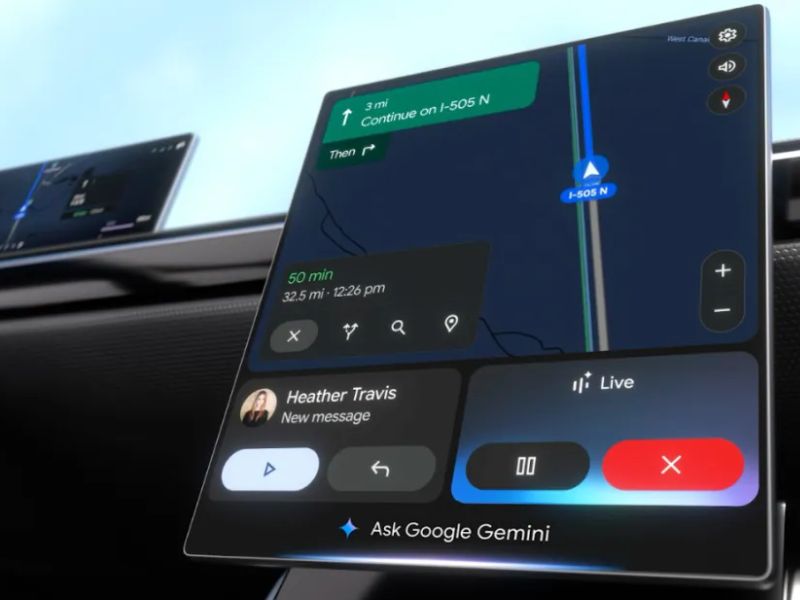
Google announced during its Android Show—held ahead of the 2025 I/O developer conference—that Gemini, its generative AI, will be rolled out to all vehicles compatible with Android Auto in the coming months.
According to the company, incorporating Gemini into Android Auto, and later this year into vehicles with Google’s built-in operating system, will enhance the driving experience by making it “more productive — and fun,” as highlighted in a blog post.
“This marks what we believe will be one of the most significant changes to in-car technology in a very long time,” said Patrick Brady, Google’s VP of Android for Cars, in a media briefing prior to the event.
Gemini will appear in Android Auto in two key ways.
Gemini Enhances In-Car Voice Assistance with Natural Language Capabilities for More Intuitive Interactions
Primarily, it will serve as a significantly more capable voice assistant. Drivers—or passengers, since voice recognition isn’t tied to the phone owner—will be able to ask Gemini to perform tasks like sending messages or playing music. While these functions were already available through Google Assistant, Gemini’s natural language processing means users can interact more conversationally, without needing to use rigid voice commands.
Gemini will also be able to “remember” user preferences—such as a contact’s preferred language for text messages—and automatically handle translations. Additionally, Google says Gemini will be equipped to perform one of the most popular in-car tech tasks: finding top-rated restaurants along a user’s route. According to Brady, it can also sift through Google’s listings and reviews to answer more specific queries, like locating taco spots with vegan options.
“Gemini Live” Enables Ongoing, Dynamic Conversations on a Variety of Topics While Driving
Another major feature is “Gemini Live,” which keeps the AI assistant continuously active and ready for full conversations on a wide range of topics. Brady explained that users could chat with Gemini about everything from spring break travel ideas and kid-friendly recipe suggestions to discussions on Roman history.
If all of this sounds potentially distracting, Patrick Brady insists otherwise. He argued that Gemini’s natural language capabilities will actually simplify how users interact with Android Auto, allowing them to complete tasks more easily and with less mental effort—ultimately “reducing cognitive load.”
That’s a bold assertion, especially at a time when many drivers are pushing for a return to physical buttons and knobs over touchscreen-heavy car interfaces—a shift some automakers are already beginning to embrace.
Gemini to Launch with Cloud Support, with Plans for Onboard Processing to Boost Performance and Reliability
There are still many details to iron out. At launch, Gemini will rely on cloud processing to function in both Android Auto and vehicles with Google Built-In. However, Brady noted that Google is collaborating with car manufacturers to integrate more onboard computing power. This would allow Gemini to run locally (at the edge), which could improve both performance and reliability—key concerns in vehicles that frequently switch between cell towers.
Today’s vehicles produce vast amounts of data through sensors and, in some cases, internal and external cameras. When asked whether Gemini might eventually tap into this multimodal data, Brady said there’s “nothing to announce” yet, but confirmed the company is actively exploring the idea.
“We definitely believe that as cars gain more cameras, there will be some very compelling use cases in the future,” he said.
Gemini for Android Auto and Google Built-In will roll out to all regions that currently support Google’s generative AI and will be available in over 40 languages.
DJI’s highly anticipated Mavic 4 Pro drone has finally been released, but there’s some bad news. Because of Trump’s tariffs and other market uncertainties, such as the possibility of a DJI ban, it’s not available for sale in the U.S. yet, and there’s no information on when it will be or at what price. This will likely frustrate U.S. buyers, as the Mavic 4 Pro is the most advanced consumer drone to date.
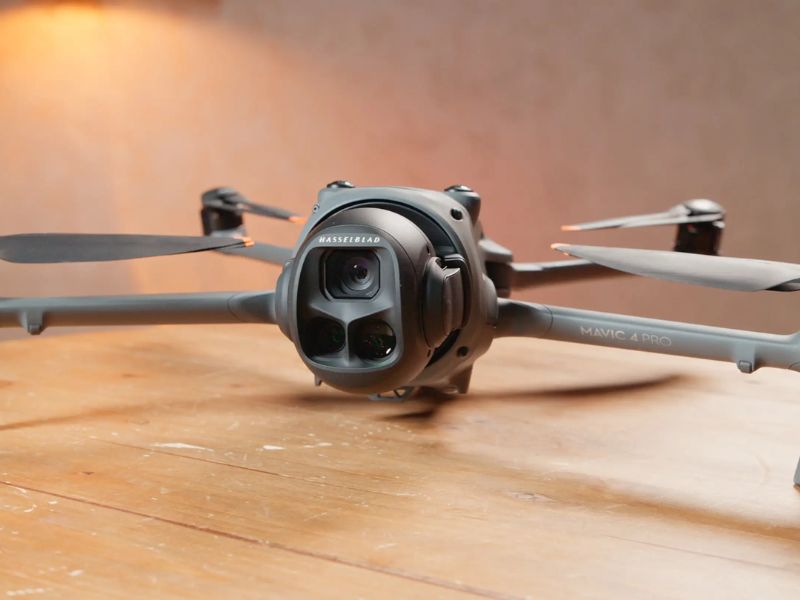
Equipped with a unique triple-camera setup in an eye-catching round gimbal, the Mavic 4 Pro can record up to 6K at 60 fps with 16 stops of dynamic range, outperforming not only other drones but even many cameras. DJI has also enhanced the drone’s top speed, battery life, and range, while upgrading obstacle avoidance in low-light conditions with a new LiDAR system. Additionally, the company unveiled the RC Pro 2 controller, featuring a practical new foldable design.
I’ve been using the Mavic 4 Pro for a few weeks, and it performs even better than the specs indicate. While it’s on the pricier side, this drone is so refined and powerful that nothing else comes close to matching it.
Layout
The standout feature, as revealed by leaks and a teaser last week, is the large round triple-camera “Infinity Gimbal” module at the front. This design allows the gimbal to rotate freely, enhancing stabilization and offering unique camera angles. It increases the tilt-up angle from 60 to 70 degrees and enables the gimbal to move at any angle, creating dynamic “Dutch” angles for more creative shots. Additionally, it can rotate 90 degrees to capture full-resolution vertical video perfect for social media.
Thanks to the new housing and slightly larger batteries, the Mavic 4 Pro weighs 2.3 pounds, which is 0.2 pounds heavier than the Mavic 3 Pro. The propeller arms have been redesigned to allow for folding and unfolding in any order, a change from the previous model. Additionally, the body is more aerodynamic, improving both efficiency and speed.
The Mavic 4 Pro features a forward-facing LiDAR sensor and six omnidirectional fisheye sensors for enhanced night-time obstacle detection, working in light as low as 0.1 lux. The standard model offers 64GB of internal storage (42GB usable), while the Creator Combo version includes 512GB (460GB usable), both with a microSD card slot.
Credit: DJI’s new RC2 Pro screen controller folds up and flips sideways. (Steve Dent for Engadget)
The Mavic 4 Pro comes with the RC2 controller, featuring a 7-inch HDR display, retractable joysticks, camera controls, HDMI and USB-C ports, and Wi-Fi 6 for fast data transfers.
Its new 95Wh batteries offer up to 51 minutes of flight time (40-45 minutes with typical use), a big improvement over the Mavic 3 Pro. They also charge faster, taking 51 minutes for one or 90 minutes for three with the Fly More kit charger.
Capabilities and Functionality
The Mavic 4 Pro can reach 56 mph (90 km/h) in sport mode, up from 47 mph, and 40 mph in normal mode with obstacle avoidance. However, it’s still a large drone, lacking the agility of the Mini 4 Pro and not ideal for tight spaces without propeller guards.
Its noise level is 83 dB, similar to the Mavic 3 Pro, but with a less intrusive lower frequency. The O4+ transmission system extends its video range to 18.6 miles (30 km), with fewer dropouts, improved interference resistance, and bright 10-bit HDR 1080p live video.
Credit: Steve Dent for Engadget
The Mavic 4 Pro’s ActiveTrack 360 lets you adjust the camera angle while keeping the subject centered, even when partially obscured. It tracked a car at 30 mph with full obstacle avoidance and followed a cyclist creatively, though it had a minor collision with a tree branch. It also performed well for vlogging, smoothly following a preset route.
At night, the Mavic 4 Pro used its LiDAR and low-light sensors to navigate trees and buildings, reliably avoiding obstacles. The LiDAR sensor works only facing forward, and the return-to-home feature now works without GPS in well-lit conditions, as the drone can remember its flight path.
Video Performance
Credit: Steve Dent for Engadget
The Mavic 4 Pro features an upgraded camera system with exceptional video quality, including a 28mm Hasselblad-branded wide-angle lens with a 100MP dual ISO 4/3 sensor, capable of shooting 6K at 60 fps or 4K at 120 fps. It supports D-Log and D-LogM color profiles for enhanced dynamic range and offers a variable aperture (f/2.0 to f/11) for better control in varying lighting conditions.
The drone also includes a 70mm medium telephoto lens and a 168mm telephoto lens, both delivering high-quality images. Video is sharp and color-accurate, with strong dynamic range, and the Creator Combo version supports H.264 All-I recording at 1,200 Mbps for efficient editing. However, it lacks the ProRes 4:2:2 HQ option available on the Mavic 3 Pro Cine edition.
Credit: Steve Dent for Engadget
The Mavic 4 Pro excels in low light with its dual ISO, capturing cityscapes with minimal grain and balancing bright skies and dark ground in D-Log mode. The 100MP mode offers detailed photos, while the 25MP mode reduces noise in low light. The RAW DNG format allows for easy adjustments in high-contrast settings.
The 70mm telephoto camera (3x) is ideal for portraits and landscapes, supporting 4K at 120 fps with D-Log or D-LogM. While its low-light performance isn’t as strong, the 168mm camera is great for wildlife photography and offers decent video quality.
Conclusion
Credit: Steve Dent for Engadget
The Mavic 4 Pro showcases DJI’s dominance in the consumer drone market, outperforming the Mavic 3 Pro in almost every aspect. Its closest competitor, the Autel Evo II Pro 6K, has a smaller sensor, shorter range, and lower endurance.
While the Mavic 4 Pro is unavailable in the U.S. due to potential sales bans, it is available in other regions, priced from €2,099 (£1,879) for the standard RC2 controller model. The Fly More kit is €2,699 (£2,459), and the Creator Combo, with additional features, is €3,539 (£3,209). The RC2 Pro controller alone costs €999 (£879).
Federal safety officials have issued Tesla a comprehensive set of questions regarding its upcoming robotaxi service, as part of an investigation into how the company’s “Full Self-Driving (Supervised)” software performs under low-visibility conditions.
The National Highway Traffic Safety Administration’s Office of Defects Investigation is seeking further details on FSD (Supervised) to better understand how Tesla intends to assess its autonomous vehicles and technologies for safe use on public roads, according to a letter made public Monday and first reported by Reuters.
Tesla’s Austin Robotaxi Plans Trigger Federal Scrutiny After April Announcement on X
Tesla has been vocal about its intention to roll out a paid robotaxi service in Austin, Texas, starting in June. However, a post on X from April 23, in which Tesla shared early deployment updates, appears to have drawn regulatory scrutiny.
That post stated: “FSD Supervised ride-hailing service is live for an early set of employees in Austin & San Francisco Bay Area. We’ve completed over 1.5k trips & 15k miles of driving. This service helps us develop & validate FSD networks, the mobile app, vehicle allocation, mission control & remote assistance operations.”
NHTSA Probes Tesla’s FSD Software After Crashes in Low-Visibility Conditions
The National Highway Traffic Safety Administration (NHTSA) launched its investigation into Tesla’s “Full Self-Driving (Supervised)” software in October following four crashes reported in low-visibility conditions. Tesla’s FSD system is a driver-assistance feature that can manage certain driving tasks, such as braking and steering, but still requires the driver to keep their hands on the wheel and remain attentive.
Tesla CEO Elon Musk has stated that the upcoming robotaxi service will operate using a new, unreleased “unsupervised” version of the Full Self-Driving software.
In a letter sent in May, NHTSA posed a series of targeted questions to Tesla to determine whether the automated system intended for robotaxis is identical or similar to the current FSD Supervised system. The agency requested details on the size of the robotaxi fleet, which Tesla vehicle models will be involved, how Tesla will evaluate the safety of its robotaxi technology, and whether this system is connected in any way to the existing FSD Supervised software.
Investigators also requested that Tesla explain how it plans to maintain safety in its robotaxi operations during low-visibility conditions, including scenarios involving sun glare, fog, airborne dust, rain, or snow.
We use cookies on our website to give you the most relevant experience by remembering your preferences and repeat visits. By clicking “Accept All”, you consent to the use of ALL the cookies. However, you may visit "Cookie Settings" to provide a controlled consent.
This website uses cookies to improve your experience while you navigate through the website. Out of these, the cookies that are categorized as necessary are stored on your browser as they are essential for the working of basic functionalities of the website. We also use third-party cookies that help us analyze and understand how you use this website. These cookies will be stored in your browser only with your consent. You also have the option to opt-out of these cookies. But opting out of some of these cookies may affect your browsing experience.
Necessary cookies are absolutely essential for the website to function properly. These cookies ensure basic functionalities and security features of the website, anonymously.
Cookie
Duration
Description
cookielawinfo-checkbox-analytics
11 months
This cookie is set by GDPR Cookie Consent plugin. The cookie is used to store the user consent for the cookies in the category "Analytics".
cookielawinfo-checkbox-functional
11 months
The cookie is set by GDPR cookie consent to record the user consent for the cookies in the category "Functional".
cookielawinfo-checkbox-necessary
11 months
This cookie is set by GDPR Cookie Consent plugin. The cookies is used to store the user consent for the cookies in the category "Necessary".
cookielawinfo-checkbox-others
11 months
This cookie is set by GDPR Cookie Consent plugin. The cookie is used to store the user consent for the cookies in the category "Other.
cookielawinfo-checkbox-performance
11 months
This cookie is set by GDPR Cookie Consent plugin. The cookie is used to store the user consent for the cookies in the category "Performance".
viewed_cookie_policy
11 months
The cookie is set by the GDPR Cookie Consent plugin and is used to store whether or not user has consented to the use of cookies. It does not store any personal data.
Functional cookies help to perform certain functionalities like sharing the content of the website on social media platforms, collect feedbacks, and other third-party features.
Performance cookies are used to understand and analyze the key performance indexes of the website which helps in delivering a better user experience for the visitors.
Analytical cookies are used to understand how visitors interact with the website. These cookies help provide information on metrics the number of visitors, bounce rate, traffic source, etc.
Advertisement cookies are used to provide visitors with relevant ads and marketing campaigns. These cookies track visitors across websites and collect information to provide customized ads.