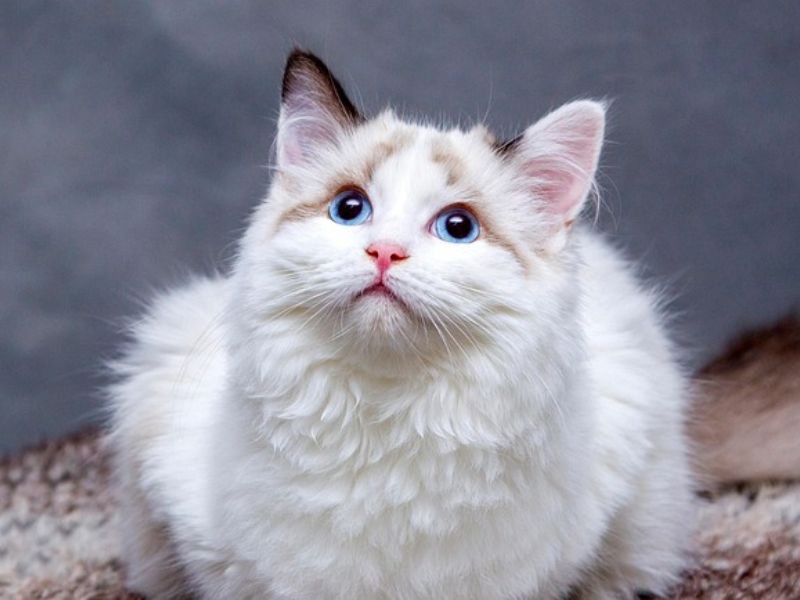

People often see cats as aloof (and adorably fluffy), but if you struggle to connect with your feline companion, it might be because you aren’t communicating in a way they understand.
The Power of a Cat-Style Slow Blink: Building Better Connections
Good news—research suggests it’s simpler than you might think. The key is to smile at them the way cats do: not with your teeth, but by slowly narrowing your eyes and blinking.
In a 2020 study, scientists found that this subtle gesture encourages both familiar and unfamiliar cats to approach and interact more positively with humans.
“It’s wonderful to demonstrate that cats and humans can communicate like this,” said University of Sussex psychologist Karen McComb at the time of the study’s release. “As both an animal behavior researcher and a cat owner, this finding is especially rewarding.”
“Many cat owners have long suspected this, so it’s exciting to finally have scientific evidence to support it.”
If you’ve been around cats, you’ve likely noticed their “partially closed eyes” look, often paired with a slow blink. This resembles the way human eyes narrow during a smile and typically appears when a cat feels calm and at ease. People often interpret it as a feline version of a smile.
Exploring How Mimicking Affects Feline Interaction
Cat owners have long shared anecdotal evidence suggesting that mimicking this expression can signal friendliness to cats and invite interaction. To explore this idea, a team of psychologists conducted two experiments.
In the first experiment, researchers observed 21 cats from 14 different households. After each cat had settled comfortably in a familiar spot at home, their owner sat about 1 meter (just over 3 feet) away and performed slow blinks whenever the cat looked at them.
Cameras captured the facial expressions of both the owner and the cat, and the researchers compared these interactions to how cats blinked when no human was present.

Building Trust Through Mutual Communication
The findings revealed that cats were more likely to slow blink at their owners after their owners had slow blinked at them, compared to when there was no human interaction.
In the second experiment, 24 cats from eight different households were observed. This time, the slow blinking was done by researchers who had never interacted with the cats before. As a control, the researchers also recorded how cats responded when a person simply stared at them without blinking.
Using the same slow-blink technique as in the first experiment—this time with an added outstretched hand—the researchers found that cats not only returned the slow blink more often but were also more likely to approach the person’s hand afterward.
“This is the first study to experimentally explore how slow blinking plays a role in communication between cats and humans,” McComb explained.
“It’s also something you can easily try with your own cat at home—or even with cats you encounter on the street. It’s a wonderful way to strengthen your connection with them. Try gently narrowing your eyes, like a relaxed smile, then slowly closing them for a couple of seconds. You’ll likely notice the cat responding in kind, and it can become a kind of back-and-forth interaction.”

Understanding Their Deep Bonds and Unique Communication
While dogs tend to show their affection more openly than cats, this finding won’t surprise cat lovers. Recent research has revealed that cats are much more attuned to their human companions than we once believed, and comparing them to dogs doesn’t do them justice.
For instance, cats often respond positively to humans who are open and receptive to them—so if a cat seems distant, the issue may lie with the person, not the cat. Additionally, cats tend to mirror the personalities of their owners, which could explain why they often seem to sense when their humans are feeling sad. They can also recognize their names, even if they choose to ignore them frequently. Their connections with humans run surprisingly deep.
The reason behind cats’ slow blinking toward humans remains unclear. It’s commonly thought to be a way of signaling friendly intentions since cats often see a steady, unblinking stare as a threat. However, it’s also possible that cats developed this behavior because humans respond well to it. With domesticated animals, it’s often hard to determine the exact origins of such behaviors.
Either way, this behavior appears to help build a connection—and that’s valuable information. Learning how to strengthen our bonds with these mysterious animals may also promote their emotional well-being, not only at home but in various potentially stressful situations.
“Recognizing positive ways that cats and humans interact can increase public awareness about cats, enhance their welfare, and provide deeper insights into the social and cognitive abilities of this often-overlooked species,” said psychologist Tasmin Humphrey from the University of Sussex.
“Our findings could be applied to improve the care and welfare of cats in different environments, such as veterinary clinics and animal shelters.”
Read the original article on: Sciencealert
Read more: Inhale, Exhale. Discover Whether you Have Diabetes