
Earth’s mesosphere is often called a “no-fly zone.” The air there is far too thin for conventional aircraft. But new ultralight devices might challenge that limitation, staying aloft with nothing more than sunlight.
Photophoresis as a Key to Mesosphere Flight
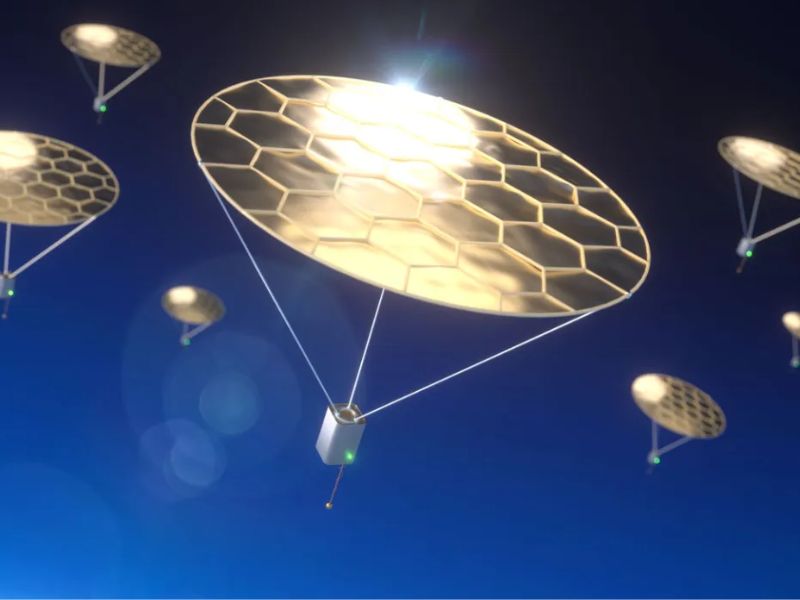
This approach relies on photophoresis — a gas flow that occurs when light strikes an object. The effect is especially strong under low-pressure conditions like those found in the mesosphere, 50 to 85 kilometers above Earth. In lab tests replicating those conditions, aircraft using this principle were able to levitate, physicist Benjamin Schafer and his team report in the August 14 Nature. The method could open new doors to studying the mesosphere, a layer so mysterious it’s often nicknamed the “ignorosphere.”
Only a centimeter across and weighing less than a milligram, the fliers are so delicate that holding one feels like holding nothing at all, says Schafer of Harvard University and Rarefied Technologies, a startup in Albuquerque, N.M., working on the concept. A simple breath could lift it from your palm — “If you sneeze, you might as well say goodbye.”
Swiss-Cheese Design That Turns Sunlight into Lift
Each flier is built from two thin, perforated layers stacked together, resembling slices of Swiss cheese. The upper layer is transparent, while the lower layer absorbs sunlight. This creates a temperature difference that drives gas from top to bottom, producing lift.
While similar designs have been explored before, Schafer notes that these new versions achieve the greatest lift-to-weight ratio yet. A craft with a 3-centimeter radius, for example, could support a 10-milligram payload capable of basic sensing and communication with the ground.
Such devices could measure wind, temperature, and pressure in the mesosphere — or even venture into tougher territory, such as the thin atmosphere of Mars.
Read the original article on: Science News
Read more: Robot Remorse: New study Aids Robots in Making Safer Choices Near People