Tag: Asthma

  • Common Plastics May Contribute to Obesity, Infertility, and Asthma

    Common Plastics May Contribute to Obesity, Infertility, and Asthma

    Recent studies show that chemicals in everyday plastics may silently cause long-term health issues. Early-life exposure has been associated with obesity, infertility, and cognitive impairments.
    Chemicals in everyday plastics may be fueling obesity, infertility, and asthma that begin in childhood. Experts warn urgent action is needed to protect future generations. Image Credits: Shutterstock

    Recent studies show that chemicals in everyday plastics may silently cause long-term health issues. Early-life exposure has been associated with obesity, infertility, and cognitive impairments.

    Researchers note that while minor lifestyle adjustments can help, long-term protection will demand decisive global measures.

    Growing Worries Over Early-Life Plastic Exposure

    Experts at NYU Langone Health warn that exposure to chemicals in common plastic products during childhood may pose serious health risks that persist into adulthood.

    This finding is based on a comprehensive review of hundreds of recent studies published in The Lancet Child & Adolescent Health.

    Research Connecting Plastic Chemicals to Health Issues

    In their recent analysis, researchers review decades of evidence showing that additives in industrial and household plastics may increase the risk of disease and disability, particularly with early-life exposure. The review focuses on three key chemical groups: phthalates, which add flexibility; bisphenols, which provide rigidity; and perfluoroalkyl substances (PFAS), which make products heat- and water-resistant.

    The studies tracked thousands of pregnant individuals, fetuses, and children, linking these chemicals to long-term health issues such as heart disease, obesity, infertility, and asthma.

    “Our research highlights how plastics contribute to the early development of numerous chronic diseases that persist into adolescence and adulthood,” said study lead author and pediatrician Leonardo Trasande, MD, MPP. “To ensure children remain healthy and live longer lives, we must take strong action to reduce the use of these materials,” added Trasande, the Jim G. Hendrick, MD, Professor of Pediatrics at NYU Grossman School of Medicine.

    How Common Products Emit Dangerous Chemicals

    Trasande points out that these chemicals are present in many everyday products, such as food packaging, cosmetics, and paper receipts. Research shows that repeatedly using, heating, or treating plastics in certain ways can release microplastic particles and nanoparticles, which people then ingest.

    Studies also suggest that chemicals in plastics can trigger excessive immune responses (inflammation) and disrupt hormones that control vital biological processes. Scientists further believe these substances may affect brain development, with numerous studies linking early exposure to lower IQ and conditions like autism and attention deficit hyperactivity disorder (ADHD).

    Ways Families Can Minimize Exposure

    In addition to highlighting the risks, the Lancet review offers strategies for reducing plastic use and safeguarding public health.

    “There are easy and affordable measures parents can take to limit their children’s exposure to plastics,” said Trasande, director of NYU Grossman School of Medicine’s Division of Environmental Pediatrics and NYU Langone Health’s Center for the Investigation of Environmental Hazards.

    He recommends swapping plastic food containers for glass or stainless steel and avoiding microwaving or dishwashing plastic items to significantly reduce exposure.

    Trasande also highlights the important role of pediatricians and other healthcare providers in guiding families to make safer choices. He urges clinicians to work with schools and community organizations to educate children and teens about the potential risks of plastic exposure.

    Regulatory Measures and International Initiatives

    At the policy level, the authors call for stricter regulations to reduce nonessential plastic use, especially in low-income communities that already face significant health disparities.

    The review coincides with the latest United Nations negotiations in Geneva on the Global Plastics Treaty, an emerging agreement aimed at limiting worldwide plastic pollution, with over 100 countries backing legally binding production caps.

    Trasande emphasizes that the findings highlight the urgent need for a strong global treaty to protect both human health and the environment. He notes that while the economic influence of the plastics industry is often seen as an obstacle to new regulations, the health-related costs of plastic exposure are substantial, with his team estimating around $250 billion annually in the United States alone.

    Plastics and Their Impact on Healthcare

    The Global Plastics Treaty will be a central focus at NYU Langone Health’s 2025 Plastics, Human Health, and Solutions Symposium. Experts will discuss the latest microplastics research, recent policy updates, and the critical role of regulations in tackling this escalating public health issue.

    While the review underscores the health risks associated with plastics, the authors emphasize that the material remains vital in many medical applications. Plastics are used in equipment like ventilators and feeding tubes for premature infants, nebulizers for children with asthma, and masks that help prevent the spread of infectious diseases. The researchers clarify that their findings do not challenge the importance of plastics in healthcare but rather highlight the need to reduce unnecessary use in everyday items.


    Read the original article on: SciTechDaily

    Read more: New Synthetic Biomaterial May Repair Hearts, Muscles, and Vocal Cords

  • This Asthma Treatment May Offer a Way to Eliminate Severe Food Allergies

    This Asthma Treatment May Offer a Way to Eliminate Severe Food Allergies

    A widely used asthma drug might help prevent deadly food allergy reactions, according to a multi-year study by Northwestern University researchers. They discovered a previously unknown biological trigger for anaphylaxis—the severe allergic reaction often caused by foods like milk, eggs, peanuts, shellfish, and wheat.
    Image Credits: Pixabay

    A widely used asthma drug might help prevent deadly food allergy reactions, according to a multi-year study by Northwestern University researchers. They discovered a previously unknown biological trigger for anaphylaxis—the severe allergic reaction often caused by foods like milk, eggs, peanuts, shellfish, and wheat.

    Asthma Drug Zileuton Shows Promise for Treating Food Allergies; Human Trials Underway

    This breakthrough offers hope to millions worldwide who live with food allergies, which currently have no cure. In the U.S., nearly 1 in 10 people are affected. The results have been confirmed in mice, and human trial data is expected soon.

    So, how does it work? The key is Zileuton, an FDA-approved asthma medication that blocks the production of inflammatory molecules called leukotrienes. By reducing these molecules, the drug eases asthma symptoms like airway inflammation and tightening, which can cause breathing difficulties and coughing.

    To trace the roots of this discovery, researchers at Northwestern started a genetic screening project a few years ago. They bred mice over generations to find genes tied to food allergy risk.

    Through this research, they discovered that a gene named DPEP1 plays a key role in controlling anaphylaxis—a common allergic reaction that can cause symptoms ranging from mild to life-threatening, including a dangerous drop in blood pressure. Here’s a quick three-minute refresher on anaphylaxis from 2008:

    Be Safe from Anaphylaxis-Mayo Clinic

    With this discovery, the researchers used Zileuton to block the pathway linked to the DPEP1 gene. As a result, mice that were once highly prone to food-triggered anaphylaxis showed almost no allergic reactions.

    Zileuton Reversed Severe Allergic Reactions in 95% of Mice, Study Finds

    In the study, the mice were given peanut extract shortly after receiving a dose of Zileuton and then observed for allergic reactions. “Following Zileuton treatment, 95% of the mice showed virtually no signs of anaphylaxis,” said Dr. Adam Williams, co-author of the study published in Science. “Their risk flipped from 95% susceptible to 95% protected.”

    The research also sheds light on why some individuals test positive for food allergies through blood tests—by detecting allergy-related antibodies—yet experience no symptoms when they actually consume those foods.

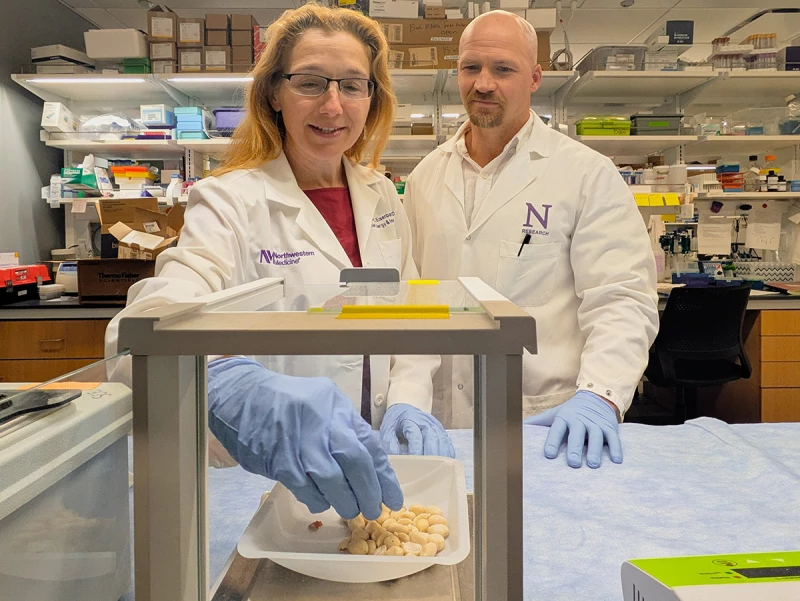
    Image Credits: Study authors Drs. Stephanie Eisenbarth and Adam Williams conducting allergy research in their lab
    Northwestern University

    Early Human Trials Begin to Test Zileuton’s Potential in Preventing Anaphylaxis

    Last month, the research team began a small early-stage clinical trial in humans to test whether blocking this pathway with Zileuton has the same effect as it did in mice. The upcoming results could offer a promising new strategy for preventing anaphylaxis.

    Laura Hoyt, a co-author of the study, emphasized the potential impact of the treatment, calling it a promising solution for a serious and unpredictable condition. “We’ve seen tragic, even fatal reactions to hidden ingredients like ground peanuts in sauces,” she said. “For parents sending kids to birthday parties or for travelers with no control over meals, this could offer vital protection.”


    Read the original article on: New Atlas

    Read more: Maternal Vitamin D May Shape Children’s Later Learning

  • Smartinhaler Delivers Timely, Precise Asthma Treatment

    Smartinhaler Delivers Timely, Precise Asthma Treatment

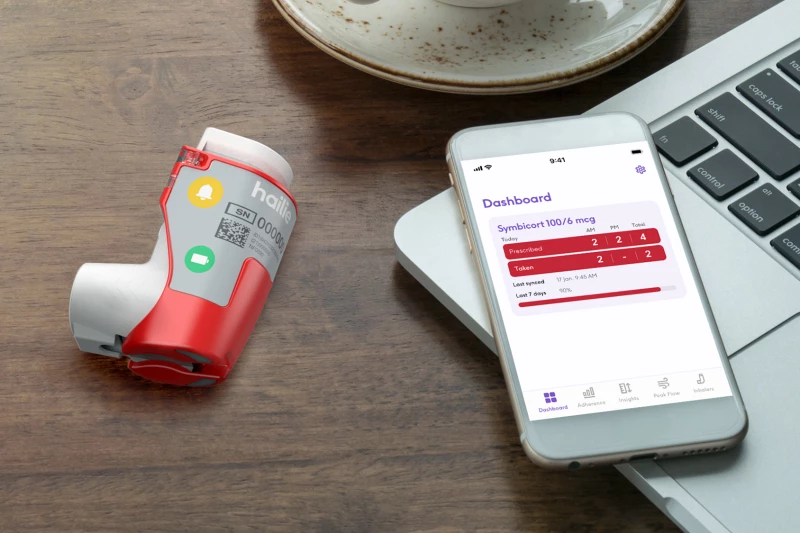
    The Hailie Smartinhaler, developed by med-tech company Adherium, helps improve asthma management by making sure inhalers are used properly and on time. It's been supporting asthma patients in the U.S. since 2017, and now the company aims to bring it to Australians as well.
    Credit:The Hailie Smartinhaler improves asthma control
    Adherium

    The Hailie Smartinhaler, developed by med-tech company Adherium, helps improve asthma management by making sure inhalers are used properly and on time. It’s been supporting asthma patients in the U.S. since 2017, and now the company aims to bring it to Australians as well.

    Asthma affects up to 29% of the global population, causing symptoms like wheezing, shortness of breath, chest tightness, and coughing.ing. If not properly managed, it can pose a serious risk of death. In many cases, poor control stems from inconsistent treatment or incorrect inhaler use.

    Adherium Limited, an Australian eHealth company specializing in respiratory disease management, created the Hailie Smartinhaler to help asthma patients use their inhalers as effectively as possible.

    I’ve suspected that many asthma patients either don’t take their medication regularly or use it incorrectly,” said Dr. William McCann, an allergy and immunology expert. “The health outcomes from asthma treatments haven’t been as good as they should be.

    Tracking and Reminding for Effective Asthma Medication Management

    The Hailie Smartinhaler features a Bluetooth sensor that attaches to an asthma inhaler, tracking the amount of medication delivered. It also includes an alarm to remind patients when it’s time to take a dose. Real-time updates are sent to the patient’s Hailie app and doctor via the Hailie portal. The device is compatible with all inhalers, whether rescue or preventive.

    Credit:he full range of Hailie Smartinhalers fits all types of rescuer and preventer inhalers
    Adherium

    This technology reminds patients to use their medication and ensures proper use, improving treatment adherence,” McCann said. “It helps patients, families, and healthcare providers discuss inhaler technique and medication, leading to better outcomes and quality of life.

    Study Finds Smartinhaler Boosts Adherence and Reduces Severe Asthma Flare-Ups

    A 2014 study in The Journal of Allergy and Clinical Immunology found that Smartinhaler reminders improved treatment adherence in moderate-to-severe asthma patients. It also showed that 11% of Smartinhaler users had severe flare-ups, compared to 28% in the non-user group.

    The Hailie Smartinhaler has been available in the U.S. since 2017, following FDA approval. In 2022, the U.S. began reimbursing Remote Therapeutic Monitoring (RTM) for Smartinhaler patients. This reimbursement program encourages providers to adopt these technologies by offering financial support for delivering remote care.

    Adherium Pushes for Smartinhaler Introduction in Australia

    Adherium is now advocating for the Smartinhaler to be introduced in Australia.

    We’ve seen great results in the U.S. and gathered data that highlights Hailie’s value to patients and the healthcare system,” said Adherium’s interim CEO, Jeremy Curnock Cook.“The next step is to conduct demonstration pilots in Australia to show the impact Hailie can have on asthma patients.

    Beyond the clear health benefits for patients, Curnock Cook noted that the Smartinhaler could also lead to savings at both the state and federal levels.

    Our healthcare system in Australia is under strain, and adopting our technology could ease the burden on frontline workers and improve lives,” he said. “In 2020-21, there were 25,500 asthma-related hospitalizations, costing an estimated AU$851.7 million (US$549 million) in healthcare expenses. We aim to give patients the best chance for better health outcomes and more effective treatment.


    Read the original article on: New Atlas

    Read more: Wearable Stethoscope Patch Monitors Respiratory Issues Over Extended Periods

  • Early Childhood Antibiotic Use Raises the Likelihood of Developing Asthma

    Early Childhood Antibiotic Use Raises the Likelihood of Developing Asthma

    Credit: Pixabay

    Recent research from Monash University underscores the profound impact of early antibiotic exposure on long-term asthma risk.

    Antibiotics, commonly used to treat infections in early childhood, have been found to disrupt the delicate balance of gut microbiota, potentially heightening susceptibility to asthma later in life. This study has identified a promising avenue: a molecule produced by gut bacteria, IPA (indole-3-propionic acid), which could serve as a preventive measure against asthma development in children vulnerable to the condition.

    Understanding IPA’s Role in Asthma Protection

    Additionally, the study led by Professor Ben Marsland and published in the prestigious journal Immunity illuminates the critical role of IPA in protecting against this disease. Moreover, the research reveals that frequent antibiotic use in infancy diminishes the presence of IPA-producing bacteria in the gut. Consequently, this reduction in IPA levels appears to compromise the immune system’s ability to regulate allergic responses effectively, thus increasing the risk of asthma and allergic airway inflammation in the long term.

    The research employed a mouse model genetically predisposed to asthma to explore the effects of early-life antibiotic exposure. Mice exposed to antibiotics during early development showed heightened susceptibility to allergic airway inflammation triggered by common allergens like house dust mites. Importantly, even after the microbiota normalized post-antibiotic treatment, these mice continued to exhibit increased vulnerability to asthma, underscoring the enduring impact of early disruptions in gut microbiota composition.

    In contrast, supplementing the diet of these mice with IPA during their early developmental stages significantly reduced the incidence of allergic airway inflammation and asthma in adulthood. This experimental finding suggests that restoring IPA levels in infancy could potentially mitigate the adverse effects of early antibiotic use on asthma susceptibility.

    Exploring Preventive Strategies

    Understanding the intricate relationship between antibiotics, gut microbiota, and asthma susceptibility opens new possibilities for preventive strategies. “By focusing on maintaining healthy gut microbiota and enhancing IPA production early in life, healthcare interventions could potentially reduce the incidence of childhood asthma and related allergic conditions.”

    Further research is warranted to explore the feasibility and effectiveness of IPA supplementation as a preventive approach in human populations at risk of contracting this disease. Ultimately, these insights could lead to personalized interventions that mitigate the long-term health impacts of early antibiotic exposure and improve respiratory health outcomes globally.


    Read the Original Article on: Medical Xpress

    Read more: Identifying Chronic Sinusitis Apart from Allergies