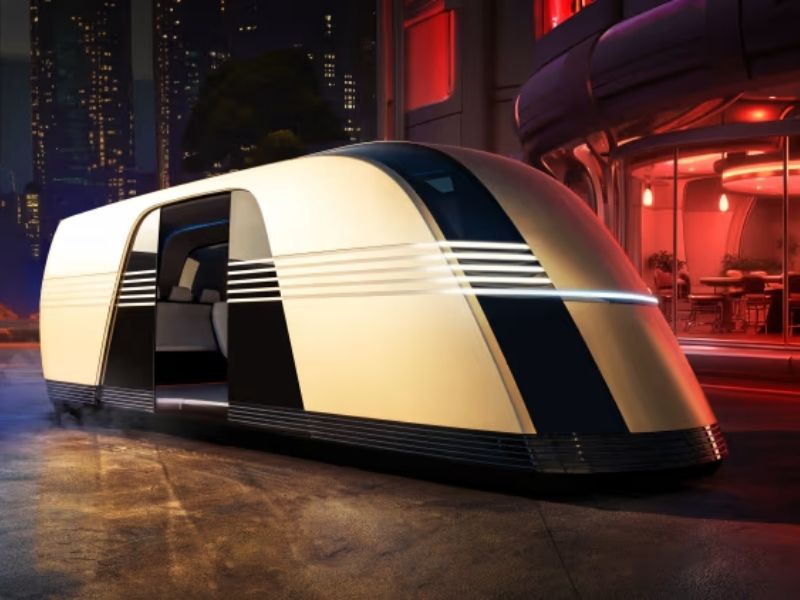
The Tesla Robovan concept debuted at the company’s “We, Robot” event last October and was met with an enthusiastic response. Interest has surged again after an executive hinted it could evolve into a self-driving RV.
A Driverless Design Beyond Urban Mobility
The Tesla Robovan prototype is a modular, fully autonomous vehicle for up to 20 passengers and cargo. Its low-floor design, spacious interior, and panoramic visibility have sparked ideas for uses beyond urban transport.
Social media has been buzzing that the Robovan could lead to autonomous RVs. Y Combinator CEO Garry Tan suggested it’s time for self-driving RV startups, and Tesla’s VP of Autopilot, Ashok Elluswamy, replied “On it,” fueling speculation about a camper-ready Robovan.
Why the Robovan Design Fits the RV Lifestyle
The Robovan concept’s design makes it well suited to discussions around RV use. Its flat, open floor plan, absence of a steering wheel, and Tesla’s load-leveling suspension allow users to configure the platform for sleeping, relaxing, or working. A self-driving electric RV also aligns with the growing “van life” movement, offering the appeal of autonomous, low-stress travel.
For now, the concept of a Robovan-based RV exists only through hints and speculation on social media. Tesla has yet to confirm any plans for a fully autonomous RV built on the platform, and the Robovan itself remains a prototype without a defined production schedule. Still, online enthusiasm for a self-driving Tesla camper continues to grow, hinting that the Robovan could become more than the urban people mover Tesla initially imagined.
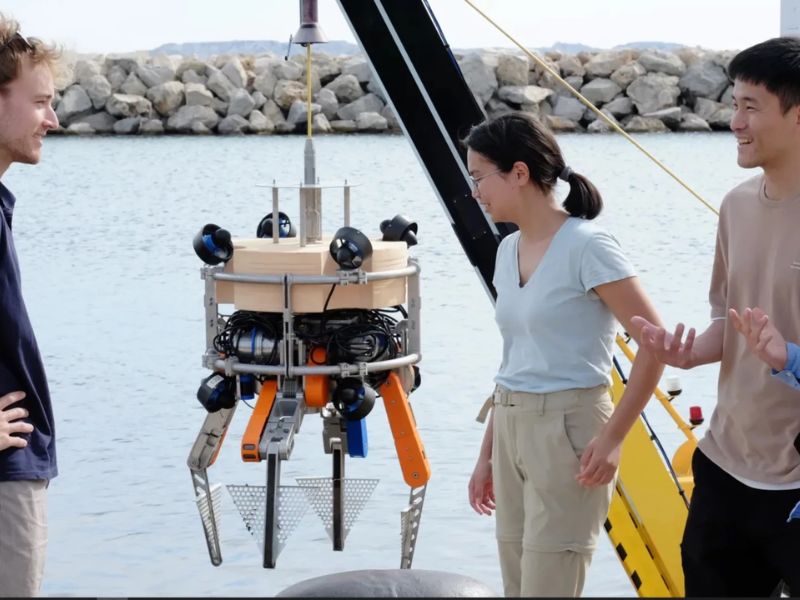
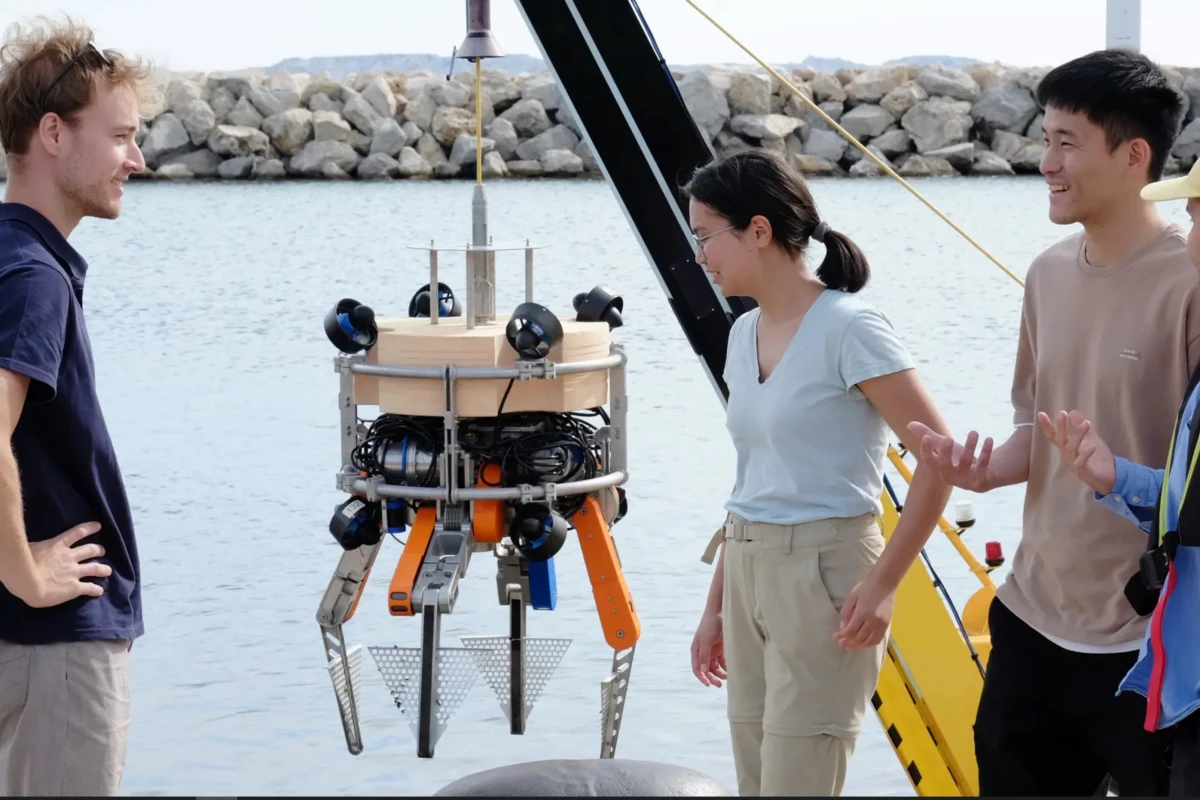
Image Credits:Researchers at the Technical University of Munich have demonstrated an autonomous underwater waste collection system for the first time in the port of Marseille Andreas Schmitz/TUM
Picture an oversized arcade claw machine—only instead of toys, it picks up the waste littering the seafloor. That’s what an autonomous robot has been doing recently in Marseille.
We humans generate a lot of waste, much of which gets dumped on land or into the sea, often ignored once it’s out of sight. This careless disposal causes major environmental damage, while cleanup is difficult and costly.
Tackling the Trash That Sinks
Many initiatives have focused on collecting floating debris like plastic from rivers and oceans, but what about the garbage that sinks? The EU-funded SEACLEAR project set out to address this, creating autonomous robot crews to clean the seafloor.
Partners include Fraunhofer CML, TU Delft, and universities in Dubrovnik, Cluj-Napoca, and Munich. The underwater gripper robot now retrieving trash in the Port of Marseille comes from the Munich team.
When a gentler touch is needed, onboard sensors adjust the pressure so the robot lifts plastic buckets without breaking them and glass bottles without shattering.
Tethered for Power, Control, and Heavy Lifting
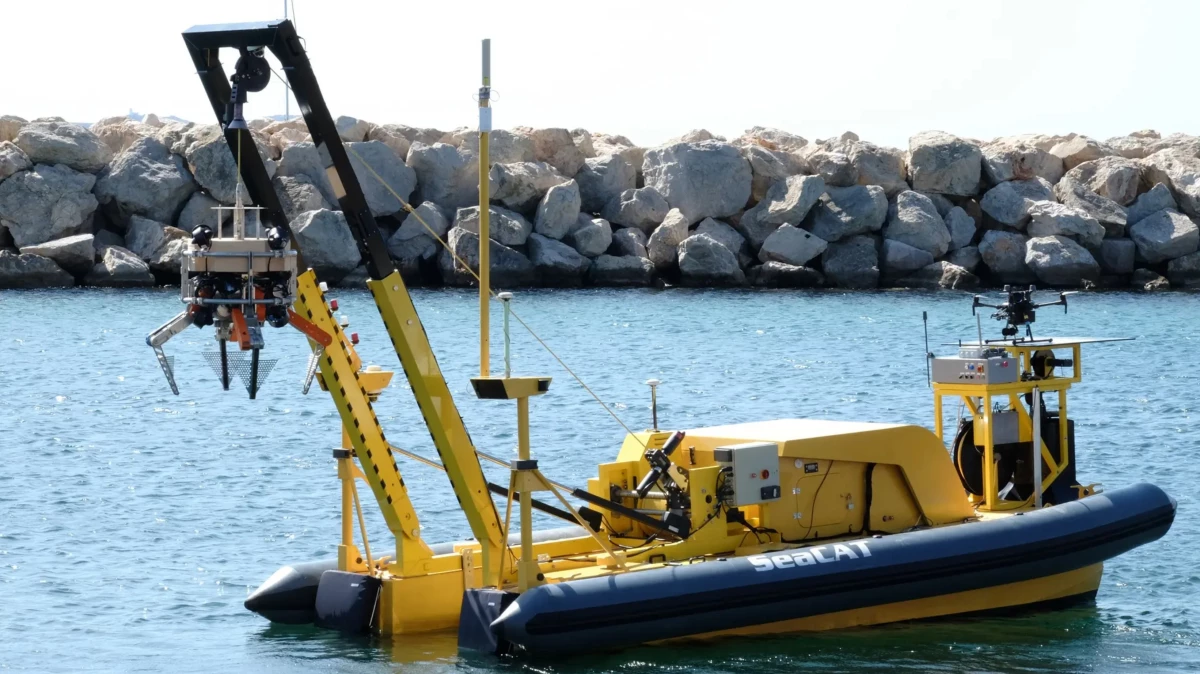
Powered by eight propellers, the robot navigates underwater on its own but remains tethered. The cable supplies energy and data, while also enabling the robot to lift heavy debris out of the water and onto a support vessel for disposal.The team opted against onboard batteries, as charging would restrict operating time.
Image Credits:The underwater trash collector is being developed as part of a larger system designed to autonomously clear waste from the seabed Andreas Schmitz/TUM
Using sonar, a vision camera, and AI, the robot identifies seabed debris and where to grip. To train it, the SEACLEAR team contributed 7,000+ test images of items from nets to bicycles, tires, and car seats. The team then modeled these objects in 3D for recognition..
Towards a Fully Autonomous Seafloor Cleanup System
The project’s long-term goal is a fully autonomous cleanup system. An unmanned service vessel would first map the seabed with ultrasonic waves, followed by a search robot conducting detailed scans. The data guides the gripper bot, while an autonomous dinghy serves as the collection point.
SEACLEAR 2 is ongoing, paving the way for robotic fleets to handle large-scale seafloor cleanup. Dr. Stefan Sosnowski from TUM shares more about the gripper bot in the video below.
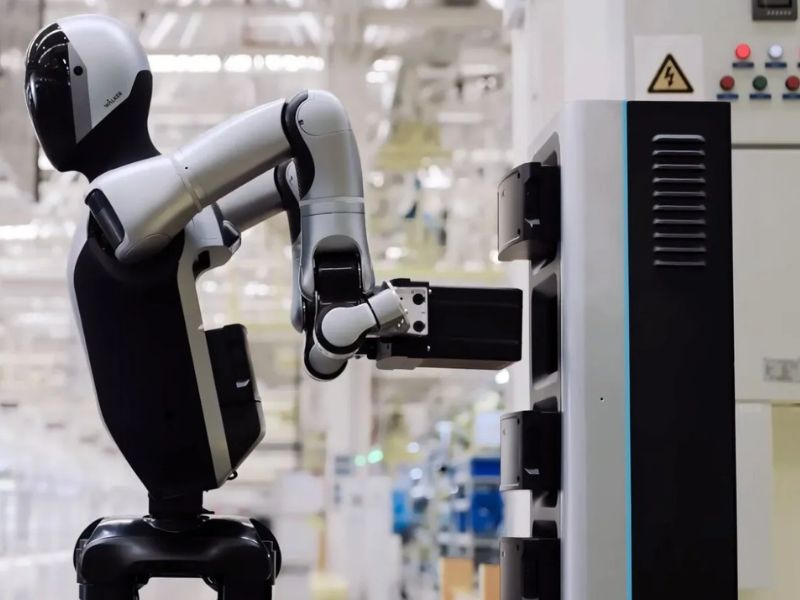
China has made a major advancement in the tech race by developing a humanoid robot capable of operating 24/7 with full autonomy and managing its own energy supply. Named Walker S2, the prototype created by UBTech Robotics is seen as a significant breakthrough in global innovation.
Robot Uses Built-In USB-Like Device for Power Replacement
During the battery replacement process, the humanoid robot can utilize multiple devices integrated into its system, each featuring a design similar to that of USB flash drives.
To accomplish this, the robot evaluates the energy requirements of any upcoming tasks.
Throughout the development phase, the team implemented a technology called UBTech Robotics, which uses an advanced program resembling a superintelligent brain to enable autonomy and self-regulation.
Collaborative Intelligence
This system allows Walker S2 to operate across various production lines, guided by decisions from a network of other robots that coordinate the software’s capabilities.
According to a report by U.S. firm Moody’s, the debut of the fully autonomous prototype propels China to a leading role in the global robotics industry.
The report emphasizes China’s unique combination of cutting-edge AI and cost-effective tech manufacturing. Another article on the topic also notes that nearly half of the world’s humanoid robot development companies are now based in China.
Joby Aviation is known for electric air taxis but has also pursued a parallel path through a long-term U.S. military partnership. Department of Defense. That partnership may now be bearing fruit.
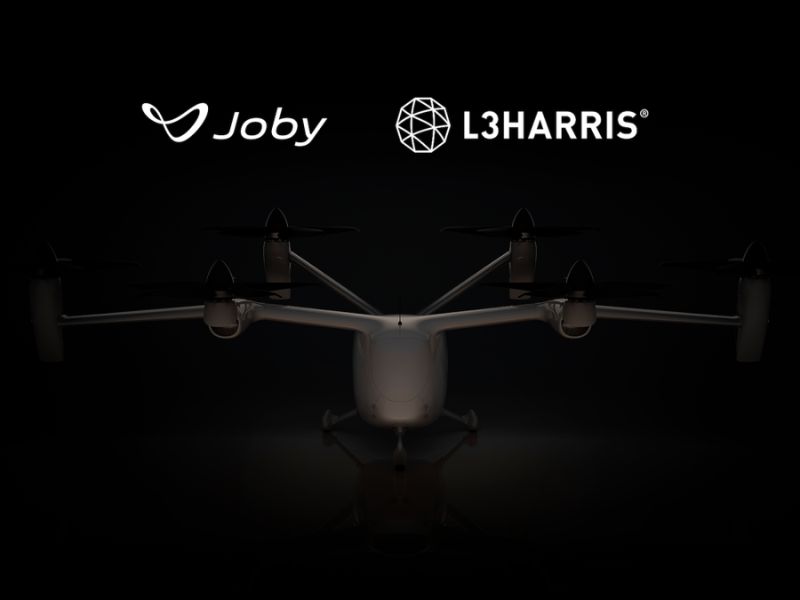
Joby announced a deal with L3Harris to explore developing a gas-turbine hybrid VTOL aircraft with autonomous capabilities for military use.
Adapting the S4 Platform for Extended Range and Military Use
Joby will base the hybrid VTOL on its existing S4 platform. The company later converted the all-electric S4 into a hydrogen-electric hybrid, which flew 521 miles—more than double the range of its battery-powered version.
The L3Harris partnership could lead to a DoD contract, pending flight tests and demonstrations. Joby plans to begin flight testing in the fall, with demonstrations anticipated in 2026.
Joby has dedicated years to developing its all-electric vertical takeoff and landing (VTOL) aircraft and pursuing Type 1 certification from the Federal Aviation Administration, with plans to use the aircraft for short-distance passenger transport in urban settings.
Joby’s Strategic Partnership with the Department of Defense
Joby has spent nearly a decade working with the DoD, helping it understand key requirements for successful military collaboration, said executive chairman Paul Sciarra.
“Range proved to be one of the most critical factors,” Sciarra said. “We realized we had to adapt accordingly.”
Sciarra emphasized the need to demonstrate the “missionization” of Joby’s aircraft—showing how the platform integrates sensors, autonomous systems, communications, and payloads to meet specific DoD requirements.
“We had two options: either develop all of this capability in-house or team up with a strong partner who already has extensive expertise and proven technologies in these areas,” he explained.
That’s where L3Harris enters the picture.
Hybrid VTOL to Support Diverse Low-Altitude Military Missions
L3Harris’ Jon Rambeau said the hybrid VTOL will enable long-range crewed and uncrewed missions. Sciarra added it could support low-altitude operations like contested logistics, electronic warfare, and C-UAS.
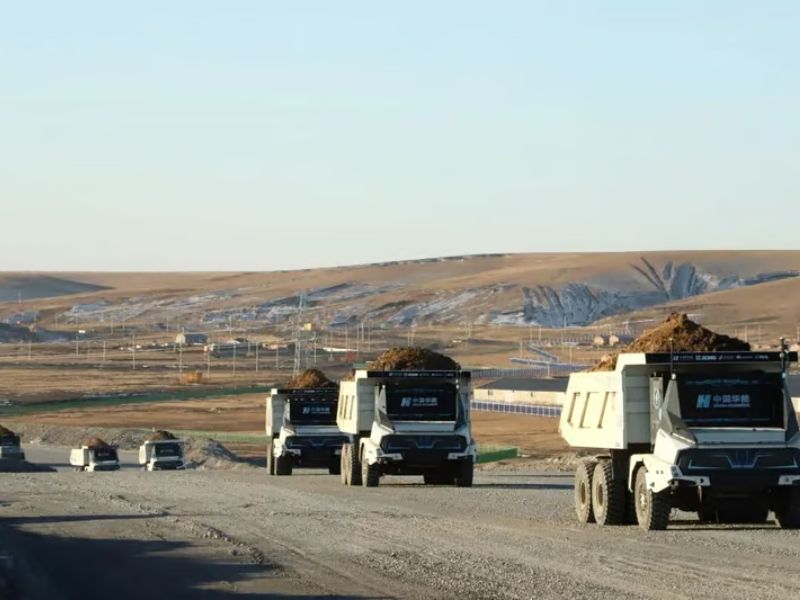
The unmanned trucks in operation in Inner Mongolia, China Huaneng Group
A fleet of 100 electric, self-driving coal mining trucks has started operating in Mongolia, managed by artificial intelligence connected through a 5G-Advanced (5G-A) network. The project is expected to expand, bringing greater safety and efficiency to China’s coal mining industry.
Coal Use Remains High Despite Environmental Concerns
Although the environmental drawbacks of coal are well known, it remains widely used as an energy source around the world. According to Enerdata, global coal use growth slowed from about 6% in 2022 to 2.2% in 2023. However, in countries like China, India, and Vietnam, usage surged during the same period, with growth rates of 6.9%, 9.9%, and 25%, respectively. Currently, China and India together account for 71% of global coal consumption. China alone is developing about 1,280 million tons per year in new mining capacity — roughly half of all proposed global capacity.
In this context, it makes sense for China to explore ways to make coal mining safer, more efficient, and more environmentally friendly.
One such effort is the Huaneng Ruichi fleet, which includes 100 electric autonomous trucks that recently began working at the Yimin open-pit mine in Inner Mongolia.Chinese energy giant Huaneng Group launched the project.
Advanced Technology Enables Efficient Operations in Extreme Conditions
Each vehicle can carry up to 90 metric tons of coal and operates in extremely low temperatures, down to -40 °C — not typical in Inner Mongolia, but certainly possible. The trucks operate in sync thanks to a 5G-A mobile network, which enables high-speed data transmission and low latency. In this case, the system reaches upload speeds of 500 Mbps and latency as low as 20 milliseconds. The artificial intelligence system managing the location and operations of the robotrucks is provided by Huawei through the Commercial Vehicle Autonomous Driving Cloud service.
“As China’s first autonomous mining truck without a driver’s cabin, Huaneng Ruichi puts worker safety first, keeping personnel away from hazardous equipment and harsh environments, significantly reducing associated risks,” Huawei said in a statement. “Ensuring the safety of people and machinery while improving productivity under extreme conditions — such as freezing temperatures, high altitudes, and severe rain, snow, or dust — is a critical challenge. It requires strong data processing and system coordination capabilities.”
Huaneng Group representatives state that this is the largest single deployment of autonomous electric mining trucks in the world.Additionally, the Yimin mine now holds the distinction of being the first open-pit mine in the world to power operations with 5G-A technology. The system will eventually support up to 300 autonomous trucks.
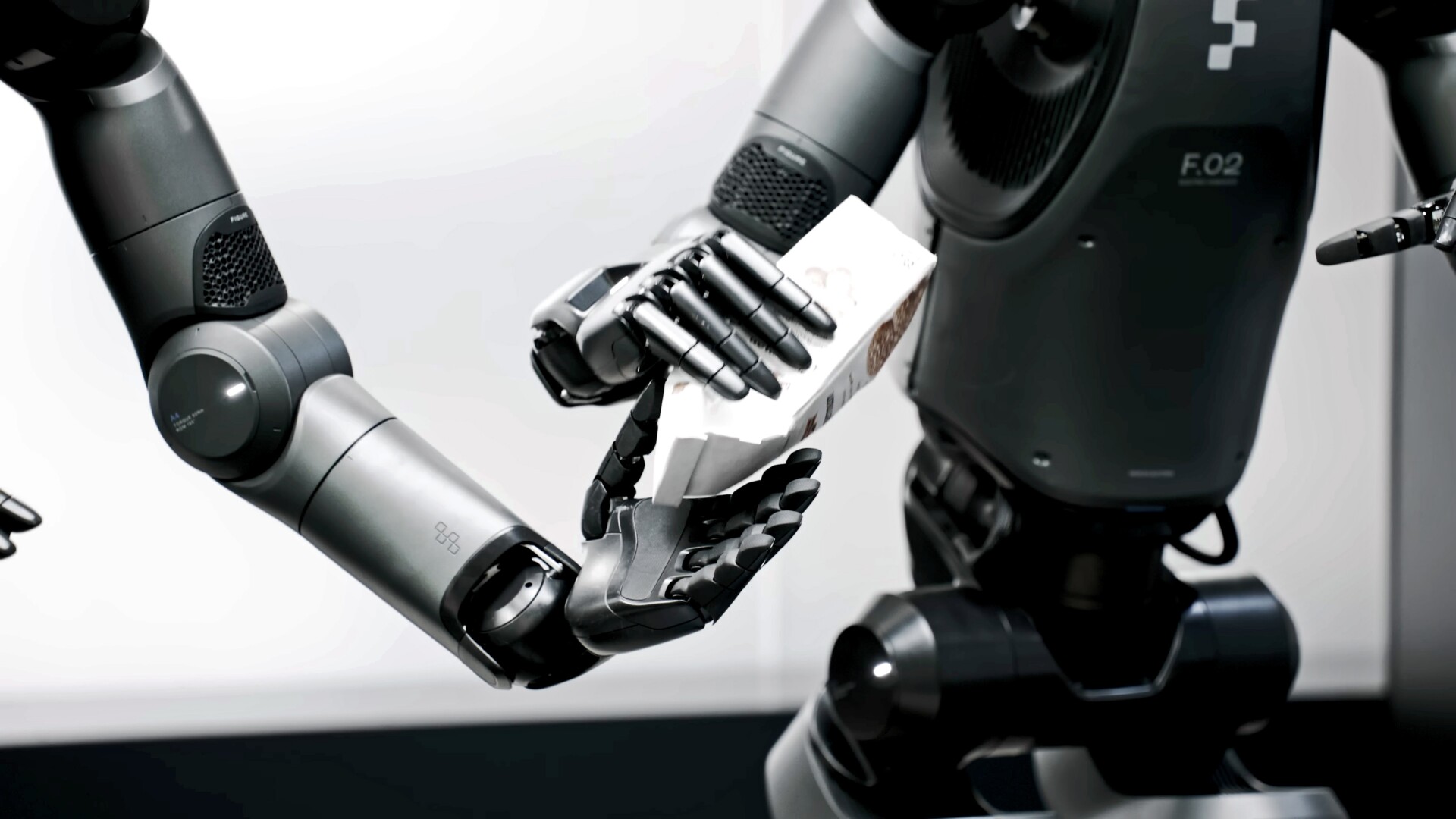
“Here ya go, bud. I got you.” Running a single Helix instance across two robots allows levels of bot-to-bot collaboration never before seen Figure.ai
Just weeks after Figure.ai ended its collaboration with OpenAI, the Silicon Valley startup introduced Helix—a commercial-ready, AI-powered “hive-mind” humanoid robot capable of performing nearly any task on command.
A New AI Brain for Figure 02
Figure gained attention with its humanoid robot, Figure 01. Now, Figure 02 features more than just upgrades—it has a new AI brain, Helix VLA. As the first generalist Vision-Language-Action (VLA) model in a humanoid robot, Helix perceives, understands language, interacts physically, and learns continuously.
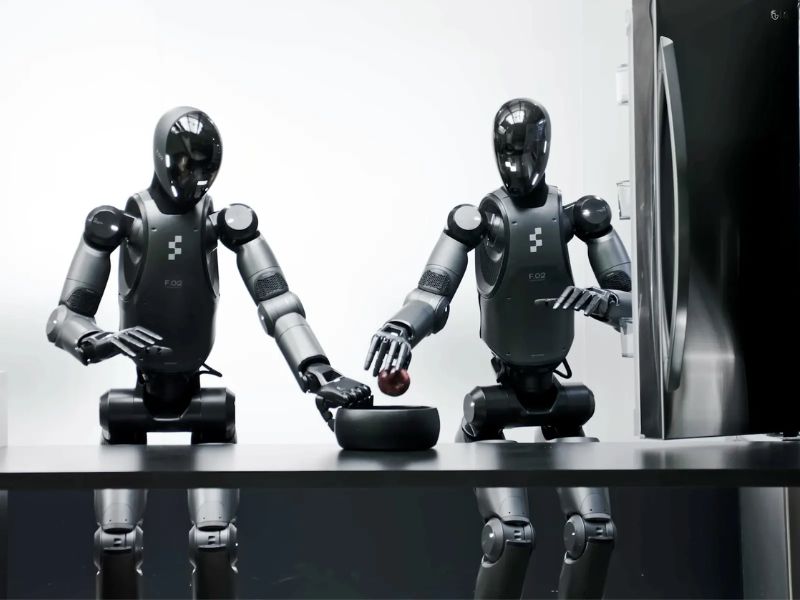
In a demo, Helix-powered Figure 02 robots put away unfamiliar groceries by simply responding to, “Can you put these away?” Unlike most AI models requiring extensive training, Helix integrates semantic knowledge with its vision-language model (VLM) to interpret commands and act instantly.
For example, if asked to pick up a cassette tape, Helix combines general knowledge from LLMs like ChatGPT with its VLM to identify and retrieve it—though its taste in music remains a mystery.
Having never seen these kitchen items before, Helix-powered Figure 02 robots were able to put away random groceries by simply asking them “Can you put these away?” Figure.ai
Helix can also control two robots simultaneously. With dual GPUs, System 2 handles high-level planning at 7-9 Hz while System 1 executes actions at 200 Hz, enabling seamless teamwork and real-time responses.
A Breakthrough in Autonomous Robotics
Figure and OpenAI had been working together for about a year before Figure.ai founder Brett Adcock announced the company’s decision to go solo. In a post on X, he hinted at a major advancement: “Figure made a breakthrough on fully end-to-end robot AI, built entirely in-house. We’re excited to show you something no one has ever seen on a humanoid.” Just 16 days later, Helix was unveiled—an achievement that feels less like incremental progress and more like a giant leap.
Figure 01 robots have already performed repetitive tasks at BMW’s Spartanburg, SC, factory. But Figure 02 represents a new era of capability. These humanoids are not just factory-ready—they’re commercially viable right out of the box, with batteries included.
The Hive Mind Advantage
Unlike previous models, Helix doesn’t require individual training for each robot. Instead, all Figure 02 units share a single set of neural network weights. When one robot learns a task, the entire network learns it instantly—an approach reminiscent of a hive mind.
“Here, have some cookies.” If Short Circuit had been made this century, I imagine Johnny Five would look more like these guys Figure.ai
This feature makes Figure 02 especially suited for home environments, where unpredictability is the norm. Unlike the structured conditions of a factory, a household presents endless variables: misplaced laundry, scattered toys, cleaning supplies under the sink, and fragile china in a display case. Despite these complexities, Figure 02 can recognize and manipulate almost any small household object, even if it has never seen it before.
In a demo, the robot successfully identified and retrieved a toy cactus from a pile of random objects when given the abstract command, “Pick up the desert item.” This level of contextual understanding sets Helix apart from previous AI-powered robots.
A New Era of Robotics—With Real-World Implications
The Figure 02 humanoid, powered by Helix, is the closest thing to I, Robot we’ve seen. AI is no longer confined to screens—it now has a physical form, the ability to act autonomously, and the potential to impact the real world in unprecedented ways.
However, these advancements raise critical concerns. Who controls the vast amount of data these robots collect? Could they be hacked, turning them into tools for espionage or cyberattacks? With a hive-mind system, a single breach could expose personal and corporate secrets on an unimaginable scale.
In essence, Helix represents both an extraordinary technological breakthrough and a profound ethical dilemma. While the future of robotics looks more exciting than ever, one question remains: Are we ready for it?
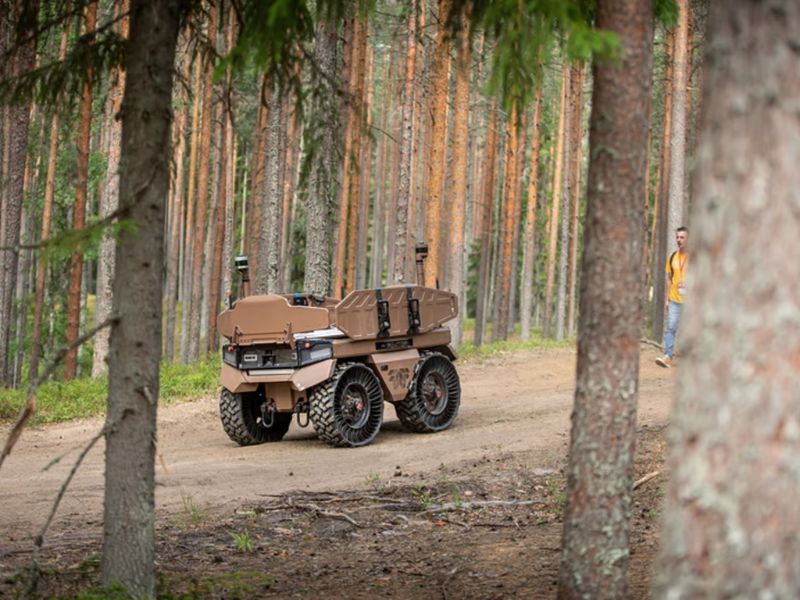
The Estonian Military Academy has recently concluded an extensive autonomy trial of Uncrewed Ground Vehicles (UGV) involving 11 developers from nine countries. This trial is considered a pioneering and comprehensive demonstration of autonomous military technology, providing a glimpse into the potential future of warfare.
The multitude of evident uses for military robots has sparked considerable global interest in their advancement. This is particularly notable as robots transition from being merely remotely operated platforms to genuinely autonomous machines capable of independently assessing situations and generating solutions.
These advanced robots would surpass the typical depiction of small tanks equipped with guns and rocket launchers. They have the potential to be deployed in hazardous environments, eliminating the risk to human lives.
Additionally, they can bridge the challenging gap between supply lines and frontline soldiers, replacing the arduous manual transportation of food, ammunition, and equipment across rugged terrain. Moreover, they have the capability to liberate numerous personnel from mundane responsibilities, such as driving trucks, enabling them to focus on more crucial assignments.
Robot being followed by observers Estonian Military Academy
However, the development of such robots is a gradual and meticulous process, as they need to acquire the ability to handle the intricate complexities and uncertainties of the real world.
Recognizing this, the Estonian Military Academy, under the guidance of defense and autonomy experts from Finland, Germany, the Netherlands, Norway, Sweden, and the UK, recently conducted a series of trials spanning two days.
During the trials, the participants subjected their machines to increasingly challenging tests, including operating on various terrains such as roads, off-road areas, and dense forests.
Autonomous Navigation and Collaboration Capabilities of the Robots
The robots were required to autonomously navigate, plan routes, execute point-to-point maneuvers, and avoid obstacles. Furthermore, they had to showcase their ability to collaborate effectively with human team members.
Markus Decision, the project coordinator, highlighted that the participating platforms were not ranked. Instead, an international team of specialists prepared reports after the event, offering comprehensive feedback and insights on the latest advancements in unmanned ground systems.
The Defense Academy led the organization of the event, which took place over the past year with the support of partners from Germany, the United Kingdom, Finland, Sweden, Norway, and the Netherlands. The event attracted major players in the European unmanned ground systems field, including companies unveiling their platforms to the public for the first time.
The following video showcases several robots in operation.
We use cookies on our website to give you the most relevant experience by remembering your preferences and repeat visits. By clicking “Accept All”, you consent to the use of ALL the cookies. However, you may visit "Cookie Settings" to provide a controlled consent.
This website uses cookies to improve your experience while you navigate through the website. Out of these, the cookies that are categorized as necessary are stored on your browser as they are essential for the working of basic functionalities of the website. We also use third-party cookies that help us analyze and understand how you use this website. These cookies will be stored in your browser only with your consent. You also have the option to opt-out of these cookies. But opting out of some of these cookies may affect your browsing experience.
Necessary cookies are absolutely essential for the website to function properly. These cookies ensure basic functionalities and security features of the website, anonymously.
Cookie
Duration
Description
cookielawinfo-checkbox-analytics
11 months
This cookie is set by GDPR Cookie Consent plugin. The cookie is used to store the user consent for the cookies in the category "Analytics".
cookielawinfo-checkbox-functional
11 months
The cookie is set by GDPR cookie consent to record the user consent for the cookies in the category "Functional".
cookielawinfo-checkbox-necessary
11 months
This cookie is set by GDPR Cookie Consent plugin. The cookies is used to store the user consent for the cookies in the category "Necessary".
cookielawinfo-checkbox-others
11 months
This cookie is set by GDPR Cookie Consent plugin. The cookie is used to store the user consent for the cookies in the category "Other.
cookielawinfo-checkbox-performance
11 months
This cookie is set by GDPR Cookie Consent plugin. The cookie is used to store the user consent for the cookies in the category "Performance".
viewed_cookie_policy
11 months
The cookie is set by the GDPR Cookie Consent plugin and is used to store whether or not user has consented to the use of cookies. It does not store any personal data.
Functional cookies help to perform certain functionalities like sharing the content of the website on social media platforms, collect feedbacks, and other third-party features.
Performance cookies are used to understand and analyze the key performance indexes of the website which helps in delivering a better user experience for the visitors.
Analytical cookies are used to understand how visitors interact with the website. These cookies help provide information on metrics the number of visitors, bounce rate, traffic source, etc.
Advertisement cookies are used to provide visitors with relevant ads and marketing campaigns. These cookies track visitors across websites and collect information to provide customized ads.