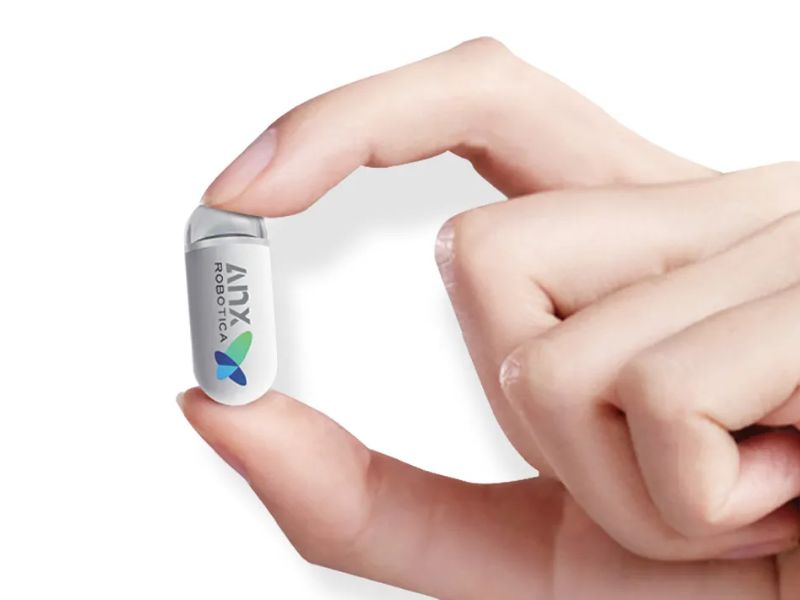
The NaviCam, developed by the U.S.-based company AnXRobotica, is a pill-sized endoscopic capsule designed to examine the stomach and intestines without the need for sedation. Guided magnetically by an external operator and enhanced with artificial intelligence, it moves through the digestive tract while transmitting live video.
Inside the capsule are a camera, integrated light source, lenses, wireless connectivity, and a magnet. Using external magnetic control, physicians can precisely steer the capsule in real time, especially within the esophagus and stomach.
Minimizing Risks with Non-Sedated Visualization
This system enables non-sedated visualization, minimizing risks such as perforation and cross-contamination. The capsule can also rotate up to 180 degrees to inspect the esophageal sphincter and view the stomach in its natural condition.
In addition, NaviCam incorporates ProScan, an FDA-cleared AI software that supports interpretation of the images. According to the company, this technology detects abnormalities with an accuracy rate of up to 99.9% and significantly speeds up the review process.
Currently available in the United States and gradually expanding into Europe, the NaviCam also comes in smaller versions (such as NaviCam XS) along with compatible accessories.
For certain common medical conditions, taking medication at the right time is crucial. A new customizable capsule developed at UC San Diego may streamline complex dosing routines with its innovative staged release system.
In recent years, studies have explored how the timing of substance intake, aligned with our body’s internal clock—known as the circadian rhythm—can affect health outcomes. For instance, one study found that early risers who took blood pressure medication in the morning, and night owls who took it at bedtime, had a reduced risk of non-fatal heart attacks. Another study suggested that taking anti-inflammatory drugs at night rather than in the morning might slow healing. Even when you add sugar to your coffee can influence how caffeine affects you.
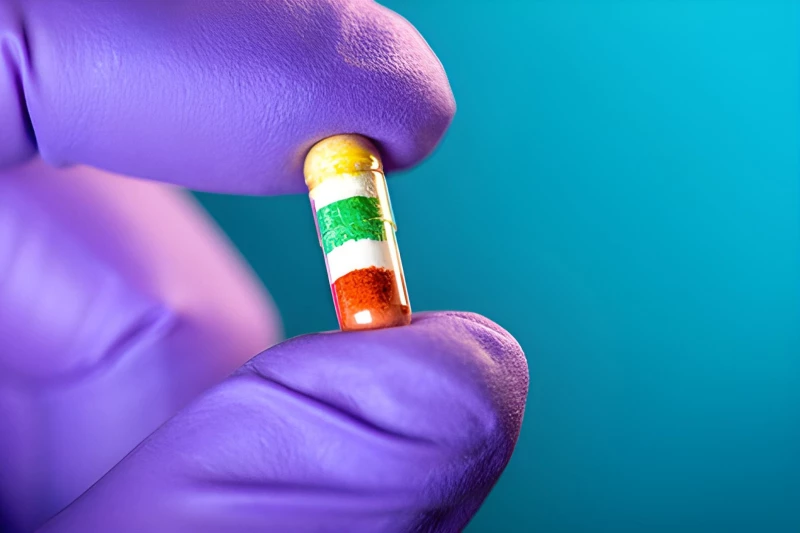
To develop the capsule, researchers designed it with multiple compartments divided by barriers made of “a lactose and maltose matrix infused with a pH-responsive polymer,” according to a university statement. This polymer shields the barriers from stomach acid, and by adjusting their thickness, the researchers can control when each compartment releases its medication.
The capsule is coated with a protective vegetable cellulose layer that dissolves in the stomach. This design allows medications that need immediate release to sit outside the internal barriers, releasing them as soon as the outer coating dissolves.
Credit: Newatlas
Speeds Delivery and Protects
As if that weren’t impressive enough for such a small pill, the engineers also infused the outer layer with tiny magnesium particles that serve two purposes. When released, they produce hydrogen bubbles that help spread the first medication more quickly, and they also neutralize stomach acid, preventing it from prematurely triggering the pH-sensitive barrier that controls the release of a second drug.
To test the capsule, researchers loaded it with three color-tinted doses of the Parkinson’s drug levodopa. Under simulated stomach conditions, they observed that the first dose—along with its magnesium components—was released rapidly, while the remaining two compartments delivered the drug in a more gradual, staggered manner over time.
Using Levodopa for Consistent Symptom Management
The choice to use the Parkinson’s drug levodopa was intentional—researchers note that keeping consistent levels of the medication throughout the day can significantly help patients manage their symptoms.
“If the drug level drops too low, patients will experience tremors and other motor symptoms,” explains Amal Abbas, the study’s lead author. “However, if we can maintain a steady level, we can help stabilize a patient’s movement. Our capsule could ensure this stability throughout the day, eliminating the need for patients to time each dose precisely.”
Abbas also suggests that the capsule could benefit patients with cardiovascular disease by releasing a dose of aspirin in the morning, a beta blocker in the afternoon, and a cholesterol medication at night, for instance.
Abbas and her team plan to proceed with in vivo testing and are working on designing a version of the capsule that can last longer than a single day. They also aim to explore the possibility of creating a capsule that releases drugs further along in the digestive system. Additionally, Abbas has launched a startup to speed up the capsule’s development.
The study on the development and use of the capsule has been published in the journal Matter.
Beneath Antarctica’s Lake Enigma, a hidden freshwater ecosystem has been sealed under 30 feet (9 meters) of ice for up to 14 million years. Led by Italian scientists, researchers used radar and advanced, contamination-free drilling methods to access and study this ancient, isolated biome.
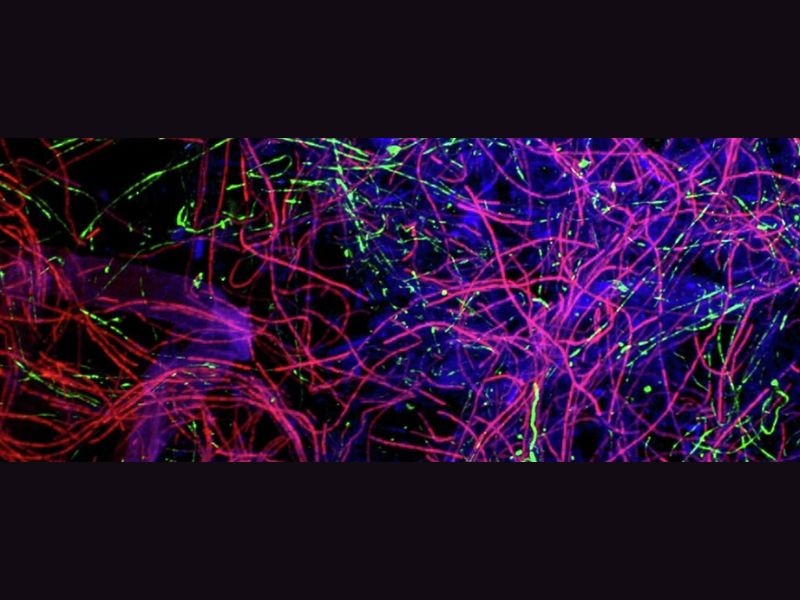
Analysis shows Lake Enigma hosts a phylogenetically diverse, high-biomass microbial ecosystem distinct from any other ice-covered Antarctic lake. Researchers suggest these microbes are remnants of an ancient ecosystem that thrived before the lake froze over. The microbial community forms a simple food web, ranging from photosynthetic organisms to predators and symbiotic species.
Unveiling Microbial Dark Matter: Patescibacteria and Other Unique Microbial Groups Thrive in Lake Enigma
Key microbial groups discovered include Pseudomonadota, Actinobacteriota, and Bacteroidota. Most notably, an unexpected abundance of Patescibacteria thrives despite the water column’s unusually high levels of dissolved oxygen. Furthermore, these tiny, symbiotic bacteria—often referred to as “microbial dark matter“—appear to play unique and critical roles in this extreme environment.
Underwater imaging revealed the lake floor covered in diverse microbial mats, dominated by oxygen-producing cyanobacteria absent in the water column and ice. These mats form crumpled carpets, towering structures up to 2 feet tall, and dune-like pinnacles. The stable, pressurized ecosystem, likely fed by meltwater from the nearby Amorphous Glacier, includes elusive Patescibacteria, ultrasmall symbiotic microbes that may play unique roles in Lake Enigma’s extreme conditions.
We use cookies on our website to give you the most relevant experience by remembering your preferences and repeat visits. By clicking “Accept All”, you consent to the use of ALL the cookies. However, you may visit "Cookie Settings" to provide a controlled consent.
This website uses cookies to improve your experience while you navigate through the website. Out of these, the cookies that are categorized as necessary are stored on your browser as they are essential for the working of basic functionalities of the website. We also use third-party cookies that help us analyze and understand how you use this website. These cookies will be stored in your browser only with your consent. You also have the option to opt-out of these cookies. But opting out of some of these cookies may affect your browsing experience.
Necessary cookies are absolutely essential for the website to function properly. These cookies ensure basic functionalities and security features of the website, anonymously.
Cookie
Duration
Description
cookielawinfo-checkbox-analytics
11 months
This cookie is set by GDPR Cookie Consent plugin. The cookie is used to store the user consent for the cookies in the category "Analytics".
cookielawinfo-checkbox-functional
11 months
The cookie is set by GDPR cookie consent to record the user consent for the cookies in the category "Functional".
cookielawinfo-checkbox-necessary
11 months
This cookie is set by GDPR Cookie Consent plugin. The cookies is used to store the user consent for the cookies in the category "Necessary".
cookielawinfo-checkbox-others
11 months
This cookie is set by GDPR Cookie Consent plugin. The cookie is used to store the user consent for the cookies in the category "Other.
cookielawinfo-checkbox-performance
11 months
This cookie is set by GDPR Cookie Consent plugin. The cookie is used to store the user consent for the cookies in the category "Performance".
viewed_cookie_policy
11 months
The cookie is set by the GDPR Cookie Consent plugin and is used to store whether or not user has consented to the use of cookies. It does not store any personal data.
Functional cookies help to perform certain functionalities like sharing the content of the website on social media platforms, collect feedbacks, and other third-party features.
Performance cookies are used to understand and analyze the key performance indexes of the website which helps in delivering a better user experience for the visitors.
Analytical cookies are used to understand how visitors interact with the website. These cookies help provide information on metrics the number of visitors, bounce rate, traffic source, etc.
Advertisement cookies are used to provide visitors with relevant ads and marketing campaigns. These cookies track visitors across websites and collect information to provide customized ads.