Tag: Carbon Capture

  • Can FPSOs Reduce Carbon Emissions? Exploring Efforts to Clean up Offshore Production

    Can FPSOs Reduce Carbon Emissions? Exploring Efforts to Clean up Offshore Production

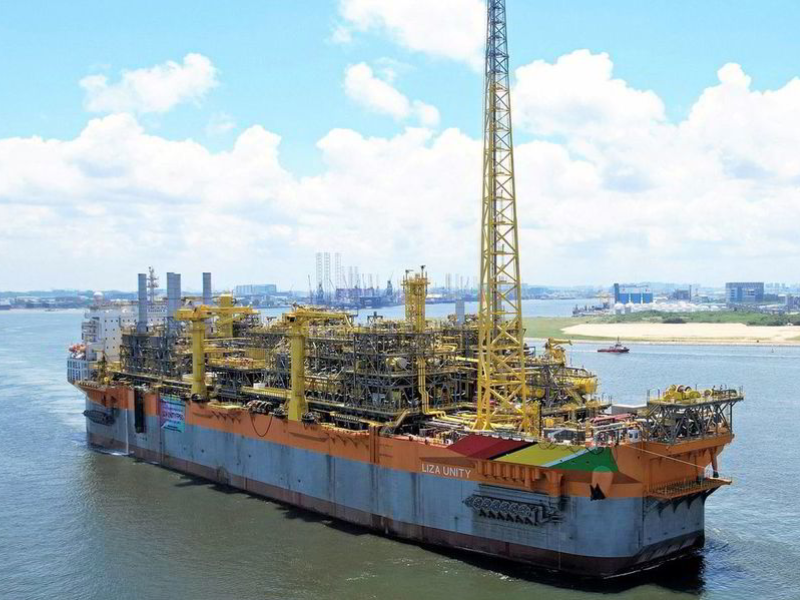
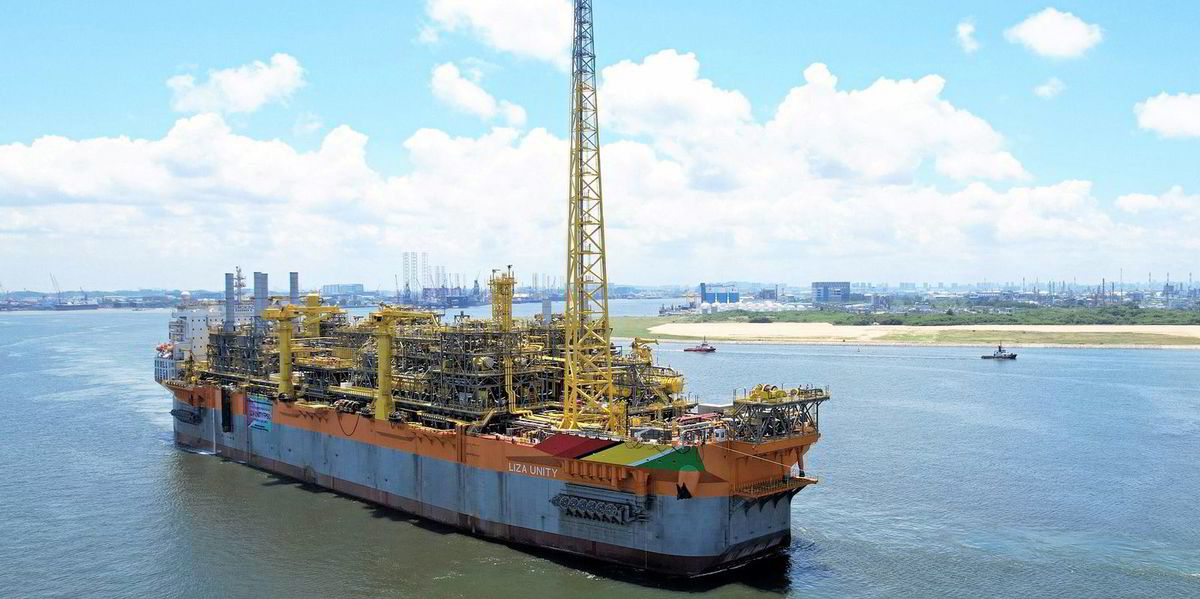
    The Liza Unity, the first FPSO built under SBM’s Fast4Ward concept. Photo: KEPPEL CORPORATION.

    Floating production, storage, and offloading vessels (FPSOs) have long been favored for offshore development, and this trend is expected to continue in the coming years. However, the projected growth in FPSOs also means a significant increase in greenhouse gas emissions, posing challenges for oil and gas companies striving for cleaner production.

    According to a recent report by Rytsad Energy, the FPSO sector is estimated to contribute 38 million tonnes of carbon dioxide emissions this year, with the figure expected to rise to nearly 50 million tonnes per year by the end of the decade unless emission reduction measures are implemented.

    CCS R&D

    To address this issue, many companies are taking steps to curb emissions. They are adopting electricity transmitted from shore to power operations whenever possible and leveraging digital technologies to minimize downtime and flaring. Additionally, considerable efforts are underway to develop carbon capture technology specifically for FPSOs.

    For instance, Sembcorp Marine and its subsidiary Keppel Shipyard are constructing large units equipped with carbon capture and storage (CCS) facilities for Petrobras’ Buzios field in Brazil. Given the interest and demand from key players like Petrobras, these CCS-equipped FPSOs will likely become more common.
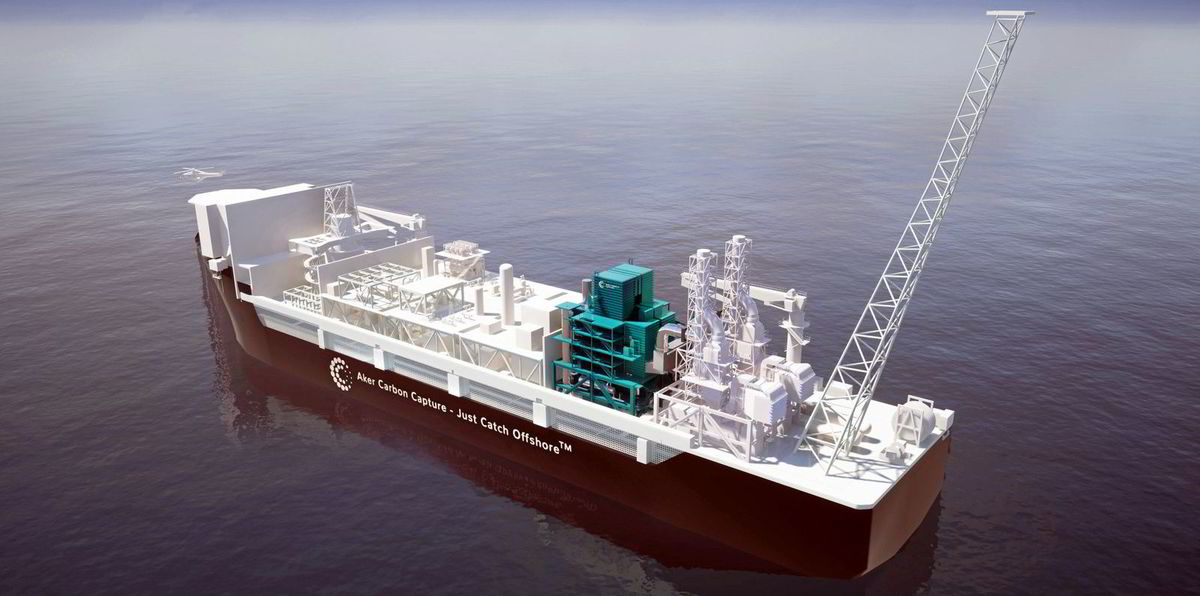
    Modularised: A rendering of Aker Carbon Capture’s Just Catch Offshore CCS system. Photo: Image AKER CARBON CAPTURE.

    Standardised modules

    Norway’s Aker Solutions, known for its expertise in CCS research and development, has spun off its CCS business into a separate company called Aker Carbon Capture. Aker Carbon Capture is developing a modularized offshore carbon capture plant named Catch FPSO, focusing on harsh environment applications in offshore Norway. The technology has received qualification for offshore use, and the company aims to capture and store CO2 emissions from FPSOs.

    SBM Offshore, a prominent player in the FPSO industry, has also been working on offshore CCS applications. Through its EmissionZero program, SBM aims to design a near-zero emissions FPSO by 2025 using various carbon-reduction technologies. The company’s Fast4Ward program, based on standardized hull design and configurable topsides modules, enables efficient integration of CCS technology into FPSOs.

    The development of CCS systems for offshore applications presents challenges, such as limited space on floating facilities. However, the modularized nature of FPSOs and standardized layouts provide advantages in accommodating CCS modules. Process intensification and optimization are key focuses to maximize the efficiency and compactness of the CCS systems.

    The pressure to decarbonize offshore operations is increasing, driven by environmental concerns and economic imperatives. Achieving emission reduction targets is crucial for the industry’s sustainability. While electrification powered by renewable energy from shore is viable, it has limitations and must be assessed case-by-case. Using gas from the field for power generation, alongside CCS implementation, is being explored as a potential solution.

    Energy hubs

    Engineers are also considering the concept of offshore “energy hubs” that can supply power to multiple platforms without extensive modifications. Offshore microgrids, primarily powered by dedicated wind farms but with battery storage and gas turbines for intermittent power generation, are being studied to reduce emissions.

    In conclusion, efforts are underway to address carbon emissions in the FPSO sector. With advancements in carbon capture technology and the integration of renewable energy sources, FPSOs have the potential to clean up their act and contribute to a more sustainable offshore industry.


    Read the original article on Upstream.

    Read more: Fighting a Trend of Asset Destruction In Nigeria.
  • Eco-Friendly and Economical: Underground Storage Space of Carbon Captured Directly From Air

    Eco-Friendly and Economical: Underground Storage Space of Carbon Captured Directly From Air

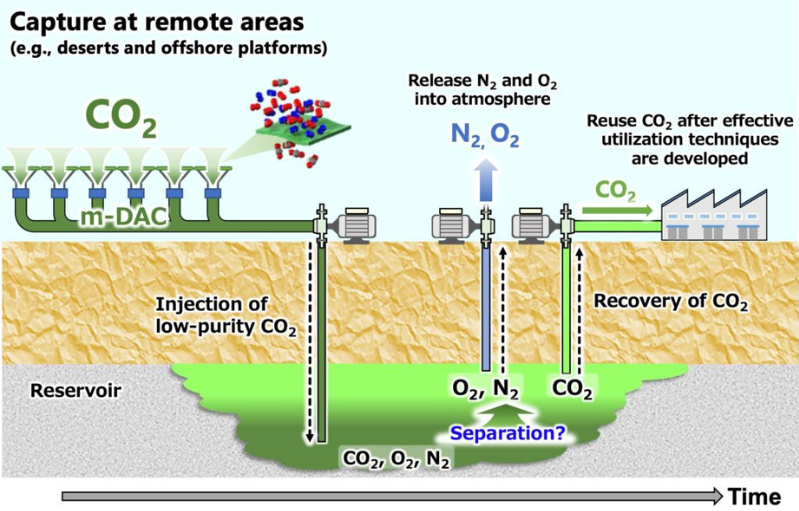
    Schematic image of low-purity CO2 storage with membrane-based Direct Air Capture (DAC). Credit: Takeshi Tsuji

    A new research shows that geological storage of low purity carbon dioxide associated with oxygen and nitrogen of direct air capture is an environmentally and financially feasible techniques to remove carbon from the environment.

    The recurring international threat of environmental adjustment has one main cause: carbon hidden underground in the form of fossil fuels is being removed and released directly into the atmosphere in the form of carbon dioxide (CO2). One promising way to solve this problem is carbon capture and storage space: the use of technology to remove CO2 from the environment to return it to the subsurface..

    Greenhouse Gases Scientific Research and Innovation, scientists from Kyushu University and the National Institute of Advanced Industrial Science and Innovation, Japan, evaluated the geological storage space of low-purity CO2 combined with nitrogen (N2) and oxygen (O2), produced by direct air capture (DAC) using membrane-based innovation.

    At the moment, a considerable number of projects related to carbon capture are being carried out on localised sources using focused CO2 emissions, such as coal-fired nuclear power plants, and require intensive purification storage space due to hazardous substances such as nitrogen oxide and sulphur oxide. They also have expensive transport prices, as practicable geological storage sites are usually a long way from the CO2 sources. On another side, direct capture of carbon dioxide can be performed anywhere on the storage site and does not require extensive filtration because the impurities, O2 and N2, are not unsafe. As an outcome, low purity CO2 can be seized and injected directly into geological developments, at least theoretically. Acknowledging how the resulting mixture of CO2, O2, and N2 behaves when infused and stored in geological structures is necessary before underground storage of low-purity CO2 from direct air sequestration may become widely embraced.

    As the lead writer of the research, Professor Takeshi Tsuji, discusses the difficulty of capturing high purity carbon dioxide using DAC. Takeshi mentioned that he and his team performed molecular dynamic simulations as a preliminary evaluation of the storage effectiveness of CO2-N2-O2 combinations at three different temperature and stress problems, corresponding to depths of 1,000 m, 1,500 m, and 2,500 m at the Tomakomai CO2 storage site in Japan.

    Although additional studies are still required, such as investigations of the chemical reactions of O2 and N2 infused at incredible depths, the results of these simulations recommend that geological storage of CO2-N2-O2 combines created by direct air capture is both free of ecological risks and economically feasible.

    Professor Tsuji says, due to the ubiquity of ambient air, direct air capture has the potential to become a ubiquitous form of carbon capture and storage that can be implemented in many remote locations such as deserts and offshore platforms. This is very relevant both to lower transport prices and to ensure social acceptance.


    Reference: “Geological storage of CO2–N2–O2 mixtures produced by membrane-based direct air capture (DAC)” by Takeshi Tsuji, Masao Sorai, Masashige Shiga, Shigenori Fujikawa, Toyoki Kunitake, 1 June 2021, Greenhouse Gases: Science and Technology.
    DOI: 10.1002/ghg.2099