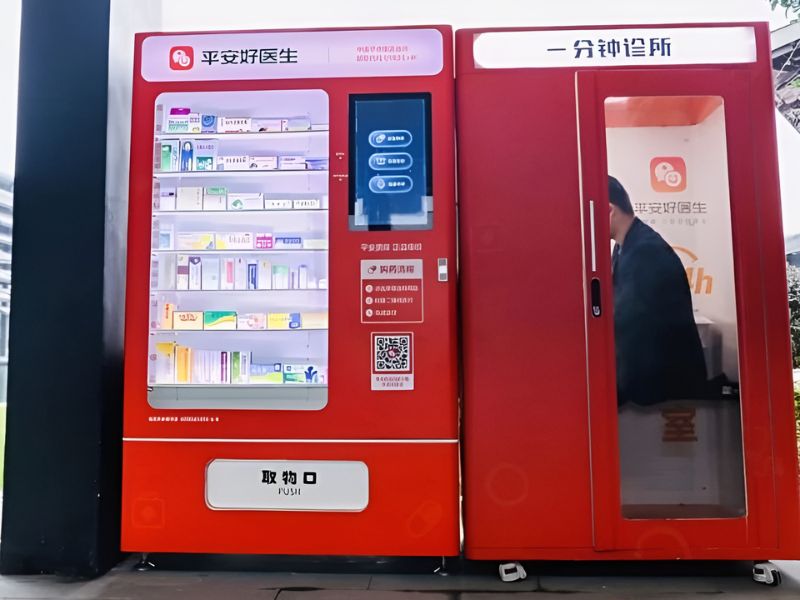

China is bringing science fiction to everyday life. In subway stations and busy public spaces, AI-powered medical booths now handle basic consultations within minutes.
There are already 2,200 booths nationwide, with around 250 in the Shanghai metro alone, seamlessly serving millions of commuters.
Automated Triage Booths for Quick Symptom Assessment
These booths act as automated triage points: users register, report symptoms via voice or text, and have vital signs measured automatically.
AI then processes this data, resolving simple cases on the spot, easing the burden on hospitals and allowing medical staff to focus on more serious patients.

According to Ping An Health, a Chinese digital health platform linked with medical services, the system matches each consultation against a database containing hundreds of millions of clinical records.
Essentially, the algorithm identifies similar past cases from roughly 300 million doctor-patient interactions, enhancing rapid decision-making.
4-Minute Diagnosis with 95% Accuracy
Reported data shows an average consultation time of 4 minutes, with nearly 95% accuracy for common, well-documented conditions.
The platform primarily targets recurring symptoms, monitoring stable chronic illnesses, and providing initial guidance—areas where large datasets improve effectiveness.
After automated triage, a remotely connected doctor reviews the case, confirming the suggested diagnosis and approving prescriptions or referrals.
This approach highlights that AI organizes and speeds up the process, while professionals retain clinical judgment and final responsibility.
Subway Booths Ease Hospital Crowding and Cut Waiting Times
With 250 booths across the subway system, thousands of patient visits are now diverted from hospitals each month, reducing waiting times in some areas by up to 70%.
Patient costs have also dropped by roughly 30%, making the model appealing to urban populations.
China recognizes the challenge of providing enough doctors for its population, making AI a strategic focus of its health policy.
The booths extend healthcare reach, redistribute human effort, and scale the system nationally.
AI Supports Doctors by Managing Routine Tasks
Rather than replacing doctors, AI handles high-volume, routine tasks, freeing humans to concentrate on clinical judgment and patient interaction.
This approach reshapes global perspectives on healthcare, pressures regional systems, and reframes discussions about the future of medicine.
Read the original article on: en.clickpetroleoegas
Read more:Japan has Created Technology that lets your Body Control Humanoid Robots