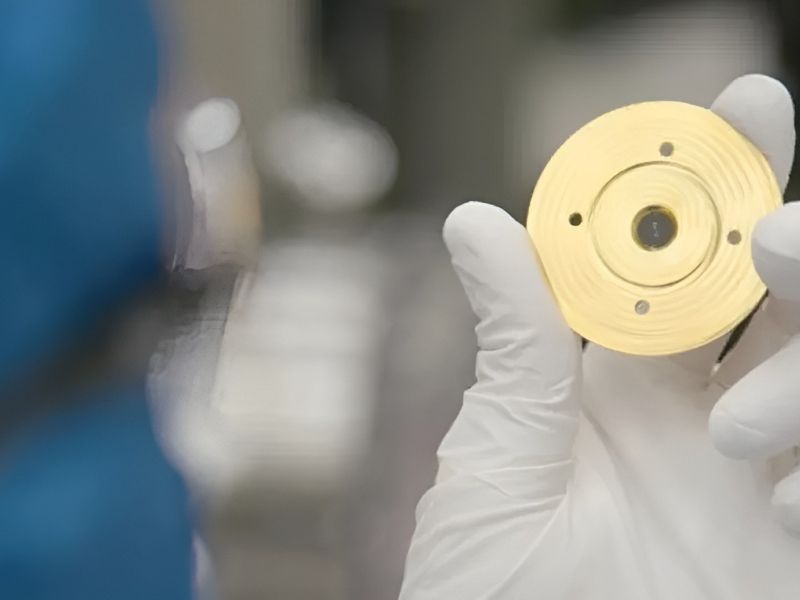
“This technology moves X-rays from black-and-white to color, making it easier to spot materials and defects,” said Noelle Collins.
Project leader Edward Jiménez said the new Color Hyperspectral X-ray Imaging with Multimetal Targets (CHXI MMT) technology was developed with Noelle Collins and Courtney Sovinec.
Sandia Team Tests Technology on Multiple Metal Samples
The Sandia National Laboratories team in the U.S. demonstrated the technique using small, standardized samples of metals such as tungsten, molybdenum, gold, samarium, and silver.
“Each metal emits a unique color of X-ray light,” Sovinec said. “Using an energy detector, we count photons to gauge density and identify a sample’s elements.”
According to Jiménez, the result is color X-ray images offering “revolutionary clarity and a deeper understanding of an object’s composition.”
Breakthrough Broadens X-ray Applications
Researchers say the breakthrough is a major leap in X-ray technology, with potential uses in airport security and non-destructive testing.
The team also envisions advancements in medical diagnostics, particularly in the early detection of diseases like cancer.
“We hope CHXI MMT will enhance our ability to detect diseases such as cancer and enable more precise analysis of tumor cells,” said Edward Jiménez.
He added that staining sharpens the beam and image resolution, improving detection of microcalcifications linked to breast cancer.
Over 130 years after Wilhelm Röntgen’s X-ray discovery, U.S. scientists have created a more precise imaging method using metals and their unique light colors.
We can only imagine what this new color must be like to behold with the naked – albeit laser-blasted – eye DALL-E
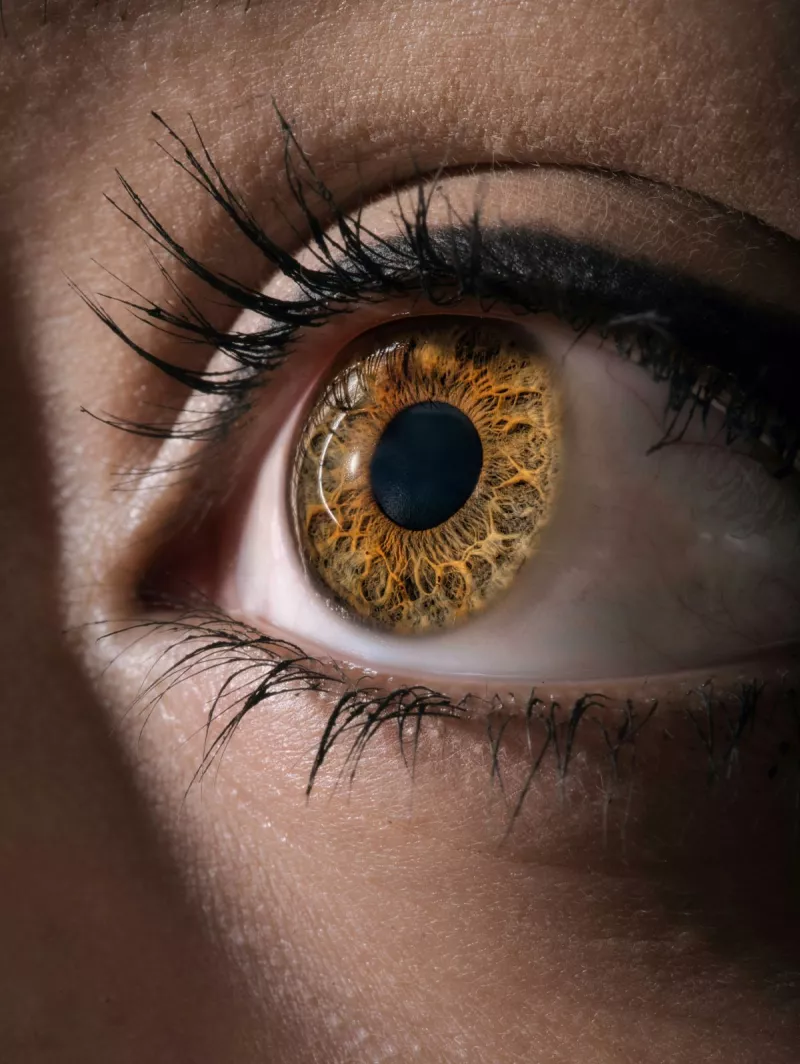
Just when we think we’ve experienced the full spectrum of visible color, scientists have reportedly discovered a way to reveal a brand-new hue to the human eye — a color that’s never before been perceived. They’ve named it Olo.
Before diving into the details, it’s worth noting how participants in the study described this color: an intensely vivid, almost surreal blend of blue and green — a tone so striking that it left viewers stunned.
While that description offers some sense of it, it likely doesn’t convey the awe of encountering a completely unfamiliar color — one that lies outside the usual boundaries of human color perception. Researchers even shared an approximation of the shade with The Guardian, though it’s still just a visual placeholder for something profoundly novel.
While Olo can’t be accurately reproduced on a monitor, this is sort of what it could look like
How Does One “See” Olo?
To witness this new color, participants had a carefully calibrated laser beam directed into their eye. But understanding this breakthrough requires a brief refresher on how human vision works.
Our eyes use two primary types of photoreceptor cells: rods and cones. Rods assist with night vision, while cones handle color. There are three cone types, each sensitive to specific light wavelengths — long (L), medium (M), and short (S), corresponding roughly to red, green, and blue light.
The Oz technique maps M cones in the eye, tracks micro eye movement, and then targets a laser to stimulate those cones – giving the perception of the color Olo Venti Views on Unsplash
Typically, we see colors based on how these cones respond to combined light wavelengths. The M cones, which respond to green light, don’t have a natural monochromatic light source that activates them alone without also affecting the L or S cones. This overlap has, until now, limited our ability to isolate M cone activity and reveal unique color experiences.
Researchers from the University of California, Berkeley and the University of Washington collaborated with ophthalmologists to overcome this hurdle. Their technique, dubbed Oz, uses adaptive optics optical coherence tomography to scan and map the retina at a cellular level, precisely locating the M cones.
As participants fixate on a visual target, the system uses infrared light to track microscopic eye movements in real time. With this data, it calculates how much stimulation each cone requires to produce the intended effect.
Then, using a method called adaptive optics scanning light ophthalmoscopy (AOSLO), the system delivers ultra-precise, brief flashes of laser light directly to thousands of individual M cones.
Olo: A Color Born from Innovation
By selectively targeting these cones, the researchers were able to bypass natural vision limitations and create a new perceptual experience — a color never encountered in the natural world.
“This isn’t just a variation of a known color — it’s something entirely different,” said vision scientist Austin Roorda, the lead author of the study, published in Science Advances. “Any color we’ve seen before pales in comparison to the experience of seeing Olo.”
A Divisive Discovery in the Scientific Community
Not all experts agree on the implications. Kimberly Jameson, a color vision researcher at the University of California, Irvine, praised the work as a “remarkable milestone.” However, John Barbur from St George’s, University of London, expressed skepticism, asserting that Olo is not a genuinely new color and questioning the practical value of the study.
Regardless of the debate, this marks the first successful attempt to manipulate individual cone responses across a wide retinal area to shift a viewer’s perceptual experience.
Looking ahead, the research team aims to explore whether similar techniques could help address color blindness or even enhance normal vision in new ways.
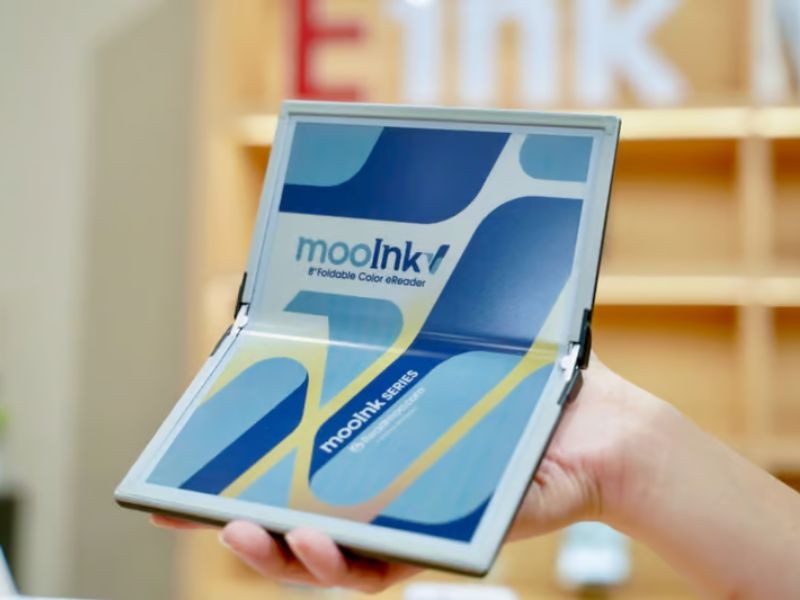
“Continuously looking for lighter and more colorful reading solutions for readers has always been the team’s goal,” said Readmoo CEO, Pang Wenzhen. “We are very happy to cooperate with E Ink to launch mooInk V” Readmoo
Storing an entire library of books on a single device is a fantastic way to quench your thirst for knowledge or entertainment without cluttering your home with shelves. However, traditional e-readers haven’t quite replicated the tactile feel of a real book—until now. E Ink has teamed up with Readmoo to unveil the first-ever foldable color e-book reader.
The Age of Foldable Devices
Foldable devices are all the rage these days, from smartphones to tablets and even items like helmets and bikes. The idea behind these gadgets is simple: create something large that can be folded down into a compact form for easy portability. The mooInk V, developed by Readmoo and E Ink, certainly fits the bill, but it goes a step further by offering an experience that’s closer to holding an actual book compared to other e-readers.
This “world’s first foldable color e-book reader” boasts a Gallery 3 color ePaper display that bends over a hinge, providing 8 inches of screen space. Users can enjoy digital content like comics and picture books in this tablet-like format, though it’s unclear if split-screen functionality is supported.
Readmoo CEO Pang Wenzhen, E Ink Technology Chairman Li Zhenghao, and E Ink Technology Associate Liu Dajing present the mooInk V at Touch Taiwan 2025 Readmoo
Thanks to this advanced E Ink technology, the device promises faster response times and a color resolution of 300 pixels per inch, resulting in more vibrant colors, richer saturation, and improved contrast. However, the device doesn’t appear to have a built-in front light, meaning you’ll need some ambient lighting to read comfortably.
When folded up between reading sessions, the device features a gap at the hinge—similar to early foldable smartphones—and a visible crease. E Ink’s assistant manager, Liu Dajing, explained that this is due to the ePaper layer being about four times thicker than an OLED screen, which makes foldable electronic paper much harder to develop.
Panel Optimization and Durability
The team optimized the Gallery 3 panel used in the mooInk V for stacking and subjected it to 200,000 bend tests to ensure its durability.
The mooInk V folds for between-reading transport in a pocket or bag Readmoo
We’re thrilled that the first foldable color e-book reader is nearing release, said Zhenghao Li from E Ink. E Ink has made great strides in advancing ePaper technology, transitioning from black and white to color, and increasing panel sizes to meet various needs and applications.
Foldable technology is an area where we’ve invested heavily in R&D. Now that we’ve successfully developed the first foldable e-book reader, we’re excited to offer consumers a new reading experience that’s light, portable, colorful, comfortable, and natural.
Readmoo showcased the mooInk V at Touch Taiwan 2025 this week, reporting that the device is production-ready and weighs around 255 grams (~9 ounces). However, details about pricing and availability remain undisclosed by both companies.
The Bigme B13 is vying for the title of world’s first 13.3-inc color ePaper monitor Bigme
The race to release the first 13.3-inch color ePaper monitor is heating up. Dasung is preparing a campaign on Indiegogo, but it looks like Bigme is pulling ahead, already accepting pre-orders for its B13 model.
The Challenge of Mobile Productivity and Limited Screen Space
While laptops are excellent tools for productivity on the go, their limited screen space can be a downside. Carrying around a large monitor just isn’t practical, so a variety of secondary display solutions — including slim, portable screens and multi-display setups — have emerged to address the issue.
For those wanting to spare their eyes from the strain of multiple LCD screens, ePaper displays present a more eye-friendly alternative. E Ink monitors already exist, of course, but color 13.3-inch ePaper displays that can simply plug into a port for more screen space? That’s still new territory — but not for long. As mentioned, Dasung is developing the Paperlike 13K, currently in a pre-launch phase.
The Bigme B13’s color ePaper display resolution of 3,200 x 2,400 pixels, with grayscale coming in at 300 ppi and color at 150 ppi Bigme
Bigme seems to be closer to market readiness with its B13 ePaper monitor, already available for pre-order with expected shipping by the end of May.O Bigme B13 oferece uma resolução de tela de 3.200 x 2.400 pixels, com densidade de 150 pixels por polegada (ppi) em cores. A própria Bigme implementou uma tecnologia de atualização a 30 Hz para reduzir o efeito ghosting e garantir movimentos mais suaves — em comparação, espera-se que o Paperlike 13K da Dasung conte com taxa de atualização de 37 Hz.
Wide Connectivity and Energy Efficiency
A Bigme equipou o B13 com duas portas USB-C e uma porta mini-HDMI, permitindo conexão direta e sem necessidade de drivers com computadores Windows ou macOS, além de tablets e smartphones Android ou iOS. Como o ePaper consome pouca energia, esses monitores portáteis exigem menos da bateria do seu laptop em comparação com os equivalentes em LCD. O dispositivo também oferece suporte a espelhamento sem fio via DLNA, AirPlay ou Miracast.
Bigme incluiu alto-falantes duplos na carcaça de metal e mencionou uma placa traseira ajustável com braços magnéticos integrados para acoplar o monitor a laptops de 13 a 17 polegadas — embora ainda não esteja claro se esse acessório acompanha o produto ou é vendido separadamente.
Each unit weighs 660 g (about 23 oz), and the B13 is currently available for pre-order at US$499, down from the suggested retail price of $679. Shipping is scheduled to begin at the end of May.
Bigme B13 pre-sale will start on April 14World’s First 13.3″ Color ePaper Monitor!
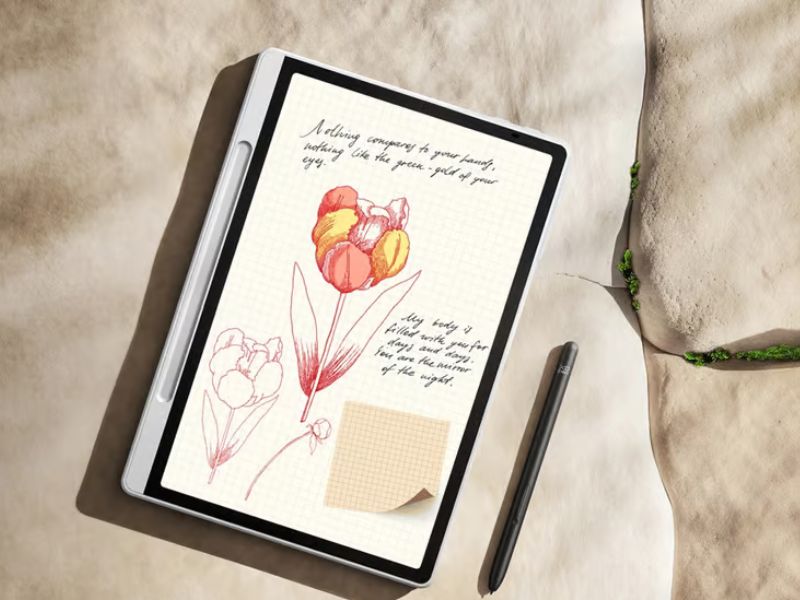
The Magic Note Pad introduces an entirely new digital note-taking experience for users in the mobile-first era. More than just a digital notepad, it’s a powerful productivity tool designed to enhance thinking, streamline note-taking, and boost efficiency in both work and creative expression” XPPen
Reading and writing on standard tablets can strain your eyes, but E Ink technology offers a solution. However, color quality can often be disappointing, and the refresh rate is often not very smooth. XPPen has introduced a new ePaper note device with three color options and an improved refresh rate.
Unlike E Ink, the Magic Note Pad utilizes a modified 10.9-inch LCD panel, similar to TCL’s NXTPAPER technology. XPPen refers to this display as their 3-in-1 X-Paper.
This display provides three different modes: Paper Mode for a monochrome experience that’s easy on the eyes, Light Color Mode for a subtle color effect similar to E Ink, and Nature Color Mode for vibrant, full-color visuals like those found on regular tablets.
With more than 16 million colors onscreen and a refresh rate of 90 Hz, the Magic Note Pad should offer smooth movie action XPPen
Enhanced Display Features for Clarity and Comfort
The display’s resolution reaches 1,920 x 1,200 pixels, and the nano-etched matte surface helps to reduce glare and reflections. Backlighting is available in all modes, with automatic adjustments up to 400 nits.
Where E Ink devices often struggle with low refresh rates, XPPen’s 90-Hz panel offers “fluid writing and minimal latency,” making it more suitable for video viewing as well.Additionally, TÜV SÜD has certified the device for low blue light, and it meets paper-like display standards, making it gentler on the eyes during extended note-taking.
The digital notepad comes with the XP Pro Pencil 2 stylus, which provides 16,384 pressure levels for enhanced accuracy and responsiveness (most styluses on the market top out at 4,096). The stylus also features a soft nib and an activation button to instantly wake the Pad.You can magnetically attach it to the e-note’s frame for convenient storage.
The Magic Note Pad’s 3-in-1 X-Paper technology offers a monochrome digital paper experience, along with a low-saturation color mode and a full-on vivid color setting XPPen
Smart Note-Taking Features and App
The Pad operates on Android 14 and includes a custom smart note-taking app, co-developed with Jnotes, ideal for “capturing sudden inspiration, taking lecture notes, or sketching ideas.” Key features of the app include five pen effects, handwriting-to-text conversion, three-finger swipe for screenshots, multi-window support, and cloud backup.
The Pad runs on an octa-core processor, with 6 GB of RAM and 128 GB of storage. It easily connects to the internet through dual-band 802.11ac Wi-Fi.It also features a 13-megapixel front-facing camera, dual microphones for video chats, and two speakers for audio output. The 8,000-mAh battery is expected to last up to a week on a single charge and supports fast charging.
The Magic Note Pad is available for $439.99, and the video below offers more information.
Meet XPPen Magic Note Pad: The world’s first 3-in-1 color Note Pad
The authentic color rendition of Voyager photos reveals a striking similarity in hue between the ice giant planets. Photo credit: Patrick Irwin/University of Oxford/NASA
Uranus and Neptune, the giant ice planets within our solar system, have long been recognized for their similarities. One noticeable distinction, their coloration, has captivated scientific curiosity, with Uranus appearing aquamarine and Neptune displaying a deeper cobalt hue. However, recent revelations indicate that this visual contrast results from image processing, challenging the initial perceptions.
Image Processing Unveiled
The Voyager2 spacecraft, the sole explorer to journey past both planets, captured single-color images, later transformed through processing. Cameras, unlike human eyes, employ filters that emphasize specific features.
Scientists discerned that the processed images deviated from the planets’ true colors, evident in Hubble images, albeit also manipulated. The quest for genuine colors prompted researchers to reprocess Voyager images to align them with human perception.
True Colors Revealed
Observations from the Hubble Space Telescope and the Multi Unit Spectroscopic Explorer (MUSE) on the European Southern Observatory’s Very Large Telescope played a pivotal role in uncovering the authentic hues. These instruments analyzed the planetary light spectrum, aiding in refining the Voyager images to match human vision better.
Neptune’s Subtle Blue and Uranus’s Seasonal Palette
Neptune’s slightly bluer tone stems from a thinner haze, while Uranus exhibits intriguing color variations during its unique seasons. Uranus orbits on its side due to a significant collision, transitioning from one pole facing the Sun to the equatorial regions and then the other pole.
Notably, the planet’s greenish tint at solstices results from reduced methane abundance in the polar regions and an increased presence of brightly scattering methane ice particles.
Decades of Unraveling Mysteries
Decades of meticulous observations have facilitated understanding of Uranus’s seasonal color shifts during its 84-year orbit around the Sun. The study marks a breakthrough, offering a quantitative model to explain Uranus’s color changes, shedding light on the impact of methane ice particles and methane distribution.
Conclusion: Resolving Decades-Long Enigmas
Lead author Professor Patrick Irwin from the University of Oxford emphasizes that this study, combining a quantitative model with imaging data, provides a definitive explanation for the color variations of Uranus and Neptune.
Dr. Heidi Hammel, an expert not involved in the study, acknowledges the comprehensive findings as a resolution to longstanding misconceptions about the planets’ colors.
We use cookies on our website to give you the most relevant experience by remembering your preferences and repeat visits. By clicking “Accept All”, you consent to the use of ALL the cookies. However, you may visit "Cookie Settings" to provide a controlled consent.
This website uses cookies to improve your experience while you navigate through the website. Out of these, the cookies that are categorized as necessary are stored on your browser as they are essential for the working of basic functionalities of the website. We also use third-party cookies that help us analyze and understand how you use this website. These cookies will be stored in your browser only with your consent. You also have the option to opt-out of these cookies. But opting out of some of these cookies may affect your browsing experience.
Necessary cookies are absolutely essential for the website to function properly. These cookies ensure basic functionalities and security features of the website, anonymously.
Cookie
Duration
Description
cookielawinfo-checkbox-analytics
11 months
This cookie is set by GDPR Cookie Consent plugin. The cookie is used to store the user consent for the cookies in the category "Analytics".
cookielawinfo-checkbox-functional
11 months
The cookie is set by GDPR cookie consent to record the user consent for the cookies in the category "Functional".
cookielawinfo-checkbox-necessary
11 months
This cookie is set by GDPR Cookie Consent plugin. The cookies is used to store the user consent for the cookies in the category "Necessary".
cookielawinfo-checkbox-others
11 months
This cookie is set by GDPR Cookie Consent plugin. The cookie is used to store the user consent for the cookies in the category "Other.
cookielawinfo-checkbox-performance
11 months
This cookie is set by GDPR Cookie Consent plugin. The cookie is used to store the user consent for the cookies in the category "Performance".
viewed_cookie_policy
11 months
The cookie is set by the GDPR Cookie Consent plugin and is used to store whether or not user has consented to the use of cookies. It does not store any personal data.
Functional cookies help to perform certain functionalities like sharing the content of the website on social media platforms, collect feedbacks, and other third-party features.
Performance cookies are used to understand and analyze the key performance indexes of the website which helps in delivering a better user experience for the visitors.
Analytical cookies are used to understand how visitors interact with the website. These cookies help provide information on metrics the number of visitors, bounce rate, traffic source, etc.
Advertisement cookies are used to provide visitors with relevant ads and marketing campaigns. These cookies track visitors across websites and collect information to provide customized ads.