Tag: Dark Matter

  • Innovative Quantum Detection Technology is Reshaping Dark Matter Research

    Innovative Quantum Detection Technology is Reshaping Dark Matter Research

    In our quest to comprehend the universe, our knowledge represents just a tiny fraction of the full reality.
    A MINER detector that is used to search for low-energy neutrinos at the Texas A&M TRIGA reactor. This sapphire detector can be used for both dark matter searches and for detection of reactor neutrinos that can not only provide evidence of new physics but also enable nuclear non-proliferation. Image Credits: Texas A&M University

    In our quest to comprehend the universe, our knowledge represents just a tiny fraction of the full reality.

    Dark matter and dark energy constitute roughly 95% of the universe, leaving a mere 5% as “ordinary matter” that we can directly observe. Dr. Rupak Mahapatra, an experimental particle physicist at Texas A&M University, develops cutting-edge semiconductor detectors equipped with cryogenic quantum sensors. His work supports experiments around the globe, pushing the limits of our knowledge in the quest to understand this profound cosmic mystery.

    Mahapatra compares our grasp of the universe to an old parable: “It’s like trying to describe an elephant by only touching its tail. We sense something immense and intricate, yet we are only experiencing a tiny fragment of it.”

    What Exactly are Dark Matter and Dark Energy?

    Dark matter and dark energy are named for the mystery surrounding their composition. Most of the mass in galaxies and clusters comes from dark matter, which helps shape the vast cosmic structures we observe. Dark energy, in contrast, is the force responsible for the accelerating expansion of the universe. In simple terms, dark matter binds matter together, while dark energy drives it apart.

    Although both are abundant, neither emits, absorbs, or reflects light, which makes them extremely difficult to detect directly. Nevertheless, their gravitational influence shapes galaxies and large-scale cosmic structures. Dark energy makes up about 68% of the universe’s energy, surpassing dark matter’s 27%.

    Dr. Rupak Mahapatra, an experimental particle physicist, holds a TESSERACT detector. The highly sensitive devices, which are fabricated at Texas A&M University, are deepening the search for dark matter and have potential applications in quantum computing. Image Credits: Texas A&M University

    Catching Murmurs in The Midst of Turmoil

    At Texas A&M, Mahapatra’s team is developing extremely sensitive detectors designed to capture signals from particles that rarely interact with normal matter—signals that could help uncover the mysteries of dark matter.

    “The difficulty is that dark matter interacts so weakly that we need detectors capable of observing events that might occur only once a year, or even once every ten years,” Mahapatra explained.

    The group has played a role in a leading global dark matter experiment using a detector called TESSERACT. “It’s all about innovation,” he said. “We’re finding ways to amplify signals that were previously lost in noise.”

    Texas A&M is among a select number of institutions involved in the TESSERACT project.

    Redefining What’s Possible

    Mahapatra’s research continues a decades-long effort to extend the boundaries of particle detection, highlighted by his 25-year involvement in the SuperCDMS experiment. In a groundbreaking 2014 Physical Review Letters paper, he and his collaborators presented voltage-assisted calorimetric ionization detection within SuperCDMS—a major advancement that enabled the study of low-mass WIMPs, a prominent dark matter candidate. This method significantly enhanced sensitivity to particles that had previously been undetectable.

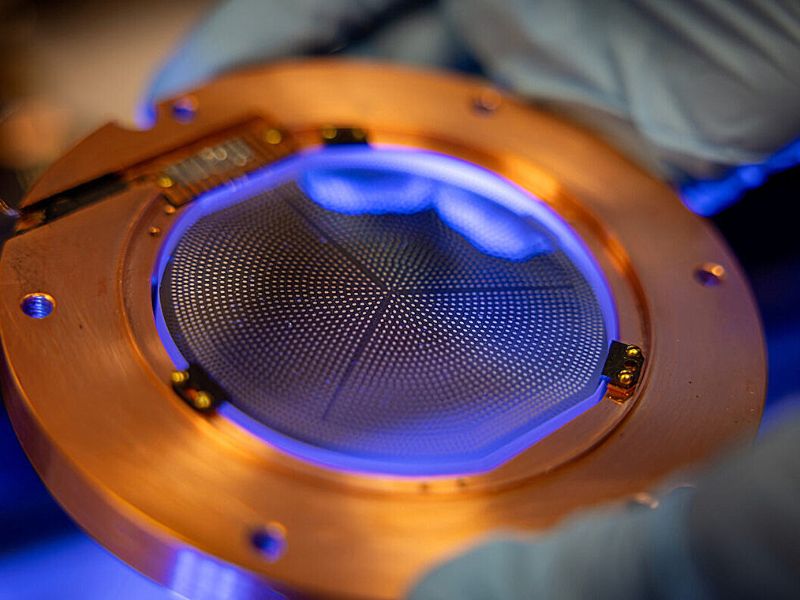
    A wafer with many different designs of chips for the TESSERACT project. Image Credits: Texas A&M University

    In 2022, Mahapatra co-authored a study examining complementary strategies for detecting WIMPs, including direct detection, indirect detection, and collider searches. The research highlights the worldwide, multi-faceted effort to unravel the mystery of dark matter.

    “No single experiment can provide all the answers,” Mahapatra emphasizes. “We need different approaches working together to build a complete understanding.”

    Studying dark matter goes beyond academic curiosity—it is essential for uncovering the fundamental laws of nature. “Detecting dark matter would mark a new era in physics,” Mahapatra explained. “This quest requires extremely sensitive technologies and could pave the way for innovations we can’t yet imagine.”


    Read the original article on: Phys.Org

    Read more: Ultrathin Polymer Improves the Longevity of Anode-Free Lithium Batteries

  • Using Gravitational Waves to Hunt for Dark Matter

    Using Gravitational Waves to Hunt for Dark Matter

    Credit: Unsplash.

    A global team of cosmologists has discovered through computer simulations that observing gravitational waves from merging black holes can reveal the real nature of dark matter. Dr. Alex Jenkins of University College London will co-author their discovery today at the 2023 National Astronomy Meeting.

    The team studied the production of gravitational wave signals in simulated universes with various types of dark matter through computer simulations. Their findings show that counting the number of black hole merger events found by the next generation of observatories can tell us whether or not dark matter interacts with other particles. This gives us new insights into what it is made of.

    The understanding of cosmologists

    Cosmologists generally believe that our understanding of the cosmos lacks dark matter. Despite solid evidence that it accounts for 85% of all matter in the universe, there is no current consensus on the underlying nature of dark matter. This covers whether dark matter particles can collide with others, such as atoms or neutrinos, or can pass directly through them unaffected.

    To verify this, you can look at how galaxies form into haloes, dense clouds of dark matter. The structure of the dark matter disperses when it collides with the neutrinos, resulting in fewer galaxies forming. The problem with this method is that all the galaxies that disappear are tiny and very far away from us. Even with the best telescopes available, it is difficult to determine whether they are there.

    Exploring the Structure of the Universe Through Gravitational Waves: Future Perspectives

    The authors of this study suggest using gravitational waves to indirectly measure the abundance of vanishing galaxies rather than seeing them directly. Their simulation shows far fewer black hole mergers in the distant universe in models where dark matter collides with other particles. Although this effect is too small to be observed by the gravitational-wave experiments currently being performed, it will be an important target for the next generation of observatories that are being planned.

    The authors hope their methods will stimulate new ideas for using gravitational-wave data to explore the universe’s large-scale structure and shed new light on the mysterious nature of dark matter.

    Dr. Sownak Bose of Durham University, a co-author, said: Our understanding of the universe still faces many mysteries, including dark matter. This indicates that it is crucial to continue discovering new ways to study dark matter models, combining new and existing probes to test model predictions as much as possible. The study of gravitational wave astronomy allows for a better understanding of dark matter and the formation and evolution of galaxies in general.

    Co-authors’ Statements on Gravitational Waves and the Evolution of the Universe

    The other co-author, Markus Mosbech of the University of Sydney, added: As they pass unimpeded through the universe, gravitational waves offer us a unique opportunity to observe the early universe, and next-generation interferometers will be sensitive enough to detect individual events over enormous distances.

    Professor Mairi Sakellariadou of King’s College London, another member of the research team, said: The third generation gravitational wave data will provide a new and independent way to test the current model describing the evolution of our universe and shed light on the still unknown nature of dark matter.


    Read the original article on PHYS.

    Read more: Get Inspired by this Amazing Story. Her Pure Maths Journey.

  • What Exactly is the (dark) Matter with Euclid?

    What Exactly is the (dark) Matter with Euclid?

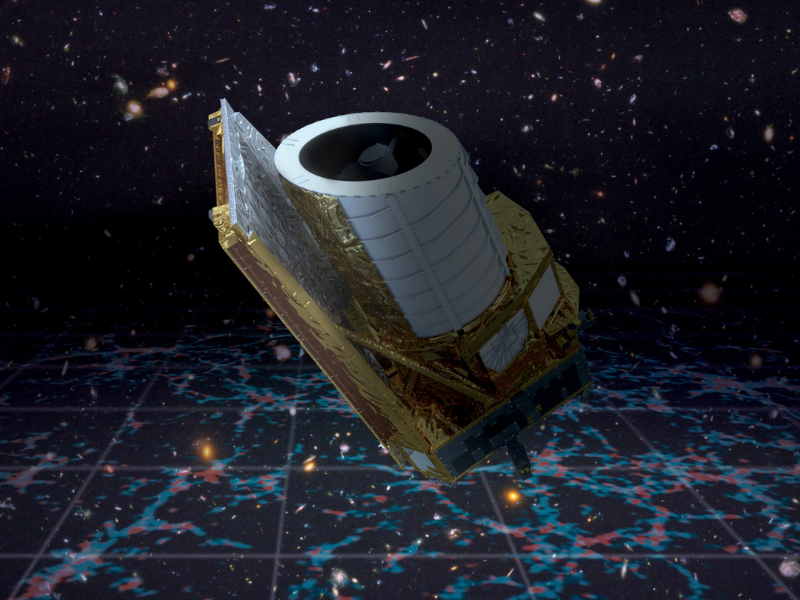
    Artist impression of the Euclid mission in space. The spacecraft is white and gold and consists of three main elements: a flat sunshield, a large cylinder where the light from space will enter, and a ‘boxy’ bottom containing the instruments. The spacecraft is shown half in the shadow, because the sunshield will always be faced in the direction of the Sun and thus protecting the telescope from the light of the Sun. The background is a realistic representation of a deep field view of the night sky, with many galaxies visible. On the bottom half of the image, an artistic representation of the cosmic web is overlayed over the galaxies. The cosmic web is the scaffolding of the cosmos on which galaxies are built, consisting primarily of dark matter and laced with gas. The cosmic web is here represented with a grid and a two-dimensional representation of a cosmological simulation. Credit: ESA/Euclid/Euclid Consortium/NASA. Background galaxies: NASA, ESA, and S. Beckwith (STScI) and the HUDF Team, CC BY-SA 3.0 IGO

    The Main Control Room is buzzing with preparations for the Launch and Early Orbit Phase (LEOP) and spacecraft commissioning, about halfway through the Euclid simulations campaign. These important moments represent the mission’s reawakening following its arduous launch and the start of its trek to solve the mysteries of the universe.

    As the Euclid thrusters fail, there is stress

    Euclid’s simulations officer, Joe Bush, methodically planned for every possible failure scenario. He left no stone untouched, from spacecraft problems to human elements like team cohesion and morale. On March 23, however, his worst worries seemed to come true when not one but two sets of thrusters on the Euclid spacecraft simulator failed.

    “One of Euclid’s attitude thrusters was rendered inoperable due to a suspected mechanical failure, forcing us to rely on the backup set.” But then the backup orbit control thrusters began to behave erratically, with one performing 10% over capacity and the other 10% below, Tiago Loureiro, Euclid Flight Operations Director, recounts.

    Structural and thermal model of the Euclid satellite. Credit: ESA–S. Corvaja
    Structural and thermal model of the Euclid satellite. Credit: ESA–S. Corvaja

    The team faced a huge undertaking with no set protocol for such a case. They investigated a potential hybrid system incorporating both sets of thrusters, seeking advice from ESA’s Technical Heart (ESTEC) and industry partners. The experience demonstrated the need to collaborate among experts and specialists to overcome unexpected obstacles.

    “The double-thruster nightmare scenario demonstrated how successful mission operations require a diverse range of experts and specialists capable of supporting and brainstorming with our Control Teams for the plethora of potential issues that can arise,” Joe adds.

    Building a Resilient Team: A Life Lesson

    Teamwork is prominent throughout the simulated campaign, highlighting that no task can be completed alone. As Tiago points out, knowing who to turn to for expertise, counsel, and support during critical decision-making times is essential for mission operations and life.

    While such losses are unlikely in practice, the teams’ capacity to remain calm and determined in the face of adversity and recognize which resources to rely on will be critical to Euclid’s mission success.

    Precise Engineering for Cosmic Understanding

    Euclid’s purpose is to catch the weak light that has traveled through the cosmos for 10 billion years, giving insight into the fundamental question: What is the universe made of? Dark energy, which accounts for nearly 70% of the universe, and dark matter, which accounts for roughly 25%, remain enigmas. The stuff we know and can see accounts for only 5% of the total.

    To fulfill its goals, Euclid’s engineers at ESA’s mission control will take great care to protect the telescope from direct sunlight during and after launch. The spacecraft’s calibration and pointing must be precise to achieve excellent visibility.

    The Bullet Cluster is a much-studied pair of galaxy clusters, which have collided head on. One has passed through the other, like a bullet travelling through an apple. In the Bullet Cluster, this is happening across our line of sight, so we can clearly see the two clusters. The optical image from the Magellan and the Hubble Space Telescope shows galaxies in orange and white in the background. Hot gas, which contains the bulk of the normal matter in the cluster, is shown by the Chandra X-ray image, which showst the hot intracluster gas (pink). Gravitational lensing, the distortion of background images by mass in the cluster, reveals the mass of the cluster is dominated by dark matter (blue), an exotic form of matter abundant in the universe, with very different properties compared to normal matter. This was the first clear separation seen between normal and dark matter. Credit: X-ray: NASA/CXC/CfA/M.Markevitch, Optical and lensing map: NASA/STScI, Magellan/U.Arizona/D.Clowe, Lensing map: ESO WFI
    The Bullet Cluster is a much-studied pair of galaxy clusters, which have collided head on. One has passed through the other, like a bullet travelling through an apple. In the Bullet Cluster, this is happening across our line of sight, so we can clearly see the two clusters. The optical image from the Magellan and the Hubble Space Telescope shows galaxies in orange and white in the background. Hot gas, which contains the bulk of the normal matter in the cluster, is shown by the Chandra X-ray image, which showst the hot intracluster gas (pink). Gravitational lensing, the distortion of background images by mass in the cluster, reveals the mass of the cluster is dominated by dark matter (blue), an exotic form of matter abundant in the universe, with very different properties compared to normal matter. This was the first clear separation seen between normal and dark matter. Credit: X-ray: NASA/CXC/CfA/M.Markevitch, Optical and lensing map: NASA/STScI, Magellan/U.Arizona/D.Clowe, Lensing map: ESO WFI

    From the Earth to the Lagrange Point

    Euclid is set to launch from Cape Canaveral, Florida, aboard a SpaceX Falcon 9 rocket, aiming for “Lagrange Point 2.” This strategic location balances the Sun’s and Earth’s gravitational pulls, resulting in a stable orbit where things can revolve with minimal effort.

    The ongoing simulations at ESA’s ESOC mission control center bring together local and science teams from ESA’s ESTEC technical heart, SpaceX, ground stations, and Thales Industry to practice every step of the journey.

    The hardships and victories experienced during simulations feed the teams’ determination, reinforcing their resolve to reveal the universe’s secrets as the Euclid mission prepares to embark on its cosmic voyage.


    Read the original article on PHYS.

    Read more: AI Framework Improves Communication Analysis in Team Training.

  • “Boson Clouds” Could Explain Dark Matter

    “Boson Clouds” Could Explain Dark Matter

    Credit:  Brian Koberlein

    The nature of dark matter stills astonishes astronomers. As the search for dark matter particles keeps on turning up nothing, it is tempting to throw away the dark matter model altogether, but indirect evidence for the stuff remains to be strong. So what is it? One team has an idea, and they have released the results of their very first search.

    The conditions of dark matter imply that it cannot be regular matter. Regular matter (atoms, molecules, and so forth) easily absorbs and emits light. Even if dark matter were clouds of molecules so frigid, they emitted practically no light, these clouds would still show up by the light they soak up. They would resemble dark nebula typically seen near the galactic plane.

    There are not enough of them to account for the effects of dark matter we observe. We have likewise eliminated neutrinos. They do not interact strongly with light. However, neutrinos are a form of “hot” dark matter because neutrinos move at almost the speed of light. We know that the majority of dark matter should be sluggish and consequently “cold.” If dark matter is out there, it has to be something else.

    Dark matter and elementary particles

    In their most recent work, the authors argue that dark matter could be constructed from particles referred to as scalar bosons. All identified matter can be put in 2 huge categories known as fermions and bosons. A particle’s category depends on a quantum property referred to as spin. Fermions such as electrons and quarks have fractional spin such as 1/2 or 3/2. Bosons such as photons have an integer spin such as 1 or 0. Any kind of particle with a spin of 0 is a scalar boson.

    Quarks and leptons are fermions, while force carriers are bosons. Credit: Fermilab

    While it appears like a trivial difference, both types of particles behave very differently when united in large groups. Fermions can never occupy the exact same quantum state, so when you try to press them with each other, they push back. This is why white dwarfs and neutron stars exist.

    Gravity attempts to push electrons or neutrons together, but the Fermi pressure is so strong that it can withstand gravity (up to a point). On the other hand, Bosons are completely pleased occupying the same state. So if you supercool a lot of bosons (such as helium-4), they can settle right into an odd quantum object called a Bose-Einstein condensate.

    The only recognized scalar boson is the Higgs boson. The Higgs cannot be dark matter considering its known properties; however, some theories suggest other scalar bosons. These would certainly not interact strongly with light, only with gravity. Since light cannot substantially heat them up, in time, these scalar bosons would certainly cool and collapse into big clouds. So probably dark matter is constructed from huge diffuse clouds of scalar bosons.

    How would researchers confirm this idea?

    Illustration of a quark core in a neutron star. Credit: Jyrki Hokkanen, CSC– IT Center for Science

    It appears that considering that scalar bosons interact gravitationally, they also interact with gravitational waves. Depending on their mass, scalar bosons may also decay by emitting gravitons. Therefore, scalar bosons can create lasting gravitational waves with a similar frequency. It is the gravitational equivalent of a slight hum.

    The team observed the gravitational-wave data from LIGO and Virgo. They tried to find evidence of a gravitational hum in the 20– 600 Hz range and found nothing. The authors conclude that there are no young scalar boson clouds in our galaxy based on their work. There are additionally no old and cold scalar boson clouds within 3,000 light-years of Earth.

    This research study does not entirely eliminate scalar bosons, but it strongly limits the idea. Furthermore, now that appears to be the story of dark matter. In our search to find what it is, we continue to learn what it is not.


    Read the original article on Scitech Daily.

    Related “First Detection of Exotic ‘X’ Particles in Quark-Gluon Plasma”