Tag: Dinosaurs

  • Octopuses Have a Hidden Sex Chromosome That Predates Dinosaurs

    Octopuses Have a Hidden Sex Chromosome That Predates Dinosaurs

    Credit: Pixabay

    University of Oregon researchers have discovered a sex chromosome in the California two-spot octopus that likely dates back 480 million years—long before octopuses and nautiluses diverged. This makes it one of the oldest known animal sex chromosomes.

    The finding confirms that octopuses and other cephalopods, including squid and nautiluses, use chromosomes to determine sex, solving a long-standing biological mystery.

    Unlocking the Secrets of Cephalopod Sex Determination

    “Cephalopods are already fascinating creatures, and we’re still uncovering so much about them—especially in neuroscience,” said Gabby Coffing, a UO doctoral student in biologist Andrew Kern’s lab. “Now, we’ve found another intriguing trait: their sex chromosomes are incredibly ancient.”

    Coffing, Kern, and their team published their findings in Current Biology on February 3.

    How Different Species Determine Sex

    In most mammals, sex is determined by chromosomes, but animals use a wide range of mechanisms. Turtles rely on egg incubation temperature, while some fish use a single gene rather than a full chromosome. Even in humans, the X/Y system isn’t always clear-cut—gene mutations and extra sex chromosomes can complicate sex determination.

    Because cephalopods aren’t common lab animals like mice or fruit flies, their genetics remain largely unexplored. Though scientists have sequenced a few octopus genomes, linking genes to traits remains difficult.

    A Surprising Genetic Find

    While sequencing a female California two-spot octopus, UO researchers noticed a chromosome with only half the usual genetic material—something not seen in previously sequenced male octopuses.

    “This chromosome had half the sequencing data, meaning there was only one copy,” Coffing explained. “That led us to realize we had found a sex chromosome.”

    To confirm, the team examined existing octopus genomic data. They found the same half-sized chromosome in another octopus species, as well as in squid, which diverged from octopuses 248–455 million years ago. Even more striking, they identified it in nautiluses, which split from octopuses about 480 million years ago.

    This suggests their common ancestor already used this sex determination system. Unlike many sex chromosomes, which evolve rapidly due to reproductive pressures, cephalopods seem to have stuck with the same system for nearly half a billion years.

    The researchers initially suspected octopuses might follow a system like birds and butterflies, where males are ZZ and females are ZW. However, they haven’t yet identified a W chromosome. It’s possible octopuses use a simpler system where males have two copies of the Z chromosome while females have only one.

    For now, the octopus continues to keep some of its secrets.


    Read Original Article: Scitechdailly

    Read More: Could Light Therapy Help Alleviate Alzheimer’s Symptoms?
  • The First Dinosaurs May Be Hidden in Earth’s Least Accessible Places

    The First Dinosaurs May Be Hidden in Earth’s Least Accessible Places

    Credit: Pixabay

    Ancient fossils of the world’s very first dinosaurs may be buried in places almost impossible to investigate, according to new research from University College London and the UK’s Natural History Museum.

    Oldest Dinosaur Fossils and Their Evolutionary Significance

    The oldest dinosaur fossils currently on record date back around 230 million years. These specimens, recovered from sites that were once part of Gondwana – the southern half of the late Paleozoic supercontinent Pangea – occupy relatively distant branches of the dino family tree, suggesting they had already been evolving and perhaps dispersing across the world for millions of years.

    What’s more, the discovery of dinosaurs from that same period in what was the supercontinent’s northern landmass, Laurasia, has only upturned our understanding of dinosaur history further.

    Convinced that paleontologists have not yet traced the true point of origin of dinosaurs, they now suspect that Earth’s most hard-to-get places could hide the starting point for all ‘terrible lizards.’

    Map of Pangea around 250 million years ago, at the beginning of the Triassic. (Scotese et al./Wikimedia Commons)

    The Fossil Gap Around the Equator

    Between each hemisphere’s claims to the earliest fossils lies a massive gap in the record around the equator. In places where we have found no dinosaur fossils, it’s easy to assume that there were no dinosaurs, but that might not necessarily be the case.

    Fossils can only be preserved when the conditions are just right. For trace fossils, like footprints, the imprint in soft mud fills with loose sand, which then compacts. To form a body fossil, the animal carcass covers itself with mud or silt soon after death to prevent it from rotting away completely.

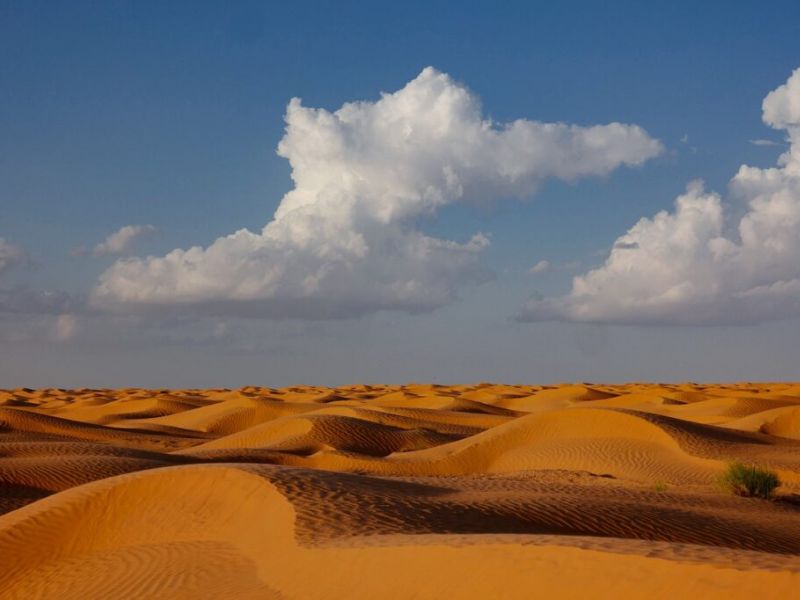
    But even if the perfect fossil formed, we might not necessarily find it, especially in locations that are difficult to reach. In a new paper led by University College London paleontologist Joel Heath, the authors point out that paleontological expeditions in the Amazon and the Sahara haven’t been particularly common, or easy-going.

    And that’s a problem, because these are the places where they suspect we might find dinosaurs’ more ancient evolutionary history.

    Searching for fossils in the Sahara desert is no easy feat. (Paul Biris/Getty Images)

    “Paleontological expeditions to these regions may be less common as a result of the harsh environment of the Sahara and inaccessibility of many areas of the Amazon,” they write.

    Socioeconomic factors, the legacy of colonialism, and political instability have likely hindered research efforts in these regions, as documentation shows.

    Modeling Dinosaur Evolution Using Available Fossils

    Their study modeled the radiation of dinosaurs in reverse, using known dinosaur fossils, taxonomic data on both dinosaurs and their reptile relatives, and the geography of the period. Rather than assuming that places with no fossils have no dinosaurs, the researchers categorized these regions as having missing information.

    And since we don’t really know exactly how the oldest known dinosaurs are related to each other, they modeled three different scenarios based on proposed evolutionary trees.

    An artist’s illustration of Nyasasaurus, which could be the earliest known dinosaur, or else a close relative of early dinosaurs. (Mark Witton/The Trustees of the Natural History Museum, London)

    A model in which silesaurids (considered more like dinosaur cousins than dinosaurs) are ancestors of ornithischian dinosaurs most strongly supports a low-latitude Gondwanan origin, with proof potentially lying in the Sahara and the Amazon.

    Ornithischians and the Missing Fossils

    Ornithischians are one of the three main dinosaur groups that is oddly absent from the early dinosaur fossil record, but silesaurids as their ancestors would fill some of that gap.

    Conveniently, low-latitude Gondwana is also the midpoint between the earliest dinosaur fossils in our current record.

    Heath says, “So far, researchers have not found dinosaur fossils in the regions of Africa and South America that once formed this part of Gondwana.”

    However, this might be because researchers haven’t stumbled across the right rocks yet, due to a mix of inaccessibility and a relative lack of research efforts in these areas.”


    Read the original artilce on: Science Alert

    Read more: Did Male and Female Dinosaurs Differ? A New Analytical Strategy is Helping Address the Inquiry

  • Sick Dinosaur May Have Had the Earliest Known Cough

    Sick Dinosaur May Have Had the Earliest Known Cough

    Credit: WOODRUFF ET AL. (2022); CORBIN RAINBOLT

    Peculiar growths on dinosaur neckbones hint at old infection

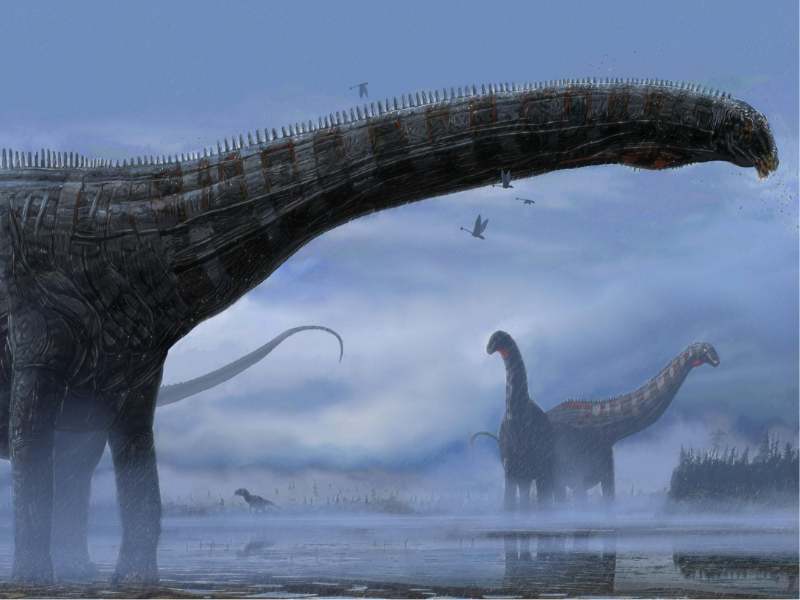
    It takes much force to cough a loogie up a nearly 4-meter-long neck, but that is what one dinosaur had to do. The Guardian reports that paleontologists have discovered unusual nodules on the neck of a 150-million-year-old sauropod, proof of the first known respiratory infection in a dinosaur.

    The long-necked dinosaur, nicknamed Dolly, lived during the late Jurassic period and was discovered in Montana more than 30 years ago. When scientists recently re-examined the skeleton, they discovered strange broccoli-shaped bone collections near where the animal’s air sacs would certainly have been. They looked similar to identical spurs that spring up in birds’ lungs when they get a respiratory system infection, and computerized tomography scans validated the idea, the researchers write recently in Scientific Reports.

    The group thinks the infection was similar to aspergillosis, which is caused by breathing in mold and also can be fatal to modern birds. They do not know whether the infection killed Dolly. It is clear the poor dinosaur would certainly have been feverish, coughing, and also sniffling, they say.


    Read the original article on Science.

    Related “Worms Frozen for 42,000 Years Come Back to Life”