
Tag: Evolution

  • The Importance of the Anus in Animal Evolution

    The Importance of the Anus in Animal Evolution

    Credit: Canvas

    Today, let’s talk about a part of the body that doesn’t get much attention but is incredibly important: the anus. This little opening at the end of our digestive tract is essential for our survival and the survival of many animals on Earth.

    The Journey of Digestion

    Inside your body, the digestive system is a long, complex journey. It starts at the mouth, travels through the stomach and intestines, and ends at the anus. This system is like a long tube, about 12 meters in length. If you laid it out flat, it would cover a small apartment!

    What is a Butt?

    A butt, as we commonly refer to it, is the fleshy part at the base of our trunk. The most important feature of the butt is the anus, which is Latin for “ring” or “circle.” The mentioned part is crucial for getting rid of waste from our bodies.

    The Evolution of the Anus

    Some simple animals, like sponges, don’t have a mouth or anus. They absorb nutrients and expel waste through the same opening. As animals evolved, some developed a mouth but no anus, meaning they had to expel waste from the same place they ate. This is not very efficient (we might think).

    The Advantage of Having It

    The evolution of the anus allowed animals to have a more complex and efficient digestive system. With a separate mouth and anus, animals can eat more food and extract more nutrients. This allows them to grow larger and more complex bodies. For example, humans and many other animals have a “through gut,” a digestive tube with a front door (mouth) and a back door (anus).

    Special Features of the Anus

    The anus has some unique features. It is a sphincter, a ring-like muscle that stays tightly closed most of the time. It has to differentiate between solids, liquids, and gases, making sure to release the right one at the right time.

    Anuses in the Animal Kingdom

    Anuses come in different shapes, sizes, and even numbers across the animal kingdom. Some animals, like sea cucumbers, use their anuses for multiple functions, including breathing. Reptiles, amphibians, and some birds have a cloaca, a single opening for excretion and reproduction.

    The Human Butt

    Humans have one of the most distinctive butts in the animal kingdom. Our large gluteal muscles help us stand, walk, and run on two legs. The fat in our buttocks may have evolved to store energy and serve as a sexual signal indicating health and vitality.

    The Anus

    The anus, though often overlooked, is a fascinating and vital part of our anatomy. It plays a crucial role in our digestion and overall health. So, the next time you think about your body’s amazing functions, don’t forget to appreciate the anus! Stay curious, and remember, from black holes to back holes, the universe is full of wonder!

    Read more Starting a Vegan Diet: Simple Tips for Beginners

  • Scientists have found Answers to Why Humans don’t have Tails.

    Scientists have found Answers to Why Humans don’t have Tails.

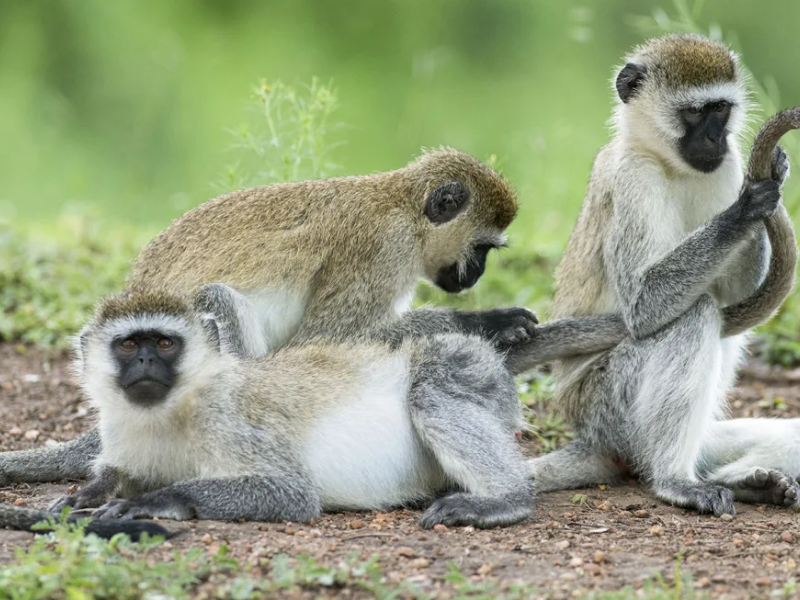
    Tails serve various purposes, yet unlike vervet monkeys seen in Lake Mburo National Park, Uganda, humans' nearest primate ancestors shed these appendages roughly 25 million years ago.
    Tails serve various purposes, yet unlike vervet monkeys seen in Lake Mburo National Park, Uganda, humans’ nearest primate ancestors shed these appendages roughly 25 million years ago. ImageBROKER/Shutterstock


    Humans are special, but we’re missing something common in many animals with spines: a tail. Why this is has been a bit of a mystery.

    Tails are helpful for balance, moving, talking, and protecting against bugs that bite. But humans and our closest ape relatives said goodbye to tails around 25 million years ago, when we split from Old World monkeys. People thought losing tails was because we started walking on two legs, but we didn’t know much about the genes that caused it.

    Now, scientists have found out that a small piece of genetic code, called an Alu element, is the reason we lost our tails. This code was thought to be useless for a long time. They found this code in a gene called TBXT, which controls tail length. Alu elements can move around in our genes and cause or fix changes.

    An Alu element called AluY


    A long time ago, an Alu element called AluY moved into the TBXT gene in our ancestors, including great apes and humans. Scientists checked the DNA of six great ape species and 15 other primates. They found AluY only in great apes, as reported in Nature on February 28. In tests with changed mice genes, altering Alu insertions in the TBXT genes led to different tail lengths.

    Before this study, many ideas tried to explain why great apes became tailless. One common idea linked it to walking upright and evolving to walk on two legs. Bo Xia, the main researcher from the Broad Institute of MIT and Harvard University, said this.

    Before, no one knew exactly how humans and great apes lost their tails. Bo Xia said, “Our finding is the first to suggest a genetic reason.”

    Since tails are connected to the spine, this discovery could also help us understand problems with the neural tube during human baby growth.

    Extremely Rare

    A big discovery happened for the researchers when Xia looked at a part of the genome called TBXT on a popular online database used by scientists studying how organisms grow. This was mentioned by Itai Yanai, who works at the New York University Grossman School of Medicine.

    The research shows that mice with modified genes have different tail lengths, ranging from no tail to long tails. Arrowheads point out the differences in tail appearances. "cv" stands for "caudal vertebrae," "sv" stands for "sacral vertebrae," and "WT" represents the normal type of mice. Itai Yanai discussed these findings.
    The research shows that mice with modified genes have different tail lengths, ranging from no tail to long tails. Arrowheads point out the differences in tail appearances. “cv” stands for “caudal vertebrae,” “sv” stands for “sacral vertebrae,” and “WT” represents the normal type of mice. Itai Yanai discussed these findings.


    Alu elements are common in human DNA, and the insertion in TBXT is very rare, like finding one specific thing among a million others in our genetic code, according to Yanai. Despite many scientists thinking the Alu insertion in TBXT was useless DNA, Xia saw that it was close to another Alu element. He thought that if they joined together, it might cause a problem in making proteins in the TBXT gene.

    “It was a quick realization. Then it took four years of studying mice to check if it was true,” Yanai explained.

    The Use of CRISPR Tool


    In their tests, the scientists used a tool called CRISPR to change genes in mice, adding the Alu part into their TBXT genes. They discovered that Alu caused the TBXT gene to make two types of proteins. One of these proteins resulted in shorter tails: the more of this protein the genes made, the shorter the tails became.

    This finding adds to the growing evidence that Alu elements and similar jumping genes might not be useless as previously thought, Yanai explained. “While we know how they copy themselves in the genetic code, we now have to consider how they also affect important parts of the body, like how it looks and grows,” he said. “It’s surprising that one tiny Alu element can lead to losing a whole part of the body, like the tail.”


    Xia mentioned that people haven’t fully understood how Alu works in changing how genes function, even though it’s quite effective and easy.

    “I’m finding that the more I learn about the genetic code, the more I see how much we still don’t know,” Xia said.


    Leia o Artigo Original CNN

    Leia mais Rare Gray Whale Spotted After 200 Years

  • Genome Study Finds Unexpected Variation in a Fundamental RNA Gene

    Genome Study Finds Unexpected Variation in a Fundamental RNA Gene

    A genome study carried out by Johns Hopkins Kimmel Cancer Center scientists to search for variants in a gene thought about an essential building block for microscopic structures that manufacture proteins took a shocking twist.

    Human ribosomal RNA (rRNA) genes are essential for constructing ribosomes or mechanisms that translate proteins. The study findings, to be released in the Feb. 2 issue of the journal RNA, showed that these genes were thought to be similar among people -; instead differed dramatically based upon an individual’s geographic ancestry. Specifically, high variants were found on a segment called 28S rRNA, a crucial part of the protein-translating ribosome.

    Genome study

    The team, led by Marikki Laiho, M.D., Ph.D., director of molecular radiation sciences in the Department of Radiation Oncology and Molecular Radiation Sciences, veered from their regular research study emphasis on establishing brand-new molecules that could be potentially helpful in the treatment of cancer cells to explore a basic biology concept they wanted to understand much better.

    They had developed cancer drugs that target the synthesis of ribosomal rRNAs, a unique procedure that drives cancer cells development. Without these, cancer cells can not increase. The team questioned if the rRNA gene itself was altered in cancers and how that can affect their targeting approach. Despite the value of this gene, there has been no definitive reference sequence published to date.

    Unexpected heterogeneity of ribosomal RNA genes in human populations revealed by genome studies suggests potential variation in protein translation by the ribosomes.
    Unexpected heterogeneity of ribosomal RNA genes in human populations revealed by genome studies suggests potential variation in protein translation by the ribosomes. Credit: Wenjun Fan, Ph.D.

    How was the study conducted?

    Team members set out to take a bioinformatics approach to rRNA genetics sequences, using high-performance computers at the Maryland Advanced Research Computing Center, a joint venture managed by Johns Hopkins University and the University of Maryland. To start charting cancer cells alterations, they needed to understand whether variants existed in the human populace. The rRNA gene sequence was considered “untouchable,” approximately essential that it appeared unlikely to have many variations.

    “Nevertheless, when we began that analysis, we very promptly understood that the cancer genomes were highly aberrant,” Laiho states. “For us to comprehend whether that aberration is real-; meaning that it changes in certain cancers -; we needed to understand better what a typical human gene looks like.”

    Next off, they utilized whole-genome sequencing data from the 1000 Genomes Project (a worldwide human genetics database) to examine variants in 2,504 individuals from 26 populations. They determined 3,791 variant placements on the rRNA gene. This included 470 alternative positions seen on 28S rRNA. The majority of these variations were situated on lengthy sticking-out folds of the rRNA that vary among types. These stand for positions of diversity and are potentially under continual evolution.

    The study reveals something unexpected

    “The analysis results were beyond our imagination. We saw perfect preservation of sequences over vast swaths of the gene, and after that, very variable sites in the specific locations that we anticipated to be unaltered. This suggests that the manner alternative rRNAs are developed into the ribosomes could bring about possible changes in just how the ribosome work.”, said Marikki Laiho, M.D., Ph.D., supervisor of molecular radiation sciences, Department of Radiation Oncology and Molecular Radiation Sciences

    Most of the variants observed were set apart by population. For example, some variants were much more frequent among African or Asian people versus American or European people, and the other way around. This raises the possibility that a few of the versions are ancient, ancestry-dependent, yet have been kept in modern populations, Laiho says.

    “It’s premature to hypothesize what these variants suggest; however, what is remarkable is that the population conserves them, and this indicates their retention is in some way crucial,” she says.

    The study discoveries suggest a requirement to functionally analyze how the 28S rRNA variants influence ribosome functions, which can consequently aid bring about even more targeted therapies for cancer or various other illnesses, Laiho claims.


    Originaly published in Johns Hopkins Medicine.

    Related “Advanced Cryo-EM Exposes Viral RNA Duplication Complex Structure in “Game-Changing” Detail”