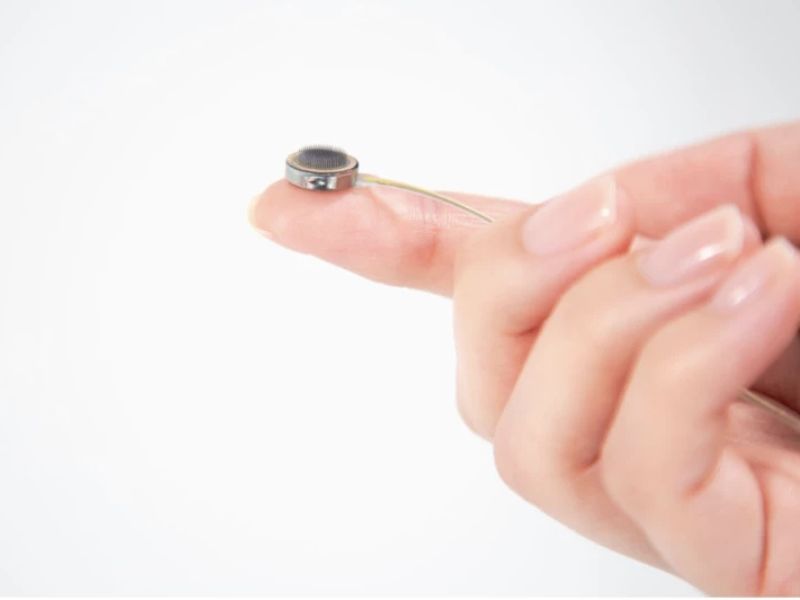
Image Credits: The trial will investigate the Paradromics BCI for speech restoration Paradromics
Paradromics, a U.S. BCI startup, is emerging as a key neural tech contender after FDA approval for a human trial of its speech-restoration implant for people with paralysis.
The Austin-based company, with multiple FDA Breakthrough Device designations, received IDE approval for its Connexus BCI Connect-One Early Feasibility Study. It is the first company to obtain IDE clearance for a fully implantable BCI intended for speech restoration.
Assessing Connexus BCI’s Potential to Restore Communication Abilities
The study will test Connexus BCI’s safety and performance, aiming to help people with paralysis communicate via text or voice.
The company says Connexus is designed for long-term clinical use and is the first high–data-rate BCI built for top performance.
The device has a titanium-alloy casing with 400+ electrodes and onboard processing to capture brain activity. Each electrode measures under 40 microns—thinner than a human hair.
How the Fully Implantable BCI System Operates
The full BCI system implants under the skin, captures motor signals, and wirelessly transmits them via a chest transceiver to an AI-powered computer that converts them into text, speech, or device controls.
“We’re thrilled to introduce this new hardware into a clinical study,” says Matt Angle, CEO of Paradromics.
The initial trial will involve two participants receiving 7.5-mm-wide implants in the motor cortex to capture neuron activity. They will imagine speaking sentences, with signals sent to an external computer. Over time, the system will learn which neural patterns correspond to specific speech sounds, tailoring the interface to each user.
First BCI Trial Aiming for Real-Time Personalized Synthetic Speech
This marks the first BCI study focused on generating a synthesized voice in real time, using past recordings of the participants’ speech as a basis.
Researchers will also test whether the implant can pick up neural signals linked to imagined hand movements, which could enable cursor control.
If early results are promising, the trial may expand to include 10 participants, with two of them receiving dual implants for stronger signal acquisition.
“It’s an exciting step,” says Mariska Vansteensel, a BCI expert at the University Medical Center Utrecht. “A fully implantable system is essential for the technology to advance toward real-world clinical use.”
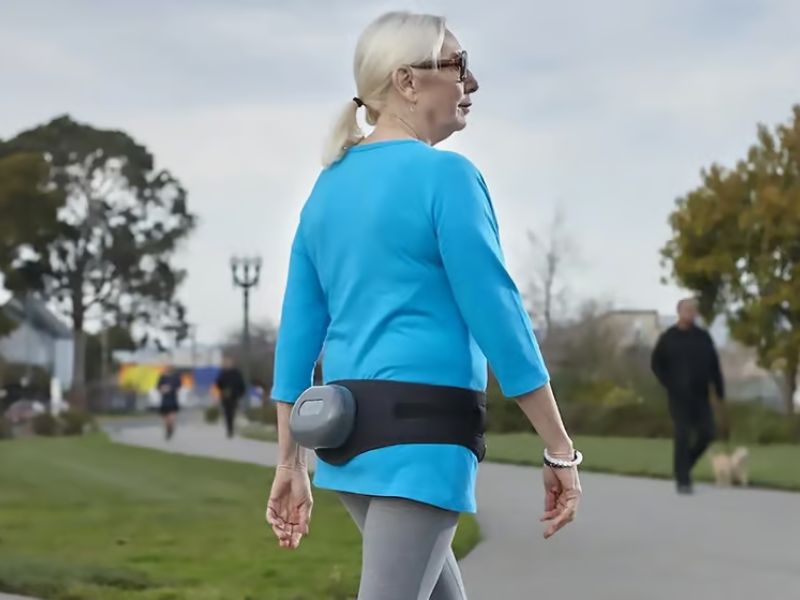
Osteoboost, a wearable device that delivers vibrations to the hips and spine to treat low bone density, has become the first medical device of its type to receive FDA approval Bone Health Technologies
The FDA has given its approval to a wearable belt, the first non-drug prescription medical device, that administers targeted vibrations to the spine and hips to treat low bone density, a precursor to osteoporosis. Proven effective in clinical trials, this innovative device provides postmenopausal women with an alternative treatment option compared to traditional vitamin and mineral supplements.
Postmenopausal women face an elevated risk of fractures due to a decline in the hormone estrogen. Estrogen plays a crucial role in preserving bone density, and its reduction can result in osteopenia or low bone density. Osteopenia, the precursor to osteoporosis, impacts 40.4% of the global population.
FDA Approves Osteoboost, a Wearable Device by Bone Health Technologies, for Osteopenia Treatment
Created by Bone Health Technologies (BHT), Osteoboost is an innovative wearable belt device designed to deliver vibrations to the lumbar spine and hips, promoting bone growth. The FDA recently granted approval for the device to treat osteopenia, marking it as the first non-drug prescription medical device to receive such recognition.
Laura Yecies, the CEO of BHT, expressed the significance of the FDA’s decision on January 18th, stating, “Today’s groundbreaking decision represents the first non-pharmacological therapy approved to treat this widespread and serious condition. With Osteoboost, we have a new treatment option – free of serious adverse events – that taps into the body’s natural mechanism to stimulate bone growth. Women’s health has been underserved for too long, making this a huge step forward for older women who have lacked effective treatment options and are seeking an effective way to protect their bone health.”
Derived from NASA technology to counteract bone loss in zero gravity, whole-body vibration therapy (WBVT) stimulates bone growth by simulating mechanical loading akin to high-impact exercise. Previous research indicates that WBVT can encourage bone growth and prevent bone loss in postmenopausal women, particularly in the hips and lumbar spine. Typically delivered via an oscillating platform, Osteoboost, an offshoot of WBVT, provides targeted, low-intensity vibrations to the hips and lumbar spine, addressing common areas susceptible to osteoporotic fractures.
FDA Approval Based on Clinical Trial Data for Osteoboost’s Efficacy in Postmenopausal Women with Low Bone Density
The FDA’s approval of Osteoboost relied on data from a clinical trial published in the Journal of the Endocrine Society. The trial involved 126 postmenopausal women with low bone density who received Osteoboost treatment five times a week for 12 months. In the sham setting, a sound was produced, but no vibration was delivered. Stratifying participants by age revealed significant differences in percent change in vertebral bone strength, particularly in the 50-to-60-year-old group.
Those in the sham group experienced a 3.4% loss in vertebral bone strength, compared to a 0.5% loss in the active group. In participants meeting the compliance criterion of three Osteoboost treatments per week, the sham group had a 2.84% loss of bone strength, while the active group only had a 0.48% loss, indicating a five times greater loss in the sham group. Additionally, Osteoboost treatment preserved the bone density of the first lumbar vertebra (L1), with the active group showing a 0.29% loss of bone mineral density (BMD) compared to a 1.97% loss in the sham group, representing a 6.8 times greater loss in the sham group.
Lead author Laura Bilek emphasized the threat to the well-being and active lifestyle of postmenopausal women due to rapid bone loss resulting from estrogen decline. While lifestyle interventions like exercise and diet offer modest benefits, Osteoboost shows promise in slowing the loss of bone density and strength, potentially filling a treatment gap.
Regulatory Milestone
The FDA employed the De Novo classification process, offering a marketing pathway for the approval of Osteoboost through Bone Health Technologies’ (BHT) request, initially before it gained Breakthrough Device designation. This approval establishes a new therapeutic class for addressing low bone density, distinct from pharmaceutical interventions. Notably, Osteoboost stands as the first therapeutic device specifically designed and approved for use in osteopenia.
Currently, aside from calcium and vitamin D supplements, there are no other available treatments for osteopenia.
David Karpf, Adjunct Clinical Professor of Endocrinology, Gerontology, and Metabolism at Stanford University School of Medicine, highlighted the lack of innovative approaches in the field of bone health. With no new agents in clinical trials for osteoporosis and a scarcity of options for women with osteopenia, the aging population necessitates novel methods to effectively prevent the decline in bone mass and strength affecting women in the perimenopause or postmenopausal stage.
We use cookies on our website to give you the most relevant experience by remembering your preferences and repeat visits. By clicking “Accept All”, you consent to the use of ALL the cookies. However, you may visit "Cookie Settings" to provide a controlled consent.
This website uses cookies to improve your experience while you navigate through the website. Out of these, the cookies that are categorized as necessary are stored on your browser as they are essential for the working of basic functionalities of the website. We also use third-party cookies that help us analyze and understand how you use this website. These cookies will be stored in your browser only with your consent. You also have the option to opt-out of these cookies. But opting out of some of these cookies may affect your browsing experience.
Necessary cookies are absolutely essential for the website to function properly. These cookies ensure basic functionalities and security features of the website, anonymously.
Cookie
Duration
Description
cookielawinfo-checkbox-analytics
11 months
This cookie is set by GDPR Cookie Consent plugin. The cookie is used to store the user consent for the cookies in the category "Analytics".
cookielawinfo-checkbox-functional
11 months
The cookie is set by GDPR cookie consent to record the user consent for the cookies in the category "Functional".
cookielawinfo-checkbox-necessary
11 months
This cookie is set by GDPR Cookie Consent plugin. The cookies is used to store the user consent for the cookies in the category "Necessary".
cookielawinfo-checkbox-others
11 months
This cookie is set by GDPR Cookie Consent plugin. The cookie is used to store the user consent for the cookies in the category "Other.
cookielawinfo-checkbox-performance
11 months
This cookie is set by GDPR Cookie Consent plugin. The cookie is used to store the user consent for the cookies in the category "Performance".
viewed_cookie_policy
11 months
The cookie is set by the GDPR Cookie Consent plugin and is used to store whether or not user has consented to the use of cookies. It does not store any personal data.
Functional cookies help to perform certain functionalities like sharing the content of the website on social media platforms, collect feedbacks, and other third-party features.
Performance cookies are used to understand and analyze the key performance indexes of the website which helps in delivering a better user experience for the visitors.
Analytical cookies are used to understand how visitors interact with the website. These cookies help provide information on metrics the number of visitors, bounce rate, traffic source, etc.
Advertisement cookies are used to provide visitors with relevant ads and marketing campaigns. These cookies track visitors across websites and collect information to provide customized ads.