Tag: fire

  • AI-Enabled Technology Can Autonomously Tackle Oil Fires on Ships

    AI-Enabled Technology Can Autonomously Tackle Oil Fires on Ships

    Engineers have developed a next-generation, domestically made fire suppression system that autonomously detects oil fires on naval ships and accurately extinguishes them, even in challenging maritime conditions.
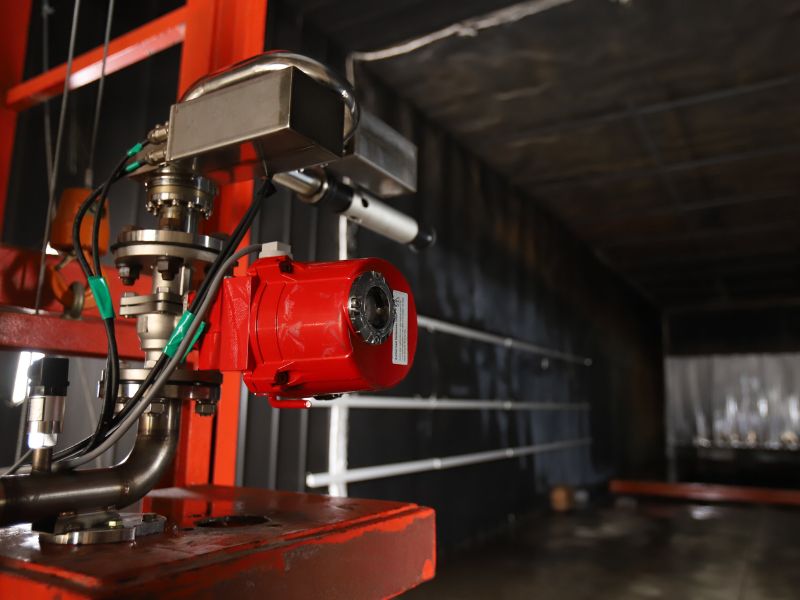
    Fire test facility for the fire suppression system for initial response to oil fires on naval vessels. Image Credits: Korea Institute of Machinery and Materials (KIMM)

    Engineers have developed a next-generation, domestically made fire suppression system that autonomously detects oil fires on naval ships and accurately extinguishes them, even in challenging maritime conditions.

    AI independently verifies the presence of a fire and activates the system only when a real fire is detected. It directs its extinguishing agent precisely at the fire source, similar to how a firefighter targets flames.

    KIMM Develops Autonomous Oil Fire Suppression System for Ships

    A team led by Senior Researcher Hyuk Lee at KIMM’s AX Convergence Research Center (NST) developed an autonomous shipboard oil fire suppression system and successfully tested it on a vessel.

    This system is an advanced version of the team’s autonomous firefighting technology, optimized for common naval oil fires. It autonomously detects and extinguishes oil fires from equipment or aircraft leaks across the ship, even in rough seas.

    Current shipboard firefighting systems release extinguishing agents throughout the affected area as soon as they detect a fire. This method risks unnecessary damage from false alarms and hampers accurate fire targeting at sea.

    Senior Researcher Dr. Hyuk Lee (right) of the KIMM inspects the fire suppression system equipment for initial response to oil fires on naval vessels. Image Credits: Korea Institute of Machinery and Materials (KIMM)

    KIMM’s AI Shipboard Fire System Hits 98% Accuracy in Rough Seas

    In contrast, KIMM’s technology combines AI-based fire detection with reinforcement learning to adapt to maritime conditions, effectively overcoming these limitations.

    The system includes fire sensors, monitors, and an AI-enabled control unit that verifies fires and estimates their locations. The system achieves a fire detection accuracy exceeding 98% and can discharge foam up to approximately 24 meters. It has also been confirmed to operate reliably in sea conditions of level 3 or higher.

    KIMM Tests AI Fire System in Full-Scale Ship Simulator

    The team validated performance in a large land-based simulation facility (25 m × 5 m × 5 m) replicating real ship conditions.

    Inside the ship-like facility, the team simulated oil fires and fire-like scenarios (e.g., lighters, welding, heaters) to pre-train the AI and test its detection accuracy.

    Notably, the system extinguished both open (4.5 m²) and shielded (3.0 m²) oil fires, proving its capability to handle all oil fire types on aircraft carriers.

    Senior Researcher Dr. Hyuk Lee (left) of the KIMM developed a fire suppression system for initial response to oil fires on naval vessels. Credit: Korea Institute of Machinery and Materials (KIMM)

    KIMM Trials AI Fire Suppression on LST-II Vessel

    The team then conducted live-ship trials on the LST-II (ROKS Ilchulbong), successfully targeting a fire 18 meters away in 1-meter waves.

    They developed a reinforcement learning algorithm that recalculates aiming in real time using only 6-DOF acceleration data to account for waves and hull motion.

    Senior Researcher Hyuk Lee of KIMM stated that this shipboard oil-fire suppression system is the world’s first to be verified from land-based simulations to actual shipboard use.

    It can independently tackle the most severe shipboard oil fires, enhancing crew safety while preserving operational readiness.

    This technology suits naval vessels, ammunition depots, supply storage, hangars, and offshore installations. Its future use on civilian ships and petrochemical sites could greatly enhance fire safety at sea and in industry.


    Read the original article on: Tech Xplore

    Read more: Scientists Recreate Rare Pigment Behind Octopus’s Abilities

  • How Early Humans First Made Fire

    How Early Humans First Made Fire

    Fire is thought to have been vital for Ice Age humans—used for cooking, warmth, light, and crafting tools. However, it's still unclear why so few well-preserved hearths have been discovered from the coldest part of that period in Europe. Researchers from the University of Algarve and the University of Vienna have recently offered new insights into this mystery.
    Credit: Pixabay

    The Mystery of Scarce Ice Age Hearths: New Insights from Researchers

    Fire is thought to have been vital for Ice Age humans—used for cooking, warmth, light, and crafting tools. However, it’s still unclear why so few well-preserved hearths have been discovered from the coldest part of that period in Europe. Researchers from the University of Algarve and the University of Vienna have recently offered new insights into this mystery.

    Through the study of three hearths at a prehistoric site in Ukraine, researchers found that people during the last Ice Age constructed various kinds of fireplaces and mainly burned wood, with possible use of bones and fat as additional fuel sources. “The researchers published the results in the journal Geoarchaeology.”

    Archaeological findings reveal that Homo sapiens in Europe during the Upper Paleolithic period, from 45,000 to 10,000 years ago, utilized fire for a variety of purposes.

    Philip R. says that people used fire not only for warmth but also for cooking, tool production, and social interaction.” Nigst, lead author and archaeologist at the University of Vienna. Despite its importance to Ice Age hunter-gatherers, especially during the harshest period between 26,500 and 19,000 years ago, well-preserved traces of fire use from that time are surprisingly scarce.

    Credit: Scitech Daily

    It seems that your message got cut off.” Could you please clarify or resend what you’d like me to paraphrase?

    Uncovering Prehistoric Hearths: Key Findings in Ukraine

    This study is especially important because researchers uncovered and examined three hearths at a prehistoric site in Ukraine using advanced geoarchaeological methods. Techniques like microstratigraphic analysis, micromorphology, and colorimetric analysis allowed the team to identify three basic, flat hearths that burned wood.

    Notably, the fires reached temperatures exceeding 600°C, indicating a high level of pyrotechnic skill despite the harsh environmental conditions of the Ice Age.

    Credit: Scitech Daily

    The analysis also revealed that humans primarily used wood as fuel during the height of the Ice Age, with charcoal studies suggesting spruce wood. However, they may have also used other materials like bone or fat.”

    Marjolein D. says, ‘We are currently examining whether people deliberately used the animal bones discovered at the site as fuel or simply burned them accidentally in fires exceeding 650 degrees Celsius.’” Bosch, one of the authors and a zooarchaeologist at the University of Vienna, the Austrian Academy of Sciences, and the Natural History Museum Vienna.

    Credit: Scitech Daily

    Advanced Fire Use: Seasonal and Hearth Variations

    All three hearths are open and flat, but the new findings indicate that fire use was more advanced than previously thought. “People probably constructed and used the hearths differently depending on the season.” One of the hearths is larger and more robust, implying that it reached higher temperatures.

    Nigst explains, ‘People controlled fire completely and used it skillfully in various ways, depending on its intended purpose.’” However, our findings also reveal that these hunter-gatherers frequented the same location at different times of the year during their seasonal migrations.

    Despite these new discoveries, the scarcity of fireplaces from the Last Glacial Maximum remains a mystery.”Did the typical ice-age cycles of freezing and thawing soil destroy most of the evidence?” Murphree asks. “Or did people struggle to find enough fuel during the Last Glacial Maximum?”Perhaps they didn’t use fire at all and relied on other technological solutions?” adds Nigst. By further exploring the role of fire in human evolution, the researchers aim to illuminate one of the most crucial technologies that has contributed to our species’ success in spreading across the globe.


    Read the original article on: Scitech Daily

    Read more: New ‘Fire-and-Ice’ Phase of Matter Discovered in a Magnet

  • New ‘Fire-and-Ice’ Phase of Matter Discovered in a Magnet

    New ‘Fire-and-Ice’ Phase of Matter Discovered in a Magnet

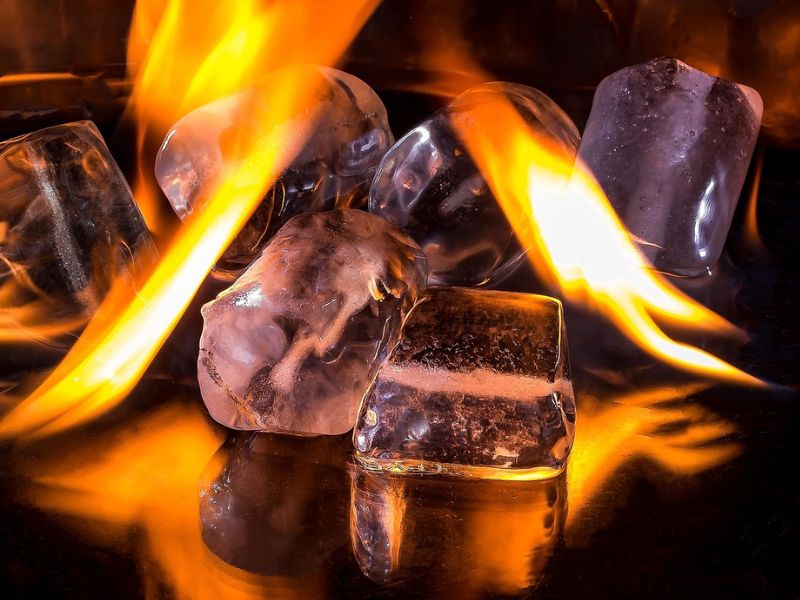
    Credit: Pixabay

    A newly discovered state of matter has emerged within a previously identified exotic phase in a magnetic compound.

    In 2016, physicists Weiguo Yin, Christopher Roth, and Alexei Tsvelik from Brookhaven National Laboratory identified a unique “half-fire, half-ice” spin-state phase in Sr₃CuIrO₆, a compound of strontium, copper, iridium, and oxygen. Now, they have uncovered its opposite—a “half-ice, half-fire” phase, where electrons in two distinct structures swap behaviors.

    At the core of this discovery is frustration, a concept describing how neighboring particles interact. A single change can trigger a cascading phase shift, reshaping the system. In the half-fire, half-ice phase, copper atom spins remain disordered, resembling flickering flames, while iridium spins stay frozen, strengthening their magnetic pull.

    Mathematically, shifting this formation seemed impossible. However, the researchers identified a key temperature-dependent transition that flips the state entirely. This reversibility is a breakthrough, unlocking Sr₃CuIrO₆’s potential for quantum computing and microelectronics.

    Unlocking Exotic States: A Path to Quantum Computing and Spintronics

    “Finding new states with exotic properties—and understanding how to control their transitions—are fundamental challenges in condensed matter physics and materials science,” Yin explains. “Solving these problems could advance technologies like quantum computing and spintronics.”

    Magnetic materials exist in different forms. In ferromagnets like iron, all particle spins align in the same direction. Ferrimagnets, like Sr₃CuIrO₆, contain two distinct spin states. The team’s 2024 research expands on their 2016 work, revealing that an external magnetic field can induce the half-fire, half-ice phase. In this state, copper spins become chaotic, while iridium spins align rigidly.

    While intriguing, this phase alone offered little practical use. Qubits, the building blocks of quantum computing, rely on electron spin states to represent binary values. More importantly, tunable qubits—ones whose spins can be controlled—are highly desirable.

    “Despite extensive research, we didn’t know how to utilize this state,” Tsvelik explains. “For over a century, the one-dimensional Ising model—a foundational mathematical model of ferromagnetism—was thought incapable of hosting a finite-temperature phase transition. We were missing key pieces of the puzzle.”

    A graph demonstrating the shift in the magnetic entropy field (h) with changing temperature (T). (Brookhaven National Laboratory)

    Unveiling the Hidden Twin: The Half-Ice, Half-Fire Phase Emerges

    The missing piece was a hidden twin state. Within a narrow temperature range, the researchers found that copper spins become ordered while iridium spins fall into disorder, creating the half-ice, half-fire phase.

    This discovery not only reveals a new class of hidden phases but also allows precise control over phase transitions, unlocking potential quantum applications. However, more work remains.

    “Next, we’ll explore this fire-ice phenomenon in systems with quantum spins and additional lattice, charge, and orbital degrees of freedom,” Yin says. “New possibilities are now wide open.”


    Read Original Article: Science Alert

    Read More: Watch: Europe’s First Orbital Launch Ends With a Bang

  • Recent Study Reveals Surprising Boreal Forest Fire Effects in North America

    Recent Study Reveals Surprising Boreal Forest Fire Effects in North America

    A novel research endeavor, employing a unique method to examine satellite images of boreal forests spanning the past thirty years, has identified that fire might be altering the landscape of the area in an unforeseen manner, catching researchers off guard with its findings.
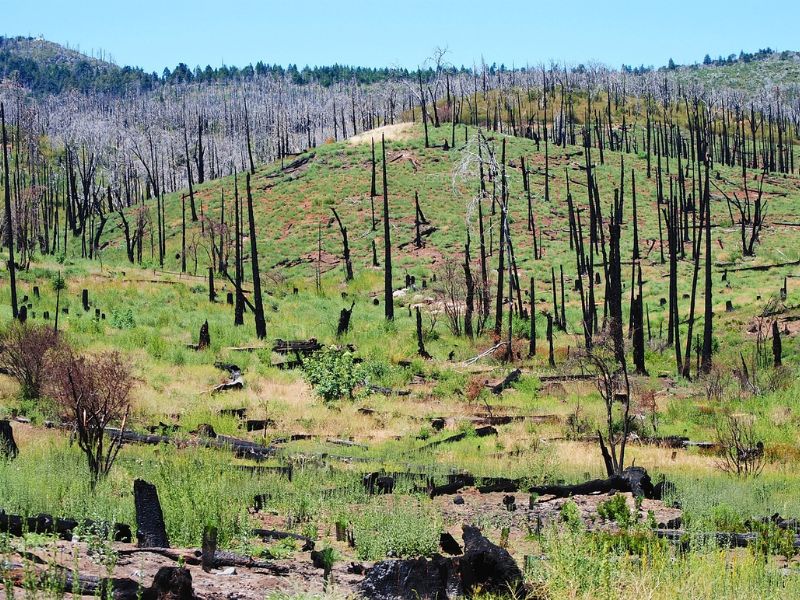
    Credit: Pixaobay

    A novel research endeavor, employing a unique method to examine satellite images of boreal forests spanning the past thirty years, has identified that fire might be altering the landscape of the area in an unforeseen manner, catching researchers off guard with its findings.

    Throughout history, fires in North American boreal forests have typically resulted in the replacement of coniferous trees with faster-growing deciduous trees. This shift to deciduous trees has several climate-related benefits, such as increased carbon absorption and greater light reflection, leading to a cooling effect and reduced fire risk.

    Reversing the Post-Fire Shift to Deciduous Dominance

    However, a recent study led by Northern Arizona University, published in Nature Climate Change, has surprisingly revealed that although forests do become more dominated by deciduous trees after fires, this change is not permanent. Over the course of a few decades, the same forests gradually revert back to being dominated by coniferous trees.

    Furthermore, the study found that the abrupt loss of coniferous forests due to wildfires was offset by the gradual increase in coniferous forests in areas that had not recently experienced fires. This balanced out the overall forest composition, preventing a widespread shift toward deciduous cover.

    Long-Term Effects of Fires on Forest Composition and Climate

    Scott Goetz, a co-author of the study and a Regents’ professor at Northern Arizona University, noted, “Fires clearly lead to a transition from conifer to deciduous cover, but when we examine these changes over many decades, we observe deciduous trees gradually being replaced by conifer trees three to four decades after a fire. There are complex dynamics at play, but when we consider them collectively, the net impact on the climate appears to be relatively modest.”

    Logan Berner, another co-author of the study, added, “This finding was somewhat unexpected, as recent studies had suggested shifts toward deciduous forests at local and regional levels. Our research indicates that there have not been comprehensive changes in forest composition in recent decades, but we anticipate that ongoing climate warming and increased wildfire activity could lead to significant alterations in forest composition in the years to come.”

    Credit: Nature Climate Change (2023). DOI: 10.1038/s41558-023-01851-w

    The researchers emphasize that this observed shift may not be permanent; recent decades have witnessed an increase in fire disturbances in these forests, suggesting that the return to coniferous dominance may take longer than in the past. Additionally, as the climate continues to become warmer and drier, it will influence both the way forests burn and how they regenerate.

    Insights from Shifting Forest Composition

    Brendan Rogers, a study co-author and associate scientist at Woodwell Climate Research Center, commented, “Considering various fire management strategies, such as those aimed at reducing carbon emissions and mitigating fire risks to local communities and infrastructure, this study lays a crucial groundwork for future research. Particularly in the wake of a summer marked by record-breaking fires in Canada, comprehending the shifting composition of these forests in response to fire over time is vital for guiding optimal management practices and safeguarding people and the environment.”

    Analyzing Forest Changes and Climate Impact Using Satellite Data

    The research team conducted their investigation as part of NASA’s Arctic Boreal Vulnerability Experiment (ABoVE), for which Goetz serves as the Science Team Lead. As part of their project within ABoVE, they harnessed high-resolution satellite imagery from the Landsat series of satellites to assess alterations in forest composition in the boreal forests of Alaska and Canada, both in fire-affected areas and those untouched by fire. They also calculated the climate feedback effects by using satellite measurements of surface reflectivity.


    Read the original article on: Phys Org

    Read more: The Influence of Deforestation and Afforestation on the International Water Cycle

  • A Wood-like Propane Fire Pit Warms the Campsite

    A Wood-like Propane Fire Pit Warms the Campsite

    When you venture into unfamiliar territory, fire bans or restrictions on collecting firewood can extinguish your campfire plans before they even begin.
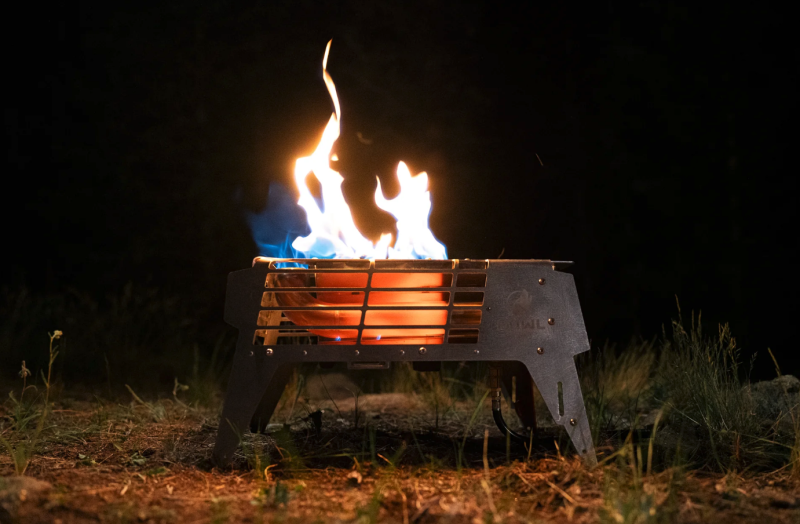
    The Howl R4 looks to deliver the heat of a wood fire without the effort, mess or wildfire potential 
    Howl Campfires

    When you venture into unfamiliar territory, fire bans or restrictions on collecting firewood can extinguish your campfire plans before they even begin. Carrying a portable propane fire pit is a wise choice to mitigate risks or avoid the hassles associated with wood fires. However, while these fire pits capture the essence of a real fire, they often fall short in key aspects, particularly when it comes to heat. Howl Campfires in Colorado aims to create a superior solution with a sturdy, high-quality 61,800-BTU portable fire pit that generates intense 1,200 °F (650 °C) heat from radiant tubes, delivering a level of warmth akin to a robust wood fire.

    How the Howl R4 Fire Pit Was Born


    Similar to numerous other innovations in the camping and RV industry, the development of the Howl R4 fire pit was born out of practical experience and adversity. A group of Howl’s founders faced a bone-chilling November camping excursion in the Utah desert, leaving them shivering under the expansive night sky. The propane fire pit they had acquired for the sole purpose of warding off the impending cold proved inadequate, offering little more than a radiant but feeble source of light, which they huddled around while pacing and dancing to stave off the cold. It was at that moment they resolved to discover a more effective solution.

    Overcoming Vertical Heat Dissipation


    After the trip, some contemplation and investigation led the Howl team to the realization that the flames from a typical propane fire essentially generate heat that rises vertically and disperses into the night sky. This is suitable for warming a grill or griddle positioned directly above a propane burner but proves less effective for keeping a group of people gathered in a circle warm, unless everyone is willing to huddle over the fire as if they’re in a tight football formation during a crucial 4th and 8 play in overtime.

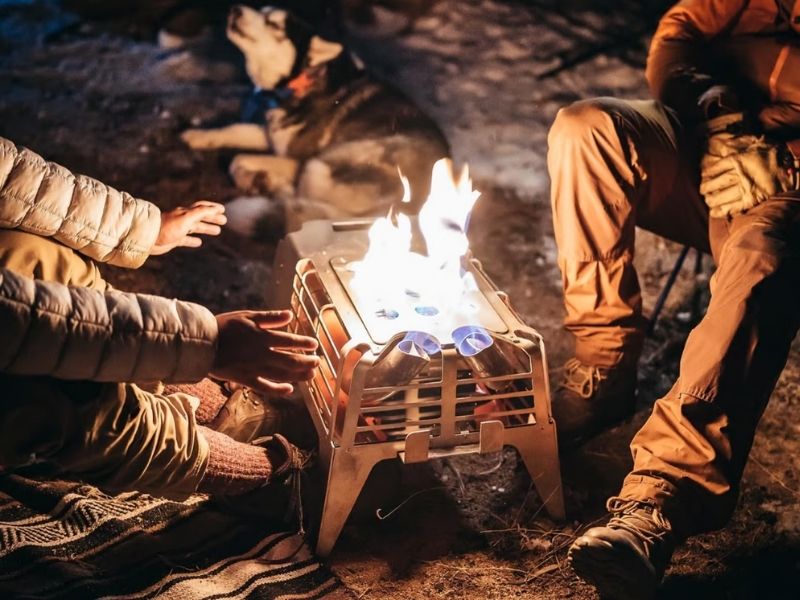
    Even without fur, the Howl R4 should keep you toasty in icy weather
    Howl Campfires

    Howl decided to deconstruct the fundamental principles of fire to reconstruct a fire pit in a unique manner, aiming to match the heat output of any wood fire. They investigated why wood fires excel in providing warmth and identified the key factor as the presence of glowing coals at the fire’s base. These coals emit omnidirectional thermal radiation, which is responsible for effectively warming the body.

    Innovative Heating Technology with ‘BarCoals’ for All-Weather Comfort

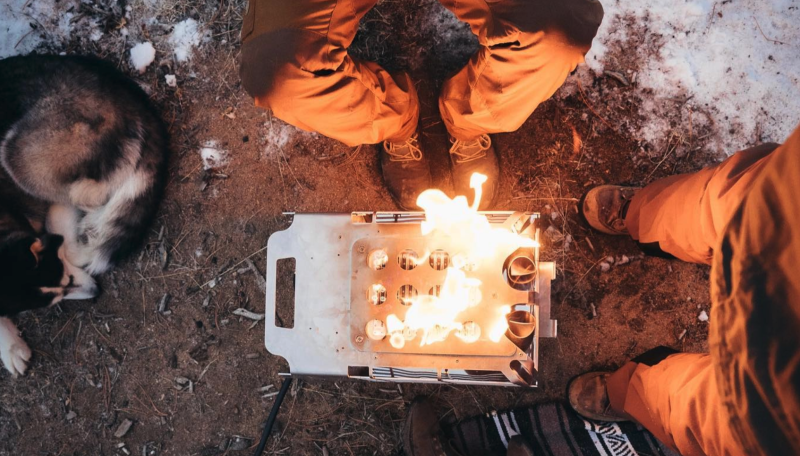
    While many propane fire pit manufacturers incorporate rocks or inserts to enhance heat, Howl opted for a more striking solution called “BarCoals.” These are two inner tubes where propane mixed with air undergoes combustion, reaching a scorching 1,200 °F to emit radiation similar to that of a wood fire. Howl refers to the R4 as the first “naturally aspirated portable radiant tube heater” and claims that it can keep a group of four people warm under any weather conditions, at any elevation, and on any terrain .

    The Howl fire pit was designed to offer the same flame-flickering ambiance of other propane fire pits but with the heat of a real wood fire
    Howl Campfires

    The R4’s combustion powers the A-Flame burner, creating a lifelike fire with flames rising through the top grate. Howl’s thoughtful design drains water efficiently from the burner plate, while a windscreen withstands winds up to 60 mph, ensuring the flame persists in harsh weather.

    To prevent the R4 from heating the ground and posing a fire risk to dry vegetation, Howl uses mirror-coated reflectors to direct the heat outward, keeping the ground cool.

    The Efficient Shape of the Howl R4 Fire Pit

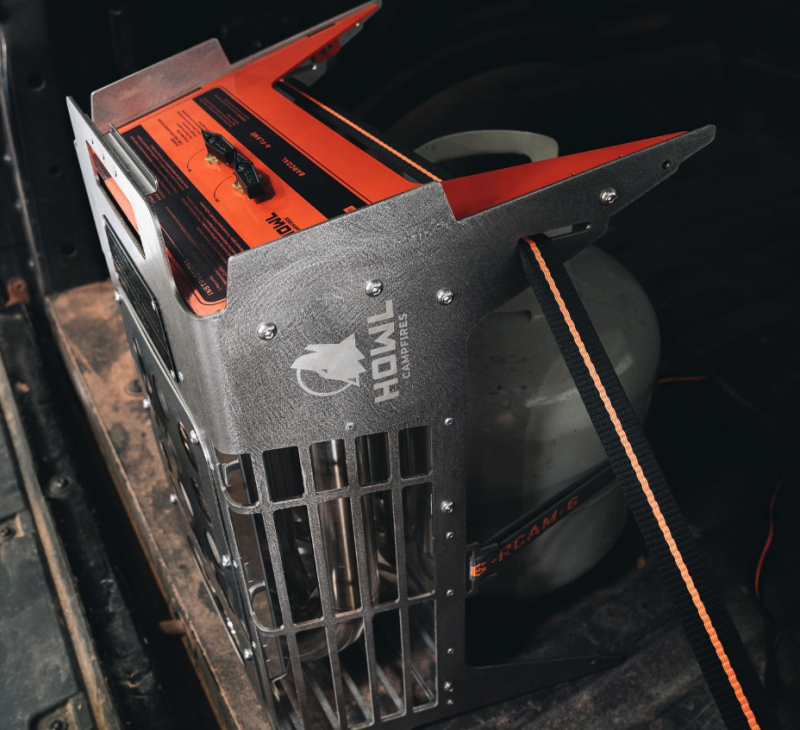
    Howl’s innovative approach departs from the conventional round shape found in most gas fire pits. The R4, though not compact or lightweight at 22 x 16 x 13 inches and 34 pounds, offers a more efficient packing solution. Its legs are spaced to accommodate a propane tank, reducing the packing size and providing stability when attached to the tank. The legs also include strap points for securing the fire pit to a pickup bed or trunk floor, resulting in a semi-rectangular shape for tidier storage alongside coolers, cargo boxes, tables, and camping stoves.

    Strapped in and ready to ride
    Howl Campfires

    Howl emphasizes the R4’s durability, claiming it’s designed to last a lifetime or more. The fire pits are made in Colorado using high-quality materials like 304 stainless steel, aluminum, and brass components.

    Is the Higher Price of the Howl R4 Justifiable?

    While the R4 isn’t a budget option at $1,299, it offers superior design and performance compared to cheaper portable propane fire pits. Many of Howl’s serious customers have likely tried less expensive alternatives for heating during overlanding, winter adventures, or full-time RVing. They might find the investment justifiable.

    Even if such discerning buyers don’t constitute a large customer base, this approach suits a company that specializes in limited batch production. The next release is scheduled for October 26, with a $100 deposit securing a reservation.


    Read the original article on: New Atlas

    Read more: Victorinox Combines Swiss Army Multitool Versatility into a Fixed-Blade Knife