Tag: Gold

  • Lasers and Gold Nanoparticles Enable Crystal Growth for New Materials

    Lasers and Gold Nanoparticles Enable Crystal Growth for New Materials

    Michigan State University researchers have found a way to create crystals on demand, which are essential for technologies like solar panels, LED lighting, and medical imaging.
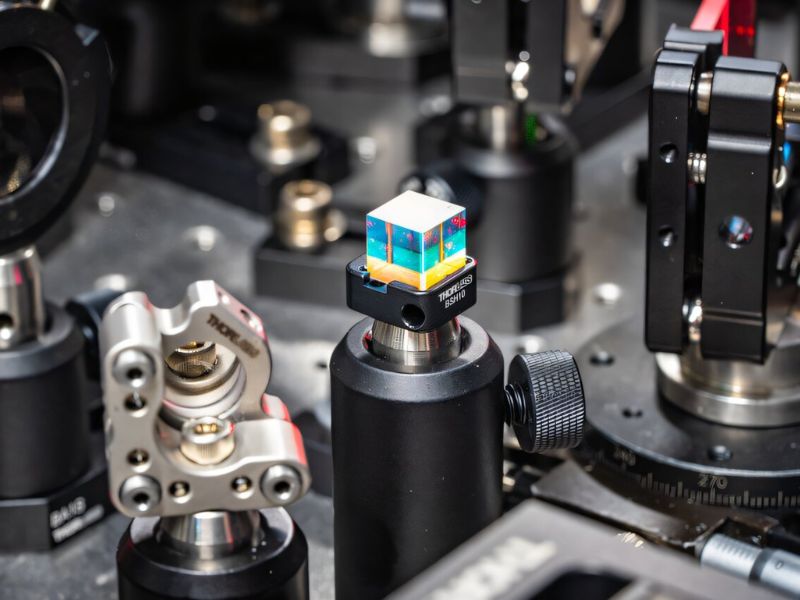
    A close-up of a beam-splitter cube found among the Harel Group’s laser instrumentation. Image Credits: Paul Henderson, Finn Gomez / College of Natural Science

    Michigan State University researchers have found a way to create crystals on demand, which are essential for technologies like solar panels, LED lighting, and medical imaging.

    A New Frontier in Material Science

    Published in ACS Nano, the breakthrough involved hitting gold nanoparticles with a single laser pulse.

    “We’re only starting to explore the possibilities. This marks a new era in material design and research,” said Elad Harel, associate professor of chemistry and senior author of the study.

    If you take a moment to look around, you’ll notice that crystals are at the heart of many technologies—from smoke detectors and TV displays to ultrasound machines and sonar systems. Their distinct optical and electrical properties make them central to modern innovation.

    But producing these crystals is no simple task.

    “With conventional growth methods, crystals may form unpredictably in both time and location, leading to inconsistent outcomes,” Harel explained.

    The Challenge of Precise Crystal Placement in Advanced Technologies

    As technology advances, it increasingly depends on precisely positioned, high-quality crystals—making this unpredictability a significant challenge for researchers.

    To address this issue, Harel turned to his lab’s area of expertise—lasers, especially ultra-fast ones.

    At MSU, Harel uses brief laser pulses to explore the hidden workings of nature, including a recent discovery that used these lasers to effectively “hear” biological processes.

    In their latest study, the researchers explored growing a class of crystals known as lead halide perovskites, which are vital components in LEDs, solar panels, and medical imaging.

    Instead of relying on the usual complex crystal-growing procedures or using a small “seed” crystal to initiate growth, Harel’s team directed their lasers at a minuscule, shimmering target—gold nanoparticles smaller than a thousandth the width of a human hair.

    By striking gold nanoparticles with ultrafast lasers, Elad Harel and his team were able to “draw” crystals. This breakthrough can help researchers accurately grow crystals when and where they’re needed. Image Credits: Paul Henderson, Finn Gomez / College of Natural Science

    Real-Time Crystal Drawing with Laser-Heated Nanoparticles

    The scientists discovered that the gold nanoparticles generated heat where the laser light hit, triggering crystallization. Using advanced high-speed microscopes, they were able to observe the process in real time.

    Much like a laser engraving designs into metal or wood, this technique allows researchers to “draw” crystals with precise control—potentially revolutionizing areas such as clean energy and quantum technology. The study also deepens our understanding of crystal formation, a complex area in chemistry.

    “With this approach, we can grow crystals at exact locations and times,” said Dr. Md Shahjahan, MSU research associate and lead author of the study. “It’s like having a front-row view of a crystal’s earliest moments under the microscope, with the ability to guide its growth.”

    With their gold nanoparticles taking center stage, Elad’s team is returning to the lab to pursue experiments with significant potential.

    These plans involve using multiple lasers of varying colors to “draw” more detailed crystal patterns and exploring the creation of entirely new materials that traditional methods can’t produce.

    “Now that we can ‘draw’ crystals with lasers, the next step is to create larger, more complex designs and evaluate how these crystals function in real-world devices,” Harel explained.


    Read the original article on: Phys.Org

    Read more: Scientists Were Amazed to Find a Marine Species that Can Destroy a Major Human Threat
  • Scientists Superheat Gold, Defying Conventional Physical Laws

    Scientists Superheat Gold, Defying Conventional Physical Laws

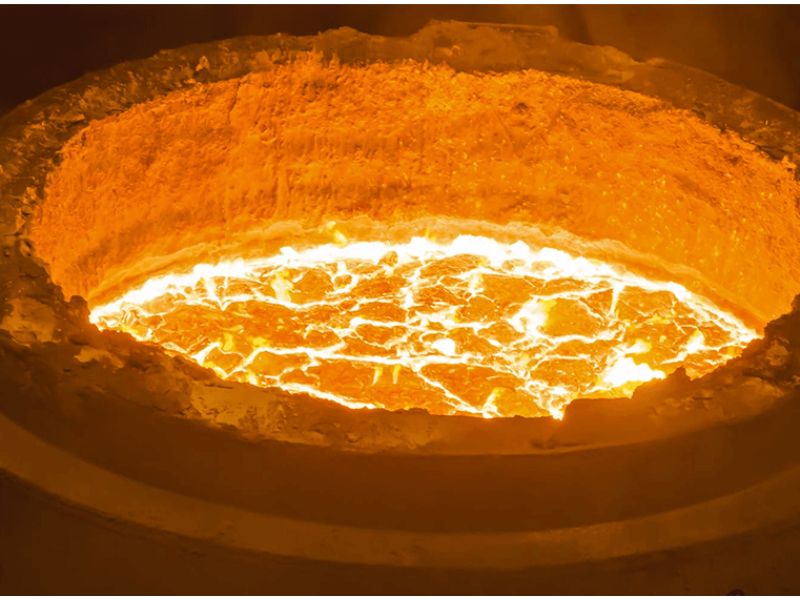
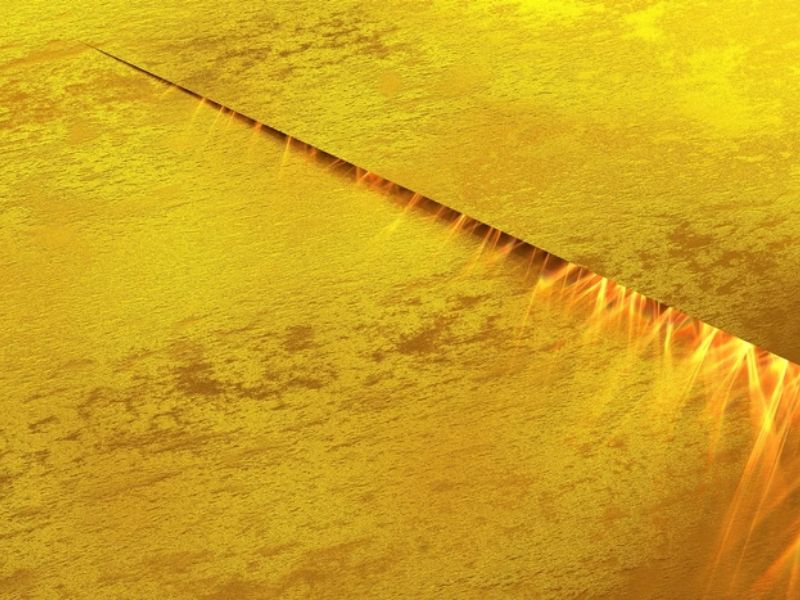
    In a pioneering experiment, scientists heated gold to temperatures well beyond the previously assumed thermodynamic limit for solids. They used ultrafast, intense laser pulses to heat a thin gold sheet without melting it.
    Image Credits: Metropoles

    In a pioneering experiment, scientists heated gold to temperatures well beyond the previously assumed thermodynamic limit for solids. They used ultrafast, intense laser pulses to heat a thin gold sheet without melting it.

    Discovery Challenges Long-Held Theory on Thermal Limits of Solids

    Published in Nature on July 23, the discovery challenges the “entropy catastrophe” theory, which held that solids can’t survive temperatures triple their melting point.

    Yet, the new research revealed that gold remained solid at over 14 times its melting point of 1337 Kelvin (1063°C).

    The key lies in how quickly the material was heated. Thomas White’s team at the University of Nevada used femtosecond laser pulses to heat gold rapidly without melting it.

    Ultrafast Heating Locks Atomic Structure, Preventing Melting

    The extremely fast heating stopped the gold atoms from transitioning into a liquid. The rapid energy delivery locked the atomic structure in place, leaving no time for the heat to trigger melting.

    Scientists used the Linac Coherent Light Source (LCLS) at SLAC to precisely measure the extreme temperatures. They directed ultra-bright X-rays through the superheated gold, tracking atomic vibrations to calculate the material’s internal temperature.

    Rapid Reactions Bypass Conventional Thermodynamic Limits

    Surprising as they are, the findings don’t break thermodynamic laws—they show some reactions happen too quickly for those laws to apply normally.

    According to the researchers, the study not only redefines the temperature limits at which materials can remain solid but also introduces a new approach for measuring heat in extreme conditions.

    Understanding material behavior under extreme conditions is key to advances in fusion energy, planetary modeling, and the study of hot dense matter.


    REad the original article: Metropoles

    Read more:New Haptic Technology Brings the Sensation of Touch to Virtual Reality Experiences

  • Tokamak Fusion Reactor Converts Mercury into Gold as Fusion Byproduct

    Tokamak Fusion Reactor Converts Mercury into Gold as Fusion Byproduct

    Credit: Depositphotos

    A centuries-old alchemical fantasy may be edging toward reality, as Marathon Fusion claims its tokamak fusion reactor can transform ordinary mercury into gold during the fusion process — and in quantities that would leave even Auric Goldfinger astonished.

    The Philosopher’s Stone and Ancient Ambitions

    For millennia, alchemists dreamt of crafting the elusive Philosopher’s Stone — a mythical substance said to transmute base metals like copper, lead, or mercury into pure gold. These early experiments, combining rudimentary chemistry with mystical beliefs, were as much about personal enlightenment as they were about material gain.

    Despite laying the groundwork for modern chemistry, these ancient alchemists never succeeded in producing real gold — aside from the illusions sold to eager patrons by a few cunning fraudsters.

    Fast-forward to the atomic age, where physicists unlocked the science of nuclear transmutation. However, while gold could indeed be produced in lab settings, the process was prohibitively expensive and yielded only microscopic amounts.

    Chrysopoeia: From Myth to Possible Reality

    Today, the concept of chrysopoeia — the refined term for metal transmutation — may finally have real-world potential. And, as with many modern breakthroughs, it’s a surprising offshoot of another innovation.

    Marathon Fusion, a company focused on advancing fusion power systems, reports that its tokamak reactors not only generate abundant clean energy but can also convert mercury into approximately five metric tonnes of gold for every gigawatt (~2.5 GWth) of electricity produced.

    Here’s how it works: A method similar to tritium breeding involves lining the reactor chamber with mercury-198 or a lithium-mercury alloy. When bombarded with high-energy neutrons from the fusion reaction, mercury-198 becomes unstable mercury-197, which quickly undergoes beta decay to form stable gold-197. The reactor also produces tritium when it uses the alloy.

    Optimizing the Process

    In a recent preprint paper (pending peer review), Marathon researchers propose enriching mercury to about 90% of the desired isotope to optimize conversion.Researchers can chemically process the material after reactor exposure to extract the gold — a relatively straightforward task thanks to gold’s chemical inertness.

    On the economic side, with gold trading at roughly US$3,388.50 per troy ounce, five tonnes annually translates to around US$544.8 million. That’s a substantial offset to reactor costs — with enough left over to celebrate with a bottle of vintage Pol Roger Brut Champagne.


    Read the original article on: New Atlas

    Read more: Earth’s Core Contains a Vast Reservoir of Gold — And It’s Leaking Toward the Surface

  • Earth’s Core Contains a Vast Reservoir of Gold — And It’s Leaking Toward the Surface

    Earth’s Core Contains a Vast Reservoir of Gold — And It’s Leaking Toward the Surface

    New evidence suggests molten heavy metals such as gold are leaking out of Earth’s core. (jxfzsy/iStock/Getty Images Plus)

    Earth’s core holds an enormous amount of gold, and this precious metal is slowly making its way into the planet’s crust, according to a new study.

    Volcanic Rocks Reveal Traces of Precious Metals

    Researchers analyzed isotopes found in volcanic rocks that emerged from deep beneath the lithosphere and identified traces of precious metals — including gold. The data suggest that these elements began their journey by leaking from the core and were gradually transported upward by convecting magma until reaching the planet’s upper layers.

    “When we saw the first results, we realized we had literally struck gold!” says geochemist Nils Messling from the University of Göttingen in Germany. “Our data confirm that materials from the core, including gold and other precious metals, are leaking into the Earth’s mantle.”

    Gold in the Crust: Just the Tip of the Iceberg

    Although we can access gold in the crust, it represents only a tiny fraction of the total amount present on the planet. Studies indicate that more than 99% of Earth’s gold is trapped in the metallic core — enough to cover the entire planet’s surface in a layer 50 centimeters (20 inches) thick.

    The evidence was found in basalt from Hawaii, once-molten material volcanically disgorged from Earth’s interior. (James St. John/Flickr/Public Domain)

    That deep concentration makes sense. During Earth’s formation, the heaviest elements sank toward the center in a process known as the “iron catastrophe,” forming the core. Later, meteor impacts delivered additional gold and heavy metals to the surface.

    Scientists already knew that the core releases primordial helium and heavy iron isotopes, but they had not determined whether the precious metals found in the crust came from the core or from space.

    Ruthenium: The Crucial Clue

    A crucial clue came from isotopes of ruthenium, a rare metal. The isotopes found in the core differ subtly from those at the surface.Messling’s team revealed this previously undetectable difference through new analytical techniques.

    By applying these methods to volcanic rock samples from the Hawaiian Islands, the scientists identified a significantly higher concentration of ruthenium-100 — an isotope associated with Earth’s core — compared to the ambient mantle.

    A graphic illustrating the leak of metals from Earth’s core. (University of Göttingen/OpenAI)

    The discovery indicates that siderophile elements — those that migrated to the core when the Earth was still molten — are gradually returning to the surface. This includes ruthenium, but also palladium, rhodium, platinum, and of course, gold.

    Implications for Understanding Earth (and Beyond)

    This gold isn’t rising in large quantities, nor is it easily accessible, since the core lies about 2,900 kilometers (1,800 miles) below the surface. However, the finding deepens our understanding of Earth’s internal dynamics — and potentially of other rocky planets as well.

    “Our results show that Earth’s core is not as isolated as previously believed,” says geochemist Matthias Willbold, also from the University of Göttingen. “We can now confirm that massive volumes of superheated mantle rock — hundreds of quadrillions of tons — originate at the core-mantle boundary and rise to the surface to form oceanic islands like Hawaii.”


    Read the original article on: Science Alert

    Read more: Origins of Earth’s Water May Not Be as Complicated as We Thought

  • Did you know It Takes Intense Heat and Volcanic Forces to Bring Gold to Earth’s Surface?

    Did you know It Takes Intense Heat and Volcanic Forces to Bring Gold to Earth’s Surface?

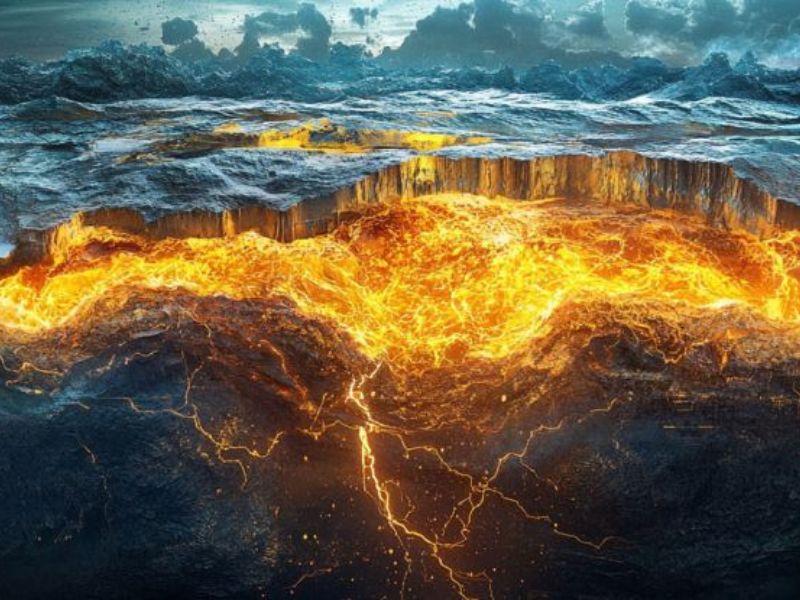
    An artist’s impression of a planetary crust. (The University of Michigan/Midjourney)

    The movement of gold from deep within Earth’s mantle to its surface relies heavily on sulfur bubbling beneath active volcanoes. This process, driven by intense geological activity, enables gold to bond with sulfur molecules, allowing it to ascend rather than remain trapped in the mantle.

    Recent research sheds light on the role of sulfur in this phenomenon but leaves room for debate. Two new studies offer different perspectives on which sulfur compound plays the most critical role in gold transport.

    Deng-Yang He and his team at the China University of Geosciences suggest trisulfur is the key player. Meanwhile, Stefan Farsang and Zoltán Zajacz from the University of Geneva argue that bisulfide is the crucial agent. Despite their differences, both studies contribute valuable insights that could help us better understand gold deposits and optimize the use of this precious resource.

    Hot elemental sulfur gas seeping from a volcanic vent in Hawaii. (USGS/Flickr)

    Golden ore deposits often form near volcanic regions along tectonic plate boundaries, especially in subduction zones. These zones occur where one tectonic plate slides beneath another, generating intense geological activity, including earthquakes and volcanic eruptions. The Pacific Ring of Fire is a prime example of such a region, hosting numerous volcanoes and associated gold deposits.

    How Volcanic Activity and Sulfur Drive Gold’s Journey to the Surface

    Golden ore originates deep within Earth’s mantle, where it would typically remain due to its density. However, volcanic activity incorporates gold into rising magma, which carries the metal to the surface and deposits it in the crust. Sulfur plays a pivotal role in this process by forming strong bonds with heavy metals like gold. The specific form of sulfur that facilitates gold transport, however, remains a topic of scientific debate.

    Deng-Yang He’s team developed a thermodynamic model to simulate the conditions necessary for gold transport. Their experiments revealed that under specific pressures and temperatures, gold bonds with trisulfur to form a soluble complex with the formula Au(HS)S3–. This compound efficiently transports gold, enabling concentrations several thousand times higher than the average abundance of gold in the mantle to migrate to the crust.

    “This thermodynamic model is the first to demonstrate the existence of the gold-trisulfur complex under these conditions,” explains Adam Simon, a geologist from the University of Michigan. “It provides a compelling explanation for the high concentrations of gold in some subduction zone mineral systems.”

    Geneva Team’s Findings: Bisulfide’s Role in Gold Transport at Magmatic Temperatures

    Golden ore is highly prized for many reasons, not least of which is its resistance to corrosion. (Holger Leue/The Image Bank/Getty Images)

    However, the Geneva team challenges this interpretation. Farsang and Zajacz conducted experiments under magmatic conditions, tweaking the oxidation state of sulfur at pressures and temperatures around 875°C (1607°F). They observed that bisulfide, hydrogen sulfide, and sulfur dioxide also play significant roles in transporting gold. Contrary to previous beliefs, their findings demonstrate that bisulfide can exist at magmatic temperatures.

    Using advanced laser techniques, Farsang’s team corrected earlier measurements, showing that trisulfur’s role might have been overestimated. “We proved that the results of the heavily cited 2011 study were based on a measurement artifact, settling this long-standing debate,” Farsang asserts.

    The debate between trisulfur and bisulfide continues to energize the scientific community. As researchers refine their methods and conduct further experiments, these competing theories may converge, offering a more comprehensive understanding of the processes that transport gold from Earth’s mantle to its surface. For now, the field is poised for the next breakthrough—your move, trisulfur!


    Read Original Article: Science Alert

    Read More: China Completes Record-Breaking Underwater Shield Tunnel

  • World’s Largest Gold Deposit Discovered, Valued at Over US$80 Billion

    World’s Largest Gold Deposit Discovered, Valued at Over US$80 Billion

    Scientists have discovered a high-quality gold deposit in central China containing approximately 1,000 metric tons (1,100 US tons) of the precious metal, according to Chinese state media.
    (bodnarchuk/Getty Images)

    Scientists have discovered a high-quality gold deposit in central China containing approximately 1,000 metric tons (1,100 US tons) of the precious metal, according to Chinese state media.

    Valued at around 600 billion yuan (US$83 billion), this find could be the largest and most lucrative gold reservoir ever uncovered, surpassing the 900 metric tons estimated in South Africa’s South Deep mine, the world’s largest known gold reserve.

    The Geological Bureau of Hunan Province revealed that researchers discovered 40 gold veins within a 2-kilometer (1.2-mile) depth in Pingjiang, a county in northeast Hunan. These veins are believed to contain 300 metric tons of gold, and 3D modeling suggests that additional reserves may extend to 3 kilometers deep.

    “Many drilled rock cores showed visible gold,” said Chen Rulin, a prospector with the bureau.

    The core samples indicate that each metric ton of ore could yield up to 138 grams (nearly 5 ounces) of ore—an extraordinary quality, as high-grade ore typically contains more than 8 grams per ton.

    China Dominates the Global Gold Market, Holding Over 2,000 Tons in Reserves and Contributing 10% of Global Output

    This image has an empty alt attribute; its file name is hunan_gold_finding_cores.jpg
    Technicians of Hunan Province Geological Disaster Survey and Monitoring Institute check rock samples at the Wangu ore field in Pingjiang County, central China’s Hunan Province, 5 November 2024. (Xinhua/Su Xiaozhou)

    China is already a dominant player in the global gold market, holding reserves of over 2,000 tons as of early 2024. The country’s mining industry contributes around 10 percent of the world’s total ore output.

    The announcement of this discovery has contributed to a further surge in gold prices, driven by growing global demand and economic uncertainty.

    While experts remain divided on whether we’ve reached “peak ore,” the latest discovery suggests there may still be significant, untapped gold reserves. This finite resource, formed in the intense heat of stars long before Earth existed, takes millions of years to become accessible for mining.

    Additional core samples from the Hunan site indicate that the deposit may extend further than initially estimated, potentially making it one of the richest gold reserves on the planet.

    The massive find was made in Pingjiang County, shown here, along with its location in China. (Philg88/Wikimedia Commons)

    A Banner Year for Gold Discoveries: Major Finds in England and Australia

    This photo taken on 20 November 2024 shows drilled rock samples from the Wangu ore field in Pingjiang County, central China’s Hunan Province. (Xinhua/Dai Bin)

    This discovery adds to a year already marked by impressive ore finds. In March, a treasure hunter in England uncovered what might be the largest gold nugget ever found in the country. Moreover, just two months ago, Australian scientists discovered a new process that could explain how seismic activity from earthquakes helps form large ore nuggets.

    In addition to learning more about the natural formation of gold, researchers are also exploring innovative ways to manipulate this precious metal. A study published in April introduced “goldene,” a new form of two-dimensional gold just one atom layer thick, which exhibits properties distinct from traditional three-dimensional ore.

    While people have prized ore for millennia, these discoveries show that we still have much to learn about this ancient and valuable metal.


    Read Original Article: Science Alert

    Read More: Scitke

  • The Weight of the Largest Gold Nugget Ever Discovered Equaled That of a Grown Man

    The Weight of the Largest Gold Nugget Ever Discovered Equaled That of a Grown Man

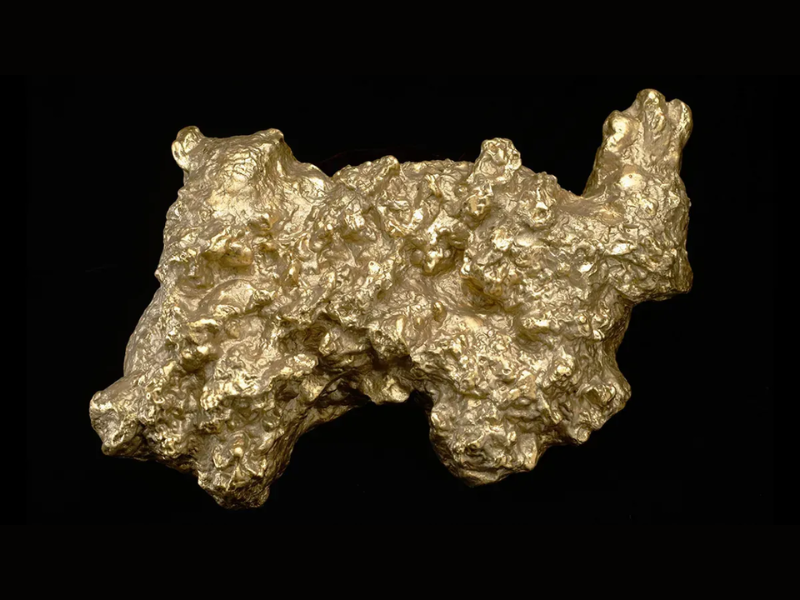
    A reproduction of the “Welcome Stranger” gold nugget, which weighed in at 72 kilograms. Credit: Museums Victoria, CC BY 4.0

    In the pursuit of quick wealth, individuals often explore unconventional avenues, from curious artifacts like necropants to contemporary ventures like Bitcoin. However, amidst the volatility of internet investments, gold stands as a stalwart symbol of enduring value. Yet, even unearthing the largest gold nugget in history offers no guarantee of lifelong prosperity, as the world of gold prospecting is rife with challenges and uncertainties.

    Historic Gold Discoveries

    On February 5, 1869, in Victoria, Australia, John Deason and Richard Oats, two Cornish miners, stumbled upon the world’s largest gold nugget and christened the “Welcome Stranger.” Weighing a staggering 72 kilograms (158.7 lbs) and measuring 61 centimeters (24 inches) in length, its discovery captured global attention. Despite its immense value, the nugget faced practical challenges, requiring it to be broken down into gold bullion for transaction purposes.

    Another notable discovery, the Pepita Canaa, reigns as the most significant surviving golden nugget, weighing 60 kilograms (134 pounds). Unearthed by Julio de Deus Filho in Brazil in 1983, this remarkable specimen is now a centerpiece exhibit at the Museu de Valores do Banco Central in Brasília.

    Modern Technological Contributions

    Advanced technology has revolutionized gold prospecting, exemplified by the “Hand of Faith.” Discovered in 1980 by Kevin Hillier using a metal detector, this colossal nugget, boasting a weight of 875 troy ounces, is the largest ever found in such a manner.

    Despite its Australian origins, the “Hand of Faith” now resides in a Las Vegas casino, having fetched over $1 million at auction.

    Understanding Gold Measurement

    The measurement of gold, often denoted in troy ounces, harkens back to antiquity. One troy ounce equals approximately 31.1 grams, differing from the more commonplace avoirdupois system.

    Despite the metric system’s prevalence, troy ounces remain the standard for weighing precious metals and gems, particularly within the industry. Thus, when referencing gold prices, the troy ounces unit prevails, underscoring this precious metal’s enduring legacy and global significance.


    Read the original article on IFL Science.

    Read more: Gold is Poised for a Transformative Role in Reshaping the Future of Wearable Devices.