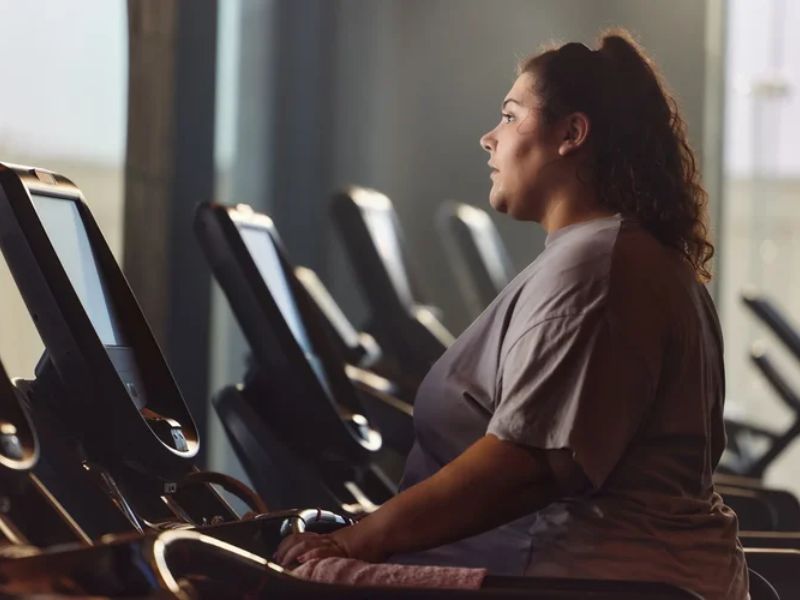
Image Credi:Side view of carefree obese woman exercising on treadmill during sports training in a health club. (Getty Images)
Doctors have long warned that excess weight raises the risk of serious conditions like type 2 diabetes, hypertension, and heart disease. But a new study suggests that this understanding may…
Researchers at the Icahn School of Medicine in New York and the University of Copenhagen examined genetic data from over 450,000 individuals of European ancestry, identifying 266 variants in the process.
Some individuals may put on weight yet maintain normal levels of blood pressure, cholesterol, and blood glucose, while others—who lack these genetic variants—gain weight quickly and develop complications.
Obesity Exists in Multiple Forms, Each with Its Own Risks
“Obesity isn’t a single disorder; it comes in multiple forms, each carrying its own risks,” said Nathalie Chami, the study’s lead author.
The team identified eight separate obesity subtypes, each influencing health in different ways. The pattern also appeared in children: those with protective variants tended to have more pronounced obesity.
Genetic Insights Could Lead to Personalized Treatments for Obesity
In the future, this insight could help physicians identify which patients are more vulnerable and potentially guide the development of new therapies that replicate these protective genetic mechanisms.
Still, the scientists stress that for the vast majority, obesity remains a serious health issue. “Most people continue to face significant risks, and lifestyle factors like diet and physical activity are still crucial.”
The World Health Organization (WHO) reports that in 2022, one in every eight people worldwide was living with obesity. Since 1990, cases have more than doubled among adults and increased fourfold among adolescents.
A study in Aging Cell links immune resilience to salutogenesis—the active promotion of health and well-being.
The researchers’ study on 17,500 individuals underscored the crucial role of immune resilience in the process of aging and longevity. Focusing on the TCF7 gene, the study shows its key role in immune cell regeneration, vital for long-term immune health. This resilience supports healthy aging and may enhance longevity by helping the immune system adapt and fight disease over time.
Immune Resilience as a Shield: Slowing Aging and Reducing Mortality Risk
The study shows that immune resilience helps counteract chronic inflammation, immune system deterioration, and cell death, which are major contributors to aging and mortality. This protective function slows biological aging and offers survival benefits. At age 40, individuals with low immune resilience face nearly 10 times the mortality risk of those with high immune resilience, roughly equivalent to the risk of a 55.5-year-old. This creates a 15.5-year survival gap.
Preserving strong immune resilience helps maintain youthful immune function at any age, improves vaccine efficacy, and dramatically lowers the risk of cardiovascular disease, Alzheimer’s disease, and severe infections.
The Midlife Advantage: Strengthening Immune Resilience to Maximize Longevity
Midlife (ages 40-70) is key for extending lifespan, with immune resilience linked to a 69% reduction in mortality. After age 70, mortality rates between those with strong and weak immune resilience converge, suggesting biological limits on lifespan extension. These results emphasize the importance of strengthening immune resilience during early midlife to optimize healthspan.
Immune Resilience as a Key to Healthy Aging: Study Highlights Role of TCF7 in Sustaining Immune Function
“While aging research often centers on disease, our study highlights immune resilience as a driver of salutogenesis—actively promoting health,” said senior author Dr. Sunil K. Analyzing data from 17,500 individuals, researchers found that genes like TCF7, CCR7, and LEF1 play a vital role in sustaining immune regeneration. Individuals with stronger T-cell activity linked to TCF7 showed greater long-term immune function.
These findings suggest that immune resilience—driven by genes like TCF7, CCR7, and LEF1—not only protects against illness but also supports healthy aging and longevity by aiding healing, immune regeneration, and systemic balance.. Individuals with higher immune resilience exhibited stronger T-cell responses, better recovery from stressors, and more robust defense against age-related decline. This research underscores the importance of cultivating immune resilience as a proactive strategy for enhancing overall well-being and life span.
This approach shifts focus from fighting disease to boosting the body’s natural ability to sustain health and longevity. Ahuja of UT Health San Antonio and the South Texas Veterans Health Care System. “This paves the way for new approaches to support lifelong well-being.”
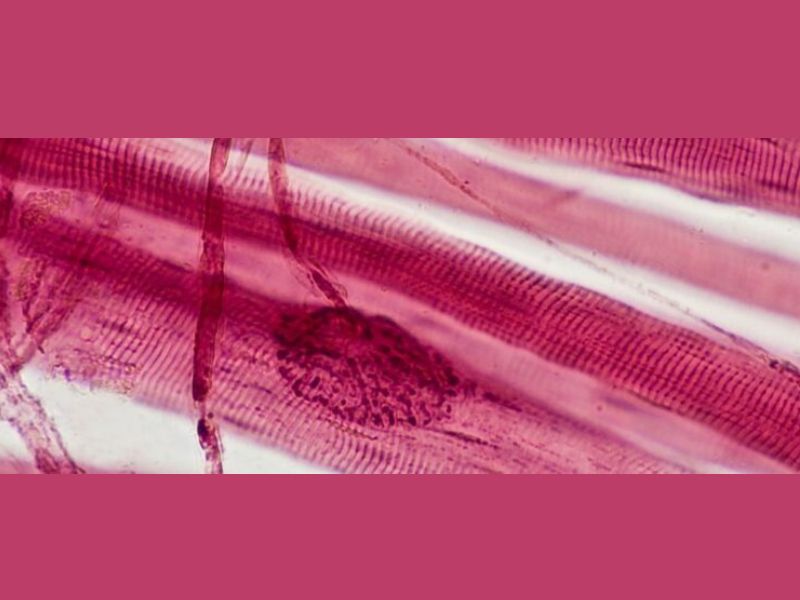
Skeletal muscle fibers (multinucleated cells) with their nerve connections. (Ed Reschke/Stone/Getty Images)
We all wish for a longer life—at least, I know I do—but what about ensuring that we enjoy good health during the time we have?
Over the past century, human life expectancy has significantly increased for several reasons, particularly advances in sanitation, public health, nutrition, and medicine. These improvements have reduced mortality, especially among younger people, allowing more individuals to live longer.
For instance, in 2021, Canadians had an average life expectancy of 81.6 years, marking an impressive 24.5-year increase since 1921. Projections indicate that by 2050, the population aged 85 and older will triple.
While the rise in life expectancy is a remarkable achievement, it is essential to distinguish between lifespan—the total years of life—and healthspan—the years spent in good health. Today, older adults often experience prolonged periods of poor health, placing a significant strain on both individuals and public health systems.
At an advanced age, the ability to maintain independence is critical to quality of life. Thus, it’s not enough to merely extend life; we must also extend the healthspan to match, reducing the gap between the two as much as possible.
The idea of extending healthspan challenges the belief that age-related diseases are inevitable and untreatable.
A major challenge for the aging population is the decline in muscle mass, strength, and function, known as sarcopenia. This condition can lead to reduced independence, metabolic disorders, and an increased risk of falls and fractures.
Muscle plays a crucial role in posture, movement, and metabolism. It serves as a storage for glucose and lipids and helps regulate blood sugar. It also acts as a “buffer” of amino acids during times of stress, such as illness.
Research shows that muscle health at the time of hospital admission can predict outcomes like ventilator-free days and mortality. Unfortunately, muscle loss begins around the age of 50, with a decline of about 1% in muscle mass and 3% in strength annually. Periods of inactivity, such as during illness or hospitalization, accelerate this decline.
Even short-term reductions in physical activity—such as a few weeks of decreased walking—can lead to muscle loss, decreased strength, and worsened blood glucose control in older adults.
(Nastasic/Canva)
Maintaining Muscle Health with Age
The good news is that muscle tissue is highly adaptable, responding to physical activity by growing stronger and shrinking when not used. This adaptability offers an opportunity to counteract muscle loss with regular exercise and proper nutrition.
At McMaster University, my research team investigates how exercise and nutrition impact muscle health, with a focus on aging. Our findings show that even light resistance training can be effective in combating muscle loss, particularly when combined with a higher intake of protein.
Older adults, in particular, require more protein than current guidelines suggest. Research from our lab recommends consuming 1.2 to 1.6 grams of protein per kilogram of body weight daily—up to 100% more than the current recommendation—derived from a mix of animal and plant-based sources.
By engaging in consistent physical exercise and consuming adequate high-quality protein, you can enhance muscle health and close the gap between healthspan and lifespan. In doing so, you can maintain your independence and improve your quality of life as you age.
We use cookies on our website to give you the most relevant experience by remembering your preferences and repeat visits. By clicking “Accept All”, you consent to the use of ALL the cookies. However, you may visit "Cookie Settings" to provide a controlled consent.
This website uses cookies to improve your experience while you navigate through the website. Out of these, the cookies that are categorized as necessary are stored on your browser as they are essential for the working of basic functionalities of the website. We also use third-party cookies that help us analyze and understand how you use this website. These cookies will be stored in your browser only with your consent. You also have the option to opt-out of these cookies. But opting out of some of these cookies may affect your browsing experience.
Necessary cookies are absolutely essential for the website to function properly. These cookies ensure basic functionalities and security features of the website, anonymously.
Cookie
Duration
Description
cookielawinfo-checkbox-analytics
11 months
This cookie is set by GDPR Cookie Consent plugin. The cookie is used to store the user consent for the cookies in the category "Analytics".
cookielawinfo-checkbox-functional
11 months
The cookie is set by GDPR cookie consent to record the user consent for the cookies in the category "Functional".
cookielawinfo-checkbox-necessary
11 months
This cookie is set by GDPR Cookie Consent plugin. The cookies is used to store the user consent for the cookies in the category "Necessary".
cookielawinfo-checkbox-others
11 months
This cookie is set by GDPR Cookie Consent plugin. The cookie is used to store the user consent for the cookies in the category "Other.
cookielawinfo-checkbox-performance
11 months
This cookie is set by GDPR Cookie Consent plugin. The cookie is used to store the user consent for the cookies in the category "Performance".
viewed_cookie_policy
11 months
The cookie is set by the GDPR Cookie Consent plugin and is used to store whether or not user has consented to the use of cookies. It does not store any personal data.
Functional cookies help to perform certain functionalities like sharing the content of the website on social media platforms, collect feedbacks, and other third-party features.
Performance cookies are used to understand and analyze the key performance indexes of the website which helps in delivering a better user experience for the visitors.
Analytical cookies are used to understand how visitors interact with the website. These cookies help provide information on metrics the number of visitors, bounce rate, traffic source, etc.
Advertisement cookies are used to provide visitors with relevant ads and marketing campaigns. These cookies track visitors across websites and collect information to provide customized ads.