Tag: Hydropower

  • Approval Granted for the World’s Largest Hydroelectric Dam

    Approval Granted for the World’s Largest Hydroelectric Dam

    China has given the green light to the construction of what will become the world's largest hydropower dam, expected to generate nearly three times the electricity of the current record-holder, the Three Gorges Dam.
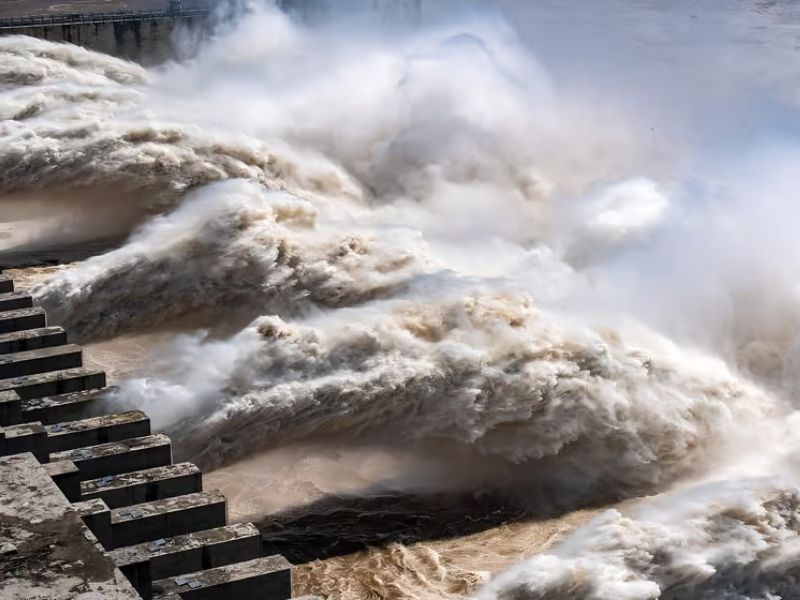
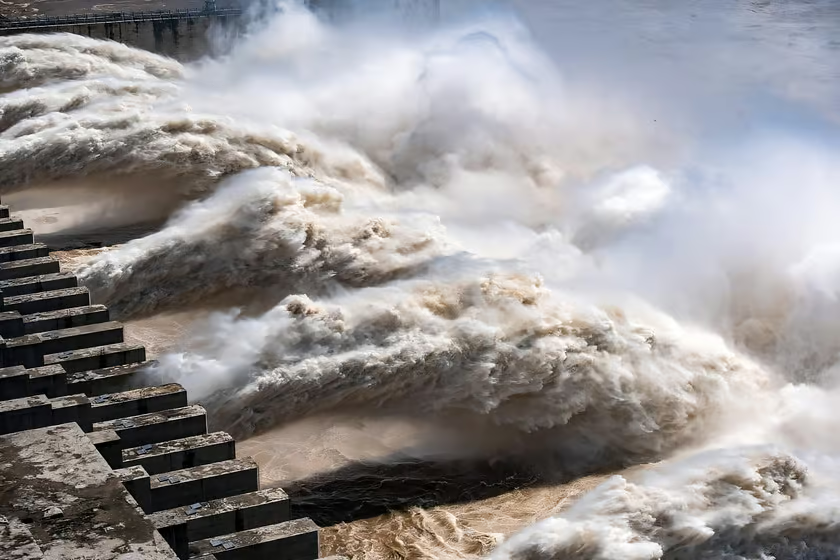
    The proposed Yarlung Tsangpo Hydroelectric Project will produce three times as much electricity as the Three Gorges Dam, pictured here
    Xinhua

    China has given the green light to the construction of what will become the world’s largest hydropower dam, expected to generate nearly three times the electricity of the current record-holder, the Three Gorges Dam.

    Location and Purpose of the Dam

    The dam is planned for the Yarlung Zangbo River in Tibet, near the Indian border, with an estimated cost of $137 billion. It is part of China’s 14th “Five-Year Plan,” which aims to boost renewable energy and combat pollution. The location takes advantage of the river’s steep terrain to harness an unprecedented amount of hydropower, generating up to 300 billion kilowatt-hours annually.

    This energy output is equivalent to 300 terawatt-hours (TWh), enough to power 300 million people in China.

    Currently, the Three Gorges Dam on the Yangtze River holds the world record for installed capacity and annual hydroelectric generation, producing between 95 and 112 TWh each year. If completed, the Yarlung Tsangpo Hydroelectric Project would surpass that output by almost three times.

    U.S. Hydroelectric Plants Comparison

    For comparison, the largest hydroelectric plant in the U.S., the Grand Coulee Dam on the Columbia River in Washington, produces around 20 TWh annually. The Hoover Dam, on the Nevada/Arizona border, generates just 4.2 TWh per year.

    The Yarlung Zangbo River, which becomes the Brahmaputra River in India, is one of the highest rivers globally, originating from the Angsi Glacier in Tibet. The river is partially responsible for carving the Yarlung Tsangpo Grand Canyon, one of the deepest canyons on Earth, which reaches 19,714 feet (6,009 meters) at its deepest point. The canyon spans 313.5 miles (504.6 km), making it longer than the Grand Canyon.

    Ideal Site for Hydroelectric Power Plant

    The Yarlung Zangbo River drops approximately 25,152 feet (7,667 meters) from its highest point to India, making it one of the richest rivers in the world for hydropower potential. A 31-mile (50 km) section near the Namcha Barwa mountain features a 6,562-foot (2,000-meter) drop, which makes it an ideal site for a hydroelectric plant.

    Building the dam at this location would require the construction of 12.5-mile (20 km) tunnels to divert the river, which flows at a rate of 70,600 cubic feet per second (2,000 cubic meters)—enough to fill three Olympic swimming pools per second.

    Concerns from India

    However, Indian officials have raised concerns about China controlling the river’s flow and the potential impacts downstream. Chinese authorities have conducted extensive geological studies of the seismically active area and are confident that they can complete the construction safely. They have not set a construction timeline yet.


    Read the original article on: New Alas

    Read more:First U.S. Onshore Wave Energy Project Receives Green Light
  • A New Type of Hydropower is Becoming Increasingly Popular

    A New Type of Hydropower is Becoming Increasingly Popular

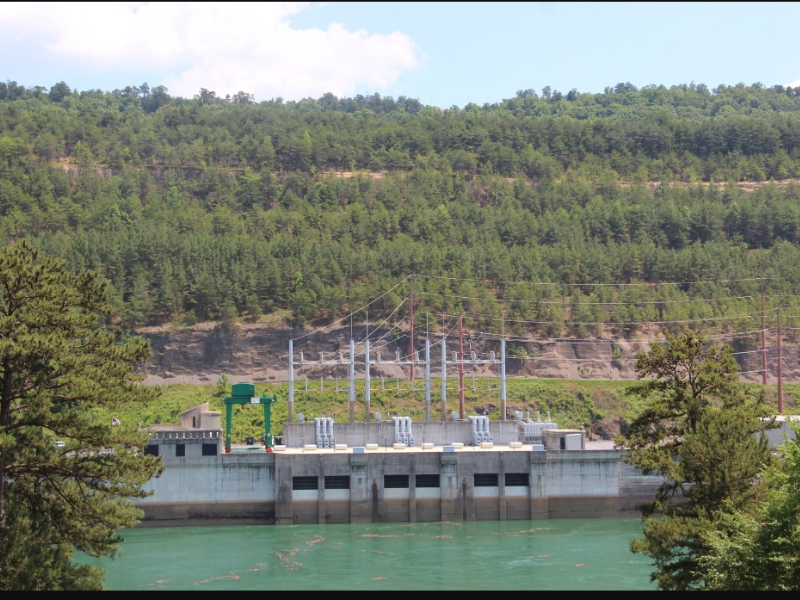
    Rocky Mountain pumped-storage hydtroele3ctric power plant is owned by Oglethorpe Power Corp.
    Rocky Mountain pumped-storage hydtroele3ctric power plant is owned by Oglethorpe Power Corp. Source – Thomson200. Public Domain

    Pumped storage hydropower (PSH), a type of hydroelectric energy storage, is rapidly gaining popularity worldwide as a new technology. Unlike the traditional image of hydroelectric power, which is associated with massive dams such as the Hoover Dam or the Three Gorges Dam, PSH is more environmentally friendly and does not displace communities or damage ecosystems.

    Global Energy Monitor recently released a study indicating a shift in the hydroelectric power industry. Instead of the traditional large dams, there is a fast-growing interest in a new technology called pumped storage hydropower, which leverages the gravitational properties of water.

    Switzerland’s launch next month of a powerful pumped-storage hydroelectric plant is unlikely to help avoid problems this winter.
    Switzerland’s launch next month of a powerful pumped-storage hydroelectric plant is unlikely to help avoid problems this winter – Copyright AFP/File William WEST

    Is it a lake or a battery?

    PSH is a form of hydroelectricity that stores energy using two water reservoirs at different elevations. It generates power as water flows from the higher reservoir to the lower one, passing through a turbine. Additionally, it requires electricity to pump the water back up to the higher reservoir for later use. The upper reservoir effectively functions as a large storage battery by storing energy that can be released as needed.

    To elaborate on the definition of Pumped Storage Hydropower, there are two types of systems: open-loop and closed-loop. In an open-loop PSH system, the reservoirs have a direct connection to a natural body of water, which allows for a continuous flow of water.

    On the other hand, in a closed-loop PSH system, the reservoirs are not connected to an outside body of water, which means the water used for energy generation is recycled between the upper and lower reservoirs.

    OPEN-LOOP VERSUS CLOSED-LOOP PUMPED STORAGE HYDROPOWER Source.
    OPEN-LOOP VERSUS CLOSED-LOOP PUMPED STORAGE HYDROPOWER Source – US Department of Energy

    The Open-loop and Closed-loop Systems

    Both the open-loop and closed-loop systems involve two reservoirs positioned at different elevations. During times of excess electricity generation, the surplus power is used to pump water from the lower reservoir to the upper reservoir, thereby storing the energy. This stored energy can be retrieved later during peak demand periods by allowing the water to flow back down from the upper reservoir through a turbine, which generates electricity.

    As the world shifts towards using more variable renewable energy sources like solar and wind, the need for energy storage solutions is becoming increasingly important. Pumped storage is an important part of this transition, as it allows excess electricity to be stored and released when needed.

    According to modeling by IRENA, the International Renewable Energy Agency, it’s estimated that around 420 GW of total installed pumped storage hydropower will be required to meet the climate goals outlined in the Paris Agreement by 2050.


    Read The Original Article Digital Journal.

    Read more: The Flint Water Crisis Underscores The Impact Of Social Networks.