Tag: Intense Heat

  • Did you know It Takes Intense Heat and Volcanic Forces to Bring Gold to Earth’s Surface?

    Did you know It Takes Intense Heat and Volcanic Forces to Bring Gold to Earth’s Surface?

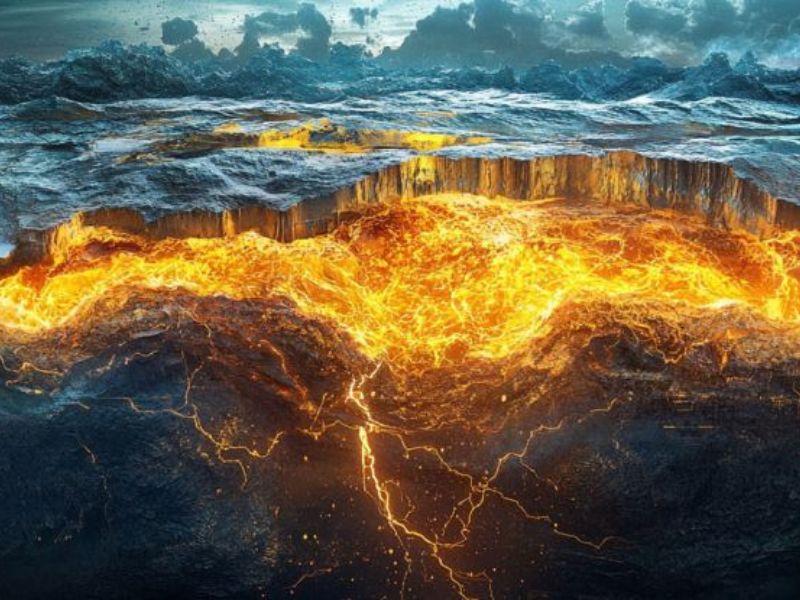
    An artist’s impression of a planetary crust. (The University of Michigan/Midjourney)

    The movement of gold from deep within Earth’s mantle to its surface relies heavily on sulfur bubbling beneath active volcanoes. This process, driven by intense geological activity, enables gold to bond with sulfur molecules, allowing it to ascend rather than remain trapped in the mantle.

    Recent research sheds light on the role of sulfur in this phenomenon but leaves room for debate. Two new studies offer different perspectives on which sulfur compound plays the most critical role in gold transport.

    Deng-Yang He and his team at the China University of Geosciences suggest trisulfur is the key player. Meanwhile, Stefan Farsang and Zoltán Zajacz from the University of Geneva argue that bisulfide is the crucial agent. Despite their differences, both studies contribute valuable insights that could help us better understand gold deposits and optimize the use of this precious resource.

    Hot elemental sulfur gas seeping from a volcanic vent in Hawaii. (USGS/Flickr)

    Golden ore deposits often form near volcanic regions along tectonic plate boundaries, especially in subduction zones. These zones occur where one tectonic plate slides beneath another, generating intense geological activity, including earthquakes and volcanic eruptions. The Pacific Ring of Fire is a prime example of such a region, hosting numerous volcanoes and associated gold deposits.

    How Volcanic Activity and Sulfur Drive Gold’s Journey to the Surface

    Golden ore originates deep within Earth’s mantle, where it would typically remain due to its density. However, volcanic activity incorporates gold into rising magma, which carries the metal to the surface and deposits it in the crust. Sulfur plays a pivotal role in this process by forming strong bonds with heavy metals like gold. The specific form of sulfur that facilitates gold transport, however, remains a topic of scientific debate.

    Deng-Yang He’s team developed a thermodynamic model to simulate the conditions necessary for gold transport. Their experiments revealed that under specific pressures and temperatures, gold bonds with trisulfur to form a soluble complex with the formula Au(HS)S3–. This compound efficiently transports gold, enabling concentrations several thousand times higher than the average abundance of gold in the mantle to migrate to the crust.

    “This thermodynamic model is the first to demonstrate the existence of the gold-trisulfur complex under these conditions,” explains Adam Simon, a geologist from the University of Michigan. “It provides a compelling explanation for the high concentrations of gold in some subduction zone mineral systems.”

    Geneva Team’s Findings: Bisulfide’s Role in Gold Transport at Magmatic Temperatures

    Golden ore is highly prized for many reasons, not least of which is its resistance to corrosion. (Holger Leue/The Image Bank/Getty Images)

    However, the Geneva team challenges this interpretation. Farsang and Zajacz conducted experiments under magmatic conditions, tweaking the oxidation state of sulfur at pressures and temperatures around 875°C (1607°F). They observed that bisulfide, hydrogen sulfide, and sulfur dioxide also play significant roles in transporting gold. Contrary to previous beliefs, their findings demonstrate that bisulfide can exist at magmatic temperatures.

    Using advanced laser techniques, Farsang’s team corrected earlier measurements, showing that trisulfur’s role might have been overestimated. “We proved that the results of the heavily cited 2011 study were based on a measurement artifact, settling this long-standing debate,” Farsang asserts.

    The debate between trisulfur and bisulfide continues to energize the scientific community. As researchers refine their methods and conduct further experiments, these competing theories may converge, offering a more comprehensive understanding of the processes that transport gold from Earth’s mantle to its surface. For now, the field is poised for the next breakthrough—your move, trisulfur!


    Read Original Article: Science Alert

    Read More: China Completes Record-Breaking Underwater Shield Tunnel
  • Despite its Intense Heat, Mercury May Harbor Polar Glaciers

    Despite its Intense Heat, Mercury May Harbor Polar Glaciers

    Discovering subterranean salt glaciers at the north pole of the scorching planet Mercury might seem as improbable as locating a ski resort in the Amazon, yet a team of scientists from the Planetary Science Institute asserts they have uncovered supporting evidence for this phenomenon.
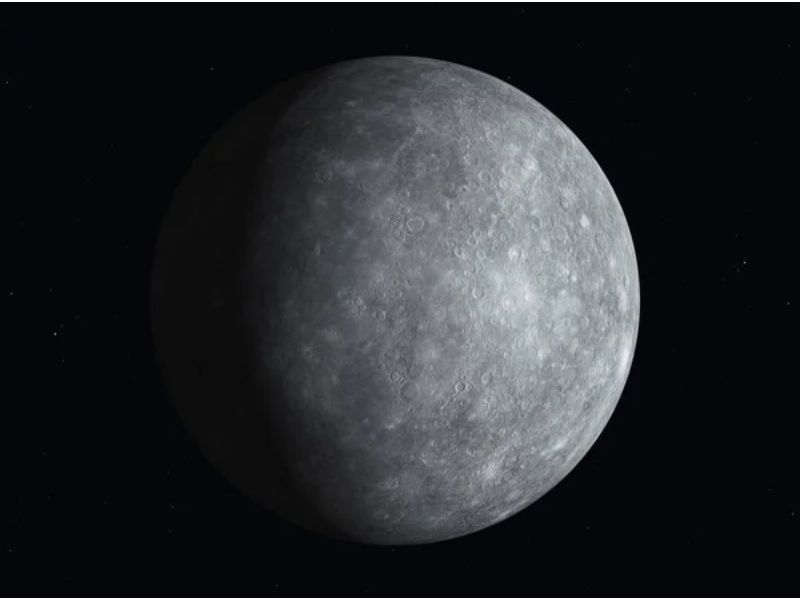
    Mercury may have buried glaciers near its north pole
    NASA

    Discovering subterranean salt glaciers at the north pole of the scorching planet Mercury might seem as improbable as locating a ski resort in the Amazon, yet a team of scientists from the Planetary Science Institute asserts they have uncovered supporting evidence for this phenomenon.

    Mercury is renowned for its extreme heat, being the closest planet to the Sun. With a daytime surface temperature reaching 800 °F (230 °C), it lacks an atmosphere or magnetic field, making it appear as desolate and arid as one can imagine.

    Concealed Glaciers at Mercury’s North Pole Defy Initial Beliefs

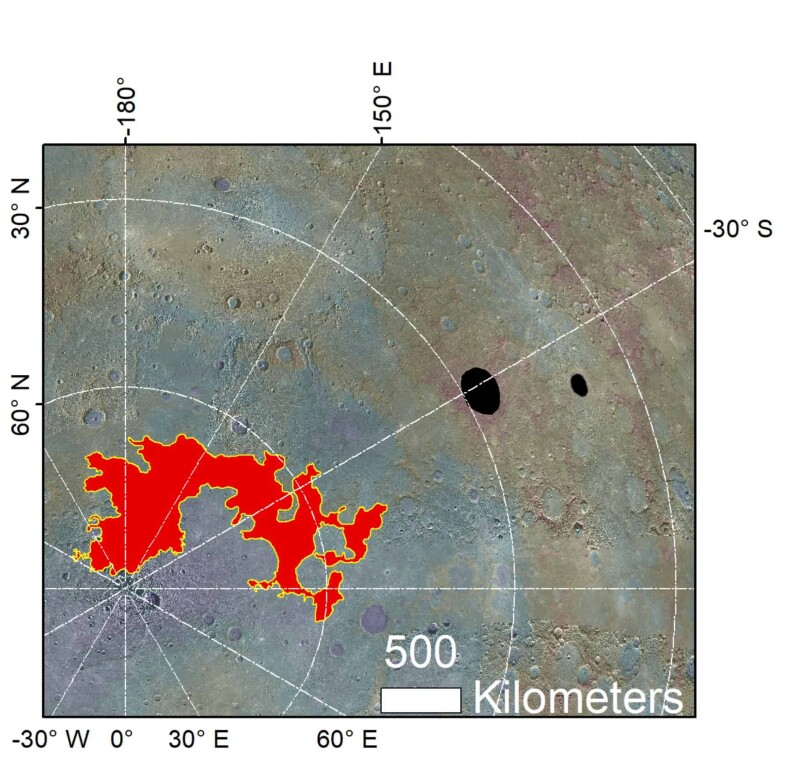
    However, this assumption may not hold true. Concealed glaciers may exist at the north pole of Mercury, having persisted for over a billion years, with signs of their existence revealed through subsequent asteroid impacts.

    The team argues that glaciers are more prevalent in the solar system than previously believed, citing the nitrogen glaciers discovered on Pluto by NASA’s New Horizons deep-space probe as an example. The glaciers on Mercury are believed to have originated in the planet’s ancient history when water seeped up from its core during a period of volcanic activity. As the water reached the frozen subsurface polar region, it created shallow seas interacting with salt flows, eventually forming hidden glaciers, as indicated by computer models based on data from NASA’s MESSENGER orbiter.

    Polar regions that may contain glaciers
    Planetary Science Institute

    The persistently cold subsurface temperatures trace back to an era when the early Mercury possessed an atmosphere. This atmosphere shielded the poles from the Sun, enabling the formation of liquid water and the subsequent stabilization of frozen regions below the surface.

    Volatile Rich Layers (VRLs) and Sublimation Pits in Mercury’s Polar Region

    As per the team’s findings, these Volatile Rich Layers (VRLs) led to distinct geological formations in the shape of sublimation pits. These pits are remnants left behind when the exposed salty ice transformed into gas upon encountering the vacuum of Mercury’s surface due to asteroid impacts. Notably, these pits were identified within craters but not in close proximity to their rims, providing support for the hypothesis that they were uncovered through impacts.

    Should this hypothesis prove valid, it could impact the quest for extraterrestrial life as these saline glaciers might provide a habitat for certain microbial life forms. While the conditions may be too harsh for typical microbes, it could potentially support extremophiles akin to those found in specific environments on Earth, such as the Atacama Desert, the Dead Sea, and hot springs.


    Read the original article on: New Atlas

    Read more: NASA Tests Laser Communications Across 10 Million Miles in Space