Tag: Lithium

  • Battery Charging Fuels Lithium Recycling Breakthrough

    Battery Charging Fuels Lithium Recycling Breakthrough

    Lithium may not be the fictional “Spice” from Dune, but this shiny, highly reactive metal is just as crucial in the real world. Its exceptional ability to store electricity makes it indispensable for moving away from fossil fuels and toward a cleaner, low-carbon economy powered by renewable energy.
    Image Credits:The recharge-to-recycle process harvests usable lithium from discarded EV batteries, so it can find use in new ones
    Depositphotos

    Lithium may not be the fictional “Spice” from Dune, but this shiny, highly reactive metal is just as crucial in the real world. Its exceptional ability to store electricity makes it indispensable for moving away from fossil fuels and toward a cleaner, low-carbon economy powered by renewable energy.

    Today, about 87% of global lithium is used for rechargeable batteries in power grids, EVs, and electronics. Beyond batteries, lithium also plays an important role in other industries. Natural Resources Canada says it strengthens glass, boosts heat and corrosion resistance, and cuts energy use in production.

    Given lithium’s importance, why does attention need to be paid to something called “black mass”?

    Despite the name, black mass is the fine powder left after recycling lithium-ion batteries, and recovering lithium from it is vital because mining new lithium is costly and environmentally harmful. Recycling spent batteries is therefore critical to meeting demand while limiting ecological harm.

    Until now, lithium recovery relied on corrosive acids or energy-intensive smelting. A new method from Rice University, detailed by Yuge Feng in Joule, offers a cleaner, more efficient electrochemical approach.

    Rather than burning or chemically dissolving the black mass, the researchers essentially “recharge” the cathode materials within it, causing them to release lithium. Combined with simple processes like water splitting, the method produces high-purity lithium hydroxide suitable for making new batteries. The approach requires only electricity, water, and battery waste—eliminating the need for harsh chemicals and significantly reducing environmental impact.
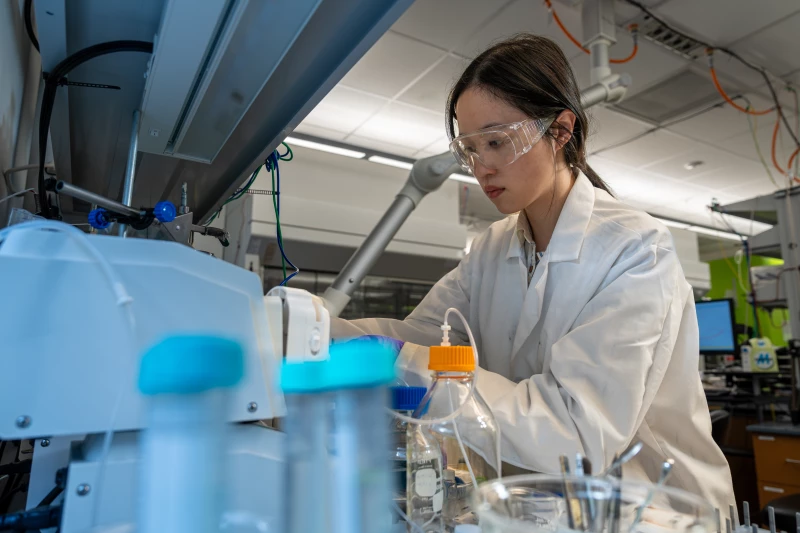
    Image Credits:Yuge Feng, first author of a paper on the study, and a graduate student at Rice University
    Jorge Vidal/Rice University

    The Rice University team’s process proved remarkably effective, producing lithium hydroxide with purity exceeding 99%. It also demonstrated exceptional energy efficiency, operating steadily for more than 1,000 continuous hours while recycling over 50 grams of black mass.

    So how did this novel lithium recovery method come about?

    We started with a simple idea,” explains Sibani Lisa Biswal, co-corresponding author of the study. “If charging a battery removes lithium from a cathode, why not harness that same reaction for recycling?

    In a conventional battery, lithium ions leave the cathode—the electrode that gains electrons—during charging. In the Rice system, lithium ions pass through a thin cation-exchange membrane into flowing water. At a secondary electrode, a straightforward water-splitting reaction generates hydroxide ions, which then bond with lithium to form lithium hydroxide.

    By combining this chemistry with a compact electrochemical reactor, we can selectively extract lithium and produce the precise compound battery manufacturers need,” says Biswal, chair of Rice’s Department of Chemical and Biomolecular Engineering and the William M. McCardell Professor of Chemical Engineering.
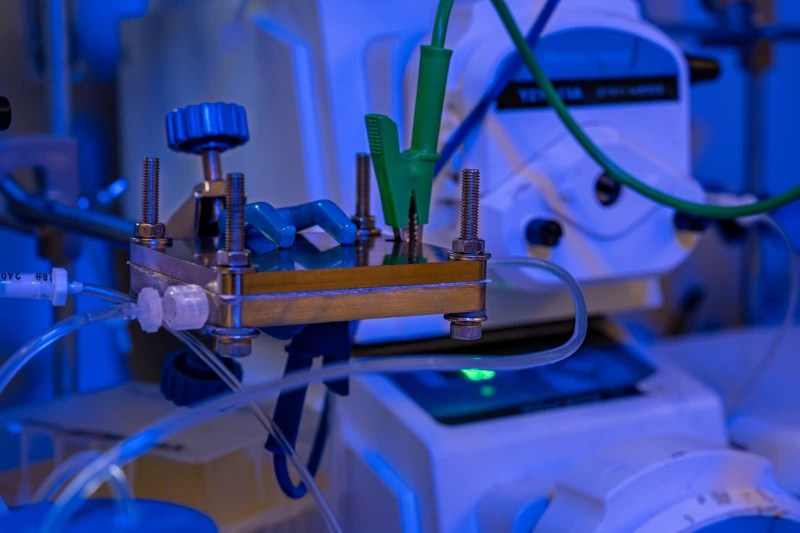
    Image Credits:The electrochemical cell set-up in the Rice University lab
    Jorge Vidal/Rice University

    New Atlas has reported on fast, low-cost lithium extraction and robotic EV battery recycling. The Rice University method advances this further, working with various battery chemistries like LFP, LMO, and NMC.

    Co-author Haotian Wang says producing high-purity lithium hydroxide directly shortens the path to battery production, cutting steps, waste, and strengthening the supply chain. Wang is an associate professor of chemical and biomolecular engineering.

    We’ve simplified and cleaned up lithium extraction to cut both energy use and emissions,” adds Biswal. “The next challenge is clear—improving concentration. Solving that will further enhance sustainability.


    Read the original article on: Newatlas

    Read more:Scientists Develop the Inaugural Model of Artificial Brain Tissue
  • New Reactor Recycles Battery Waste into Lithium Feedstock

    New Reactor Recycles Battery Waste into Lithium Feedstock

    As electric vehicle use rises worldwide, discarded battery packs are rapidly turning into a significant waste source. Lithium is expensive to extract, and most existing recycling techniques consume substantial energy and chemicals, typically yielding lithium carbonate that still requires additional processing to become reusable lithium hydroxide.
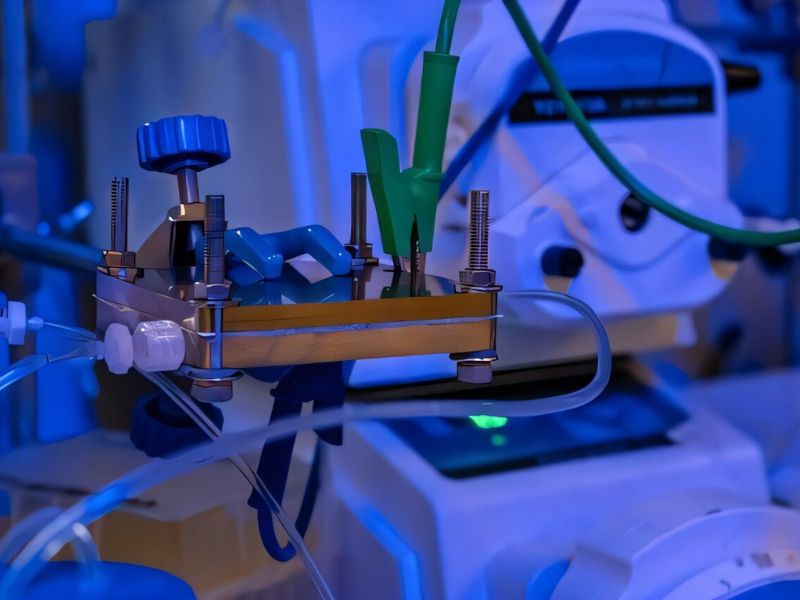
    A photo of the electrochemical cell set-up in the Rice lab. Image Credits: Jorge Vidal / Rice University

    As electric vehicle use rises worldwide, discarded battery packs are rapidly turning into a significant waste source. Lithium is expensive to extract, and most existing recycling techniques consume substantial energy and chemicals, typically yielding lithium carbonate that still requires additional processing to become reusable lithium hydroxide.

    Instead of smelting or leaching shredded battery material (“black mass”) with harsh acids, engineers at Rice University have devised a cleaner method: they electrochemically “recharge” the spent cathode material, prompting lithium ions to move into water, where they react with hydroxide to form high-purity lithium hydroxide.

    “We posed a simple question: if charging a battery extracts lithium from a cathode, why not use that same process for recycling?” said Sibani Lisa Biswal, chair of Rice’s Department of Chemical and Biomolecular Engineering and the William M. McCardell Professor of Chemical Engineering. “By combining that chemistry with a compact electrochemical reactor, we can recover lithium cleanly and generate the exact salt manufacturers need.”

    Electrochemical Recycling of Lithium from Spent Cathodes

    In a functioning battery, charging draws lithium ions out of the cathode. Rice’s system applies this mechanism to spent cathodes such as lithium iron phosphate. As the reaction starts, lithium ions pass through a thin cation-exchange membrane into flowing water. At the counter electrode, water splitting produces hydroxide. The lithium and hydroxide then merge in the water stream, forming lithium hydroxide without the use of strong acids or additional reagents.

    The work, published recently in Joule, showcases a zero-gap membrane-electrode reactor that runs solely on electricity, water, and battery waste.

    Image Credits: Joule (2025). DOI: 10.1016/j.joule.2025.102197

    In certain operating modes, the method used just 103 kilojoules of energy per kilogram of black mass—roughly ten times less than typical acid-leaching approaches, even before their extra processing steps are considered. The researchers also scaled their reactor to 20 square centimeters, completed a 1,000-hour durability test, and treated 57 grams of industrial black mass.

    “Producing high-purity lithium hydroxide directly streamlines the route back into new batteries,” said Haotian Wang, associate professor of chemical and biomolecular engineering and co-corresponding author with Biswal. “It cuts down processing steps, reduces waste, and strengthens the supply chain.”

    High-Purity, Energy-Efficient Lithium Recovery Across Multiple Cathodes

    The method yielded lithium hydroxide at over 99% purity—suitable for immediate use in battery production. It was also highly energy-efficient, requiring only 103 kilojoules of energy per kilogram of waste in one mode and 536 kilojoules in another. Over 1,000 hours of continuous operation, the system remained stable and scalable, achieving an average lithium recovery rate of nearly 90%.

    The technique proved effective with several cathode chemistries, including lithium iron phosphate, lithium manganese oxide, and nickel–manganese–cobalt materials. Notably, the team also demonstrated roll-to-roll processing of whole lithium iron phosphate electrodes straight from aluminum foil, eliminating the need for scraping or other pretreatment.

    “The roll-to-roll demonstration shows how this technology could integrate seamlessly into automated battery-disassembly lines,” Wang said. “You feed in the electrode, power the reactor with low-carbon electricity, and collect battery-grade lithium hydroxide on the other end.”

    The team’s next steps include scaling the system with larger-area stacks, increasing black-mass loading, and creating more selective, hydrophobic membranes to maintain high efficiency at elevated lithium-hydroxide concentrations. They also view downstream processing—concentrating and crystallizing the lithium hydroxide—as a major opportunity to further reduce energy use and emissions.

    “We’ve made lithium extraction cleaner and more straightforward,” Biswal said. “Now the next bottleneck is obvious. Solve the concentration challenge, and sustainability improves even more.”


    Read the original article on: Tech Xplore

    Read more: AI-Enabled Technology Can Autonomously Tackle Oil Fires on Ships

  • U.S. Data Center to use Non-foreign lithium Batteries

    U.S. Data Center to use Non-foreign lithium Batteries

    A data center developer and a battery startup will debut a new kind of energy storage at a U.S. data center, marking the latest effort by tech firms to address the rising energy demands of artificial intelligence.
    Credit: Pixabay

    A data center developer and a battery startup will debut a new kind of energy storage at a U.S. data center, marking the latest effort by tech firms to address the rising energy demands of artificial intelligence.

    Prometheus Hyperscale and XL Batteries will install an organic flow battery at Prometheus’ one-gigawatt Wyoming data center, starting with a pilot in 2027 and expanding by 25 megawatts in 2028 and 2029. Unlike traditional batteries, organic flow batteries use pumped electrolytes—rather than lithium—to store and discharge energy.

    U.S. Data Centers Set to Consume More Electricity by 2035

    Data centers powering AI and cloud services already consume vast amounts of electricity, and demand is expected to keep rising. BloombergNEF projects that U.S. data centers will grow from using 3.5% of the nation’s electricity today to 8.6% by 2035.

    To meet rising demand, utilities and hyperscalers are exploring options like new gas plants, reactivating nuclear sites, and harnessing geothermal energy. Both conventional lithium-ion batteries and alternative flow batteries can store renewable energy to help support data center operations.

    We’re seeing limitless demand, and by demonstrating the effectiveness of our technology, we hope this is just the beginning,” said XL CEO Tom Sisto.

    A New, Cost-Effective Solution for U.S. Data Centers

    No organic flow batteries are publicly known to be in use at U.S. data centers, though undisclosed projects may exist, says Evelina Stoikou of BloombergNEF. XL’s organic flow batteries, using salt water as the electrolyte, are cheaper to produce than vanadium-based systems and don’t rely on foreign lithium. They also offer longer power duration than lithium-ion batteries, according to Sisto.

    We require batteries that match or exceed lithium’s performance without the risk of overheating for use in our data halls,” said Prometheus CEO Trenton Thornock in a statement. “XL Batteries’ organic flow technology provides a scalable, long-lasting, and non-toxic energy storage option.

    The companies did not disclose the financial details of the agreement.

    Prometheus has stated that its Wyoming data center will utilize natural gas along with carbon capture and storage, and the company has also signed a letter of intent for power with Oklo, the advanced nuclear firm supported by Sam Altman.


    Read the original article on: Techxplore

    Read more: Fusion Energy is Grappling with a Fuel Issue—But Hexium Offers a Laser-Based Fix

  • Electrochemical Reactor Extracts 97.5% of Lithium From Geothermal Sources

    Electrochemical Reactor Extracts 97.5% of Lithium From Geothermal Sources

    Lithium-ion batteries power everything from vapes to electric cars, but they rely on hard-to-extract lithium. A new electrochemical reactor from Rice University promises to make lithium harvesting safer and more efficient.
    Geothermal pools, like the Grand Prismatic Spring in Yellowstone National Park seen here, contain ample amounts of lithium
    Depositphotos

    Lithium-ion batteries power everything from vapes to electric cars, but they rely on hard-to-extract lithium. A new electrochemical reactor from Rice University promises to make lithium harvesting safer and more efficient.

    Lithium-ion batteries dominate the market due to their high energy density and lightweight nature, despite occasional safety concerns. Alternatives like potassium or sodium batteries have been considered, but lithium remains the standard.

    The demand for lithium is set to skyrocket, with projections showing a seven-fold increase by 2030, driven by electric vehicles. This growth could push the market value from $56.8 billion in 2023 to $187.1 billion by 2032.

    However, lithium is not easy to obtain. While abundant, it’s often found in low concentrations in rocks or geothermal brines, requiring energy-intensive processes to extract. Traditional lithium mining can also harm ecosystems and deplete water supplies.

    Rice University’s New Reactor Revolutionizes Safe Lithium Extraction from Geothermal Brines

    Enter the Rice University reactor, designed to tackle these issues. The reactor extracts lithium from brines found in geothermal sources, which contain various ions like magnesium, calcium, and sodium. Separating lithium from these chemicals is difficult, especially since chloride ions can produce toxic chlorine gas during the extraction process.

    The Rice team developed a three-chamber reactor with a lithium-ion conductive glass ceramic (LICGC) membrane, commonly used in batteries but never before in a reactor. This membrane allows only lithium ions to pass through, blocking other harmful ions. In tests, the reactor achieved a 97.5% purity rate for lithium and minimized chlorine gas production.

    “This reactor could significantly improve lithium extraction while reducing environmental harm,” said co-author Sibani Biswal. While sodium buildup on the membrane may reduce efficiency, the team suggests lowering sodium levels in the brine or researching membrane coatings to prevent this issue.

    The full study is published in Proceedings of the National Academy of Sciences.


    Read Original Article: New Atlas

    Read More: Scitke

  • World’s First 18650-Sized Potassium-Ion Battery Aims to Tackle Lithium Shortage

    World’s First 18650-Sized Potassium-Ion Battery Aims to Tackle Lithium Shortage

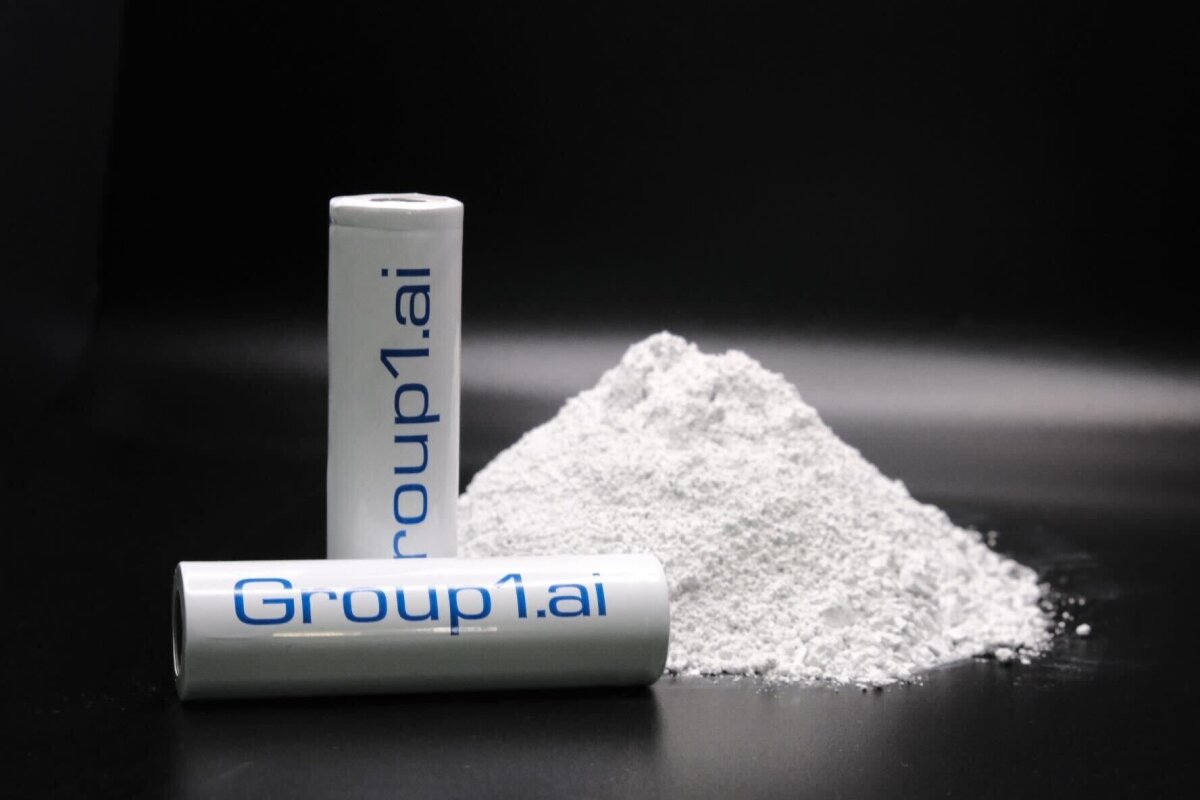
    Most portable electronics and the latest electric vehicles rely on lithium batteries. Texas-based startup Group1 has introduced a more sustainable option with the world’s first 18650 potassium-ion battery.
    The 18650-format potassium-ion battery was launched at the 14th annual Beyond Lithium Conference at the Oak Ridge National Laboratory in Tennessee
    Group1

    Most portable electronics and the latest electric vehicles rely on lithium batteries. Texas-based startup Group1 has introduced a more sustainable option with the world’s first 18650 potassium-ion battery.

    Group1, established in 2021 by experienced battery technology professionals, includes Leigang Xue as Chief Product Officer. Xue previously worked with Dr. John Goodenough, the 2019 Nobel Laureate and co-inventor of the Li-ion battery, at the University of Texas at Austin.

    In Dr. Goodenough’s lab, Dr. Xue developed the Potassium Prussian White (KBW) cathode material, which is crucial for creating the new “safer, faster-charging, more efficient, and sustainable” potassium-ion battery (KIB).

    To assemble a KIB cell, KBW is combined with a commercial-grade graphite anode, along with common electrolyte formulations and separators. Notably, these new batteries do not require critical minerals such as lithium, cobalt, nickel, or copper.

    A Solution to the Looming Lithium Shortage Amid Fossil Fuel Transition

    As the shift away from fossil fuels intensifies, the need for lithium-ion batteries is rapidly increasing, and our lithium resources will soon fall short,” said CEO Alexander Gira when Group1 emerged from stealth in 2022. “Group1 and potassium-ion batteries offer a viable alternative to address this supply gap.”

    Group1 highlights that potassium is over a thousand times more abundant than lithium, and its KBW cathode is produced through low-temperature, sustainable methods.

    Initially, development focused on a coin-cell battery, progressed to a pouch-cell format, and now has introduced the world’s first 18650 potassium-ion battery. This format should facilitate adoption by electric vehicle manufacturers and could be used in power banks and portable devices, promising a superior combination of performance, safety, and cost compared to LiFePO4 (LFP)-based lithium-ion batteries and sodium-ion batteries.

    The new cells operate at 3.7 volts and have reportedly surpassed performance expectations, achieving a gravimetric energy density of 160-180 Wh/kg. While this is comparable to current LFP packs, it still falls short of the next-gen CATL Shenxing Plus batteries, which reach up to 205 Wh/kg. It also lags behind lab-grade lithium batteries and Tesla’s 4680 cells in terms of performance.

    Group1 has distributed samples to “key Tier 1 OEMs” and battery cell manufacturers, with the goal of “widespread adoption of this transformative technology” in the near future.


    Read the original article on: New Atlas

    Read more: Semi-transparent Solar Cell Achieves Groundbreaking Energy Conversion rates

  • Sodium Batteries Sans Lithium Move from Lab to US Manufacturing

    Sodium Batteries Sans Lithium Move from Lab to US Manufacturing

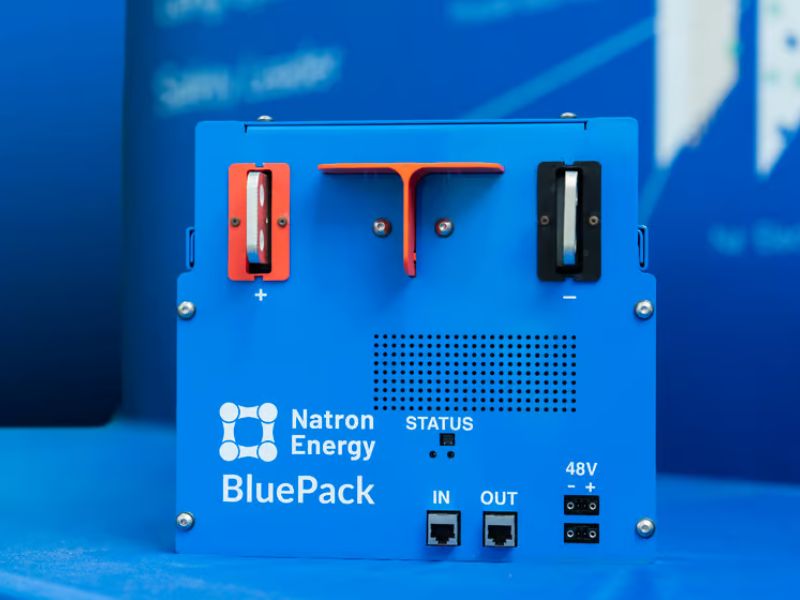
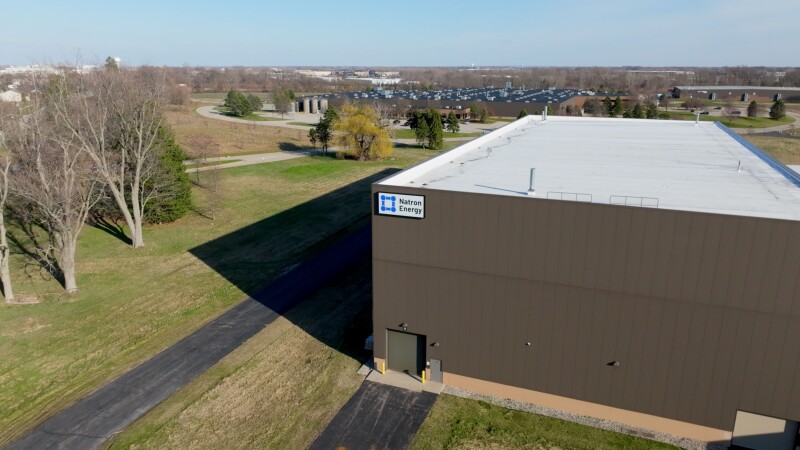
    In 2023, sodium-ion battery innovator Natron Energy was gearing up for large-scale production of its custom-designed sodium batteries. Although slightly delayed from its initial plans, the company successfully launched production of its fast-charging, durable lithium-free sodium batteries this week, introducing a compelling new option in the energy storage sector.
    Blue has become Natron Energy’s signature color owing to the patented Prussian Blue electrons it uses for the fast, frequent transfer of sodium ions that underpin its claims of 10 times lithium-ion’s cycling speeds and a 50,000-cycle lifespan 
    Natron Energy

    In 2023, sodium-ion battery innovator Natron Energy was gearing up for large-scale production of its custom-designed sodium batteries. Although slightly delayed from its initial plans, the company successfully launched production of its fast-charging, durable lithium-free sodium batteries this week, introducing a compelling new option in the energy storage sector.

    Sodium, which is 500 to 1,000 times more plentiful than lithium, offers a more environmentally friendly sourcing process without the need for intensive extraction methods.

    Natron Energy emphasizes that its sodium-ion batteries utilize readily available materials such as aluminum, iron, and manganese, ensuring a sustainable supply chain beyond the sodium versus lithium debate.

    Additionally, Natron’s sodium-ion chemistry relies on materials sourced from a dependable domestic supply chain in the United States, free from the risk of geopolitical disruptions—a contrast to the uncertainties surrounding common lithium-ion materials like cobalt and nickel.

    Sodium-ion Technology

    Sodium-ion technology has garnered increased attention recently as a potentially more reliable and cost-effective energy storage option. While its energy density may not match that of lithium-ion, sodium-ion batteries offer advantages such as faster charging cycles, extended lifespan, and enhanced safety due to their non-flammable nature.

    These qualities make sodium-ion batteries particularly appealing for stationary applications such as backup storage for data centers and electric vehicle chargers.

    Established in 2013, Natron has been at the forefront of sodium-ion research and innovation.

    While many sodium-ion designs are still in the experimental stage, Natron has transitioned to large-scale production, marking a significant milestone in the industry.

    The company celebrated the official commencement of production at its manufacturing facility in Holland, Michigan, with a ribbon-cutting ceremony, marking the first commercial-scale production of sodium-ion batteries in the United States.

    Natron’s CEO on Sodium-ion Advantages and Sustainable Innovation

    During the event, Natron’s founder and co-CEO, Colin Wessells, highlighted the unique benefits of sodium-ion batteries, including higher power output, faster recharging, and a safer and more stable chemistry.

    He emphasized the importance of developing innovative energy storage solutions to support the electrification of the economy, and expressed pride in Natron’s ability to deliver such solutions without relying on conflict minerals or environmentally questionable materials.

    Natron's batteries tout charging and discharging speeds ten times faster than lithium-ion, ideal for dynamic backup power requirements. With an estimated lifespan of 50,000 cycles, they're well-suited for extended use.
    Natron has begun production at its Holland, Michigan facility
    Natron Energy

    Natron’s batteries tout charging and discharging speeds ten times faster than lithium-ion, ideal for dynamic backup power requirements. With an estimated lifespan of 50,000 cycles, they’re well-suited for extended use.

    Although Natron hasn’t disclosed a specific energy density figure, an article from 2022 suggests it’s around 70 Wh/kg, placing it at the lower end of sodium-ion batteries. This aligns with its focus on stationary applications. While CATL achieved an energy density of 160 Wh/kg for mobility batteries in 2021, Natron aims for gigawatt-scale production, starting at 600 megawatts in June.

    Beyond data centers, Natron plans to expand into EV fast-charging and telecommunications, aiming to cater to diverse industrial power needs.


    Read the original article on: New Atlas

    Also Read: Soil-Powered Fuel Cell Harnesses Earth’s Energy

  • Engineers Develop Ultra-Fast Charging Lithium Battery

    Engineers Develop Ultra-Fast Charging Lithium Battery

    Credit: Unsplash.

    Engineers have achieved a remarkable feat in battery technology, unveiling a revolutionary lithium battery equipped with superior electrodes poised to revolutionize charging speeds. The latest innovation boasts a charging time of under five minutes, marking a significant advancement over current battery offerings, particularly concerning electric vehicle applications.

    Unveiling the Innovation

    The breakthrough stemmed from the engineers’ exploration of an asymmetrical charging and discharging system. Their objective was to enable rapid charging alongside prolonged discharge cycles.

    The researchers devised a groundbreaking solution by scrutinizing the interplay between chemical reaction rates and the mobility of specific chemicals.

    Indium: A Key Element

    Central to their discovery was the utilization of indium, a metal renowned for its swift mobility yet sluggish surface reaction kinetics. This unique characteristic renders indium an optimal candidate for expedited charging and gradual discharge, fulfilling the researchers’ ambition.

    Lead author Shuo Jin of Cornell University elucidated, “We aimed to engineer battery electrodes that align with daily usage patterns. The ideal scenario involves rapid charging coupled with extended operational durations.” This led to the identification of an indium-based anode material capable of synergizing with diverse cathode materials to facilitate swift charging and prolonged discharge.

    Challenges and Future Prospects

    Despite its promising attributes, indium’s substantial weight poses logistical challenges, potentially limiting the battery’s applications. However, the researchers remain optimistic, speculating the existence of alloys harboring similar beneficial properties sans the associated drawbacks.

    The advent of such batteries heralds a transformative era in electrified transportation, mitigating concerns regarding “range anxiety” – a primary deterrent to widespread adoption. Professor Lynden Archer, overseeing the project, emphasized, “Addressing range anxiety is pivotal for the electrification of transportation. Our rational electrode designs offer a pathway to overcome this obstacle.”

    Implications for Electric Vehicles

    The implications for electric vehicles (EVs) are profound. With the ability to charge an EV battery in mere minutes, the necessity for extensive driving ranges diminishes. This reduces the cost of EVs and paves the way for their broader acceptance and integration into mainstream transportation.

    In essence, the development of ultra-fast charging lithium batteries represents a paradigm shift in energy storage technology, promising to reshape the landscape of electrified mobility.


    Read the original article on Joule.

    Read more: Cold Weather can Restrict EV Range and Create Charging Challenges.