
Tag: Lunar

  • Sake to the Stars: Japan Prepares to Launch its Lunar Brewing Experiment

    Sake to the Stars: Japan Prepares to Launch its Lunar Brewing Experiment

    The goal is to make lunar meals more convivial with space sake
    Mitsubishi Heavy Industries

    They’re not serving sushi on the Moon—at least not yet—but when that day comes, Mitsubishi Heavy Industries and DASSAI want sake to be part of the menu. To move toward that goal, the two companies are launching a rice fermentation experiment aboard the International Space Station (ISS).

    One long-running joke of the Space Race was how unappetizing astronaut meals were during their journeys to the Moon. No matter how heroic the mission, it was hard to stay enthusiastic while eating dehydrated applesauce, gelatin-coated chicken sandwich cubes, rehydrated shrimp cocktail, and Tang.

    The Ongoing Challenge of Eating Well in Orbit

    While such fare might suffice for a two-week lunar mission, it could easily spark discontent on longer trips—a lesson that pushed NASA and other space agencies to upgrade space cuisine. Even so, food aboard the ISS still resembles a series of boxed lunches paired with lukewarm coffee rather than futuristic fine dining.

    As plans advance for permanent lunar bases and crewed missions to Mars, the role of food becomes far more critical. Beyond maintaining morale, astronauts will need meals made from ingredients that can be grown locally—on the Moon itself.
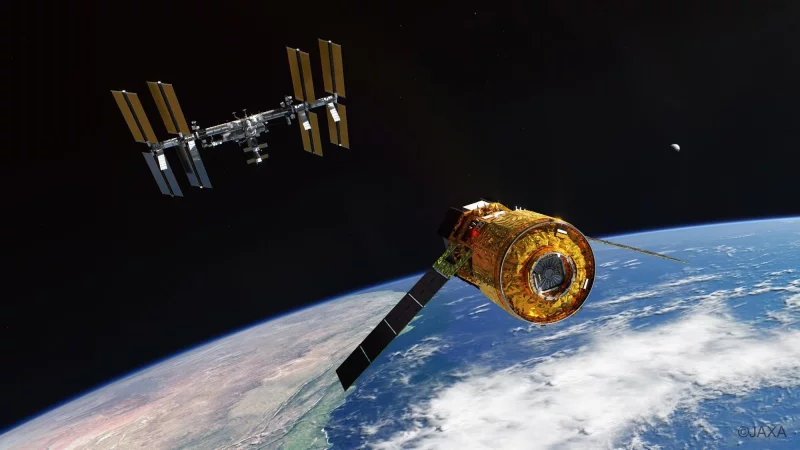
    The sake experiment will be delivered to the ISS aboard the HTV-X cargo ship
    JAXA

    Naturally, astronauts can’t live on bread alone—they’ll want something to drink as well. To that end, Mitsubishi, DASSAI, and the Aichi Industrial Technology Institute aim to bring Japan’s national beverage, sake, into space to make life beyond Earth a little more enjoyable. However, transporting sake to a lunar base would be prohibitively expensive, so the logical next step is to learn how to brew it 400,000 kilometers away on the Moon.

    Brewing Japan’s Signature Sake Under Lunar Conditions

    Enter the DASSAI MOON Project, an initiative designed to explore whether it’s possible to brew sake under lunar conditions using rice shipped from Earth and water extracted from lunar ice. It sounds simple, but sake brewing is an intricate process that depends heavily on fluid dynamics—which behave quite differently under the Moon’s low gravity.

    To study this, DASSAI MOON will launch on October 21 aboard JAXA’s first HTV-X cargo resupply vehicle to the International Space Station. The experiment’s setup—an automated closed system with a fermentation chamber and a centrifuge to mimic lunar gravity—will be installed in the Cell Biology Experiment Facility-Light (CBEF-L) inside Japan’s Kibō module.

    A Delicate Dance of Fermentation

    Without diving too deeply into the science, sake production is particularly complex. Although technically classified as a beer, it uses a process called parallel multiple fermentation, where starches convert into sugars and sugars into alcohol simultaneously through the work of specialized fungus and yeast.

    The experiment will run for about two weeks, producing around 520 grams (18.3 ounces) of fermented mash, which will then be frozen and sent back to Earth. Once home, part of the mash will be refined into a limited 100-milliliter (3.5-ounce) bottle of DASSAI MOON – Made in Space sake, to be sold for ¥110 million (about US$720,000), with proceeds supporting Japan’s space research. The rest of the mash will be used for scientific study.

    The only question now is whether this will inspire a new kind of space race—one to brew lunar versions of IPAs, lagers, and stouts. Hopefully, though, they’ll skip the overly hopped, fruit-filled varieties that defy all good brewing sense.


    Read the original article on: New Atlas

    Read more: Moonquakes Could Pose Serious Risks to Future Lunar Bases

  • Lunar Helium-3 Extraction Project Reaches Key Prototyping Phase

    Lunar Helium-3 Extraction Project Reaches Key Prototyping Phase

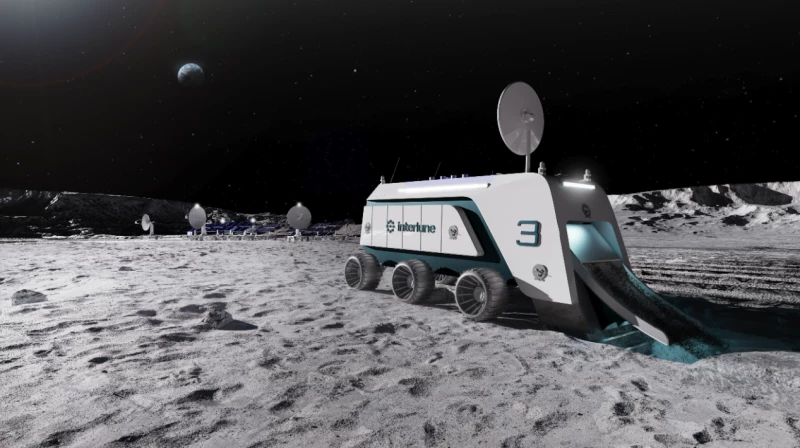
    The excavator will be integrated with three other key systems to form the Interlune Harvester
    Interlune

    An American startup is turning its attention to the Moon in hopes of addressing a terrestrial resource shortage. While helium-3 is scarce on Earth, scientists believe the Moon’s surface layer, or regolith, contains a rich supply. Interlune, the company behind this initiative, has just unveiled a full-scale prototype excavator—an essential part of its planned lunar harvesting system.

    Helium-3: A Critical and Dwindling Resource

    Concerns about helium-3 availability—an isotope valued for its potential in clean energy production and critical medical uses—first gained attention in the U.S. around 2008. The government formally acknowledged the problem in 2009, initiating efforts to manage the limited supply.

    According to a 2014 newsletter from the National Isotope Development Center, the U.S. has historically obtained helium-3 from the radioactive decay of tritium, a material tied to nuclear weapons production. But as the tritium stockpile has naturally decayed and demand has lessened, future supply has become increasingly uncertain.

    Render depicting what an Interlune resource extraction plant might look like
    Interlune

    On Earth, helium-3 is incredibly limited. However, the Moon has long been exposed to solar wind, which is believed to have deposited significant amounts of this rare isotope onto its surface. Interlune plans to tap into this overlooked lunar resource and transport it back to Earth. The project has gained support from major organizations including NASA, the U.S. Department of Energy, and the National Science Foundation.

    Four-Stage Harvesting Process Begins with Advanced Excavation

    Interlune’s harvesting method includes four primary stages: excavation, sorting, extraction, and separation. For the excavation phase, the company collaborated with equipment manufacturer Vermeer to develop a smaller prototype last year. Now, the team has progressed to a full-scale version. Engineers designed this new electric excavator to operate with lower power consumption, reduced tractive force, and less dust generation than conventional trenching methods.

    While specific technical details remain limited, Interlune reports that the machine is capable of continuously removing up to 100 metric tons of lunar soil per hour. The extracted regolith will be fed into the next stages—sorting, then processing for helium-3 separation.The team will return the leftover material to the Moon’s surface after extracting the resource.

    Render of the Interlune Harvester, which could be harvesting helium-3 from regolith as soon as the early 2030s
    Interlune

    Other components of the system are also under active development and testing, including in conditions simulating lunar gravity and within Interlune’s cryogenic lab at its Seattle headquarters. The current roadmap includes a 2027 mission to verify helium-3 concentrations on the Moon, followed by the installation of a pilot plant by 2029. Interlune expects to begin commercial operations and deliver to customers in the early 2030s.

    Interlune isn’t the only company preparing heavy machinery for lunar applications. Japanese firm Komatsu also showcased its own electric excavator at CES 2025, although their focus appears to lean more toward lunar construction rather than resource extraction.


    Read the original article on: New Atlas

    Read more: How Light Travels Across the Universe Without Losing Energy

  • Breathtaking Lunar Sunset Images May Unravel a Long-Standing Mystery

    Breathtaking Lunar Sunset Images May Unravel a Long-Standing Mystery

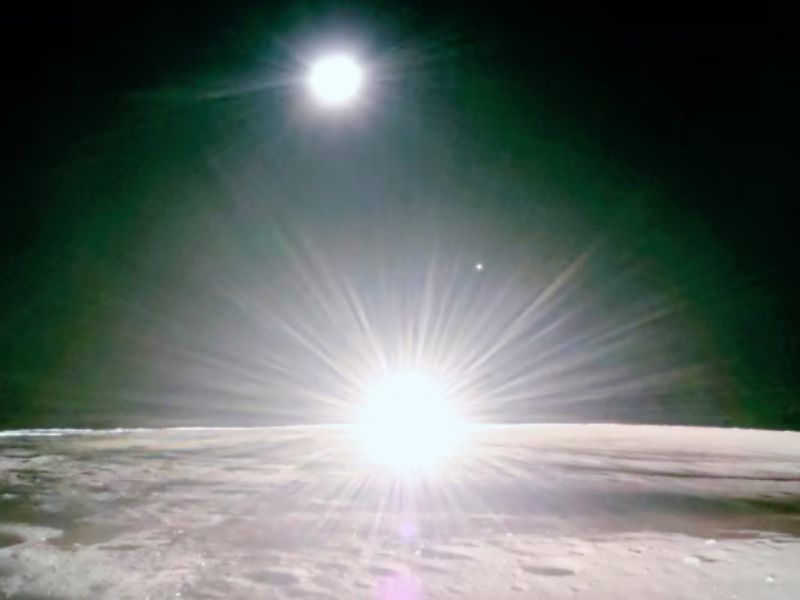
    Earth shines above as the Sun slowly sinks below the Moon’s horizon. (Firefly Aerospace)

    A private U.S. lander has captured striking high-definition images of a lunar sunset, offering NASA a new opportunity to investigate the mysterious haze first observed on the Moon in the 1960s.

    Texas-based Firefly Aerospace, which released the images on Tuesday, recently became the first private company to land a robotic spacecraft upright on the Moon. Its Blue Ghost lander—about the size of two side-by-side rhinos—touched down on March 2 at Mons Latreille, a volcanic feature in Mare Crisium on the Moon’s northeastern near side. The lander remained operational until March 16, shutting down as lunar night set in.

    One image reveals the Sun glowing just above the horizon, its halo tinged with green. Another west-facing shot captures the setting Sun bathed in an eerie green glow. Venus appears as a small dot above the Sun, while Earth’s bright reflection dominates the top of the frame.

    As the sun sets over the lunary horizon, Venus can be see as a pale dot in the distance. (Firefly Aerospace)

    NASA scientists are now analyzing the imagery. “One of the things they will be looking for is ‘horizon glow’ or a mechanism called ‘dust lofting,’” said Joel Kearns, deputy associate administrator for exploration at NASA’s Science Mission Directorate. Researchers suspect that lunar dust particles become electrically charged by solar ultraviolet radiation, causing them to levitate above the surface. This phenomenon, first recorded by NASA’s Surveyor probes in the 1960s and later observed by Apollo astronauts, remains an open question in lunar science.

    Analyzing Blue Ghost’s Data: Unraveling Lunar Mysteries Through Stunning Imagery

    To refine existing theories, scientists will compare the images with data from Blue Ghost’s instruments, including electromagnetic field and radiation sensors. “The images themselves are beautiful, they’re really aesthetic,” Kearns noted.

    A particularly detailed west-facing image shows soil in front of the lander illuminated by light reflecting off mountains behind it. This level of detail could help scientists improve models of how light scatters on the lunar surface.

    Earlier in the mission, Blue Ghost also captured high-definition footage of a total solar eclipse from the Moon on March 14. The mission is part of NASA’s collaboration with private industry to lower costs and support Artemis, the program designed to return astronauts to the Moon and eventually send humans to Mars.

    An eclipse image obtained by Blue Ghost, showing the ‘diamond ring’ effect, when the Sun just starts to emerge from totality. (Firefly Aerospace)

    Firefly Aerospace is already using lessons from this mission to improve future flights, including Blue Ghost-2 and Blue Ghost-3. Spaceflight program director Ray Allensworth acknowledged the lander’s unlikely survival beyond lunar night but remained hopeful. “The lander is absolutely not designed to withstand the extreme cold of lunar night, so I think the probability is very low that we will power back on – but this lander has surprised me,” she said.


    Read Original Article: Science Alert

    Read More: Stranded NASA Astronauts Joyfully Welcome Rescue Crew

  • Joint Chinese-Russian Initiative: Planning for a Nuclear-Powered Lunar Research Station by 2035

    Joint Chinese-Russian Initiative: Planning for a Nuclear-Powered Lunar Research Station by 2035

    Russia and China aim to deploy a lunar nuclear reactor by 2035. Credit: gizmodo.

    In 2021, the Chinese and Russian space agencies forged a collaborative agreement to establish a research facility on the Moon. Recently, they unveiled plans to construct an automated nuclear reactor on the lunar surface, intended to energize the International Lunar Research Station by the year 2035.

    Since the departure of Apollo 17 in December 1972, no human has set foot on the lunar surface. Despite numerous uncrewed missions dispatched to the Moon in recent years, progress toward human exploration has been incremental, delaying the eagerly anticipated return to our celestial neighbor.

    Ambitious Goals: Humanless Reactor Deployment

    Although China and Russia aspire to land humans on the Moon by 2030 and 2031, respectively, their latest venture contemplates deploying the nuclear reactor without direct human intervention. Yury Borisov, CEO of the Russian space agency Roscosmos, revealed plans to implement the reactor autonomously, stressing the necessity of overcoming this formidable challenge devoid of human presence.

    Borisov emphasized the inadequacy of solar panels alone in meeting the power demands of prospective lunar settlements, underscoring the pivotal role of nuclear energy in sustaining human habitation on the Moon.

    Geopolitical Complexities and Technological Hurdles

    While the International Lunar Research Station was initially envisioned as a collaborative effort, recent geopolitical tensions stemming from Russia’s actions in Ukraine have strained international cooperation in space endeavors.

    Additionally, the development of a nuclear-powered cargo spaceship, crucial for transporting essential materials to the Moon, faces technical obstacles, notably the challenge of effectively cooling the nuclear reactor.

    Looking Ahead

    Despite these challenges, Russian efforts persist in advancing the space tugboat project, a monumental endeavor aimed at facilitating lunar missions and addressing various space-related tasks. 

    Overcoming technical hurdles such as nuclear reactor cooling remains imperative to achieving the ambitious goal of establishing a Moon base by 2035.


    Read the original article on IFL Science.

    Read more: Odysseus Broke his Leg Landing from an Overlooked Laser Switch.

  • Newly Discovered Moon Mineral Unveiled by Chinese Mission

    Newly Discovered Moon Mineral Unveiled by Chinese Mission

    Credit: Unsplash / Nicolas Thomas.

    In December 2020, the Chang’e-5 mission embarked on an extraordinary journey to the Moon, marking a milestone in lunar exploration. Its mission is to land, collect, and return rocks to Earth. This endeavor marked the first collection of lunar material in 45 years, offering a treasure trove of insights into the Moon’s composition and history.

    Unveiling Lunar Mysteries

    The samples retrieved by Chang’e-5 have unveiled fascinating revelations about the Moon’s makeup. They have reaffirmed the presence of water and revealed the surprising discovery of rust in surface rocks.

    The exploration of high-pressure minerals is particularly intriguing. These minerals are believed to have formed due to asteroid or cometary impacts. While the Moon’s surface is pockmarked with craters, previous lunar samples lacked these unique minerals.

    Discoveries Within the Samples

    Researchers made remarkable discoveries within the lunar samples. They identified a new phosphate mineral, Changesite-(Y), representing the first new lunar mineral from the Chinese probe’s collection. This transparent, colorless mineral, composed of column-shaped crystals, likely formed during the late stages of basalts’ crystallization in the region where Chang’e-5 touched down.

    The findings of two known shock minerals, stishovite, and seifertite, were even more captivating. These silica polymorphs, possessing the same composition as ordinary quartz but with distinct crystalline structures, offer valuable insights into the Moon’s geological history.

    Insights into Mineral Formation

    These high-pressure minerals in lunar samples pose intriguing questions about their formation. While impact craters are abundant on the lunar surface, such minerals are rare. Researchers speculate that their scarcity may be due to their high-temperature instability.

    Additionally, the coexistence of stishovite and seifertite in a specific sample suggests dynamic processes at play, possibly involving phase transformations under varying conditions.

    Origins of the Samples

    The lunar samples are believed to originate from the Aristarchus crater, situated not far from the landing site in Oceanus Procellarum. Ejecta from a historical collision likely deposited these samples, providing a glimpse into a distant lunar event.

    The Chang’e-5 mission has expanded our understanding of the Moon’s geology and opened new avenues for exploration and discovery. As researchers continue to analyze these precious samples, the mysteries of Earth‘s celestial companion slowly unravel, offering profound insights into the evolution of our solar system.


    Read the original article in the journal Matter and Radiation at Extremes.

    Read more: Japan to Achieve Historic Moon Landing, Becoming Fifth Nation Ever.

  • Japan to Achieve Historic Moon Landing, Becoming Fifth Nation Ever

    Japan to Achieve Historic Moon Landing, Becoming Fifth Nation Ever

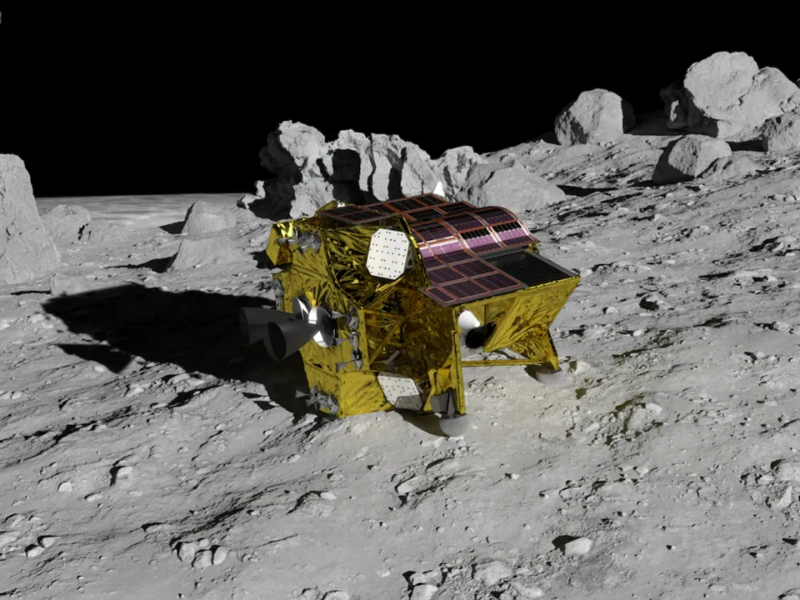
    Illustration of the Moon-landed SLIM probe. Credit: JAX

    Tomorrow marks a pivotal moment for the Japan Aerospace Exploration Agency (JAXA) as it endeavors to achieve a groundbreaking feat in space exploration. The agency is set to launch its Smart Lander for Investigating Moon, or SLIM, on a mission to land on the Moon successfully. If triumphant, Japan will join the exclusive ranks of nations that have achieved lunar landings, becoming the fifth globally and the third in the 21st century after China and India.

    Precision Landing and Lunar Exploration

    SLIM is scheduled to initiate its descent at 10 am ET on Friday (midnight Saturday in Japan), aiming for a soft touchdown just 20 minutes later. This mission is a crucial milestone for JAXA, as SLIM seeks to showcase unprecedented accuracy in lunar landing, a feat not yet accomplished by any previous mission.

    The goal is to land within 100 meters (330 feet) of a specific target area, a precision far beyond historical lunar landings.

    Moon Sniper’s Advanced Navigation

    In a departure from past lunar missions, SLIM leverages cutting-edge software initially designed for facial recognition. This innovative technology enables SLIM to determine its location precisely throughout the descent and landing phases.

    Utilizing data gathered by JAXA’s SELENE mission (Kaguya), SLIM is equipped to navigate and land with remarkable precision. Its moniker, Moon Sniper,” aptly captures the mission’s accuracy.

    Objectives and Challenges

    JAXA President Hiroshi Yamakawa emphasized SLIM’s primary objective as proving a “high-accuracy landing” during a September news conference. The mission aims not only to land on the lunar surface but to do so precisely, choosing the landing site rather than settling for a feasible location.

    If all goes according to plan, SLIM will deploy two rovers upon landing. The first rover, equipped with cameras and scientific payloads, utilizes a hopping mechanism for mobility. The second rover, weighing just 250 grams (9 ounces), boasts shape-shifting capabilities to adapt optimally to lunar conditions.

    Challenges Faced in Lunar Exploration

    As evident from past setbacks, the quest for lunar exploration comes with formidable challenges. JAXA’s OMOTENASHI lander and other notable missions, including a private US endeavor, faced complications or communication losses during their lunar endeavors. The difficulty of reaching and landing on the Moon, coupled with the precision required, underscores the significance of SLIM’s upcoming attempt.

    In a recent development, the private US mission Peregrine-One encountered failure, culminating in the burning and re-entry of its spacecraft into Earth’s atmosphere on January 18. These challenges highlight the complexities of lunar exploration and the risks accompanying ambitious space missions.


    Read the original article IFL Science.

    Read more: Historic Launch: First U.S. Lunar Lander in Over 50 Years Sets Course for the Moon.

  • Historic Launch: First U.S. Lunar Lander in Over 50 Years Sets Course for the Moon

    Historic Launch: First U.S. Lunar Lander in Over 50 Years Sets Course for the Moon


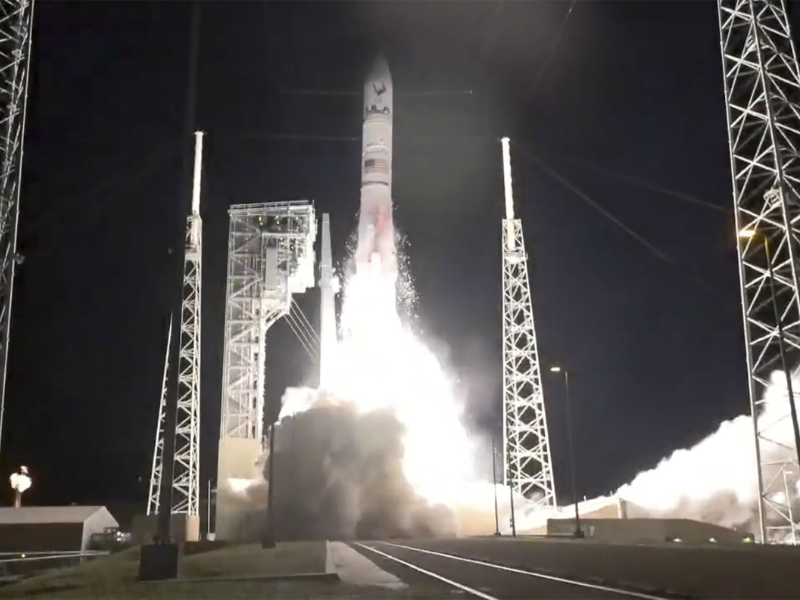
    In this footage captured from NASA’s video, the Vulcan rocket from United Launch Alliance, carrying Astrobotic Technology’s lander, takes off from Cape Canaveral Space Force Station in Florida on Monday, January 8, 2024. This marked the launch of the first U.S. lunar lander in over 50 years, initiating a competitive space race among private companies for delivering payloads to NASA and other clients. Photo credit: NASA via AP.

    In a groundbreaking event, the first U.S. lunar lander in more than five decades soared toward the moon on Monday, marking the onset of a space race among private companies vying to fulfill delivery missions for NASA and various clients.

    Astrobotic Technology’s Journey on ULA’s Vulcan Rocket

    Astrobotic Technology’s lunar lander hitched a ride on the newly launched United Launch Alliance’s Vulcan rocket. The Vulcan, piercing through the Florida predawn sky, charted a circuitous path to the moon, anticipating a planned landing on February 23.

    Astrobotic CEO John Thornton exclaimed, expressing excitement, “So, so, so excited. We are on our way to the moon! Astrobotic aims to be the first private entity to achieve a successful moon landing, a feat achieved by only four countries to date. However, competition looms, as a Houston-based company stands ready with a lander that could potentially reach the lunar surface via a more direct route.

    NASA’s Investment and Lunar Exploration Plans

    NASA allocated millions to both Astrobotic and the Houston company to develop and launch their lunar landers. These private spacecraft are tasked with conducting preliminary surveys before human exploration while delivering NASA technology, scientific experiments, and miscellaneous cargo. Astrobotic’s Peregrine lander, under a $108 million contract, is a significant player in this lunar exploration initiative.

    The last U.S. moon-landing mission took place in December 1972 with Apollo 17. The Artemis program, NASA’s latest lunar exploration initiative, aims to return astronauts to the moon within the next few years, starting with a lunar fly-around featuring four astronauts.

    Vulcan Rocket’s Inaugural Test Flight

    Monday’s mission also marked the long-delayed inaugural test flight of the Vulcan rocket, an upgraded version of ULA’s Atlas V. The launch’s success was celebrated by ULA’s chief executive, Tory Bruno, marking a significant milestone for space exploration.

    While the Soviet Union and the U.S. dominated lunar exploration in the 1960s and 70s, China and India joined the elite club in subsequent years. Last year, they witnessed lunar landers from Russia and a private Japanese company, with SpaceX scheduled to launch a lander from Intuitive Machines in the coming month.

    In this 2024 illustration from Astrobotic Technology, the Peregrine lunar lander is depicted on the moon’s surface. The anticipated launch date is set for Monday, January 8, 2024. Credit: Astrobotic Technology via AP.

    Challenges and Lunar Descent Anticipation

    The hour-long descent to the lunar surface poses a substantial challenge, with Astrobotic’s Thornton describing it as “exciting, nail-biting, terrifying all at once.” In addition to NASA experiments, the company has initiated its own lunar freight business, including unique cargo such as a chip of rock from Mount Everest and toy-size cars from Mexico.

    Controversies and Future Collaborations

    The launch faced controversy as the Navajo Nation sought a delay due to concerns about human remains on board. Astrobotics pledged to address these concerns in future missions, emphasizing collaboration with the Navajo Nation.

    Despite cargo fares ranging from a few hundred dollars to $1.2 million per kilogram, not enough for Astrobotic to break even on this initial flight, Thornton emphasized the importance of the mission, stating, “A lot of people’s dreams and hopes are riding on this.”


    Read the original article on PHYS.

    Read more: Lunar Exploration in 2024: A Pivotal Year for Human and Robotic Missions.