Tag: Medication

  • A Microrobot Moves Through the Bloodstream to Deliver Medication Precisely

    A Microrobot Moves Through the Bloodstream to Deliver Medication Precisely

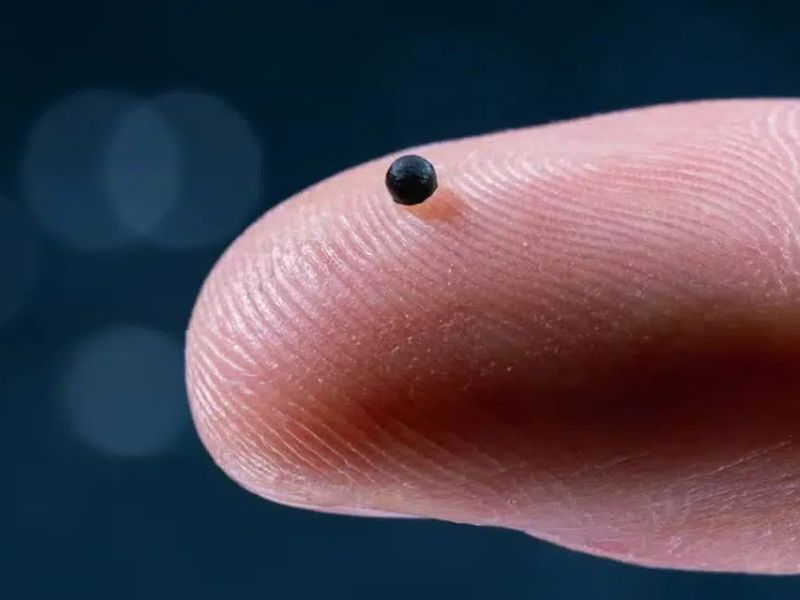
    An ETH Zurich grain-sized microrobot has demonstrated in preclinical tests the ability to navigate the bloodstream, deliver drugs precisely, and dissolve, showing promise for stroke and localized cancer treatments.
    Image Credits:fatosdesconhecidos

    An ETH Zurich grain-sized microrobot has demonstrated in preclinical tests the ability to navigate the bloodstream, deliver drugs precisely, and dissolve, showing promise for stroke and localized cancer treatments.

    The system consists of a miniature capsule that holds the drug along with iron oxide nanoparticles. Iron oxide nanoparticles let operators steer the microrobot via magnetic fields and X-ray imaging, then release the drug by heating the capsule with high-frequency pulses.The capsule’s materials then either dissolve or are cleared from the body.

    Unprecedented Precision in Targeted Intravascular Delivery

    According to the researchers, the experiments showed that over 95% of the drug releases in animal models took place precisely at the intended site—an exceptional level of accuracy for targeted delivery within blood vessels. The demonstrations covered catheter insertion, movement both with and against blood flow, and precise navigation along vessel walls.

    • Magnetic control: External magnetic fields enable steering and drug release.
    • Real-time imaging: X-ray guidance provides accurate tracking and positioning.
    • Biocompatible design: Materials are evaluated in large animals and engineered to break down safely.

    Although results in pigs and sheep are promising, the technology is still preclinical; safety, immune response, and human-specific imaging and navigation must be verified before clinical use. The authors note that regulatory evaluations and clinical trials will be required to determine safety and effectiveness in humans.

    Reducing Side Effects and Increasing Precision

    Delivering many medications systemically can cause toxicity and unwanted side effects. Approaches that deposit small doses directly at the affected site can improve effectiveness while minimizing harm to healthy tissue. Potential early uses include targeted clot breakdown in ischemic stroke, localized therapy for brain tumors, and intricate endovascular procedures requiring high precision.

    The ETH Zurich microrobot, featuring magnetic steering, controlled drug release, and post-delivery dissolution, is nearing clinical trial readiness, though regulatory, safety, and imaging challenges remain. If development continues as anticipated, the method could reshape certain invasive treatments in the coming decades.


    Read the original article on: Fatos Desconhecidos

    Read more: An injectable Weight-loss Drug can Reduce Leftover Post-Surgery Pounds

  • New Schizophrenia Medication Shows Promise Beyond Current Treatments

    New Schizophrenia Medication Shows Promise Beyond Current Treatments

    Credit: Depositphotos

    A groundbreaking compound, evenamide, has been shown to calm overactive brain circuits in animal models of schizophrenia, leading to improvements in memory, social behaviors, and dopamine regulation—offering hope for treating symptoms that existing antipsychotics fail to address.

    A Complex Disorder with Multiple Symptom Types

    Schizophrenia presents a complex mix of positive symptoms (such as hallucinations and delusions), negative symptoms (like social withdrawal and loss of pleasure), and cognitive issues (including memory and decision-making problems). While current antipsychotics can help manage positive symptoms, they often do little for negative or cognitive ones, and some patients develop resistance to these drugs.

    In preclinical tests, evenamide improved all three symptom categories—positive, negative, and cognitive—suggesting a broader therapeutic reach. “This study indicates that evenamide holds strong potential for addressing multiple aspects of schizophrenia,” said Anthony Grace, PhD, professor of neuroscience, psychiatry, and psychology at the University of Pittsburgh.

    Traditional antipsychotics work by blocking type 2 dopamine (D2) receptors, which reduces the effects of excessive dopamine activity in the brain—commonly linked to positive symptoms. While effective for hallucinations and delusions, this approach rarely improves cognitive or negative symptoms and can cause side effects such as stiffness, tremors, or hormonal changes.

    A New Approach Targeting the Hippocampus

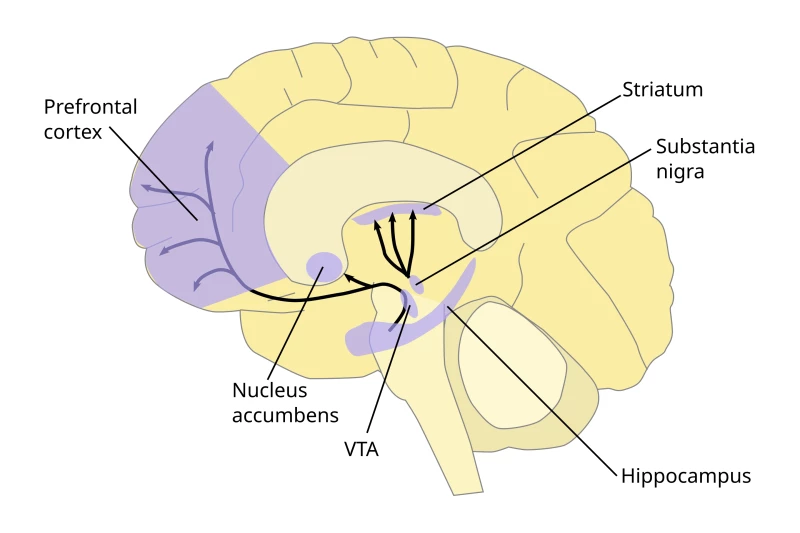
    Researchers at Newron Pharmaceuticals, an Italy-based company specializing in central nervous system therapies, took a different route. They targeted the hippocampus, a brain region that can become hyperactive in schizophrenia due to the loss of inhibitory GABA neurons.

    Evenamide, the first drug of its kind, selectively reduces the overactivity of certain neurons—especially in the hippocampus—by blocking voltage-gated sodium channels that enable electrical signaling. Unlike broader-acting drugs, it calms only the neurons firing excessively, leaving normal brain activity intact. “Evenamide uniquely addresses the hippocampal overactivity seen in schizophrenia without the side effects of D2 receptor blockade,” Grace explained, noting its benefits in behavioral symptoms neglected by standard treatments.

    The ventral tegmental area (VTA) is a key dopamine hub in the brain; an overactive hippocampus contributes to schizophrenia symptoms
    Wikimedia Commons/Quasihuman

    Using the MAM rat model—a well-established mimic of schizophrenia—researchers administered single doses of evenamide either into the abdominal cavity or directly into the ventral hippocampus. The drug normalized dopamine neuron activity, reduced overactive hippocampal pyramidal neurons, restored memory in both sexes, and improved social interaction in males. Females showed no social deficits to correct, so no change was observed there.

    Many antipsychotics don’t address all of the symptoms of schizophrenia
    Fernando @cferdophotography on Unsplash

    Grace noted that the memory benefits suggest evenamide could enhance cognitive function in patients, potentially improving their daily lives. “D2-based antipsychotics don’t address cognitive impairments, which remain a major burden for patients,” he said.

    Looking Ahead to Clinical Trials

    The study examined only short-term dosing and left some sex-specific effects unexplained, but the findings align with earlier clinical trial results.Ravi Anand, Newron’s Chief Medical Officer, stated that the data support the likelihood of success in the company’s ongoing Phase III program, potentially introducing a new treatment paradigm for schizophrenia.


    Read the original article on: New Atlas

    Read more: Viral Traces Found in Brain Lining of Individuals With Schizophrenia

  • Alzheimer’s Breakthrough: Sleep Medication Reduces Harmful Tau Buildup by Up to 40%

    Alzheimer’s Breakthrough: Sleep Medication Reduces Harmful Tau Buildup by Up to 40%

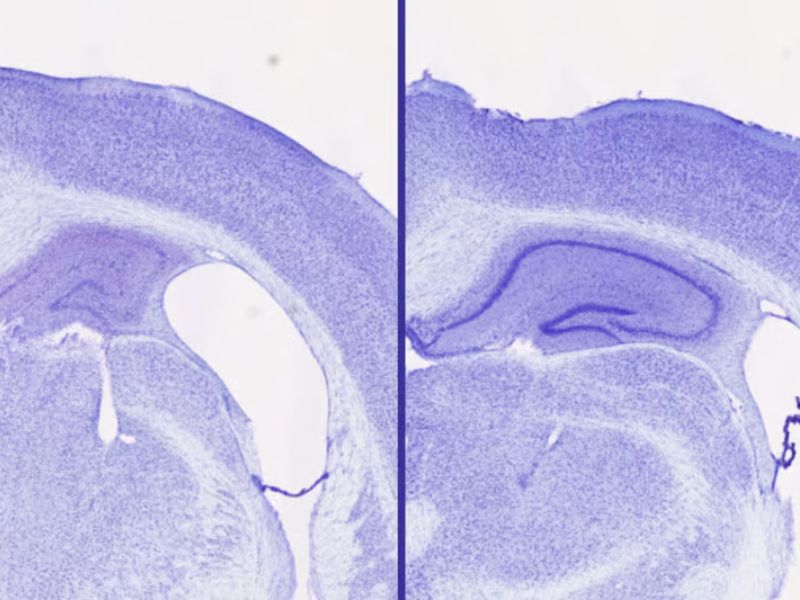
    Treatment with lemborexant (right) resulted in larger volume in the hippocampus (central purple spiral) and a smaller gap in brain tissue (white space) compared with another sleep aid treatment (left)
    Samira Parhizkar/WashU Medicine

    A widely available sleep aid has shown unexpected potential in supporting brain health by significantly reducing the accumulation of tau proteins — a key factor in the progression of neurodegenerative conditions such as Alzheimer’s disease.

    A Cross-Continental Collaboration Aims at Innovation

    This discovery stems from a collaboration between researchers at Washington University School of Medicine in St. Louis (WashU Medicine) and the Japanese pharmaceutical company Eisai. Eisai, which established a dedicated research unit in 2022 focused on Alzheimer’s prevention and treatment, is part of a growing trend that explores new therapeutic uses for existing drugs.

    The team centered their research on lemborexant, a sleep aid sold under the brand name Dayvigo. Unlike traditional sedatives, lemborexant works by inhibiting orexin — a neurotransmitter involved in maintaining wakefulness — through its action as a central nervous system (CNS) depressant. Approved in late 2019 for insomnia, lemborexant belongs to a newer class of drugs called orexin receptor antagonists, which are also being studied for their potential in treating depression.

    “Sleep loss has long been linked to increased risk of Alzheimer’s,” explained Dr. David M. Holtzman, senior author of the study and Professor of Neurology at WashU Medicine. “This study shows that lemborexant not only improves sleep but also reduces abnormal tau levels — a major contributor to the neural damage seen in Alzheimer’s and related disorders. We’re optimistic this could open the door to new treatments, either as standalone solutions or used in combination with other therapies.”

    Brain Volume Preserved in Treated Mice

    In the study, researchers observed genetically modified mice that were prone to developing tau buildup. They administered either lemborexant or zolpidem (brand name Ambien), a sleep aid from a different drug class that interacts with the GABA neurotransmitter rather than orexin. Despite both groups of mice sleeping similar amounts, those treated with lemborexant retained 30% to 40% more brain volume in the hippocampus — a region vital for cognitive function — than those given zolpidem. Brain volume loss is a hallmark of neurodegeneration.

    Holtzman, who previously helped uncover the link between poor sleep and tau and amyloid accumulation, noted that the new findings suggest a more nuanced mechanism is at work. The ability of orexin blockers like lemborexant to reduce toxic protein deposits may offer direct neuroprotective benefits.

    Interestingly, the study found these protective effects only in male mice, raising questions about biological sex differences in response to the treatment. Researchers suspect that female mice may naturally tolerate tau accumulation better, which could make the benefits of the drug harder to detect. Further investigation is needed to understand these differences.

    Next Steps and Future Possibilities

    Although the research is still in the animal-testing phase, the implications are promising. Orexin receptor antagonists may be particularly well-suited for use in neurodegenerative treatment regimens because they do not impair motor coordination — a concern with many traditional sleep aids.

    The anti-amyloid antibody treatments we currently use for early-stage Alzheimer’s patients help, but not to the degree we’d like,” said Holtzman. “To better slow disease progression, we need strategies that also target abnormal tau and the inflammation it triggers. This type of sleep aid could become an important part of that approach.We especially want to explore whether combining therapies that target both amyloid and tau can more effectively halt or even prevent the disease’s progression.


    Read the original article on: New Atlas

    Read more: The US Has Recently Approved The First Blood Test For Alzheimer’s Disease

  • Japanese Scientists Trial Groundbreaking Medication to Regenerate Teeth

    Japanese Scientists Trial Groundbreaking Medication to Regenerate Teeth

    Unlike reptiles and fish, which routinely replace their teeth, it’s long been believed that humans and most mammals only develop two sets over a lifetime.
    image Credit: Pixabay

    Unlike reptiles and fish, which routinely replace their teeth, it’s long been believed that humans and most mammals only develop two sets over a lifetime.

    However, Katsu Takahashi, head of oral surgery at the Medical Research Institute Kitano Hospital in Osaka, explains that a third set of tooth buds lies dormant beneath the gums.

    Takahashi’s team began clinical trials at Kyoto University Hospital in October, giving an experimental drug to adult volunteers in hopes of activating the growth of these hidden teeth.

    This is a completely new technology,” Takahashi told AFP.

    Natural Tooth Regeneration Could Offer a Less Invasive, More Affordable Alternative to Prosthetics

    Traditional prosthetic solutions for tooth loss due to decay, injury, or disease are often expensive and invasive. “Restoring natural teeth clearly offers significant benefits,” he added.

    Animal studies on mice and ferrets showed that inhibiting a protein called USAG-1 could trigger the growth of a third set of teeth. The researchers even published lab images showing regenerated teeth in these animals.

    In a study released last year, the team reported that their antibody-based treatment successfully promoted tooth regrowth in mice, marking what could be a major breakthrough in addressing human dental abnormalities.

    For now, the research team is focusing on patients with the most urgent needs—specifically those born missing six or more permanent teeth, a condition known as congenital tooth agenesis.

    A Rare Condition Causes Tooth Gaps and Social Struggles for Affected Youth in Japan

    This rare genetic disorder affects about 0.1% of the population and can cause significant difficulties with eating. In Japan, many young people with the condition wear face masks throughout adolescence to conceal the large gaps in their teeth, explained Takahashi.

    This drug could be life-changing for them,” he said.

    The treatment is primarily intended for children, and the researchers aim to make it available by 2030.

    Angray Kang, a professor of dentistry at Queen Mary University of London, noted that only one other group is working on a similar approach—using antibodies to regenerate or repair teeth.

    In my view, Takahashi’s team is leading the field,” said Kang, who specializes in immunotechnology and is not involved in the study.

    Kang described the research as “promising and worth further exploration,” especially since a drug targeting a protein closely related to USAG-1 is already being used to treat osteoporosis.

    He compared the long path ahead to “a series of ultra-marathons,” emphasizing that this is just the beginning of the journey toward human tooth regeneration.

    Chengfei Zhang, a clinical professor in endodontics at the University of Hong Kong, also praised the approach as “innovative with significant promise.”

    Experts Caution That Human Tooth Regrowth Remains Unproven Despite Promising Animal Studies

    Still, Zhang called the idea that humans have hidden tooth buds capable of generating a third set “both groundbreaking and controversial.” He warned that positive results in animal models don’t always guarantee success in humans.

    He added that while the animal experiments are encouraging, key questions remain—particularly whether the regenerated teeth would be functional and visually suitable as replacements for missing teeth.

    Takahashi remains optimistic, stating that the position of a newly grown tooth can be influenced—if not precisely controlled—by the location of the drug injection.

    If a tooth grows in an unintended spot, he explained, it can be realigned through orthodontic treatment or even relocated via transplantation.

    The initial clinical trial does not include young patients with congenital tooth loss, as the main goal at this stage is to assess the drug’s safety rather than its effectiveness.

    For now, the participants are healthy adults who have lost at least one natural tooth.

    Tooth Regrowth in Trial Participants Could Offer Early Evidence of the Drug’s Potential

    Although tooth regeneration isn’t the primary aim of this trial, Takahashi noted there’s a small chance it could occur—an outcome that would provide early proof the drug works for people who have lost teeth over time.

    If that happens, I’d be absolutely thrilled,” he said.

    Such a breakthrough would be especially meaningful in Japan, where the population is rapidly aging. The country has the world’s second-highest proportion of elderly citizens.

    According to Japan’s health ministry, over 90% of people aged 75 and older are missing at least one tooth.

    There’s strong hope that our technology can directly help extend healthy life expectancy,” Takahashi added.


    Read the original article on: France

    Read more: Lab-Grown Teeth Are Closer to Reality, Scientists Say

  • A Common Blood Pressure Medication Prolongs Lifespan and Delays Aging in Animals

    A Common Blood Pressure Medication Prolongs Lifespan and Delays Aging in Animals

    The blood pressure medication rilmenidine has shown potential to slow aging and extend lifespan in animal studies, raising the possibility of similar benefits for humans. If effective, it could promote longer, healthier lives without the challenges of extreme calorie restriction.
    Credit: Pixabay

    The blood pressure medication rilmenidine has shown potential to slow aging and extend lifespan in animal studies, raising the possibility of similar benefits for humans. If effective, it could promote longer, healthier lives without the challenges of extreme calorie restriction.

    Previous research revealed that rilmenidine mimics the effects of caloric restriction at a cellular level. Caloric restriction, which involves reducing energy intake while maintaining proper nutrition, has been proven to extend lifespans in several animal models. However, translating these findings to humans remains uncertain, as long-term caloric restriction poses health risks such as dizziness, brittle bones, and hair thinning. Researchers hope rilmenidine could offer similar benefits without these drawbacks.

    Study Highlights Rilmenidine’s Potential to Extend Lifespan and Boost Health in Worms

    A 2023 study treated young and old Caenorhabditis elegans worms—a popular research organism due to its genetic similarities to humans—with rilmenidine. The drug extended their lifespan and improved key health markers, much like the effects of caloric restriction. “For the first time, we have been able to show in animals that rilmenidine can increase lifespan,” said molecular biogerontologist João Pedro Magalhães from the University of Birmingham. “We are now keen to explore if rilmenidine may have other clinical applications.”

    Some human cell types and their nuclei on the left, compared to cells from C. elegans on the right. (J.J.Froehlich/CC BY-SA 4.0/Wikimedia Commons)

    Rilmenidine Mimics Caloric Restriction Effects in Mice, Targeting Aging Key Tissues

    Additional tests on mice revealed that rilmenidine induced gene activity associated with caloric restriction, particularly in kidney and liver tissues. This finding suggests the drug might replicate some of the cellular changes that contribute to longer lifespans in calorie-restricted animals.

    A key discovery was the role of the nish-1 receptor in rilmenidine’s effectiveness. When this receptor was deleted in worms, the drug no longer extended their lifespan. However, restoring the receptor reinstated the drug’s benefits, identifying a potential target for future anti-aging interventions.

    Rilmenidine shows strong potential as an anti-aging treatment because people can take it orally, it is widely available, and it rarely causes mild side effects like occasional insomnia or drowsiness. Although researchers must conduct more studies to confirm its effects on human aging, these findings represent significant progress.

    Rilmenidine is normally used to treat high blood pressure. (Prostock-studio/Canva)

    “With a global aging population, the benefits of delaying aging, even slightly, are immense,” said Magalhães.


    Read Original Article: Science Alert

    Read More: Scitke

  • What Occurs When you Stop Taking Medication for Weight Loss?

    What Occurs When you Stop Taking Medication for Weight Loss?

    Cutting-edge medications for obesity such as injectable liraglutide, marketed as Saxenda, produce notable outcomes within the initial year. Recent studies investigate the sustainability of these results post-treatment cessation.
    Anti-obesity drugs alone may not be effective at maintaining weight loss. Credit: Pixaobay

    Cutting-edge medications for obesity such as injectable liraglutide, marketed as Saxenda, produce notable outcomes within the initial year. Recent studies investigate the sustainability of these results post-treatment cessation.

    Recently, there has been a rapid surge in popularity for the latest class of weight-loss medications. Initially developed as the antidiabetic medication Ozempic, semaglutide garnered global attention due to its potent additional benefit. Under the new name Wegovy, it swiftly emerged as the most successful weight loss drug to date.

    Semaglutide received FDA approval for weight management in 2021, though it wasn’t the first GLP-1 drug to gain this approval; that distinction belonged to liraglutide (Saxenda) in 2014. However, semaglutide captured significant public attention, especially after some celebrities disclosed their use of it, leading to global shortages of Wegovy and propelling its manufacturer, Novo Nordisk, to a valuation of US$500 billion.

    Reevaluating the Role of Exercise in GLP-1 Weight Loss Medication

    Clinical trials validate the impressive weight-loss efficacy of GLP-1 drugs, contributing to their popularity. Yet, questions arise regarding whether the hype surrounding them aligns with clinical outcomes. Both semaglutide and liraglutide received FDA approval for use alongside a reduced-calorie diet and increased physical activity. However, there’s little research on how many users adhere to this approved usage of GLP-1 drugs. It’s improbable that all users have altered their diet and exercise habits accordingly. Now, a few years later, researchers are revisiting the importance of exercise in conjunction with GLP-1 medications in maintaining weight loss.

    Novo Nordisk-sponsored Semaglutide Treatment Effect in People with Obesity (STEP) trials examined semaglutide’s efficacy as a weight-loss drug. STEP 1, published in 2021, showed that weekly semaglutide alongside “lifestyle intervention” (diet and exercise) led to a sustained, clinically significant weight reduction. However, a subsequent study, an extension of STEP 1, funded by Novo Nordisk, revealed that participants regained two-thirds of their lost weight within a year after treatment and lifestyle interventions ceased.

    In a recent University of Copenhagen-led study published in eClinical Medicine, researchers enrolled 109 adults with obesity, inducing weight loss through an eight-week low-calorie diet. Participants were then assigned to one of four groups: supervised exercise only, liraglutide alone, liraglutide combined with exercise, or placebo.

    Long-Term Effects of Liraglutide-Exercise Combination on Weight Maintenance

    A year after discontinuing the liraglutide-exercise combination, participants maintained reduced body weight and fat percentage compared to those discontinuing liraglutide alone. Those on the combined treatment sustained at least a 10% weight loss compared to those on liraglutide alone or placebo. Interestingly, those only engaging in exercise, without liraglutide, also maintained a 10% weight loss compared to placebo. Notably, participants receiving liraglutide alone regained 13 lbs/6.0 kg more weight after a year than those receiving exercise alone, despite similar initial weight loss. The study received partial funding from Novo Nordisk.

    Signe Sørensen Torekov, the study’s lead author, notes that individuals incorporating an exercise routine, with or without obesity drug treatment, reported reduced fatigue, increased energy, and enhanced mental well-being, resulting in an overall improved quality of life. Conversely, those solely on medical treatment reported heightened fatigue and reduced energy levels.

    This study highlights the ongoing challenge of maintaining long-term adherence to weight loss treatment, emphasizing the importance of exercise for sustained weight loss. However, there is debate over whether the ‘quick-fix‘ approach of GLP-1 weight loss drugs could be surpassed by dietary changes and regular exercise, albeit with slower outcomes.

    The evolving landscape of weight loss treatment sees the FDA’s approval of Zepbound (tirzepatide) in late 2023, offering potential weight loss of up to 50 lbs/23 kg and adding to the range of GLP-1 anti-obesity medications. Yet, the history of diet drugs reveals challenges, with many past medications banned due to adverse effects such as cardiovascular issues or increased suicide risk. The future of these new diet drugs remains uncertain, with their efficacy and longevity to be determined over time.


    Read the original article on: New Atlas

    Read more: Healthy Eating, Happy Gut: Right Diet Equals Weight Loss

  • Medication Activates Dormant Bone Cells to Ease Lower Back Discomfort

    Medication Activates Dormant Bone Cells to Ease Lower Back Discomfort

    Navitoclax knocked out pain-triggering senescent osteoclasts to relieve back pain
    Depositphotos

    In positive developments for the 80% of Americans experiencing lower back pain during their lifetime, scientists have discovered that repurposing an existing drug can effectively target dormant osteoclast cells, reducing spinal hypersensitivity.

    Xu Cao, a senior author and Orthopedic Surgery professor at Johns Hopkins University School of Medicine, explained that while osteoclasts play a crucial role in bone remodeling and skeletal development, senescence in the endplate of the spinal column leads to nerve growth and spine pain. The research indicates that eliminating these senescent osteoclasts, potentially through the use of existing drugs, could present a novel approach to treating lower back pain.

    Unlocking Navitoclax’s Potential

    The drug in question is an experimental anticancer medication called Navitoclax, initially known as ABT263, developed by the US pharmaceutical company AbbVie. Previous research has demonstrated the drug’s potential beyond cancer treatment, showing effectiveness in rejuvenating skin cells and addressing Alzheimer’s disease.

    In the realm of geroscience, which focuses on age-related diseases, cellular senescence is a central area of investigation. Senescent cells, ceasing division but persisting without proper elimination, contribute to inflammation and various age-related chronic conditions.

    Navitoclax, categorized as a senolytic, belongs to a new class of drugs targeting cellular dysfunction associated with aging to extend both healthspan and lifespan. Concerning osteoclasts, these senescent cells, instead of fulfilling their bone breakdown role for tissue remodeling, remain dormant.

    Lead author Dayu Pan from Johns Hopkins explains, “Senescence promotes age-related musculoskeletal diseases such as osteoporosis, and removing senescent cells from degenerated vertebral disks restores the intervertebral disk structure.” The study aimed to investigate whether specific senescent osteoclasts were causing the porous endplates between vertebrae and disks, allowing nerve infiltration leading to lower back pain, and if eliminating these osteoclasts could alleviate the pain.

    Targeting Senescent Osteoclasts with Navitoclax in a Mouse Model

    Using a mouse model, the scientists investigated the presence of senescent osteoclasts in the porous endplates of mice experiencing two types of pain – one related to aging and the other resulting from lumbar spine instability. Once identified, they administered Navitoclax to target and eliminate these senescent cells from the affected area, resulting in reduced pain and increased activity in both groups of mice compared to a control group.

    Examination of bone tissue revealed diminished degeneration and porousness in the endplates, along with reduced separation between them. Additionally, the absence of senescent cells prevented the growth of new nerves into the bones, preventing sensitivity and pain.

    This outcome holds promise for the researchers, who aspire to subject it to further evaluation in a clinical trial. The study is currently available as a peer-reviewed preprint, anticipating publication in the journal eLife.


    Read the original article on: New atlas

    Read more: US and UK Approve Potent Weight Loss Medication

  • US and UK Approve Potent Weight Loss Medication

    US and UK Approve Potent Weight Loss Medication

    The FDA's approval of Eli Lilly's Zepbound marks a significant milestone for the United States in the rapidly growing global field of efficient weight loss solutions. The company has provided details on the drug's pricing, recommended doses, insurance coverage, and its availability in stores.
    In trials that included controlled diet and exercise, tirzepatide performed better than semaglutide (Ozempic, Wegovy)
    Credit: Depositphotos

    The FDA’s approval of Eli Lilly’s Zepbound marks a significant milestone for the United States in the rapidly growing global field of efficient weight loss solutions. The company has provided details on the drug’s pricing, recommended doses, insurance coverage, and its availability in stores.

    Zepbound, originally introduced as a treatment for type 2 diabetes under the name Mounjaro, has now become the official brand for weight management. While the FDA granted approval for diabetes management in May 2022, it has also been commonly prescribed for weight loss despite not being officially indicated for that purpose.

    UK Regulatory Authority Approves Mounjaro for Weight Management

    Simultaneously with this announcement on November 8, the Medicines and Healthcare products Regulatory Agency (MHRA) in the UK authorized the use of Mounjaro for weight management and weight loss.

    Zepbound is entering the market at a time when its competitor, Denmark’s Novo Nordisk, is facing challenges in meeting the demand for Ozempic and Wegovy. To avoid potential shortages, Eli Lilly plans to double its manufacturing capacity by the end of 2023. Currently, approximately five million people in the US are officially eligible for Mounjaro, but around 50 million adults will qualify for Zepbound, with insurance covering roughly half of the cost.

    Not surprisingly, Lilly shares rose 3.2% following the FDA announcement
    Depositphotos

    Zepbound, similar to Ozempic, used for managing type 2 diabetes, and Wegovy, prescribed for obesity treatment, belongs to the class of glucagon-like peptide 1 (GLP-1) agonists. These drugs mimic a hormone to reduce food intake, slow stomach emptying, and suppress appetite. However, Zepbound’s active ingredient is tirzepatide, not semaglutide, and it mimics a second hormone called glucose-dependent insulinotropic polypeptide (GIP), which may also assist in breaking down sugar and fat in the body.

    FDA Approval Based on Weight Loss Trials in 2,539 Adults

    The FDA’s approval was based on trials involving 2,539 adults dealing with obesity and weight-related problems unrelated to diabetes. In these trials, which also emphasized dietary and exercise measures, participants with an average starting weight of 231 pounds (105 kilograms) lost an average of 48 pounds (22 kilograms) with the highest dose (15 mg) and 24 pounds (11 kilograms) with the lowest dose (5 mg).

    Zepbound will also be administered through a pen-style injection once a week and will be offered in six different dosages: 2.5 mg, 5 mg, 7.5 mg, 10 mg, 12.5 mg, and 15 mg. Its monthly cost is set at $1,059.87, which is approximately equivalent to the price of Mounjaro and about 20% lower than the cost of Wegovy’s 2.5-mg dose.

    The pharmaceutical company has introduced a commercial savings card program to improve access to this relatively expensive medication. Individuals with commercial insurance covering Zepbound may only need to pay as little as $25 for a one-month or three-month prescription. Even if Zepbound is not included in their commercial insurance plan, individuals may still qualify to obtain the drug at a subsidized rate of approximately $550 per month.

    Mike Mason, the executive vice president and president of Lilly Diabetes and Obesity, emphasized the barriers preventing people with obesity from accessing effective treatments for weight loss and expressed the company’s commitment to collaborating with healthcare, government, and industry partners to ensure broader access to Zepbound for those who could benefit from it.

    Gastrointestinal Side Effects Associated with Zepbound, Ozempic, and Wegovy

    Similar to Ozempic and Wegovy, the use of Zepbound is associated with gastrointestinal side effects, with common symptoms including nausea, diarrhea, vomiting, constipation, abdominal pain, dyspepsia, injection-site reactions, fatigue, hypersensitivity reactions, eructation, hair loss, and gastroesophageal reflux disease.

    Dr. John Sharretts, director of the Division of Diabetes, Lipid Disorders, and Obesity in the FDA’s Center for Drug Evaluation and Research, noted that obesity and being overweight are serious conditions linked to leading causes of death like heart disease, stroke, and diabetes. He highlighted the importance of the FDA’s approval to address the growing rates of obesity and overweight in the United States, emphasizing the unmet medical need for effective treatments.

    Tirzepatide is presently undergoing evaluation by regulatory authorities in both Europe and China.

    Additionally, the FDA is conducting an inquiry into counterfeit semaglutide products. The FDA’s Adverse Event Reporting System has received 42 reports referencing the utilization of unauthorized imitation Ozempic and Wegovy medications. According to CBS News, 28 of these reports were classified as “serious,” and three individuals have required hospitalization.


    Read th e original article on: New Atlas
    Read more: A Healthy Lifestyle May Help Prevent Depression, and New Research Delves into the Underlying Reasons