Tag: Memory

  • 10,000 Brain Scans Explain How Aging Impairs Memory

    10,000 Brain Scans Explain How Aging Impairs Memory

    Episodic memory—the ability to remember personal experiences and past events—tends to weaken with age. While this decline is well documented, the underlying mechanisms have long been unclear. A recent study helps shed light on how and why this process occurs.
    Image Credits:(PM Images/Stone/Getty Images)

    Episodic memory—the ability to remember personal experiences and past events—tends to weaken with age. While this decline is well documented, the underlying mechanisms have long been unclear. A recent study helps shed light on how and why this process occurs.

    A team at the University of Oslo studied whether age-related memory loss is universal or influenced by individual risk factors like the APOE ε4 gene.

    A Massive, Multi-Cohort Research Effort

    Their analysis was notable for its scale. The researchers analyzed data from 3,737 healthy adults, including 10,343 MRI scans and 13,460 memory tests from multiple long-term studies.

    By pooling data from dozens of cohorts, researchers have created the most detailed view yet of how age-related brain changes affect memory, says neurologist Alvaro Pascual-Leone.

    Image Credits:The researchers looked for links between brain structural changes and memory decline. (Vidal-Piñeiro et al., Nat. Commun., 2025)

    The findings revealed a nuanced pattern. Although the hippocampus—a region crucial for learning and memory—played a prominent role, as anticipated, declines in memory could not be attributed to changes in any single brain region alone.

    Decreases in brain tissue volume were associated with poorer episodic memory, a predictable result, but this relationship varied considerably. The link became more pronounced with advancing age, particularly after 60, and was strongest among individuals experiencing faster-than-average brain shrinkage.

    The Impact of APOE ε4 on Brain Shrinkage and Memory

    Participants carrying the APOE ε4 gene showed a more rapid reduction in brain tissue volume and a steeper decline in memory than others, though the overall progression followed a similar course.

    According to Alvaro Pascual-Leone, cognitive and memory decline are not merely inevitable outcomes of aging, but reflect a combination of individual susceptibility and age-related biological processes that facilitate neurodegeneration and disease.

    The results generate new questions while also providing important insights. Overall, they suggest memory decline is closely linked to aging, with brain changes becoming increasingly important over time.

    The findings also carry implications for efforts to slow or prevent memory loss. Effective treatments will likely need to address multiple brain regions and may offer the greatest benefit if introduced early. Encouragingly, the same therapies may work for people with or without the APOE ε4 gene due to shared underlying biology.

    Memory Decline Is Shaped by Multiple Interacting Factors

    Evidence is mounting that memory loss later in life is shaped by a range of interacting factors within broader cognitive functioning. As researchers deepen their understanding of these influences, opportunities to manage and mitigate decline improve.

    Alvaro Pascual-Leone notes that memory decline reflects broad, long-term brain vulnerability rather than a single region or gene, and understanding this could help identify at-risk individuals and develop targeted strategies to preserve cognitive health.


    Read the original article on: Sciencealert

    Read more:Russian Scientists Test a Plasma Engine that could Shrink Mars Travel to 30 Days
  • Brain Found to Retain Three Copies of Each Memory

    Brain Found to Retain Three Copies of Each Memory

    Similar to a computer system with built-in redundancies, a study has discovered that the brain uses three distinct sets of neurons to store a single memory. This finding might eventually aid in alleviating painful memories for those who have experienced trauma.
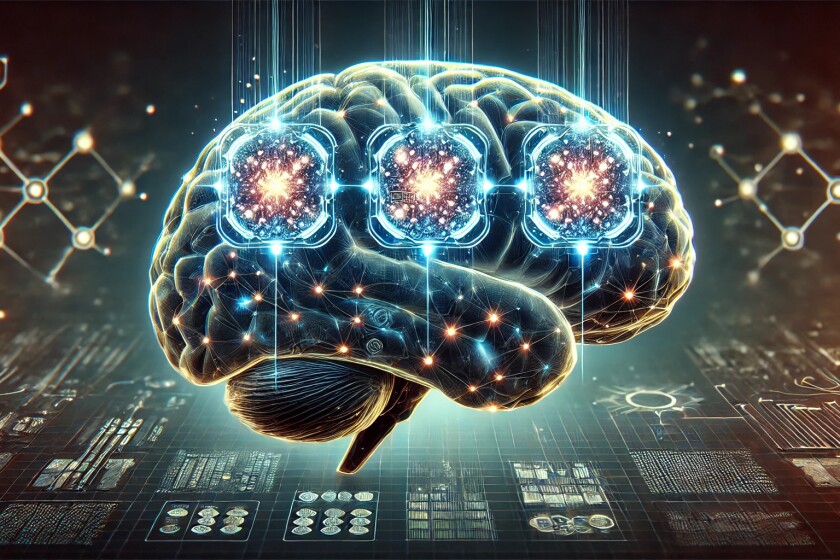
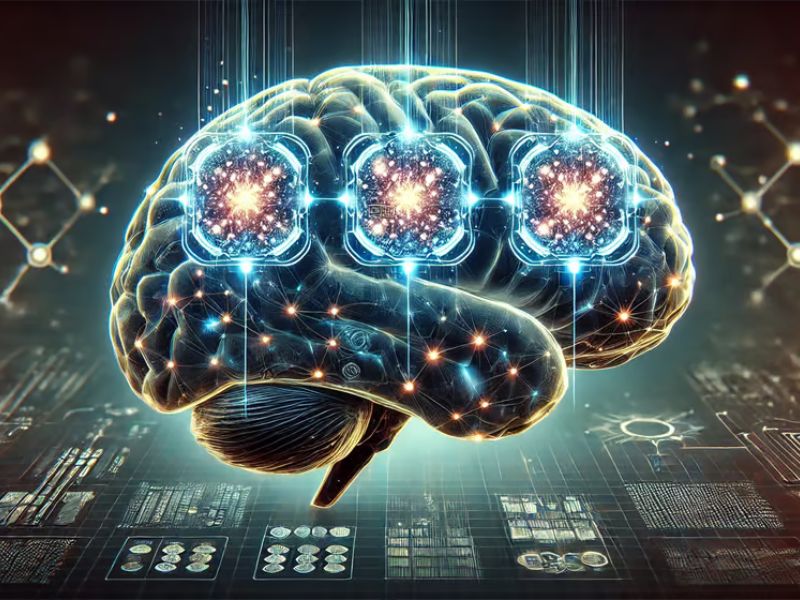
    This generative image illustrates the discovery that the brain stores memories in three parallel copies

    Similar to a computer system with built-in redundancies, a study has discovered that the brain uses three distinct sets of neurons to store a single memory. This finding might eventually aid in alleviating painful memories for those who have experienced trauma.

    Researchers at the University of Basel’s Biozentrum imaged the brains of mice to observe memory formation. They found that forming a new memory involves activating three different sets of neurons.

    The first set, early-born neurons, develop early during fetal growth. The second set, late-born neurons, appear late in embryonic development. The third set consists of neurons that form in the middle of fetal development.

    The imaging study showed that memories stored in early-born neurons are initially difficult to retrieve but strengthen over time.

    Memory Stability Varies

    In contrast, memories stored in late-born neurons are initially very strong but gradually weaken, eventually becoming inaccessible. Memories stored in middle-born neurons, however, demonstrated greater stability compared to those in either of the other two neuron groups.

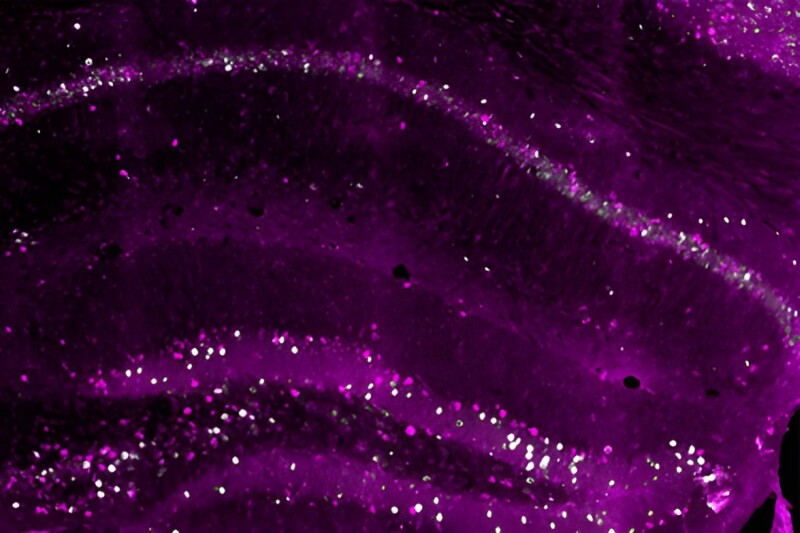
    This cross-section of a mouse’s hippocampus shows the early-born neurons in magenta, which are responsible for creating a long-lasting copy of a memory
    University of Basel, Biozentrum

    Flavio Donato Highlights the Brain’s Dual Challenge with Memory

    The brain’s challenge with memory is quite remarkable,” says Flavio Donato, head of the research group at Biozentrum. “On one hand, it needs to retain past events to help us understand our world. On the other, it must adapt to ongoing changes, requiring our memories to adjust so we can make suitable future decisions.”

    With their new insights, the researchers delved deeper into how memories are formed and accessed. Although the study was conducted on mice, which are frequently used in neuroscience due to their similar cortical cell types to humans (75 in total), the findings are specific to mice at this stage.

    The researchers believe their findings could have implications for treating individuals affected by traumatic events. Their work suggests it may be possible to alter memories in the brain. For instance, if a memory is still recent and resides in the late-born neurons, it might be possible to modify it before it is transferred to the middle and early-born neurons for long-term storage.

    Once a memory is established in the late-born neurons, however, modifying it becomes increasingly difficult. Essentially, the longer a memory has been stored, the harder it is to change.

    Vilde Kveim, the study’s lead author, notes, “The dynamic nature of memory storage in the brain highlights its plasticity, which supports its vast memory capacity.”

    Understanding this plasticity could eventually assist scientists in helping people recover memories they believed were lost or reduce intrusive, painful memories that disrupt daily life.


    Read the original article on: New Atlas

    Read more: How to Improve Focus and Attention: Insights from Neurobiology

  • Sleep Boosts Memory for Complex Events

    Sleep Boosts Memory for Complex Events

    Sleep aids in solidifying our memory of complex associations, thereby facilitating the recollection of entire event sequences.
    Credit: Depositphotos

    Sleep aids in solidifying our memory of complex associations, thereby facilitating the recollection of entire event sequences.

    For a while, researchers have been aware that sleep plays a role in consolidating our memories of facts and episodic events.

    However, previous research has primarily focused on straightforward associations, such as those formed when learning new vocabulary.

    Understanding Complex Event Composition

    Dr. Nicolas Lutz from LMU’s Institute of Medical Psychology explains that real-life events typically consist of multiple components, such as location, individuals, and objects, interconnected in the brain. These associations vary in strength, with some elements linked indirectly. Through neural connections, a single cue word often triggers the recollection of various aspects of an event simultaneously, a process known as pattern completion, fundamental to episodic memory.

    Lutz led a study recently published in the journal Proceedings of the National Academy of Sciences (PNAS), examining sleep’s impact on memory for such complex events. Participants learned events with intricate associations, spending one night in a sleep laboratory or staying awake all night in different conditions. Both groups then spent the following night at home for recovery.

    Subsequently, participants were tested on their ability to recall different associations between event elements. The study revealed that sleep specifically strengthens weak associations and fosters new connections between elements not directly linked during learning. Moreover, sleep enhances the ability to remember multiple event elements together, prompted by a single cue, compared to staying awake.

    Insights from Brain Activity Monitoring

    This underscores sleep’s importance in processing complex event information and completing partial data in the brain. Monitoring the participants’ brain activity during sleep, the study authors also found that enhanced memory performance is associated with sleep spindles—bursts of neural oscillatory activity linked to active memory consolidation.

    This process involves the reactivation of the underlying neural structures during sleep.

    This discovery implies that sleep spindles play a crucial role in consolidating complex associations, which are fundamental for recalling complete event memories,” explains Professor Luciana Besedovsky, the lead researcher of the study.

    According to Lutz and Besedovsky, the observed effects of sleep on memory represent a significant adaptation of the human brain. These effects assist individuals in forming a more coherent understanding of their surroundings, thereby facilitating more comprehensive predictions of future events. “Thus, our findings unveil a novel function through which sleep can confer an evolutionary advantage,” concludes Luciana Besedovsky. “Moreover, they offer fresh insights into how we encode and retrieve information related to complex, multi-element events.”


    Read the original article on: Science Daily

    Read more: Sleep Boosts Memory but Can also Implant False Memories

  • Scientists Developed a Protein to Boost Memory

    Scientists Developed a Protein to Boost Memory

    Neuroscientists from the Faculty of Medicine and Surgery at the Catholic University in Rome, along with the Fondazione Policlinico Universitario Agostino Gemelli IRCCS, have genetically altered the brain-active molecule LIMK1, crucial for memory. They introduced a "molecular switch" activated by the drug rapamycin, recognized for its various anti-aging effects on the brain.
    Credit: Depositphotos

    Neuroscientists from the Faculty of Medicine and Surgery at the Catholic University in Rome, along with the Fondazione Policlinico Universitario Agostino Gemelli IRCCS, have genetically altered the brain-active molecule LIMK1, crucial for memory. They introduced a “molecular switch” activated by the drug rapamycin, recognized for its various anti-aging effects on the brain.

    Joint research with substantial consequences

    However, the findings are from a research paper in Science Advances, a collaboration between the Catholic University in Rome and the Fondazione Policlinico Universitario Agostino Gemelli IRCCS. The study, led by Claudio Grassi, a Full Professor of Physiology and Director of the Department of Neuroscience, is backed by the Italian Ministry of Education, University and Research, the American Alzheimer’s Association Foundation, and the Italian Ministry of Health. This research holds significant promise in advancing our knowledge of memory function and aiding the development of novel approaches for neuropsychiatric disorders such as dementia.

    The Function of LIMK1 in Memory Processes

    LIMK1 protein is essential in determining the structural alterations in neurons, specifically the development of dendritic spines. These spines enhance the transmission of information in neural networks and are pivotal in learning and memory processes.

    Professor Claudio Grassi, the study’s senior author, elucidates, “Memory is an intricate process that encompasses modifications in synapses, the connections between neurons, particularly in specific brain regions like the hippocampus, which plays a vital role in memory formation.

    Professor Grassi elaborates further, stating that synaptic plasticity, involving alterations in the structure and function of synapses triggered by the activation of neural circuits, occurs during experiences like sensory stimuli. These experiences initiate complex signaling pathways that engage numerous proteins. Some of these proteins play a crucial role in memory, and reduced expression or modifications in these proteins are associated with changes in cognitive functions. LIMK1 is one such crucial protein. Our study aimed to regulate the activity of this protein, given its pivotal role in dendritic spine maturation between neurons. Professor Grassi underscores that controlling LIMK1 with a drug offers the potential to promote synaptic plasticity and, consequently, the physiological processes dependent on it.”

    Chemogenetic Strategy: A Fresh Approach to Enhancing Memory

    Cristian Ripoli, Associate Professor of Physiology at the Catholic University and the study’s first author, explains, “The innovative ‘chemogenetic’ strategy, which integrates genetics and chemistry, hinges on the use of rapamycin. This immunosuppressive drug, known for extending life expectancy and its positive effects on the brain in preclinical models, is integral to this approach.

    Professor Ripoli underscores, “We altered the LIMK1 protein sequence by integrating a molecular switch, allowing us to activate it at will by administering rapamycin.”

    In animals experiencing age-related cognitive decline, employing this gene therapy to alter the LIMK1 protein and activate it with the drug resulted in significant memory improvement. This method allows us to manipulate synaptic plasticity processes and memory under both physiological and pathological conditions. Moreover, it opens the door to the development of additional ‘engineered’ proteins that could revolutionize research and therapy in the field of neurology,” the expert highlights.

    The subsequent stage entails evaluating the efficacy of this treatment in experimental models of neurodegenerative disorders marked by memory impairments, such as Alzheimer’s disease. Further studies are also required to validate the application of this technology in humans,” Professor Grassi concludes.


    Read the original article on: ScitechDaily

    Read more: Vascular Cells are Crucial for Long-term Memory Formation

  • We All Lose Our Memory Sometimes

    We All Lose Our Memory Sometimes

    (Dougal Waters/Getty Images

    You’ve driven home from work along the same course for the past five years. However, lately, you’ve been stopping at the same intersection, struggling to remember if you must turn left or right. Many occasions in everyday life could make us question whether lapses in memory are common, a sign of cognitive decline, or even the start of dementia.

    Our first instinct might be that it is due to deterioration in our brains. And it is true that, like the rest of our body, our brain cells shrink when we get older. They also keep fewer connections with other neurons and store less of the chemicals required for sending messages to other neurons.

    But not all memory lapses are due to age-related modifications to our neurons. In many cases, the influencing elements are more trivial, including being tired, anxious, or distracted.

    Some forgetfulness is normal

    Our memory system is built in a way that some degree of forgetting is regular. This is not a flaw but a feature. Keeping memories is not just a drain on our metabolism; however, too much unneeded information can slow down or hamper retrieving specific memories.

    Unfortunately, it’s not constantly up to us to decide what’s essential and should be remembered. Our brain does that for us. Generally, our brain prefers social information (the latest gossip) but easily discards abstract info (such as numbers).

    Memory loss becomes an issue when it starts to affect your common day-to-day living. It’s not a huge issue if you can not remember to turn right or left.

    However, forgetting why you are behind the wheel, where you are meant to be going, or even how to drive are not typical. These are signs something might not be right and should be investigated further.

    After that, there´s mild cognitive impairment

    The road between aging-associated memory loss and also the more concerning memory loss is coined as mild cognitive impairment. The level of impairment can remain stable, improve, or worsen.

    Nevertheless, it shows an increased risk (around three to five times) of future neurodegenerative diseases such as dementia. Every year, approximately 10-15 percent of individuals with mild cognitive impairment will develop dementia.

    For individuals with mild cognitive impairment, the ability to undertake typical activities becomes gradually and more significantly impacted over time. Besides memory loss, it could be accompanied by other issues with language, thinking, and decision-making abilities.

    A mild cognitive impairment diagnosis could be a double-edged sword. It affirms older individuals’ concerns their memory loss is abnormal. It also raises concerns it will advance into dementia. However, it can also lead to the exploration of potential treatment and also planning for the future.

    Losing your way can be an early marker

    Impairment in navigation is thought to be an early marker for Alzheimer’s illness, the most common type of dementia. Magnetic resonance imaging (MRI) researches have shown the regions that crucially underpin memories for our spatial environment are the 1st to be affected by this degenerative illness.

    So, a noticeable increase in occasions of getting lost could be a warning sign of more pronounced and widespread difficulties in the future.

    Given the predictive link between declines in the ability to discover your way and dementia, there is an incentive to advance and use standardized tests to spot deficits as early as possible.

    Presently, the scientific literature describes varying strategies, ranging from pen-and-paper tests and virtual reality to real-life navigation, but there is no gold standard yet.

    A specific challenge is to establish a test that is accurate, cost-effective, and easy to administer during a busy clinic day.

    We have developed a 5-minute test that utilized scene memory as a proxy for way-finding capability. We ask participants to remember images of houses and subsequently test their ability to differentiate between the images they have learned and a set of recent photos of homes.

    The researchers discovered the test works well in predicting natural variations in way-finding ability in healthy youngsters, but are presently still evaluating the effectiveness of the test in older individuals.

    Get help when your memory lapses are consistent

    While everyday memory lapses are not something we must unduly worry about, it is prudent to look for specialist healthcare advice, like from your GP, when those impairments become more marked and consistent.

    While there is presently still no cure for Alzheimer’s, early detection will permit you to plan for the future and also for more targeted management of the disorder. The Discussion

    Oliver Baumann, Assistant Professor, Institution of Psychology, Bond College, and Cindy Jones, Associate Professor of Behavioral Sciences, Bond University


    Read the original article on SCIENCE ALERT.

    Read more: Eye Implant Performed From Pig Skin Reverses Blindness in 14 Individuals.