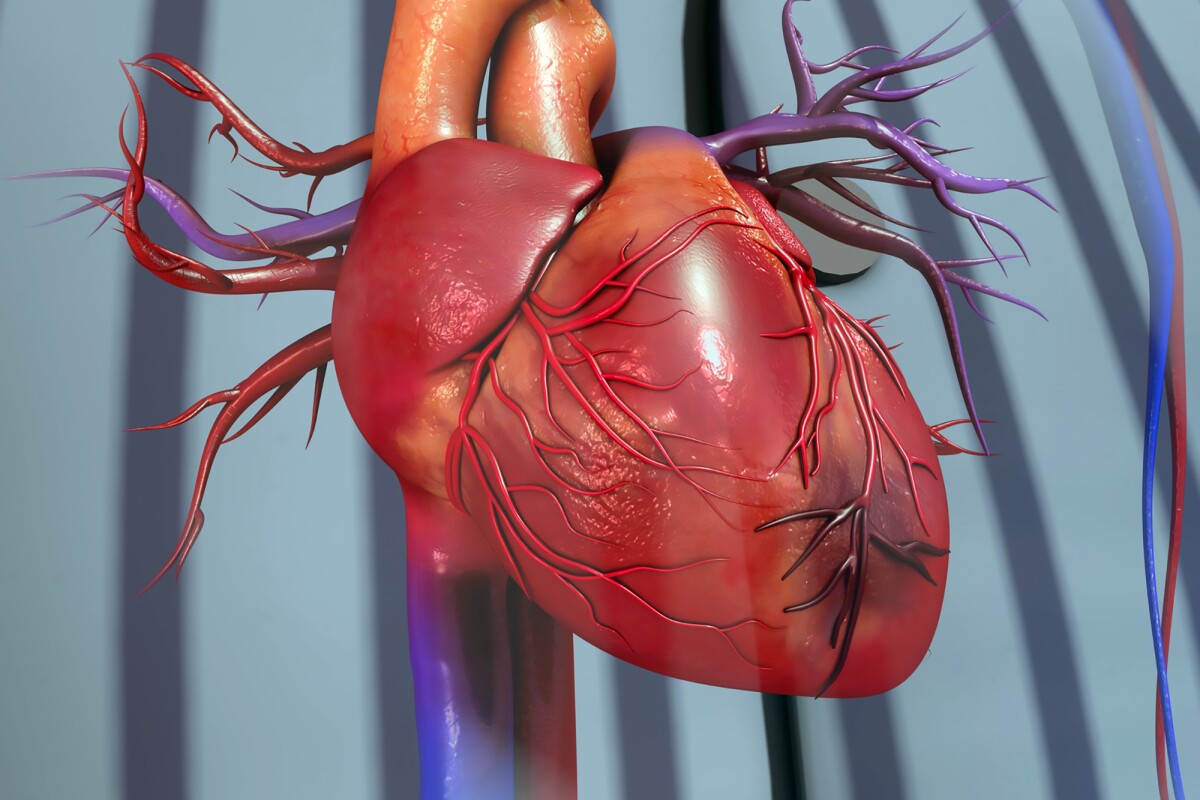
A new study reveals that women gain greater heart health benefits from exercise than men.
According to research published in Nature Cardiovascular Research, women who work out about four hours a week can cut their risk of coronary heart disease by 30%, while men need nearly nine hours of exercise to achieve similar results.
What Causes Coronary Heart Disease?
Coronary heart disease, caused by narrowing or calcification of heart vessels, limits blood flow and is linked to factors like poor diet, inactivity, and smoking.
Even small amounts of exercise help: around 2.5 hours of moderate to vigorous activity weekly can lower heart disease risk by 22% in women and 17% in men.
The results surprised Germany’s former health minister, Karl Lauterbach, who described them as “unfair” in a post on X.
Exercise Helps Even Those With Existing Heart Disease
The study also showed that exercise benefits people who already have heart disease. Women who engaged in 51 minutes of moderate to vigorous activity per week had a lower risk of death, while men needed about 85 minutes for the same effect.
In other words, men must exercise roughly 1.7 times more than women to achieve comparable survival benefits.
Overall, the more frequently someone is active, the lower their risk of heart disease, regardless of gender.
Researchers suggest women’s biological advantage may stem from hormonal and muscular differences. Oestrogen supports fat metabolism and protects blood vessels, while women tend to have more endurance-oriented muscle fibres. Men, by contrast, have more power- and speed-focused fibres — a factor that may explain why women’s hearts improve with less training.
São Paulo – Reaching adulthood isn’t simply about settling your first bills. A study of British individuals indicates that behavioral maturity typically occurs in the 30s and 40s, with men generally reaching it at 43 and women at 32.
The study behind these findings was carried out by Nickelodeon UK, the producer of the TV show Wendell & Vinnie, and was reported this week by international media. According to the Telegraph website, 80% of women think men never truly outgrow childish behavior. Examples of such behavior include laughing at burps and flatulence, playing video games, and being unable to prepare a simple meal.
Survey participants of both genders agreed that women tend to reach mental maturity earlier than men. About one in four men saw themselves as immature, nearly double the proportion reported by women.
Women’s Maturity in Relationships and the Lighter Side of Immaturity
In relationships, women were often seen as more mature, being twice as likely as men to be regarded as the “adult in the relationship.” For instance, 30% of women surveyed had ended a relationship due to frustration with their partner’s immaturity. Additionally, 25% reported that they typically made the key decisions, and 46% felt they often took on a maternal role toward their partners.
Still, immaturity isn’t always negative. The study found that 40% of respondents feel that being less “mature” can make a relationship more enjoyable and playful. The survey also identified the 30 most common signs of male immaturity, with the top 10 listed below:
Finding burps and flatulence amusing
Grabbing fast food in the middle of the night
Spending time playing video games
Speeding or racing other cars at stoplights or on the highway
Professors at Canisius College in New York State discovered that, for women, dogs make better sleeping companions than humans or cats. To evaluate how pets influence sleep quality, they examined the nighttime routines of 1,000 women across the United States.
Dogs’ Sleep Patterns Align More Closely with Humans Than Cats’
Christy Hoffman, PhD in animal behavior, explained that dogs’ sleep cycles closely resemble those of humans. Unlike cats, which often wake and move around at night, dogs usually remain in bed. “This indicates that cats cause more nighttime disruptions. We also observed that dog owners maintained more regular sleep and wake schedules compared to cat owners,” Hoffman told Healthline.
Dogs also outperformed human partners as sleeping companions. Hoffman noted, “Couples often have mismatched bedtimes and wake-up times, which can easily disturb sleep. Our study found that dogs adjust to their owners’ schedules more readily than human partners do.”
Women Feel Safer Sleeping Beside Dogs Than Cats
Lastly, women who slept alongside their dogs said they felt safer and more at ease. This sense of security comes from dogs’ tendency to alert their owners to intruders or emergencies—a role cats are far less likely to fulfill, which meant they didn’t offer participants the same reassurance.
Christy Hoffman states that further research is needed, but the study was valuable for examining minor disturbances that disrupt sleep and are often overlooked. Regarding germs, she notes there is no cause for concern as long as the pet is well cared for and vaccinated. “However, if your immune system is compromised, it’s best to avoid sleeping with your pet,” the researcher concluded.
Some still assume that women long for a romantic partner and build their lives around a spouse—but this view is deeply flawed. A recent University of Toronto study found that, on average, single women reported greater satisfaction with their relationship status, overall life, and sex lives, along with a lower desire for a partner.
The results suggest that, on average, women are more content with single life than men, finding greater satisfaction and less desire for a partner.
How Women’s Rights Have Opened New Paths to Fulfillment
Psychologist Flávia Bonani notes that, over the years, women have secured significant rights and begun to pursue new directions and opportunities.
“With relationships no longer being the focal point of a woman’s life, countless other avenues for fulfillment beyond marriage have opened up. This broadens women’s freedom to choose and, in turn, strengthens female empowerment,” she explains.
The psychologist also notes that “women now experience greater sexual freedom than ever, feeling empowered to embrace their desires without shame.“
University of Toronto Analyzes the Lives of 6,000 Single Adults
Researchers from the University of Toronto examined data from nearly 6,000 single adults who took part in 10 separate studies conducted between 2020 and 2023. The participants included a nearly equal number of men and women, along with 29 nonbinary individuals. All were at least 18 years old, with an average age of 32, and none were in a romantic relationship.
The study evaluated aspects such as financial wellbeing, sexual satisfaction, household responsibilities, and feelings about being single. Women, in particular, reported high levels of happiness with their relationship status.
Single Women Nurture Deep Family and Social Connections
The study also emphasized that single women tend to cultivate meaningful relationships beyond marriage, including strong family bonds and social connections.
Being content on your own is definitely trending—especially among Gen Z, who have popularized “solo dating” on social media. The concept encourages people to enjoy their own company by doing activities alone.
Whether it’s bringing a book to a favorite café or dining out solo, the #solodating movement has gained millions of views on TikTok. The trend promotes the idea of not waiting for a partner or friends to enjoy life’s moments and instead embracing activities typically associated with dates—solo.
New research has identified why heart attacks cause more damage in males Depositphotos
A recent study has identified testosterone as the reason men suffer greater heart muscle damage after a heart attack than women. Researchers have also found a potential solution using an existing drug.
The World Heart Federation’s World Heart Report 2023 highlighted that heart disease has remained the leading cause of death worldwide for decades, with cases continuing to rise. In 2019, the WHF reported that age-standardized cardiovascular disease death rates were higher in men than in women across high-income countries.
Previous studies have shown that men typically experience larger and more severe heart attacks than women, but the underlying mechanism remained unclear. Now, researchers at the University of Gothenburg in Sweden have identified testosterone as a key factor driving this sex-based difference in heart attack damage.
Testosterone Amplifies Inflammation, Increasing Heart Injury in Male Mice
“We found that testosterone amplifies the inflammatory response in male mice, leading to greater heart injury,” said Åsa Tivesten, professor of medicine at the Sahlgrenska Academy and senior physician at Sahlgrenska University Hospital. “Testosterone clearly plays a role in worsening inflammation after a heart attack.”
A heart attack, or myocardial infarction (MI), usually occurs when a coronary artery becomes blocked, cutting off oxygen-rich blood to a portion of the heart muscle. This causes the affected cells to die within minutes.
In response, neutrophils—white blood cells that serve as the immune system’s first line of defense—are rapidly released from the bone marrow and recruited to the damaged area, triggering inflammation to clear dead cell debris. The body’s initial response in the days following an MI determines the extent of muscle damage and influences recovery outcomes.
To examine sex-based differences in heart attack response, researchers induced an acute MI in male and female mice by blocking a coronary artery for 45 minutes, then restoring blood flow (reperfusion) to trigger inflammation.
After 24 hours, male mice had higher neutrophil levels and larger infarct areas than females. Additionally, their testosterone levels were 15 times higher than those of female mice. In humans, male testosterone levels are typically more than ten times higher than female levels.
Testosterone’s Impact on Neutrophils and Heart Damage Confirmed in Castrated Mice
To confirm testosterone’s role in post-MI neutrophil levels, the team compared castrated and uncastrated male mice. Castrated males had lower testosterone levels after a heart attack and exhibited neutrophil levels similar to post-MI female mice, along with smaller infarct sizes.
When given a dose of testosterone, castrated mice showed increased blood levels of troponin I—a marker of heart muscle damage—compared to castrated mice that did not receive testosterone. Troponin I is routinely used in humans to assess heart attack severity.
The blackened area represents heart muscle damage from a blocked coronary artery Depositphotos
Tocilizumab Reduces Testosterone-Driven Inflammation and Heart Damage in Men
To find a way to reduce the testosterone-driven inflammatory response, researchers analyzed data from a clinical trial where patients experiencing their first acute heart attack were treated with tocilizumab, a rheumatoid arthritis drug.
Tocilizumab is a biological disease-modifying antirheumatic drug (bDMARD) that blocks interleukin-6 (IL-6) receptors, preventing this signaling protein from activating the immune system after events like a heart attack. This, in turn, helps lower inflammation. The study found that administering tocilizumab before restoring blood flow significantly reduced neutrophil levels and infarct size, with a more pronounced effect in men than in women
“Our research reveals a previously unknown link between testosterone and neutrophil activity,” said Tivesten. “These findings highlight the need to consider sex differences in both research and medical treatment. Ignoring these differences could lead to less effective therapies, particularly for women, who are often underrepresented in clinical studies.”
A study found that the effects of alcohol intake on sperm take longer than initially thought to disappear Credit: Pixaobay
Research indicates that the duration for the adverse impacts of alcohol on a man’s sperm lasts longer than previously believed. Considering the connection between alcohol and birth defects, these findings are crucial for prospective fathers to consider when contemplating starting a family.
Historically, emphasis has been placed on maternal health before conception as a key determinant of pregnancy and child development outcomes. Concerns about alcohol intake before and during pregnancy have centered on fetal alcohol syndrome (FAS), leading to abnormal facial features, low birth weight or height, attention and hyperactivity issues, and poor coordination.
The responsibility to refrain from drinking to prevent FAS has traditionally rested on women. Only in recent times has attention turned to paternal alcohol consumption as a contributing factor.
Exploring the Epigenetic Impact
Recent studies have demonstrated that sperm carry a significant amount of epigenetic information susceptible to modification through exposure to various stressors, such as alcohol. A novel investigation conducted by Texas A&M University researchers has explored the impact of alcohol consumption on sperm, the resulting epigenetic alterations, and the duration of these changes.
“For an extended period, there has been minimal attention given to male alcohol consumption,” noted Michael Golding, the lead author of the study. “In the past five to eight years, we’ve observed specific circumstances where paternal influence significantly affects alcohol exposure and fetal development. In this study, we aimed to determine the duration of time required for the effects of alcohol on sperm to diminish. Contrary to our initial expectations of a rapid return to normal, the withdrawal process extended beyond a month.”
In the United States, much like in numerous other countries globally, a significant proportion of men engage in alcohol consumption. Previous investigations have presented conflicting findings regarding the impact of alcohol intake on male fertility, with some suggesting minor declines and others asserting no discernible effects. In this present study, scientists utilized a mouse model to reassess the consequences of alcohol exposure on the sperm epigenome.
Alcohol Exposure in Male Mice and RNA Sequencing Analysis of Epididymal Gene Expression Patterns
Male mice were subjected to 6% or 10% alcohol for a duration of 10 weeks, followed by a four-week withdrawal period. RNA sequencing was employed to analyze gene expression patterns in the epididymis, the extended, coiled tubular structure situated atop each testicle responsible for storing sperm. A control group was exposed solely to water.
The researchers noted that persistent alterations in genetic pathways associated with mitochondrial function, oxidative stress, and the generalized stress response in the epididymis occurred due to chronic alcohol exposure, and these changes persisted for a month after the cessation of drinking.
Dr. Golding explained, “During the withdrawal phase, the liver undergoes continuous oxidative stress and transmits a signal throughout the male body. The reproductive system interprets this signal and responds with, ‘We are in an environment characterized by a potent oxidative stressor. I must program the offspring to adapt to such an environment.’”
A puzzling trend emerges in research on women’s well-being. Despite enjoying increased freedom and job prospects, women are experiencing elevated levels of anxiety and facing a greater prevalence of mental health issues, including depression, anger, loneliness, and disrupted sleep. This pattern transcends national boundaries and applies to various age demographics.
A recent survey conducted by the American Psychological Association may shed light on these trends. The findings revealed that a majority of women in the United States are dissatisfied with how society treats them.
Gendered Caregiving Burdens and Workplace Challenges
Many women continue to shoulder the primary caregiving responsibilities for children and elderly family members. Additionally, most of them bear the dual burden of managing household affairs and family obligations alongside their paid employment. Disturbingly, within the workplace, three out of every five women have encountered instances of bullying, sexual harassment, or verbal abuse.
The gender disparity in well-being became particularly evident during the pandemic when many women took on additional domestic and caregiving duties while also fulfilling their work responsibilities. However, it’s noteworthy that despite the greater impact on their well-being, women demonstrated a swifter recovery, suggesting that they possess greater emotional resilience compared to men.
The Role of Robust Social Connections in Women’s Resilience
One contributing factor to women’s resilience could be their strong social connections. In a 2019 study, researchers discovered that women outperformed men in fostering positive relationships with others and exhibited a greater capacity for personal growth. Essentially, women tend to be more adept at seeking support, seeking assistance earlier, and thus are more likely to overcome adversity more swiftly.
Moreover, women tend to place a higher value on social connections than men. Studies have shown that women’s friendships tend to be more intimate, emphasizing face-to-face interactions that facilitate deeper self-disclosure and emotional support. In contrast, men’s friendships often revolve around shared activities, with activities like watching a football game taking precedence over heartfelt coffee chats. This difference in social interaction styles may further explain women’s ability to safeguard their mental health.
Balancing Happiness with Purpose
While women may not experience as much immediate happiness as men and often confront higher levels of social inequality, a recent study suggests that women tend to report having a greater sense of purpose in their lives. Having a sense of meaning and purpose in life is closely linked to improved health and a longer lifespan.
The research indicates that women often engage more frequently in altruistic activities, such as providing support to others and volunteering for charitable causes, which contributes to their heightened sense of meaning and purpose.
However, it’s important to note that this tendency is likely influenced by cultural norms that encourage women to prioritize the needs of others. Although prioritizing others doesn’t necessarily lead to increased personal happiness, it unquestionably contributes to an overall sense of well-being.
Considering these findings, it’s essential for women to allocate time for self-care to safeguard their mental and emotional well-being. Here are four evidence-based strategies to help achieve this:
Prioritizing Women’s Self-Care for Mental and Emotional Well-Being
Consider therapy: Creating a space exclusively for yourself, where you can openly discuss your feelings and emotions, is crucial for your psychological health. Art-based therapies can be especially beneficial for women, as can group-based interventions that offer a platform for women to converse openly with their peers, reducing feelings of stigma and shame.
Connect with nature: Spending time in natural environments can be remarkably soothing. Recent research suggests that nature-based interventions are particularly therapeutic for women who have faced trauma or illness. Women’s biological and value systems often align with the natural world, as reflected in concepts like “Mother Earth,” symbolizing the feminine inclination toward nurturing and life-giving attributes. Therefore, incorporating outdoor activities in natural settings into your daily or weekly routines, such as beach walks, woodland jogs, or park reading, can be highly beneficial.
Prioritize physical activity: Studies indicate that regular physical exercise can enhance self-acceptance and personal growth in women. Aerobic exercise, in particular, is beneficial for cognitive health as women age. High-impact weight-bearing activities, such as jumping and running, can enhance bone health for middle-aged women, while consistent moderate exercise like walking has been shown to alleviate menopause-related symptoms.
Reduce alcohol consumption: Women face gender-specific risks associated with alcohol consumption, including a higher likelihood of becoming victims of violence and experiencing health-related issues such as heart disease and breast cancer. Women also metabolize alcohol more quickly than men, which can increase vulnerability. Given that women are twice as likely as men to experience anxiety, reducing or eliminating alcohol consumption may be a prudent choice. Research indicates that quitting alcohol can significantly enhance women’s health and overall happiness.
Read the original article on: Medical X press
Read more: Why Do Women Feel the Cold more than Men?
We use cookies on our website to give you the most relevant experience by remembering your preferences and repeat visits. By clicking “Accept All”, you consent to the use of ALL the cookies. However, you may visit "Cookie Settings" to provide a controlled consent.
This website uses cookies to improve your experience while you navigate through the website. Out of these, the cookies that are categorized as necessary are stored on your browser as they are essential for the working of basic functionalities of the website. We also use third-party cookies that help us analyze and understand how you use this website. These cookies will be stored in your browser only with your consent. You also have the option to opt-out of these cookies. But opting out of some of these cookies may affect your browsing experience.
Necessary cookies are absolutely essential for the website to function properly. These cookies ensure basic functionalities and security features of the website, anonymously.
Cookie
Duration
Description
cookielawinfo-checkbox-analytics
11 months
This cookie is set by GDPR Cookie Consent plugin. The cookie is used to store the user consent for the cookies in the category "Analytics".
cookielawinfo-checkbox-functional
11 months
The cookie is set by GDPR cookie consent to record the user consent for the cookies in the category "Functional".
cookielawinfo-checkbox-necessary
11 months
This cookie is set by GDPR Cookie Consent plugin. The cookies is used to store the user consent for the cookies in the category "Necessary".
cookielawinfo-checkbox-others
11 months
This cookie is set by GDPR Cookie Consent plugin. The cookie is used to store the user consent for the cookies in the category "Other.
cookielawinfo-checkbox-performance
11 months
This cookie is set by GDPR Cookie Consent plugin. The cookie is used to store the user consent for the cookies in the category "Performance".
viewed_cookie_policy
11 months
The cookie is set by the GDPR Cookie Consent plugin and is used to store whether or not user has consented to the use of cookies. It does not store any personal data.
Functional cookies help to perform certain functionalities like sharing the content of the website on social media platforms, collect feedbacks, and other third-party features.
Performance cookies are used to understand and analyze the key performance indexes of the website which helps in delivering a better user experience for the visitors.
Analytical cookies are used to understand how visitors interact with the website. These cookies help provide information on metrics the number of visitors, bounce rate, traffic source, etc.
Advertisement cookies are used to provide visitors with relevant ads and marketing campaigns. These cookies track visitors across websites and collect information to provide customized ads.