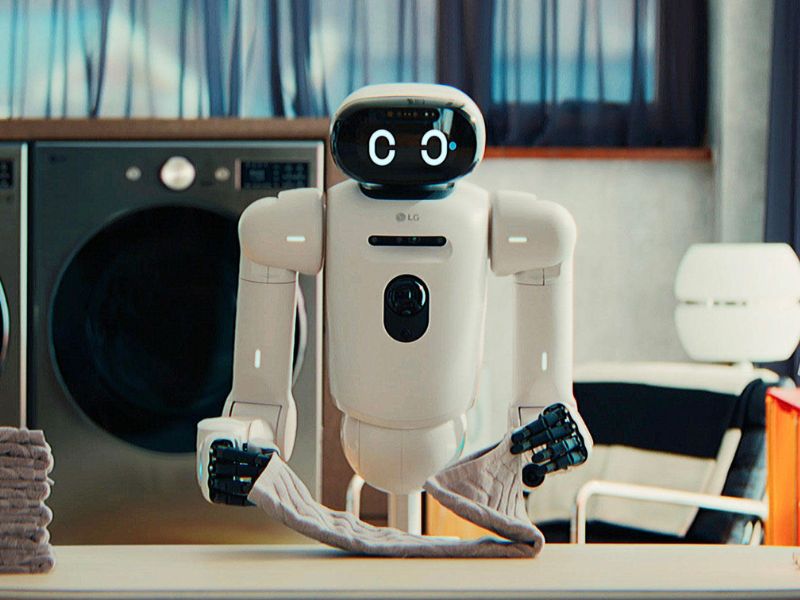
LG has revealed a new humanoid robot designed to take on everyday household tasks. After teasing CLOiD last week, LG has now revealed its AI-powered assistant capable of folding laundry, unloading dishwashers, serving meals, and performing other household tasks.
CLOiD features an unexpectedly charming head module outfitted with a display, speakers, cameras, and various sensors. LG says the setup lets the robot communicate through speech and visuals, learn users’ homes and habits, and control connected smart devices.
Articulated Arms and Wheeled Mobility
The robot features two articulated arms with jointed shoulders, elbows, wrists, and independently moving fingers, along with a wheeled base similar to LG’s robot vacuums. Its arms can grasp items at knee height or higher, but not objects on the floor.
Image Credits:The CLOiD robot unloading a dishwasher. (LG)
LG says it will showcase the robot handling everyday chores such as starting laundry, folding clothes, unloading dishes, removing food from an oven, and serving meals, though its role in a home workout scene remains unclear.
A Concept Robot With Future Home Applications
A closer look at CLOiD’s laundry-folding abilities will come once CES opens, revealing its real-world capabilities. For now, LG appears to be positioning the robot as a concept rather than a consumer product ready for sale. LG plans to keep developing practical home robots and expand its robotics tech to appliances like auto-opening refrigerators.
CES 2026 runs from January 4 through January 9 in Las Vegas. Team Engadget is on-site covering CES 2026 announcements, demos, and press events from LG,Lego, Hisense, NVIDIA, Hyundai, and more, with live coverage and previews available.
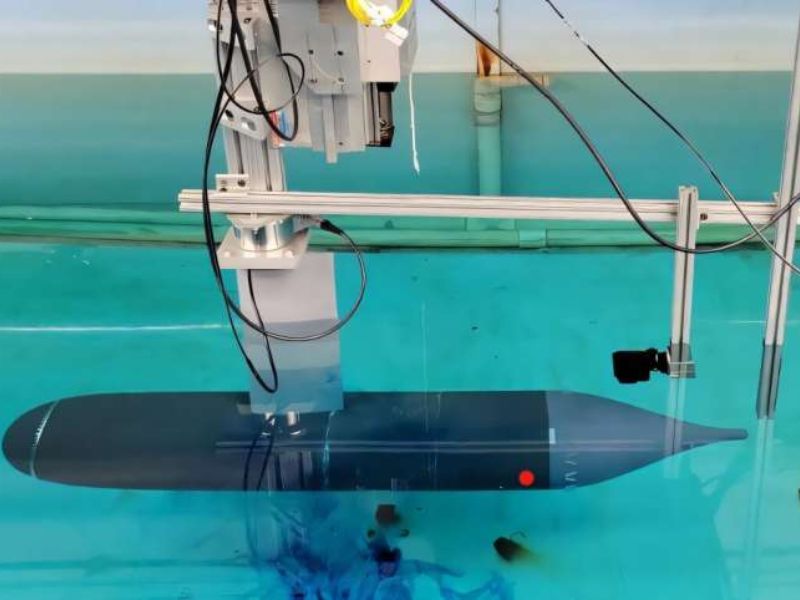
Image Credits:The researchers tested multiple hulls through rapid prototyping to validate their results experi
MIT researchers found that wedge-shaped vortex generators can reduce ship drag by up to 7.5%, lowering fuel use and emissions, as presented at the 2025 SNAME Maritime Convention.
The study highlights a promising path to decarbonize shipping and meet the IMO’s 2030 target of a 40% reduction in carbon intensity, requiring hull, engine, and propeller redesign, new fuels, and improved operations.
MIT Team Optimizes Vortex-Generator Design with CFD and AI
MIT researchers, with collaborators from the Center for Bits and Atoms, used CFD and AI-guided experiments to optimize vortex-generator geometry.
They began by mapping key parameter trends through extensive CFD simulations, then verified their findings with rapid-prototyped hull models. Scale models included a plain axisymmetric hull, one fitted with delta-wing vortex generators, and one with wedge-shaped generators. Their tests confirmed that the wedge configuration delivered the significant drag reduction observed.
Using flow-visualization techniques, the team observed that the vortex generators cut drag by postponing turbulent flow separation. This extends hull water flow, shrinks the wake, and improves propeller and rudder efficiency.
First Experimental Proof That Vortex Generators Reduce Ship Fuel Use
Michael Triantafyllou: “We show for the first time that wedge-shaped vortex generators can reduce a ship’s fuel use.”
Although vortex generators have been used for decades on aircraft wings to preserve lift and prevent stalling, this research is the first to show their effectiveness in reducing drag on commercial ships.
Because the wedge-style generators are modular, they can be incorporated into many different hull designs, including tankers and bulk carriers. They can also complement—or in some cases replace—current systems such as pre-swirl stators, enhancing overall propulsion performance.
As an illustrative example, the researchers estimate that fitting these devices to a 300-meter Newcastlemax bulk carrier traveling at 14.5 knots on a trans-Pacific route could substantially cut emissions and save roughly $750,000 in fuel annually.
In 1972, a pregnant woman’s blood sample puzzled scientists when it lacked a surface molecule present on all known red blood cells.
Over 50 years later, UK and Israeli researchers identified a new human blood group, published in 2024.
A Breakthrough Decades in the Making
“This milestone crowns years of collaboration,” said NHS hematologist Louise Tilley, who dedicated nearly two decades to solving the mystery. “It allows us to provide better care for rare but significant patients.”
Watch the video below for a summary of their discovery:
Our bodies use these antigen molecules, among other functions, as identification markers to distinguish between our own cells and potentially harmful foreign ones.
Blood type (or blood group) is determined, in part, by the ABO blood group antigens present on red blood cells. Antibodies in our blood plasma detect when a foreign antigen marker is present. (InvictaHOG/Public Domain/Wikimedia Commons)
If these markers don’t align during a blood transfusion, the procedure meant to save a life can trigger severe reactions or even be deadly.
Researchers discovered most major blood groups in the early 20th century.
Discoveries Few and Far Between
Researchers have recently identified blood groups like the Er system in 2022, found in only a few individuals — just like this newly discovered group.
“Tilley explained that studying such rare genetic cases made the research challenging.”
Image Credits:Transfusion reactions can be severe. (baseimage/Canva)
Earlier studies showed that over 99.9% of people have the AnWj antigen missing from the 1972 patient’s blood. Researchers linked it to a myelin and lymphocyte protein and named it the MAL blood group.
People with mutations in both MAL gene copies have an AnWj-negative blood type, like the 1972 patient. Yet, Tilley’s team found three AnWj-negative cases without the mutation, suggesting some blood disorders can suppress the antigen.
Unraveling the Mystery of the MAL Protein
“MAL is a small, complex protein that was hard to identify, requiring multiple investigations to confirm,” said Tim Satchwell of the University of the West of England.
After decades of research, scientists confirmed the gene by adding a normal MAL gene to AnWj-negative cells, restoring the antigen.
The MAL protein is known to help maintain cell membrane stability and support cellular transport. Earlier studies also revealed that the AnWj antigen is absent in newborns but develops shortly after birth.
A Shared Mutation Without Other Health Effects
All AnWj-negative patients in the study shared the same mutation, but researchers found no link to other cellular abnormalities or diseases.
With MAL mutation markers identified, doctors can tell if an AnWj-negative type is inherited or caused by suppression, possibly signaling another condition.
Understanding rare blood variations is vital for better care and saving lives.
Introducing ionocaloric cooling — a groundbreaking method for reducing temperatures that could replace current refrigeration systems with a safer, more environmentally friendly alternative.
How Traditional Refrigeration Systems Work
Conventional refrigeration works by moving heat away from an area using a fluid that absorbs warmth as it evaporates into a gas, then circulates through a closed system and condenses back into a liquid.
While efficient, many of the refrigerants used in this process are harmful to the environment.
There’s more than one way to make a material absorb or release heat energy.
In 2023, scientists from Lawrence Berkeley National Laboratory and the University of California, Berkeley, introduced a new approach that leverages the energy stored or released during a material’s phase change—like when ice melts into water.
How Ions Can Trigger Cooling Without Heat
When ice melts, it absorbs heat from its surroundings, producing a cooling effect. Interestingly, this process can be triggered without raising the temperature by adding charged particles, or ions—a principle seen when salt is used to melt ice on roads.
The ionocaloric cycle applies this same idea, using salts to shift a fluid’s phase and generate cooling.
Image Credits:Illustration of the ionocaloric cycle concept. (Jenny Nuss/Berkeley Lab)
“The world of refrigerants remains an unresolved challenge,” said mechanical engineer Drew Lilley of Lawrence Berkeley National Laboratory in California.
“To date, no one has created an alternative cooling method that is effective, efficient, safe, and environmentally friendly. We believe the ionocaloric cycle could achieve all of these objectives if developed properly.”
Modeling the Ionocaloric Cycle for Greater Efficiency
The team developed a theoretical model of the ionocaloric cycle, demonstrating its potential to match or even surpass the efficiency of modern refrigerants. By running an electric current through the system, ions are moved within the material, altering its melting point and thereby changing the temperature.
The researchers conducted experiments using a salt composed of iodine and sodium to melt ethylene carbonate—a common organic solvent also found in lithium-ion batteries and derived from carbon dioxide. This feature could make the system not only carbon neutral (GWP zero) but potentially carbon negative.
In their tests, applying less than one volt of electric charge produced a temperature change of 25 degrees Celsius (45 degrees Fahrenheit), surpassing the performance of existing caloric cooling technologies.
image Credits:The ionocaloric cycle in action. (Jenny Nuss/Berkeley Lab)
Balancing Environmental Impact, Efficiency, and Cost
“We’re aiming to strike a balance among three key factors: the refrigerant’s global warming potential (GWP), its energy efficiency, and the overall cost of the equipment,” explained mechanical engineer Ravi Prasher from Lawrence Berkeley National Laboratory.
“Our initial results look very promising across all three areas.”
Conventional vapor compression refrigeration systems, however, depend on gases with high GWP—such as hydrofluorocarbons (HFCs)—which contribute significantly to environmental harm.
Ionocaloric Cooling and the Global Push to Reduce HFCs
Countries under the Kigali Amendment have committed to reducing HFC use by 80% within 25 years — a target ionocaloric cooling could help achieve.
Researchers are now working to transition the technology from lab experiments to scalable commercial systems that could serve both cooling and heating needs.
Recent studies have shown promising results with nitrate-based salts recycled using electric fields and membranes, confirming what Prasher and his team had envisioned.
“We’ve developed a new thermodynamic cycle that works,” said Prasher. “The next step is testing materials and methods to solve the engineering challenges.”
According to Axios, Tinder now requires new users in California to verify their profiles using facial recognition. The new “Face Check” feature is designed to combat impersonation and prevent matches with bots or fake accounts.
Axios reports that Face Check prompts users to record a short video selfie during sign-up. The scan verifies their authenticity, matches their face to profile photos, and flags repeated use of the same face across multiple accounts.
Verification Badge Granted, Face Data Secured for Future Protection
If the user passes the check, they’ll get a photo verification badge on their profile. According to the report, Tinder will delete the selfie video but retain an encrypted face map to detect future duplicate profiles.
Face Check is already in use in Colombia and Canada.
It’s important to note that Face Check differs from Tinder’s ID Check, which verifies a user’s age and identity through a government-issued ID.
At WWDC 2025, Apple revealed that Apple Wallet is becoming more travel-friendly. The app will soon support digital passports, and boarding passes will include new features designed to simplify the travel experience.
Digital Passports Offer Convenience, Not a Full Replacement
Apple clarified that the new digital passport feature is “not a replacement for your physical passport,” but it can be used in apps requiring age or identity verification and at select TSA checkpoints. It may also benefit those who haven’t yet obtained a Real ID.
Boarding passes have been accessible in the Wallet app for some time, offering quick access from the lock screen. With iOS 26, however, they’re getting several upgrades — including links to terminal maps, making it easier to navigate to your gate or baggage claim.
At baggage claim, a new integration with Find My in Wallet will be useful, enabling users to track the location of their AirTagged luggage directly from their boarding pass.
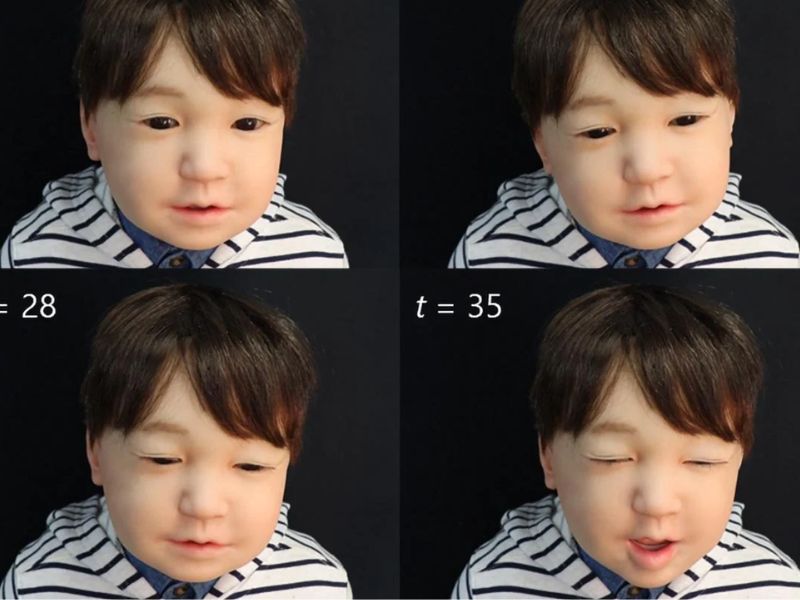
Snapshots of realized sleepy mood expression on a child android robot. Credit: Hisashi Ishihara
Osaka University researchers have developed a technology that enables androids to express moods like excitement or drowsiness through dynamic facial movements modeled as overlapping, decaying waves.
While androids can mimic human expressions, their movements often feel artificial, creating discomfort. Traditional approaches rely on pre-programmed action sequences, requiring complex preparation and careful transition management to avoid unnatural expressions.
Proposed system. Credit: Hisashi Ishihara
To overcome these challenges, lead researcher Hisashi Ishihara’s team introduced “waveform movements,” where gestures like blinking, breathing, and yawning are represented as individual waves that combine in real-time. This method removes the need for pre-set action scenarios and ensures smoother transitions.
Additionally, “waveform modulation” adjusts these waves based on the robot’s internal state, instantly reflecting mood changes in facial expressions. Senior author Koichi Osuka emphasizes that this advancement allows androids to display more natural, responsive emotions, enriching human-robot communication.
Ishihara envisions androids whose every movement reflects internal emotions, making them appear as if they have a heart. By enabling adaptive emotional expression, this technology brings robots closer to humanlike interaction, enhancing their role in communication.
Electrons forced through a maze of twisted carbon layers behave in unexpected ways. Researchers from the University of British Columbia, the University of Washington, Johns Hopkins University, and Japan’s National Institute for Materials Science have discovered a strange new state of matter in graphene’s electrical currents.
Their findings confirm predictions about electron behavior in crystalline formations and could inspire new approaches to quantum computing or room-temperature superconductors.
“Graphene consists of carbon atoms arranged in a honeycomb pattern,” explains study co-author Joshua Folk, a condensed matter physicist at UBC. “How electrons hop between these atoms determines its electrical properties, making it similar to metals like copper.”
For decades, graphene’s unique structure has fascinated scientists. Its free electrons move like quantum game pieces, allowing researchers to manipulate resistance and uncover exotic states of matter. This makes graphene an ideal testing ground for exploring low-resistance conductivity and quantum effects.
A New Twist: Moiré Effects and Electron Freezing
One such quantum effect is electron “freezing,” where electrons lock into position, transforming from a flowing liquid-like state into a structured arrangement called a Wigner crystal. Traditionally, these crystals had well-defined shapes and behaviors—until now.
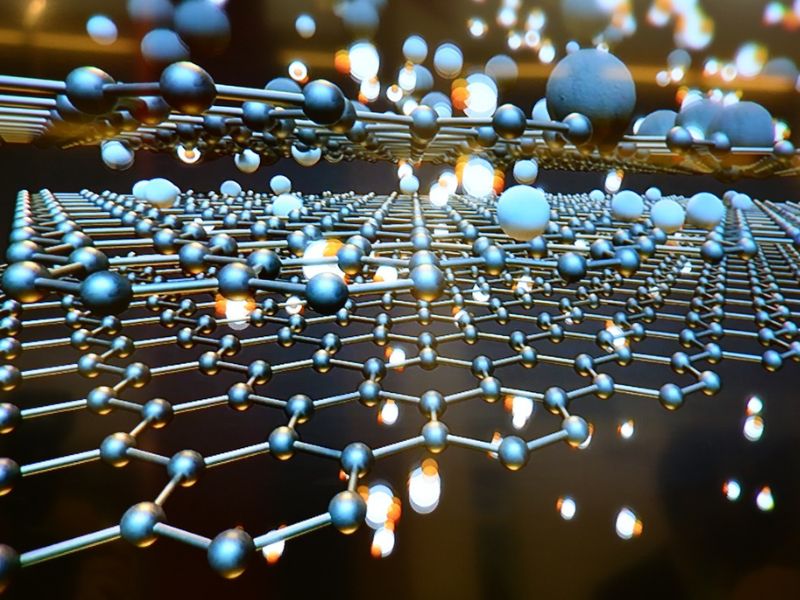
Stacked sheets of graphene can lead to new configurations of carbon atoms for electrons to move between. (Jynto/Wikimedia Commons/PD/ScienceAlert)
In this experiment, researchers twisted single-atom-thick layers of graphene to create a moiré effect—a pattern formed when two grids overlap. This distortion alters the electrons’ motion, changing their speed and even twisting their movement along the material’s edges.
“This results in a paradox,” says Folk. “Despite forming an ordered crystal, the electrons still conduct electricity along the boundaries—something never seen in conventional Wigner crystals.”
A New Frontier in Quantum Computing
This bizarre electron behavior also leads to phenomena like the quantum Hall effect, where resistance becomes quantized. Such topological quantum states are a goldmine for physicists seeking more stable qubits—key components of quantum computers.
Twisting graphene may be just the beginning. Manipulating atomic-scale geometry could unlock even stranger electron behaviors, paving the way for new breakthroughs in quantum technology.
We use cookies on our website to give you the most relevant experience by remembering your preferences and repeat visits. By clicking “Accept All”, you consent to the use of ALL the cookies. However, you may visit "Cookie Settings" to provide a controlled consent.
This website uses cookies to improve your experience while you navigate through the website. Out of these, the cookies that are categorized as necessary are stored on your browser as they are essential for the working of basic functionalities of the website. We also use third-party cookies that help us analyze and understand how you use this website. These cookies will be stored in your browser only with your consent. You also have the option to opt-out of these cookies. But opting out of some of these cookies may affect your browsing experience.
Necessary cookies are absolutely essential for the website to function properly. These cookies ensure basic functionalities and security features of the website, anonymously.
Cookie
Duration
Description
cookielawinfo-checkbox-analytics
11 months
This cookie is set by GDPR Cookie Consent plugin. The cookie is used to store the user consent for the cookies in the category "Analytics".
cookielawinfo-checkbox-functional
11 months
The cookie is set by GDPR cookie consent to record the user consent for the cookies in the category "Functional".
cookielawinfo-checkbox-necessary
11 months
This cookie is set by GDPR Cookie Consent plugin. The cookies is used to store the user consent for the cookies in the category "Necessary".
cookielawinfo-checkbox-others
11 months
This cookie is set by GDPR Cookie Consent plugin. The cookie is used to store the user consent for the cookies in the category "Other.
cookielawinfo-checkbox-performance
11 months
This cookie is set by GDPR Cookie Consent plugin. The cookie is used to store the user consent for the cookies in the category "Performance".
viewed_cookie_policy
11 months
The cookie is set by the GDPR Cookie Consent plugin and is used to store whether or not user has consented to the use of cookies. It does not store any personal data.
Functional cookies help to perform certain functionalities like sharing the content of the website on social media platforms, collect feedbacks, and other third-party features.
Performance cookies are used to understand and analyze the key performance indexes of the website which helps in delivering a better user experience for the visitors.
Analytical cookies are used to understand how visitors interact with the website. These cookies help provide information on metrics the number of visitors, bounce rate, traffic source, etc.
Advertisement cookies are used to provide visitors with relevant ads and marketing campaigns. These cookies track visitors across websites and collect information to provide customized ads.