Tag: Organs

  • Man Declared Brain Dead Wakes Up as Organs About to Be Removed

    Man Declared Brain Dead Wakes Up as Organs About to Be Removed

    A case in Kentucky, where a man woke up just before his organs were set to be harvested, has raised concerns about the protocols used by US hospitals and organ donation networks to confirm death.
    Credit: Depositphotos

    A case in Kentucky, where a man woke up just before his organs were set to be harvested, has raised concerns about the protocols used by US hospitals and organ donation networks to confirm death.

    Whistleblower Nyckoletta Martin detailed this disturbing incident in a letter to the US House Energy and Commerce Committee during their September hearing on the organ procurement system. While working as an organ preservationist for Kentucky Organ Donor Affiliates (KODA), Martin claims to have reviewed the case notes from the October 2021 surgery.

    NPR Report Reveals Organs Donor Showed Signs of Life After Heart Test

    According to NPR, case notes revealed that the organ donor showed signs of life after a heart fitness test.

    The donor woke up during the procedure and thrashed on the table,” whistleblower Nyckoletta Martin told NPR’s Rob Stein. The donor, 36-year-old Anthony Thomas ‘TJ‘ Hoover II, had been taken to Baptist Health Hospital in Kentucky after a drug overdose.

    Declared brain dead following cardiac arrest, TJ was taken off life support for organ donation. His sister, Donna Rhorer, recalled seeing TJ’s eyes open on the way to the operating room but was told by staff it was just a reflex.

    Later, when TJ made more exaggerated movements and was “crying visibly” on the operating table, the medical staff became alarmed. In the ensuing chaos, surgeons refused to continue the procedure, despite KODA allegedly requesting another doctor, which KODA denies.

    The surgeon said, ‘I’m out. I want nothing to do with it,’” hospital organ preservationist Natasha Miller told NPR, describing the chaotic and emotional scene.

    TJ survived but now suffers from speech, memory, and movement issues. The case is under federal investigation, and Baptist Health Richmond stated patient safety is its top priority. KODA maintains the case was accurately handled and says the situation was properly communicated to the family when the donation could not proceed.

    Balancing Criteria for Consciousness Recovery and the Role of EEG in Diagnosing Brain Death

    Determining whether a patient could regain consciousness relies on criteria that balance certainty with various medical concerns. Electroencephalogram (EEG) readings, which detect brain waves, are crucial in diagnosing brain death.

    Setting strict criteria may tie up resources, like beds and ventilators, for patients with little chance of recovery. Looser criteria, however, could lead to rare incidents like TJ’s, eroding public trust in the system.

    That’s everyone’s worst nightmare—being alive during surgery while someone prepares to take your organs,” Martin told NPR.

    Organ transplantation is a critical issue in the US. The current administration is working on reforms to improve transparency and accountability. Concerns about errors, inequality in donations, long wait times, and organs wastage persist.

    Last year, over 46,000 organ transplants were performed, but that’s still far short of the 100,000 patients waiting. Such transplants wouldn’t be possible without the generosity of donors and the skill of medical teams ensuring the process is ethical and safe. Why TJ became such a rare case remains under investigation, with hopes to prevent future incidents.


    Read original article on: Science Alert

    Read more: Scitke
  • Plant-Animal Hybrid Cells Create Solar-Powered Tissues, Organs, Or Meat

    Plant-Animal Hybrid Cells Create Solar-Powered Tissues, Organs, Or Meat

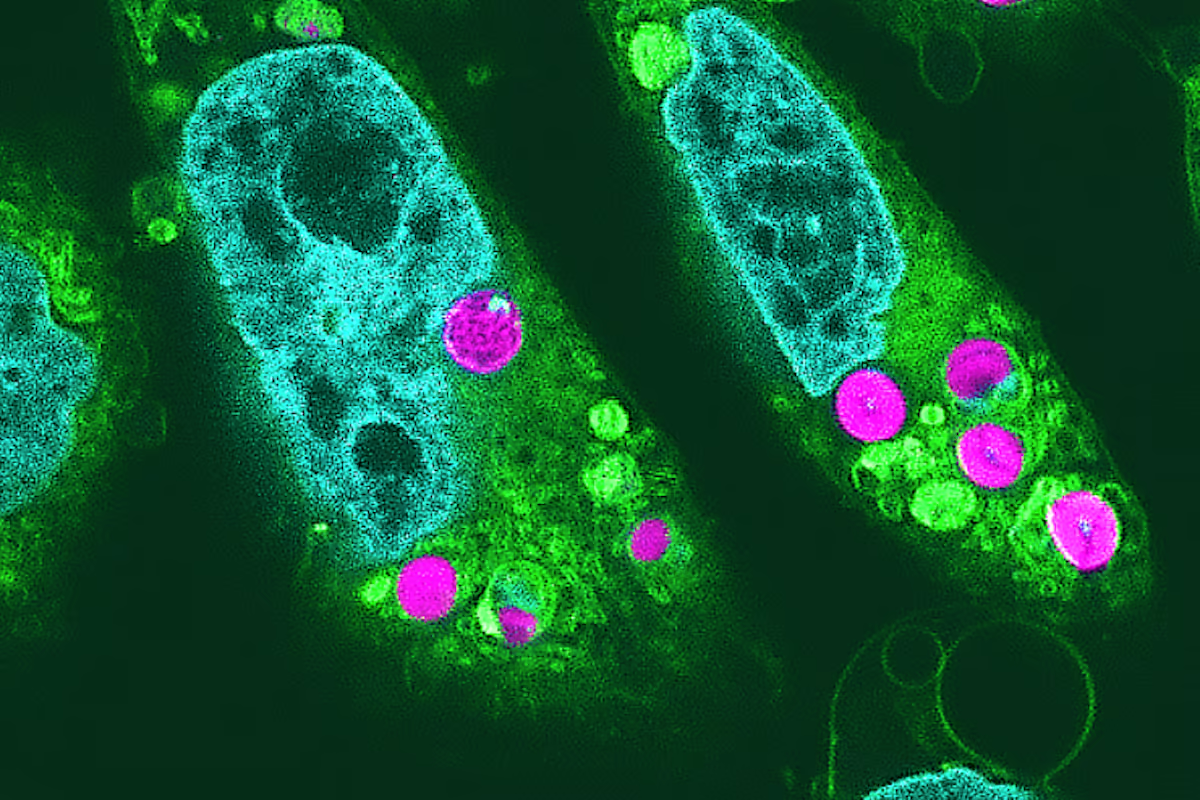
    Scientists in Japan have developed hybrid plant-animal cells, allowing animal cells to harness energy from sunlight like plants. This innovation could bring significant benefits for growing organs and tissues for transplant, as well as lab-grown meat.
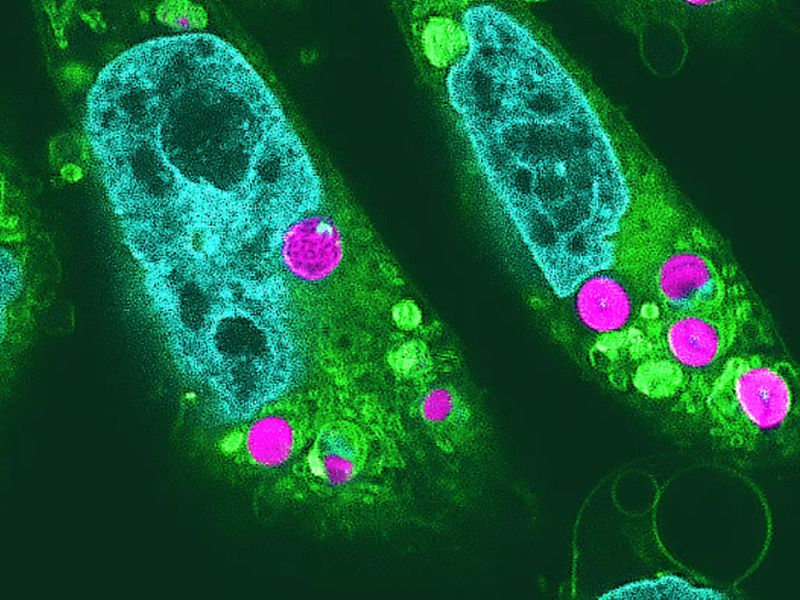
    Fluorescent microscope image of the animal cells with embedded chloroplasts (magenta)
    R. Aoki, Y. Inui, Y. Okabe et al. 2024/ Proceedings of the Japan Academy, Series B

    Hybrid Plant-Animal Cells Developed in Japan

    Scientists in Japan have developed hybrid plant-animal cells, allowing animal cells to harness energy from sunlight like plants. This innovation could bring significant benefits for growing organs and tissues for transplant, as well as lab-grown meat.

    Animal and plant cells have different structures for energy production. In animals, this function is performed by mitochondria, which convert chemical energy from food into a form usable by our cells. Meanwhile, plants and algae utilize chloroplasts, which perform photosynthesis to generate energy from sunlight.

    Successful Insertion of Chloroplasts into Animal Cells

    In a new study led by the University of Tokyo, the team inserted chloroplasts into animal cells and discovered that these cells continued to perform photosynthetic functions for at least two days. The chloroplasts were sourced from red algae, while the animal cells were cultured from hamsters.

    Previous research had successfully transplanted chloroplasts into yeast, granting them the ability to perform photosynthesis. However, achieving this in animals is a significant advancement.

    The team essentially cultivated hamster cells and isolated the chloroplasts together for two days, then checked that the animal cells had absorbed the chloroplasts by looking for signs of chlorophyll. This compound plays a key role in chloroplasts but should not normally be present in animal cells, making its presence a good indicator that the method was successful. Conveniently, chlorophyll naturally fluoresces under certain wavelengths of light.

    Detection of Photosynthesis Using Laser Illumination

    When the team illuminated the cells with a specific type of laser, they quickly saw chlorophyll — and by extension, chloroplasts — inside the hamster cells. Using another technique called pulse amplitude modulation fluorometry, they confirmed that the chloroplasts were still performing photosynthesis.

    As far as we know, this is the first reported detection of photosynthetic electron transport in chloroplasts implanted in animal cells,said Professor Sachihiro Matsunaga, the corresponding author of the study. We thought that the chloroplasts would be digested by the animal cells within hours after being introduced. However, what we found was that they continued to function for up to two days, and that the electron transport of photosynthetic activity occurred.


    Read the original article on: New Atlas

    Read more: Strong Link Between Red Meat Consumption and Cancer Discovered