Tag: Plasma

  • Russian Scientists Test a Plasma Engine that could Shrink Mars Travel to 30 Days

    Russian Scientists Test a Plasma Engine that could Shrink Mars Travel to 30 Days

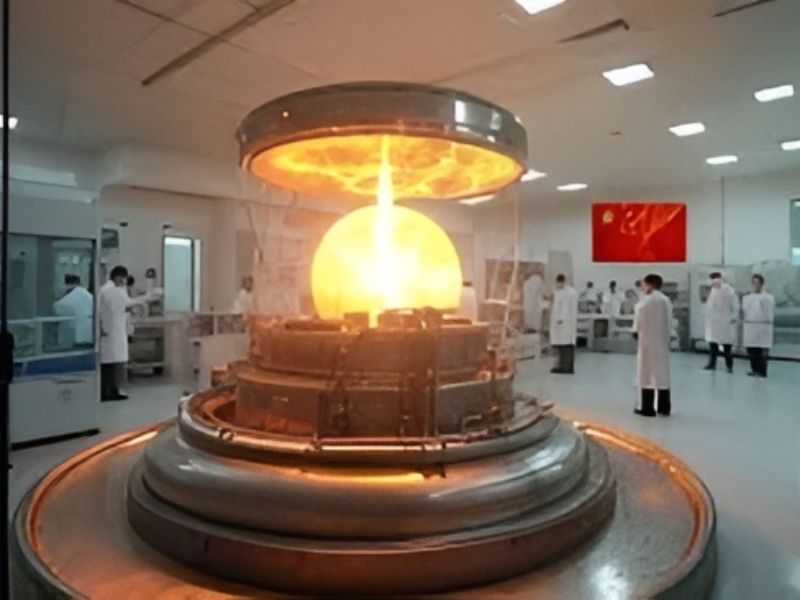
    Scientists tied to Rosatom have revealed a plasma engine that could cut Earth–Mars travel to 30–60 days. The announcement has renewed discussion about the future of space exploration and whether such technology could realistically support interplanetary missions.
    Image Credits:regisandrade

    Scientists tied to Rosatom have revealed a plasma engine that could cut Earth–Mars travel to 30–60 days. The announcement has renewed discussion about the future of space exploration and whether such technology could realistically support interplanetary missions.

    Developed by engineers at the Rosatom Research Institute, the project focuses on nuclear and advanced propulsion systems. Unlike chemical rockets, the plasma engine uses energized particles for efficient, long-lasting thrust.

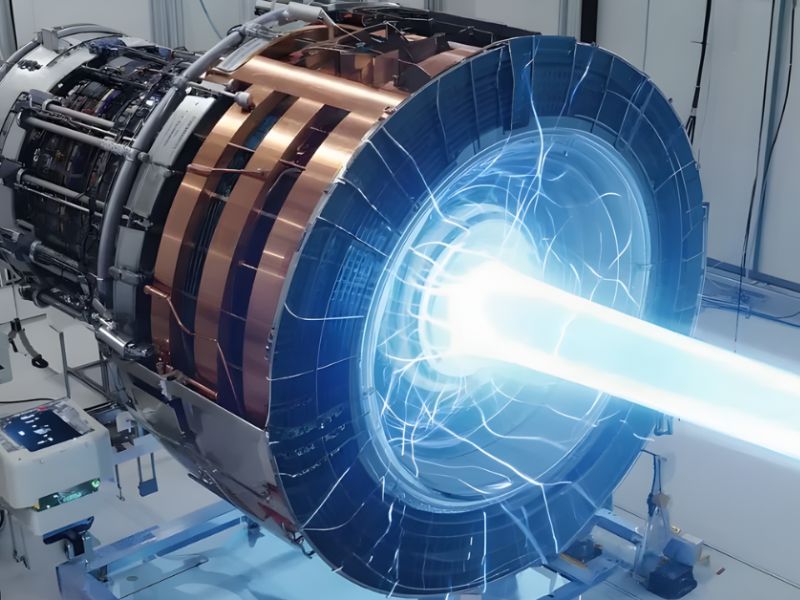
    The engine uses a plasma stream guided by electromagnetic fields, allowing continuous acceleration and much faster travel to Mars.

    Laboratory Testing Shows Promising Stability and Efficiency

    The prototype is still undergoing laboratory tests and has been examined inside vacuum chambers designed to mimic space conditions. During these trials, engineers assessed plasma stability, energy efficiency, and the ability to operate continuously. Rosatom reports that early results show stable long-term operation, a critical factor for extended missions.

    Even so, specialists caution that a 30-day trip to Mars remains a theoretical estimate. Making this engine practical requires spacecraft integration, sustained power, and solutions for radiation, heat, and crew safety.

    Power supply is another major issue. High-output plasma engines demand vast amounts of electricity, likely necessitating compact onboard nuclear reactors. Despite Russia’s nuclear expertise, such systems pose technical, safety, and political challenges for space use.

    Global Research Continues, but No Operational Missions Yet

    Analysts also note that similar propulsion concepts are being explored in countries like the United States and China, but all remain experimental. No space agency has yet completed a long-range mission—crewed or uncrewed—using high-power electric propulsion as the main drive.

    Realistically, even if the technology performs as expected, its use in human missions to Mars is unlikely before the next decade. Extensive testing in Earth orbit, uncrewed demonstration flights, and full validation of life-support and protection systems would be required first.

    The announcement reflects a trend toward faster, safer, and more efficient space travel, reducing risks and strain for astronauts.

    Overall, the claims rest on credible scientific work but are far from immediate application. The engine currently exists only as a prototype, the timelines rely on simulations, and there is no official schedule for an operational mission using this propulsion system.


    Read the original article on:Regisandrade

    Read more:A Remarkable Sodium-Ion Battery Built Around a Core of “Wood.”
  • M Dwarf Plasma Rings Offer Hints On Planet Habitability

    M Dwarf Plasma Rings Offer Hints On Planet Habitability

    How does a star affect the makeup of its planets, and what does this mean for their habitability? Luke Bouma of Carnegie studies this using natural ‘space weather stations’ around at least 10% of young M dwarfs. He is sharing his research at the 247th meeting of the American Astronomical Society.
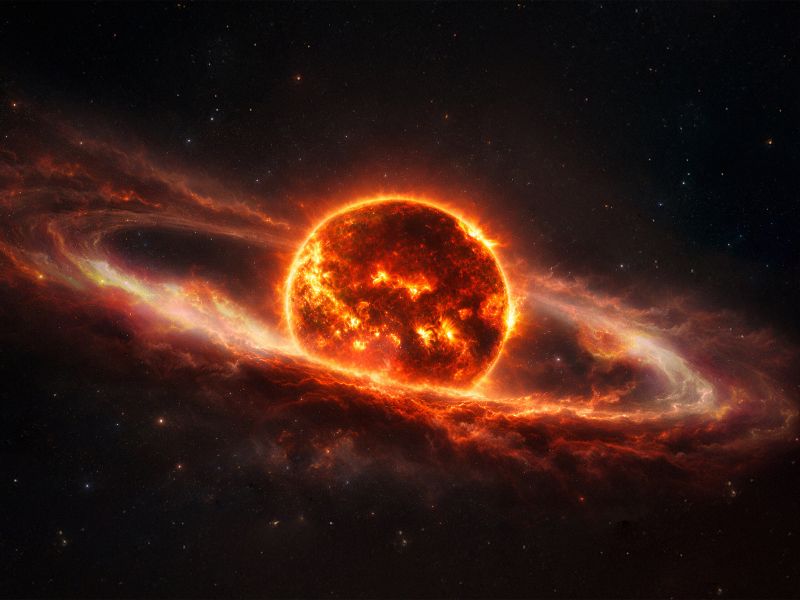
    Artist’s rendition of the space weather around M dwarf TIC 141146667. The torus of ionized gas is sculpted by the star’s magnetic field and rotation, with two pinched, dense clumps present on opposing sides of the star. Image Credits:Navid Marvi, Carnegie Science.

    How does a star affect the makeup of its planets, and what does this mean for their habitability? Luke Bouma of Carnegie studies this using natural ‘space weather stations’ around at least 10% of young M dwarfs. He is sharing his research at the 247th meeting of the American Astronomical Society.

    M Dwarf Planets: How Stars Shape Their Worlds

    Most M dwarfs—smaller and cooler than the Sun—host at least one rocky, Earth-sized planet. Though often inhospitable, these worlds offer key insights into how stars shape their planetary environments.

    “Stars clearly shape their planets,” Bouma said. “Stars affect planets through light, which is easy to observe, and particles—space weather like solar winds—which are harder to measure but often more impactful.”

    The challenge, of course, is that astronomers can’t simply set up a space weather station around a distant star.

    Or can they?

    Artist’s concept of the space weather around M dwarf TIC 141146667 with magnetic field lines shown. Image Credits: Navid Marvi, Carnegie Science

    Unraveling the Mystery of Dimming M Dwarfs

    Working with Moira Jardine from the University of St. Andrews, Bouma focused on a peculiar type of M dwarf known as a complex periodic variable. Young, fast-spinning stars show recurring dimming, but it’s unclear if it’s from starspots or orbiting material.

    “For a long time, these unusual little dips in brightness puzzled astronomers,” Bouma said. “But we’ve shown that they can actually reveal details about the environment just above the star’s surface.”

    Nature’s Space Weather Station Around M Dwarfs

    Bouma and Jardine tackled the mystery by creating “spectroscopic movies” of a complex periodic variable star. The brightness dips are caused by cool plasma clumps trapped in the star’s magnetic field, forming a doughnut-shaped torus.

    “Once we figured this out, those strange dimming blips stopped being mysteries and became a kind of space weather station,” Bouma said. “The plasma torus lets us track what’s happening with material near the star—where it’s concentrated, how it moves, and how strongly the star’s magnetic field is affecting it.”

    Bouma and Jardine estimate that at least 10% of M dwarfs may host plasma structures like this early in their lifetimes. These natural space weather stations could provide astronomers with valuable insights into how stellar particles influence the environments of surrounding planets.


    Read the original article on: Phys.Org

    Read more: Assessing the Feasibility of Asteroid Mining: Insights from a New Study

  • China’s Artificial Sun Breaks Plasma Containment Record

    China’s Artificial Sun Breaks Plasma Containment Record

    The EAST tokamak (Experimental Advanced Superconducting Tokamak), often called China’s "artificial sun," has reached a major milestone by sustaining plasma for 1,066 seconds (around 17 minutes and 46 seconds). This sets a new world record for plasma confinement in a standard tokamak, surpassing EAST’s own 2023 record of 403 seconds.
    Image Credits: GOOGLE

    The EAST tokamak (Experimental Advanced Superconducting Tokamak), often called China’s “artificial sun,” has reached a major milestone by sustaining plasma for 1,066 seconds (around 17 minutes and 46 seconds). This sets a new world record for plasma confinement in a standard tokamak, surpassing EAST’s own 2023 record of 403 seconds.

    Replicating the Sun

    The goal of the artificial sun is to replicate stellar nuclear fusion, offering a nearly limitless and clean energy source, with designs for reactors that avoid radioactive fuel. Plasma confinement is a key first step toward practical fusion power, which requires extreme temperatures over 100 million degrees Celsius, long-term stability, and precise control.

    A fusion device must maintain stable and efficient operation for thousands of seconds to sustain plasma on its own, a crucial step for generating continuous power in future fusion plants, said Professor Yuntao Song of the Hefei Institute of Physical Sciences.


    Read the original article on: Inovacao Tecnologica

    Read more: Your Intelligence may Affect How Well you Hear in Noise

  • AI Predicts Real-Time Plasma Instabilities in Nuclear Fusion Reactor

    AI Predicts Real-Time Plasma Instabilities in Nuclear Fusion Reactor

    Engineers Employ AI to Manage Fusion Power Integration into the Grid. Credit: Google DeepMind

    Deep within the confines of the tokamak, a toroidal chamber sculpted to embrace the marvels of nuclear fusion, hydrogen atoms collide with immense force, birthing a searing plasma hotter than the sun.

    Nuclear fusion is key to sustainable energy, leveraging hydrogen isotopes, abundant elements readily extracted from water, and diverse sources.

    Unveiling AI-Driven Solutions

    Recent advancements reveal an artificial intelligence-driven breakthrough in forecasting potential plasma instabilities, notably targeting tearing mode instabilities.

    These disruptions arise from the intricate dance of plasma currents and pressure gradients, creating magnetic islands that challenge proper confinement.

    The deep reinforcement learning-trained controller guides the plasma across various stages of the experiment. On the left, an internal perspective of the tokamak during the experiment is depicted. On the right, the reconstructed plasma shape and the desired target points are visible. Credit: DeepMind & SPC/EPFL).

    Proactive Prevention of Disruptions

    At the DIII-D National Fusion Facility in San Diego, scientists showcased an AI model trained on historical data, capable of predicting tearing mode instabilities up to 300 milliseconds in advance. This foresight empowers the AI to adjust reactor operations preemptively.

    Their experimental endeavor aims to safeguard magnetic field lines within the plasma, which is crucial for sustaining the fusion reaction.

    The Fusion of AI and Plasma Physics

    Crafting an AI tool proved as challenging as instructing one to navigate the skies. Leveraging past data from the DIII-D tokamak, researchers constructed a deep neural network to forecast future instabilities, complemented by a reinforcement learning algorithm to regulate plasma behavior.

    The AI acquired optimal strategies for maintaining high power while averting instabilities through simulated trials. Refined over time, the AI controller effectively preempted disruptions during real fusion experiments by dynamically adjusting tokamak parameters.

    This proactive methodology departs from reactive approaches, where corrective measures are initiated only after instabilities manifest.

    Towards Universal Application

    While demonstrating promise at DIII-D, researchers acknowledge the need for further data to validate the AI controller’s efficacy across diverse scenarios. They aspire to evolve towards a universally applicable solution, propelling fusion energy into a sustainable future.


    Read the original article on Nature.

    Read more: KSTAR’s Latest Upgrade: Potential Breakthrough in Nuclear Fusion.

  • China Unveils New Stealth Aircraft Utilizing Plasma Technology

    China Unveils New Stealth Aircraft Utilizing Plasma Technology

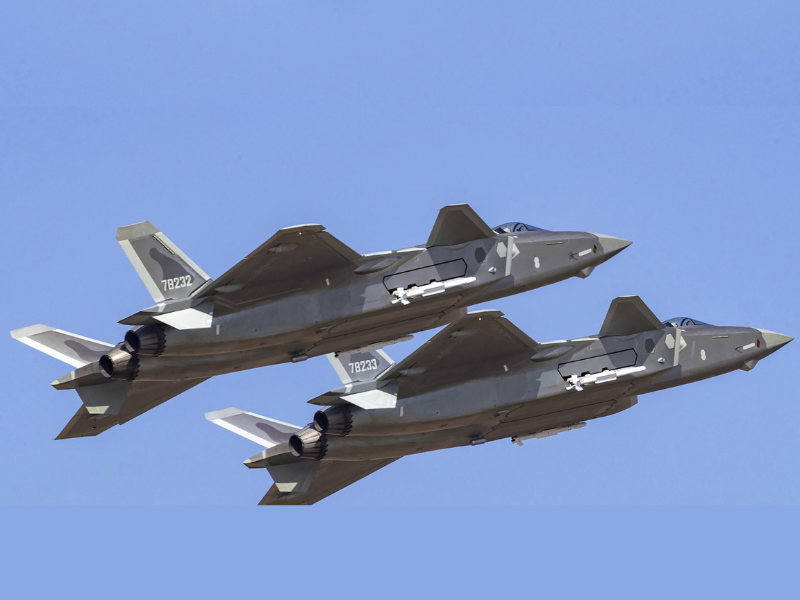
    Chinese Air Force J-20 Stealth Fighter Jets Showcase Skills at Air Show in Changchun, Jilin Province. Credit: Yang Pan/China Ministry of Defense.

    Traditionally, aircraft are designed to be highly visible for safety reasons, except military planes, which prioritize stealth. Various methods have been employed to minimize visibility through materials, design, and technologies to reduce the reflection and emissions of light and sound. Recently, scientists in China proposed a groundbreaking approach involving the fourth state of matter: plasma.

    Harnessing the Power of Plasma

    Plasma, the most abundant state of matter in the universe, exists when a substance is ionized, resulting in a mix of unbound negative electrons and positive ions. This partial ionization holds significant promise for stealth technology, particularly regarding radar invisibility. Electromagnetic waves, such as radar signals, interact with the charged particles in plasma, effectively absorbing the waves and rendering the object invisible to radar detection.

    While the concept of plasma stealth technology has long been theoretical, Chinese researchers, led by Tan Chang, claim to have made significant strides in its practical application. According to South China Morning Post reports, Chang and his team have successfully tested two approaches.

    Experimental Solutions

    One method involves strategically placing radioactive material on the aircraft, which, as it decays, ionizes the surrounding air, generating a plasma shield. Alternatively, electricity can ionize the air around specific areas of the vehicle.

    Unlike traditional stealth aircraft designs like the F-22 Raptor or the B-2 Spirit, which require complex shaping to minimize radar cross-section, these plasma-based solutions offer adaptability to various aircraft designs without significant aerodynamic compromises.

    Future Implications

    Plasma stealth technology could revolutionize military aircraft design, offering enhanced stealth capabilities without the drawbacks associated with traditional stealth aircraft. Notably, plasma stealth is believed to have already been utilized in Russian missiles such as the 3M22 Zircon (SS-N-33) and the Kh-47M2 Kinzhal.

    As research progresses, plasma-based approaches may become a cornerstone of next-generation stealth technology, reshaping the landscape of aerial warfare.


    Read the original article on Interesting Engineering.

    Read more: NASA’s Approach to Quieting the Sonic Boom in Supersonic Aircraft.