
Tag: Rainforest

  • Gabon Rainforest: Supplying Amsterdam’s Gates

    Gabon Rainforest: Supplying Amsterdam’s Gates

    Lock gates have always been really important in Amsterdam. The city only became habitable when they built a dam on the River Amstel to stop the salty water from the IJ. Today, Amsterdam has about 200 sets of lock gates, mostly made of wood. They’re becoming more crucial as sea levels rise. These well-made wooden gates come from a place far away from where the first lock in Amsterdam built in the 12th century. They come from the Congo Basin.

    Tropical Forest Destruction

    Tropical forest destruction is a significant worldwide issue. However, Aimé-Roger Malonda, the forest operations manager at Precious Woods in Gabon, argues that cutting down trees doesn’t necessarily equate to deforestation.

    Despite being located over 8,000 kilometers away, the company supplying Amsterdam’s lock gates is certified by the Forest Stewardship Council (FSC), considered the top standard for sustainable forest management. Here’s why the NGO has endorsed their practices.

    In simpler terms, these items crafted from Azobé wood sourced from Gabon. This type of wood known for being very strong and resistant to water. Commonly used for things like ship decks and train tracks.

    Amsterdam is situated two meters below sea level and is safeguarded by a complex network of canals, locks, and dams.
    Amsterdam locates two meters below sea level and safeguarded by a complex network of canals, locks, and dams. Credited by FSC.

    Gabon: A Positive Contributor in the Congo Basin

    The Congo Basin hosts the world’s second-largest rainforest, trailing only the Amazon. It spans six Central African countries: the Democratic Republic of Congo (DRC), Cameroon, the Central African Republic, the Republic of Congo, Gabon, and Equatorial Guinea.

    This vast area encompasses approximately 3 million square kilometers of primary rainforest, which is the oldest and most biologically diverse type of rainforest, supporting abundant wildlife. Just one hectare of this rainforest contains twice as many native tree species as the entire United Kingdom. Collectively, the towering trees of the Congo Basin absorb 1.2 billion tonnes of carbon dioxide annually.

    Gabon have Achieved Net-zero Emissions

    Gabon stands out as one of the eight nations that have achieved net-zero emissions, as reported by the World Economic Forum. This achievement is primarily due to Gabon’s commitment to preserving its forests, which cover nearly 90% of its territory, enabling it to capture more carbon than it releases.

    David Zakamdi, the director of sustainable management at Precious Woods, acknowledges Gabon’s dedication to forest preservation, noting that the country is outperforming its neighbors in this regard. In 2021, the Gabonese government made the decision to certify all forest concessions in Gabon to meet FSC standards, although not all concessions have been fully certified yet. However, Precious Woods serves as a compelling example of why pursuing such certifications is beneficial.


    Read the Original Article EURONEWSGREEN

    Raed more Rainforest’s Next Tree Generation at Risk 30 Years Post-Logging
  • Rainforest’s Next Tree Generation at Risk 30 Years Post-Logging

    Rainforest’s Next Tree Generation at Risk 30 Years Post-Logging

    Recent research indicates that seedlings in natural rainforests have higher survival rates compared to areas previously subjected to logging, despite efforts of tree restoration projects. This study is featured in Global Change Biology.
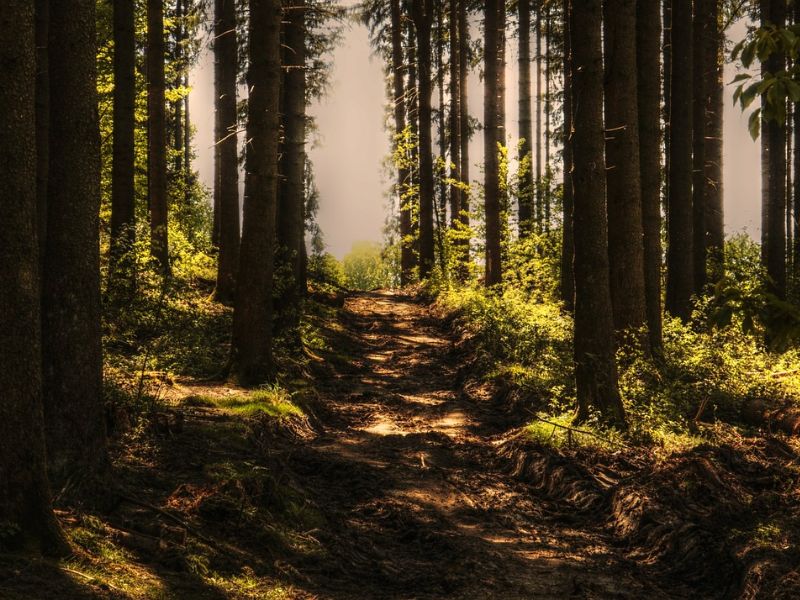
    An unlogged tropical forest in Danum Valley, Malaysian Borneo. Credit: Pixaobay

    Recent research indicates that seedlings in natural rainforests have higher survival rates compared to areas previously subjected to logging, despite efforts of tree restoration projects. This study is featured in Global Change Biology.

    Researchers monitored over 5,000 seedlings for eighteen months in North Borneo. They explored a landscape that included natural forests and areas logged three decades ago, with some undergoing natural recovery while others underwent restoration through methods such as tree planting. A drought induced “mast fruiting” across the region, leading to simultaneous fruit shedding by trees and emergence of new seedlings.

    Transient Benefits and Lingering Challenges

    Initially, both natural and restored forests showed similar high seedling numbers compared to naturally recovering areas, indicating that restoration efforts enhanced fruit production. However, this advantage proved short-lived: poor seedling survival in restored forests led to equally low seedling numbers in both restored and naturally recovering areas by the study’s end. Seedling populations remained higher in natural forests.

    These findings highlight challenges to regeneration influenced by restoration methods—seed availability in naturally recovering sites and seedling survival in areas with mature planted trees. Such variations could have long-term implications for forests’ ability to provide essential ecosystem services like carbon sequestration.

    In this study, over 5,000 seedlings were individually tagged and monitored for 1.5 years. Credit: David Bartholomew

    Dr. Robin Hayward, who conducted this research as part of their doctoral studies at the University of Stirling, expressed surprise at the lower seedling survival observed in restoration sites. Reflecting on the aftermath of a fruitful event in the restored forest, Dr. Hayward noted the disappointment in the limited survival of seedlings and raised concerns about the implications for the long-term recovery of various tree species.

    Restoration efforts have shown benefits in biomass accumulation in these forests, but achieving full establishment of the next generation of seedlings remains challenging.

    Challenges in Forest Regeneration

    Dr. David Bartholomew, formerly of the University of Exeter and now with Botanic Gardens Conservation International, highlighted that seedlings in logged forests are stressed due to changes in canopy structure, microclimate, and soil. Current restoration methods seem inadequate in mitigating this stress, especially for specialized species, leading to reduced species diversity compared to intact forests.

    Daisy Dent, affiliated with ETH Zürich, Switzerland, and the Smithsonian Tropical Research Institute, Panama, emphasized the complexity of rainforest ecosystems. She noted that factors like seed predation by animals such as bearded pigs may affect seedling survival differently in restored and natural forests.

    Selective logging is widespread in tropical regions, highlighting the importance of long-term recovery for preserving carbon stocks and biodiversity. The low survival rates of seedlings three decades after logging raise concerns about future tree regeneration.

    Insights into Plant Community Recovery and Future Research Directions

    Dr. Lindsay F. Banin from the UK Centre for Ecology & Hydrology explained that the study reveals potential hindrances in the recovery of certain plant community elements. Further research will investigate regeneration process stages to better comprehend observed patterns and promote forest regeneration.

    The study underscores the significance of meticulously designing, monitoring, and adjusting restoration projects to revive biodiversity and biomass carbon in the long run, aligning with global objectives outlined in the UN Kunming-Montreal Global Biodiversity Framework and the UN Decade on Ecosystem Restoration.

    Logged forests have reduced seedling density, reducing the probability for the next generation to emerge. Credit: David Bartholomew

    Variations in local environmental conditions between restored and degraded areas may result from greater biomass and canopy cover in the former. Understanding the low survival rates of seedlings may hinge on analyzing plant traits, indicating the resources plants struggle to access.

    Implications for Biodiversity and Ecological Functioning in Disturbed Areas

    The study observed disparities in plant traits between logged areas and intact forests, suggesting that some species may struggle to flourish in disturbed areas, while others may adapt their growth patterns. These differences could affect long-term biodiversity and ecological functioning.

    While this study examines data 18 months after a single fruiting event, further research is needed to fully grasp the effects of historical disturbance and strategies to enhance seedling survival.

    Conducted in the Danum Valley Conservation Area and surrounding Ulu Segama landscape of North Borneo, the study focuses on intact forests dominated by the Dipterocarpaceae tree family. These forests experience large inter-annual fruiting episodes known as masting events, significantly impacting food availability for animal species.


    Read the original article on: Phys org

    Read more: Recent Study Reveals Surprising Boreal Forest Fire Effects in North America