Tag: Revolutionize

  • Physicists Discover Quantum Forces Poised to Transform Device Efficiency

    Physicists Discover Quantum Forces Poised to Transform Device Efficiency

    A groundbreaking discovery in spintronics promises to transform computing by harnessing electron spin-orientation for faster, energy-efficient quantum devices. Credit: SciTechDaily.com

    In today’s rapidly evolving digital landscape, the need for greater storage capacity, efficiency, and computing power continues to rise. To meet these demands, researchers are exploring spintronics, an innovative field that could transform modern electronics. Unlike conventional electronics, which rely solely on the electric charge of electrons, spintronics leverages both charge and spin. By encoding binary values—“up” for 1 and “down” for 0—into an electron’s spin, spintronic devices can deliver faster performance and superior energy efficiency.

    Understanding the Quantum Basis of Spintronics

    To fully harness the potential of spintronics, scientists must delve deeper into the quantum properties of materials. A critical element in this pursuit is spin torque, which allows electrical currents to control magnetization. This function is essential for advancing next-generation data storage and processing technologies.

    In a study published in Nature Nanotechnology on January 15, 2025, researchers from the University of Utah and the University of California, Irvine, unveiled a novel spin-orbit torque called the anomalous Hall torque. This phenomenon enables the manipulation of spin and magnetization through electrical currents.

    First-ever spintronic prototype device that exploits the anomalous Hall torque effect. Credit: Adapted from Montoya et. al., (2025) Nature Nanotech

    “This discovery introduces entirely new physics with exciting applications,” said Eric Montoya, lead author and assistant professor of physics at the University of Utah. “These self-generated spin-torques are ideal for emerging systems like neuromorphic computing, which mimic human brain networks.”

    Exploring Spin and Symmetry

    Electrons exhibit tiny magnetic fields and dipolar spins—“up” or “down,” similar to Earth’s magnetic poles. Spin-orientation torque refers to the speed at which electrons spin around a fixed point. In certain materials, electrical currents sort electrons based on their spin orientation. This spin symmetry, or distribution, influences the material’s magnetic properties and behavior.

    The anomalous Hall torque relates to the anomalous Hall effect, first identified in 1881, where electrons scatter asymmetrically in magnetic materials, producing a perpendicular charge current. In spintronics, a similar process occurs: applying an electric current creates a spin current perpendicular to the charge current, aligning spin with magnetization.

    “It all comes down to symmetry,” Montoya explained. “We can fine-tune these properties in materials to control spin orientation efficiently, enabling new functionalities for devices.”

    The Universal Hall Torque Framework

    The anomalous Hall torque, part of the “Universal Hall torques,” advances spintronics by enabling simpler device designs.

    Researchers created a spin-torque oscillator that mimics neuron functions but operates faster and smaller. “Our next step is building networks for neuromorphic tasks like image recognition,” said Krivorotov.

    This breakthrough paves the way for future technologies.


    Read Original Article: Scitechdaily

    Read More: Global Survey Reveals What 68 Countries Think About Science

  • Tiny Micro-Flower Could Revolutionize Drug Delivery Inside the Body

    Tiny Micro-Flower Could Revolutionize Drug Delivery Inside the Body

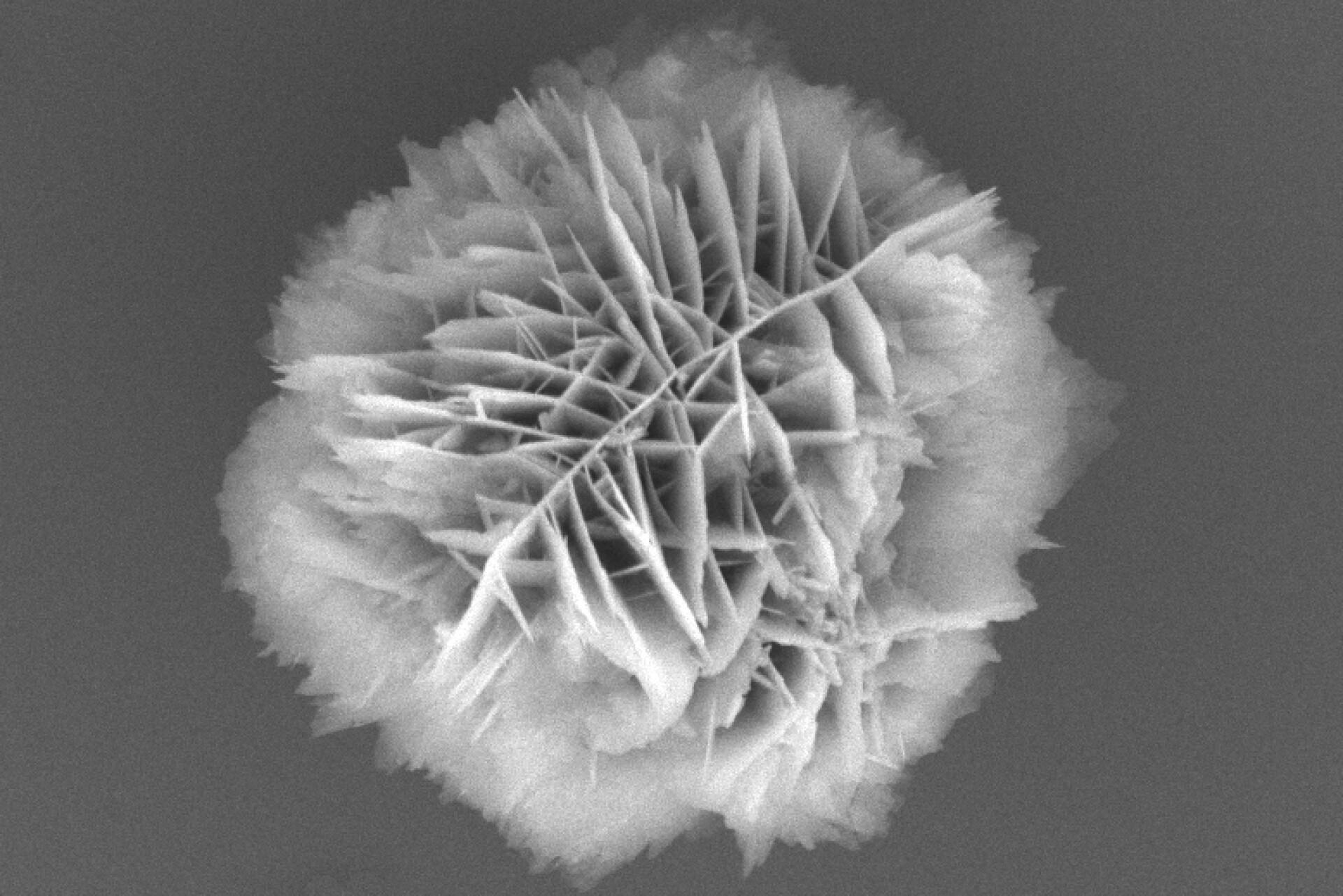
    A batch of the drug-delivery microparticles – these ones are made of zinc oxide, although other materials can be used
    Dong Wook Kim / Max Planck Institute for Intelligent Systems, colorization: ETH Zurich

    Medications, whether taken orally or intravenously, often spread throughout the body instead of targeting the specific area where they are needed. However, this inefficiency may soon be addressed by a new microparticle design resembling a flower.

    In recent years, researchers have developed various particles for targeted drug delivery. These microscopic particles are typically loaded with medication, injected into the bloodstream, and externally guided to the affected area. Once there, they can either release their drug payload on command or gradually dissolve to diffuse the medication. This method ensures the treatment directly reaches the intended site, reducing side effects and requiring lower dosages by minimizing wasted medication.

    Each microparticle is just 3 micrometers in size
    Dong Wook Kim / Max Planck Institute for Intelligent Systems

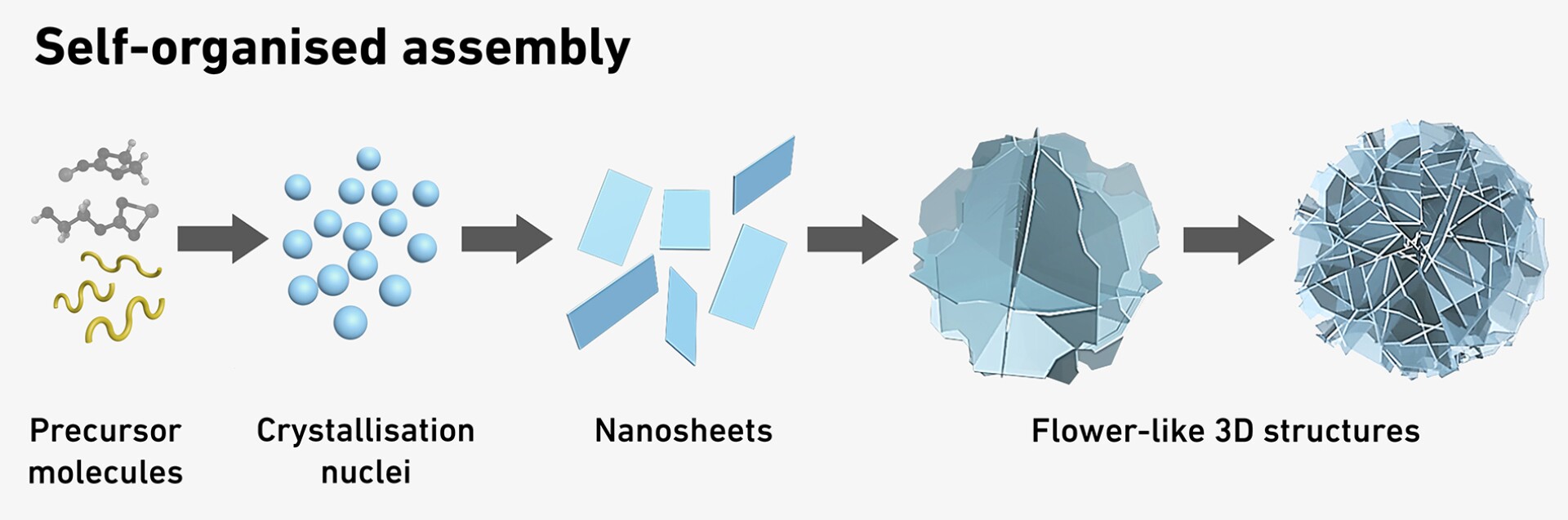
    A team led by ETH Zurich professors Daniel Razansky and Metin Sitti has created innovative microparticles with a flower-like structure, distinct from the commonly used smooth spheres. These “petals” are nanosheets of material that self-assemble into a three-dimensional cluster. Depending on the treatment, the petals can be made from various materials, including zinc oxide, polyimide, or a nickel/organic composite.

    Flower-Petal Microparticles: Enhanced Drug Delivery and Imaging Capabilities

    The unique flower-petal design offers two significant advantages over spherical particles. First, the increased surface area of the petals allows each particle to carry a larger dose of medication. Second, the structure enhances the particles’ ability to scatter sound waves, improving visibility during ultrasound imaging. Additionally, the petals can be coated with light-absorbing molecules for better optoacoustic imaging.

    Ultrasound serves a dual purpose in this technology. It tracks the microparticles within the body and uses focused pulses to steer and “park” them at specific locations in the bloodstream, even against the flow of blood. Lab tests successfully demonstrated this capability in mice.

    A very basic diagram of the self-assembly process
    Kim et al. Advanced Materials 2024, modified

    The research team plans to conduct further animal studies before advancing the technology for human use, potentially offering new treatments for cardiovascular diseases or cancer.


    Read Original Article: New Atlas

    Read More: Scitke