Tag: Rocket

  • Rocket Plane Achieves First Civilian Supersonic Flight Since Concorde

    Rocket Plane Achieves First Civilian Supersonic Flight Since Concorde

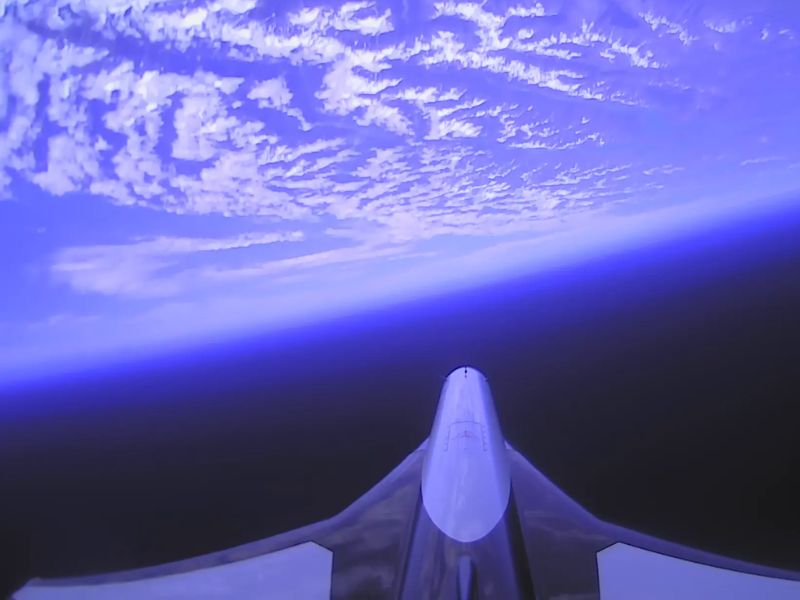
    Pilot cam view from Aurora as it reaches 82,500 ft
    Dawn Aerospace

    The dream of commercial supersonic flight is inching closer to reality. On November 12, 2024, Dawn Aerospace’s 16-ft (4.8-m) autonomous Mk-II Aurora rocket-powered plane reached Mach 1.1, officially breaking the sound barrier.

    Since the Concorde’s retirement in 2003, civil supersonic travel has largely faded into history. However, a new wave of startups has emerged, aiming to build faster, quieter, and more efficient supersonic aircraft. Dawn Aerospace’s recent success marks a tangible step forward, even if the flight involved an uncrewed experimental craft weighing 880 lb (200 kg) with a 13-ft (4-m) wingspan.

    https://youtu.be/XjIlE-RZUmw
    Mk-II Aurora

    Mk-II Aurora Sets Records in Supersonic Flights Over New Zealand

    Flying over New Zealand’s Glentanner Aerodrome near Aoraki/Mount Cook, the Mk-II Aurora climbed to 82,500 ft (25,150 m) while achieving supersonic speeds. Dawn Aerospace reported that the craft set multiple records, including being the first supersonic aircraft designed and built in New Zealand and the fastest ascent to 66,000 ft (20 km), completing the climb in just 118.6 seconds—4.2 seconds faster than a modified F-15 in the 1970s. Remarkably, the Mk-II Aurora completed a second flight only six hours later.

    Looking ahead, the Mk-II Aurora is expected to reach Mach 3.5 and soar to the edge of space at 62 miles (100 km). The company envisions the aircraft supporting microgravity research, atmospheric science, Earth observation, and high-speed flight experiments.

    This achievement showcases the extraordinary potential of rocket-powered aircraft,” said Stefan Powell, CEO of Dawn Aerospace. “With flight test 57, we resolved the final technical risk in the Aurora program: stability during the transonic phase. Aurora is now confirmed as the highest climb-rate vehicle ever, setting the stage for it to become the world’s fastest and highest-flying aircraft. This milestone is a critical step toward operational hypersonic aviation, redefining what’s possible in aerospace innovation.”


    Read Original Article: New Atlas

    Read More: Scitke
  • Spacex Third Flight Test of Starship

    Spacex Third Flight Test of Starship

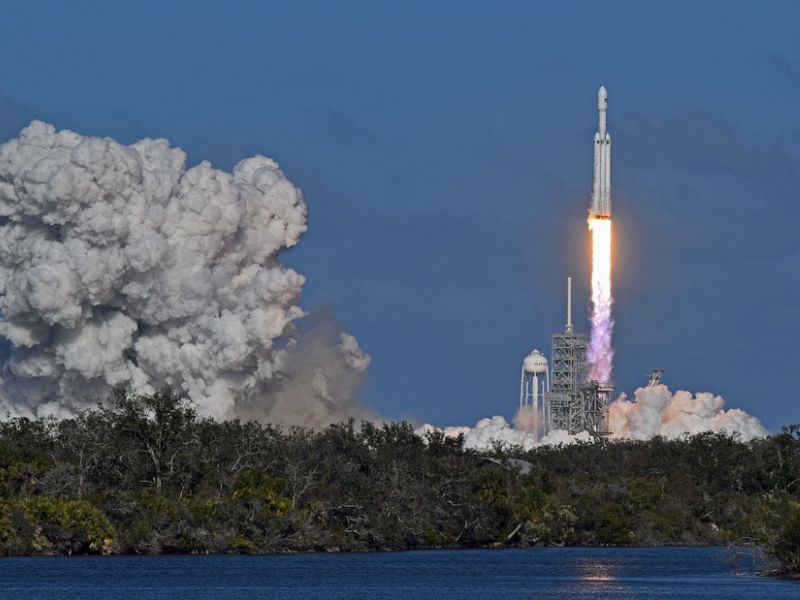
    With the objective of testing different aspects of the rocket, SpaceX has launched for the 3rd time a flight test of Starship. This time, the stainless-steel rocket and its Super Heavy booster, which together stand 400 feet tall (122 meters) filled with more than 10 million pounds of liquid methane and liquid oxygen propellant reached space. The test was performed at SpaceX's Starbase facility near Boca Chica Beach in southern Texas this Thursday.
    Credit: Pixaobay

    With the objective of testing different aspects of the rocket, SpaceX has launched for the 3rd time a flight test of Starship. This time, the stainless-steel rocket and its Super Heavy booster, which together stand 400 feet tall (122 meters) filled with more than 10 million pounds of liquid methane and liquid oxygen propellant reached space. The test took place on Thursday at SpaceX’s Starbase facility located near Boca Chica Beach in southern Texas.

    The Rocket went to space with the intent to splash down in the Indian Ocean. The test comprised of observing the detachment of the booster and the main starship reaching space.

    So far, it has met all expectations without issues. The test served its purpose well, succeeding in both aspects, even executing reentry before experiencing Rapid Unscheduled Disassembly (RUD) after a few seconds.

    Starship Third Test Flight

    Elon Musk on SpaceX Third Flight Test of Starship

    Founder and CEO of SpaceX Elon Musk reacted to the latest Starship launch on Thursday, saying the world’s most powerful rocket will “make life multiplanetary.” He made the short comment with an accompanying photo of the rocket in a post on X.

    Gwynne Shotwell, Chief Operating Officer of SpaceX, extends heartfelt congratulations to the entire team for their exceptional achievements on this remarkable day: flawlessly executing the count (with relief that the shrimpers could evacuate in time!), achieving successful liftoff, conducting precise hot staging, overseeing the Super Heavy boost back and coast (with likely a couple of engines engaged during landing burn!), smoothly inserting and coasting the ship, demonstrating payload door cycling and prop transfer (pending confirmation!), and completing the ship entry!

    It has been awhile since the time of static fire tests. news such as ” SpaceX’s massive Starship rocket remains to pass key tests on its road to sending the Mars-bound launch system up to orbit for the 1st time.” are now things of the past. Resilience and a lot of effort have proven time and again that a private company such as SpaceX can deliver humans to Mars if believed and worked on a strategic plan.

    Evolution of Starship
    Evolution of Starship part 1: Christopher Stanley
    Various stages of development of starship from static fire to reentry
    Evolution of Starship part 2. Credit: Christopher Stanley

    Starship Third Flight Test is Carefully Monitored

    SpaceX and NASA may be celebrating the successes of Thursday’s mission, but from the perspective of the Federal Aviation Administration (FAA), responsible for licensing commercial rocket launches, the loss of the Super Heavy booster and Starship spacecraft remains a setback requiring thorough review. The FAA regularly oversees investigations into incidents involving spacecraft loss during flight. Despite SpaceX’s prior awareness that Starship and Super Heavy were unlikely to survive the flight, regulators still need to analyze the incident.

    SpaceX and the FAA have had occasional tensions in their relationship, with SpaceX expressing frustration over what it perceives as prolonged reviews by the agency, leading to delays in testing.

    Starship Third Flight Test in a Nutshell

    Here a few aspects according to CNN that can help you catch up on the event:

    • The Starship spacecraft made it to orbital speeds.
    • Both the Starship spacecraft and Super Heavy rocket booster made it much further into flight than during two previous tests in 2023.
    • SpaceX completed a propellant transfer demonstration, and Starship’s payload doors were tested. It’s too early to say if they’re wholly successful, as engineers said they need to review some data.
    • SpaceX did not re-light Starship’s engines as expected, but the webcast offered stunning views of the spacecraft plunging back into the atmosphere.
    • It’s not clear if the Super Heavy booster landed in one piece.
    • The Starship spacecraft experienced premature destruction, leading to an earlier-than-anticipated loss of communication by SpaceX. However, SpaceX had no intention of recovering the vehicle; it was designed for crash landing.

    Read the original article on: CNN

    Read more: Is Kennedy Space Center Ready for Starship’s Force?

  • Ex-Student Competitor’s Journey to NASA Engineer

    Ex-Student Competitor’s Journey to NASA Engineer

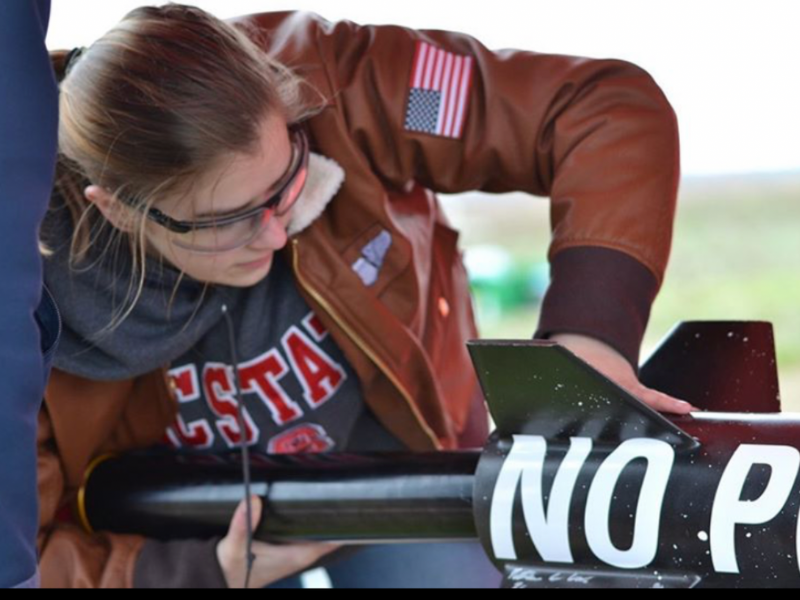
    This picture shows Meredith Patterson when she was a first-year student at North Carolina State University. She's putting together the rocket used by the university's high-powered rocketry club for NASA's 2019 Student Launch. Patterson was part of the club and joined in the Student Launch for five years until she graduated. She then made her experience into a job as an aerospace engineer at NASA.
    This picture shows Meredith Patterson when she was a first-year student at North Carolina State University. She’s putting together the rocket used by the university’s high-powered rocketry club for NASA’s 2019 Student Launch. Patterson was part of the club and joined in the Student Launch for five years until she graduated. She then made her experience into a job as an aerospace engineer at NASA.

    Sometimes, it only takes a few years and meeting the right people to completely change someone’s career path. Meredith Patterson is a great example. She works as an aerospace engineer at NASA‘s Marshall Space Flight Center in Huntsville, Alabama. Even though she didn’t know much about rockets at first, now she’s part of the team working to send people back to the Moon.

    She says a big part of her success is thanks to NASA’s Student Launch program. It not only helped her discover her love for aerospace engineering but also gave her the skills and experience she needed for her job today.

    Every year, Student Launch invites student teams from all over the U.S. to spend nine months designing, building, and testing a powerful rocket with a scientific or engineering payload. The program ends with a final launch in Huntsville. This year, it’s happening from April 10 to 14, with the final launch on April 13 at Bragg Farms in Toney, Alabama.

    Patterson first heard about Student Launch when she was a junior in high school, during a tour of North Carolina State University. She visited the rocketry lab there and knew right away that she wanted to be part of it. She wanted to help lead the team and make sure they did well in Student Launch, no matter how many years it took.

    Her Journery


    For five years, she went to North Carolina State University. Every year, she took part in the Student Launch competition. In her last year, she led the team, and they came fourth. Through Student Launch, she got certifications from the Tripoli Rocketry Association, which helped her meet mentors from Tripoli and the National Rocketry Association. These mentors gave her hands-on experience and technical knowledge that she thinks are really important in the aerospace industry.

    Patterson said her leadership, system engineering, and technical writing skills improved a lot because of Student Launch. Having mentors during the competition allowed her to ask questions and learn more about the technical side of things. She believes she uses more information from Student Launch in her daily work than from most of her college classes.

    When she was 16, attending an engineering camp sparked her interest in spaceflight and rockets. But it was through Student Launch that she got to really explore and deepen her love for it.

    “It’s amazing to think that less than 10 years ago, I had never even built a rocket,” Patterson said. “And now, I can build Level II-sized rockets by myself, and I’m working on the biggest solid rocket boosters in the world. Just in the past year, I’ve gone from using the L-class motor for Student Launch to making 11-inch motors and now watching the making of the SLS (Space Launch System) boosters.”

    Student Launch


    Student Launch is a component of NASA’s Artemis Student Challenges. In the 2024 Student Launch Challenge, seventy teams from 24 states and Puerto Rico were chosen to participate.

    The Student Launch challenge is held at Marshall, with oversight from NASA’s Office of STEM Engagement – Southeast Region. Financial support comes from NASA’s Space Operations Mission Directorate and NASA’s Next Gen STEM project.


    Read the Original Article NASA

    Read more NASA’s Approach to Quieting the Sonic Boom in Supersonic Aircraft