Tag: Sensor

  • A Smart Sensor Tag Safeguards Delicate Products

    A Smart Sensor Tag Safeguards Delicate Products

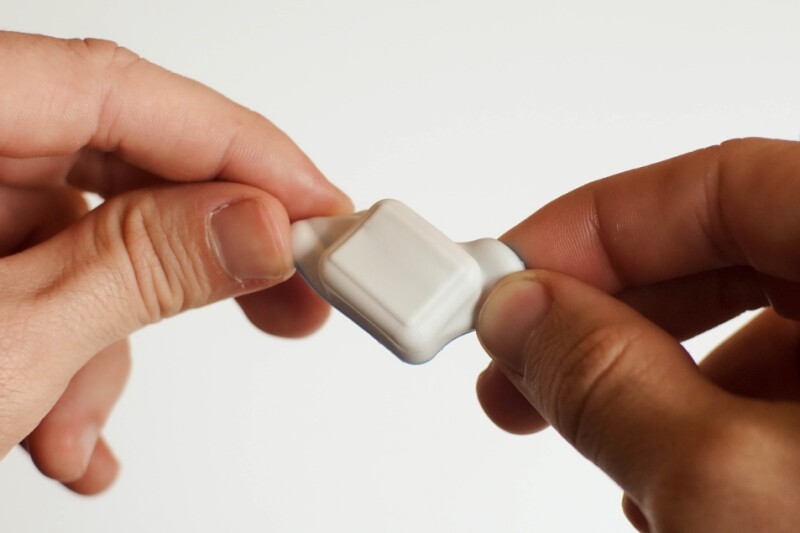
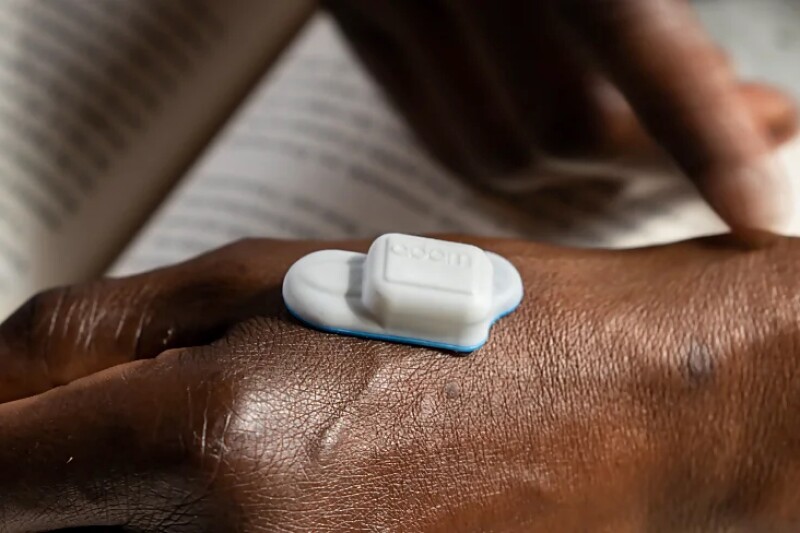
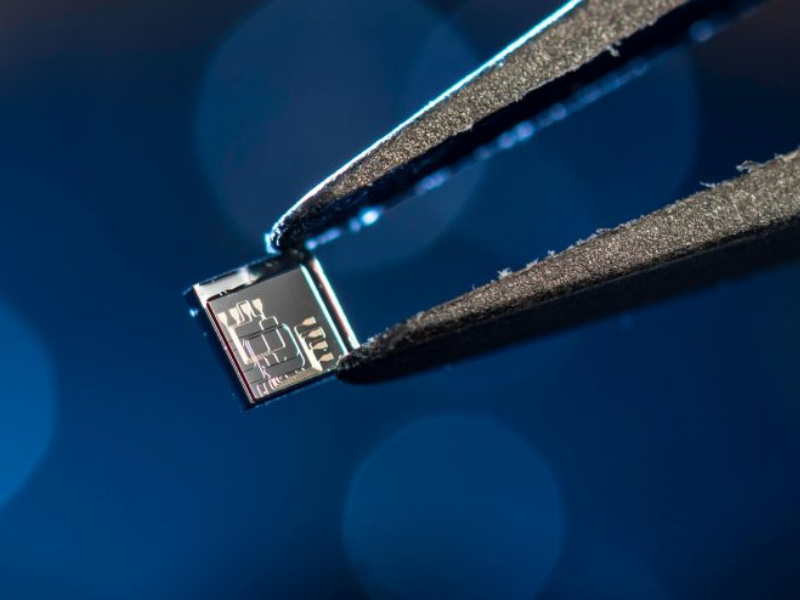
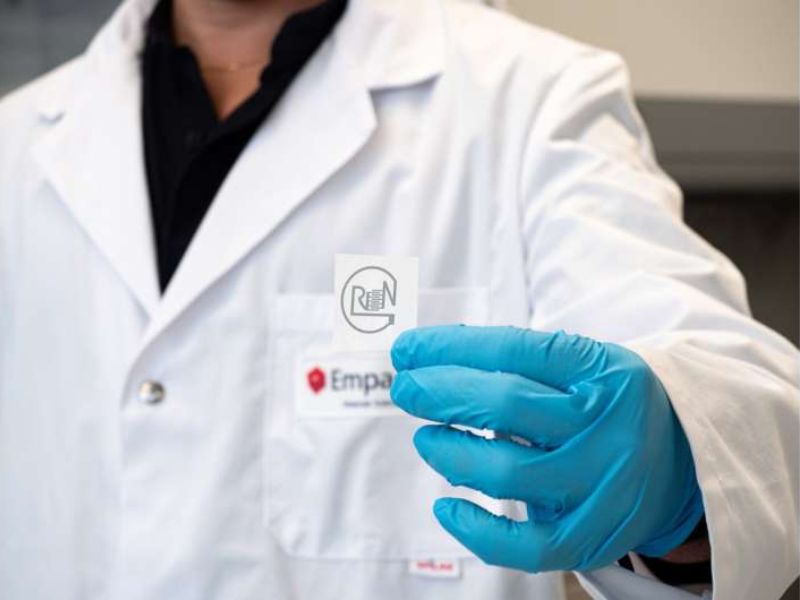
    Researchers at Empa, EPFL, and CSEM have created an eco-friendly smart sensing tag that tracks temperature and humidity in real time and can indicate when a temperature limit has been crossed. It could eventually be used to monitor sensitive goods like pharmaceuticals or food. The tag is fully biodegradable.
    Image Credits:Inconspicuous: The biodegradable tag is as thin as a sheet of paper, but still able to measure 

    Researchers at Empa, EPFL, and CSEM have created an eco-friendly smart sensing tag that tracks temperature and humidity in real time and can indicate when a temperature limit has been crossed. It could eventually be used to monitor sensitive goods like pharmaceuticals or food. The tag is fully biodegradable.

    Every day, vast quantities of sensitive goods—like vaccines, medicines, and perishable foods—travel globally. Maintaining strict temperature and humidity limits is crucial, but equipping each shipment with conventional sensors is costly, unsustainable, and provides limited insight into conditions along the route.

    A Four-Year Effort Leads to a Fully Biodegradable Smart Sensor Tag

    In response to this problem, researchers at Empa, EPFL, and CSEM have spent four years working on the Greenspack project. They have created an innovative sensor tag that tracks temperature and relative humidity and can log when a critical temperature threshold has been surpassed. This tiny, sticker-like device contains no silicon and is fully biodegradable. The team has reported its results in Nature Communications.

    The smart tag operates without a battery or transmitter. Instead, it functions much like an RFID device. It uses printed conductive pathways that create electrical circuits made up of resistive and capacitive components. When exposed to an electromagnetic field, the circuits generate a resonance signal that the reader can detect.

    Image Credits:Eco-friendly chipless temperature-responsive tag concept, fabrication and testing setup. Credit: N

    The circuits’ conductivity and capacitance change with temperature or humidity, altering their resonance. This shift reveals the surrounding temperature and moisture levels—eliminating the need for complex sensing electronics.

    Smart Tag Records Irreversible Heat Events Above 25 °C

    The team also added a built-in “memory”: if temperatures exceed 25 °C, a tiny circuit component melts and breaks permanently. At the next scan, the tag reveals that the shipment was exposed to excessive heat. “For vaccines, this could make the batch unusable or expire,” says Gustav Nyström, head of Empa’s Cellulose and Wood Materials lab.

    This approach reduces supply chain strain and environmental impact by detecting compromised goods early, allowing rerouting of items with reduced shelf life. “By choosing different materials, we can define various temperature thresholds,” Nyström adds. Tags designed specifically for frozen products are one potential application.

    After a shipment arrives, the tag is intended to be composted or recycled with cardboard, since it is entirely biodegradable. For the base material, the Empa team developed a special substrate made from a biopolymer combined with cellulose fibers. Empa and EPFL researchers then printed the conductive sensing structures using a tailored ink that contains the bio-absorbable metal zinc. At the same time, CSEM focused on designing the tag and developing the readout system.

    Overcoming the Challenges of Biodegradable Sensor Design

    Using biodegradable materials poses its own difficulties—they must remain stable until their job is complete. Moreover, each sensing component had to react only to its specific environmental factor. “We didn’t want the temperature sensor to respond to humidity, or the humidity sensor to react to temperature,” Nyström explains. Working together, the partners succeeded in addressing these challenges.

    Two EPFL researchers are now moving toward commercializing the Greenspack results through a start-up called Circelec. Meanwhile, Nyström’s team at Empa plans to advance their research in green electronics and investigate how smart biodegradable labels could be used in agriculture and environmental monitoring.


    Read the original article on: Techxplore

    Read more: Selfie-Based Age Checks Rise Amid Stricter Online Rules
  • Sensor Prevents Nighttime Scratching Without Disrupting Sleep

    Sensor Prevents Nighttime Scratching Without Disrupting Sleep

    A new device aims to help individuals with chronic itching avoid scratching their skin during sleep, without disturbing their rest. Scratching can exacerbate dermatitis, and this innovative sensor seeks to address the issue.
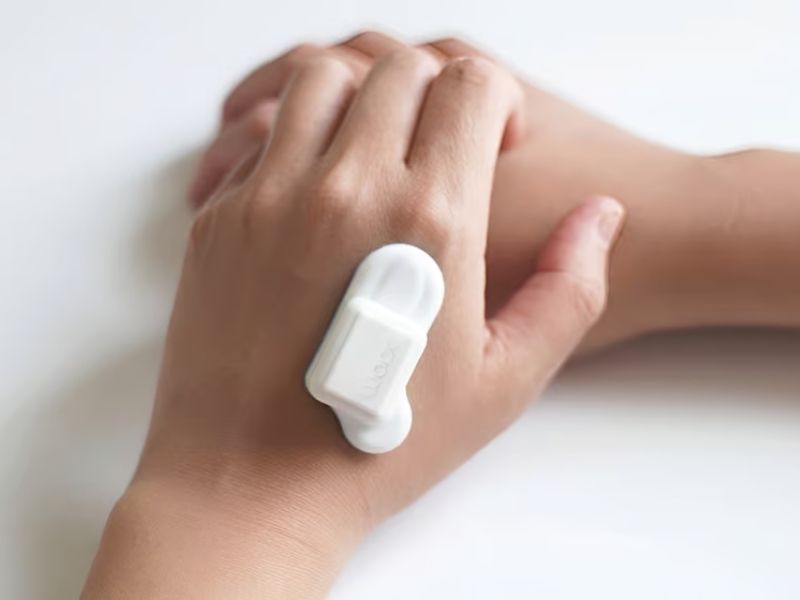
    The ADAM sensor uses haptic feedback to indicate when scratching is taking place 
    Sibel Health

    A new device aims to help individuals with chronic itching avoid scratching their skin during sleep, without disturbing their rest. Scratching can exacerbate dermatitis, and this innovative sensor seeks to address the issue.

    Key Components of the ADAM Sensor

    Developed by Chicago-based Sibel Health, the ADAM (ADvanced Acoustic-Mechanic) sensor integrates several key components: a microprocessor, a haptic feedback motor, a Bluetooth module, an IMU (inertial measurement unit), and a rechargeable battery. These are all housed in a waterproof, medical-grade silicone casing, which attaches to the back of the patient’s dominant hand with a hypoallergenic, waterproof adhesive.

    The device operates through an AI-based algorithm running on the microprocessor. It analyzes real-time data from the IMU to detect hand movements associated with scratching. This information is then transmitted to a smartphone or computer, where it can be reviewed by a physician.

    here’s currently no word on when ADAM may reach commercial production
    Sibel Health

    When the device detects scratching, it activates the motor and delivers a subtle vibration, alerting the wearer to their behavior without waking them. This technology draws inspiration from the NightWare system, which uses an Apple Watch to vibrate and interrupt PTSD-related nightmares without disturbing sleep.

    ADAM could also be utilized to monitor scratching activity while the wearer is awake 
    Sibel Health

    Successful Pilot Test and Results

    In a pilot test, 10 adults with atopic dermatitis used ADAM nightly over 14 days. During the first week, they kept the motor disabled, and the device only recorded scratching activity, achieving 99% accuracy compared to infrared video footage. In the second week, they activated the motor, which led to a 28% reduction in scratching time and a 40% reduction in scratch events. The best part? Participants reported no disruptions to their sleep, with their total sleep time increasing by an average of 16%.

    While further research, including larger studies with more diverse participants, is necessary, ADAM is now moving forward commercially through a partnership between Sibel Health and Maruho, a Japanese dermatology technology company.


    Read the original article on: New Atlas

    Read more: Popular Sleeping Pill May Block the Brain’s Essential Cleaning Cycle

  • Tiny Photonic Chip Provides a Big Boost in Precision Optics

    Tiny Photonic Chip Provides a Big Boost in Precision Optics

    A 2 mm by 2 mm integrated photonic chip developed by Jaime Cardenas, assistant professor of optics, and PhD student Meiting Song (lead author) will make interferometers—and therefore precision optics—even more powerful. Potential applications include more sensitive devices for measuring tiny flaws on mirrors, or dispersion of pollutants in the atmosphere, and ultimately, quantum applications. Credit: J. Adam Fenster/University of Rochester

    New technology of the integrated photonic chip

    Researchers at the University of Rochester’s Institute of Optics, for the first time, distill unique interferometry into a photonic device. University of Rochester scientists, for the very first time, harbor a way of amplifying interferometric signals using inverse weak value amplification– without increment in extraneous input or “noise”– on an integrated photonic chip.

    By combining two or more light sources, interferometers make interference patterns that can provide incredibly detailed information about everything they illuminate, from a tiny defect on a mirror to the dispersion of contaminants in the atmosphere to gravitational patterns in depths of the Universe.

    “If you wish to measure something with very high precision, you almost always use an optical interferometer, since light stands for a highly precise ruler,” claims Jaime Cardenas, assistant professor of optics at the University of Rochester.

    The Cardenas Lab has produced a method to make these optical workhorses a lot more helpful and sensitive. Meiting Song, a Ph.D. student, has for the very first time packaged an experimental way of amplifying interferometric signals– without a matching increase in extraneous, unnecessary input, or “noise”– on a 2 mm by 2 mm integrated photonic chip. The advancement, explained in Nature Communications, is based on a theory of weak value amplification with waveguides that were developed by Andrew Jordan, a professor of physics at Rochester, and students in his laboratory.

    Weak value amplification

    Jaime Cardenas (left) and Meiting Song (right) in the Cardenas Lab at Rochester’s Institute of Optics. Credit: University of Rochester/ J. Adam Fenster

    Together with his team, Jordan has been researching weak value amplification for over ten years. They have applied mode analysis uniquely on a free space interferometer with weak value amplification, which closed the gap between free space and waveguide weak value amplification. As a result, they managed to confirm the theoretical feasibility of incorporating weak value amplification on a photonic chip. More collaborators include Yi Zhang and Juniyali Nauriyal of the Cardenas laboratory, John Steinmetz of the Department of Physics and Astronomy, and Kevin Lyons of Hoplite AI.

    “You can think of the weak value amplification strategy as offering you amplification for free. It is not absolutely free since you forfeit power. However, it is practically for free, since you can amplify the signal without including noise– which is a huge deal,” Cardenas says.

    Weak value amplification is based upon the quantum mechanics of light and generally involves directing only certain photons containing the data required for a detector. The concept has been shown before, “but it is always with a large setup in a laboratory with a table, several mirrors as well as laser systems, all very meticulously as well as thoroughly aligned,” Cardenas states.

    According to Cardenas, Meiting developed all of this and placed it into a photonic chip. Having the interferometer on a chip means you can place it on a rocket, or a helicopter, in your phone– anywhere you want– as well as it will never be misaligned.

    Traditional Interferometry vs. Photonic Chip

    Traditional interferometry (left) needs an intricate assemble of mirrors and laser systems all extremely meticulously and thoroughly aligned,” Cardenas claims. Song “distilled every one of this and put it into a photonic chip.” The chip (right) calls for only a single microscope. Credit: University of Rochester/ J. Adam Fenster

    The device Song produced does not look like a typical interferometer. Rather than using a set of tilted mirrors to bend light and develop an interference pattern, Song’s device includes a waveguide crafted to propagate the wavefront of an optical field through the chip.

    “This is just one of the novelties of the paper,” Cardenas says. “No one has actually discussed wavefront engineering on a photonic chip.”

    The use of conventional interferometers can increase the signal-to-noise ratio, leading to even more meaningful input by merely cranking up the laser power. However, there is, in fact, a limitation, Cardenas states since the traditional detectors used with interferometers can deal with only so much laser power before turning into saturated. At this point, there cannot be an increase in the signal-to-noise ratio.Song’s device eradicates that limitation by reaching the same interferometer signal with less light at the detectors, leaving space to increase the signal-to-noise ratio by including laser power.

    “If the very same quantity of power reaches the detector in Meiting’s weak value device as in a conventional interferometer, Meiting’s device will always have a preferable signal to noise ratio,” Cardenas claims. “This work is truly awesome, really subtle, with a lot of outstanding physics as well as engineering taking place behind the scenes.”

    Following actions will include adapting the device for coherent communications and quantum applications using squeezed or knotted photons to enable devices such as quantum gyroscopes.


    Read the original article on Scitech Daily.

    Related “New Photonic Chip for Isolating Light May Be Key to Miniaturizing Quantum Technology

    The project was financed by A. N. Jordan Scientific, in partnership with Leonardo DRS, and partially by the Center for Emerging and Innovative Sciences (CEIS). Fabrication was conducted at the Cornell NanoScale Facility, with support from the National Science Foundation.