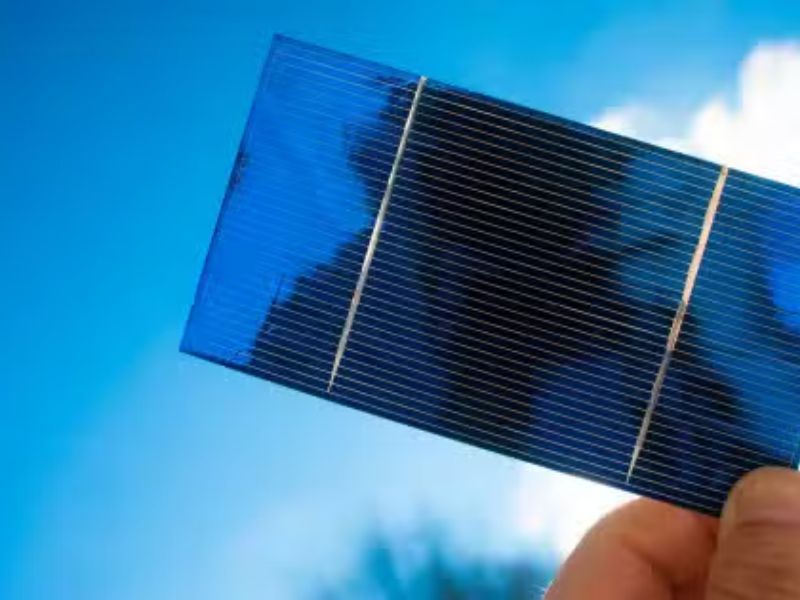
Tag: Solar Cells

  • Longi Breaks Theoretical Limit: Solar Cells Reach 34.85% Efficiency

    Longi Breaks Theoretical Limit: Solar Cells Reach 34.85% Efficiency

    Credit: Futuroprossimo

    Chinese solar giant Longi has shattered expectations with a new tandem solar cell that achieves a record-breaking 34.85% efficiency—thanks to an innovative fusion of perovskite and silicon technologies.

    In the world of solar energy, even a 0.1% boost in efficiency is considered a big deal. Now imagine surpassing what was long believed to be the absolute theoretical ceiling—by more than a full percentage point. That’s exactly what Longi accomplished with its latest silicon–perovskite tandem cell, certified by the prestigious U.S. National Renewable Energy Laboratory (NREL). The achievement marks not just a new world record, but a major milestone in the evolution of photovoltaic science.

    How Did They Do It?

    The secret lies in a carefully engineered blend of materials, including lithium fluoride, a molecule known as ethylenediammonium diiodide (EDAI), and an asymmetrically textured silicon surface. Sound technical? Let’s simplify.

    Breaking the Unbreakable: Longi vs. Shockley-Queisser

    For decades, the Shockley–Queisser limit of 33.7% was regarded as an almost unbreakable wall for single-junction solar cells—a theoretical boundary set back in the 1960s. It became the “Holy Grail” of solar efficiency.

    Now, Longi has gone beyond it—achieving a 34.85% conversion rate. In solar terms, that’s the equivalent of shaving half a second off a world record sprint. And the trick? Combining conventional silicon—the base of 95% of today’s solar panels—with perovskite, a newer material with extraordinary light-absorbing properties.

    Material Innovation: The Real Magic

    The breakthrough lies in the layered cell structure. Longi’s engineers enhanced both the hole-blocking (positive charge carriers) and electron transport processes by integrating ultra-thin layers of LiF and EDAI.

    Think of it as designing a perfectly paved expressway for electrical particles: EDAI patches areas where LiF alone wouldn’t be effective, resulting in smooth, efficient charge movement throughout the cell.

    Perhaps most impressively, Longi addressed one of the trickiest challenges in tandem cell design—how to connect different materials efficiently. Their asymmetrically textured silicon surface provides an elegant solution, improving light capture and interface quality simultaneously.

    A Company Built on Breaking Records

    This isn’t Longi’s first leap forward. The company has consistently pushed the limits of solar performance. In November 2023, it reached 33.9% efficiency. By June 2024, it climbed to 34.6%. Now, with this latest result, the trajectory is clearly upward.

    And their innovation doesn’t stop with tandem cells. Longi also set a new benchmark with a silicon cell using Heterojunction Interdigitated Back Contact (HIBC) technology, reaching an impressive 27.81% efficiency—outstanding for a monocrystalline silicon cell.

    What This Means for the Future of Solar

    So, why does this matter to the rest of us? Higher efficiency means more energy harvested from the same area, making solar installations more powerful and cost-effective. It could accelerate the shift toward renewable energy in both residential and commercial sectors.

    We may be standing at the edge of a new era in solar technology. When companies like Longi defy once-untouchable limits, they unlock possibilities we hadn’t even imagined.

    One day, the Shockley–Queisser limit may be remembered not as a barrier, but as a stepping stone—something that inspired a new generation of scientific breakthroughs and cleaner energy for all.


    Read the original article on: Futuro prossimo

    Read more: Another Turbine World Record – But This Time, Not By China

  • New Molecule Boosts Efficiency and Stability of Perovskite Solar Cells

    New Molecule Boosts Efficiency and Stability of Perovskite Solar Cells

    A recent study published in Science highlights that incorporating a synthetic molecule can greatly enhance the energy efficiency and lifespan of perovskite solar cells. The molecule, named CPMAC, was developed through an international collaboration that involved researchers from King Abdullah University of Science and Technology (KAUST).
    Credit: Depositphotos

    A recent Science study shows that the synthetic molecule CPMAC, developed through an international collaboration with KAUST, significantly boosts the energy efficiency and lifespan of perovskite solar cells.

    CPMAC is an ionic salt derived from buckminsterfullerene (C60), a carbon-based material with 60 atoms. While C60 has helped achieve record energy efficiencies in perovskite solar cells, it also limits performance and long-term stability.. To address these issues, scientists explored alternative materials, leading to the creation of CPMAC.

    For over a decade, C60 has played a key role in the development of perovskite solar cells. However, weak interactions at the perovskite/C60 interface result in mechanical degradation, which compromises the long-term stability of the cells. “To address this, we created CPMAC, a C60-derived ionic salt, to greatly enhance the stability of perovskite solar cells,” said Professor Osman Bakr, Executive Faculty at KAUST CREST, who led the research.

    Enhanced Electronic Properties of Solar Cells with CPMAC

    The chemistry of CPMAC enhanced the electronic properties of the solar cells. Solar cells incorporating CPMAC exhibited a power conversion efficiency— a key measure of solar cell energy efficiency— that was 0.6% higher than those made with C60.

    To put this into perspective, if a typical power plant generates 1 gigawatt of power, a less than 1% increase could still provide electricity to 5,000 additional homes.

    As we consider the scale of a typical power plant, even a small increase in efficiency, such as a fraction of a percentage point, can lead to a significant amount of additional electricity generated,” said Hongwei Zhu, a research scientist at KAUST and a contributor to the study.

    Moreover, CPMAC-based solar cells showed a reduction in power conversion efficiency that was only one-third of that seen in C60 solar cells when exposed to high temperatures and varying humidity for over 2,000 hours, a standard test for solar cell stability.

    Increased Performance Differences in Solar Cell Modules

    The distinction between the two types became more noticeable when assembled into modules of four solar cells— a simplified version of a solar panel, which typically contains 50 to 100 cells.

    CPMAC reduces defects in the electron transfer layer of the solar cell by forming stronger ionic bonds with the perovskite, unlike C60, which forms weaker van der Waals bonds.”


    Read the original article on: Scitech Daily

    Read more: Quantum Dot Solar Cells Break Efficiency Record Target Silicon Technology Surpass

  • Onion-skin Dye May Find Use In Greener UV-Protected Solar Cells

    Onion-skin Dye May Find Use In Greener UV-Protected Solar Cells

    Dye-sensitized solar cells were used in the study, as they’re particularly prone to UV damage
    Väinö Anttalainen

    Solar cells frequently encounter high levels of harmful ultraviolet light because they capture the maximum possible sunlight.A new eco-friendly coating could protect them from these UV rays, using its active ingredient extracted from onion skin.

    Currently, manufacturers apply clear films made from petroleum-based materials to the surface of solar cells for UV protection.However, the extraction and processing of petroleum are not sustainable processes, nor is the disposal of film-coated cells after they have reached the end of their life.

    Exploring Bio-Based Alternatives to Petroleum Films

    For this reason, scientists have been looking for bio-based alternatives to petroleum-based films.One promising material is nanocellulose, which researchers compose from small cellulose fibers obtained from plant sources, such as agricultural and forestry waste.

    However, this material alone cannot provide the necessary protection.

    With that in mind, Finnish and Dutch researchers recently experimented with three different additives: cross-linked iron ions, nanoparticles of a plant-based biopolymer called lignin, and an anthocyanin dye extract obtained from red onion skin. Previous studies have shown that these substances possess UV-blocking properties.

    University of Turku doctoral researcher Rustem Nizamov is one of the scientists who led the study
    Väinö Anttalainen

    In laboratory tests, researchers applied sheets of nanocellulose film treated with each of the additives to dye-sensitized solar cells, which they then exposed to a UV lamp for 1,000 hours.This time is equivalent to approximately one year of sunlight exposure in a Central European climate.

    Effectiveness of Onion-Dye Film in UV Protection

    The results showed that the onion-dye film performed the best, blocking 99.9% of UV light with wavelengths up to 400 nanometers. Additionally, it allowed over 80% of visible light transmission at longer wavelengths, maintaining this efficiency throughout the testing period. Visible light is the source that solar cells use to generate electricity.

    In fact, these figures surpassed the figures that researchers achieved with commonly used UV-blocking PET (polyethylene terephthalate) films, which are also petroleum-based

    Future Potential for Biodegradable Solar Cells

    Researchers hope that in the future, they can use the onion-dye nanocellulose film not only in conventional solar cells but also in cells designed to be fully biodegradable, such as those that power remotely located environmental sensors.

    Scientists from the University of Turku and Aalto University in Finland, along with Wageningen University in the Netherlands, conducted the study, which they recently published in the journal ACS Applied Optical Materials.


    Read the original article on: New Atlas

    Read more: Bacteria Feed on Toxic and Persistent PFAS Chemicals

  • Semi-transparent Solar Cell Achieves Groundbreaking Energy Conversion rates

    Semi-transparent Solar Cell Achieves Groundbreaking Energy Conversion rates

    Perovskite solar cell partially transparent under sunlight. Credit: KOREA INSTITUTE OF ENERGY RESEARCH(KIER)

    According to a recent press release, researchers at the Korea Institute of Energy Research (KIER) have achieved a groundbreaking milestone in solar cell technology, developing perovskite-based semi-transparent solar cells with an unprecedented energy conversion efficiency of 21.68 percent.

    Advancements in Solar Cell Technology

    Solar cells with high efficiency are essential as the global transition from fossil fuels accelerates. Traditional solar cells typically have an energy conversion efficiency of only 20 percent, leaving much of the incident light untapped. Researchers have been exploring materials like perovskites, known for their high energy efficiency, to address this limitation.

    These newly developed semi-transparent solar cells offer versatility in deployment, capable of functioning as building windows or in tandem with existing solar infrastructure. Notably, they exhibit improved durability compared to previous iterations of perovskite-based solar cells.

    Overcoming Challenges and Innovative Solutions

    Developing semi-transparent solar cells posed challenges, particularly concerning the degradation of the hole transport layer caused by high-energy particles received through transparent electrodes. To mitigate this, the research team introduced a metal oxide layer as a buffer, enhancing stability but reducing charge transport.

    Drawing insights from the Energy AI and Computational Science Lab at KIER, the researchers identified lithium ions as a solution to enhance conductivity in the hole transport layer while preventing diffusion into the metal oxide layer. This strategy significantly improved the stability of the solar cells.

    Record-Breaking Efficiency

    The resultant solar cells achieved a record-breaking energy conversion efficiency of 21.68 percent. They demonstrated exceptional stability, enduring over 400 hours in dark storage and over 240 hours in continuous operational conditions.

    (L to R): Solar cell with perovskite material, Semi-transparent solar cell utilizing perovskite material and Tandem solar cell combining perovskite and silicon technologies. Credit: KOREA INSTITUTE OF ENERGY RESEARCH(KIER)

    Future Prospects

    The team’s innovative approach extends beyond efficiency improvements, enabling the integration of these semi-transparent solar cells into tandem configurations, further enhancing energy conversion rates.

    Lead researcher Ahn Sejin emphasizes their findings’ practicality and potential impact, signaling promising advancements in solar technology for widespread adoption.


    Read the original article on Advanced Energy Materials.

    Read more: Quantum Dot Solar Cells Break Efficiency Record Target Silicon Technology Surpass.

  • Quantum Dot Solar Cells Break Efficiency Record Target Silicon Technology Surpass

    Quantum Dot Solar Cells Break Efficiency Record Target Silicon Technology Surpass

    Engineers at UNIST in South Korea have significantly enhanced the efficiency of one of the most promising and emerging solar cell technologies, achieving a world record efficiency of 18.1% in quantum dot solar cells.
    Solar cells made with quantum dots have achieved a new record efficiency, and been made more stable at the same time
    Depositphotos

    Engineers at UNIST in South Korea have significantly enhanced the efficiency of one of the most promising and emerging solar cell technologies, achieving a world record efficiency of 18.1% in quantum dot solar cells.

    Quantum dots are miniature semiconductor crystals shaped like circles, known for their exceptional efficiency in absorbing and emitting light. Their size can be adjusted to determine the color of the light they engage with, rendering them valuable in display technologies or sensor applications.

    Quantum Dots’ Unique Advantages in Efficiency, Affordability, and Sprayable Solutions

    However, their most promising application could be in solar cells. Unlike most commercial solar cells that use bulk materials for the light-collecting layer, where the entire surface absorbs the same wavelengths, quantum dots offer the advantage of utilizing multiple sizes that target different parts of the spectrum, thereby enhancing potential efficiency. Additionally, they are cost-effective, easy to manufacture, and can be transformed into a sprayable solution.

    In the recent study, UNIST researchers made adjustments to refine the technology. While quantum dot solar cells with organic materials boast the highest theoretical efficiency, they tend to be less stable in sunlight and adverse weather conditions due to defects, making them less suitable for prolonged exposure to sunlight. To address this issue, such solar cells are typically crafted with inorganic materials; however, this compromises their efficiency, as noted by the research team.

    The UNIST team utilized organic perovskite for their quantum dots and introduced a novel method to anchor them to a substrate, allowing for a closer arrangement of the dots. This enhancement resulted in a record-breaking efficiency of 18.1%, surpassing the 2020 figure of 16.6%. The National Renewable Energy Laboratory (NREL) independently verified and acknowledged this achievement in its ongoing efficiency comparison chart for various technologies.

    Quantum Dot Solar Cells Maintain Efficiency Over Extended Periods and Harsh Conditions

    Furthermore, the stability of the new solar cells significantly improved. They maintained their efficiency for 1,200 hours under standard conditions and 300 hours at an elevated temperature of 80 °C (176 °F). Even after two years in storage, their performance remained consistent.

    Although quantum dot solar cells still have a considerable distance to cover to match the widespread use of silicon solar cells, which have been in use for over half a century and are nearing their theoretical maximum efficiency, the rapid progress of quantum dots since their introduction in the lab around 2010—from under 4% efficiency to the current levels—combined with cost-effective and straightforward manufacturing processes, holds promise for scaling up the technology and extending its application to a broader range of surfaces.


    Read the original article on: New Atlas

    Read more: Climate Change: ‘Sand Battery’ Can Fix Environment-Friendly Energy’s Significant Problem