Scientists from the Southwest Research Institute and UT San Antonio are studying how space weathering alters lunar surface materials to improve interpretation of the Moon’s far-ultraviolet maps.
Revealing Lunar Evolution Through Apollo Sample Analysis
In their recent work, the team examined how space weathering affects the FUV spectral response. A few Apollo-returned grains revealed how solar wind and micrometeoroids shaped the lunar surface over billions of years, says SwRI’s Dr. Ujjwal Raut.
Researchers used advanced instruments and analytical methods to gain new insights from lunar soil samples returned by NASA’s Apollo 11, 16, and 17 missions.
“These Apollo-era samples remain fundamental to lunar science, offering the most direct evidence of the Moon’s surface processes and evolution, including the effects of space weathering,” Raut said.
The study, led by Caleb Gimar, a recent SwRI–UT San Antonio physics Ph.D. graduate, was funded by NASA’s Lunar Data Analysis Program. Raut was the project’s principal investigator.
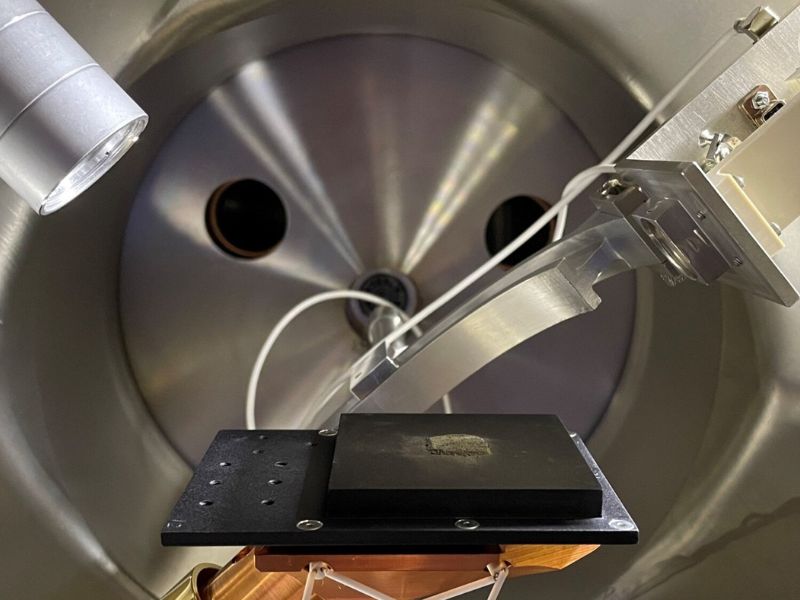
Apollo 11 grain rims. Image Credits: Southwest Research Institute
“We are studying how space weathering alters lunar grains, affecting their far-ultraviolet reflectance and explaining why soils with different weathering levels vary in brightness and light scattering,” Gimar said.
Advancing Moon Water Ice Detection with LRO-LAMP
This work helps scientists better interpret remote sensing data from LRO-LAMP, orbiting the Moon since 2009.
“The SwRI-led LAMP instrument detects potential water ice in permanently shadowed polar craters using far-UV starlight, said Dr. Kurt D.” Retherford, principal investigator for LAMP.
“Detecting lunar ice and its abundance requires knowing dry soil’s far-UV reflectance and correcting for space-weathering to isolate hydration signals.”
Nanoscale Imaging Unveils Lunar Grain Composition
This research highlights SwRI’s CLASSE and UT San Antonio’s KAMC, which conducted nanoscale imaging of lunar grains.
“We employed a cutting-edge transmission electron microscope capable of imaging individual atoms,” said Dr. Ana Stevanovic, KAMC director. “This tool examines lunar dust grains in detail, revealing tiny minerals, space-weathering features, and chemical composition.”
“The images showed weathered grains coated with nanophase iron, each 1/10,000 the width of a hair, Stevanovic explained.” Grains with less weathering had far fewer of these nanophase iron particles, making them appear brighter in the far-ultraviolet.
Tardigrades are among the toughest animals, surviving dehydration, freezing, and space radiation. Recent findings offer more promising news: their favorite habitat might also endure space travel unharmed. Experiments by Chang-hyun Maeng at Hokkaido University show mosses can endure harsh conditions outside a spacecraft.
The biologist and his team studied which parts of Physcomitrium patens—protonemata, germ cells, or spore capsules—best survived extreme conditions. Previous observations had shown that spore capsules, especially in larger numbers, were more resistant to heat, cold, freezing, and vacuum. The capsules were sent to the ISS, where they orbited unprotected for nine months, enduring extreme cold, dryness, and radiation, before being returned to Earth for cultivation.
Moss Spore Capsules Endure Extreme Space Conditions
Remarkably, 80% of the spore capsules successfully germinated and grew into living mosses. Maeng and his team had expected almost all of them to perish under such harsh conditions. This outcome demonstrates that, at least at the cellular level, some plants can survive extreme environments and possess protective mechanisms against severe cold and high radiation.
Considering their 500-million-year evolutionary history as early land colonizers, mosses’ resilience is unsurprising; in space, only chlorophyll a, essential for photosynthesis, showed a notable decrease. Mosses grown in captivity after the space mission had 20% less chlorophyll a than their counterparts that stayed on Earth. Other types of chlorophyll remained unchanged, meaning the plants’ overall ability to carry out photosynthesis was largely unaffected.
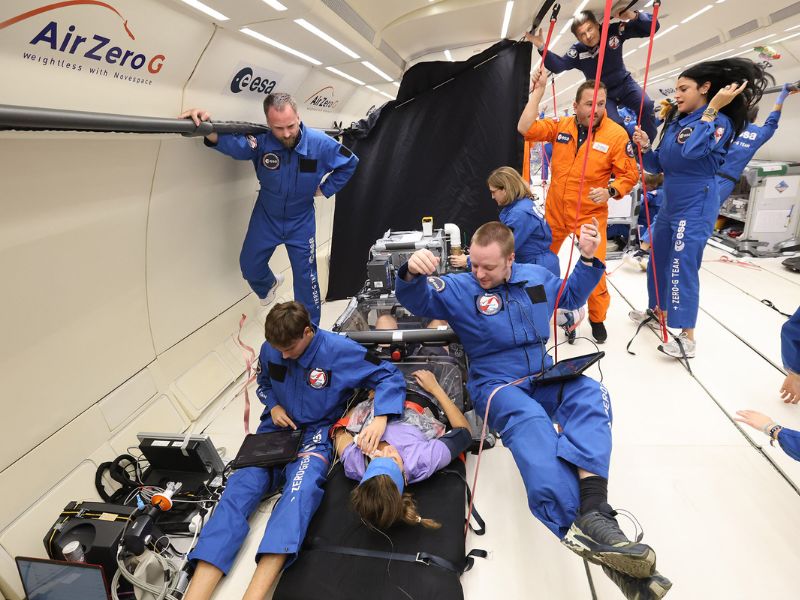
Texas A&M University researchers participate in parabolic flights operated by Novespace in Bordeaux, France. Image Credits: Novespace
The microgravity encountered during spaceflight can threaten astronauts’ cardiovascular health. Finding effective ways to reduce these risks is difficult because countermeasures are typically evaluated under Earth’s gravity. But what if research could be conducted in microgravity conditions without having to leave the atmosphere?
Texas A&M Researchers Test Microgravity in France
Researchers from Texas A&M University are taking part in parabolic flights run by Novespace in Bordeaux, France, which generate short periods of microgravity through a sequence of upward and downward parabolic maneuvers.
“It’s like a rollercoaster drop lasting 22 seconds, but without the rushing wind,” said Huc Pentinat Llurba, the aerospace engineering student leading the project. “It was the most extraordinary experience of my life—you really feel like an astronaut.”
During each 22-second microgravity interval, the team tests countermeasures to reduce spaceflight health risks from fluid shifts.
Testing LBNP to Counteract Fluid Shifts in Microgravity
One method being tested is lower body negative pressure (LBNP). Using an LBNP chamber developed by Austin-based Technavance, Texas A&M researchers can expose participants’ lower bodies to a vacuum-like environment. This helps shift fluids from the upper body back down, reducing risks like jugular vein thrombosis and elevated blood pressure.
A graphic showing a plane in parabolic flight. Image Credits: Rachel Barton/Texas A&M Engineering
The Bioastronautics and Human Performance Laboratory, under the direction of Dr. Ana Diaz Artiles, has been evaluating how effectively LBNP can counteract fluid shifts in Earth-based microgravity simulations.
The parabolic flights, offered by the European Space Agency, allow for one of the most thorough and systematic investigations of this countermeasure in true microgravity conditions.
“Parabolic flights provide a chance to test LBNP in real microgravity, helping us confirm the results we observed in our Earth-based studies,” said Diaz Artiles, associate professor of aerospace engineering.
Initial findings are encouraging, showing LBNP produces the expected fluid shifts and shows promise as a spaceflight countermeasure.
Assessing LBNP’s Impact on Cardiovascular Health in Space
Researchers have completed one of the four parabolic flights scheduled over the next 18–24 months. They assess how different LBNP levels affect cardiovascular function by measuring jugular vein flow, heart rate, and blood pressure.
By studying spaceflight’s effects on cardiovascular health, the team can guide space agencies on needed astronaut countermeasures.
“Gaining a deeper understanding of the body’s physiological responses to LBNP in microgravity will allow us to develop personalized countermeasures for astronauts, tailored to their specific health risks and physiological profiles,” said Diaz Artiles.
This global collaborative project offers students like Pentinat Llurba a distinctive learning experience. Parabolic flights are a rare opportunity, and Diaz Artiles takes pride in giving her students access to them.
Other partners in the project include Universidad Carlos III de Madrid, the University of California Davis, the University of Florida, the Spanish Space Agency, Centro de Instrucción de Medicina Aeroespacial, and Lockheed Martin.
The competition for quantum supremacy has reached a new stage—this time extending into space. China unveiled its fastest quantum computer as another milestone marked the first launched into orbit on a SpaceX rocket.
China’s newly unveiled model outperforms several of the world’s most powerful supercomputers. Using a photon-based architecture, the system performs complex computations exponentially faster than classical machines. This breakthrough strengthens China’s position in the global tech race and moves quantum computing closer to practical, real-world use.
Debating Supremacy, Advancing Reality
Though debated, quantum supremacy is a milestone that recent progress shows is getting closer.
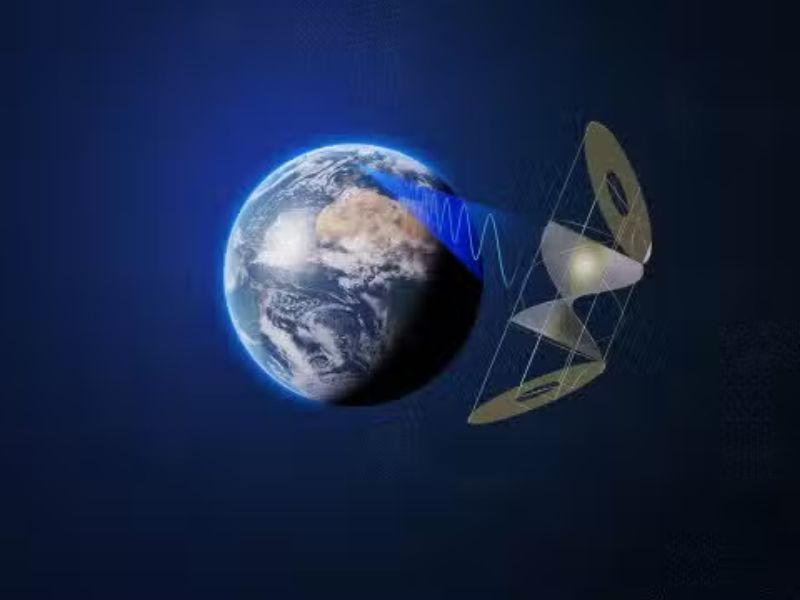
Meanwhile, University of Vienna researchers launched the first operational quantum computer into orbit, now circling Earth at about 530 km.
Remarkably, the device was built in only 11 days. Compact and efficient, the device is under 4 liters, 9 kg, and runs on 10–30 watts—ideal for energy-limited space missions.
Project lead Philip Walther said the mission tests whether quantum principles endure space’s extreme conditions.
“As pioneers, we also bear the responsibility of ensuring that these systems perform as expected beyond Earth’s atmosphere,” Walther told ScienceNews.
Its main advantage is enabling edge computing, letting satellites process data locally instead of sending it back to Earth, saving time, energy, and bandwidth.
Photons as the Building Blocks of Quantum Power
The system uses photonic quantum computing, with photons as qubits able to exist in 0 and 1 states simultaneously. This method offers not only faster processing but also higher energy efficiency, a critical factor for space operations.
Though still experimental, the mission proved the hardware works in space. The next step is to assess how well it withstands long-term exposure to orbital conditions.
Once the mission concludes, the satellite will be directed into a controlled atmospheric reentry, ensuring its safe destruction and marking the close of its groundbreaking journey.
From Earth to space, China’s breakthrough and the orbital experiment show quantum computing is moving from promise to reality.
Robotics is rapidly transforming the future of space infrastructure, making possible the construction of massive solar farms in orbit—and that’s just the beginning. A recent UK-based demonstration suggests that remote-controlled robots may soon assemble gigawatt-scale solar satellites in space.
How Do Robots Assemble Structures in Space?
In a test known as AlbaTRUSS, conducted at the UKAEA’s advanced facility on the University of Oxford’s Culham Campus, researchers used dual-arm robotic manipulators operated remotely to show that robots can construct the structural framework of large-scale solar satellites.
These are no ordinary factory robots. They’re specifically engineered to function in the vacuum of space, withstand radiation, and operate without oxygen. Sam Adlen, Co-CEO of Space Solar, explained that space-based satellites can harness solar energy continuously—uninterrupted by day-night cycles—and beam it back to Earth as microwaves.
During the trial, robots successfully assembled a key structural component known as a “longeron,” a tubular element that forms the core of the satellite’s framework. Unlike the International Space Station—the largest structure built in space to date—these new satellites will require much more complex and large-scale assembly.
As highlighted in predictions about robotics for 2025, advancements in adaptive AI and sensor technologies are revolutionizing how robots operate in extreme environments.
Why Robots Are Essential for Space-Based Projects
The reason is straightforward but critical: space is hostile to human life. According to Professor Rob Buckingham, Executive Director at UKAEA, constructing a remotely controlled fusion reactor on Earth closely mirrors the challenges of building in space.
Extravehicular activities (EVAs) are costly and risky. Industry experts note that using robots to assemble and maintain space infrastructure remotely is far more efficient and safer. Consider the multibillion-dollar Space Shuttle missions required to repair the Hubble Telescope—these were rare exceptions, not the norm, due to their extreme cost and risk.
UKAEA’s collaboration with Space Solar highlights key parallels between nuclear fusion and space robotics—both operate without oxygen and can function under various levels of radiation. This technological synergy could accelerate innovations across both fields.
The potential for space infrastructure isn’t limited to solar panels. These advancements could enable projects such as orbital data centers, lunar communications hubs, and even Martian mining facilities.
Technical Challenges in Robotic Space Construction
Building in space presents unique difficulties far beyond Earth-based construction. One major issue is communication latency—remotely operating a robot on the Moon involves several seconds of delay, making real-time control impractical for precision tasks.
As a result, autonomous systems are vital. Due to the speed-of-light limitation, robots must be equipped with sophisticated AI that allows them to make real-time decisions independently.
Neuromorphic computing is emerging as a key solution. With low energy consumption and minimal heat output, these systems can deliver up to five times more processing power using the same energy budget—ideal for space environments.
Materials and robot design also pose challenges. The robots must endure extreme temperatures, from -270°C in shadow to over 120°C in sunlight, as well as cosmic radiation and micrometeorite impacts. Plus, the absence of gravity creates entirely different movement dynamics compared to Earth.
We’ve previously examined the risks and opportunities of autonomous robotics, emphasizing the importance of clear safety standards in system design.
When Will Robots Begin Building in Space?
That future is closer than many expect. Space Solar plans to launch its first 30-megawatt demonstration system by 2029, with gigawatt-scale deployment expected in the early 2030s.
To put that in perspective: a 30 MW system could power around 1,000 homes, while a gigawatt could meet the energy needs of a mid-sized city. The envisioned structures are enormous, spanning several kilometers in length and roughly 20 meters in width.
AlbaTRUSS, supported by a Proof of Concept grant from the Science and Technology Facilities Council, is just the beginning. NASA is also working on its ARMADAS initiative (Automated Reconfigurable Mission Adaptive Digital Assembly Systems), which aims to build self-assembling orbital and lunar structures.
The global race is already underway, with the European Space Agency, NASA, and various startups across the UK, US, China, and Japan pursuing solar space power and infrastructure development.
Economic and Environmental Impacts
While the financial figures are eye-watering—a gigawatt-scale prototype could cost between €15–20 billion—the long-term benefits could outweigh the initial investment, especially considering decades of potential operation.
The energy advantage is undeniable: compared to a solar panel installed on Earth, an identical one in orbit would collect over 13 times more energy. Space offers uninterrupted solar access, free from weather interference or nightfall.
Still, the environmental impact is complex. Launching such massive satellites might require hundreds of rocket missions, contributing to Earth’s atmospheric pollution. It’s an ironic trade-off: using clean energy in space might come at a cost to the environment during launch.
The UKAEA and Space Solar partnership aims to position the UK at the forefront of the rapidly growing ISAM (In-Space Assembly and Manufacturing) sector, which is expected to reach vast market potential in the coming decades.
Professor Buckingham sees even broader implications: from lunar bases to Martian habitats, this is about more than infrastructure—it’s about securing energy and expanding humanity’s presence in the cosmos.
The Future Is Already Taking Shape
The AlbaTRUSS demonstration represents a pivotal moment in our ability to construct advanced space structures. This is no longer speculative science fiction—it’s engineering in progress, backed by clear timelines and real-world funding.
As humanity ventures further into the cosmos, robotic systems will form the foundation of our expansion. With increasing experience in orbital construction, these technologies could soon be used to build permanent facilities on the Moon, Mars, and beyond.
In just a few decades, billions of people may look up and see the glow of space-based infrastructure lighting the lunar surface. What seems like a futuristic dream today could soon be a familiar sight from our windows.
Robots are literally building the bridge to our interstellar future—and that bridge begins with the innovative space structures now taking shape through human ingenuity and robotic precision.
The concert celebrates the 200th birthday of Johann Strauss II Vienna Tourist Board
On May 31, Voyager 1 will receive a truly one-of-a-kind musical tribute. In celebration of Johann Strauss II’s 200th birthday, the European Space Agency (ESA) will send a live performance of The Blue Danube waltz into deep space, directed straight to NASA’s Voyager 1 spacecraft.
Kubrick’s Iconic Musical Choice
When Stanley Kubrick was editing his cinematic masterpiece 2001: A Space Odyssey, he initially used classical library tracks as placeholders for a planned original score by composer Alex North. But as the editing progressed, Kubrick realized the classical selections captured the tone of the film more effectively than the commissioned music—so he made the bold decision to keep them in.
Among the standout pieces was Strauss’s The Blue Danube, famously used during the elegant scene where a Pan Am space shuttle docks with a rotating space station, often described as a ballet in zero gravity. The waltz became iconic, contributing to the film’s commercial success and musical legacy. The soundtrack reached gold status, climbing to No. 24 on the Billboard 200, No. 2 on Billboard’s Classical LP chart, and No. 3 in the UK Albums Chart.
Danube
The composition, along with Also Sprach Zarathustra, became deeply ingrained in popular culture, with The Blue Danube gaining a nickname as the “unofficial anthem of space.”
A Musical Omission from the Golden Record
Back in 1977, when NASA launched Voyager 1 and Voyager 2 on their grand tour of the outer planets and into interstellar space, each spacecraft carried the famous Golden Record—an ambitious attempt to communicate Earth’s culture to any extraterrestrial finders. The record included a diverse collection of sounds and music, but despite The Blue Danube’s space association, it was left out due to the project’s eclectic and idealistic musical curation.
Now, the Vienna Tourist Board, ESA, and the Vienna Symphony Orchestra aim to correct that oversight. They plan to send the waltz directly to Voyager 1 during a special event described as the first interstellar live concert.
Mistake
On May 31, 2025, at 12:30 PM PDT (8:30 PM CET), the Vienna Symphony Orchestra—under the direction of chief conductor Petr Popelka—will perform a selection of works at Vienna’s Museum of Applied Arts (MAK). The centerpiece, The Blue Danube, will be transmitted in real-time to ESA’s Deep Space Antenna DSA 2 in Cebreros, Spain, from where it will be beamed into space. The signal will travel nearly 24.9 billion kilometers, taking 23 hours and 3 minutes to reach Voyager 1.
Global Viewing for a Cosmic Performance
The performance will be streamed live via space.vienna.info, the Vienna Tourist Board’s Instagram (@vienna), and at public venues including Vienna’s Strandbar Herrmann, New York’s Bryant Park, and outside the DSA 2 station in Spain.
2001: A Space Odyssey – Satellite Docking Sequence w/North Soundtrack
While the precision transmission will be directed at Voyager 1, the aging spacecraft likely won’t be able to receive it. Its 1970s-era hardware may not support the signal’s format or speed, and the onboard receiver can’t filter modern interstellar noise. Still, the beam will continue on its journey through space, possibly reaching the star AC+79 3888 in about 17 light-years—assuming the star hasn’t drifted from its current position.
The event celebrates multiple milestones: Strauss’s 200th birthday, Vienna’s “King of Waltz. Queen of Music” campaign (with Strauss as King and the city as Queen), ESA’s 50th anniversary, the 20-year mark of Deep Space Antenna DSA 2, five decades of ESA’s Estrack deep space tracking network, and the Vienna Symphony Orchestra’s 125th anniversary.
Voyager 1 will receive a special livecast of “By the Beautiful Blue Danube” NASA
A Space Ballet for the Cosmos
In 2001: A Space Odyssey, ‘The Blue Danube’ accompanies the majestic motion of spacecraft docking with a space station,” said Jan Nast, director of the Vienna Symphony Orchestra. “Kubrick chose the waltz to highlight the elegance and poetry of movement in space—a true ballet in the cosmos. No other piece connects music and the universe as powerfully as Strauss’s waltz, which has become the anthem of space. With ‘Waltz into Space,’ we’re now performing for a potentially extraterrestrial audience for the very first time. It’s a continuation of our founding goal: to make the beauty of symphonic music accessible to ever wider audiences.
NASA’s newly released budget reveals a significant reduction in funding for the Orion spacecraft and the Lunar Gateway space station. The agency’s total budget has dropped to $18.8 billion, marking a 24% cut of $6 billion. NASA’s budget shift reflects a realignment of resources, prioritizing crewed missions to the Moon and Mars over the Orion spacecraft and the Lunar Gateway space station.
The new budget proposal not only reflects the Trump administration’s goal to reduce federal spending, but it also signals a shift in NASA’s priorities that goes beyond just financial management. For many years, NASA has been at the heart of a complex debate, not just over funding, but also regarding the direction of the American space program in the 21st century.
If the budget is approved, NASA plans to terminate both the Orion spacecraft and the Space Launch System (SLS) following the Artemis III mission, which is set to launch around 2027. With both projects already facing major delays and cost overruns, there have been calls to cancel them in favor of more advanced and cost-efficient commercial alternatives.
Credit: Orion is one of the projects marked for cancellation ESA
Escalating Costs and Delays: The Struggles of Orion and SLS Programs
Orion is already $20 billion over budget and has faced continuous setbacks, including issues with its life support system and heat shield. Meanwhile, the SLS is decades behind schedule and has consumed $24 billion. Even more troubling, the expendable SLS will cost $4 billion per launch and will occur only once every two years. It has also faced criticism as a simplified version of the Apollo program, relying on 1970s-era Space Shuttle technology. Some view it more as a job creation scheme for congressional districts and aerospace contractors than a progressive space initiative.
In addition to these changes, NASA is also canceling the Gateway project. Originally envisioned as an outpost in cislunar orbit to serve as a staging point for lunar and Mars missions, critics now argue that it is unnecessary. Due to ongoing delays, it now won’t be operational until the mid-2030s at the earliest. The new budget will terminate the Gateway project and reassign its completed components to other missions.
Artemis Program Boosted: Increased Funding for Lunar and Mars Missions Amid Global Competition
Despite these cuts, they do not signal a general reduction of the Artemis program. On the contrary, the budget includes a $7 billion increase for crewed lunar exploration, along with an extra billion dollars for a planned crewed mission to Mars. This funding boost aims to counter China’s growing ambitions to send astronauts to the Moon and Mars.
Credit: The Space Launch System rocket NASA
Another component of the budget involves cutting missions deemed not cost-effective in terms of scientific returns relative to the investment. The leading candidate for cancellation is the Mars Sample Return mission, which is budgeted at up to $11 billion and wouldn’t launch until the middle of the next decade. Other potential cuts include the aging Chandra X-ray Observatory, with an annual operating cost of $70 million, the Nancy Grace Roman Space Telescope, which costs $3 billion and has been criticized as redundant compared to other missions, and $1.161 billion allocated for Earth science missions.
The last point is notable because it highlights the rise of advocates who have long argued for NASA to shift its focus away from space launch vehicles, low Earth orbit stations, and Earth monitoring missions. Instead, they have pushed for a greater emphasis on deep space exploration, human spaceflight, and advanced technology, while leaving many traditional space functions to commercial companies.
In addition, the budget abandons green aviation projects and places greater emphasis on supporting the FAA in carrying out the administration’s mandate to modernize America’s outdated air traffic control system.
Credit: A Mars Sample Return mission spacecraft NASA
Shifting Focus: Reducing U.S. Role in the ISS and Accelerating Private Sector Involvement
One less obvious aspect of the budget is the shift towards reducing U.S. involvement in the International Space Station (ISS) before its planned decommissioning and deorbiting in 2030. While budget concerns may play a role, recent reports suggest that the ISS may be in worse condition than initially thought, with cracks and air leaks potentially forcing an earlier evacuation and disposal of the orbital lab. As a result, NASA appears to be pushing more strongly for private companies to develop their own space stations and to expedite the development of the propulsion system needed to safely deorbit the ISS for a controlled burn-up in Earth’s atmosphere.
“This proposal allocates resources to simultaneously explore the Moon and Mars while continuing to prioritize essential science and technology research,” said acting NASA Administrator Janet Petro. “I am grateful for the President’s ongoing support of NASA’s mission and look forward to collaborating with the administration and Congress to ensure we keep advancing toward achieving the impossible.”
Miso is a popular Japanese fermented condiment that goes into a range of dishes to provide a punch of umami Wikimedia Commons
Anyone who has read about life aboard spacecraft knows that astronauts live with very limited resources, including meals that are mostly rehydrated.
Even though NASA and other space agencies work hard to provide a variety of dishes, astronauts still have few food choices. On top of that, nasal congestion caused by microgravity dulls their sense of smell, making food taste blander in space.
Exploring Fermentation as a Flavor Solution
With the goal of expanding flavor possibilities beyond Earth, researchers from the Massachusetts Institute of Technology (MIT) and the Technical University of Denmark set out to explore the potential of fermentation in space.
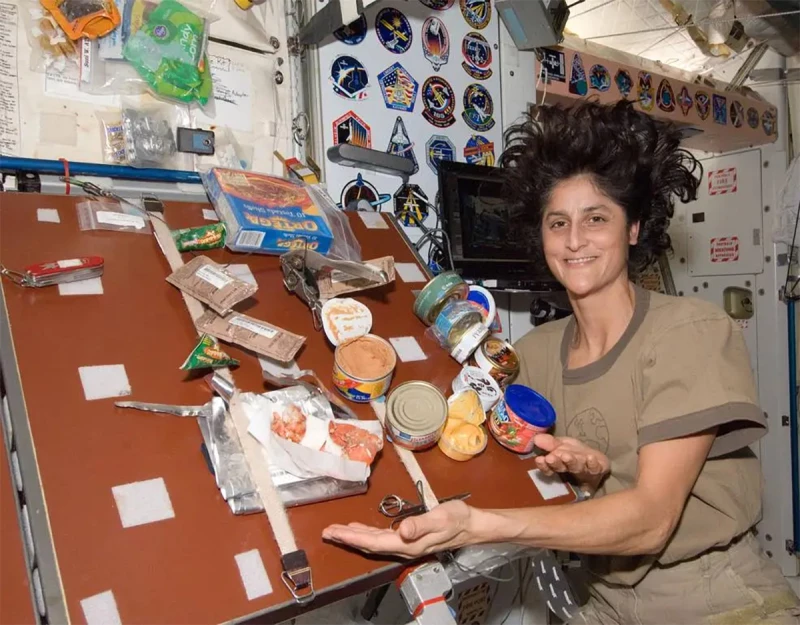
Astronaut Sunita Williams displays the meal she prepared in the ISS’ Unity Node 1 module NASA
In 2020, they sent a sample of miso — the traditional Japanese condiment made from cooked soybeans, salt, and the mold koji, known for its rich umami taste — to the International Space Station (ISS), where it fermented for 30 days in Low Earth Orbit. Meanwhile, two other batches fermented on Earth, one in Cambridge, USA, and the other in Copenhagen, Denmark.
The scientists retrieved the space-fermented miso, compared it with the Earth-based samples, and found that the flavors were quite similar — but they rated the miso from space higher in “nutty” and “roasted” flavor notes.
One of the most common dishes made with miso paste is a simple light soup with dashi stock Yelena / Pexels
What Made Space Miso Different?
This stood out, especially considering two unique conditions aboard the ISS.Microgravity prevents the miso from compressing under its own weight during fermentation.This may change how gas bubbles form, affecting the miso’s density and how microbial communities grow.Cosmic and solar radiation, to which the sample was more exposed in space, may have influenced the microbial ecosystem and ultimately altered the flavor.
Based on these findings, the researchers believe fermentation could be a valuable tool for expanding food options during long-term missions. It could help preserve fresh ingredients for longer and enable the creation of new seasonings, condiments, and dishes — all without needing to cook. In essence, fermentation could open up a new frontier in space cuisine.
The issue of space debris has been growing for years, exacerbated by the continuous launch of rockets and payloads. In recent years, organizations, particularly the European Space Agency (ESA), have begun to take the issue more seriously. Now, they are asking: How can we achieve zero space debris?
The Scale and Danger of Space Debris
This may seem unrealistic at first. There are billions of debris pieces orbiting Earth, with more than 25,000 larger than 10 cm. Despite their size, these objects move at high speeds and pose significant risks to satellites and space stations. So, what would it take to eliminate all this debris?
ESA’s Zero Debris Technical Booklet outlines the challenges and potential solutions for reaching this goal. It follows the signing of the Zero Debris Charter by members of the Zero-Debris community. The report emphasizes that more ambitious actions are needed to prevent, mitigate, and remove space debris, urging all space stakeholders to collaborate.
The booklet highlights how space access is hindered by debris, as outlined by the United Nations’ Committee on the Peaceful Uses of Outer Space. It defines clear zero-debris targets and presents solutions to achieve them.
This image shows the Tethered Satellite System (TSS). The tether generated electricity as it moved through Earth’s magnetic field and the electricity could be used to adjust the satellite’s orbit without the need for other propulsion. (NASA Johnson Space Center (NASA-JSC), Public Domain)
Preventing New Debris Creation
The first priority is stopping the creation of more debris. This includes preventing unintentional debris release caused by material degradation or impacts during missions. The development of better insulation and impact-resistant materials, along with improved monitoring and testing, can help mitigate this issue.
The booklet also advocates for new propulsion technologies. Some current systems release small particles that contribute to debris. Alternatives like electromagnetic tethers and solar radiation pressure devices are suggested to reduce this risk.
Improved space traffic surveillance and coordination (STC) can also help prevent collisions, reducing unnecessary collision-avoidance maneuvers. However, this requires better communication and standardized guidelines between space agencies, which may be challenging.
The CanX-7 with its sails deployed in a clean room. (Space Flight Laboratory)
The Need for Space Debris Removal
When it comes to existing debris, removal is essential. The booklet proposes assessing defunct satellites to determine the safest way to de-orbit them. The removal process requires reliable, configurable methods, such as deploying solar sails or using active debris removal (ADR) technologies like Clearspace-1, which aims to capture and de-orbit the PROBA-1 satellite.
The challenge also involves predicting and avoiding collisions. With the rising debris, space operators must take steps to avoid collisions, and coordination is crucial. The booklet suggests that machine learning algorithms, optical tracking aids, and better collision risk assessments could assist in this area.
The Need for Standardized Risk Management
The main takeaway is that tackling space debris demands standardized methods for assessing and managing risks. While the necessary technologies are not yet fully developed, they will come. The key challenge is cooperation.
Without collaboration between space agencies, solving the debris problem will be impossible. Unfortunately, political differences, competition, and some nations’ actions—like anti-satellite tests—have created additional debris, complicating efforts. Despite this, as with climate change, cooperation remains the only path to a sustainable solution for space debris.
Human minibrains, or organoids, launched into space surprised scientists by thriving during their time in low-Earth orbit. In 2019, US researchers sent lab-grown human neural tissue to the International Space Station (ISS) for a brief stay. The result was nothing short of astonishing.
The cells not only survived the weightlessness of space for weeks, but they also matured faster than similar cells grown on Earth. “The fact that these cells survived in space was a big surprise,” says Jeanne Loring, molecular biologist at the Scripps Research Institute. “This lays the groundwork for future space experiments involving brain regions affected by neurodegenerative diseases.”
The ISS offers a unique research opportunity to study microgravity’s effects on human cells. This has implications not only for astronauts but also for human health research and disease modeling. Led by molecular biologist Davide Marotta of the ISS National Laboratory, a team investigated how microgravity affects the human brain, focusing on neurons impacted by neurodegenerative diseases like Parkinson’s and multiple sclerosis.
The researchers grew organoids using human induced pluripotent stem cells from both healthy donors and patients with neurodegenerative conditions. These stem cells, derived from adult human cells, were reverted to an earlier developmental stage and then induced to form neurons—specifically cortical or dopaminergic neurons, which are affected by diseases like Parkinson’s.
Organoids with Microglia Sent to Space for Analysis After a Month in Orbit
A diagram explaining the design of the experiment. (Marotta et al., Stem Cells Transl. Med., 2024)
Some organoids also contained microglia, brain immune cells. These organoids were placed in cryovials, divided into two groups—one sent to space and the other kept on Earth. After a month in orbit, the organoids returned to Earth for analysis.
The survival of the organoids was a surprising result in itself. However, there were also notable differences between the space-grown and Earth-grown organoids. Not only did the space organoids show increased gene expression related to cell maturation, but they also had slower cell replication rates compared to their Earth counterparts.
Interestingly, the space organoids expressed fewer stress-related genes and showed less inflammation than expected. This suggests that microgravity, which is devoid of convection, may create conditions that resemble the brain’s natural environment more closely than Earth-based laboratory conditions. “In space, these organoids are more like the brain,” Loring explains. “They don’t get flushed with culture medium or oxygen; they form a brain-like microcosm.”
The neural rosettes typical of cortical organoids seen in ground-based (left) and space-faring organoids (right). Both grew healthy cells, but fewer grew in space. (Marotta et al., Stem Cells Transl. Med., 2024)
These findings suggest microgravity may provide a more natural environment for studying brain cells’ responses to stressors or treatments. Looking ahead, the researchers plan to explore brain regions affected by Alzheimer’s disease and investigate how neurons connect in space. As Loring notes, “We’re at the ground floor—literally in the sky, but on the ground floor of something new.”
We use cookies on our website to give you the most relevant experience by remembering your preferences and repeat visits. By clicking “Accept All”, you consent to the use of ALL the cookies. However, you may visit "Cookie Settings" to provide a controlled consent.
This website uses cookies to improve your experience while you navigate through the website. Out of these, the cookies that are categorized as necessary are stored on your browser as they are essential for the working of basic functionalities of the website. We also use third-party cookies that help us analyze and understand how you use this website. These cookies will be stored in your browser only with your consent. You also have the option to opt-out of these cookies. But opting out of some of these cookies may affect your browsing experience.
Necessary cookies are absolutely essential for the website to function properly. These cookies ensure basic functionalities and security features of the website, anonymously.
Cookie
Duration
Description
cookielawinfo-checkbox-analytics
11 months
This cookie is set by GDPR Cookie Consent plugin. The cookie is used to store the user consent for the cookies in the category "Analytics".
cookielawinfo-checkbox-functional
11 months
The cookie is set by GDPR cookie consent to record the user consent for the cookies in the category "Functional".
cookielawinfo-checkbox-necessary
11 months
This cookie is set by GDPR Cookie Consent plugin. The cookies is used to store the user consent for the cookies in the category "Necessary".
cookielawinfo-checkbox-others
11 months
This cookie is set by GDPR Cookie Consent plugin. The cookie is used to store the user consent for the cookies in the category "Other.
cookielawinfo-checkbox-performance
11 months
This cookie is set by GDPR Cookie Consent plugin. The cookie is used to store the user consent for the cookies in the category "Performance".
viewed_cookie_policy
11 months
The cookie is set by the GDPR Cookie Consent plugin and is used to store whether or not user has consented to the use of cookies. It does not store any personal data.
Functional cookies help to perform certain functionalities like sharing the content of the website on social media platforms, collect feedbacks, and other third-party features.
Performance cookies are used to understand and analyze the key performance indexes of the website which helps in delivering a better user experience for the visitors.
Analytical cookies are used to understand how visitors interact with the website. These cookies help provide information on metrics the number of visitors, bounce rate, traffic source, etc.
Advertisement cookies are used to provide visitors with relevant ads and marketing campaigns. These cookies track visitors across websites and collect information to provide customized ads.