Tag: Star

  • Our Closest Star System Might Host a Potentially Habitable Planet

    Our Closest Star System Might Host a Potentially Habitable Planet

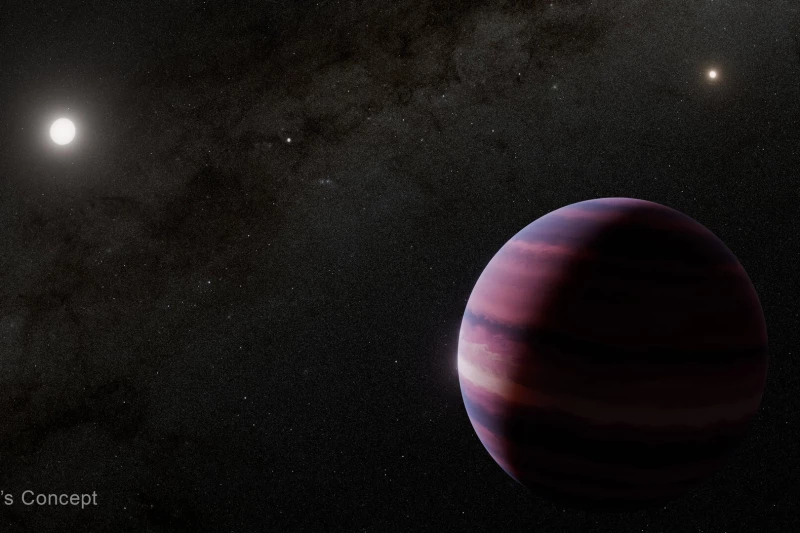
    If Earth ever needs to borrow a cup of sugar, it’s reassuring to think there might be a nearby, potentially livable planet orbiting Alpha Centauri just 4.34 light-years away—assuming the James Webb Space Telescope’s findings hold true.
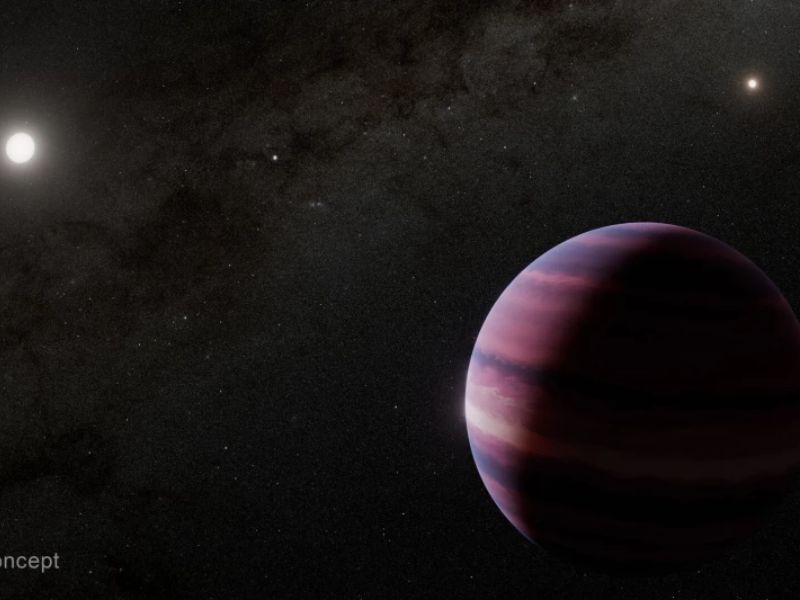
    Image Credits:Artist’s concept of the planet circling Alpha Centauri A
    NASA/ESA/CSA/STScI/R. Hurt/Caltech/IPAC

    If Earth ever needs to borrow a cup of sugar, it’s reassuring to think there might be a nearby, potentially livable planet orbiting Alpha Centauri just 4.34 light-years away—assuming the James Webb Space Telescope’s findings hold true.

    Alpha Centauri is one of the few stars in our galaxy that has captured the public’s imagination. That makes sense, given it’s our closest stellar neighbor—and there’s always the slim possibility that someone over there might be wondering if life exists here, too.

    The Triple-Star System of Alpha Centauri

    Alpha Centauri is actually a triple-star system, consisting of Alpha Centauri A and B—two stars that orbit each other—and a third, Proxima Centauri, which orbits the pair. Up until recently, only Proxima Centauri was known to host planets—two confirmed and possibly a third. One of these lies within the habitable zone, the region around a star where liquid water could exist. However, because it orbits so close to its red dwarf star and is frequently blasted by intense radiation, the chances of life there are slim.

    Alpha Centauri A, by contrast, holds greater promise from an Earth-like standpoint. It’s a G2V star, just like our Sun—the type of star we know can support life because, well, we exist. The issue was that no planets had ever been detected around Alpha Centauri A, making it seem like the system might be a cosmic disappointment.

    That changed with the release of new findings from the James Webb Space Telescope.
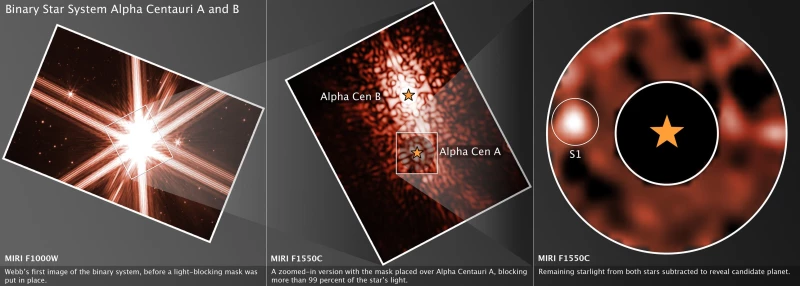
    Image Credits:Alpha Centauri as seen by Webb
    NASA/ESA/CSA/STSci/ A. Sanghi (Caltech)/C. Beichman (JPL)/D. Mawet (Caltech/ J. DePasquale (STScI)

    Why Finding Planets Around Sun-Like Stars Is So Difficult

    Finding planets around G2 stars is difficult, which is why most known exoplanets orbit red dwarfs. Red dwarfs are smaller and dimmer, and their habitable zones are much closer to the star. This makes it easier to spot slight brightness dips when a planet transits the star. G2 stars, like our Sun, are significantly brighter, and their habitable zones are farther out. Planets in these zones take longer to complete an orbit, which makes them harder to spot and study.

    So how do you detect a potential planet that’s 10,000 times fainter than the star it circles? With ingenuity.

    How Astronomers Isolated Potential Planets

    The team used coronagraphic imaging to block Alpha Centauri A’s light and minimize interference from Alpha Centauri B. They did this by referencing a third star, similar to Alpha Centauri A but without a companion. The well-known reference star served as a benchmark to filter out excess light, scattering, and telescope noise. What remained could be potential planets. The team ruled out false positives by eliminating asteroids, satellites, and background galaxies that could mimic a planetary signal.

    The investigation required patience. A possible planet seen in August 2024 vanished in follow-up observations in early 2025. This led the researchers back to the drawing board, where they created computer models simulating millions of potential orbits. They eventually found a stable orbit explaining the detection and disappearance—the planet had likely moved too close to Alpha Centauri A to be seen.
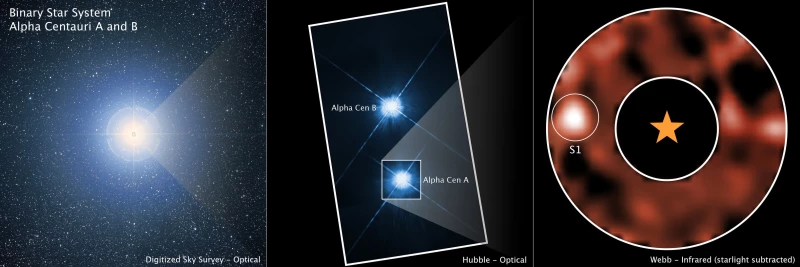
    Image Credits:Alpha Centauri as seen by DSS, Hubble, and Webb
    NASA/ESA/CSA/STSci/ A. Sanghi (Caltech)/C. Beichman (JPL)/D. Mawet (Caltech/ J. DePasquale (STScI)

    Based on their findings, the research team believes that the newly identified planet—if confirmed—is a gas giant similar in size to Saturn or Jupiter. It lies within the habitable zone of Alpha Centauri A, where the estimated surface temperature is about 225 K (-48 °C or -55 °F). Its orbit is slightly eccentric, completing a full revolution around the star every two to three Earth years.

    Moons and Neighboring Worlds

    While the planet itself is unlikely to support life due to its gaseous nature, it could host a habitable moon. There’s also the possibility that other, smaller planets within the habitable zone might exist—similar to how Earth, Venus, and Mars all reside in our own system’s habitable region.

    For scientists, the ability to search for planets so close to home (at least in cosmic terms) is an encouraging development. That said, the mysteries of extraterrestrial life—and neighborly sugar-lending—remain unanswered for now.

    Being so close, this system gives us a rare chance to study other planetary systems in detail,” said Charles Beichman of NASA’s JPL. “But these stars are bright, nearby, and move quickly, making observations extremely challenging—even for the world’s most powerful space telescope.” Webb was built to detect the most distant galaxies in the universe. The Space Telescope team created a custom observation sequence for this target—and their effort paid off.

    The full research papers can be accessed [here] and [here].


    Read the original article on: New Atlas

    Read more:‘Social Apnea’ May Worsen By Up To 47% On Certain Days
  • A Star has Been Obliterated by a Roaming Supermassive Black hole

    A Star has Been Obliterated by a Roaming Supermassive Black hole

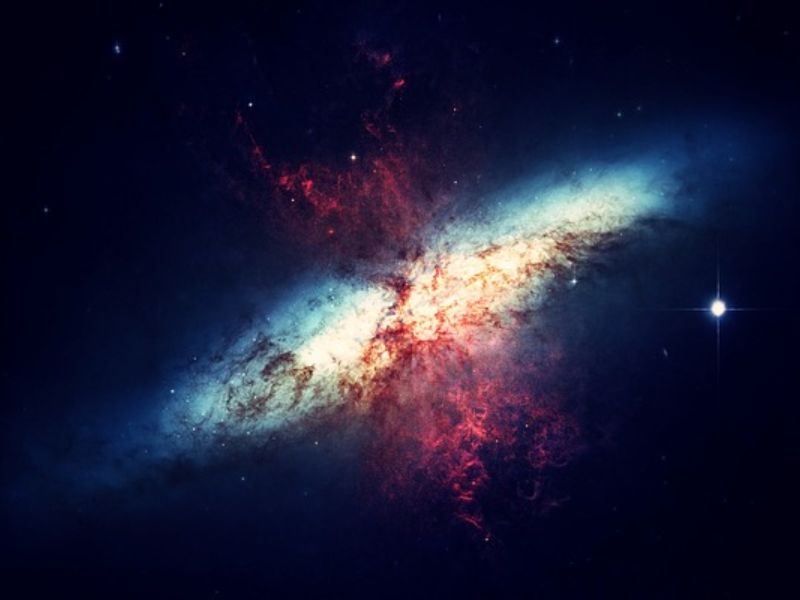
    In 2024, a system designed to detect sudden brightening events discovered something strange. However, the automated system meant to identify the object couldn't determine what it was observing. Nearly a year later, we know it was the first tidal disruption event—where a star is torn apart by a supermassive black hole—seen in visible light. Unusually, the black hole isn't at its galaxy's center. Instead, an even more massive object resides there, actively consuming matter at the same time.
    Credit: Pixabay

    In 2024, a system designed to detect sudden brightening events discovered something strange. However, the automated system meant to identify the object couldn’t determine what it was observing. Nearly a year later, we know it was the first tidal disruption event—where a star is torn apart by a supermassive black hole—seen in visible light. Unusually, the black hole isn’t at its galaxy’s center. Instead, an even more massive object resides there, actively consuming matter at the same time.

    The object, now called AT2024tvd, was found by the Zwicky Transient Facility, which scans the northern sky every two days. Its software detects sudden changes in brightness, including tidal disruption events where a star is torn apart by a supermassive black hole.

    Unusual Location of AT2024tvd Defies Typical Tidal Disruption Event Patterns

    Typically, supermassive black holes are found at the center of galaxies. As a result, the scanning software only identifies something as a potential tidal disruption event if it matches a previous light source at the same location. This wasn’t the case with AT2024tvd, which seemed to be more than 2,500 light-years away from the galaxy’s center. Because of this, the software didn’t flag it as a possible tidal disruption event, and it wasn’t until further investigation that people realized what it actually was.

    Luckily, researchers were able to arrange follow-up observations across a range of wavelengths, from x-rays to radio waves. The Hubble Space Telescope and the Very Large Array both resolved the brightened object (AT2024tvd) and a bright spot at the galaxy’s center, likely the central supermassive black hole. The brightness of this spot suggests that the black hole is currently consuming matter.

    Observational Evidence Confirms AT2024tvd as a Tidal Disruption Event

    All the observations confirmed that AT2024tvd is a tidal disruption event. For instance, it maintained a high temperature throughout the observations, unlike a supernova, which typically cools over time. Additionally, there were fewer high-energy X-rays than expected from a supernova. The UV spectrum matched other tidal disruption events, showing elements like carbon and nitrogen that don’t require a supernova to form.

    This makes it the fourth tidal disruption event linked to a supermassive black hole not situated at the galaxy’s center, and the first to be initially identified at visible wavelengths.

    This brings up two questions: why are there two supermassive black holes here, and why is one located away from the center of the galaxy? The first question is fairly straightforward to answer. It seems that large galaxies form through galaxy mergers, where multiple smaller galaxies combine. Each of these smaller galaxies would have its own black hole. Usually, new supermassive black holes drift to the galaxy’s center and merge with the central one.

    The Gradual Process of Black Hole Mergers in Large Galaxies

    However, it’s important to note the phrasing: “in most cases” and “eventually.” Even when a merger does occur, the process is gradual, potentially taking millions or even billions of years. As a result, a large galaxy could have as many as 100 extremely massive black holes roaming within it, with around 10 of them having masses over 1 million times that of the Sun. The galaxy that AT2024tvd is located in is very large.

    One consequence of these roaming black holes is that not all of them will merge. If two black holes approach the central one simultaneously, gravitational interactions could propel the smaller one at nearly the velocity required to escape the galaxy entirely. As a result, these supermassive black holes could end up far from the galaxy’s center for millions of years.

    At present, it’s unclear which of these scenarios explains AT2024tvd’s location. The galaxy it resides in doesn’t appear to have undergone a recent merger, but it’s possible that it could be a remnant from an ancient merger.

    It’s worth noting that all the galaxies where we’ve observed off-center tidal disruption events are very large. The study on AT2024tvd suggests larger galaxies, with more past mergers, have more scattered supermassive black holes. The researchers also propose that off-center events will be the only ones we observe in large galaxies. This is because larger galaxies house larger supermassive black holes at their centers. When a black hole is massive enough, its large event horizon lets stars fall in intact, releasing all energy inside.

    If you were close enough to witness this, the star would likely simply vanish from view.


    Read the original article on: arstechnica

    Read more: SpaceX Launches Astronauts for a Long-Awaited ISS Crew Swap

  • JWST Verifies Coldest Exoplanet Found Around A Dead Star

    JWST Verifies Coldest Exoplanet Found Around A Dead Star

    In 2020, astronomers discovered WD 1856+534 b, a gas giant about 81 light-years from Earth. With about six times Jupiter’s mass, this “super-Jupiter” became the first known exoplanet to transit a white dwarf.
    Credit: Pixabay

    In 2020, astronomers discovered WD 1856+534 b, a gas giant about 81 light-years from Earth. With about six times Jupiter’s mass, this “super-Jupiter” became the first known exoplanet to transit a white dwarf.

    JWST Observations Confirm WD 1856+534 b as the Coldest Exoplanet Ever Detected

    In a recent study, an international team of astronomers reported their observations of the exoplanet WD 1856+534 b using the James Webb Space Telescope  Mid-Infrared Instrument (MIRI). They confirm that it is the coldest exoplanet ever detected.

    Acording to the research was led by  Mary Anne Limbach an Assistant Research Scientist in the Department of Astronomy at the University of Michigan, Ann Arbor, with collaborators from institutions including MIT’s Kavli Institute, Johns Hopkins University Applied Physics Lab, University of Victoria, University of Texas at Austin, CIERA, Centre for Astrophysics at the University of Southern Queensland, NSF NOIRLab, and the Gemini Observatory.

    The team conducted the observations as part of the JWST Cycle 3 General Observation (GO) program, which aimed to directly study the planet using Webb’s advanced infrared imaging and spectroscopic tools.

    This aligns with one of JWST’s core goals: to analyze exoplanets through the  Direct Imaging Method. This technique captures reflected light from a planet and analyzes it with spectrometers to identify chemicals.

    Credit: Direct Imaging consists of blocking the light of stars to detect light reflected by orbiting planets. (Marois et al., Nature, 2010)

    JWST’s Role in Detecting Biosignatures Beyond Our Solar System

    This approach helps astronomers detect possible biosignatures like oxygen, methane, and water, and understand a planet’s composition and formation.

    Powerful telescopes like JWST could eventually reveal the first evidence of life beyond our Solar System.

    Therefore, emission spectra from exoplanets can also provide valuable information about their chemical makeup and migration patterns.

    However, researchers note that a host star’s brightness often drowns out an exoplanet’s light.

    Consequently, direct imaging has mostly targeted large planets—such as gas giants—with wide orbits or very hot atmospheres. So far, scientists have not directly observed any rocky (terrestrial) exoplanets in close orbits around their stars.

    So far, scientists haven’t found any exoplanets with emission spectra below 275 K—similar to Earth’s temperature. White dwarf stars offer a rare chance to find and study these colder planets. As the researchers highlighted:

    “The faint luminosity of white dwarfs greatly lessens the contrast issues that usually complicate direct detection around main-sequence stars. As the remnants of stars like the Sun, white dwarfs give us a glimpse into the future of planetary systems after stellar death. Studying how planets interact with and endure the post-main-sequence phase is key to understanding orbital stability, dynamical migration, and the potential for planetary engulfment.”

    Moreover, studying planetary systems around white dwarfs can help determine if planets can survive this advanced stage of stellar evolution and whether habitable conditions could persist around stellar remnants.

    Limbach and Team Use JWST’s MIRI to Confirm WD 1856+534 b

    Astronomers and astrobiologists are eager to explore these questions using Webb’s advanced capabilities. For their research, Limbach and her team confirmed the existence of WD 1856+534 b by employing the Infrared (IR) excess method with data from JWST’s Mid-Infrared Instrument (MIRI).

    This method enabled the team to determine the mass of WD 1856+534 b and assess its atmospheric temperature. Their analysis showed an average temperature of 186 K (-87 °C; -125 °F), making it the coldest exoplanet ever discovered.

    They also confirmed that the planet’s mass is no more than six times that of Jupiter, compared to earlier estimates of 13.8 Jupiter masses.

    Their findings provide the first direct evidence that planets can survive and migrate into close orbits within the habitable zones of white dwarfs.

    The team is eager for upcoming observations of WD 1856 b by the JWST, set for 2025. These additional observations may help identify more planets and determine if WD 1856 b was disturbed into its current orbit.

    Moreover, results from earlier observations made by Webb’s Near-Infrared Spectrograph (NIRSpec) during Cycle 1 will be released soon, offering an initial analysis of the planet’s atmosphere.


    Read the original article on: Sciencealert

    Read more: Hubble Space Telescope Detects Water Vapor in Atmosphere of Small Exoplanet

  • Aged Smokers Astronomers Discover Unknown Star Type

    Aged Smokers Astronomers Discover Unknown Star Type

    "Astronomers unearth a previously undiscovered celestial entity adrift in the cosmos" is a frequent news topic, yet it never fails to captivate. The most recent discovery introduces a novel category of stars – elderly red giants affectionately dubbed "Old Smokers" by the research team.
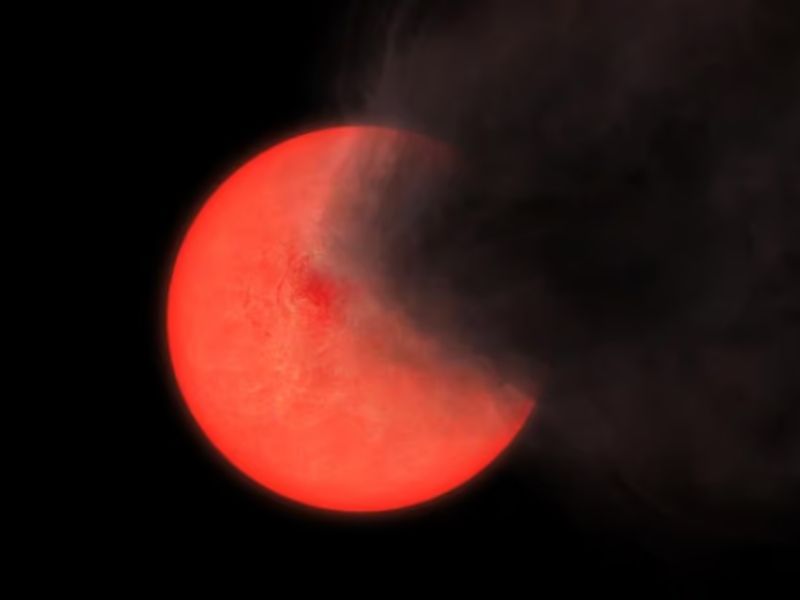
    An artist’s impression of an “Old Smoker,” a previously unknown type of red giant star that occasionally coughs up clouds of dust and gas
    Philip Lucas/University of Hertfordshire/Attribution (CC BY 4.0)

    Astronomers unearth a previously undiscovered celestial entity adrift in the cosmos” is a frequent news topic, yet it never fails to captivate. The most recent discovery introduces a novel category of stars – elderly red giants affectionately dubbed “Old Smokers” by the research team.

    Paradoxically, the scientists embarked on a mission to examine recently formed stars. Their approach involved scrutinizing a decade’s worth of data from the Visible and Infrared Survey Telescope (VISTA) in Chile, monitoring a vast section of the sky for luminosity variations over time. From this extensive dataset, they pinpointed 222 objects exhibiting the most pronounced brightness fluctuations, primarily recognizable as established event types. Subsequently, they scrutinized the spectra of the remaining candidates using the Very Large Telescope.

    Unveiling the Dynamics of Rare Newborn Stars and Their Formative Challenges

    Our primary objective was to locate rarely observed newborn stars, also known as protostars, while they undergo significant outbursts lasting for varying durations—ranging from months to years or even decades,” explained Dr. Zhen Guo, a study co-author. “These outbursts occur within the slowly rotating disk of matter that forms a nascent solar system. While aiding the central newborn star’s growth, they pose challenges to the formation of planets. The reason behind the instability of these disks remains unclear.”

    However, during the research, the team identified 21 peculiar stars near the galactic center displaying unusual variations in brightness. For instance, one star that was clearly visible in images from 2010 had completely disappeared by 2015. Merely three years later, it reappeared, albeit with diminished brightness.

    Unearthing Unknown Celestial Entities with Peculiar Attributes

    Upon analyzing the spectra of these stars, the researchers uncovered celestial entities previously undocumented in scientific literature. These objects appear to belong to a category of red giants – ancient stars that have depleted their fuel and are presently undergoing a gradual dying process. Remarkably, these stars exhibit a peculiar behavior of intermittently emitting substantial clouds of gas and dust, obstructing their light from observation. Hence, the designation “Old Smoker.”

    Remarkably, these elderly stars remain quiescent for extended periods, only to release clouds of smoke in a completely unexpected manner,” remarked Professor Dante Minniti, a study co-author. “They exhibit a very faint and red appearance for several years, to the extent that, at times, they become entirely invisible to us.”

    Infrared images of an “Old Smoker” star near the center of the Milky Way. Inset: How that star’s brightness changed over time
    Philip Lucas/University of Hertfordshire/Attribution (CC BY 4.0)

    Similar to an elderly storyteller eager to share tales with those willing to listen, these aged stars, despite their cantankerous nature, may still offer valuable insights to the younger cosmic generation. The expulsion of clouds from these celestial elders could potentially represent a previously undiscovered mechanism for the distribution of heavier elements throughout the universe, a process integral to the continuous cycle of star birth and death.

    Stellar Contributions to Elemental Cycles

    Material ejected from aging stars plays a crucial role in the elemental life cycle, contributing to the formation of subsequent generations of stars and planets,” noted Professor Philip Lucas, the lead author of the study. “Traditionally, this phenomenon was primarily associated with a well-studied star type known as a Mira variable. However, the identification of a novel star type that releases matter may hold broader implications for the dispersion of heavy elements in the Nuclear Disc and metal-rich regions of other galaxies.”


    Read the original article on: New Atlas

    Read more: NASA Unveils Images of Christmas Tree Cluster of Stars

  • Extragalactic Star Detected at Milky Way’s Center

    Extragalactic Star Detected at Milky Way’s Center

    Examining the stars in the night sky, it's unlikely you'd distinguish one as foreign. However, astronomers have identified a star near the supermassive black hole at the Milky Way's center, suggesting it originated in a smaller galaxy consumed by ours.
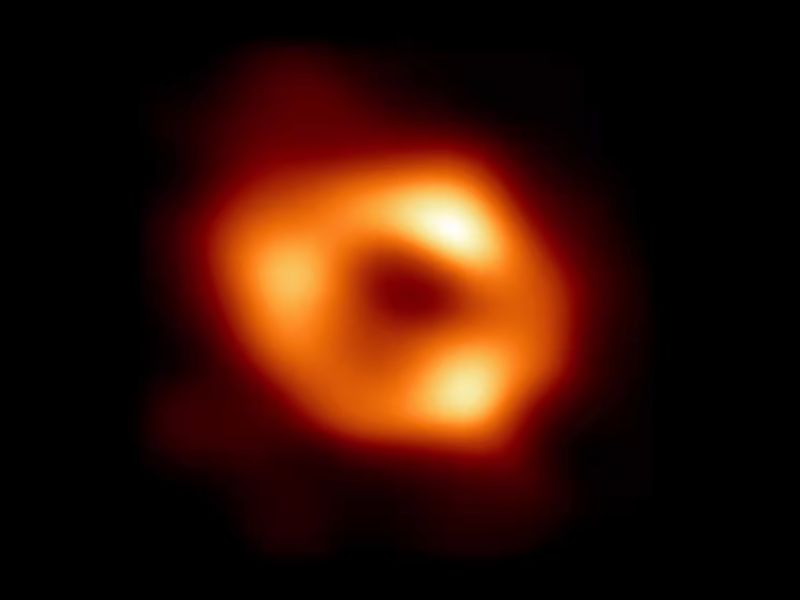
    Sagittarius A*, the black hole at the center of the Milky Way galaxy
    EHT Collaboration/CCA4.0

    Examining the stars in the night sky, it’s unlikely you’d distinguish one as foreign. However, astronomers have identified a star near the supermassive black hole at the Milky Way’s center, suggesting it originated in a smaller galaxy consumed by ours.

    Among the Milky Way’s 100 billion stars, some appear to have migrated from other galaxies. While most are located in the galactic “halo,” on the outskirts, Japanese astronomers have identified one at the very center in a recent study.

    Sagittarius A* and the Unlikely Birthplace of Stars

    Right in the heart of the Milky Way resides Sagittarius A*, a supermassive black hole. Despite the bustling surroundings, the region is not considered conducive to frequent star births due to the immense gravitational forces exerted by this cosmic giant.

    Researchers from Miyagi University of Education, investigating the origins of stars in the vicinity, made an unexpected discovery about one particular star, S0-6, located just under 11 light-years from the black hole. Monitored for eight years with the Subaru Telescope in Hawaii, the star, aged over 10 billion years, turned out to be an intriguingly well-traveled celestial veteran.

    An image of the center of the Milky Way, as captured by the Subaru Telescope. The location of the supermassive black hole Sagittarius A* and the star S0-6 have been marked
    Miyagi University of Education/ NAOJ

    S0-6 exhibited a chemical composition distinct from neighboring stars and those within the Milky Way. Instead, its composition closely resembles stars found in smaller galaxies orbiting our own, such as the Small Magellanic Cloud and the Sagittarius Dwarf galaxy. The researchers propose that S0-6’s home galaxy was assimilated by the Milky Way in what appears to be a regular cosmic event, though the depth of these stars’ migration into the galactic center was previously unknown.

    S0-6’s Migration to the Galactic Center Unveiled

    This origin story suggests that the star must have traversed at least 50,000 light-years to reach its current position. However, the actual distance is likely much greater, as it would have gradually spiraled inward over billions of years rather than taking a direct path to the center.

    Uncovering the peculiarities of S0-6 is just the beginning; in fact, it serves as an incentive for astronomers to conduct more in-depth studies, aiming to address additional questions.

    Shogo Nishiyama, the study’s lead author, stated, “Did S0-6 truly come from beyond the Milky Way galaxy? Does it have any companions, or did it journey on its own? Through continued investigation, we aspire to unravel the enigmas surrounding stars in close proximity to the supermassive black hole.”


    Read the original article on: New Atlas

    Read more: SpaceX’s Starship Launch: A Mix of Success and Setback