Tag: System

  • A Biologically Inspired AI System is Created by Scientists

    A Biologically Inspired AI System is Created by Scientists

    Australian scientists have developed a research platform called PROTEUS (PROTein Evolution Using Selection) that uses biological artificial intelligence to design and evolve molecules with new or enhanced functions directly within mammalian cells. According to the team, this technology represents a powerful new tool for creating more precise research instruments and gene therapies.
    Image Credits:greensavers.sapo

    Australian scientists have developed a research platform called PROTEUS (PROTein Evolution Using Selection) that uses biological artificial intelligence to design and evolve molecules with new or enhanced functions directly within mammalian cells. According to the team, this technology represents a powerful new tool for creating more precise research instruments and gene therapies.

    PROTEUS employs directed evolution, a lab technique that accelerates the natural process of evolution. While traditional evolution can take years or decades, PROTEUS can generate molecules with novel functions in just weeks. This approach has the potential to advance drug discovery and improve gene-editing technologies like CRISPR.

    Creating Molecules Tailored for the Human Body

    This system allows us to create molecules finely tuned to work in the human body and develop drugs that would be extremely difficult or impossible to make with current methods,” said Professor Greg Neely, senior co-author and Director of the Functional Genomics Laboratory at the University of Sydney. He highlighted that, unlike conventional directed evolution, which primarily works in bacteria, PROTEUS operates in mammalian cells.

    PROTEUS can tackle problems with unknown solutions, similar to how AI platforms respond to user input. For instance, it can explore millions of potential molecular sequences to find ones capable of effectively disabling a gene linked to disease. This dramatically shortens the time needed to identify effective solutions.

    PROTEUS Advances Protein Engineering and Cancer Research

    The team has already used PROTEUS to create improved proteins that respond more easily to drugs, as well as nanobodies that detect DNA damage—a key factor in cancer development. The system, however, is versatile and can enhance the function of a wide range of proteins and molecules.

    The study was published in Nature Communications.

    The original creation of directed evolution in bacteria was honored with the 2018 Nobel Prize in Chemistry.

    The development of directed evolution transformed biochemistry. Now, with PROTEUS, we can introduce a genetic problem into a mammalian cell—even one we don’t fully understand—and let the system work continuously, allowing us to observe how it tackles the challenge,” says lead researcher Christopher Denes from the Charles Perkins Centre and School of Life and Environmental Sciences.

    Ensuring Stability Through Multiple Evolution Cycles

    A major hurdle for Denes and his team was ensuring that mammalian cells could endure multiple cycles of evolution and mutation while remaining stable, without the system “cheating” by producing an easy but irrelevant solution.

    They found the solution in chimeric virus-like particles, which combine the outer shell of one virus with the genetic material of another. This design prevented cheating and allowed the system to explore many possible solutions simultaneously. The best solutions became dominant, while ineffective ones were eliminated.

    PROTEUS is robust, stable, and independently validated. We encourage other labs to adopt this approach. Its use could accelerate the creation of new enzymes, molecular tools, and therapeutics,” says Denes.

    Our aim is to enhance gene-editing technologies and refine mRNA-based drugs for greater precision and potency,” adds Professor Greg Neely.


    Read the original article on:greensavers.sapo
    Read more:Nipah Virus Deaths in India Put Asia on Alert

  • The Lung-on-a-Chip Forms an Immune System of its Own

    The Lung-on-a-Chip Forms an Immune System of its Own

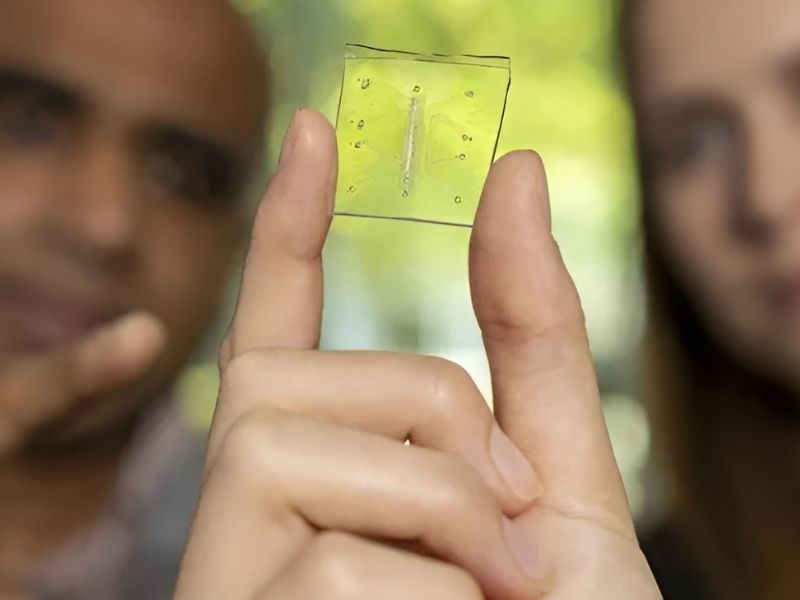
    On a clear, gum-soft polymer chip, a miniature lung springs into action—expanding, flowing with movement, and, for the first time, defending itself like a real living organ.
    Image Credits:pplware

    On a clear, gum-soft polymer chip, a miniature lung springs into action—expanding, flowing with movement, and, for the first time, defending itself like a real living organ.

    For Ankur Singh, who directs the Center for Immunoengineering at Georgia Tech, watching immune cells move through the chip was a stunning sight.

    Singh led the project alongside his longtime collaborator, Krishnendu “Krish” Roy—formerly a professor emeritus at Georgia Tech and now director of the School of Engineering and a Distinguished Professor at Vanderbilt University.

    A Breakthrough Immune-Integrated Lung-on-a-Chip Model

    Lung-on-a-chip devices give scientists a close look at how organs function. Each is about the size of a postage stamp, patterned with microscopic channels and lined with living human cells. Roy and Singh’s breakthrough was adding a functioning immune system, making the chip a realistic model of lung defense.

    With this advance, researchers can watch the lung’s defenses in action, see how inflammation develops, and observe the earliest steps of healing.

    For millions with respiratory conditions, simple tasks like climbing stairs, carrying groceries, or even laughing can be exhausting. For decades, clinicians and researchers have sought to truly understand what happens inside vulnerable lungs.

    Image Credits:Ankur Singh e Rachel Ringquist mostram o pulmão em chip microscópico que possui um sistema imunológico integrado.

    For Singh—a faculty member in the George W. Woodruff School of Mechanical Engineering professor with bioengineering ties—Singh is personally driven, having lost an uncle to an infection worsened by cancer.

    That experience helped drive the team to reimagine what a lung-on-a-chip could do, opening the door to major breakthroughs.

    Witnessing Immune Cells in Action for the First Time

    The pivotal moment arrived when Roy and Singh’s group witnessed something never seen before on a chip: blood and immune cells flowing through vessel-like channels and acting just as they would in a real lung.

    Scientists long struggled to add a working immune system to organ-on-a-chip devices, as immune cells often died or failed to interact with tissues. The team overcame this by engineering a chip environment where the cells could survive and mount a coordinated defense.

    Simulating Realistic Immune Responses to Influenza

    The ultimate validation came when they introduced a severe influenza infection. The chip’s lung triggered an immune response mirroring patient reactions, with cells rushing in, inflammation spreading, and defenses activating.

    What started with influenza could soon apply to many other conditions—asthma, cystic fibrosis, lung cancer, and tuberculosis. Scientists are also exploring ways to incorporate immune organs, revealing how the lung collaborates with the body’s broader defense network.

    Ultimately, the goal is personalized medicine: creating chips from a patient’s own cells to forecast which treatment will work best. While clinical testing and regulatory approval may still be years away, Singh’s commitment to that vision remains unwavering.


    Read the original article on: pplware

    Read more: Using Magnetic Fields, Soft Robots Can now Operate More Intelligently On Their Own

  • Our Closest Star System Might Host a Potentially Habitable Planet

    Our Closest Star System Might Host a Potentially Habitable Planet

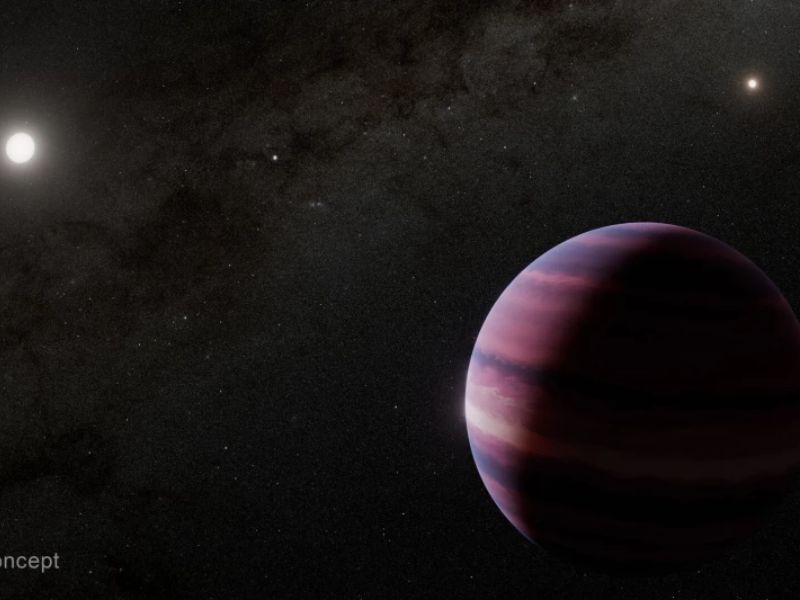
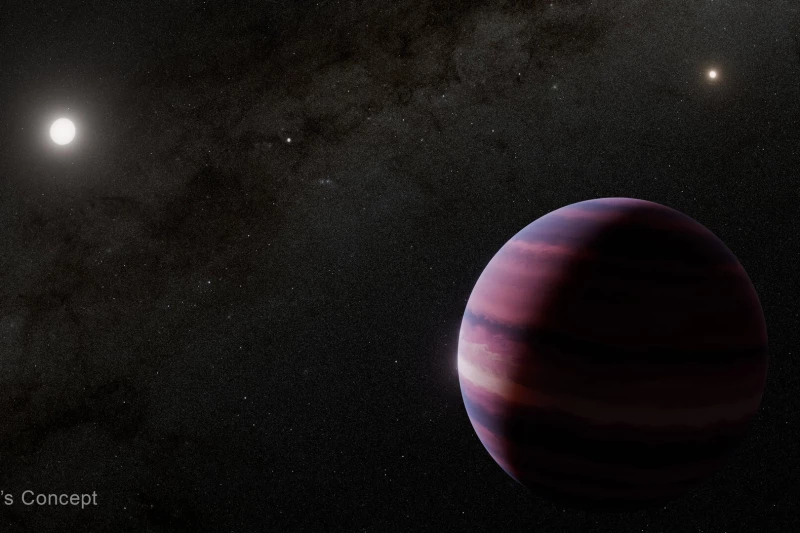
    If Earth ever needs to borrow a cup of sugar, it’s reassuring to think there might be a nearby, potentially livable planet orbiting Alpha Centauri just 4.34 light-years away—assuming the James Webb Space Telescope’s findings hold true.
    Image Credits:Artist’s concept of the planet circling Alpha Centauri A
    NASA/ESA/CSA/STScI/R. Hurt/Caltech/IPAC

    If Earth ever needs to borrow a cup of sugar, it’s reassuring to think there might be a nearby, potentially livable planet orbiting Alpha Centauri just 4.34 light-years away—assuming the James Webb Space Telescope’s findings hold true.

    Alpha Centauri is one of the few stars in our galaxy that has captured the public’s imagination. That makes sense, given it’s our closest stellar neighbor—and there’s always the slim possibility that someone over there might be wondering if life exists here, too.

    The Triple-Star System of Alpha Centauri

    Alpha Centauri is actually a triple-star system, consisting of Alpha Centauri A and B—two stars that orbit each other—and a third, Proxima Centauri, which orbits the pair. Up until recently, only Proxima Centauri was known to host planets—two confirmed and possibly a third. One of these lies within the habitable zone, the region around a star where liquid water could exist. However, because it orbits so close to its red dwarf star and is frequently blasted by intense radiation, the chances of life there are slim.

    Alpha Centauri A, by contrast, holds greater promise from an Earth-like standpoint. It’s a G2V star, just like our Sun—the type of star we know can support life because, well, we exist. The issue was that no planets had ever been detected around Alpha Centauri A, making it seem like the system might be a cosmic disappointment.

    That changed with the release of new findings from the James Webb Space Telescope.

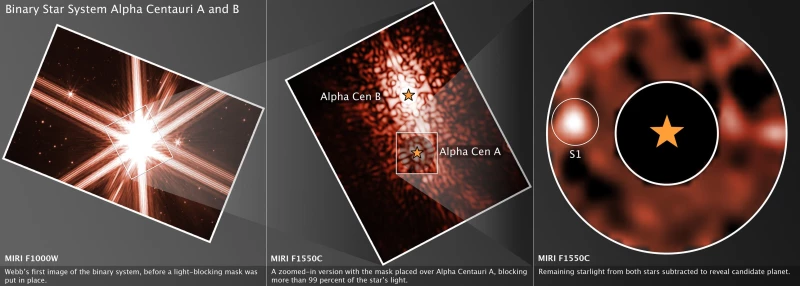
    Image Credits:Alpha Centauri as seen by Webb
    NASA/ESA/CSA/STSci/ A. Sanghi (Caltech)/C. Beichman (JPL)/D. Mawet (Caltech/ J. DePasquale (STScI)

    Why Finding Planets Around Sun-Like Stars Is So Difficult

    Finding planets around G2 stars is difficult, which is why most known exoplanets orbit red dwarfs. Red dwarfs are smaller and dimmer, and their habitable zones are much closer to the star. This makes it easier to spot slight brightness dips when a planet transits the star. G2 stars, like our Sun, are significantly brighter, and their habitable zones are farther out. Planets in these zones take longer to complete an orbit, which makes them harder to spot and study.

    So how do you detect a potential planet that’s 10,000 times fainter than the star it circles? With ingenuity.

    How Astronomers Isolated Potential Planets

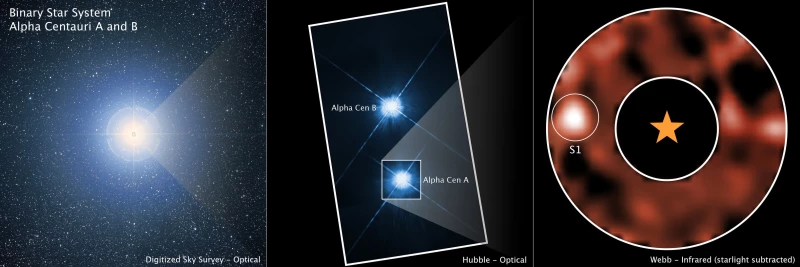
    The team used coronagraphic imaging to block Alpha Centauri A’s light and minimize interference from Alpha Centauri B. They did this by referencing a third star, similar to Alpha Centauri A but without a companion. The well-known reference star served as a benchmark to filter out excess light, scattering, and telescope noise. What remained could be potential planets. The team ruled out false positives by eliminating asteroids, satellites, and background galaxies that could mimic a planetary signal.

    The investigation required patience. A possible planet seen in August 2024 vanished in follow-up observations in early 2025. This led the researchers back to the drawing board, where they created computer models simulating millions of potential orbits. They eventually found a stable orbit explaining the detection and disappearance—the planet had likely moved too close to Alpha Centauri A to be seen.

    Image Credits:Alpha Centauri as seen by DSS, Hubble, and Webb
    NASA/ESA/CSA/STSci/ A. Sanghi (Caltech)/C. Beichman (JPL)/D. Mawet (Caltech/ J. DePasquale (STScI)

    Based on their findings, the research team believes that the newly identified planet—if confirmed—is a gas giant similar in size to Saturn or Jupiter. It lies within the habitable zone of Alpha Centauri A, where the estimated surface temperature is about 225 K (-48 °C or -55 °F). Its orbit is slightly eccentric, completing a full revolution around the star every two to three Earth years.

    Moons and Neighboring Worlds

    While the planet itself is unlikely to support life due to its gaseous nature, it could host a habitable moon. There’s also the possibility that other, smaller planets within the habitable zone might exist—similar to how Earth, Venus, and Mars all reside in our own system’s habitable region.

    For scientists, the ability to search for planets so close to home (at least in cosmic terms) is an encouraging development. That said, the mysteries of extraterrestrial life—and neighborly sugar-lending—remain unanswered for now.

    Being so close, this system gives us a rare chance to study other planetary systems in detail,” said Charles Beichman of NASA’s JPL. “But these stars are bright, nearby, and move quickly, making observations extremely challenging—even for the world’s most powerful space telescope.” Webb was built to detect the most distant galaxies in the universe. The Space Telescope team created a custom observation sequence for this target—and their effort paid off.

    The full research papers can be accessed [here] and [here].


    Read the original article on: New Atlas

    Read more:‘Social Apnea’ May Worsen By Up To 47% On Certain Days

  • Mercedes-AMG’s Axial-Flux System Packs 1,340 hp in a Lightweight Build

    Mercedes-AMG’s Axial-Flux System Packs 1,340 hp in a Lightweight Build

    Mercedes' AMG division has revealed a concept EV that's essentially a street-legal rocket. Powered by three axial-flux motors, it delivers 1,340 horsepower (985.5 kW) and reaches a top speed of 220 mph (354 km/h).
    Image Credits:New Atlas

    Mercedes’ AMG division has revealed a concept EV that’s essentially a street-legal rocket. Powered by three axial-flux motors, it delivers 1,340 horsepower (985.5 kW) and reaches a top speed of 220 mph (354 km/h).

    The new axial-flux motors are smaller, lighter, and more efficient. With a disc-shaped stator spinning parallel to the shaft, they’re 67% lighter, offering 3× the power density and 2× the torque of traditional motors.

    Next-Gen NCMA Battery Boosts Power and Efficiency

    The axial-flux motors are driven by a newly designed battery featuring oil-cooled, tall cylindrical cells using NCMA chemistry. This lithium-ion battery incorporates a nickel cobalt manganese aluminum oxide cathode, enhancing the standard NCM formula with added aluminum.The result: more capacity, higher energy and power output, with less cobalt and improved stability.

    Image Credits:An innovative EDU for the motors and transmission was designed to maximize space and weight savings
    Mercedes-Benz

    The Concept GT XX’s 800+ volt battery pack houses more than 3,000 NCMA cells, enabling ultra-fast charging at up to 850 kW. While Mercedes hasn’t disclosed the total capacity of the pack, it did confirm an energy density of 300 Wh/kg.

    The motors sit in electric drive units (EDUs) with a planetary transmission and silicon carbide inverter. The rear unit has two motors making 860 hp, while the front holds one motor with a spur-gear setup.

    Adaptive Aero Enhances Performance and Efficiency

    Aerodynamics play a major role in the Concept GT XX’s performance, with a remarkably low drag coefficient of just 0.198. A streamlined body and actively adjusting aero wheels make this possible. These wheels use “cloaking” blades that adjust to either cool the brakes or enhance aerodynamics, depending on driving conditions.

    The overall design is compact, aggressive, and steeped in nostalgia, with the front grille and hood strongly reminiscent of the classic 300 SLR.

    The Concept GT XX features V8 sounds from headlight speakers, a yoke steering wheel, carbon fiber accents, and orange lighting. A programmable center tail light adds to its sleek, game-inspired interior.

    Image Credits:The fins on the AMG Concept GT XX’s wheels can suck in or push out to allow cooling air for the brakes
    Mercedes-Benz

    Mercedes has confirmed that this concept is road-ready and headed for production. Futuristic features may be trimmed for production, but the drivetrain and aero systems actively demonstrate real-world readiness—pending durability tests.


    Read the original article on:New Atlas

    Read more:YouTube Introduces New Shopping Stickers For Shorts Videos

  • Pedaling Powers the Battery-free Automatic Shifting System

    Pedaling Powers the Battery-free Automatic Shifting System

    Automatic gear-shifting on bikes is common but usually relies on batteries that need frequent recharging. Shimano's new Q'Auto system is different—it uses the rider’s pedaling power instead.
    Image Credits:newatlas

    Automatic gear-shifting on bikes is common but usually relies on batteries that need frequent recharging. Shimano’s new Q’Auto system is different—it uses the rider’s pedaling power instead.

    Q’Auto is primarily designed for urban, trekking, and gravel bikes—both traditional and electric. It includes three components: a modified Shimano Cues rear freehub, a connected Cues wireless rear derailleur, and a Shimano Di2 wireless shifter mounted on the handlebar.

    How Pedaling Powers the Q’Auto System

    When the rider pedals, the rear wheel’s rotation powers a dynamo inside the freehub. This dynamo charges a lithium-ion capacitor that supplies energy to the derailleur’s gear-shifting actuator. The freehub also houses a microprocessor and sensors that track speed, cadence, and incline.

    Image Credits:An exploded view of the Q’Auto freehub
    Shimano

    Using data from its sensors, Q’Auto automatically shifts gears one step at a time to maintain a chosen pedaling speed. Riders can select Slow, Middle, or Fast pedaling modes via a companion app or physical pushbutton controls.

    How Manual Mode Helps Q’Auto Learn Your Shifting Style

    If users aren’t satisfied with the preset settings at first, they can switch to Manual mode and shift gears themselves using the Di2 shifter. During this time, Q’Auto’s AI learns their riding style and adjusts its Auto-shift mode accordingly—often within just 6 km (3.7 miles) of cycling.

    Image Credits:The Rose Sneak 3 EQ commuter bike will be one of the first to feature the Q’Auto system
    Shimano

    Q’Auto will be available both pre-installed on select third-party bikes and as an upgrade option for compatible existing bicycles. Pricing and release dates have not yet been announced.


    Read the original article on: New Atlas

    Read more:New System Improves Machine Recognition of Facial Expressions

  • New System Improves Machine Recognition of Facial Expressions

    New System Improves Machine Recognition of Facial Expressions

    Edith Cowan University (ECU) researchers are developing a new method to help machines better recognize human facial expressions and become more emotionally aware.
    Image Credits: Pixabay

    Edith Cowan University (ECU) researchers are developing a new method to help machines better recognize human facial expressions and become more emotionally aware.

    As digital systems like virtual assistants and wellness apps interact more with people, it’s crucial they understand human emotions,” said ECU Ph.D. student Sharjeel Tahir.

    A More Human Approach to Emotion Recognition

    Rather than using single images to train systems to detect emotions, the team—led by ECU senior lecturer and AI expert Dr. Syed Afaq Shah—adopted a more human-like method: presenting sets of related facial expressions to give machines a wider emotional context.

    Just as we don’t judge someone’s emotions from a single glance, our approach analyzes multiple expressions to make more accurate predictions,” Tahir said. “It helps machines better understand emotions, even when faces appear at different angles or in varied lighting.”

    Though not applied to physical robots, the research could shape the development of emotionally aware systems in areas like mental health support, customer service, and interactive learning.

    Building Machines That Truly Understand Faces

    We’re building a foundation for machines that truly understand faces—not just see them,” Tahir added.

    Co-author and Ph.D. student Nima Mirnateghi noted that their method provides rich visual context, boosting emotion recognition accuracy while remaining computationally efficient. The findings were published in the 2024 International Conference on Digital Image Computing: Techniques and Applications (DICTA).

    “By training the model with diverse features in an organized set, we found it could recognize emotional patterns much more effectively,” he said.

    Guided by Dr. Shah, Tahir is now focusing on developing artificial empathy in AI agents, enabling them to respond appropriately to human emotions.

    Meeting the Rising Need for Emotional Support with Intelligent Machines

    There’s a growing demand for emotional support, and emotionally intelligent machines or robots could help meet that need,” Tahir noted.

    Mirnateghi added that the research not only advanced AI’s ability to recognize emotions but also encouraged a deeper investigation into how AI models make decisions.

    Our research group is now concentrating on explainable AI in language models, aiming to reveal the complex processes behind how artificial agents recognize and interpret patterns,” he said.

    By increasing transparency, we hope to design AI systems that are easier for humans to understand—narrowing the divide between sophisticated algorithms and human insight. One key question we’re exploring is: what truly makes a machine emotionally intelligent?


    Read the original article on: Techxplore

    Read more: Flying Robot Transforms Mid-Air to Land and Travel on Wheels

  • Kepler Discovers a New System of 7 Planets

    Kepler Discovers a New System of 7 Planets

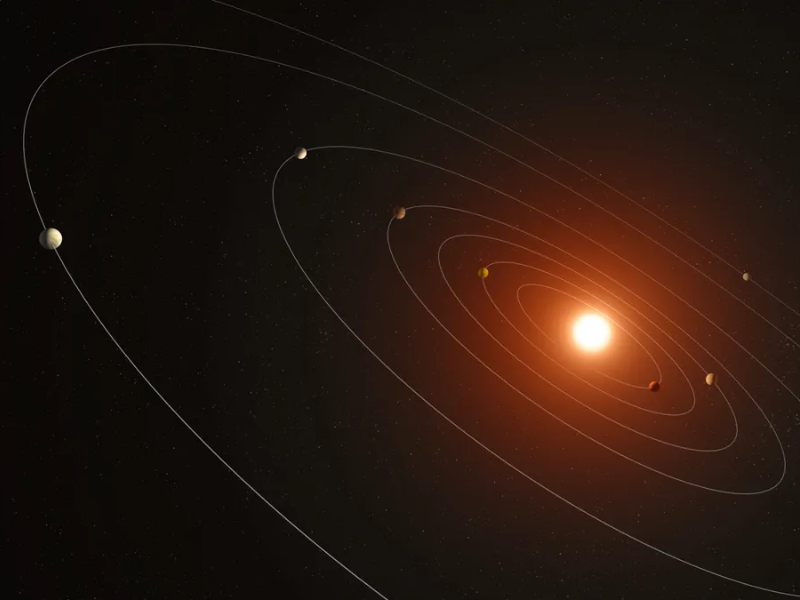
    Seven Sweltering Worlds – A Glimpse of the Kepler-385 System. Credit: NASA/Daniel Rutter

    NASA’s Kepler missions have concluded, but astronomers persist in refining their data, leading to remarkable discoveries in exoplanets. Among these findings is identifying the hottest seven-planet system, facilitated by meticulous data analysis.

    A Fiery Star at the Center: Kepler-385

    At the heart of this extraordinary system is Kepler-385, a star surpassing our Sun in size by approximately 10 percent and radiating a scorching heat that is 5 percent higher.

    In stark contrast to the expansive orbits in our own Solar System, these exoplanets hug their star, basking in an intense influx of light.

    Seven Planets nearby

    The first two exoplanets in this system have orbital periods of 10 and 15 days, respectively, and possess radii only slightly larger than Earth’s. These rocky worlds, if they include an atmosphere, likely have a thin one.

    The remaining five planets are more giant, falling short of being classified as giant planets. These super-Earths boast a radius twice that of our planet and are enveloped in a dense atmosphere.

    A Milestone in Exoplanet Research

    Professor Jason Rowe of Bishop’s University remarks, “Our revision to the Kepler Exoplanet catalog provides the first true uniform analysis of exoplanet properties. Improvements in characterizing planetary and stellar attributes have opened the door for an in-depth exploration of exoplanetary systems, allowing us to draw parallels with our Solar System and delve into the intricacies of specific systems like Kepler-385.”

    A Unique Planetary Arrangement

    All seven planets orbit well within the inner boundary of the habitable zone, yet they are too hot to sustain life as we know it. Nevertheless, astronomers are captivated by the planetary configuration of this septet.

    Notably, the innermost two and the outermost three planets exhibit a resonance in their orbits, with their rotational periods finely synchronized, yielding a captivating sonification.

    A Breakthrough in Orbital Understanding

    Professor Eric Ford from Penn State underscores the significance of this discovery, saying, “Our new result is a more direct and model-independent demonstration that systems with more transiting planets have more circular orbits.” This finding highlights the relationship between the number of transiting planets and orbital eccentricities.

    Kepler’s Enduring Legacy

    The catalog of planet candidates unveiled by Kepler remains unrivaled in its size and uniformity, representing a valuable resource for exoplanetary research. While current observatories continue to advance, these researchers emphasize that Kepler’s data remains the gold standard for investigating exoplanets.

    Jack Lissauer, a research scientist at NASA’s Ames Research Center in California’s Silicon Valley and lead author of the paper presenting the new catalog, sums it up, “We’ve assembled the most accurate list of Kepler planet candidates and their properties to date. NASA’s Kepler mission has discovered most known exoplanets, and this new catalog will enable astronomers to learn more about their characteristics.”


    Read the original article on IFL Science.

    Read more: James Webb’s Carbon Discovery on Europa Bolsters the Case for Potential Life.