Tag: Trump

  • Trump Appoints Transportation Secretary Sean Duffy as Interim Head of NASA

    Trump Appoints Transportation Secretary Sean Duffy as Interim Head of NASA

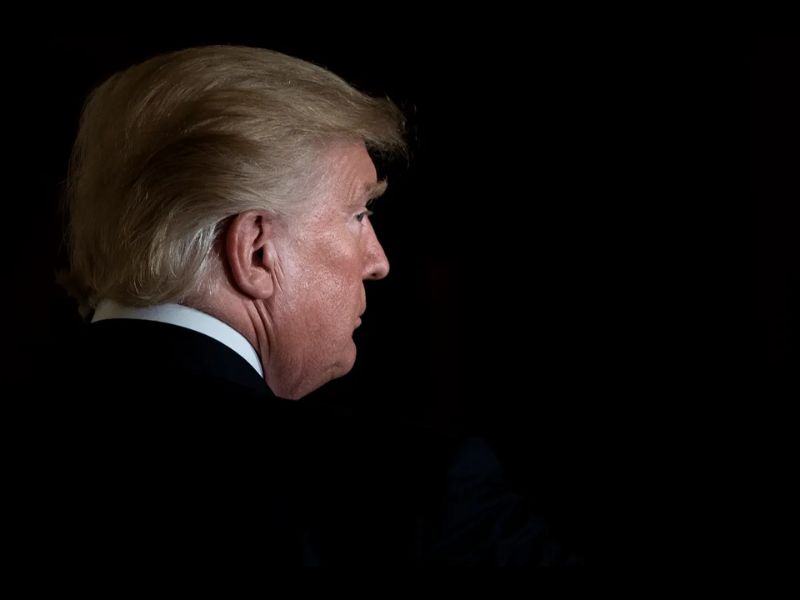
    Amid historic budget reductions and the threat of widespread layoffs, U.S. President Donald Trump has named Transportation Secretary Sean Duffy as the acting Administrator of NASA.
    Image Credits:Stefani Reynolds / AFP / Getty Images

    Amid historic budget reductions and the threat of widespread layoffs, U.S. President Donald Trump has named Transportation Secretary Sean Duffy as the acting Administrator of NASA.

    The appointment is temporary, with Duffy set to maintain his role at the Department of Transportation while also taking on leadership at NASA, Trump announced on his social media platform, Truth Social.

    Trump Praises Duffy’s Leadership in Transportation as He Steps In as Acting NASA Chief

    Sean is doing a FANTASTIC job managing our nation’s transportation systems, from developing cutting-edge air traffic control to revitalizing our roads and bridges—making them efficient and beautiful once more,” Trump stated.

    The appointment is highly unconventional, as there is no known precedent for a sitting Secretary of Transportation simultaneously serving as NASA’s acting chief. Traditionally, NASA Administrators have been former astronauts, veteran agency officials, ex-members of Congress, or military leaders.

    Duffy lacks a formal background in science or space exploration, though the Department of Transportation does oversee the Federal Aviation Administration, which regulates commercial spaceflight and air traffic. Given that he will hold both leadership positions at once, his role at NASA will likely center on executing President Trump’s immediate policy agenda.

    That agenda includes deep budget cuts to NASA, expected to significantly impact science programs and reduce staffing levels. According to the White House’s “One Big Beautiful Bill,” the agency’s budget would be slashed by 25%, with an estimated 5,000 job losses.

    After Withdrawing Isaacman Nomination, Trump Taps Duffy Amid Concerns Over Ties to Musk and Democratic Donations

    Duffy’s appointment follows President Trump’s sudden decision to withdraw his nomination of billionaire entrepreneur Jared Isaacman for NASA Administrator just weeks earlier. Isaacman, the founder of Shift4 Payments, has traveled to space twice on private SpaceX missions. Trump said he pulled his support after a “thorough review of prior associations,” pointing to Isaacman’s past donations to Democratic candidates and his close relationship with SpaceX CEO Elon Musk.

    Trump’s decision to backtrack on Isaacman’s nomination reportedly strained his relationship with Elon Musk.

    I also felt it was inappropriate for someone so close to Elon, and involved in the space industry, to lead NASA—given how much of NASA’s work is tied to Elon’s business interests,” Trump explained in a separate post on Truth Social.

    Duffy takes over from Janet Petro, director of the Kennedy Space Center and a long-serving NASA official. It remains uncertain how long Duffy will serve in the role.


    Read the original article on: TechCrunch

    Read more: Netflix Partners with NASA to Enhance its live Television Content
  • Trump Expected to Postpone TikTok Ban with Another Extension

    Trump Expected to Postpone TikTok Ban with Another Extension

    U.S. President Donald Trump will grant another 90-day extension to determine TikTok's future, the White House announced on Tuesday. The previous extension, signed in April, was scheduled to expire on Thursday, June 19.
    Image Credits:Pixabay

    U.S. President Donald Trump will grant another 90-day extension to determine TikTok’s future, the White House announced on Tuesday. The previous extension, signed in April, was scheduled to expire on Thursday, June 19.

    Trump to Issue New Executive Order to Keep TikTok Running

    President Trump will issue another Executive Order this week to allow TikTok to continue operating,” said White House Press Secretary Karoline Leavitt in a statement to CBS News.

    As he’s said many times, President Trump wants to keep TikTok running. This 90-day extension gives the Administration time to finalize the deal, so Americans can continue using TikTok, confident their data stays safe and secure,” she added.

    In January, the U.S. Supreme Court upheld the TikTok ban law, leading app stores and service providers to withdraw support for the app in the country. Shortly after assuming office, Trump signed an executive order postponing the ban to allow time for negotiations with ByteDance to sell its U.S. operations. Then, on April 4, he granted another 75-day extension to keep the short-form video app operational.


    Read the original article on:Techcrunch

    Read more:Ramp data Indicates Corporate AI Adoption May be Plateauing

  • Trump Proposes Establishing a Crypto Strategic Reserve

    Trump Proposes Establishing a Crypto Strategic Reserve

    Former President Donald Trump has voiced support for establishing a federal reserve of cryptocurrency assets. Initially, he highlighted XRP, Solana, and Cardano for inclusion, later clarifying that Bitcoin and Ethereum would “obviously” be part of the reserve as well.
    Image Credits:BRENDAN SMIALOWSKI / AFP / Getty Images

    Former President Donald Trump has voiced support for establishing a federal reserve of cryptocurrency assets. Initially, he highlighted XRP, Solana, and Cardano for inclusion, later clarifying that Bitcoin and Ethereum would “obviously” be part of the reserve as well.

    However, in January, Trump issued an executive order calling for a working group to explore crypto policy and assess “the potential creation and maintenance of a national digital asset stockpile.” The group was tasked with developing criteria for such a reserve, which could include cryptocurrencies lawfully seized by the federal government through enforcement actions.

    On Sunday morning, Trump took to Truth Social to push the idea further, emphasizing his commitment to making the reserve a reality.

    Trump Pushes for a U.S. Crypto Reserve

    A U.S. Crypto Reserve will elevate this critical industry after years of corrupt attacks by the Biden Administration,” he wrote. “That’s why my Executive Order on Digital Assets directed the Presidential Working Group to move forward on a Crypto Strategic Reserve that includes XRP, SOL, and ADA. I will make sure the U.S. is the Crypto Capital of the World.”

    Following his post, the mentioned cryptocurrencies surged by 20% or more. Later, he followed up by affirming that Bitcoin and Ethereum would be central to the reserve, adding, “I also love Bitcoin and Ethereum!”

    Trump’s initiative appears aimed at reversing the crypto regulatory approach established under President Joe Biden’s administration.

    A Deregulatory Shift in Crypto Policy

    In fact, under the Trump administration, the Securities and Exchange Commission has adopted a more lenient, deregulatory approach toward the crypto industry, dropping its lawsuit against Coinbase and ruling that memecoins are not classified as securities. (Meanwhile, the value of Trump’s own $TRUMP coin has sharply declined since his inauguration.)

    Additionally, Trump has signed an executive order proposing the establishment of a U.S. sovereign wealth fund, which he suggested could be used to acquire TikTok.

    This post has been updated to include Trump’s follow-up statement acknowledging Bitcoin and Ethereum.


    Read the original article on: TechCruch

    Read more: Trump is Pulling the U.S. Out of the WHO. Here’s What it Means

  • Trump is Pulling the U.S. Out of the WHO. Here’s What it Means

    Trump is Pulling the U.S. Out of the WHO. Here’s What it Means

    President Donald Trump has once again announced his intention to end U.S. support for the World Health Organization (WHO), a global health and humanitarian body dedicated to disease eradication and tracking outbreaks across borders.
    Credit: AI

    President Donald Trump has once again announced his intention to end U.S. support for the World Health Organization (WHO), a global health and humanitarian body dedicated to disease eradication and tracking outbreaks across borders.

    On January 20, Trump signed an executive order outlining the U.S. plan to withdraw from the Switzerland-based organization, a process that takes 12 months. His initial attempt to leave the WHO in July 2020 was blocked by President Joe Biden, who reversed the move after taking office in 2021.

    The United States was a founding member of the World Health Organization (WHO) in 1948. “For over seven decades, WHO and the USA have saved countless lives,” the organization stated. “Together, we ended smallpox and have brought polio close to eradication.”

    U.S. Contribution to WHO and Reasons for Withdrawal

    As the largest contributor to the WHO, the United States donated approximately $1.25 billion between 2022 and 2023. Germany, the second-largest donor, contributed $856 million during the same period. Trump cited the “unfairly burdensome” financial obligations of the U.S. as a key reason for withdrawing from the organization, along with dissatisfaction with WHO’s leadership during the COVID-19 pandemic.

    While this move will reduce U.S. spending, experts warn that it may come at a significant cost. A group of health policy experts noted on January 21 in the BMJ that it would leave the WHO weakened and isolate the U.S. at a time when global health challenges require cooperation. They also emphasized that the decision would “severely diminish American influence and standing in the world.”

    To explore the potential impacts of this withdrawal, Science News interviewed Paul Spiegel, director of the Johns Hopkins Center for Humanitarian Health. The interview was edited for length and clarity.

    WHO Sets Global Health Standards and Provides Vital Data for U.S. Surveillance and Early Warning Systems

    Spiegel: The WHO establishes global health standards and creates international health regulations that require governments worldwide to report certain diseases, including those with epidemic potential. It serves as an early warning system for infectious diseases and facilitates global surveillance and data sharing. The U.S. benefits from the data WHO gathers from various countries.

    The WHO also offers vaccinations and provides guidance to governments on noncommunicable diseases, covering areas like tobacco control, cancer screening, and diabetes management. It is a key source of technical expertise for many nations globally.

    Additionally, the WHO supports countries during humanitarian crises.

    Spiegel: The United States is by far the largest contributor, and it’s unlikely that other countries will be able to fill the gap. This will have a significant impact on the WHO, which will likely have to either close offices or reduce staff.

    Spiegel: Certainly, some of the world’s poorest nations, such as many in Africa and parts of the Middle East, will be affected. The WHO will face tough decisions and will need to review its budget to determine where to make cuts.

    WHO’s Health Response to Humanitarian Crises at Risk of Cuts, Threatening Millions in Conflict Zones

    In places like Ukraine, Sudan, Gaza, and Myanmar, the WHO is coordinating health responses to humanitarian crises, which is extremely costly. I expect this will be one of the areas targeted for cuts due to the high expenses involved. This would have a devastating impact on potentially hundreds of millions of people impacted by conflict and humanitarian emergencies.

    Spiegel: I don’t see any advantage for the U.S. in withdrawing. In fact, it ultimately makes Americans less secure from a public health standpoint.

    The U.S. relies on the WHO’s work, especially since the Centers for Disease Control and Prevention (CDC) collaborates closely with the organization on global health security. Leaving the WHO puts America in a more vulnerable position, particularly concerning infectious diseases.

    WHO’s disease surveillance will be diminished, leading to less information being shared, and it’s uncertain whether the coordination between WHO and the CDC will continue as it did before.

    Spiegel: Yes, in numerous studies, the WHO has helped facilitate U.S. collaboration with various ministries of health. The organization is highly respected by health ministries worldwide and plays a key role in networking and coordinating research.

    Withdrawing from the WHO could have a negative impact on the research conducted in the U.S.

    At the World Health Assembly, the U.S. plays a significant role in numerous decisions, ranging from vaccine procurement to diplomatic matters. By withdrawing, the U.S. will not only be excluded from these discussions but will also create a leadership vacuum, which other countries, like China, will likely attempt to fill.


    Read the original article on: Science News

    Read more: Excessive Sitting Poses Risks to Health Despite Regular Exercise, Study Finds